Most restaurants want you to eat quickly and leave. A rare few make you want to slow down, look around, and wonder who sat in that same chair a hundred years ago. The places on this list are not just old buildings with good food. They are time capsules that have survived wars, economic collapses, and changing tastes, all while still serving dinner.
Some have hosted presidents, painters, and poets. Others sheltered freedom seekers or doubled as Revolutionary War headquarters. A few hold Guinness World Records or National Historic Landmark status. What they all share is a refusal to let history fade into the background.
Whether you are a history lover, a food enthusiast, or someone who just wants a meal worth remembering, each of these restaurants offers something genuinely rare: a seat at a table where the past is still very much present. Here are 13 restaurants that feel exactly like stepping into a living museum.
1. Union Oyster House, Boston, Massachusetts
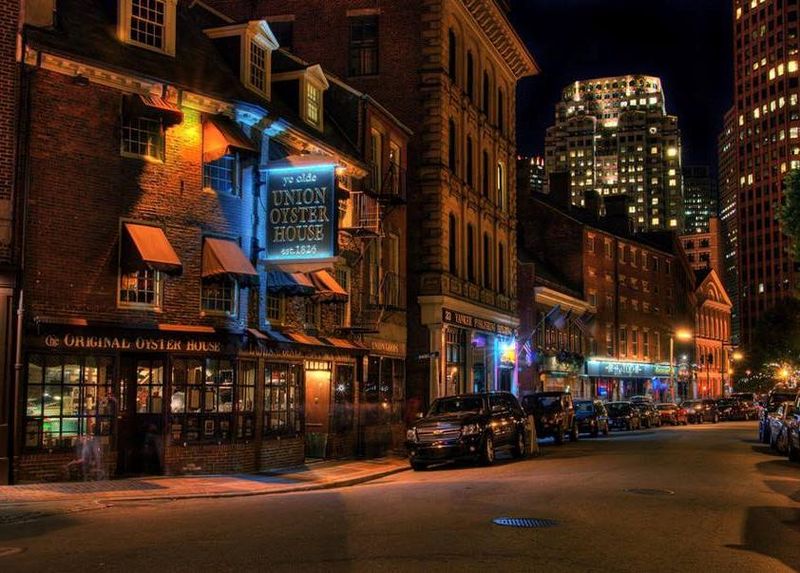
Before a single oyster was ever shucked here, this Georgian-style brick building had already lived several lives. Built around 1716, it served as a dry goods store, a Revolutionary War paymaster headquarters, and even a temporary home for Louis Philippe I, the exiled French King, who taught French lessons on the second floor to pay his way.
The restaurant opened in 1826 and was designated a National Historic Landmark in 2003. Today it spans three floors with eight distinct dining rooms, including the Pine Room with its original fireplace and exposed beams, and the Colonial Room displaying five original oil paintings.
The menu focuses on classic New England seafood, including freshly shucked oysters, clam chowder, and multiple lobster preparations. Booth 18 upstairs was John F. Kennedy’s personal favorite, and it still bears a commemorative plaque. On Sundays, the kitchen serves baked beans free of charge, continuing a tradition that has outlasted generations.
2. White Horse Tavern, Newport, Rhode Island
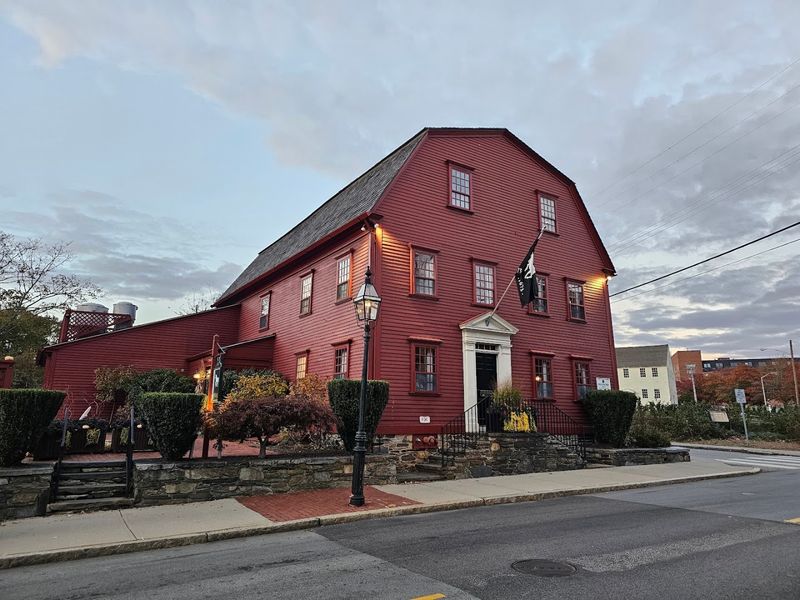
America’s oldest continuously operating restaurant did not start as a restaurant at all. The building began as a private residence in 1652, became a tavern in 1673, and for over a century doubled as the meeting place for Rhode Island’s General Assembly, Criminal Court, and City Council. British troops were even quartered inside its walls during the American Revolution.
The colonial architecture is remarkably intact, with a gambrel roof, clapboard exterior, low timber ceilings, and four original stone fireplaces still in use. The Preservation Society of Newport County stepped in during 1954 to restore the building after years of neglect, and the result is one of the most authentically preserved colonial structures in the country.
The menu centers on sophisticated New England cuisine, with fresh fish, clams, and lobsters sourced from Narragansett Bay. George Washington, Thomas Jefferson, and Alexander Hamilton are all rumored to have dined here. The tavern holds National Historic Landmark status and is listed on the National Register of Historic Places.
3. Botín, Madrid, Spain
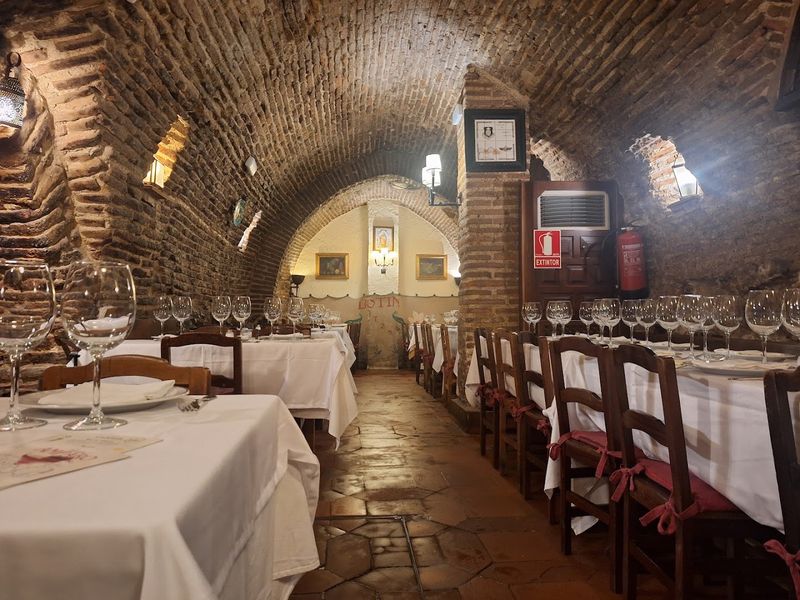
The Guinness World Records does not hand out titles lightly, but Botin in Madrid has held the record for the world’s oldest continuously operating restaurant since it first opened in 1725. Founded by French chef Jean Botin and his Asturian wife, the original concept was simple: guests brought their own ingredients and paid to have them cooked.
The restaurant spans four floors, each with its own character. Exposed brick walls, vaulted stone cellar dining rooms, and wooden ceiling beams create a setting that dates back to the building’s 1590 origins. The wood-fired oven has reportedly never been extinguished since 1725, surviving the Spanish Civil War and even the pandemic.
Roast suckling pig and roast lamb, both prepared in that legendary oven, remain the signature dishes. Francisco de Goya reportedly worked in the kitchen before his painting career took off. Ernest Hemingway was a regular guest and wrote about the restaurant in “The Sun Also Rises,” which still brings readers through its doors today.
4. Rules Restaurant, London, England
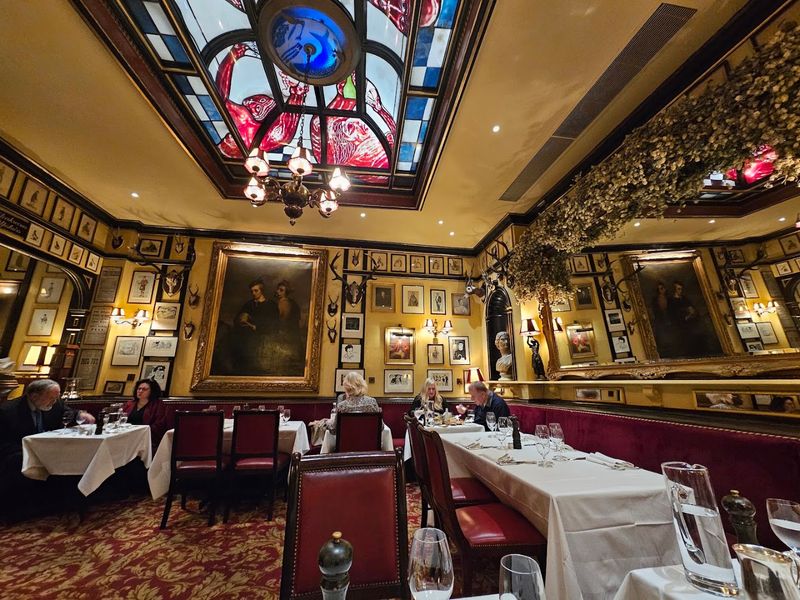
London’s oldest restaurant has been serving meals since 1798, which means it has operated through the reigns of every British monarch from George III to the present day. Thomas Rule opened it as an oyster bar, and it has remained in continuous operation ever since, even staying open through World War II rationing by serving non-rationed game.
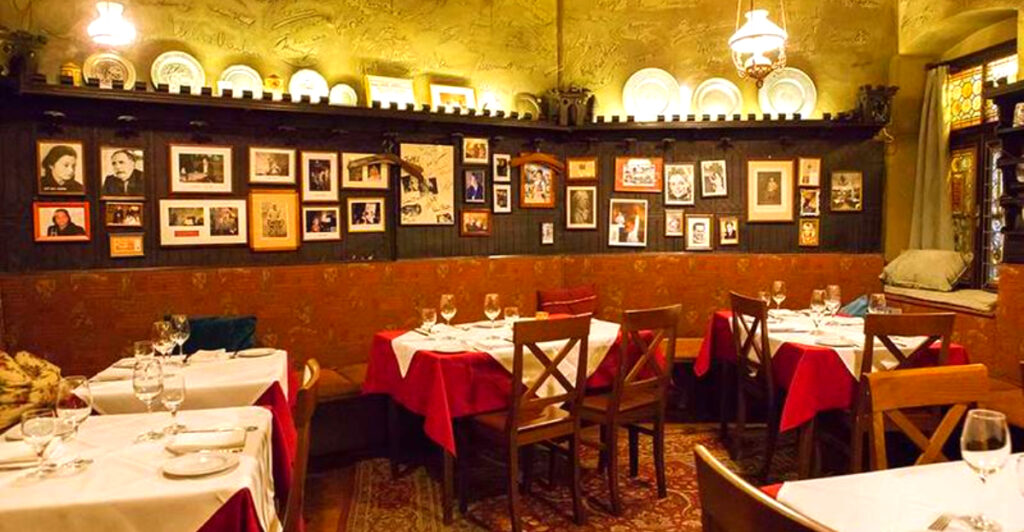
The interior is a visual record of British cultural history. Rich wood paneling, red velvet seating, and walls packed with drawings, cartoons, paintings, and memorabilia fill every dining room. Private rooms named after John Betjeman and Graham Greene offer quieter settings. A mural of Margaret Thatcher in a suit of armor is a particular conversation starter.
The menu specializes in British game cookery, with partridge, venison, wild duck, and pheasant sourced from the restaurant’s own Pennine Hills estate. Charles Dickens, Charlie Chaplin, and Laurence Olivier all dined here. More recently, the restaurant appeared in the James Bond film “Spectre” and multiple episodes of “Downton Abbey.”
5. Antoine’s Restaurant, New Orleans, Louisiana
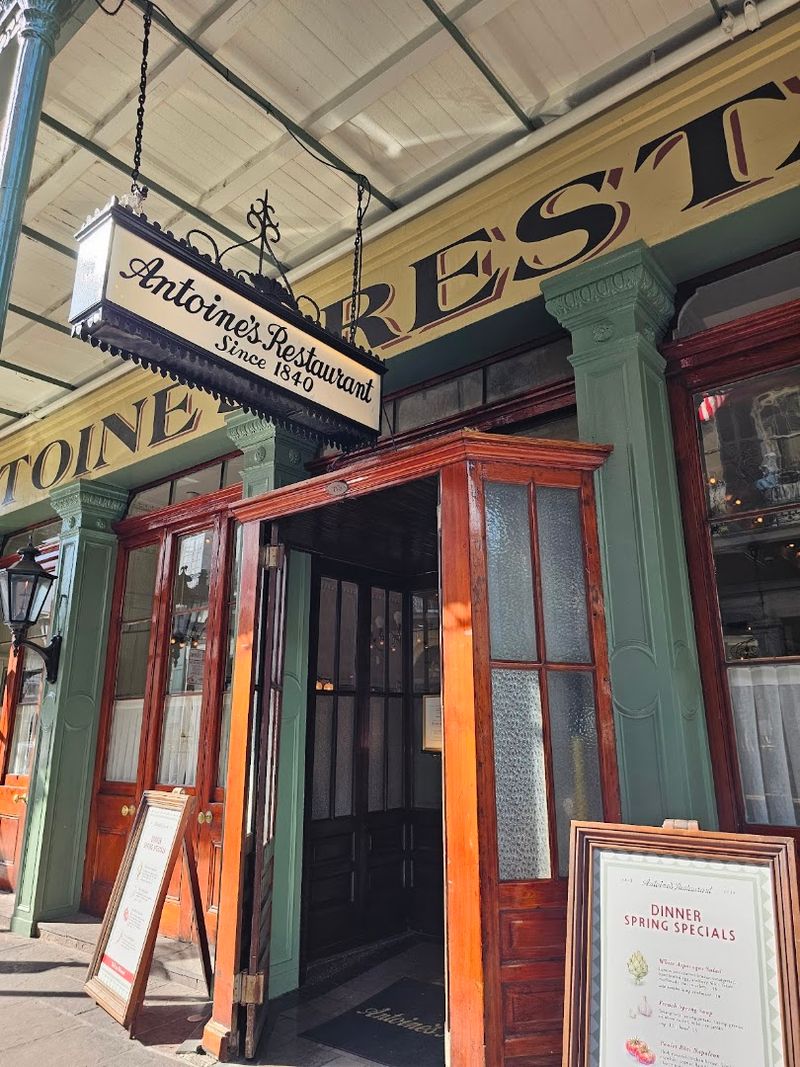
Founded in 1840 by Antoine Alciatore, a young French immigrant, this French Quarter institution holds two remarkable records: the oldest continuously operating restaurant in New Orleans and the oldest family-run restaurant in the entire United States. The fifth generation of the Alciatore family still runs it today.
The restaurant is a sprawling complex of 14 distinct dining rooms, each with its own story. The 1840 Room displays a Civil War-era sword and one of the first light bulbs personally delivered by Thomas Edison. The Rex Room is filled with Mardi Gras crowns and scepters. A climate-controlled wine corridor stretches 165 feet and holds approximately 25,000 bottles.
Antoine’s is the birthplace of Oysters Rockefeller, a recipe that has been a closely guarded family secret since 1889. Servers complete a two-to-three-year apprenticeship before working the floor independently. U.S. Presidents Franklin D.
Roosevelt and Bill Clinton, Pope John Paul II, and Elizabeth Taylor have all dined beneath its original chandeliers.
6. The Griswold Inn, Essex, Connecticut
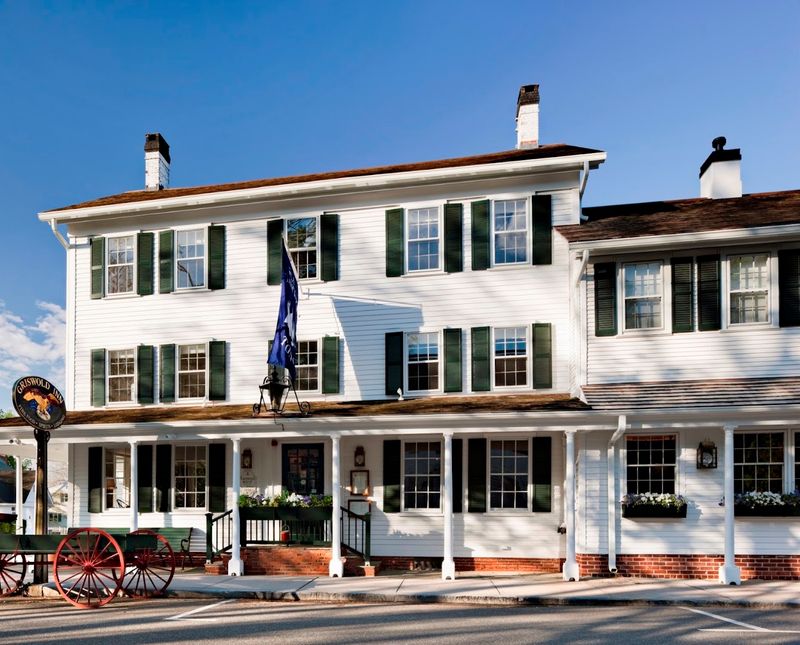
Few restaurants in America can claim that British troops moved in and accidentally started a beloved food tradition, but The Griswold Inn can. When British forces occupied the inn during the War of 1812, they began the practice of a hearty Sunday breakfast that the kitchen still honors today as the Sunday Hunt Breakfast buffet.
Founded in 1776 by Sala Griswold, the inn is a patchwork of historic structures. The Tap Room was originally a schoolhouse built in 1735 and later relocated to the property. Its ceiling is made from a rare mix of crushed clamshell and horsehair plaster. The Gun Room displays rare firearms from the Revolutionary War, and the walls throughout hold one of the finest private collections of maritime art in New England, including a piece by Norman Rockwell.
The menu covers everything from New England clam chowder to Faroe Island salmon, with three distinct dining formats available. The inn offers 34 guest rooms and live entertainment several nights a week. It even appeared in the Netflix film “The Noel Diary.”
7. Dobbin House Tavern, Gettysburg, Pennsylvania
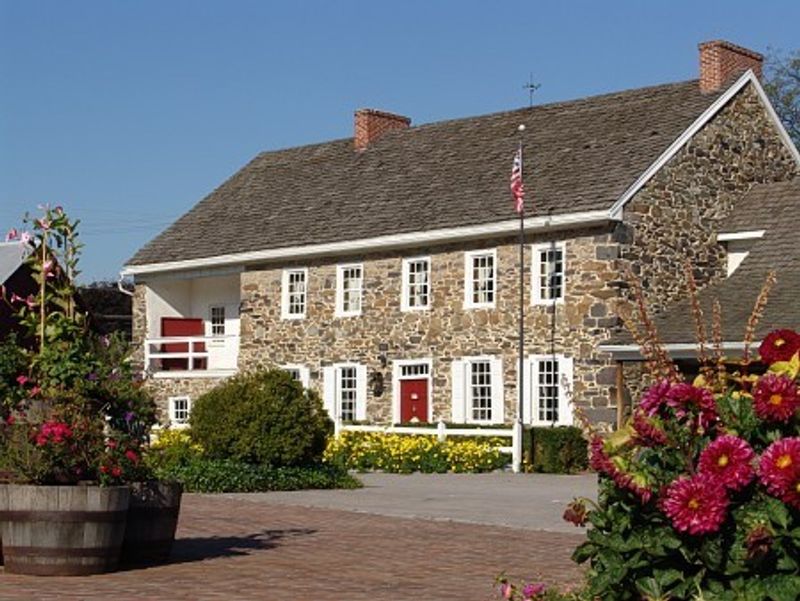
Built in 1776 by Reverend Alexander Dobbin, a Presbyterian minister who used the property as both a home and a classical school, this stone structure actually predates the town of Gettysburg itself. It is not just old by local standards; it is old by American standards, and its walls carry that weight in every detail.
After Reverend Dobbin’s passing in 1809, the property eventually became a documented station on the Underground Railroad. A hidden space used to shelter freedom seekers remains intact inside the building and is accessible on guided tours. The tavern was restored and reopened in 1977 and is now a designated Historic Preservation property.
Dinner is served by candlelight in low-ceilinged rooms furnished with antiques, and the staff dress in period attire throughout service. The menu features prime rib, game, and poultry alongside house-made desserts like Martha Washington’s Cream Cake and Alexander Dobbin’s Apple Pie. Its location near the Gettysburg battlefield makes every visit feel especially weighted with American history.
8. Buckhorn Exchange, Denver, Colorado
Henry H. “Shorty” Zietz was a close friend of Buffalo Bill Cody, and in 1893 he opened a restaurant that reflected exactly the kind of world they both inhabited. The Buckhorn Exchange became Denver’s oldest restaurant and also holds the city’s very first liquor license, a detail that still gets mentioned with considerable pride.
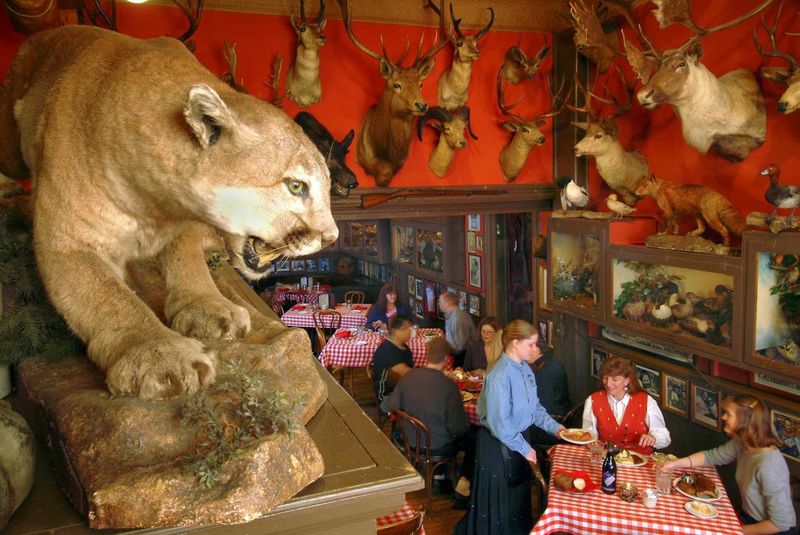
Every surface inside tells a story from the American frontier. Over 500 pieces of taxidermy cover the walls alongside antique firearms, Western art, historic photographs, and Native American artifacts. The original bar was imported from Germany, and tin ceilings complete the saloon-like layout across multiple dining rooms. Annie Oaknie and various U.S. presidents are counted among its historical patrons.
The menu is unapologetically frontier-focused, with buffalo prime rib, elk, Rocky Mountain oysters, and wild game platters as the main attractions. Fried alligator tail is a popular appetizer. The restaurant has hosted Native American dance performances and continues to serve both lunch and dinner to tourists and locals who want their meal to come with a side of genuine Western history.
9. Huber’s Cafe, Portland, Oregon
Portland’s oldest restaurant has a survival story that most establishments can only dream about. When Prohibition hit, Huber’s Cafe sidestepped closure by doubling down on food, specifically slow-roasted turkey, and rebranding away from its saloon origins. That decision kept the doors open and made roast turkey the dish the restaurant is still famous for today.
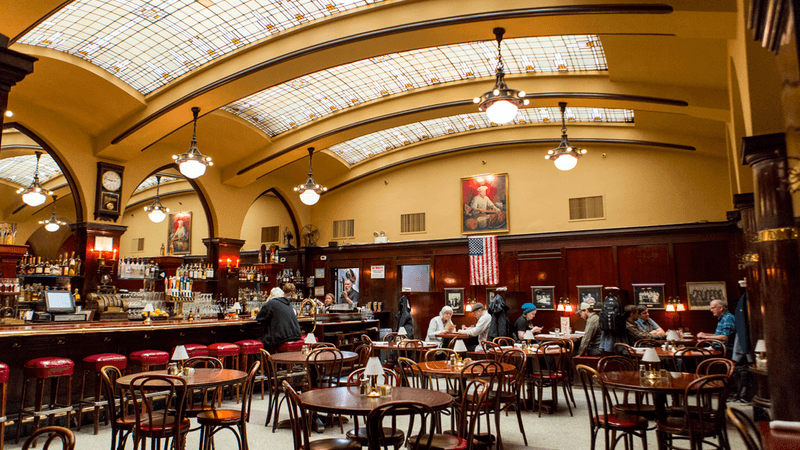
The current home in the Oregon Pioneer Building, where the cafe has operated since 1910, is a showcase of early 20th-century design. Polished mahogany paneling, stained-glass transoms and skylights, original chandeliers, and high ceilings give the dining room an elegance that has been carefully preserved across more than a century of continuous service.
Beyond the turkey, the menu covers prime rib, steaks, seafood, and classic American fare. The tableside preparation of Spanish Coffee, which involves a theatrical presentation by the bartender, has become a signature attraction in its own right. Huber’s is listed on the National Register of Historic Places and draws both longtime regulars and first-time visitors who come specifically for a taste of Portland’s culinary past.
10. Columbia Restaurant, Tampa, Florida
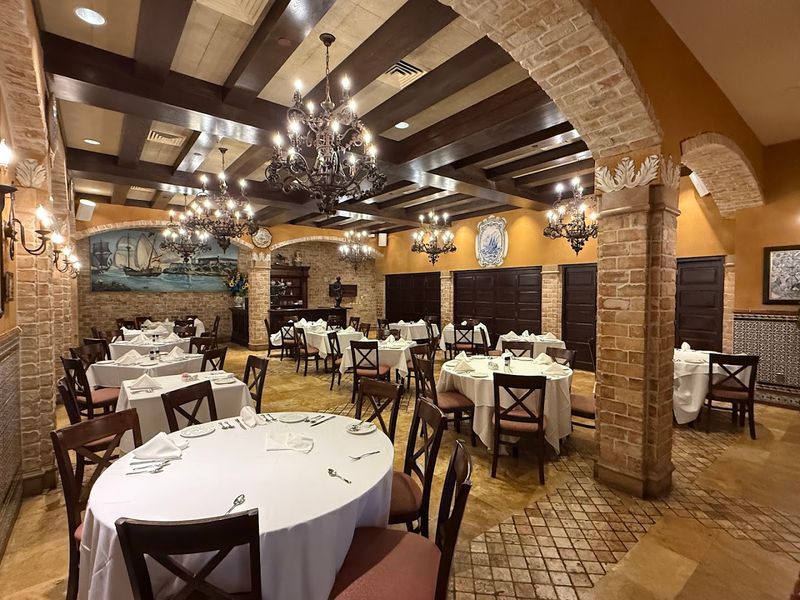
Florida’s oldest restaurant began as a small corner cafe in 1905, founded by Cuban immigrant Casimiro Hernandez Sr. in the heart of Ybor City. Over five generations of the same family, it grew from that modest corner spot into a sprawling complex that now occupies an entire city block, making it one of the most physically impressive historic restaurants anywhere in the South.
The interior is a layered showcase of Spanish and Cuban heritage. The Patio Dining Room features a central fountain surrounded by ceramic tile artwork. The Siboney Room displays hand-painted murals of Cuban life alongside a bandstand used for nightly flamenco performances. The Don Quixote Room is decorated with scenes from the famous novel, and the Grand Ballroom hosts events beneath ornate ceilings and chandeliers.
The signature “1905” Salad is prepared tableside and remains the menu’s most celebrated item, alongside Spanish bean soup, paella, and Cuban sandwiches. The restaurant holds a place in the Nation’s Restaurant News Fine Dining Hall of Fame and has received recognition from Wine Spectator for its extensive wine program.
11. The Olde Pink House, Savannah, Georgia
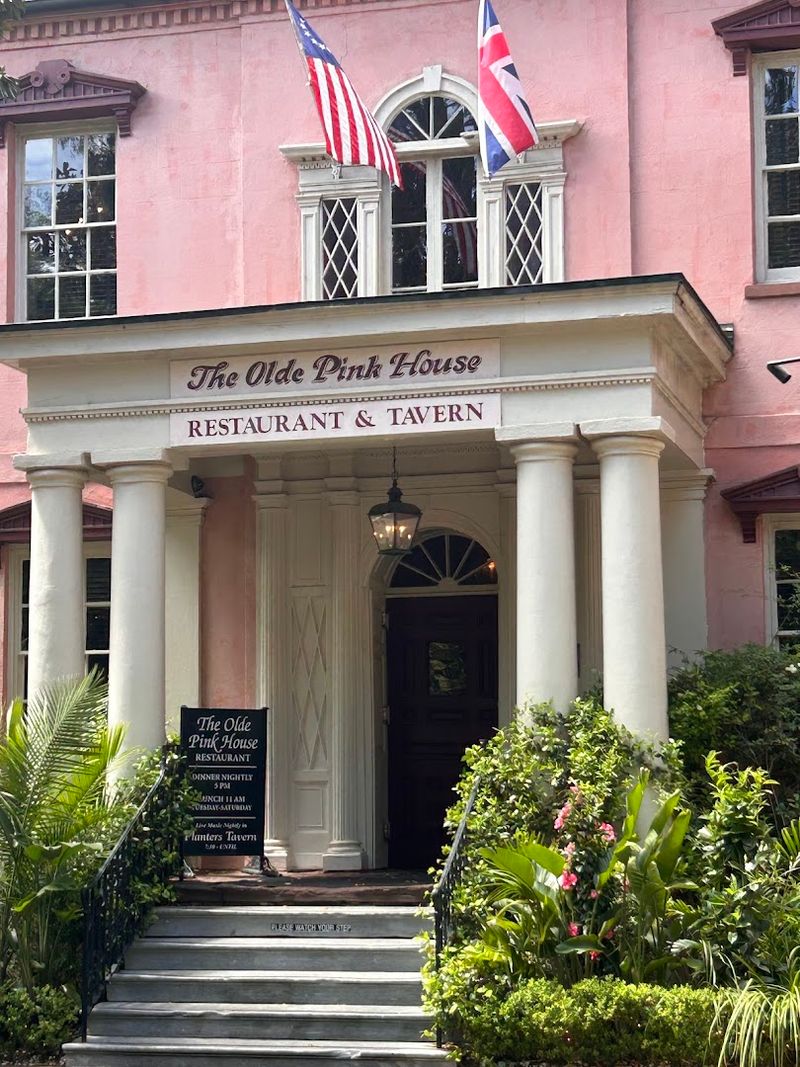
The building’s color is not a design choice, exactly. The red bricks beneath the white stucco of this 1771 Georgian mansion gradually bled through over time, turning the exterior a distinctive shade of pink that has made it one of the most recognizable buildings in Savannah. James Habersham Jr. built it as his private home, and it is now recognized as a National Historic Landmark.
Before becoming a restaurant, the mansion served as a bank and a tearoom. Each of its dining rooms has its own distinct character. The Ballroom on the top floor centers on a grand fireplace, while the Vault Bar in the basement occupies the space of a former bank vault. Exposed brick, original architectural details, and antique furnishings fill the rooms throughout the building.
The menu focuses on Southern cuisine with a contemporary approach, featuring crispy scored flounder with apricot shallot sauce, shrimp and grits, and pecan-crusted chicken. The mansion is also rumored to be haunted by James Habersham Jr. himself, as well as a former bartender, a detail that the staff mentions with practiced casualness to curious diners.
12. Griechenbeisl, Vienna, Austria
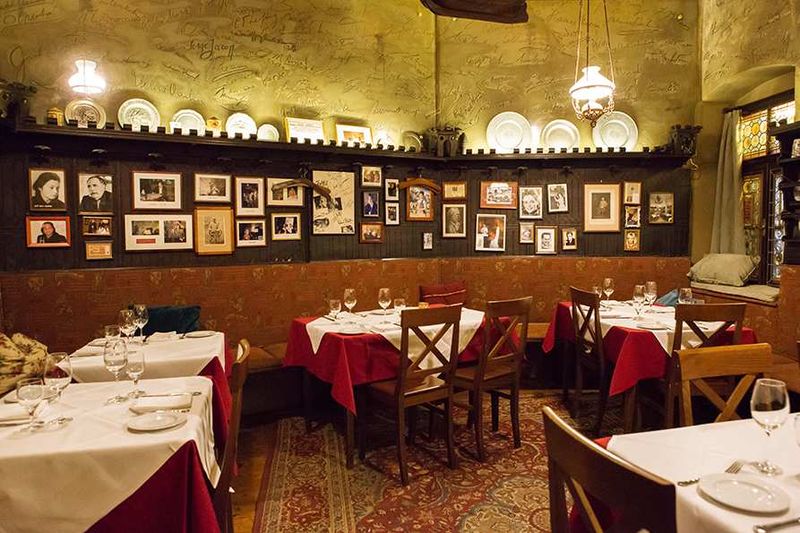
Vienna’s oldest restaurant has been operating since at least 1350, when it went by the name “Zum gelben Adler” or “At the Yellow Eagle.” The name Griechenbeisl, which translates to “Greek tavern,” came later, referencing the Greek and Levantine merchants who made it their regular gathering place during the era of the Ottoman Empire.
The building’s multi-level layout reflects centuries of modifications, giving it an authentic, layered character that no modern recreation could replicate. Exposed stone walls, heavy wooden beams, and traditional dining areas fill the space. The Mark Twain Room is a particular highlight, dedicated to the American author who was a frequent guest and left his signature on the wall. Other walls carry the signatures of Beethoven, Mozart, and Strauss.
The menu is a straightforward celebration of Viennese tradition, with Wiener Schnitzel, Tafelspitz, and Goulash as the anchors. Service reflects old-world hospitality, unhurried and attentive. Both locals and international visitors come specifically to sit inside a building that has fed people through more than six centuries of European history, making every meal feel genuinely weighted with time.
13. The Sheep Heid Inn, Edinburgh, Scotland
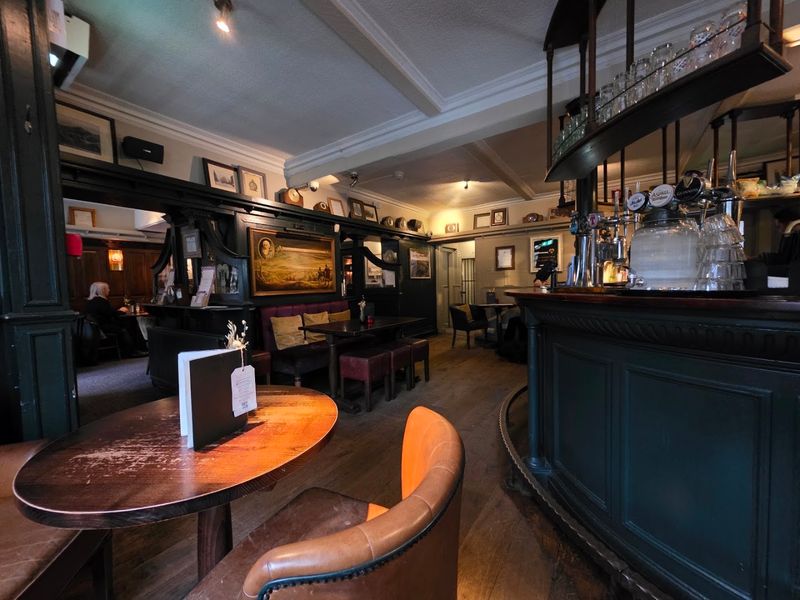
Records place The Sheep Heid Inn in the village of Duddingston as far back as 1360, making it one of Scotland’s oldest surviving pub-restaurants and a place where the phrase “historic establishment” feels like an understatement. The name traces to the sheep that once grazed nearby on Arthur’s Seat, with sheep’s head dishes once forming a core part of the early menu.
The interior holds several features that set it apart from any ordinary pub. Exposed stone walls, heavy wooden beams, and a traditional layout divide the space into a dining area and a pub section, each retaining genuine old-world character. The antique skittle alley, believed to be the oldest surviving example in Scotland, remains in use and draws visitors who want to try a game that predates most modern sports.
The menu covers classic pub fare and traditional Scottish dishes, with fish and chips, hearty burgers, and rotating local specialties. Mary Queen of Scots and Robert Louis Stevenson are both counted among its notable historical visitors. Locals and tourists continue to share the same tables, keeping a 660-year-old tradition of hospitality very much alive.
Share this story