Spain just made history by becoming the first country to reach the 2026 World Cup final, and honestly, it makes perfect sense. This is a country that does everything with passion, style, and a deep sense of identity.
From ancient palaces to volcanic peaks, from wild street festivals to quiet pilgrimage routes, Spain holds more variety than most people expect in a single country. The same energy that drives the national football team also shows up in the architecture, the art, the celebrations, and the landscapes that have made Spain one of the most visited countries on earth.
Whether you have been to Spain before or you are just starting to get curious about it, this list covers fifteen places and traditions that help explain why the whole world keeps paying attention to this remarkable country.
Sagrada Família In Barcelona Is Still Being Built After More Than A Century
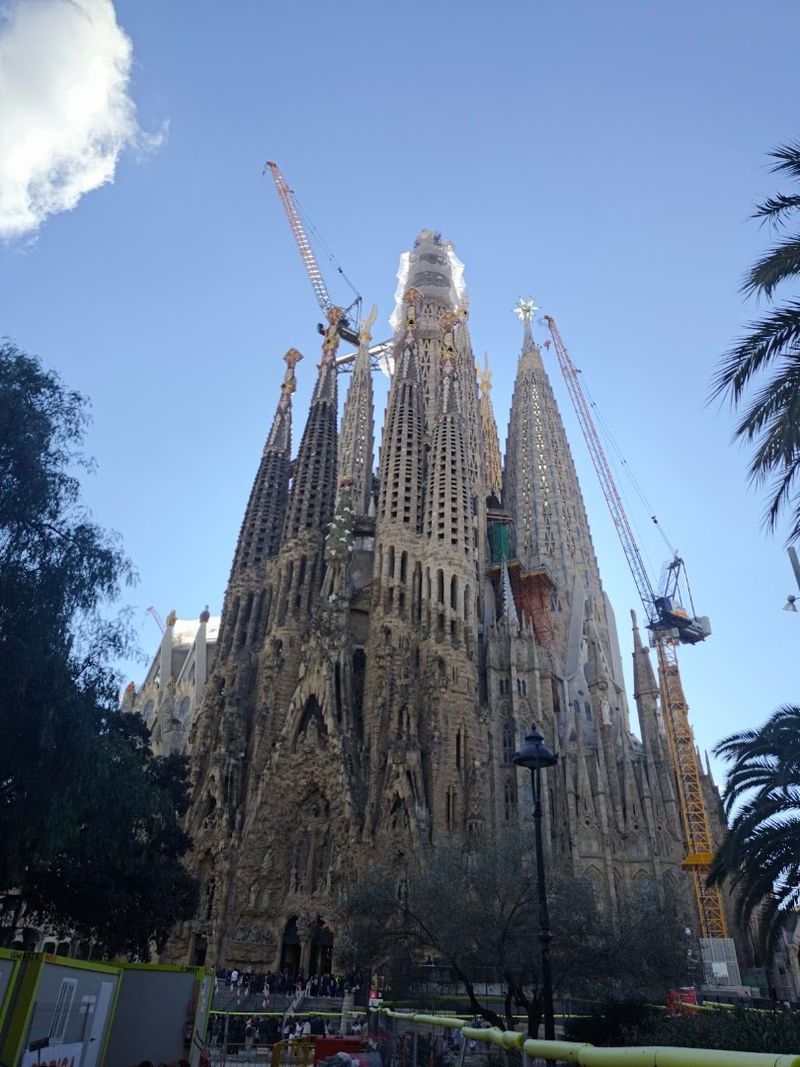
Construction started in 1882, and the Sagrada Família is still not finished. That alone makes it one of the most unusual buildings anywhere in the world.
Antoni Gaudí took over the project in 1883 and devoted the last decades of his life to it, shaping a design so complex that generations of architects have continued the work since his passing in 1926.
The basilica combines Gothic structure with Gaudí’s signature naturalistic style, meaning the towers, facades, and interior columns all look more like something grown than built. Inside, the stained glass windows shift the light into deep blues and warm golds depending on the time of day and your position in the nave.
Tickets sell out quickly, especially during peak travel months, so booking in advance through the official Sagrada Família website is genuinely important. The site also hosts worship services alongside tourist visits, which adds a layer of purpose to the experience that sets it apart from typical landmarks.
Park Güell Shows Spain’s Playful Side Through Gaudí’s Imagination
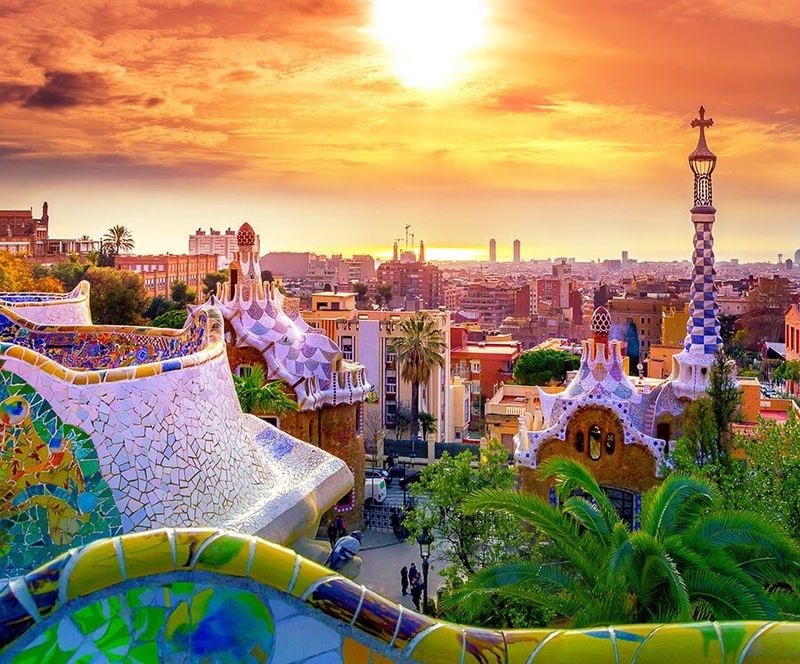
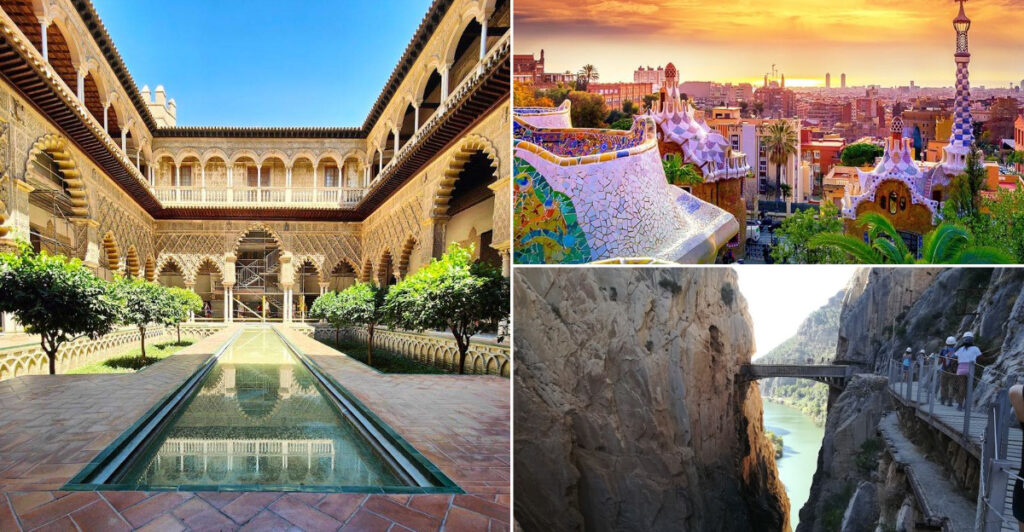
Perched on Carmel Hill in Barcelona, Park Güell started life as a planned residential development that never quite worked out. What remained instead is one of the most visually inventive public spaces in Europe, where Gaudí turned a hillside into a playground of mosaic tiles, stone archways, winding pathways, and sculptural forms that feel completely unlike anything else.
The most famous section is the main terrace with its long, curved ceramic bench, which offers sweeping views of Barcelona and the Mediterranean beyond. That bench alone has appeared in more travel photos than most entire cities can claim.
Park Güell holds UNESCO World Heritage status as part of the Works of Antoni Gaudí designation. The Monumental Zone, which includes the terrace and key structures, requires a timed entry ticket.
The surrounding park areas are free to walk through. Visiting early in the morning gives you the best light and the fewest crowds, which makes the whole experience considerably more enjoyable.
The Alhambra In Granada Is One Of Europe’s Most Beautiful Palace Complexes
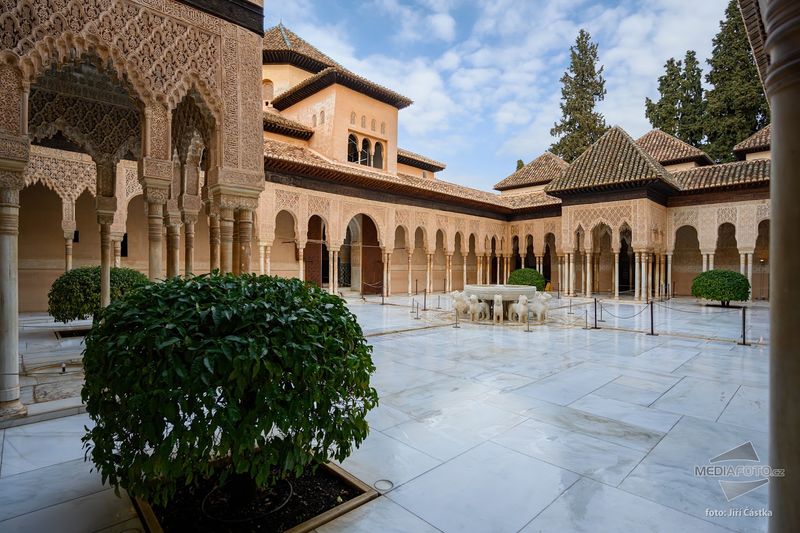
Few places in Europe carry the kind of architectural weight that the Alhambra does. Built primarily during the Nasrid dynasty between the 13th and 15th centuries, the complex sits on a forested hill above Granada and contains palaces, gardens, towers, and military fortifications that together tell the story of Moorish Spain with extraordinary detail.
The Nasrid Palaces are the centerpiece, with carved plasterwork, geometric tile patterns, wooden ceilings, and courtyards built around water features that create a sense of calm precision. The Generalife gardens nearby add terraced greenery and fountains that contrast beautifully with the stone interiors.
Tickets are strictly timed and limited, and the Alhambra regularly sells out weeks in advance. Booking directly through the Patronato de la Alhambra y Generalife is the safest approach.
The complex is a UNESCO World Heritage Site and remains one of the most visited monuments in Spain, drawing over two million visitors in a typical year.
The Prado Museum In Madrid Holds Some Of The Greatest Art In Europe
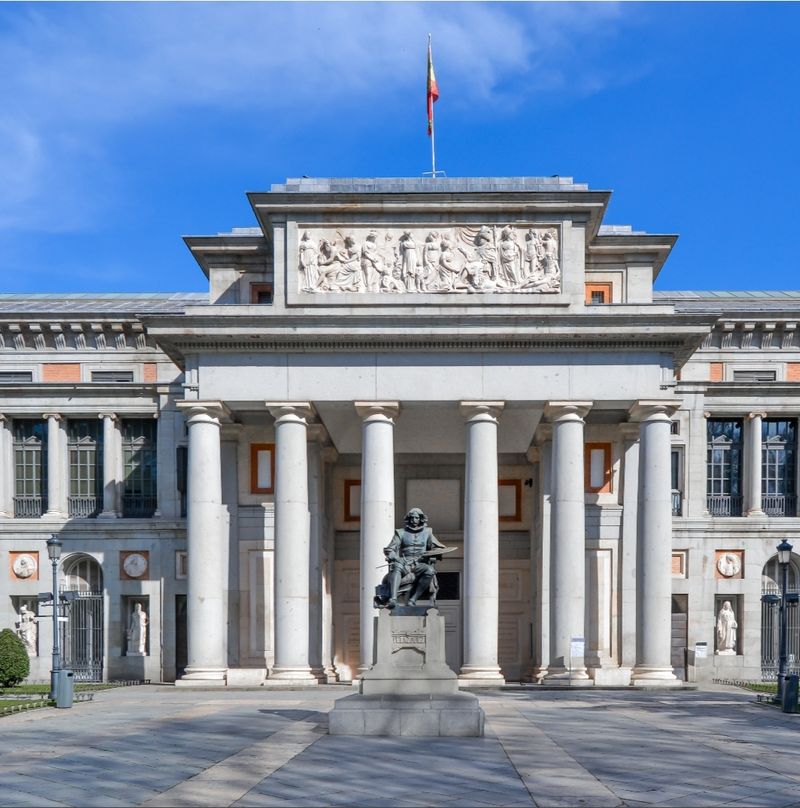
Madrid’s Museo Nacional del Prado is not just a great Spanish museum. It is one of the most important art collections anywhere on earth, and the building itself, a neoclassical structure completed in 1819, sets the tone before you even walk inside.
The permanent collection includes major works by Diego Velázquez, Francisco Goya, and El Greco, which are the three Spanish painters most associated with the museum’s identity. Velázquez’s Las Meninas is probably the single most discussed painting in the building, but Goya’s darker works, including the Black Paintings series, leave a lasting impression on most visitors.
The Prado also holds significant collections of Flemish, Italian, and other European masters, including Hieronymus Bosch and Raphael. Regular hours run Monday through Saturday, with adjusted Sunday and public holiday hours.
Admission is free during the final two hours of each day, which makes it accessible for visitors watching their budget. The museum is located in the Paseo del Arte district alongside other major Madrid galleries.
The Royal Alcázar Of Seville Is A Living Piece Of Spanish History
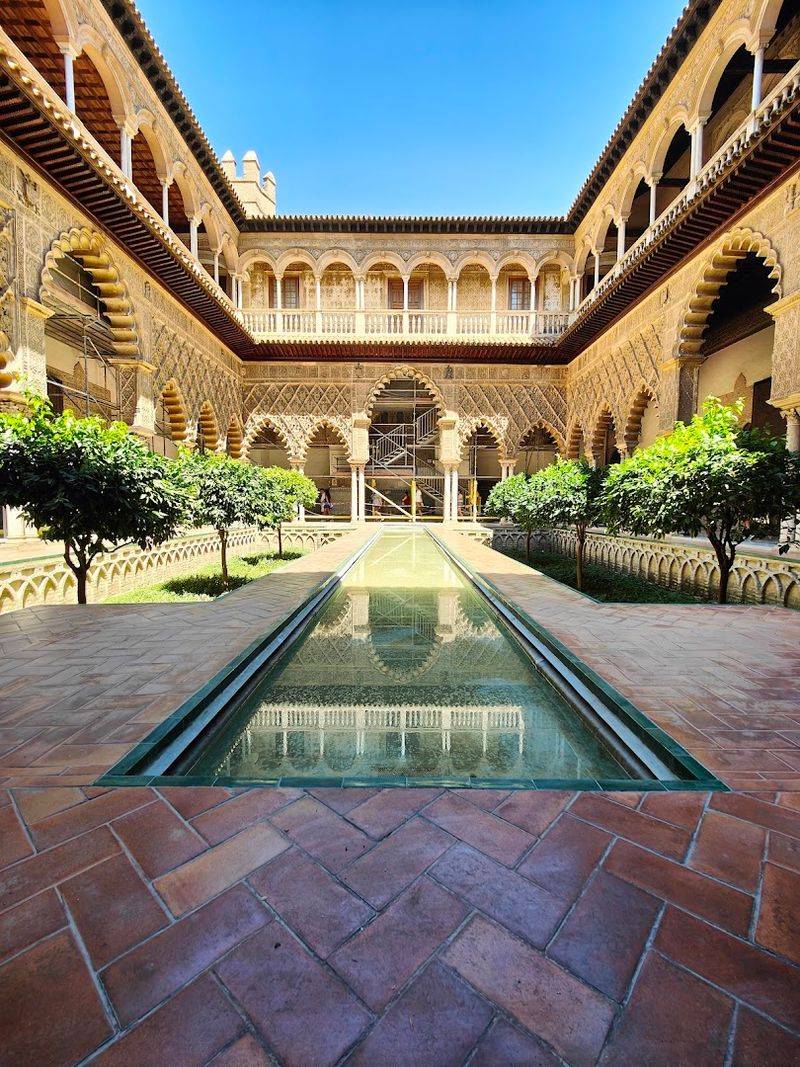
What makes the Real Alcázar de Sevilla genuinely remarkable is that it is not just a museum of history. It is still an official royal residence, used by the Spanish royal family when visiting Seville.
That means you are walking through a building that has been continuously occupied and used for over a thousand years.
The palace blends Islamic, Gothic, Renaissance, and Mudéjar architectural styles across different sections built and expanded by various rulers over centuries. The Mudéjar rooms, commissioned by King Pedro I in the 14th century, are among the most elaborately decorated spaces in Spain, with tilework, carved plasterwork, and wooden ceilings that rival the Alhambra in their detail.
The gardens cover a large area behind the palace and include fountains, hedgerows, orange trees, and pavilions that reward slow exploration. The Alcázar is part of Seville’s UNESCO-listed historic centre.
Tickets are available through the official website, and booking ahead is recommended during busy travel periods, particularly spring and autumn.
The Mosque-Cathedral Of Córdoba Tells Spain’s Layered Religious Story
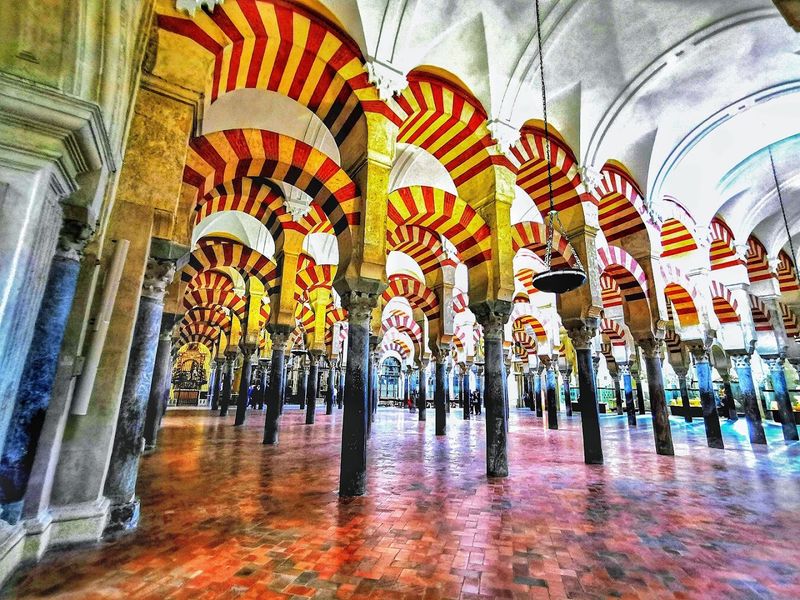
The Mezquita-Catedral de Córdoba might be the single building in Spain that most visibly captures the country’s layered history. What stands today is the result of centuries of construction, conversion, and addition, starting as a Visigothic church, transformed into a grand Islamic mosque beginning in the 8th century, and then partially converted into a Catholic cathedral after the Christian Reconquista in 1236.
The most iconic feature is the Great Mosque’s interior forest of columns and double arches in alternating red brick and white stone. That image is immediately recognizable and unlike any other interior in Europe.
The later Renaissance cathedral nave was inserted directly into the center of the mosque, creating a collision of two architectural worlds in one building.
The Mezquita is a UNESCO World Heritage Site and one of Córdoba’s most visited landmarks. The official monument website lists current hours and ticket options for tourist visits.
Córdoba itself, a city in Andalusia, is worth spending several days in, especially during spring when the famous Patio Festival takes place.
The Guggenheim Museum Bilbao Helped Transform An Entire City
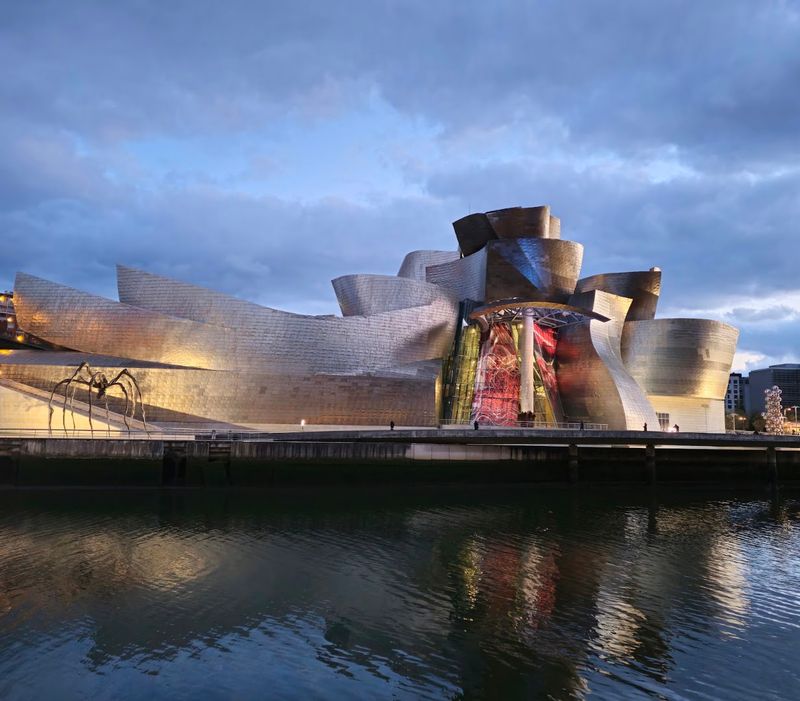
When the Guggenheim Museum Bilbao opened in 1997, it did something that architecture rarely manages to do on its own. It changed the economic and cultural direction of an entire city.
Bilbao had been struggling through industrial decline, and the arrival of Frank Gehry’s titanium-clad building along the Nervión River became a catalyst for urban renewal that urban planners now study and reference worldwide.
The building itself is the first thing most visitors photograph, and that is completely understandable. Gehry’s design uses curved and angular titanium panels that shift color depending on the light and weather, making the structure look different at every hour of the day.
Outside the main entrance, Louise Bourgeois’s giant spider sculpture Maman has become one of the most recognizable pieces of public art in Spain.
Inside, the museum holds rotating exhibitions of contemporary and modern art alongside its permanent collection. The official site lists current hours, admission fees, and exhibition schedules.
The surrounding Abandoibarra district is worth exploring on foot after your visit.
Valencia’s City Of Arts And Sciences Looks Like A Futuristic Film Set
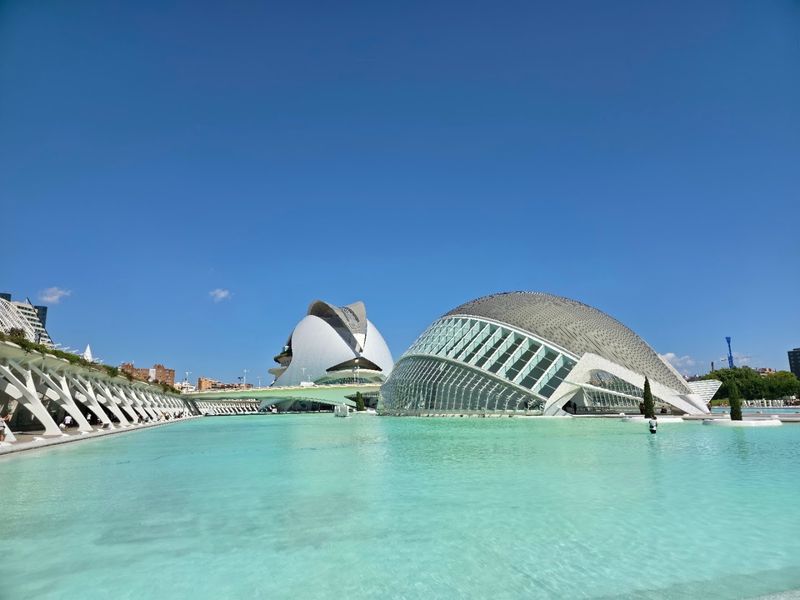
Designed primarily by Valencia-born architect Santiago Calatrava, the Ciudad de las Artes y las Ciencias stretches along the old Turia riverbed and covers an area of roughly nine hectares. The complex includes the Hemisfèric, which functions as an IMAX cinema and planetarium, the Príncipe Felipe Science Museum, the Palau de les Arts opera house, and the nearby Oceanogràfic aquarium.
The architecture is the immediate draw. Calatrava’s signature use of white concrete, steel, and long reflecting pools gives the complex a look that feels genuinely unlike anything else in Spain.
It photographs well at any time of day, but the early morning light and the evening reflections are especially striking.
The Oceanogràfic is Europe’s largest aquarium and operates separately with its own ticketing. The Science Museum is interactive and works well for families with children.
The official City of Arts and Sciences site is active with current events and visitor information. Valencia itself is increasingly recognized as one of Spain’s most livable and culturally rich cities.
Mount Teide In Tenerife Is Spain’s Highest Peak
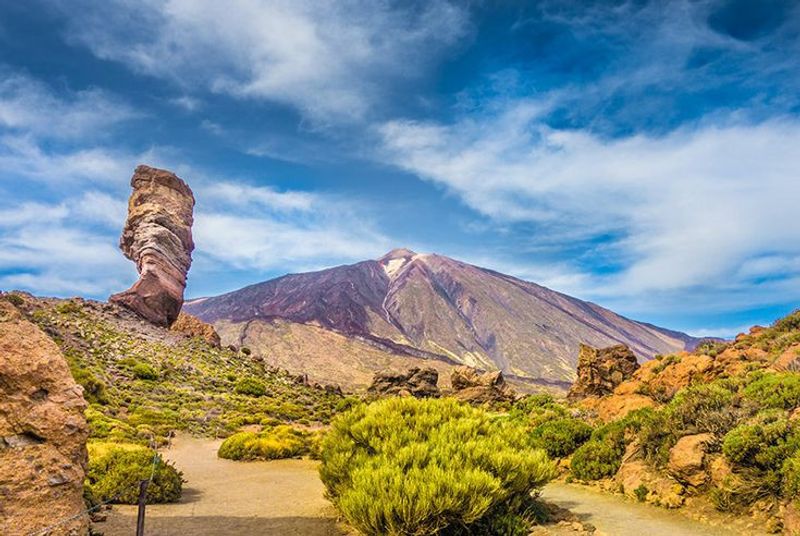
Spain’s highest point is not in the Pyrenees or the Sierra Nevada. It is on an island in the Atlantic Ocean.
Mount Teide in Tenerife rises to 3,718 meters above sea level, making it the tallest peak in Spain and the third tallest volcanic structure on earth measured from its oceanic base.
The surrounding Teide National Park, a UNESCO World Heritage Site, covers a landscape of hardened lava flows, volcanic rock formations, and high-altitude terrain that shifts dramatically with altitude and season. Snow appears on the upper slopes during winter months, creating an image that surprises many visitors who associate Tenerife primarily with beach resorts along the coast.
A cable car operates from a mid-mountain station to a point near the summit, and the official cable car operator lists current timetables, ticket prices, and availability online. Access to the very summit crater requires a separate permit, which must be reserved in advance.
The park itself is free to enter, and several hiking trails offer different routes through the volcanic landscape.
Caminito Del Rey Is One Of Spain’s Most Dramatic Walkways
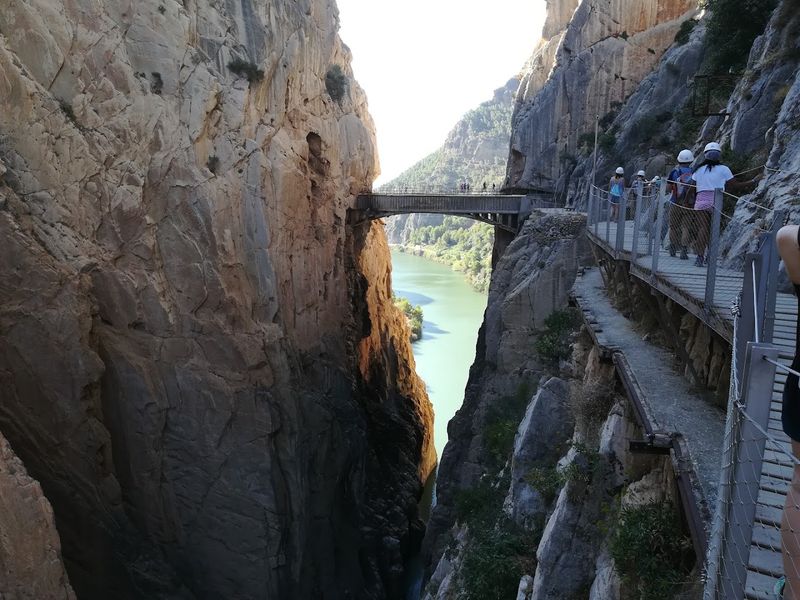
Built originally between 1901 and 1905 to allow workers access to hydroelectric infrastructure in the Desfiladero de los Gaitanes gorge, the Caminito del Rey fell into disrepair over the following decades and became known for being genuinely risky to walk. A major restoration completed in 2015 turned it into a regulated visitor route with safe boardwalks, safety rails, and controlled entry points.
The route runs approximately seven kilometers through the gorge, with sections of wooden walkway pinned directly to the cliff face above the Guadalhorce River. The height and the narrowness of the canyon walls make it one of the more visually intense walking routes in Europe, even though the path itself is now safe for most reasonably fit visitors.
The official reservation platform handles tickets and timed entry. Visits run in one direction through the gorge, ending at an exit point where shuttle transport returns visitors to the starting area.
Tickets for 2026 are available through the official website. The route is located near the town of Ardales in the Málaga province of Andalusia.
Santiago De Compostela Is The End Point Of A Legendary Pilgrimage
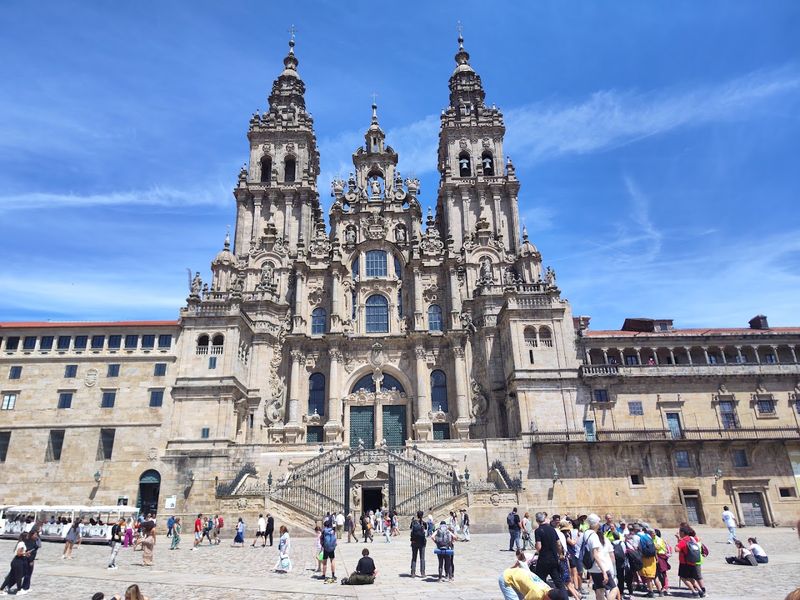
Every year, hundreds of thousands of people walk one of the Camino de Santiago routes toward a single destination. The cathedral in Santiago de Compostela, in the Galicia region of northwestern Spain, is where those routes converge, and arriving in the main plaza after days or weeks of walking is an experience that pilgrims describe as genuinely life-changing.
The Cathedral of Santiago de Compostela is a Romanesque structure with a later Baroque facade, completed in stages between the 11th and 18th centuries. It is built over the tomb of Saint James the Apostle, which has drawn Christian pilgrims since the Middle Ages.
The Pilgrim’s Mass, held daily, is specifically designed for those who have completed the Camino.
You do not need to walk the Camino to visit the cathedral. The official site lists visiting hours, museum access, guided tours, and ticket information for general visitors.
The old city center of Santiago de Compostela is itself a UNESCO World Heritage Site, with stone streets, covered arcades, and a compact historic core worth exploring slowly.
San Fermín In Pamplona Is More Than The Running Of The Bulls
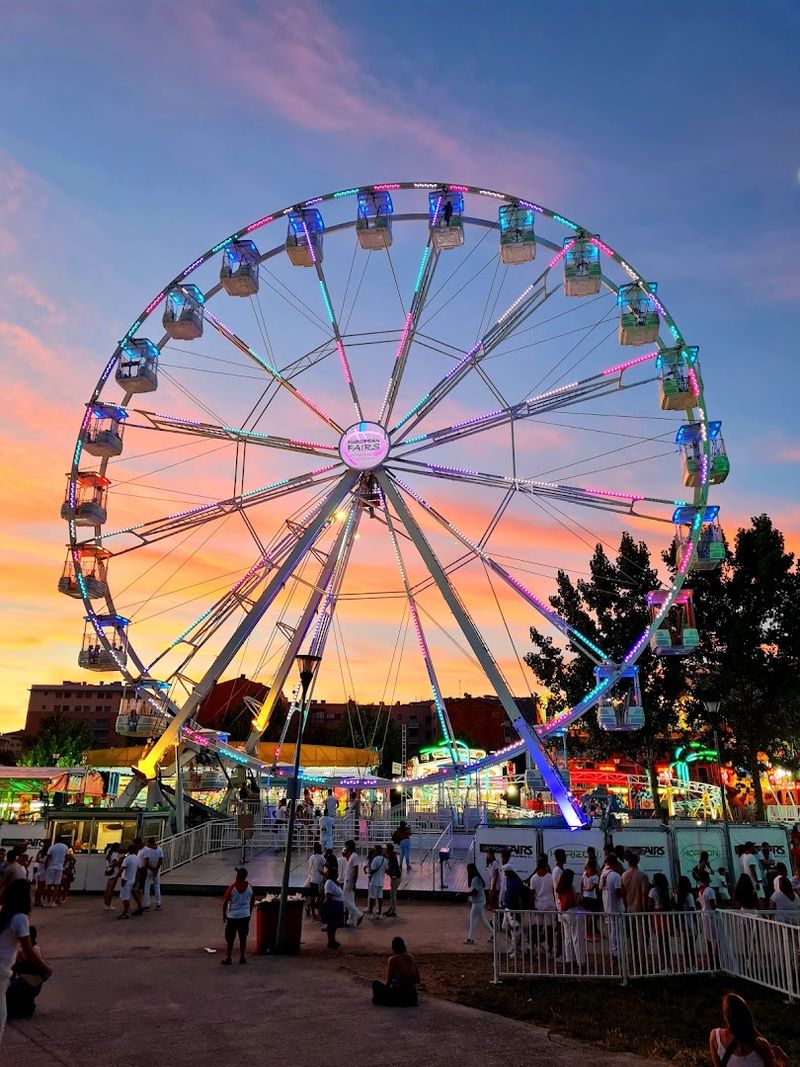
The international reputation of San Fermín rests almost entirely on the encierro, the morning bull run through Pamplona’s old city streets. But the festival runs for nine days, from July 6 to July 14, and the bull run is one event among dozens that fill the city during that stretch.
The full program includes religious processions honoring Saint Fermín, the patron saint of Navarre, alongside brass band parades, traditional Navarrese folk performances, fireworks, and continuous street celebrations that run through the night. The opening chupinazo ceremony on July 6, when a rocket is fired from the town hall balcony to mark the official start, draws enormous crowds into the Plaza del Castillo.
Spain’s official tourism site confirmed the 2026 festival dates as July 6 through July 14, and recent reporting confirms the 2026 festival took place as scheduled. Pamplona transforms completely during San Fermín, and visitors who arrive expecting only the bull run often find the broader festival atmosphere equally memorable and far more layered than they anticipated.
La Tomatina Turns A Small Valencian Town Into A Tomato-Filled Festival
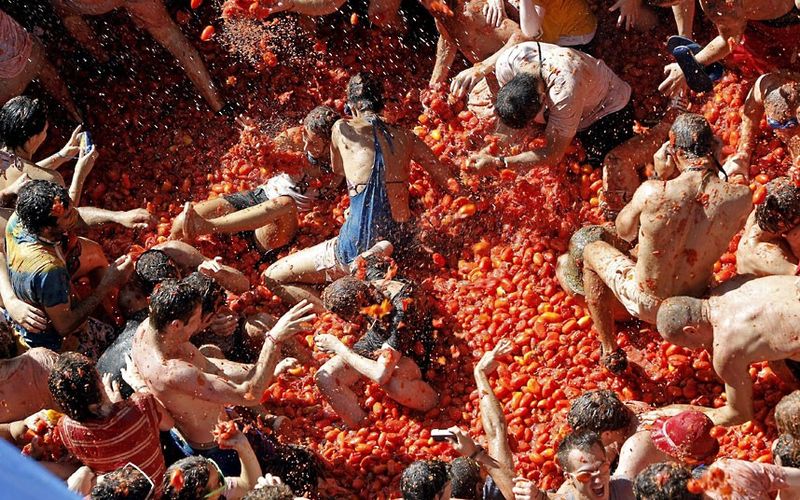
Buñol is a small town in the Valencia region with a population of around 9,000 people. For most of the year it is quiet and largely unknown outside of Spain.
On the last Wednesday of August, it becomes one of the strangest and most enthusiastically attended events in Europe.
La Tomatina is exactly what it sounds like. Participants throw tomatoes at each other in the town’s streets for approximately one hour.
Around 20,000 people typically attend, and the event uses roughly 150,000 kilograms of overripe tomatoes. The streets run red, and participants are uniformly soaked by the time the ending signal sounds.
The origin story traces back to 1945, though accounts differ on the exact trigger. What is consistent is that the event grew organically from a local incident into a globally recognized festival.
Spain’s official tourism site lists the 2026 La Tomatina date as August 26, and the official La Tomatina site is currently selling tickets. Participation tickets are required and should be purchased well in advance.
Flamenco Is Recognized As Intangible Cultural Heritage
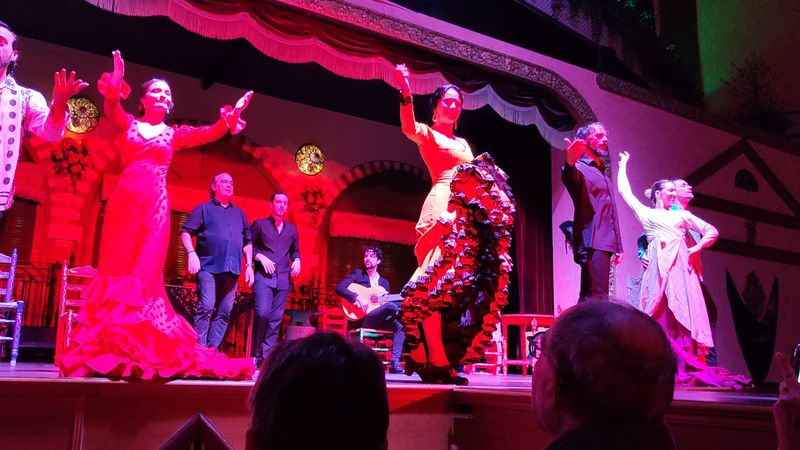
Flamenco is not a single thing. It is a family of related art forms, including cante, the singing, toque, the guitar playing, baile, the dance, and palmas, the rhythmic handclapping, that developed in Andalusia over centuries and drew from multiple cultural traditions including Romani, Moorish, Jewish, and Spanish influences.
UNESCO added flamenco to its Intangible Cultural Heritage list in 2010, recognizing it as an artistic expression deeply rooted in the communities of Andalusia, particularly in cities like Seville, Jerez de la Frontera, and Cádiz. The recognition was not just symbolic.
It came with an acknowledgment of the need to protect and transmit the tradition to future generations.
Seeing flamenco in a small tablao venue rather than a large theater tends to produce a more direct experience. Seville has several well-regarded tablaos that offer regular performances.
The art form continues to evolve, with contemporary flamenco artists blending traditional structures with jazz, electronic music, and other genres while still maintaining the core emotional intensity that defines the form.
Spain’s World Heritage List Shows How Much Variety The Country Has
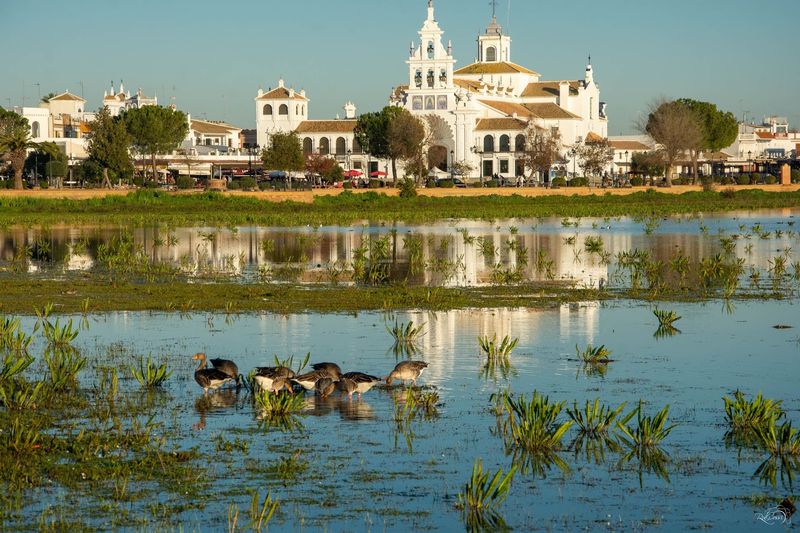
With 50 UNESCO World Heritage properties, Spain holds one of the largest and most varied heritage collections in Europe. The list includes natural landscapes, historic city centers, religious monuments, prehistoric cave art, industrial heritage, and cultural routes.
No single trip can cover it all, which is part of what makes Spain such a compelling destination for repeat visitors.
The range is genuinely striking. You can visit the prehistoric cave paintings at Altamira, the Roman aqueduct in Segovia, the medieval walled city of Ávila, the Modernista architecture of Barcelona, the wetlands of Doñana National Park, and the Silk Exchange in Valencia, and each one belongs to a completely different chapter of human history.
Spain’s World Cup run in 2026 has put the country at the center of global attention again, but the places on this list have been drawing visitors long before football entered the picture. The architecture, the festivals, the landscapes, and the living cultural traditions all point to a country that has spent centuries building something worth paying attention to.
Share this story