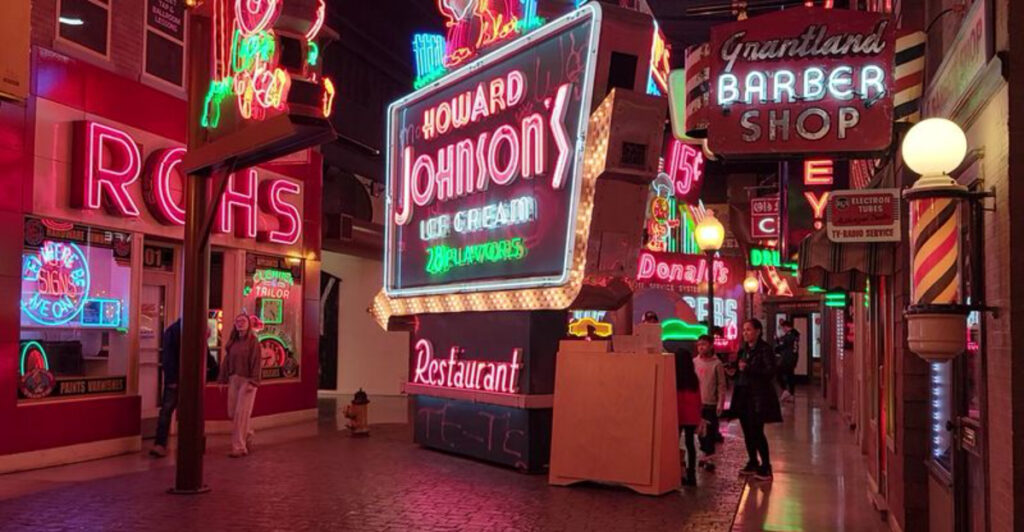
There is a place in Cincinnati, Ohio, where glowing neon tubes hum softly overhead, vintage roadside signs stretch across warehouse walls, and a century of American commercial history stares back at you from every direction. Most people drive past signs every single day without giving them a second thought.
But once you see hundreds of them gathered together, restored and lit up in a single enormous space, something shifts. Suddenly, signs stop being background noise and start telling real stories about who we were, what we sold, and how we lived.
A Museum Born from One Man’s Obsession
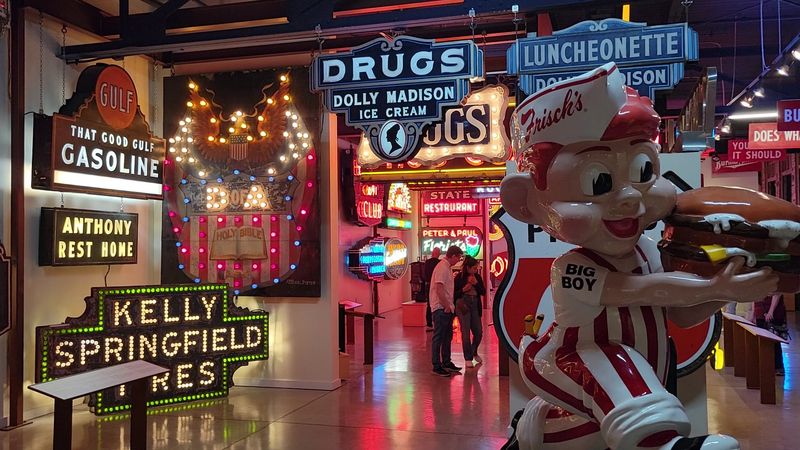
Tod Swormstedt spent years as editor of Signs of the Times, a trade publication covering the sign industry. Along the way, he started collecting historic signs that would otherwise have been thrown away or forgotten.
That personal obsession eventually became the American Sign Museum, which opened at 1330 Monmouth Ave, Cincinnati, OH 45225, in 2005.
The museum is recognized as the largest public museum dedicated to American signage in the United States. It sits inside a sprawling former factory building in a Cincinnati warehouse district, which feels surprisingly fitting once you see the sheer size of the collection it holds.
What started as one person’s mission to preserve a vanishing craft has grown into a full-scale cultural institution. The building itself is part of the experience, giving the collection the breathing room it deserves.
Walking Down a Recreated Main Street
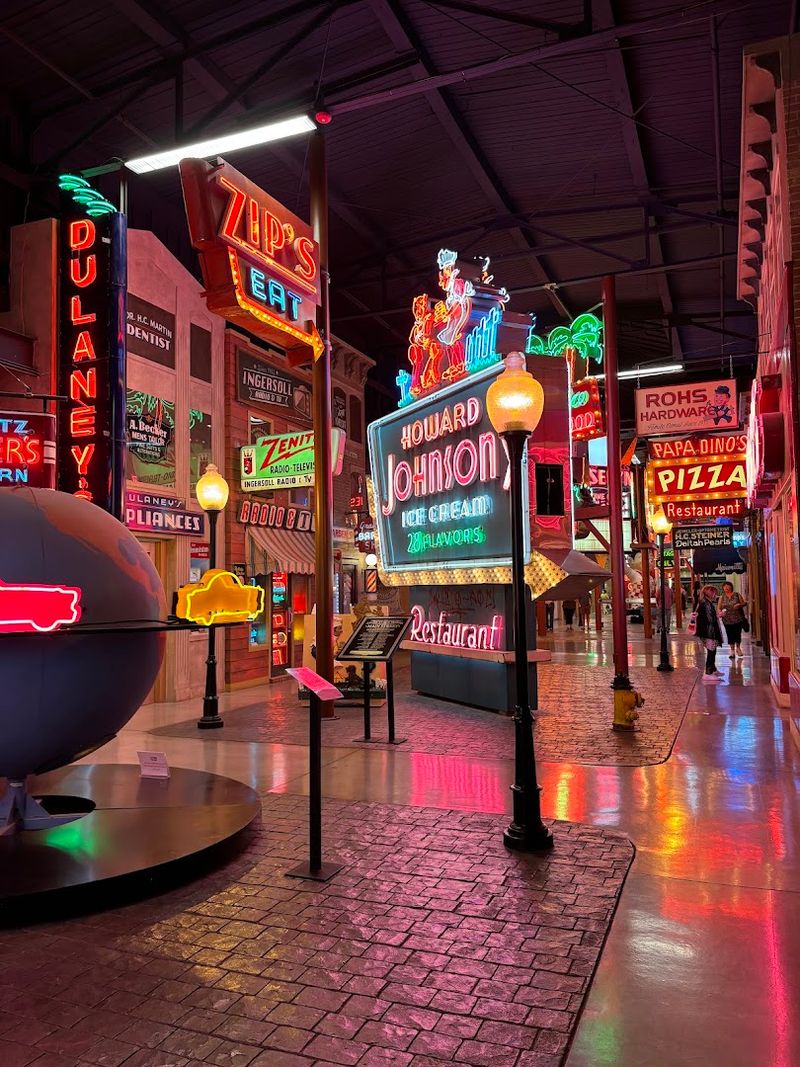
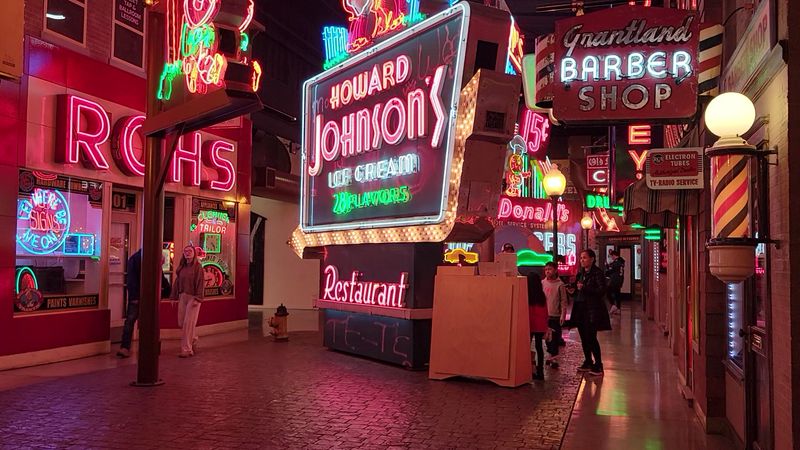
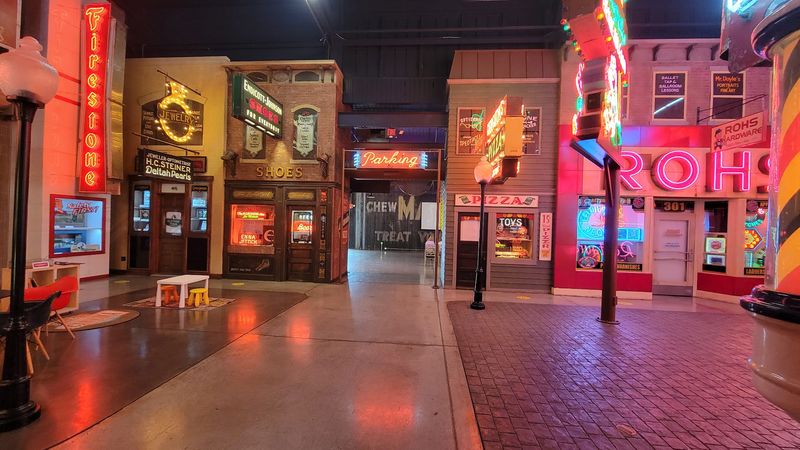
One of the most talked-about features inside the museum is a recreated Main Street that feels genuinely transporting. Vintage storefronts line a wide indoor corridor, each one glowing with hand-painted signs, neon lettering, and the kind of colorful commercial art that defined mid-century America.
Walking through it feels less like a museum visit and more like stepping onto a carefully preserved film set from the 1950s. The lighting comes almost entirely from the signs themselves, which adds a warm, buzzing glow that photography lovers find almost impossible to resist.
Every shopfront tells a slightly different story about how businesses once competed for attention before digital screens took over. The Main Street layout is clever because it gives context to signs that might otherwise feel random in isolation.
Here, they belong somewhere, and that sense of place makes all the difference.
A Century of American Signage on Display
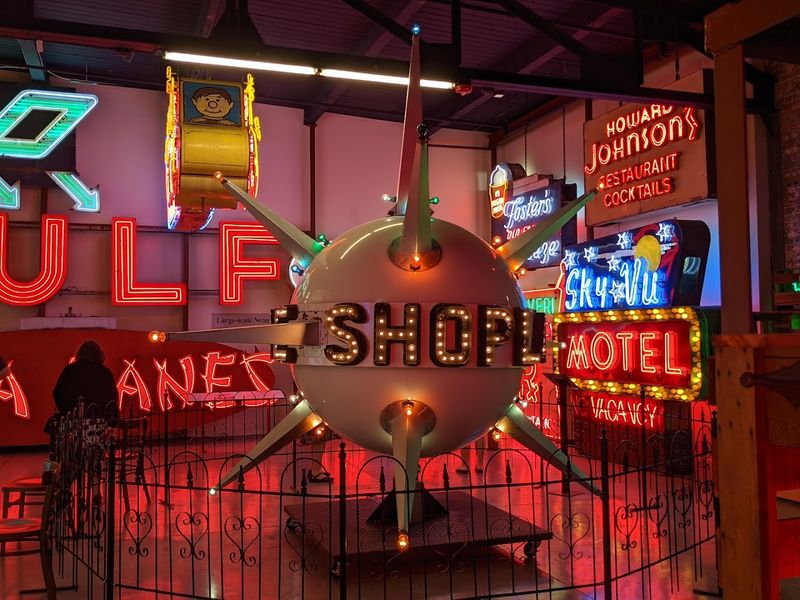
The collection at this museum traces the full arc of American sign-making, from hand-lettered wooden boards and gold-leaf painted glass to the bold plastic and neon designs that defined the postwar commercial boom. Seeing that progression laid out across a single building makes the evolution feel tangible rather than textbook.
Some of the most recognizable pieces in the collection include early McDonald’s signage and a massive Satellite Shopland sign that commands attention the moment it comes into view. These are not reproductions.
They are the real things, restored and preserved with care.
The museum also covers the technical side of signage, explaining how different materials and manufacturing methods changed what was visually possible at each point in history. For anyone who has ever been curious about why old signs look so different from modern ones, this collection provides genuinely satisfying answers.
The Working Neon Shop That Steals the Show
Tucked toward the back of the museum is something most visitors do not expect: a fully operational neon sign workshop. Craftspeople bend glass tubes by hand using open flame, shaping them into letters and designs with a level of precision that looks almost casual until you realize how many years of practice it actually requires.
Watching someone work a glowing tube of heated glass into a perfect curve is one of those experiences that quietly rewires how you see the world. Every buzzing “OPEN” sign you have ever passed suddenly carries more weight once you understand the skill behind it.
The workshop also handles restoration work on signs brought in for the museum’s collection, meaning the craft being demonstrated is not just a performance. It is the real, ongoing work of keeping neon alive.
That authenticity makes standing there and watching feel genuinely worthwhile.
How the Self-Guided Audio Tour Adds Depth
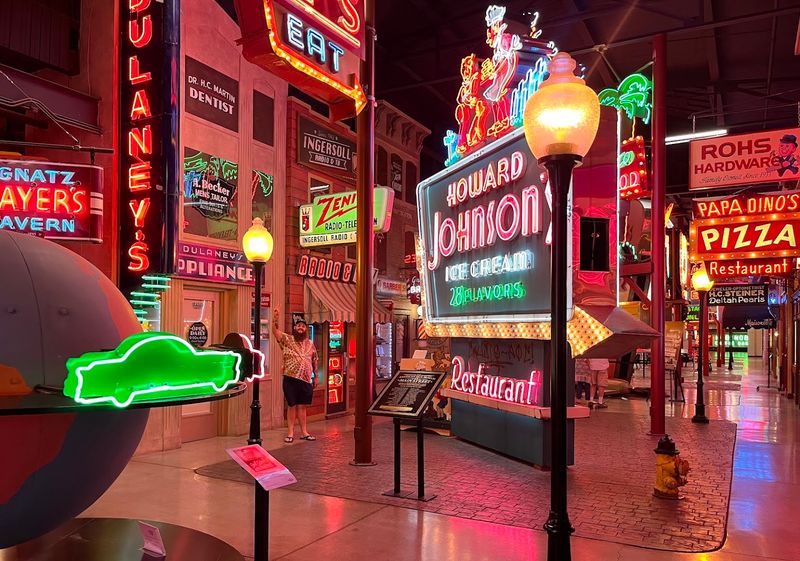
The museum offers a self-guided audio tour through its website and app, and bringing a pair of headphones along is one of the smarter decisions a visitor can make. The narration adds historical context to signs that might otherwise seem like interesting objects without much backstory.
Each stop on the tour explains not just what a sign is, but where it came from, who made it, and what it meant in the commercial landscape of its era. That layer of storytelling transforms a visual walk-through into something much more engaging and memorable.
For visitors who want even more detail, additional videos are accessible at certain points along the route. The tour is designed to move at a comfortable pace, giving you enough information to feel informed without overwhelming the experience.
Most people find it adds a solid layer of meaning without slowing them down at all.
The Unexpected Photography Paradise
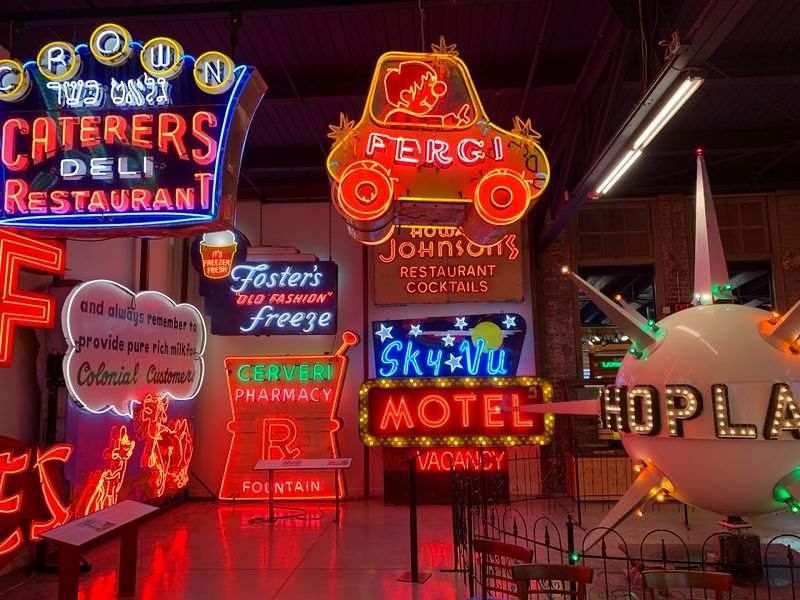
Few museums in the Midwest offer the kind of photographic variety that this one delivers naturally. The combination of warm neon glow, bold vintage colors, and dramatic scale creates lighting conditions that most photographers would pay separately to access.
Every corner of the space offers a different visual angle.
The signs themselves range from enormous rooftop-scale pieces to small, intricate hand-painted panels, which means there is always something interesting in the frame whether you are shooting wide or close. The lighting is almost entirely generated by the signs themselves, which gives photos a warm, atmospheric quality that feels genuinely cinematic.
Visitors regularly spend more time than expected simply because there is always another angle worth capturing. The museum does not restrict photography, which makes the whole experience feel generous and relaxed.
Whether you are shooting on a phone or a full camera kit, this place consistently delivers.
Nostalgia That Connects Across Generations
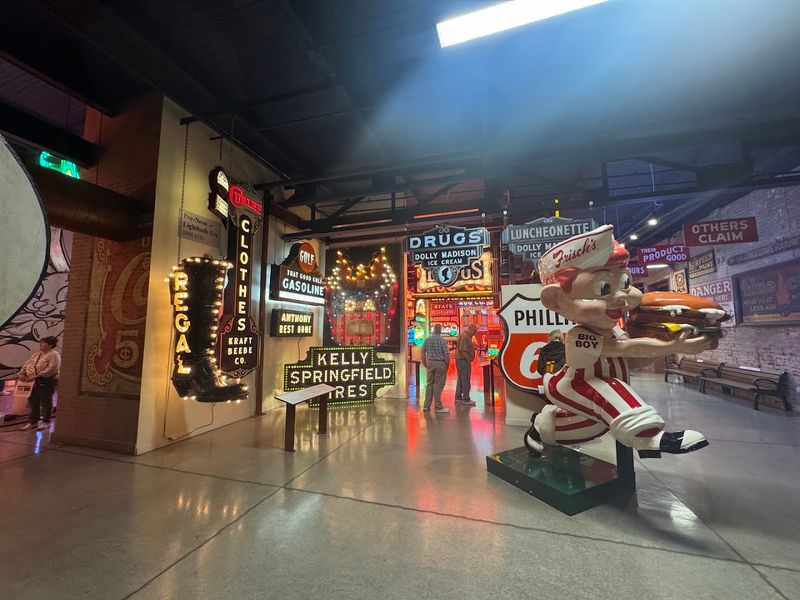
One of the most interesting things about this museum is how differently people respond depending on their age. Older visitors often stop cold in front of signs they recognize from childhood, brands and businesses that shaped their early memories in ways they had completely forgotten until that moment.
Younger visitors tend to respond differently, drawn more to the visual boldness and the craftsmanship than to personal memory. For them, the signs represent a design era they have only ever seen in photographs, and seeing them full-scale and lit up carries its own kind of surprise.
Both reactions are valid, and both happen regularly in the same space. That cross-generational pull is part of what makes the museum feel like more than a niche interest.
Signs are part of everyone’s daily landscape, which means almost every visitor finds something here that connects personally.
The Building Itself Is Part of the Story
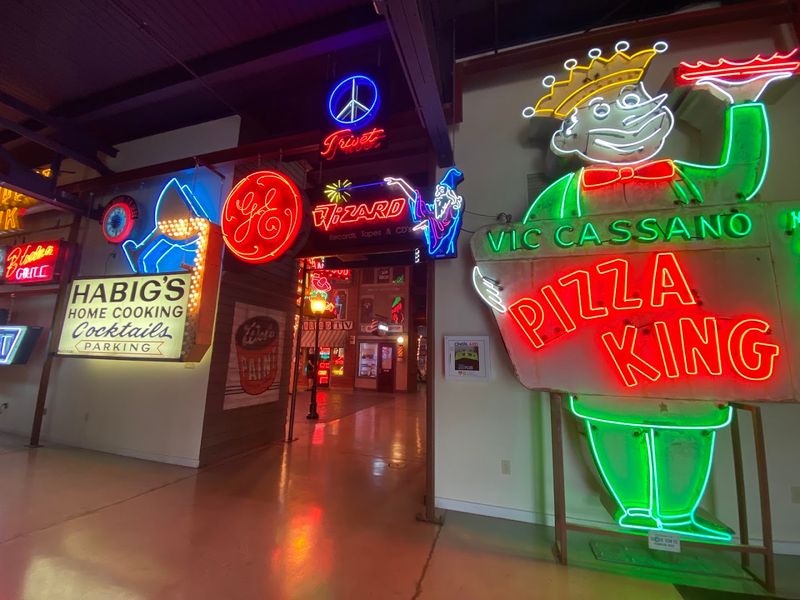
The museum occupies a former factory building in Cincinnati’s warehouse district, and the industrial architecture works in its favor in a way that a traditional museum building never could. The high ceilings and open floor plan give large roadside signs the vertical space they need to actually feel impressive rather than cramped.
First-time visitors sometimes hesitate in the parking lot, unsure they have found the right address. The neighborhood does not immediately suggest a world-class museum.
But that moment of doubt evaporates the second you walk through the door and see what is inside.
The raw industrial bones of the building also serve as a quiet reminder that sign-making was always an industrial craft, not a fine art pursuit. Seeing the collection in this kind of space reinforces that connection to manufacturing and labor in a way that feels honest and grounded rather than curated for effect.
Practical Tips for Planning Your Visit
The museum is open Wednesday through Sunday from 10 AM to 4 PM and is closed on Mondays and Tuesdays. Free parking is available in a lot directly adjacent to the building, which makes arriving straightforward even though the surrounding neighborhood is industrial and not immediately obvious to navigate.
Most visitors spend between one and two hours inside, depending on how much time they spend with the audio tour and how many photographs they stop to take. The museum also has a small gift shop near the entrance where you can pick up sign-related souvenirs and memorabilia worth browsing before you leave.
A scavenger hunt option is available for those who want a more interactive experience, which can be especially useful if you are visiting with children or a group that enjoys a bit of structured exploration alongside the general walk-through.
Why This Museum Deserves a Spot on Your Ohio Itinerary
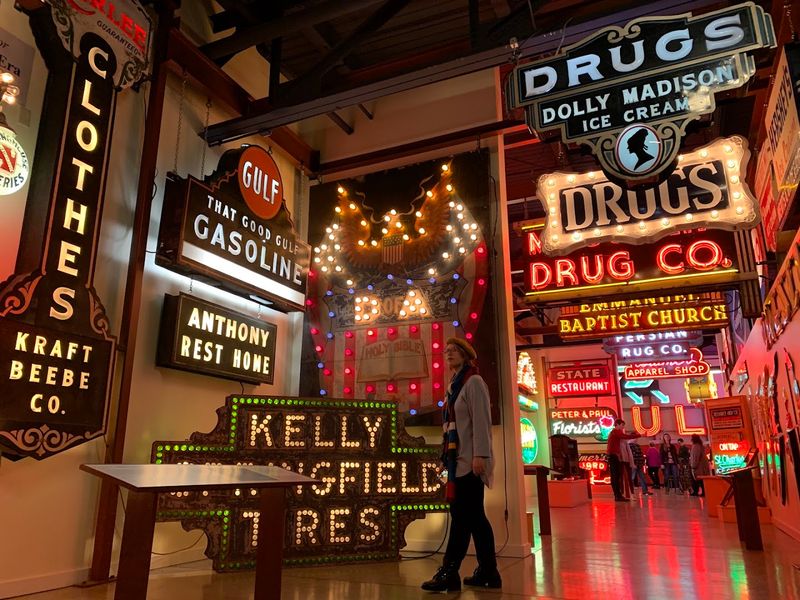
There are plenty of museums in Ohio worth visiting, but very few offer the combination of visual spectacle, genuine historical depth, and hands-on craft demonstration that this one delivers in a single building. It is the kind of place that surprises people who come in with low expectations and thoroughly satisfies those who have been planning the trip for months.
The signs on display are not just artifacts. They are evidence of how American businesses competed for attention, how design trends shifted decade by decade, and how an entire skilled trade evolved and nearly disappeared.
That context gives the collection meaning beyond its obvious visual appeal.
Cincinnati has plenty of reasons to draw visitors, and the American Sign Museum fits naturally alongside the city’s other cultural attractions. Once you have seen it, it becomes the kind of place you find yourself recommending to almost everyone you know.
Share this story