Portland International Airport, known to locals and frequent flyers as PDX, just wrapped up one of the most ambitious airport renovation projects in recent U.S. history. Eleven years in the making, this transformation turned an already-beloved terminal into something that genuinely stops travelers in their tracks.
From sweeping wooden ceilings to live music, local shops, and lush greenery, the results speak for themselves. Here is a closer look at what makes the newly renovated PDX so special and why it deserves all the attention it is getting right now.
The Address and Location That Put PDX on the Map
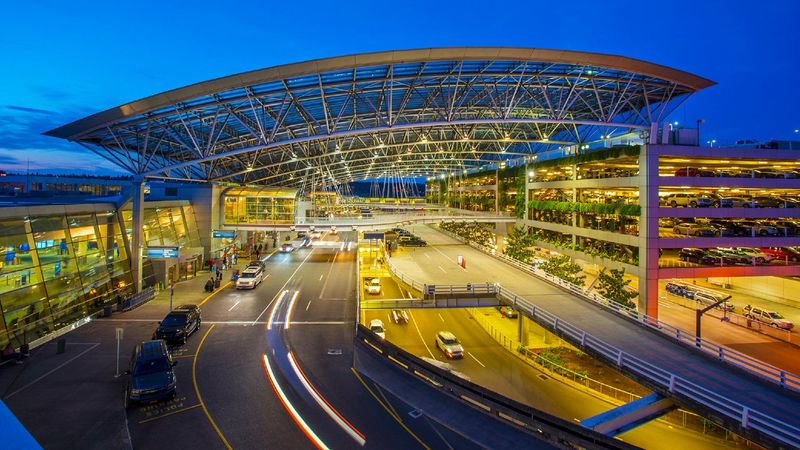
Before you even step inside, the setting itself tells you something important. Portland International Airport sits at 7000 NE Airport Way, Portland, OR 97218, just northeast of the city and conveniently connected to downtown via the MAX light rail, which drops you right at the terminal without a single transfer.
That rail connection alone sets PDX apart from most major U.S. airports, where getting from the city to the gate often feels like a small expedition. Here, the ride is smooth, affordable, and surprisingly scenic as you roll through Portland neighborhoods before arriving at the terminal entrance.
The airport serves the entire Pacific Northwest region and handles millions of passengers each year, acting as both a hub for regional travel and an international gateway. Its location in Oregon means travelers are greeted by lush greenery visible from nearly every window.
The surrounding landscape gives PDX a natural backdrop that few airports can match, and that relationship between the built environment and the outdoors carries right through the front doors and deep into the terminal design itself.
Eleven Years of Planning and the Vision Behind the Renovation
Great things rarely happen overnight, and the PDX transformation is proof of that. The renovation project stretched across roughly eleven years, combining careful planning, community input, and a clear design philosophy that honored both Oregon’s natural identity and the needs of modern travelers.
The Port of Portland worked alongside architects, local artists, Native American tribes, and community organizations to shape a space that felt authentically Pacific Northwest rather than generic and corporate. That collaborative approach is visible in every corner of the finished terminal.
The total investment ran into the billions, which understandably raised eyebrows along the way. But the results show that the money went somewhere meaningful, from structural upgrades and new security technology to the iconic mass timber roof that now defines the main hall.
What makes this renovation stand out is that it was never just about making the airport look prettier. The team behind it wanted to create a space that reduced traveler stress, celebrated regional culture, and set a new standard for what an airport could actually feel like to pass through.
The Mass Timber Roof That Stops Travelers Cold
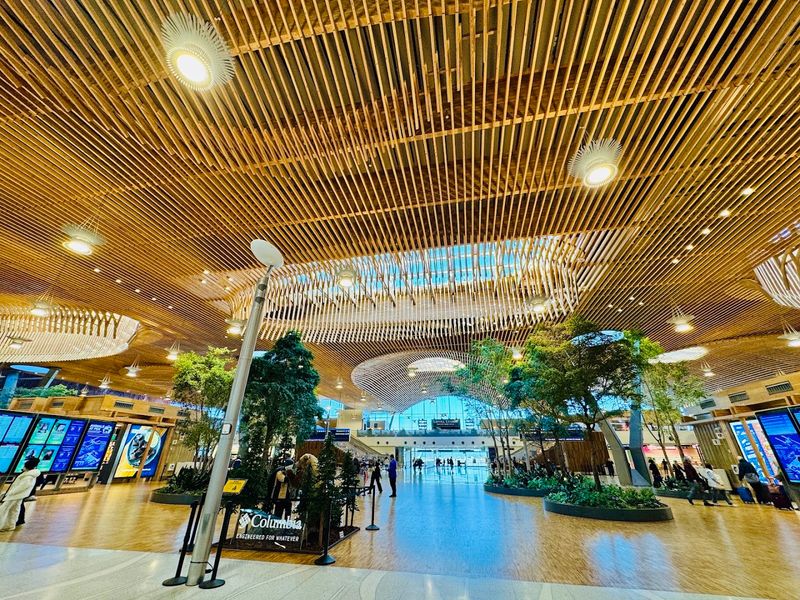
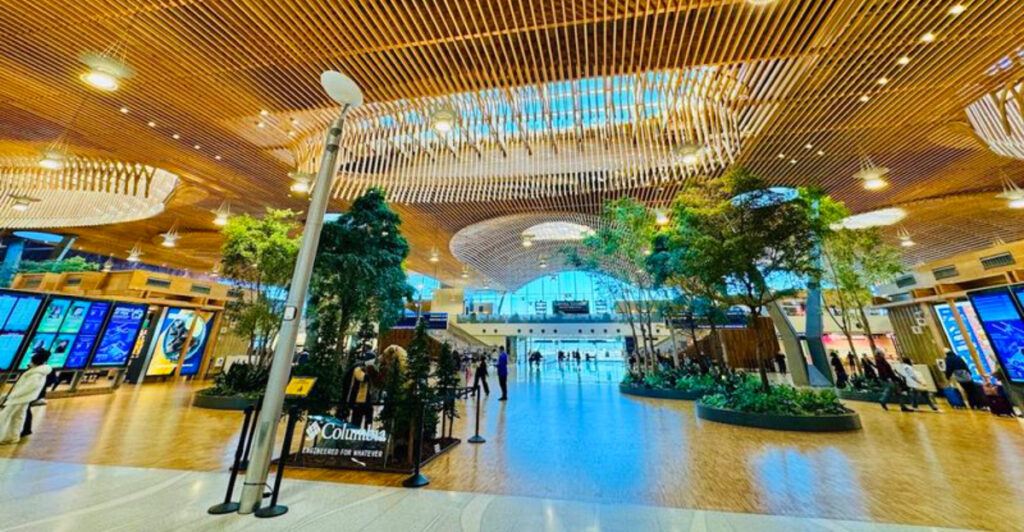
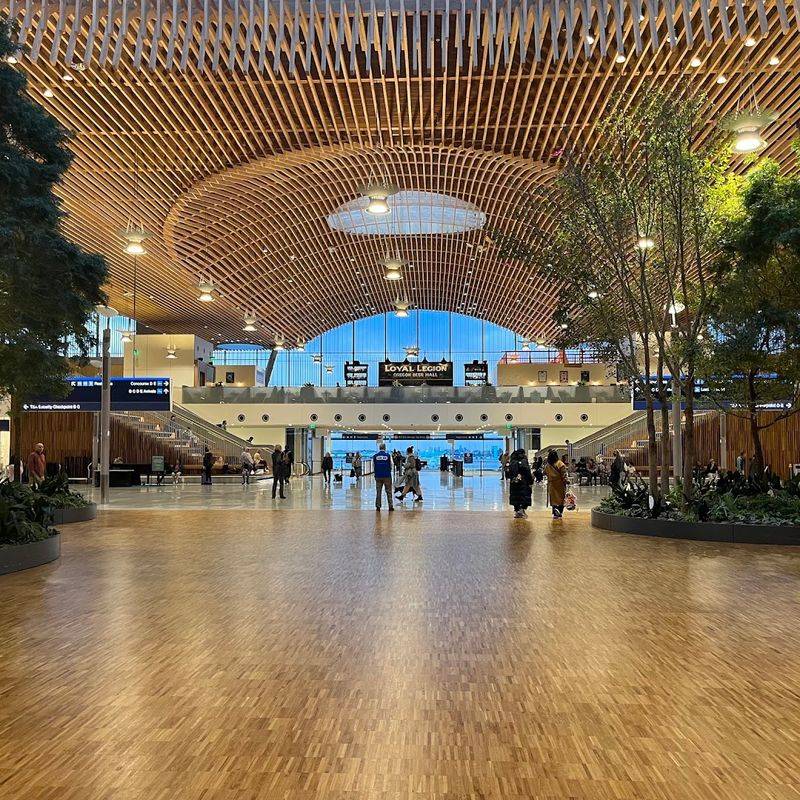
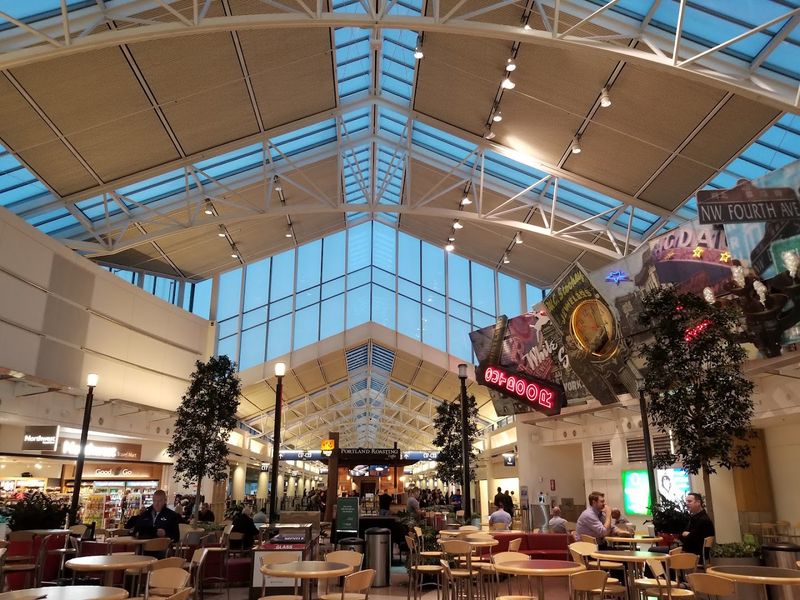
There is a moment when you walk into the main terminal hall and your eyes go straight up. The ceiling is enormous, built from mass timber beams arranged in a sweeping pattern that feels more like a cathedral forest than an airport departure hall.
Travelers arriving for the first time genuinely stop walking to look up, and that reaction says everything. The wood comes from Oregon and the broader Pacific Northwest, making the material choice both practical and deeply symbolic.
This is not decorative wood paneling slapped onto a concrete box; it is structural timber doing real architectural work at a scale that is hard to fully appreciate in photographs.
The warmth the ceiling creates filters down through the entire space, softening the hard edges that typically make airports feel cold and transactional. Natural light pours in through large windows, bouncing off the wood grain and giving the hall a glow that shifts throughout the day.
Visitors from other countries have compared the feeling to airports in Singapore and Japan, which is a serious compliment. For a building that thousands of people pass through daily, that level of emotional impact is a genuine architectural achievement worth celebrating.
Native American Heritage Woven Into the Design
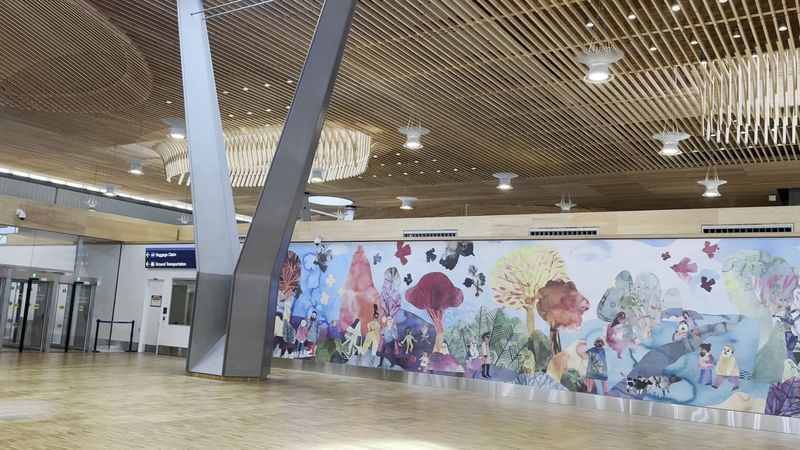
One of the most thoughtful decisions made during the renovation was the intentional inclusion of Native American cultural heritage throughout the terminal. The airport sits on the ancestral lands of the Confederated Tribes of Grand Ronde and other Indigenous peoples of the Pacific Northwest, and the design team took that history seriously.
Traditional patterns, materials, and artistic motifs appear in the flooring, wall treatments, and commissioned artworks placed throughout the concourses. These are not token gestures; they are carefully considered design choices made in direct partnership with tribal representatives who had a real seat at the table during the planning process.
The result is a terminal that feels grounded in a specific place and a specific story rather than the placeless aesthetic that defines so many modern airports. Travelers who slow down and pay attention will notice these details layered into the environment in ways that reward curiosity.
For visitors new to Oregon, the cultural elements also serve as an introduction to the region’s history before they even reach the city. That kind of storytelling through design is rare in transportation infrastructure, and PDX pulls it off with genuine respect and care.
Local Shops and Restaurants That Actually Represent Oregon
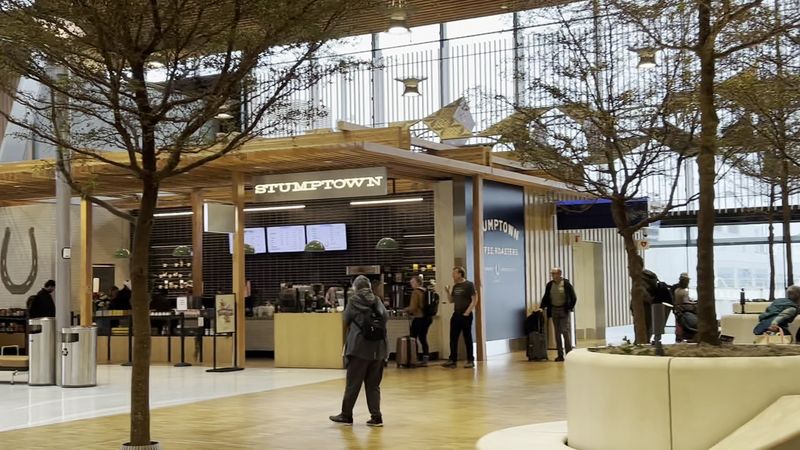
Airport retail has a reputation for being overpriced and forgettable, full of the same chain stores you could find in any mall in any city. PDX takes a very different approach, and the difference is immediately noticeable when you start walking the concourses after clearing security.
Local businesses dominate the retail and dining landscape here. Powell’s Books, one of Portland’s most iconic independent bookstores, has a branch inside the terminal that is genuinely one of the best airport bookstores in the country, stocked with a real selection rather than just bestsellers and travel guides.
Food options lean heavily on Pacific Northwest flavors and ingredients, with vendors offering everything from locally roasted coffee to fresh seafood and regional snacks. The pricing, surprisingly for an airport, stays close to street-level rates in many spots, which is a welcome change from the usual airport markup.
Sizzle Pie on the Delta side has earned serious praise for its breakfast offerings, particularly the egg and bacon croissant that feels genuinely crafted rather than assembled. Wandering the terminal with time to spare actually becomes an enjoyable experience rather than a waiting game, which is not something most airports can claim.
Live Music and Art That Make the Terminal Feel Alive
Most airports pipe in generic background music to fill the silence. PDX does something far more interesting.
The airport hosts regular live music performances throughout the terminal, featuring local Oregon musicians across a range of genres, from folk and jazz to classical and indie.
Catching an unexpected live set while waiting for a flight shifts the entire experience. There is something genuinely disarming about a talented musician playing a few feet away while you sip coffee and watch the departure board.
It makes the terminal feel like a public space rather than a processing facility.
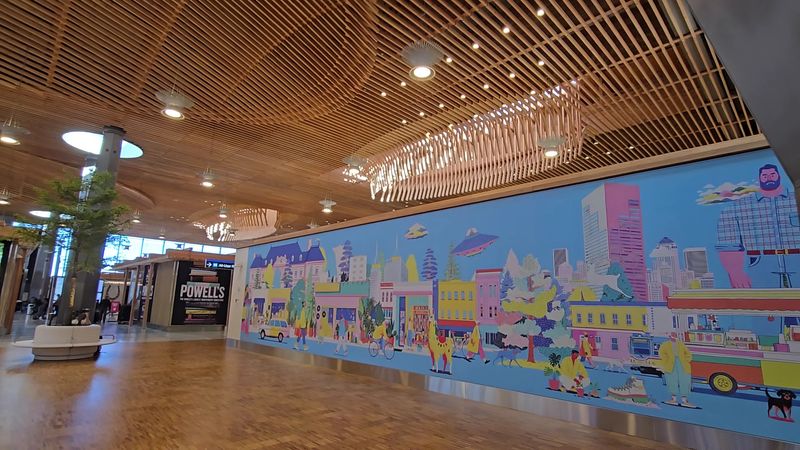
Beyond music, the airport has long maintained a strong commitment to visual art, with rotating and permanent installations by regional artists displayed throughout the concourses. The collection includes sculpture, photography, painting, and mixed media work that reflects Oregon’s creative community in an honest and diverse way.
After the renovation, both the art program and the performance spaces received upgrades, giving artists better venues and giving travelers more reasons to look up from their phones. The combination of live sound and strong visual art creates an atmosphere that is hard to replicate and even harder to forget once you have experienced it firsthand.
Security and Navigation That Actually Work
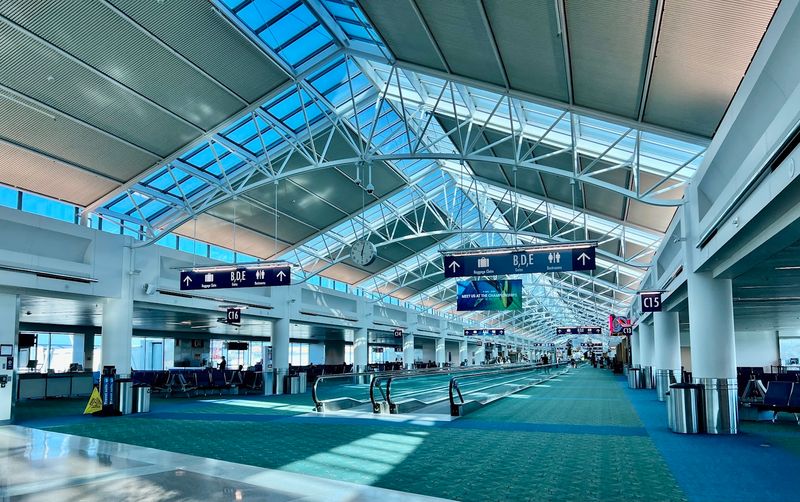
Airport security is rarely anyone’s favorite part of travel, but PDX has managed to make the experience noticeably smoother than most. The renovation brought upgraded scanning equipment and redesigned checkpoint layouts that keep lines moving at a pace that regularly surprises first-time visitors.
TSA Pre-Check lanes here have been clocked by regulars at under ten minutes even during busy travel periods, which is the kind of efficiency that turns skeptics into believers. The checkpoint design uses clear sightlines and logical flow to reduce the confusion that typically builds up when hundreds of people are trying to figure out where to put their shoes.
Wayfinding throughout the terminal is clean and consistent, with signage that guides travelers from curbside drop-off through check-in, security, and out to the gates without requiring a map or a second guess. Staff members are visible and approachable, and the general culture of the airport leans helpful rather than harried.
One useful tip worth knowing is that both security gate entrances feed into all terminals, so if one side looks backed up, heading to the other entrance can save meaningful time. Employees are good about flagging this option during peak hours, which is a small but genuinely useful piece of airport intelligence.
The Greenery and Natural Elements Inside the Terminal
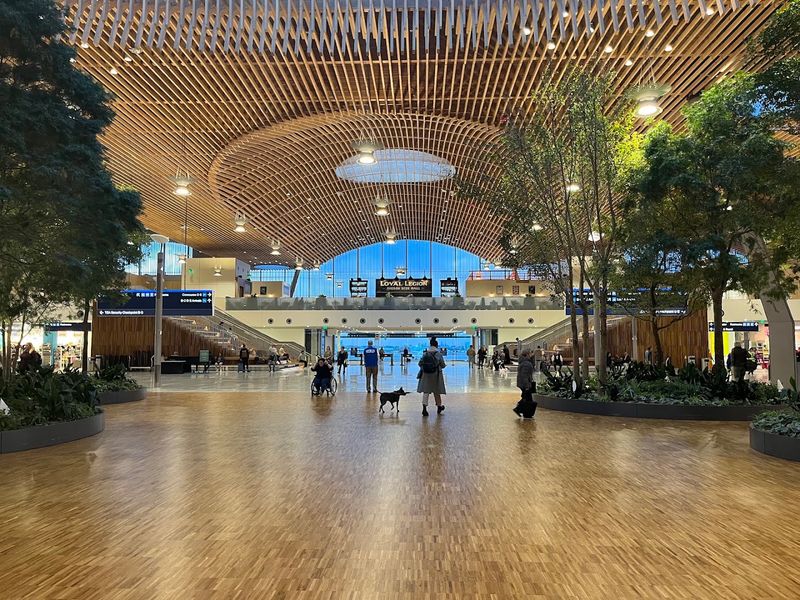
Real trees grow inside PDX. Not decorative plastic plants tucked into corners, but actual living trees placed deliberately within the terminal to soften the space and reinforce the airport’s connection to the Pacific Northwest landscape outside its walls.
The greenery works in combination with the mass timber ceiling and the natural light to create an interior atmosphere that feels genuinely calming. Travelers who arrive stressed from traffic or a long journey tend to visibly relax once they are inside, and the plant life plays a real role in that shift.
The design philosophy here draws on biophilic principles, which is the idea that humans respond positively to natural elements in built environments. PDX applies this thoughtfully rather than superficially, integrating plants at a scale that actually changes how the space feels rather than just adding a few potted ferns near the entrance.
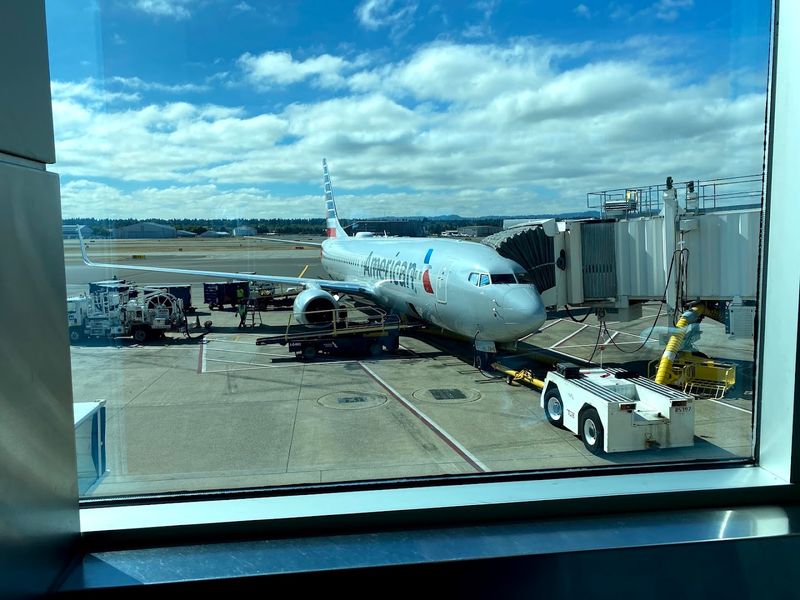
From the window seats of departing planes, passengers get one more green view as the surrounding Oregon landscape stretches out below. That continuity between the interior environment and the natural world outside is one of the quieter design achievements of the renovation, and it makes PDX feel unlike any other major airport in the United States.
Accessibility Features and the Sensory Room
Airports can be overwhelming places, full of noise, crowds, bright lights, and unpredictable delays. PDX took that reality seriously during the renovation and invested in features that make the terminal more accessible and comfortable for a wider range of travelers.
The airport includes a dedicated sensory room designed specifically for neurodivergent travelers and anyone who needs a quiet retreat from the stimulation of the main terminal. The room provides a calm, low-stimulus environment where travelers can regroup before or after a flight without having to leave the secure area.
All-user restrooms are also available throughout the terminal, featuring fully enclosed stalls that offer more privacy than standard airport bathrooms. These facilities have drawn genuinely positive attention from travelers who appreciate the thoughtful design, and they reflect a broader commitment to making PDX work for everyone who passes through.
Accessibility upgrades extend to mobility considerations as well, with clear pathways, well-placed seating, and staff trained to assist travelers with varying needs. The renovation treated accessibility not as a compliance checkbox but as a core design value, and the resulting experience is noticeably more inclusive than what you find at comparable airports across the country.
The Stadium Seating and Farewell Viewing Area
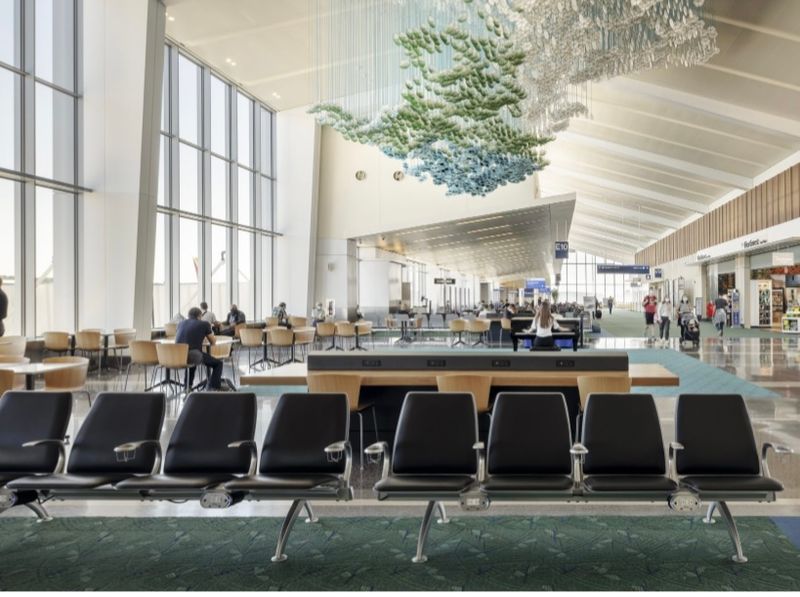
One of the renovation’s more unexpectedly charming features is the stadium-style seating area near the arrivals exit. Friends and family waiting to greet arriving passengers can settle into tiered seating that overlooks the spot where travelers emerge from the concourses after clearing baggage claim.
It sounds simple, but the emotional effect is real. Reunions happen in full view of a crowd that has nothing better to do than watch, which creates a warmly communal atmosphere that you simply do not find in most airports.
The design turns a routine arrival pickup into something that feels a little more like an event.
On the departure side, an upper-level viewing area allows people seeing travelers off to watch the security screening process from above, offering a proper goodbye moment rather than the abrupt cutoff that most airports impose. That small gesture acknowledges that airports are not just transit hubs; they are places where real emotional moments happen.
These human-centered design touches reflect the broader philosophy behind the renovation: that an airport should serve the full experience of travel, not just the logistical parts. PDX gets that balance right in ways that leave a lasting impression on both frequent flyers and first-time visitors.
Getting to and From PDX Without a Car
The MAX Red Line light rail connects PDX directly to downtown Portland with a ride that takes roughly 40 minutes and costs a fraction of what a rideshare or taxi would run. The train platform sits right inside the terminal, which means no shuttle buses, no outdoor walks in the rain, and no hunting for a stop in an unfamiliar neighborhood.
For travelers arriving in Portland for the first time, the MAX offers an immediate introduction to the city’s public transit culture, which is genuinely well-developed by American standards. The ride passes through several distinctive Portland neighborhoods before reaching the central city stations, giving newcomers a ground-level view of the place they are about to explore.
Rideshare pickup has also been streamlined as part of the renovation, with a designated area that keeps the curbside zone from becoming the chaotic bottleneck that plagues so many major airports. Taxis and car rentals are similarly well-organized, and the on-site rental car center eliminates the need for the shuttle bus rides that waste time at airports across the country.
Whether you are arriving with a suitcase and a packed itinerary or heading home after a long trip, getting in and out of PDX is genuinely one of the easiest parts of the whole travel experience.
Why PDX Sets a New Standard for U.S. Airports
After eleven years of work and a significant financial investment, PDX has emerged as something the aviation world does not produce very often: an airport that people actually enjoy spending time in. The combination of architectural beauty, local culture, efficient operations, and genuine inclusivity creates an experience that stands apart from the anonymous functionality of most American terminals.
Frequent travelers who pass through airports across the country consistently rank PDX at the top of their personal lists, not just for aesthetics but for the overall feeling of calm competence that the space projects. The renovation did not chase trends; it built something rooted in a specific place and a specific set of values.
The airport has also raised the conversation about what public infrastructure can and should aspire to be. When a transit hub makes people feel welcomed, curious, and at ease rather than processed and hurried, it changes the entire tone of a journey before it has properly begun.
PDX proves that investing in design, culture, and community is not a luxury reserved for world capitals. Oregon made that investment, and the result is an airport that travelers remember long after the flight itself has faded from memory.
Share this story