Rainforests cover less than six percent of the Earth’s land surface, yet they shelter more than half of all plant and animal species on the planet. That is a staggering deal, and it makes every responsible visit to one of these regions feel like a genuine privilege. From ancient tropical jungles in Southeast Asia to vast Amazonian reserves in South America, the world’s rainforests offer experiences that no wildlife documentary can fully capture. This list covers thirteen remarkable rainforest destinations where thoughtful tourism is actively encouraged, meaning your visit can actually help protect the very places you are exploring.
Whether you are a seasoned nature traveler or someone planning their first foray into the wild, each entry here includes practical details about what makes the region special and how to experience it without leaving a damaging footprint. Read on, because at least one of these places is almost certainly going to end up on your bucket list.
1. Daintree Rainforest, Cape Tribulation, Queensland, Australia
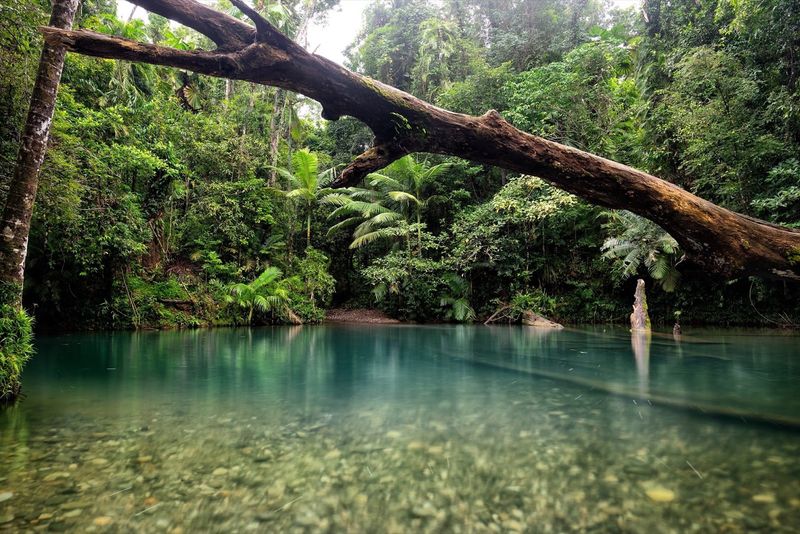
At roughly 130 million years old, the Daintree Rainforest is so ancient that it was already well-established long before the first dinosaurs disappeared from the planet.
This remarkable forest in Queensland, Australia, holds a geographical distinction found nowhere else: it is the only place on Earth where two UNESCO World Heritage sites, a tropical rainforest and a coral reef, share the same coastline.
More than 65 percent of Australia’s bat and butterfly species find refuge here, alongside primitive flowering plant families that trace their lineage back to the supercontinent Gondwana.
Elevated boardwalks and guided interpretive walks allow visitors to move through the forest without disturbing its fragile ecosystem. The Southern Cassowary, a large flightless bird critical to seed dispersal, is one of the most thrilling wildlife sightings the Daintree offers.
Eco-lodges throughout the region operate with conservation principles in mind, and organizations like Rainforest Rescue actively purchase land to expand protected areas.
2. Sinharaja Forest Reserve, Dodammuluwa, Sri Lanka
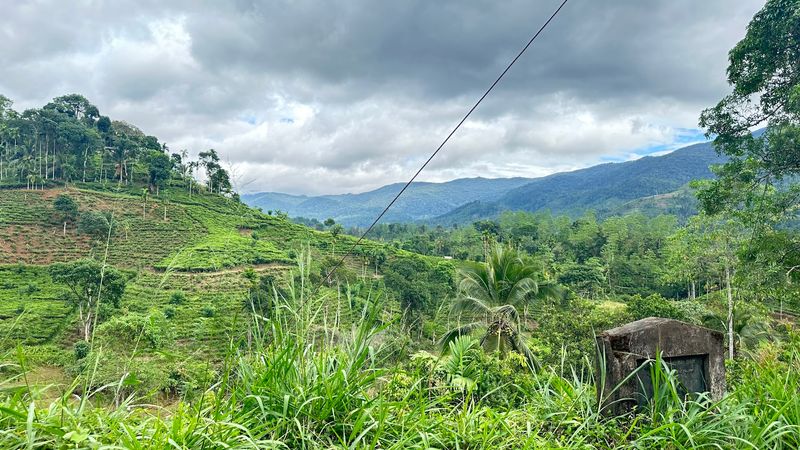
Sri Lanka’s Sinharaja Forest Reserve carries a geological history stretching back to the Jurassic period, making it one of Asia’s most ancient surviving rainforests and a UNESCO World Heritage Site since 1988.
Its long isolation from other landmasses has produced a staggering level of endemism: over 60 percent of its trees, 95 percent of its bird species, and more than half of its mammals and reptiles are found nowhere else on Earth.
Birdwatchers travel specifically to Sinharaja to observe 20 of Sri Lanka’s 26 endemic rainforest bird species, including the vibrant Sri Lanka Blue Magpie and the elusive Red-faced Malkoha.
Access is strictly controlled and only permitted with a licensed guide, a policy that has helped keep the forest remarkably pristine. Mixed-species bird flocks moving through the canopy together are a signature spectacle of the reserve.
Responsible tourism here funds ongoing scientific research that continues to identify new endemic species within this irreplaceable habitat.
3. Bako National Park, Kuching, Sarawak, Malaysia
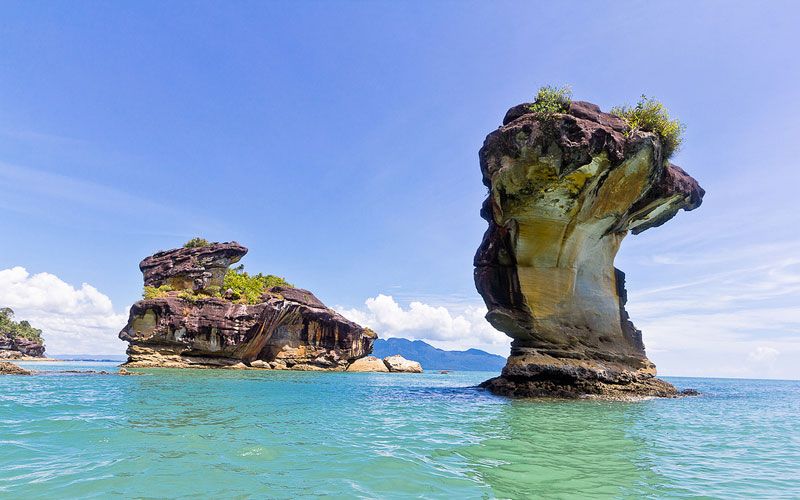
Bako National Park might be the most efficiently packed wilderness area in Southeast Asia, fitting dense rainforest, mangrove swamps, sandstone sea stacks, and secluded beaches into one compact protected peninsula in Sarawak.
As Sarawak’s oldest national park, Bako is best known for its population of proboscis monkeys, an endangered species found exclusively on Borneo, often spotted near the park headquarters during early morning and late afternoon hours.
Sixteen color-coded jungle trails cater to a wide range of fitness levels, from short nature strolls to full-day treks that reveal dramatic cliff-top views before descending to pristine coves.
Bearded pigs, silvered langurs, monitor lizards, and over 190 bird species including hornbills and kingfishers complete the remarkable wildlife roster. Ranger-led night walks add another dimension, uncovering flying lemurs and pangolins after dark.
Starting in 2026, compulsory guided tours will be introduced, a policy designed to strengthen conservation awareness and better manage visitor numbers across the park.
4. Corcovado National Park, Osa Peninsula, Costa Rica
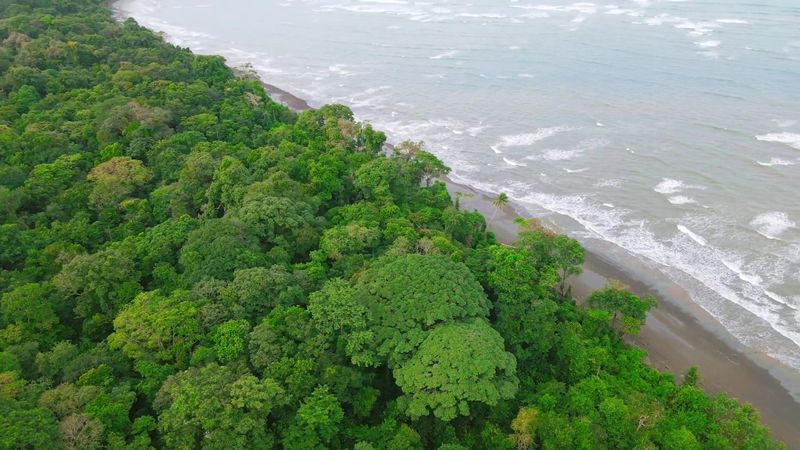
National Geographic once labeled Corcovado National Park the most biologically intense place on Earth, and the numbers back that claim up convincingly: 424 square kilometers of Costa Rican jungle protecting roughly 2.5 percent of the planet’s total biodiversity.
All four of Costa Rica’s native monkey species share the forest here, alongside tapirs, jaguars, giant anteaters, harpy eagles, and the densest population of scarlet macaws in the entire region.
Access is carefully managed through a mandatory guide system, which reduces environmental impact while directly supporting local conservation economies. Five ranger stations dot the park, with designated camping areas at two of them for visitors seeking deeper immersion.
The Sirena Ranger Station is particularly celebrated for reliable tapir sightings, especially at dawn and low tide when these large animals venture onto the beach. Booking through a certified operator is not just recommended but required.
Every guided hike here doubles as a real contribution to keeping one of Central America’s most extraordinary ecosystems intact.
5. Monteverde Cloud Forest Biological Preserve, Monteverde, Costa Rica
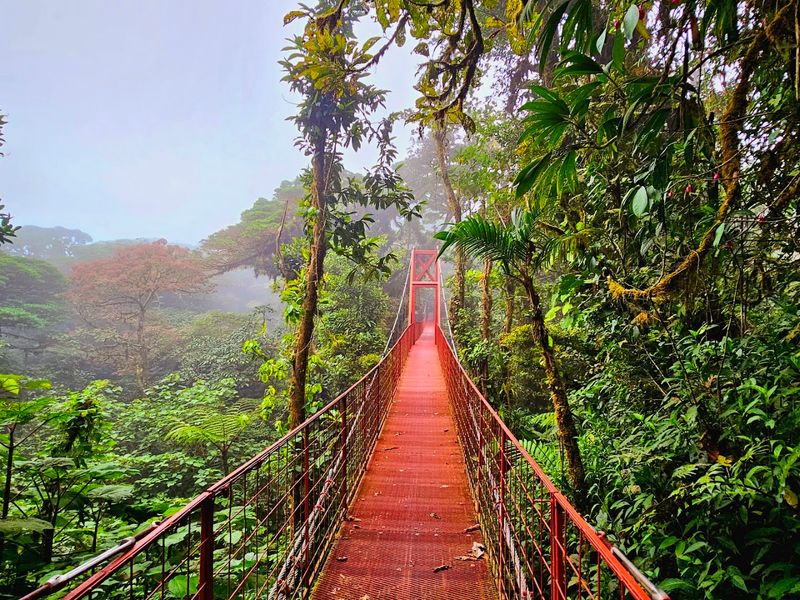
Monteverde occupies a rare atmospheric niche where tropical warmth meets mountain elevation, producing a perpetually misty cloud forest that nurtures six to eight distinct ecological zones within its 10,500 hectares.
The preserve holds the highest known orchid diversity on Earth, with more than 500 species identified, 34 of which were first discovered within Monteverde itself. Epiphytes, plants that grow on other plants for support without harming them, make up 29 percent of the total flora here.
Over 400 bird species use the preserve, drawing birdwatchers from around the world who come specifically hoping to spot the resplendent quetzal, one of the most visually striking birds in the Western Hemisphere.
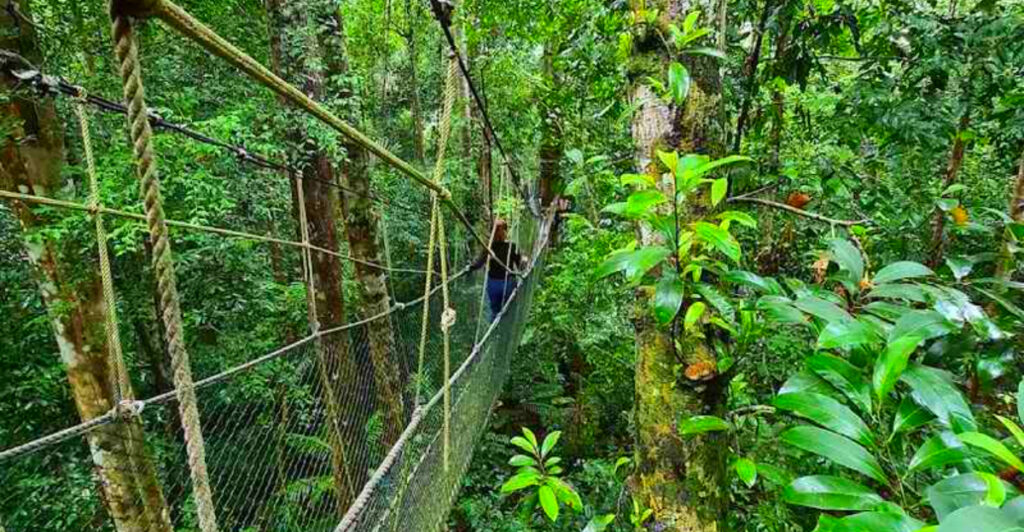
A series of hanging bridges, some stretching 170 meters and suspended 60 meters above the forest floor, allows visitors to walk through the canopy without disturbing the habitat below. Well-maintained trails lead to viewpoints overlooking the continental divide.
Guided night tours and strict waste disposal guidelines ensure that high visitor numbers do not compromise the forest’s exceptional ecological integrity.
6. Manu National Park, Madre de Dios Region, Peru
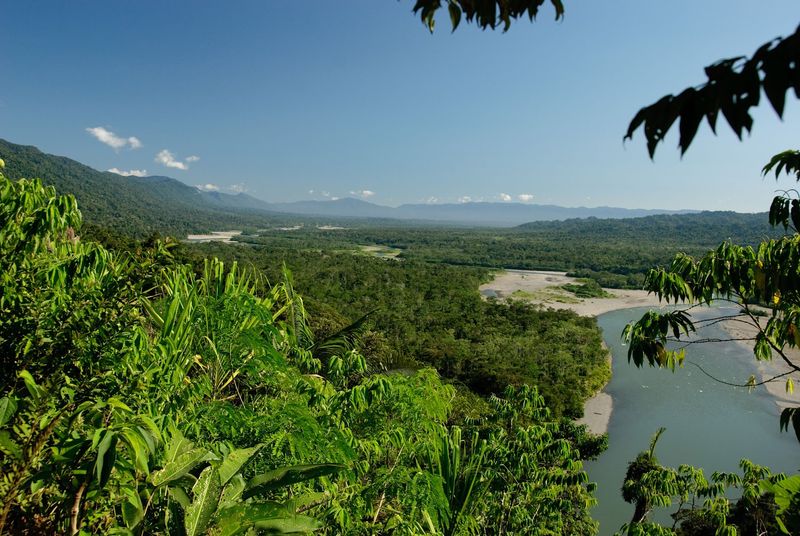
Manu National Park protects one of the most complete vertical slices of Amazon biodiversity on the planet, with altitudes ranging from 200 to 4,000 meters and 13 distinct ecological zones packed into a single UNESCO World Heritage Site in Peru.
More than 1,000 bird species have been recorded here, including the Andean cock-of-the-rock and the harpy eagle. Thirteen species of monkeys roam its complex canopy alongside giant river otters, jaguars, and tapirs.
Guided eco-tours typically run four to nine days and include boat travel along the Madre de Dios and Manu Rivers, canopy tower visits, and trips to clay licks where hundreds of macaws and parrots gather daily to feed on mineral-rich earth.
Cultural exchange with indigenous Matsigenka and Yine communities adds a layer of depth that most Amazon itineraries cannot match. These communities share ancestral knowledge of medicinal plants and traditional forest practices.
Choosing licensed operators and staying at eco-lodges ensures that tourism revenue flows directly into conservation and community welfare programs.
7. Yasuni National Park, Orellana Province, Ecuador
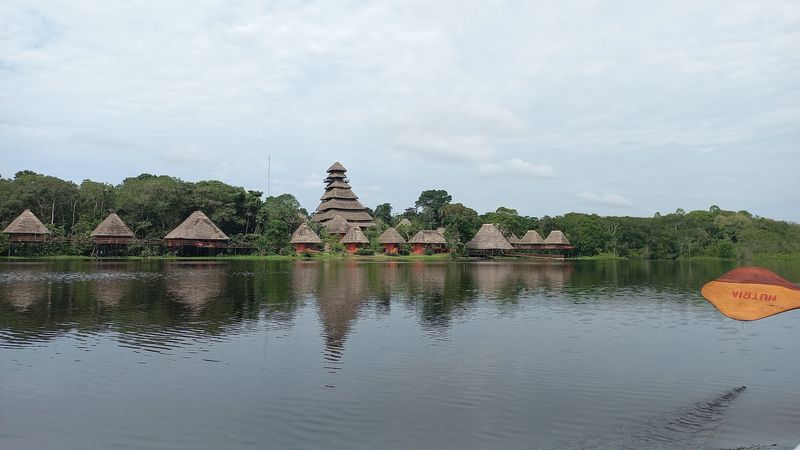
Positioned at the intersection of the Andes, the Amazon basin, and the equator, Yasuni National Park in Ecuador holds world records for the density of amphibians, reptiles, bats, and trees within a single protected area.
One hectare of Yasuni can contain more tree species than are native to the entire continental United States and Canada combined. An estimated 100,000 insect species per hectare represents the highest projected insect diversity per unit area recorded anywhere on Earth.
Eco-lodges like the Napo Wildlife Center, built and managed by the local Añangu Kichwa community, model what genuinely sustainable tourism looks like: revenue supports healthcare, education, and cultural preservation alongside forest conservation.
Guided jungle walks, dugout canoe excursions along the Napo River, and visits to 36-meter observation towers provide concrete wildlife encounters with monkeys, giant otters, caimans, and parrots. Cultural exchanges with indigenous communities offer insights into ancestral customs and traditional ceremonies.
Low-impact travel here is not just a philosophy but a practical framework built into every aspect of the visitor experience.
8. Kinabalu Park, Sabah, Malaysia
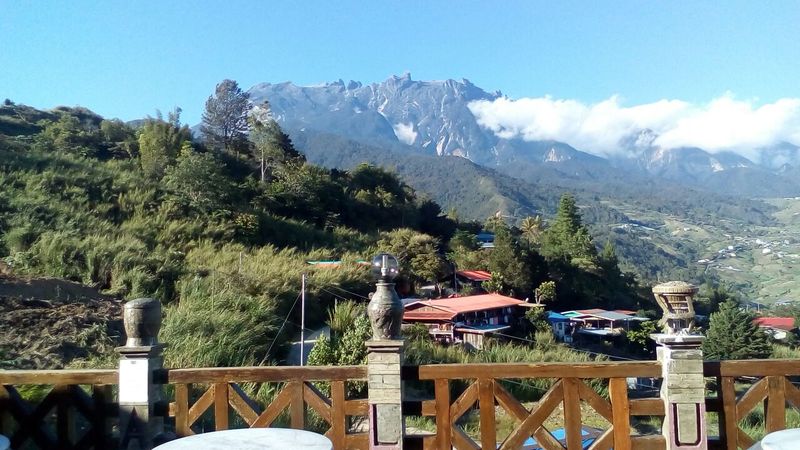
Kinabalu Park in Sabah, Malaysia, became a UNESCO World Heritage Site in 2000 and a UNESCO Global Geopark in 2023, a dual recognition that reflects just how scientifically significant this place really is.
Mount Kinabalu dominates the landscape at 4,095 meters, making it Southeast Asia’s highest peak, but the forest surrounding it is equally compelling. An estimated 4,500 to 6,000 plant species grow within the park’s 754 square kilometers, representing more than half of all flowering plant families.
Over 1,000 orchid species and four endemic carnivorous pitcher plants, including the giant Nepenthes rajah, draw botanists and plant enthusiasts from around the world. Nine nature trails around the park headquarters range from 20-minute strolls to three-hour forest hikes.
More than 326 bird species and an estimated 100 mammal species, including endemic creatures like the Kinabalu giant red leech, round out the biodiversity profile. Visitor fees and licensed operator contributions directly fund ongoing conservation management.
The indigenous Kadazan-Dusun people regard Mount Kinabalu as sacred, giving the park cultural depth that extends well beyond its impressive ecological statistics.
9. Taman Negara National Park, Pahang, Malaysia
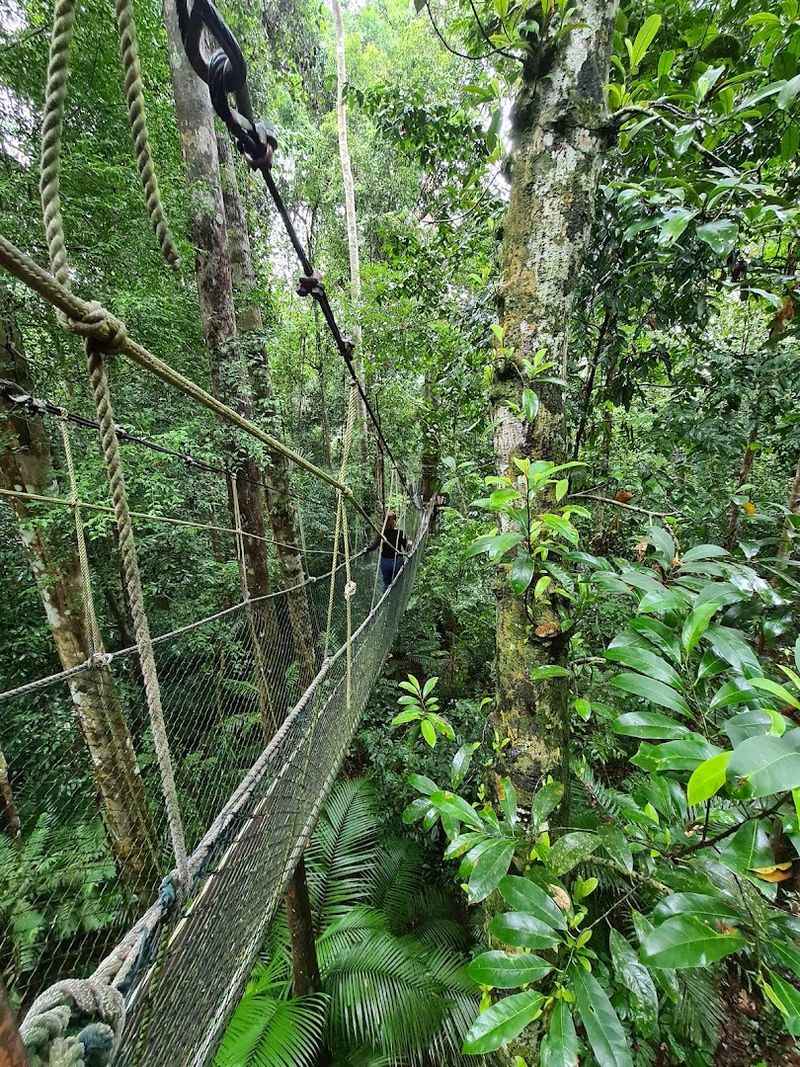
Clocking in at an estimated 130 million years of age, Taman Negara is believed to have survived the Ice Ages completely intact, making it one of the most enduring ecosystems on the planet.
Spanning over 4,300 square kilometers across three Malaysian states, this national park shelters around 10,000 plant species, 350 bird species, and critically endangered animals including the Malayan tiger and Asian elephant.
One of its most famous features is the Taman Negara Canopy Walkway, a suspended trail stretching up to 550 meters and rising 45 meters above the forest floor, offering a remarkable elevated perspective of the jungle canopy.
Visitors can also explore vast cave systems, join river cruises, and hike trails of varying difficulty. Guided visits to Batek indigenous villages provide cultural context that transforms a nature trip into something far more meaningful.
Hiring a local guide is highly recommended, as it supports nearby communities while ensuring safer, more informed forest exploration.
10. Perućica Primeval Forest, Tjentište, Sutjeska National Park, Bosnia and Herzegovina
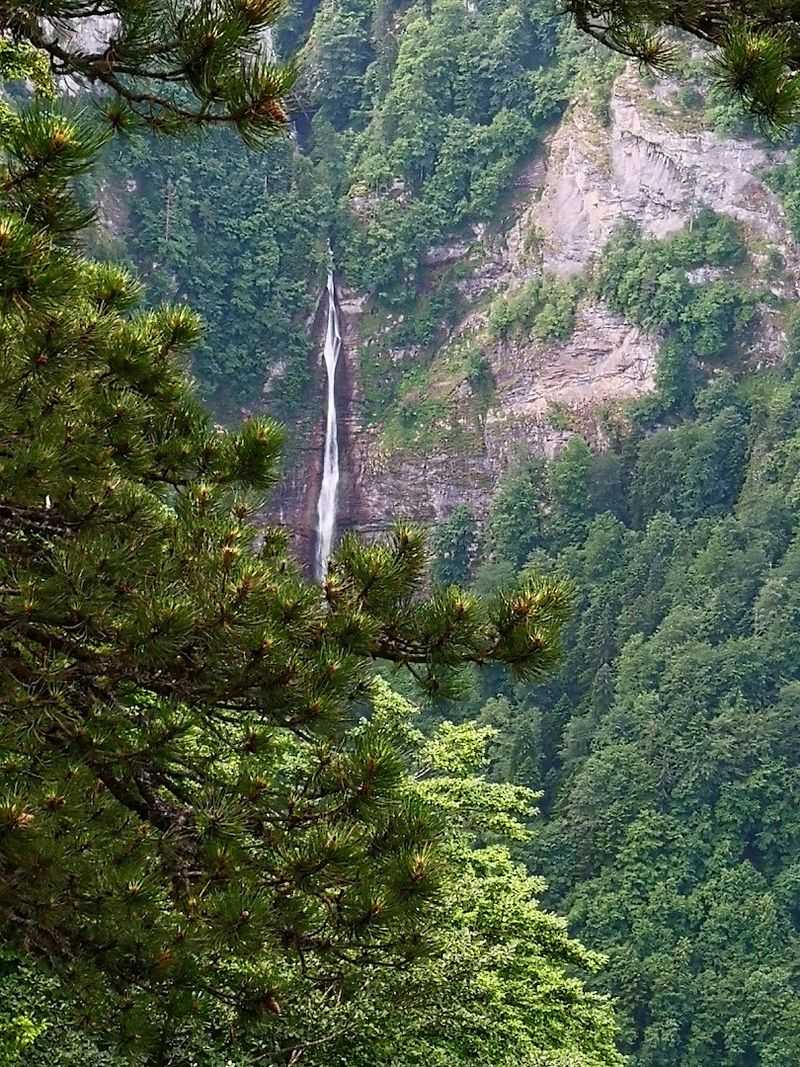
Europe has very few places left where a forest has never been logged, farmed, or significantly altered by human activity, which makes Perucica in Bosnia and Herzegovina’s Sutjeska National Park an almost startling anomaly.
Covering approximately 1,400 hectares, this UNESCO-recognized primeval forest contains trees over 300 years old that soar to heights of 60 meters. Some ecological estimates suggest the forest’s uninterrupted development stretches back 20,000 years, predating the last Ice Age.
Ecologists classify Perucica as a primary old-growth forest rather than a rainforest in the tropical sense, a distinction that actually makes it rarer and more significant from a conservation standpoint. Brown bears, wolves, and Balkan chamois inhabit its steep valleys and dense woodland.
The Skakavac Waterfall, plunging between 75 and 81 meters into the forest valley below, is one of the most dramatic natural features accessible via guided hike. Access is strictly limited to licensed guides, protecting the reserve’s fragile ecosystem from overuse.
Viewpoints like Dragos Sedlo offer sweeping panoramas of the forest and waterfall together, framed by surrounding mountain peaks.
11. Amazon Rainforest, Tambopata National Reserve, Madre de Dios Region, Peru
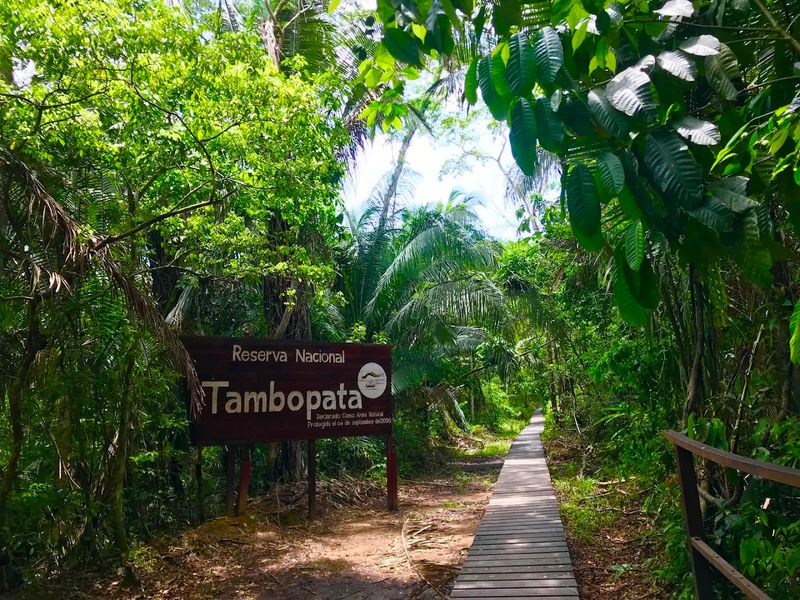
Few wildlife spectacles in the Amazon match the daily gathering at the Chuncho and Colorado clay licks in Tambopata National Reserve, where hundreds of brilliantly colored macaws and parrots descend at sunrise to feed on mineral-rich riverbank clay.
Tambopata covers approximately 274,690 hectares of lowland rainforest, oxbow lakes, and winding river systems in Peru’s Madre de Dios region, making it one of the most accessible entry points for responsible Amazon exploration.
Over 1,700 plant species, 600 bird species, and 1,217 butterfly varieties have been recorded here, alongside large mammals including black caimans, giant river otters, tapirs, and jaguars. Oxbow lakes like Lake Sandoval are particularly productive for wildlife observation, best explored by canoe.
Canopy towers reaching 40 meters provide eye-level encounters with toucans, raptors, and arboreal primates that remain invisible from the forest floor. Most eco-lodges in the reserve are locally operated, meaning overnight stays directly fund conservation efforts.
Tambopata strikes a practical balance between accessibility and authenticity that few Amazon destinations manage to achieve.
12. Korup National Park, Mundemba, Cameroon
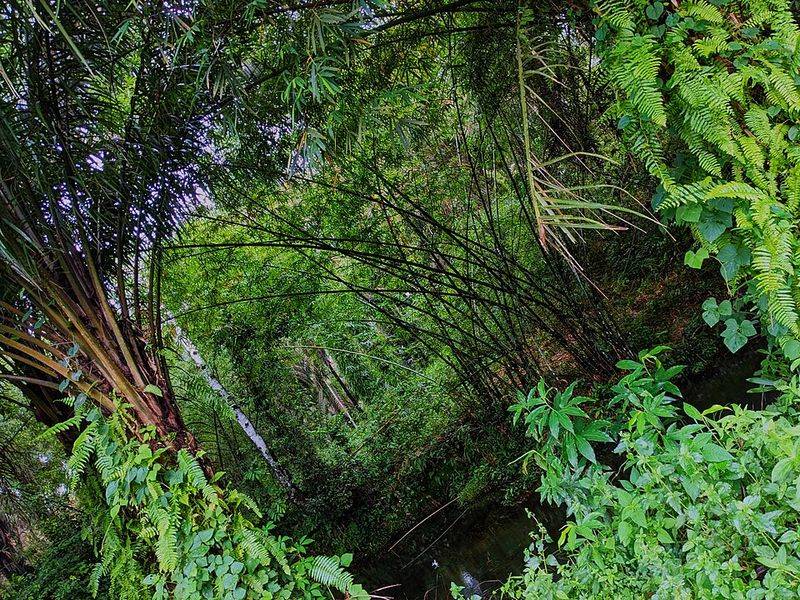
Africa’s oldest surviving tropical rainforest is not in a country most travelers immediately think of, which makes Korup National Park in Cameroon one of the continent’s most genuinely underrated conservation destinations.
Estimated to be over 60 million years old, Korup is believed to have persisted through the dry periods of the Pleistocene era as a critical biological refugium, a fact that explains its extraordinary level of species endemism. More than 1,100 plant species grow within its 1,260 square kilometers.
Critically endangered Nigeria-Cameroon chimpanzees, Cross River gorillas, and African forest elephants all rely on this forest for survival. Over 400 bird species have been recorded, attracting serious birdwatchers seeking species unavailable anywhere else in the region.
Guided hikes cross the iconic Mana suspension bridge and wind through trails that reveal giant buttressed trees, rare primates, and nocturnal creatures discovered on ranger-led night walks. Basic lodging infrastructure makes multi-day visits practical.
Responsible visits support conservation programs actively working to counter deforestation and poaching threats within this transboundary forest landscape.
13. Tongass National Forest, Ketchikan, Alaska, United States

North America’s largest national forest covers 16.7 million acres of Southeast Alaska, making the Tongass the world’s most extensive intact coastal temperate rainforest and one of the planet’s most significant carbon-storing ecosystems.
Ancient Sitka spruce and western hemlock trees, some exceeding 800 years of age, line dramatic glacial fjords alongside more than 19,000 miles of salmon-rich streams. Those salmon runs support brown and black bears, and the Tongass hosts a higher density of bald eagles than anywhere else on Earth.
Rare Alexander Archipelago wolves, mountain goats, Sitka blacktail deer, humpback whales, and orca whales all inhabit this coastal wilderness. Over 450 miles of maintained hiking trails cross dense forest, alpine meadows, and peat bog boardwalks known as muskegs.
Kayaking through quiet fjords, visiting bear-viewing areas during salmon season, and staying in one of more than 140 public use cabins scattered throughout the forest offer varied ways to experience the Tongass responsibly.
The Tlingit, Haida, and Tsimshian peoples have stewarded this land for generations, and their cultural presence remains a vital part of the Tongass story.
Share this story