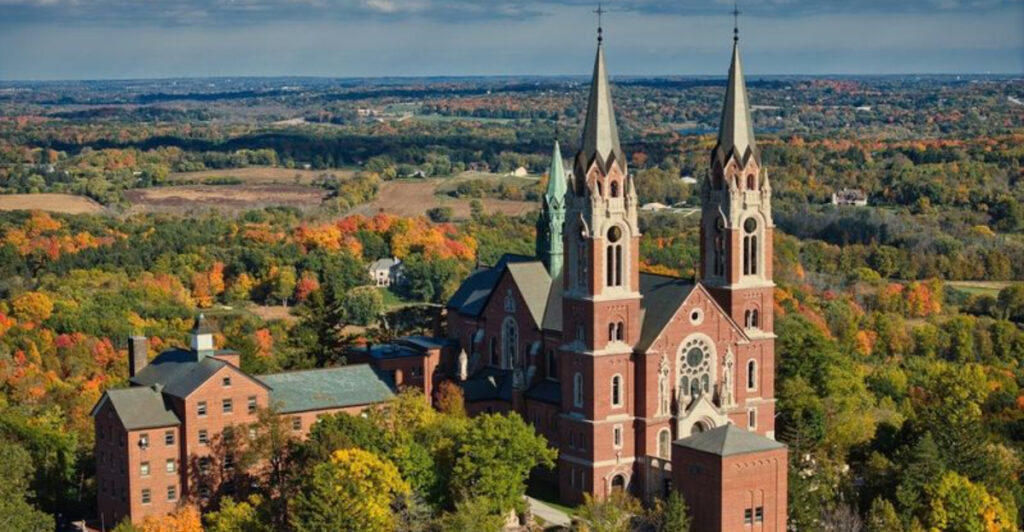
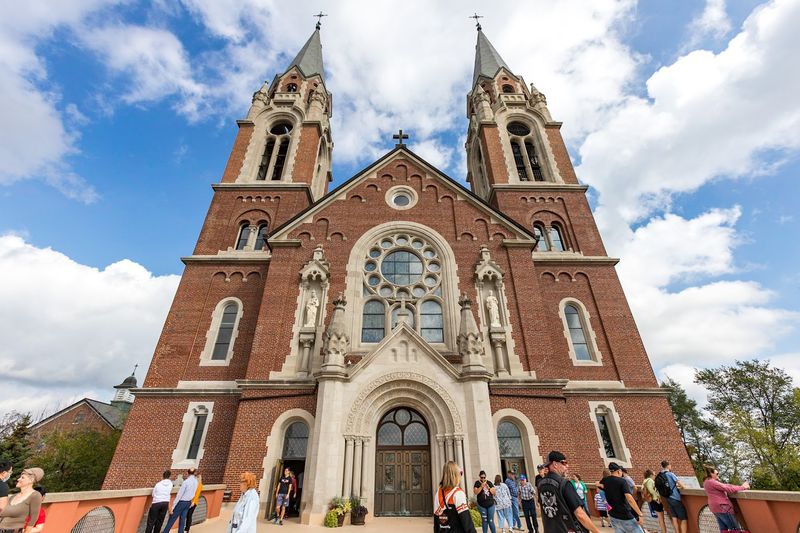
There is a hilltop in Washington County, Wisconsin, where a neo-Romanesque basilica with twin towers stands tall enough to be spotted from miles away. The building is not just a landmark on the horizon but a working national shrine that draws pilgrims, history lovers, and curious travelers throughout the year.
Surrounded by 435 acres of Kettle Moraine land, the site offers far more than its striking exterior suggests. From a climbable observation tower with views stretching toward the Milwaukee skyline, to wooded trails, a cafe, and a gift shop stocked with Catholic books, this destination rewards every kind of visitor.
Whether the draw is faith, architecture, autumn foliage, or simply a road trip worth taking, this Wisconsin hilltop has a way of making a lasting impression on everyone who makes the drive up Carmel Road.
Built on Belief: The History Behind the Shrine
The story of Holy Hill stretches back to the 1860s, when the first small chapel was established on this prominent hilltop. The site gained a reputation as a place of pilgrimage, and over the following decades, the Discalced Carmelite Friars took over its care and development.
The current basilica structure was built in 1926, constructed in a neo-Romanesque style that gives it a distinctly medieval character. The twin towers, which anchor the building visually, were designed to be seen from a distance, and they succeed completely.
On a clear day, the towers are visible from several miles away across the Kettle Moraine terrain.
In 2006, Pope Benedict XVI elevated the church to the status of a minor basilica, a recognition that carries significant weight in the Catholic Church. That designation placed Holy Hill among a select group of churches in the United States granted that title.
The Twin Towers: A Climb Worth Every Step
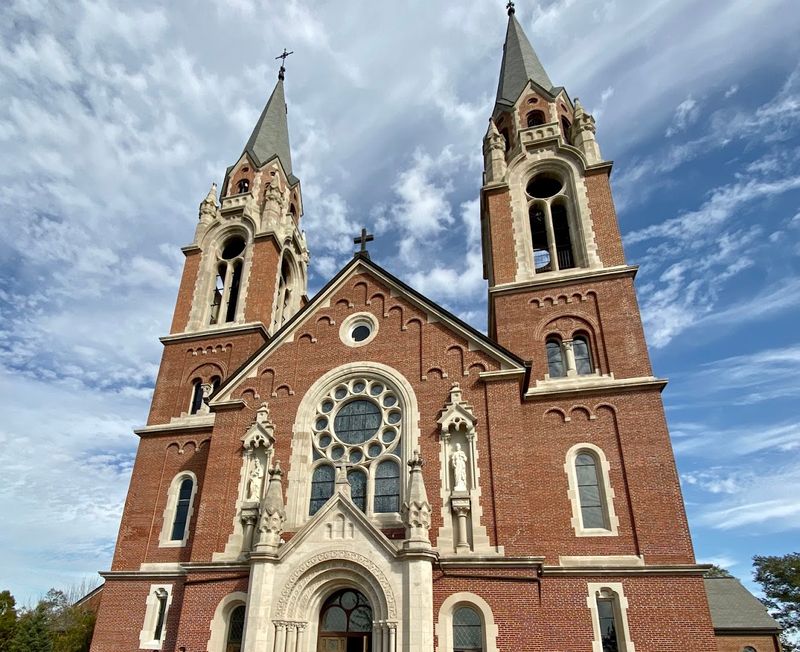
The observation tower at Holy Hill is one of the most talked-about features on the property, and for good reason. Reaching the top requires climbing 178 steps through a narrow staircase that winds upward through the tower walls.
The stairs are tight, and carrying a backpack or large bag makes the climb noticeably more difficult for everyone involved.
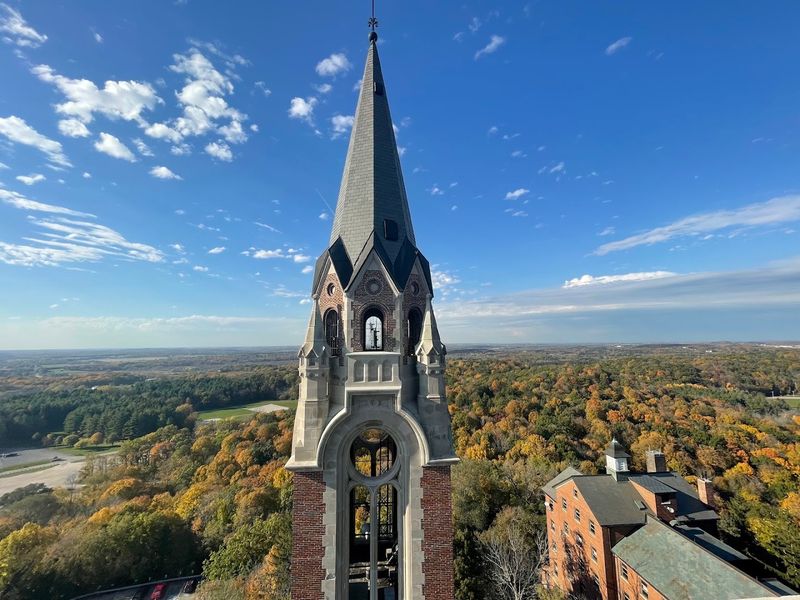
At the top, the reward is a panoramic view of the Kettle Moraine forest and surrounding countryside. On clear days, the Milwaukee city skyline is visible in the distance, which tends to catch first-time visitors off guard in the best possible way.
The tower is open seasonally and during favorable weather conditions, so checking ahead before planning around it is a smart move. Wait times can run between 30 and 50 minutes during busy periods, particularly on fall weekends.
Arriving early on a weekday morning is the most reliable way to head straight up without a long queue.
435 Acres of Kettle Moraine: The Grounds Explored
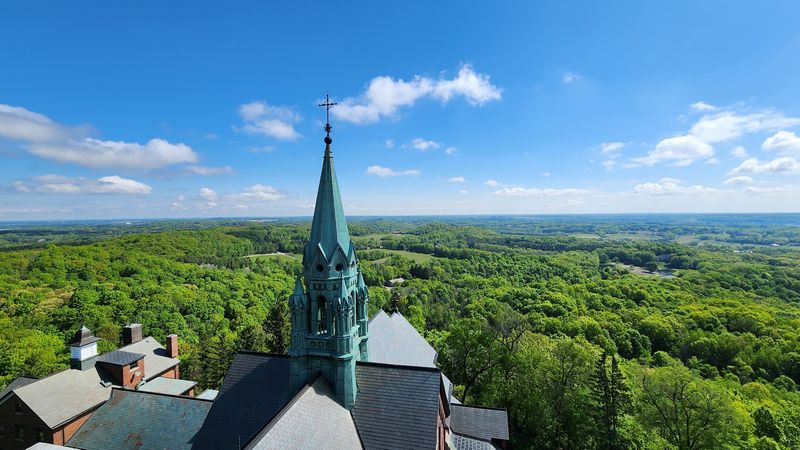
The 435 acres surrounding the basilica are not just background scenery. The Carmelite Friars have maintained the land as an integral part of the pilgrimage experience, with paved trails winding through the hillside, wooded paths connecting different chapels and grottos, and open areas where visitors can walk at their own pace.
The trails are well-kept and accessible, though some sections of the hill require a moderate level of effort to navigate. Most paths are paved and clearly marked, making the grounds manageable for a wide range of visitors.
Those with mobility concerns can ask about parking closer to the upper entrance near the elevator.
The Kettle Moraine landscape itself adds a distinctive backdrop to the whole property. The rolling terrain, carved by glacial activity thousands of years ago, creates a layered horizon of hills and tree lines that changes character with every season.
Fall brings the most dramatic visual contrast, but the grounds hold their own appeal year-round.
Inside the Basilica: Architecture That Holds Attention
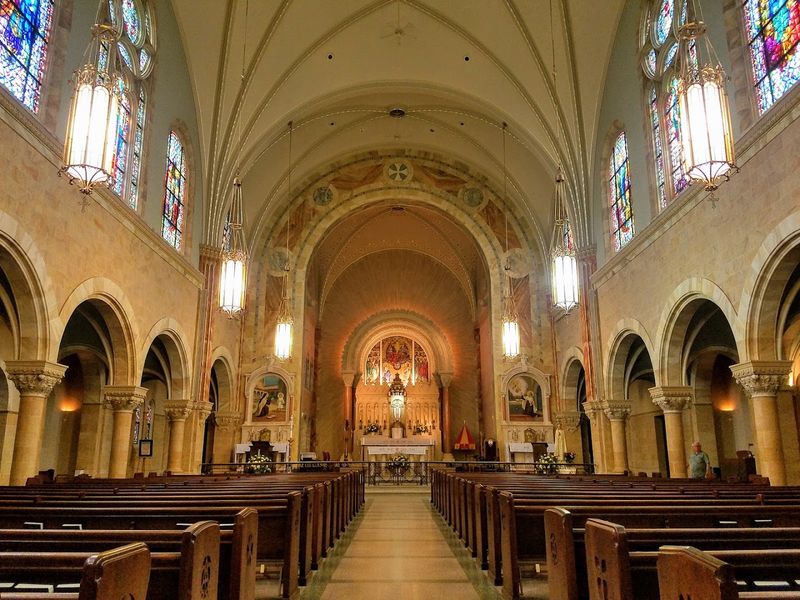
Inside the basilica, the architecture does not disappoint those who make the trip specifically for the building itself. The nave features stone arches, detailed mosaic artwork near the altar area, and stained glass windows that filter light across the interior throughout the day.
The craftsmanship throughout the building reflects the care that went into its 1926 construction.
Religious relics are also on display within the basilica, giving the interior an additional layer of historical and spiritual significance for those interested in Catholic heritage. The space is kept clean and organized, and the layout is easy to move through even when the church is receiving a steady flow of visitors.
Multiple Masses are offered throughout the week, and on Sundays there are typically three services available. After Mass, priests offer special blessings for those who wish to receive them.
The combination of architectural detail and active religious practice makes the interior worth spending real time in, not just a quick pass-through.
Fall Foliage and the Best Time to Visit
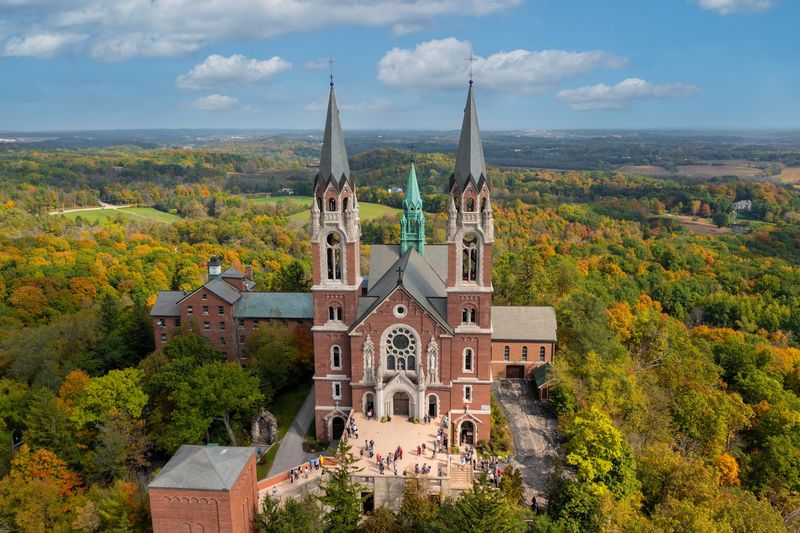
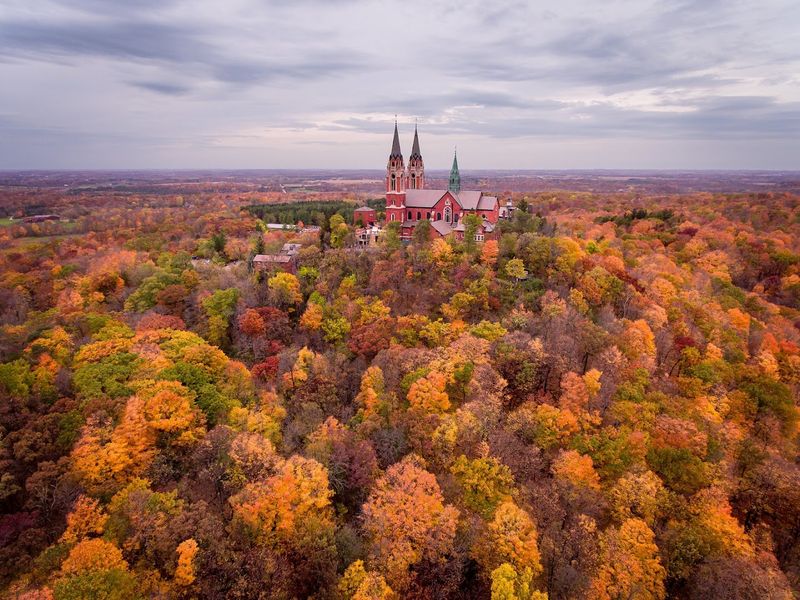
Autumn is the season that consistently draws the largest crowds to Holy Hill, and the reason is straightforward. The basilica sits above a dense forest canopy, and when the Kettle Moraine trees shift into fall color, the view from the tower and from the grounds becomes one of the more striking natural displays in the state.
October weekends tend to be the busiest, with parking filling up quickly and tower wait times stretching longer than usual. Arriving before 10 AM on a weekday gives a noticeably different experience than showing up at midday on a Saturday in mid-October.
The early morning crowds are thinner, the light across the hillside is at its best, and the whole property feels more open.
That said, Holy Hill is worth visiting in every season. Winter brings a quiet stillness to the grounds, spring adds fresh green to the hillside trails, and summer offers full canopy cover on the wooded paths.
Each season reframes the same landscape in a different way.
Stations of the Cross: A Walk Through the Hillside
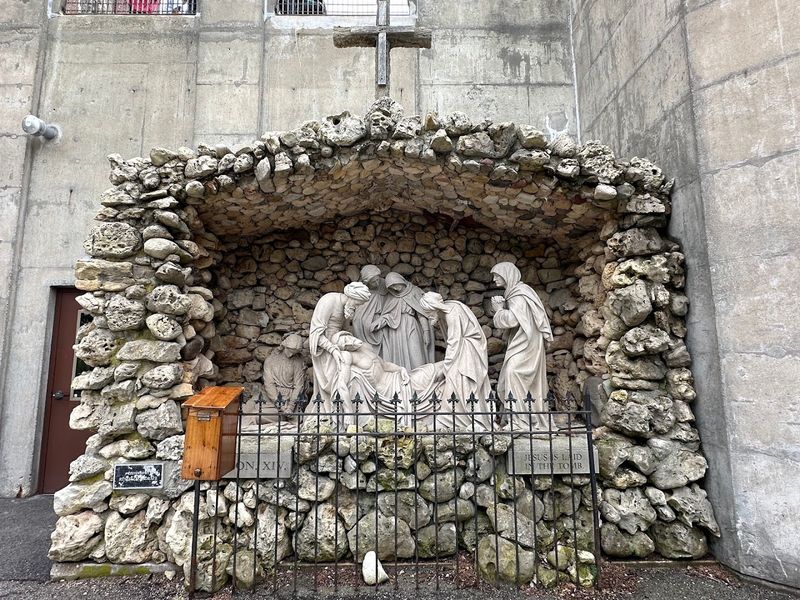
One of the more meaningful walks on the property follows the Stations of the Cross along a path that winds through the hillside. The route is marked by a series of traditional stations, each one set within the natural landscape rather than inside a building, which gives the walk a character that differs from most parish-based versions of the same devotion.
The path is accessible to visitors who are not Catholic as well, and many people walk it simply as a quiet trail through a well-maintained wooded hillside. The combination of religious markers and natural surroundings creates an atmosphere that tends to slow people down in a good way.
The walk connects to other areas of the grounds, including the Our Lady Grotto with a statue of St. Bernadette and the Chapel of St. Therese. These smaller devotional spaces are easy to miss if visitors head straight for the tower, but they add considerable depth to the overall experience of the property.
The Grottos and Chapels Hidden in Plain Sight
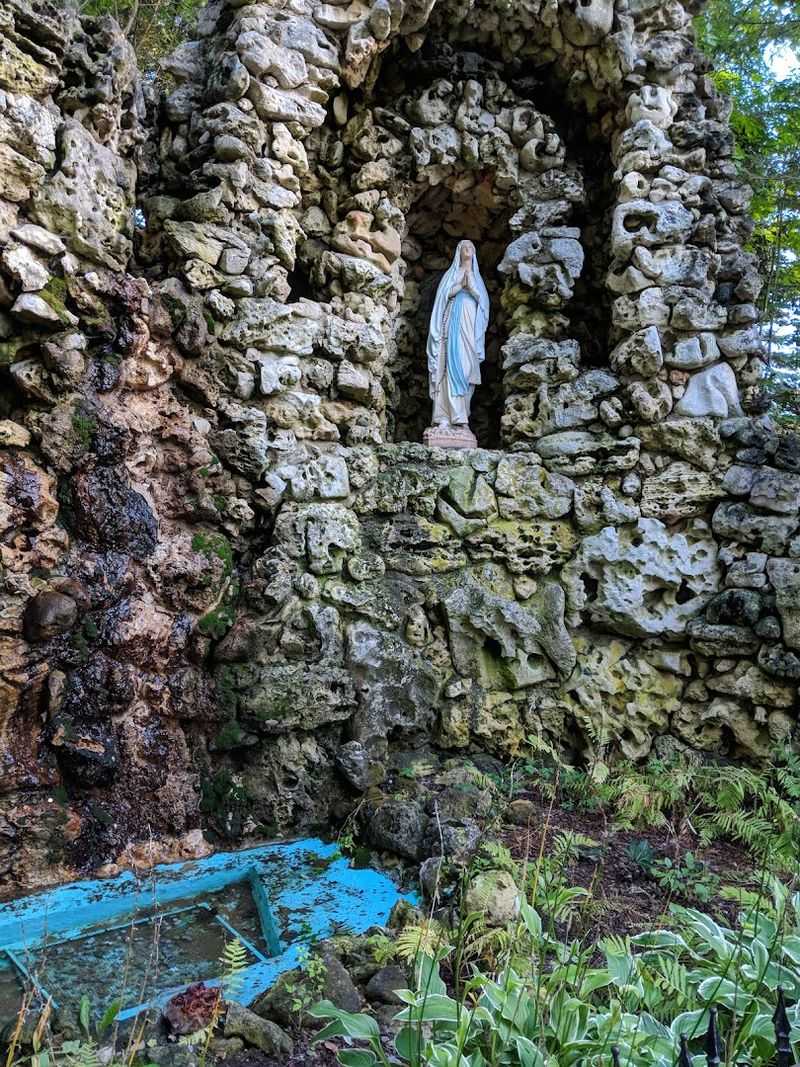
Beyond the main basilica building, the Holy Hill property contains several smaller devotional spaces that are easy to overlook on a first visit. The Our Lady Grotto, modeled after the famous grotto at Lourdes, features a statue of St. Bernadette and is set into the hillside in a way that makes it feel genuinely tucked into the landscape rather than placed on top of it.
The Chapel of St. Therese is another quiet stop along the grounds, dedicated to St. Therese of Lisieux, also known as the Little Flower. For visitors with a particular devotion to this saint, the chapel is a meaningful addition to the overall visit.
A larger outdoor statue is also positioned on the grounds and visible from several points along the walking paths.
These smaller spaces are worth seeking out deliberately rather than stumbling across by accident. A quick look at the grounds map available at the entrance helps visitors plan a route that takes in all of these features without backtracking unnecessarily.
The Cafe and Gift Shop: More Than an Afterthought
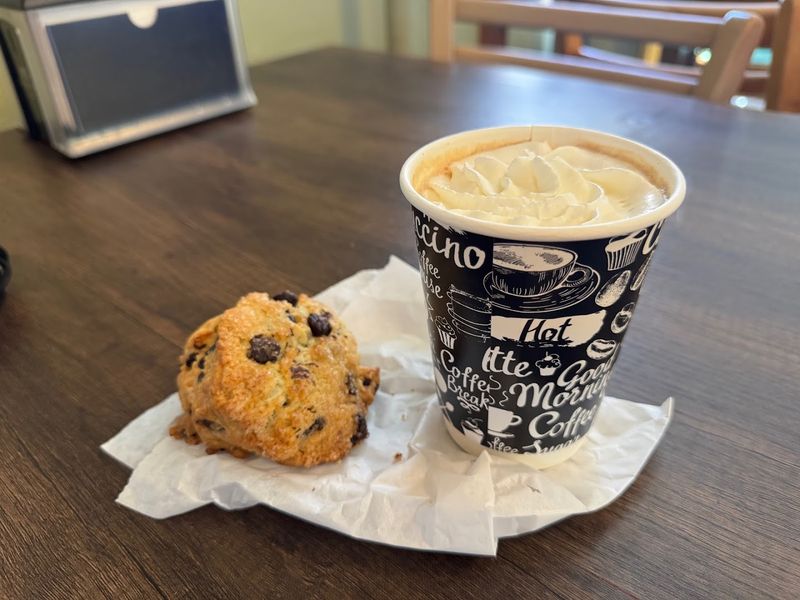
After a morning of walking the grounds and climbing the tower, the on-site cafe provides a practical and welcome stop. The menu runs toward soups, sandwiches, and pastries, which suits the casual pace of a pilgrimage day better than a full sit-down restaurant would.
The cafe is small, so arriving during off-peak hours avoids the longest waits.
The gift shop is a different story entirely. It is described consistently as one of the better Catholic bookstores in the region, stocked with religious books, rosaries, Bibles, and a wide range of devotional items and souvenirs.
For anyone looking to bring something meaningful home from the visit, the selection is genuinely worth browsing.
Both the cafe and the gift shop are located within easy reach of the main basilica entrance, making them convenient stops rather than detours. Bringing some cash is a practical move, since donation boxes are placed throughout the grounds and local vendors along the road sometimes sell farm-fresh produce nearby.
Practical Tips for Planning Your Visit
A few practical details make a real difference in how a visit to Holy Hill unfolds. Free parking is available on the grounds, but the lots fill up quickly on fall weekends and Sunday mornings around Mass times.
Arriving before 9 AM on those days is the most reliable strategy for securing a spot without circling.
There is no entrance fee to visit the property. Donation boxes are placed throughout the grounds, and contributions go toward the maintenance of the basilica and its facilities.
Bringing cash also helps with the cafe, the gift shop, and any local vendors encountered along the approach roads.
Comfortable walking shoes are a genuine necessity rather than a suggestion. The grounds involve real elevation changes, and the tower staircase is narrow and steep enough to make footwear a practical concern.
The basilica website at holyhill.com carries current information on Mass schedules, tower availability, and any seasonal events, making it the best first stop before planning a visit.
Why Holy Hill Keeps Drawing People Back
There is something about the combination of elevation, architecture, and open landscape that makes Holy Hill a place people return to more than once. The grounds are large enough that a single visit rarely covers everything, and the experience shifts enough between seasons to justify coming back at different times of year.
The basilica functions as an active religious community, not just a historic site, which means the energy of the place is different from a museum or a preserved landmark. Masses are celebrated regularly, priests are present, and the devotional life of the Carmelite community gives the property a lived-in quality that static attractions rarely have.
For those who make the trip from Milwaukee, which sits roughly 30 minutes away, Holy Hill has become a recurring destination rather than a one-time check on a list. The scenic roads leading to Hubertus, the free parking, the climbable tower, and the sheer scale of the 435-acre grounds combine to make it one of the more complete destinations in Wisconsin.
Where It All Begins: Address and Setting
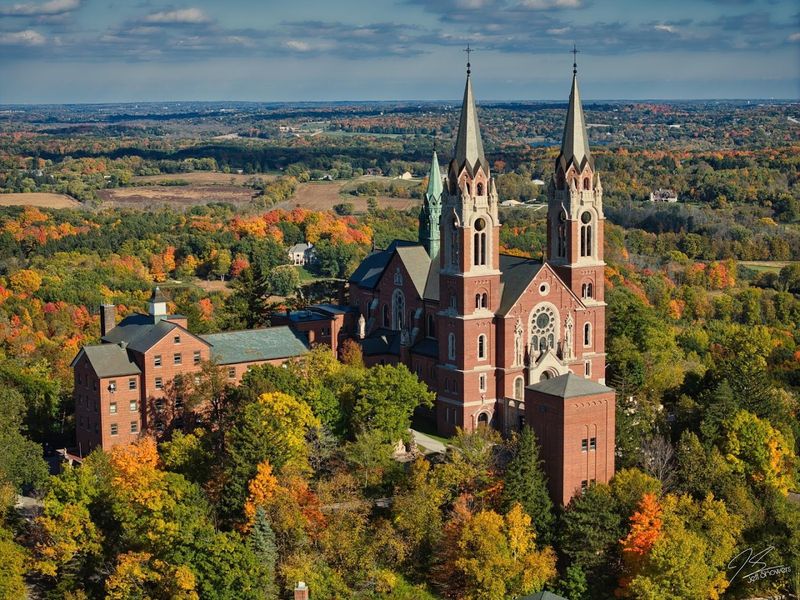
At 1525 Carmel Rd, Hubertus, WI 53033, Holy Hill sits on one of the highest points in Washington County, rising dramatically above the surrounding Kettle Moraine landscape. The approach alone is worth noting: the road winds upward through rolling hills and dense tree cover before the twin towers of the basilica come fully into view.
The site operates daily from 6 AM to 5 PM, making it accessible for early arrivals who want to avoid the midday crowds. Free parking is available on the grounds, and the layout is easy to navigate even for first-time visitors.
The basilica belongs to the Discalced Carmelite Friars, who have maintained the property for over a century. The 435-acre grounds include trails, grottos, chapels, and open hillside areas.
Getting there via scenic country roads rather than through Milwaukee adds an extra layer of character to the whole experience.
Share this story