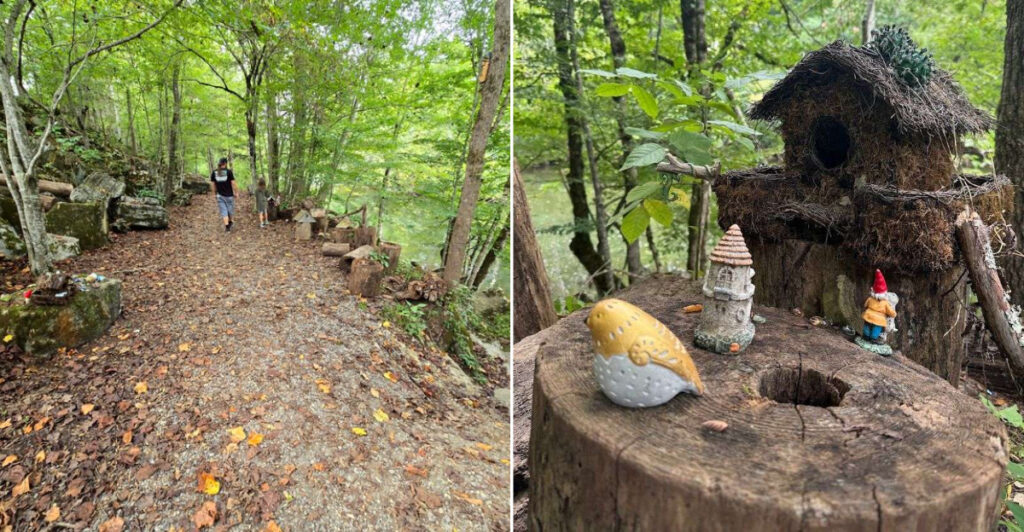
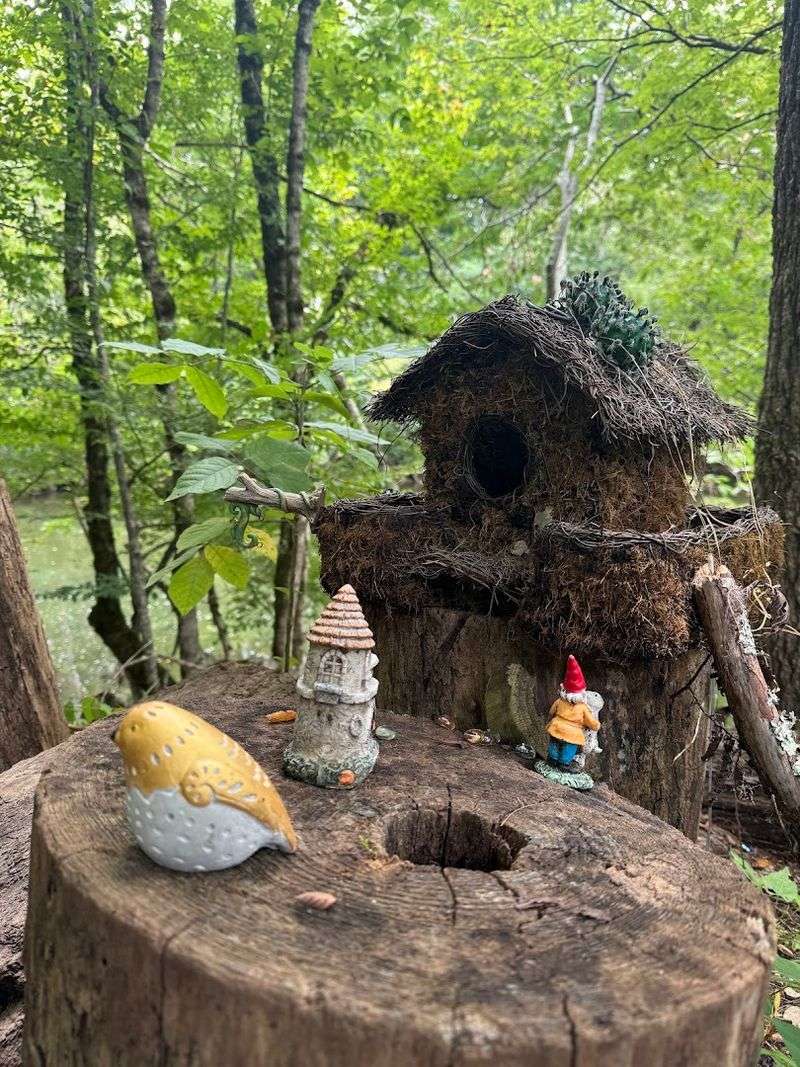
Tucked into the quiet town of Townsend, Tennessee, there is a trail that most people drive right past without a second glance. But stop for a moment, follow the path along the river, and you will find something that feels almost too charming to be real: a tiny fairy village, complete with miniature doors, gnomes, and little woodland scenes tucked between the roots of trees.
This is not a theme park or a ticketed attraction. This place is a completely free, volunteer-built treasure that has quietly become one of the most talked-about stops in the Great Smoky Mountains region.
Families, hikers, and curious travelers keep coming back, and it is easy to see why once you know what waits along that peaceful stretch of riverbank.
The Fairy Village That Started It All
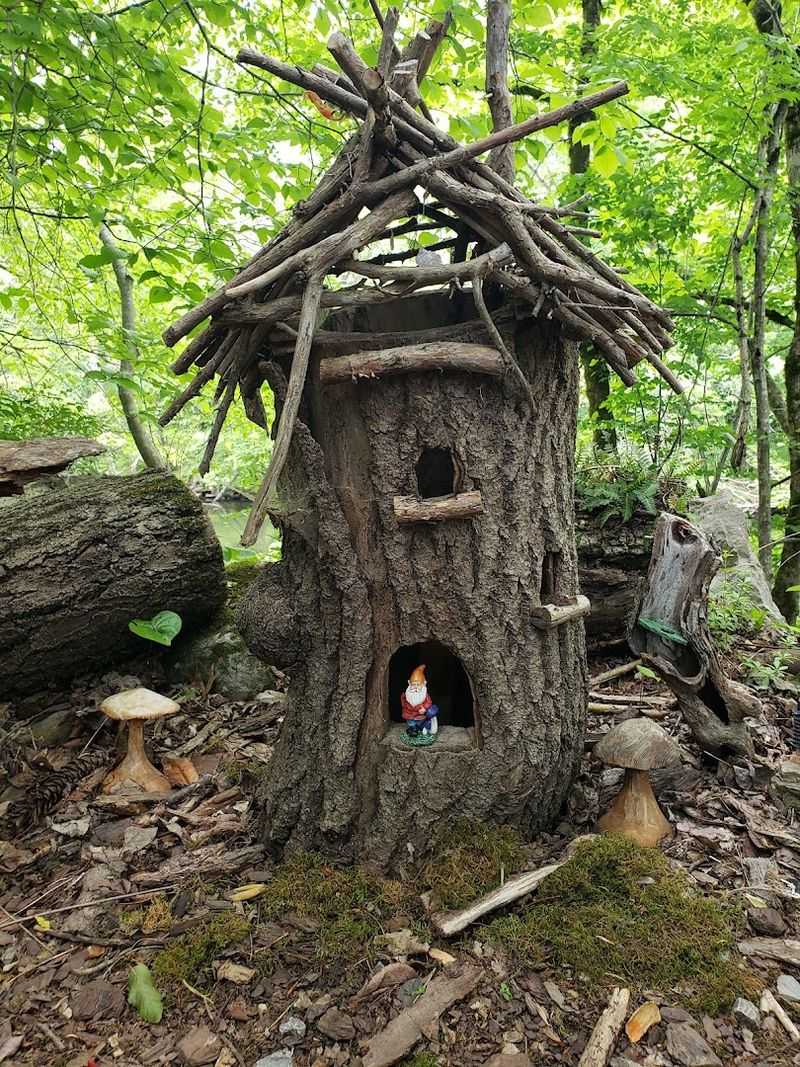
The fairy village along the Townsend River Walk is the kind of thing that stops people mid-step and makes them crouch down to look closer. Miniature doors are attached to tree trunks, tiny fences line the roots, and small gnome figures peek out from mossy corners along the trail.
Nobody commissioned a design firm or hired a contractor to build it. The whole setup grew organically, with community members and trail volunteers adding pieces over time.
Some parts were clearly planned, while others look like spontaneous contributions from families who wanted to leave a little magic behind.
One review even suggested bringing a small gnome to add to the collection, which tells you everything about the spirit of this place. The fairy garden is not roped off or protected behind glass.
It is right there on the trail, at eye level for the smallest hikers, ready to be discovered fresh every single visit.
A Trail Built Entirely by Volunteers
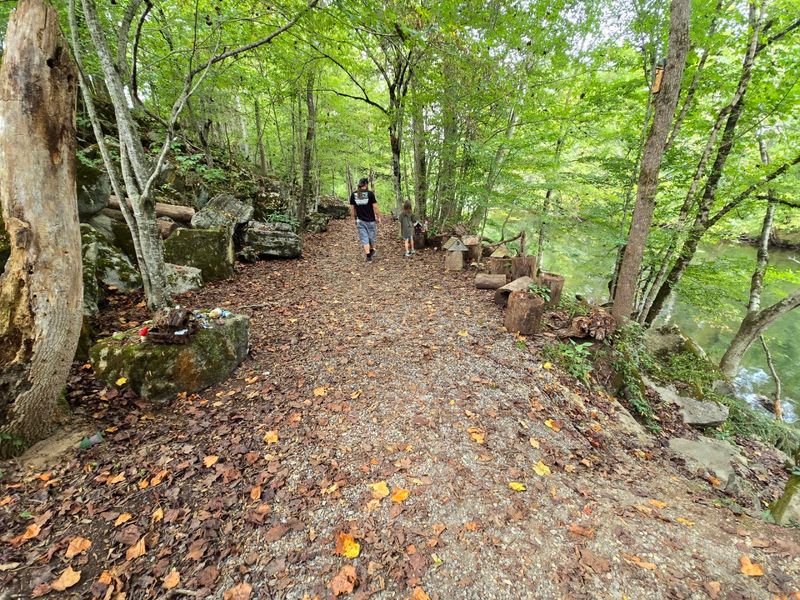
What makes this trail genuinely remarkable is not just what it looks like, but how it came to be. The Townsend River Walk and Arboretum is a 100% volunteer effort, maintained by a dedicated group of community members who donate their time, tools, and creativity to keep the path clear, safe, and constantly improving.
Donations fund new additions like the children’s garden features, the upcoming picnic area, and the Bluebell Trail that was announced for future seasons. There is no corporation behind this place, no city department with a big budget.
Just neighbors who care about their community and the natural space along the river.
That grassroots energy shows up in every hand-painted sign, every carefully placed bench, and every new feature that appears between visits. People who come back after a year often find something new waiting for them, which makes repeat trips feel less like reruns and more like catching up with an old friend who always has a new story.
The Arboretum Side: A Living Plant Library
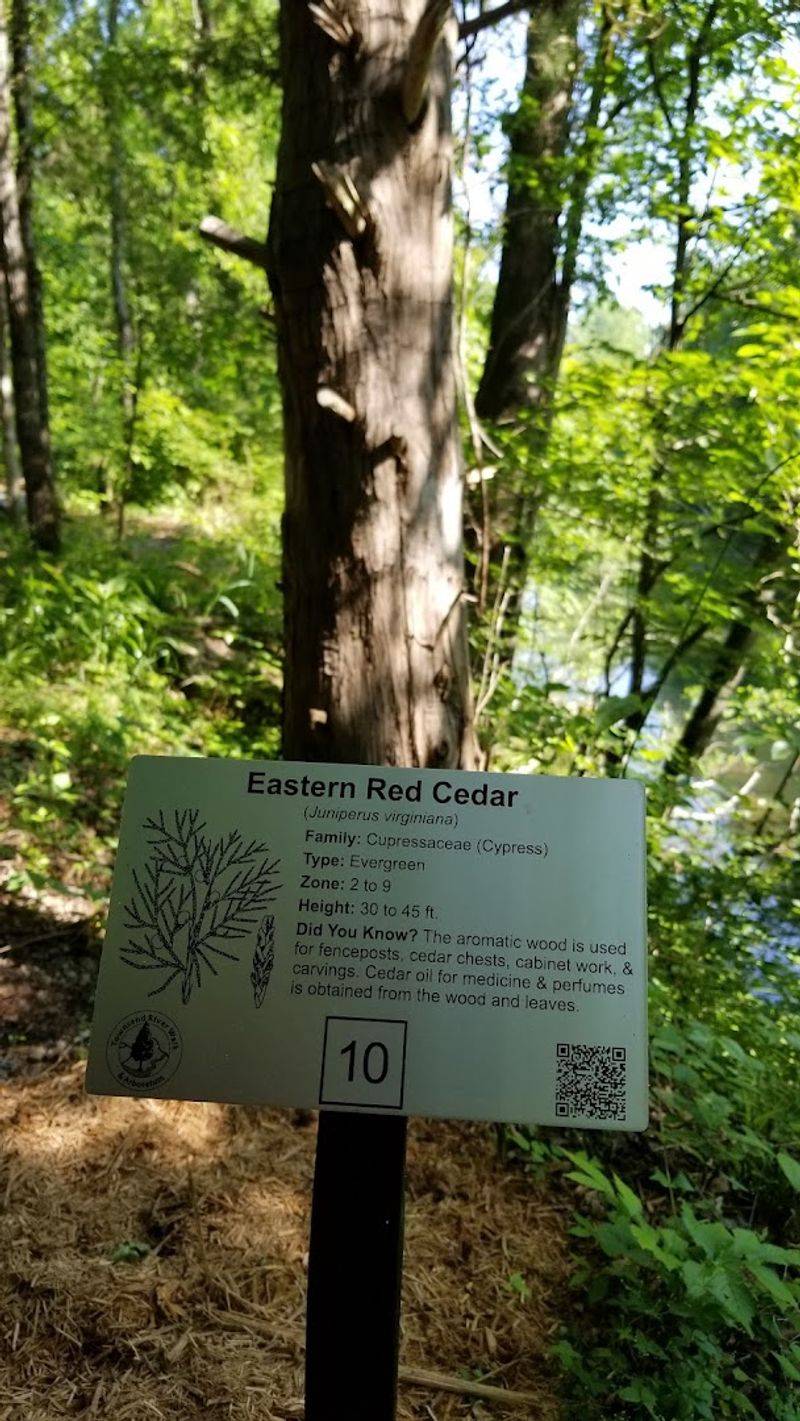
Beyond the fairy village, the arboretum section of the trail functions like an outdoor classroom. Trees, shrubs, and native plants are labeled with signs that explain what each species is, where it grows naturally, and why it matters to the local ecosystem.
For families with curious kids, this turns a simple walk into something more interactive. Instead of just passing by a tree, children can stop, read, and actually learn something about the forest they are standing in.
Adults tend to get pulled in just as easily, especially those who have always wanted to know the difference between a tulip poplar and a white oak.
The plant identification signs are clear and easy to read, written in plain language rather than dense scientific jargon. The arboretum section does not feel like a lecture.
It feels more like a conversation with someone who genuinely loves the land and wants to share that enthusiasm with anyone willing to slow down and pay attention.
The Children’s Garden: More Than Just a Playground
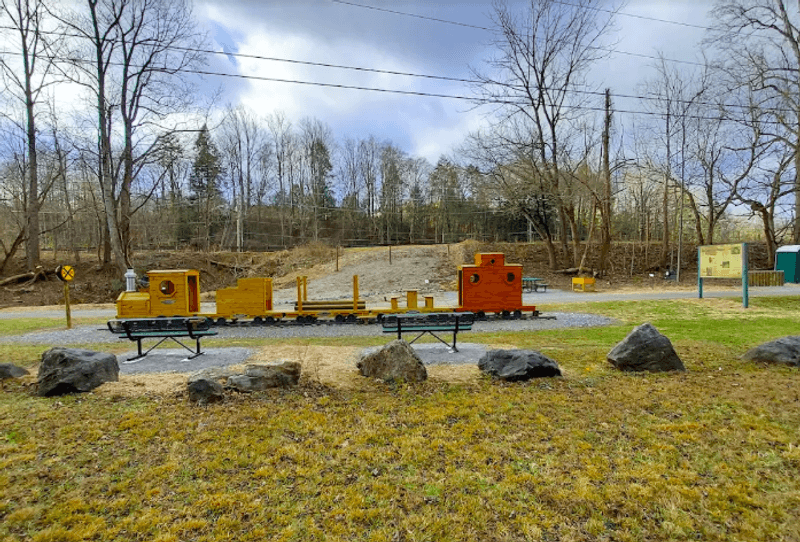
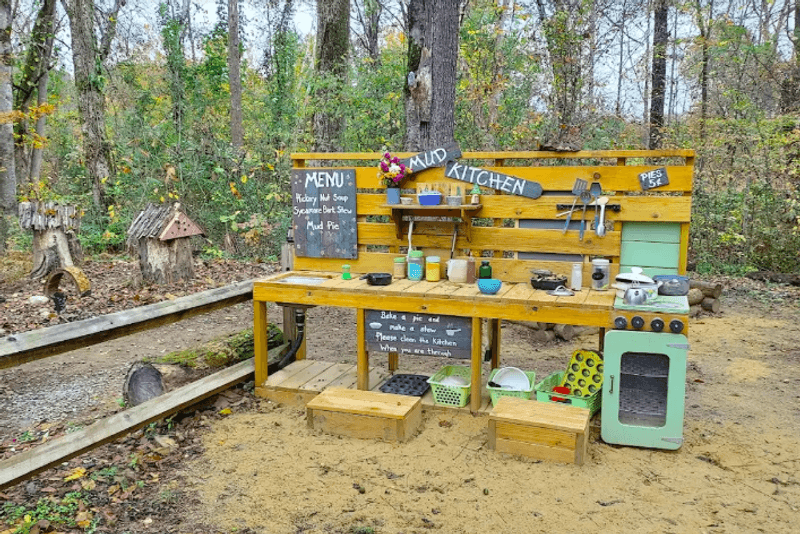
At one end of the trail, the children’s garden is a standout feature that goes well beyond a standard playground setup. Built using wood sourced directly from the surrounding area, the play space includes a mud kitchen, a sandbox, a wooden truck, a tent, and other open-ended play elements designed to encourage creativity rather than just structured activity.
The people behind the garden have been known to show up on weekends, quietly adding new pieces and chatting with families who stop to play. A teeter-totter was reportedly in the works as a future addition, which suggests the garden is always growing.
What sets this space apart is that it feels handmade in the best possible way. Nothing about it is mass-produced or plastic.
Every piece has a connection to the local land, and that gives the whole area a warmth that a catalog playground simply cannot replicate. Kids tend to linger here long after parents are ready to head back.
The Pedestrian Tunnel: A Smart and Surprisingly Fun Shortcut
Crossing E Lamar Alexander Pkwy on foot is not something anyone should attempt casually. It is a four-lane road with steady traffic, especially during peak tourist season when the Smoky Mountains draw visitors from across the country.
Fortunately, the trail has a practical solution built right in.
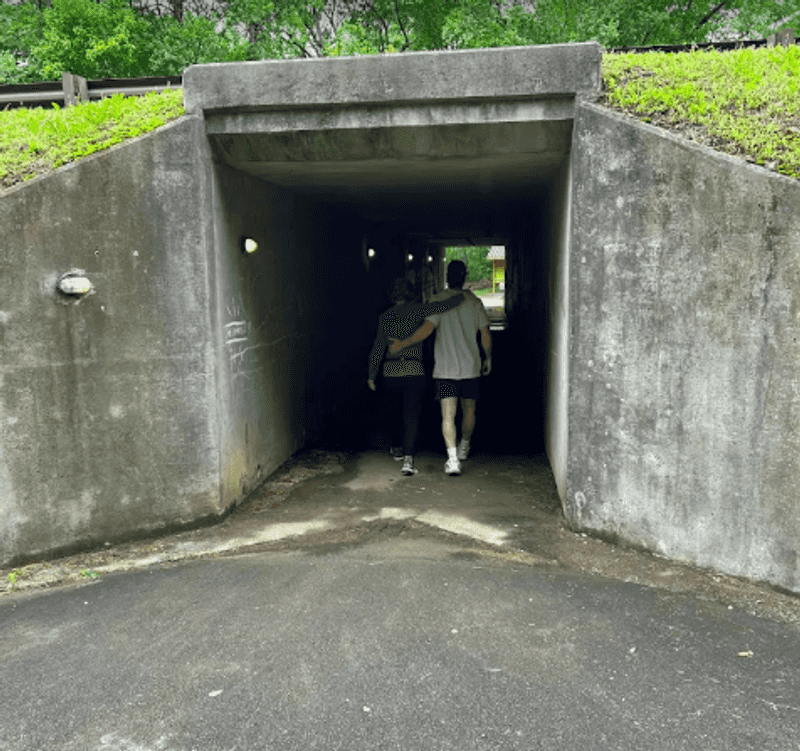
A pedestrian tunnel runs beneath the highway, connecting the church parking area on one side to the trail on the other. The walk to the tunnel entrance takes about a minute from the church, and once inside, it is a short, straightforward pass-through that comes out right near the children’s garden and the main trail area.
For families with young children, the tunnel is not just a safety feature. It genuinely adds to the adventure of the outing.
Kids who might not have been that excited about a nature walk tend to perk right up when they realize they are about to walk through an underground passage. It is a small detail that makes a real difference in the overall experience.
Walking Along the Little River
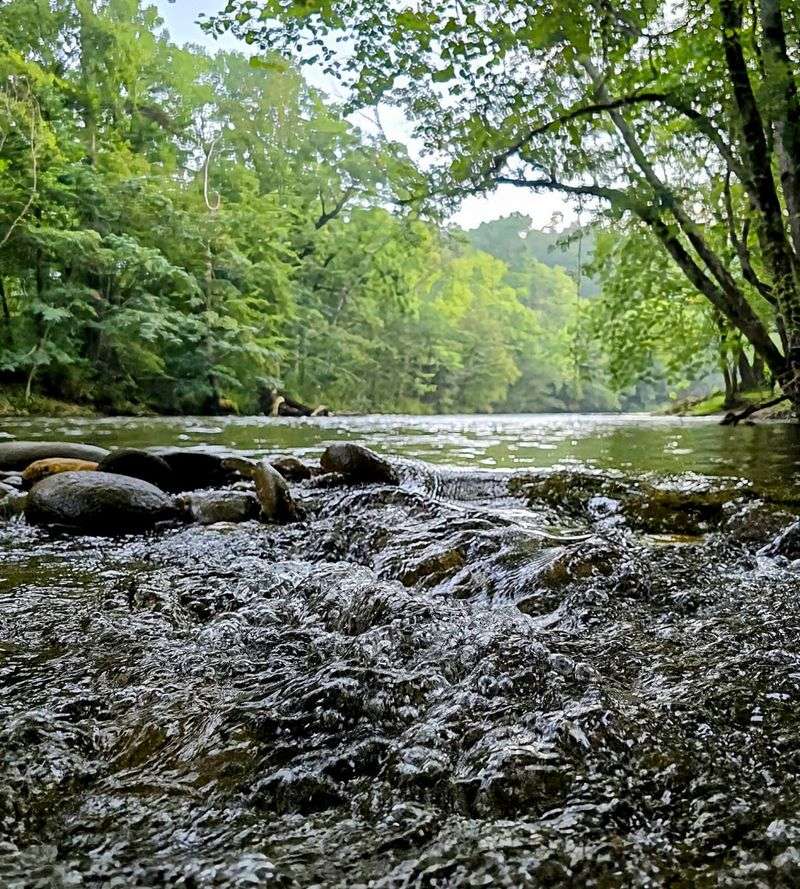
The river itself is one of the most consistent draws of the Townsend River Walk. The path runs alongside the Little River, offering steady views of the moving water as the trail winds through the trees.
The river is not hidden behind thick brush or far off in the distance. It is right there, close enough to hear and easy to see from most points along the trail.
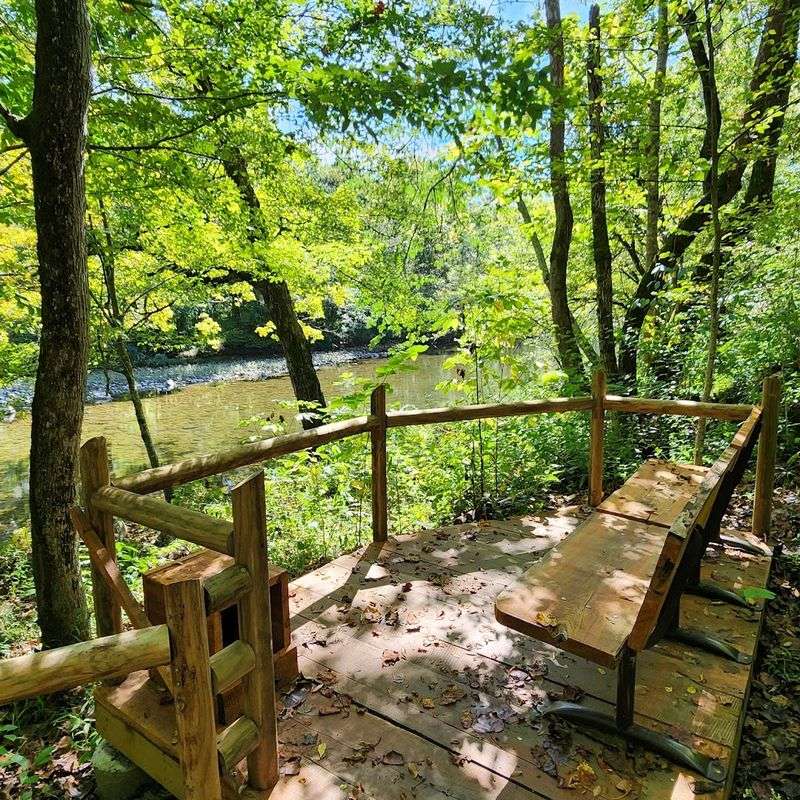
There are spots along the bank where benches have been placed, giving people a place to sit and watch the water without needing to stand the whole time. These seating areas are particularly popular with adults who bring a book or just want a few quiet minutes while kids explore nearby.
The trail is flat and easy enough for strollers, though a compact model works better than a large frame on the rocky and dirt sections. Dogs on leashes are welcome, making the river walk a regular outing for local pet owners who return again and again throughout the seasons.
What to Know Before You Go: Practical Tips
A few practical details can make the visit go much more smoothly, especially for first-timers who show up without a plan. Parking at the Campground United Methodist Church across from the trail is the standard and accepted approach.
The church lot is the closest option, and the walk from there to the trail entrance is short.
Bug spray and sunscreen are genuinely useful here, particularly during the warmer months when insects are active along the river. The trail is shaded for most of its length, which helps with heat, but the bugs do not care about shade.
Strollers can make it through the trail, but a lightweight model handles the rocky and dirt sections far better than a heavy-duty frame. The trail is open 24 hours a day, every day of the week, so there is no need to rush or plan around operating hours.
Early morning visits tend to be quieter, which gives the whole walk a more peaceful, unhurried quality that is worth seeking out.
A Covered Bridge and Multiple Entry Points
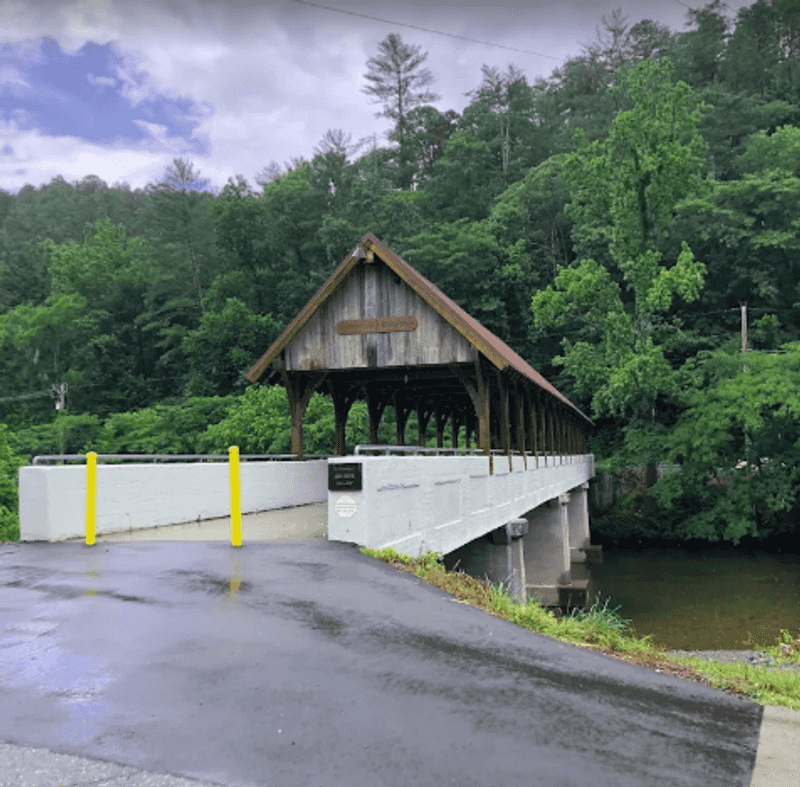
One of the more distinctive features along the trail is a covered bridge that appears along the route. It is the kind of detail that makes a walk feel like something more than just a walk.
The bridge adds a layer of character to the path and gives photographers and casual walkers alike a reason to pause.
The trail also has multiple entry points, which gives visitors some flexibility in how they approach the walk. Some people enter from the main arboretum area, while others come in from different sections of the connected bike path that runs through Townsend.
That connectivity is part of what makes the trail feel like more than just a short loop. The bike path links the river walk to other parts of town, so cyclists and walkers can extend their outing well beyond the arboretum section if they want more distance.
The covered bridge tends to be a natural stopping point and a favorite spot for photos, especially when the surrounding trees are at their most colorful in the fall.
A Nature Spot That Pairs Well With Nearby Attractions
Townsend sits in a part of Tennessee that is packed with natural attractions, and the river walk fits neatly into a full day of outdoor exploration. Tuckaleechee Caverns is just a short drive away, making the river walk a natural first stop or a relaxing wind-down after touring the cave system underground.
The trail also sits near the entrance to Great Smoky Mountains National Park, so visitors who are already in the area for the park have an easy reason to add this stop to their itinerary. It takes far less time than a full park hike, which makes it a good option for families with younger children who need a shorter outing.
The Apple Valley Cafe has been mentioned as a nearby landmark for orientation purposes, and the general Townsend area offers picnic spots and open green spaces that complement the river walk perfectly. Combining a few of these stops in one day turns a simple outing into a full and satisfying Tennessee adventure without anyone needing to drive very far.
Why This Trail Keeps People Coming Back
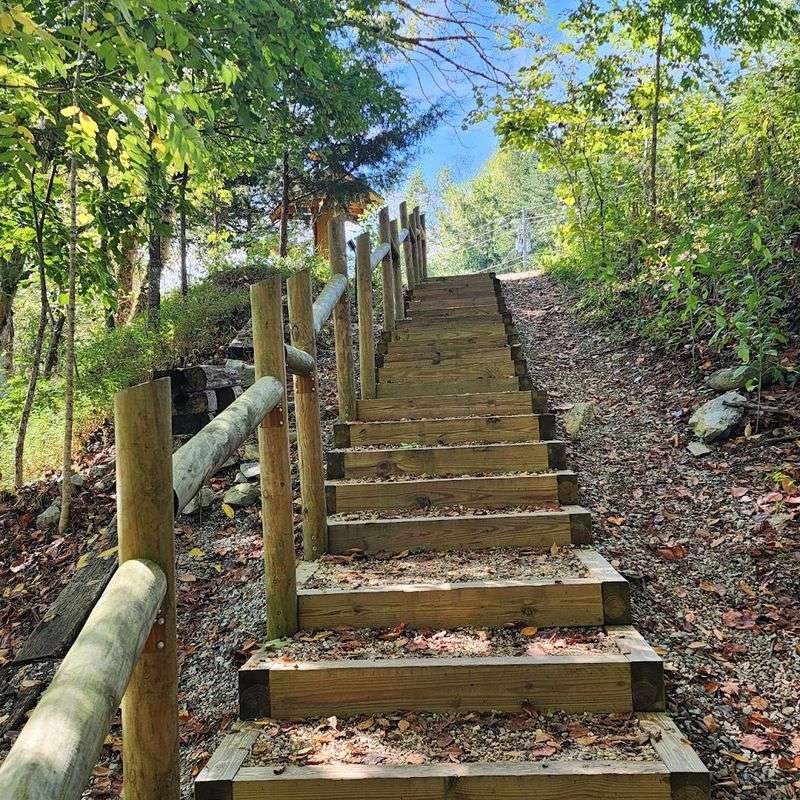
The Townsend River Walk and Arboretum has a way of turning a single visit into a habit. The trail is short enough to complete in under an hour, but it packs in enough variety that different people find different reasons to return.
Families come back to see the fairy garden additions. Plant enthusiasts return to check on seasonal changes in the arboretum.
Dog owners build it into their regular walking routine.
The volunteer team continues to add new features, which means the trail genuinely evolves between visits. A new section of the Bluebell Trail, a future picnic area, and ongoing improvements to the children’s garden all give returning guests something fresh to discover.
There is also something to be said for a free, well-maintained outdoor space that asks nothing of its visitors except that they enjoy it. That combination of accessibility, charm, and steady improvement is rare, and it explains why people who live an hour away still make the drive back on a regular basis.
The Quiet Magic of a Place That Asks Nothing in Return
Not every great outdoor spot needs a gift shop, a ticket booth, or a social media campaign. The Townsend River Walk and Arboretum exists entirely outside of that model, and that is a big part of its appeal.
The trail is free, open around the clock, and maintained by people who simply want it to be there for their community and for anyone passing through.
The gnome display, the fairy doors, the labeled trees, the handmade play equipment: none of it was built to go viral. It was built because someone thought it would make people happy, and it does.
That quiet purpose is woven into every part of the trail. There are no crowds competing for the best view, no lines for the most popular feature.
There is just a path along the river, a village small enough to fit between tree roots, and a town that has done something genuinely thoughtful with a stretch of land that could have just been left empty.
Where It All Begins: Address and Location
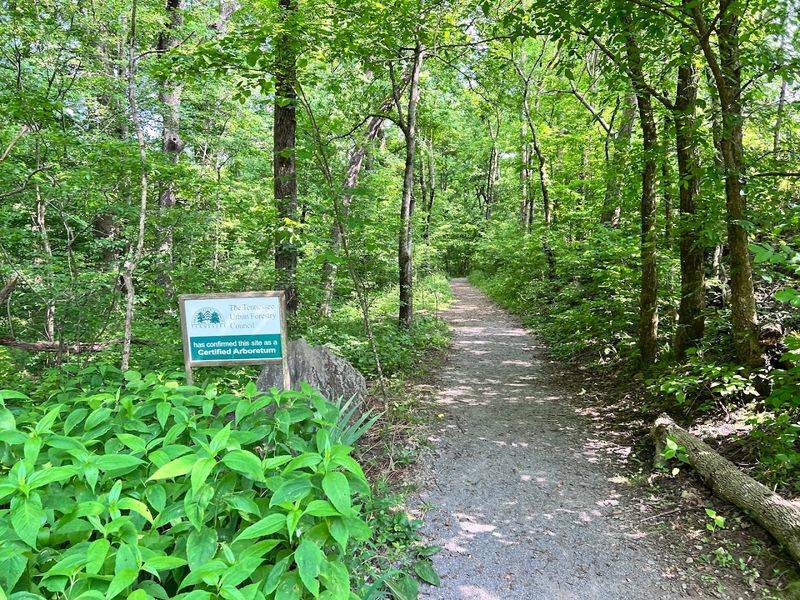
The Townsend River Walk and Arboretum sits at 7447 E Lamar Alexander Pkwy, Townsend, TN 37882, right along the main road that cuts through this small mountain town near the entrance to Great Smoky Mountains National Park.
The trail runs beside the Little River, and the arboretum section is tucked into the trees just off the highway. Because there is no dedicated parking lot at the trailhead itself, the go-to spot for most people is the Campground United Methodist Church across the street, where parking is welcome.
From there, a short walk up the road leads to a pedestrian tunnel that passes safely under the highway, connecting to the trail without requiring anyone to cross four lanes of traffic. The tunnel adds a little adventure to the start of the walk, especially for kids who are already buzzing with excitement before they even reach the river path.
Share this story