Europe’s coastline stretches from the Arctic Circle to the Mediterranean, creating an astonishing variety of beaches that go far beyond your typical strip of sand. Some are tucked beneath towering limestone cliffs, others shimmer with pink or white sand, and a few sit beside volcanic landscapes that look almost otherworldly.
Whether you love adventure, relaxation, or jaw-dropping scenery, Europe has a beach that will genuinely surprise you. Get ready to discover ten coastal gems that truly stand out from the crowd.
Cala Goloritzè – Sardinia, Italy
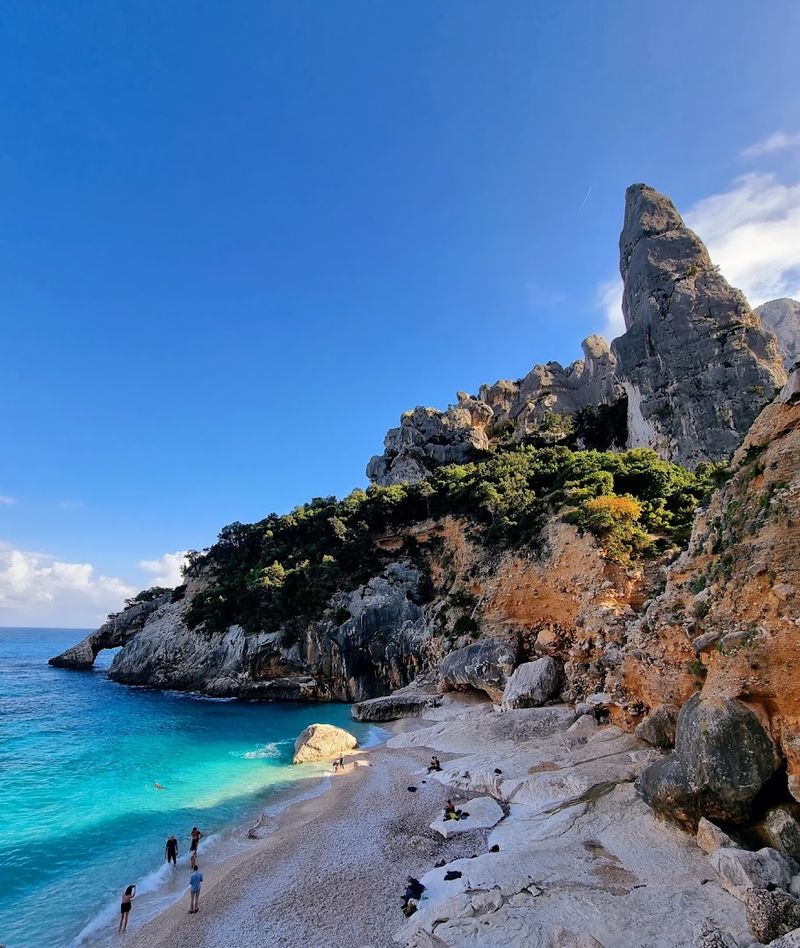
You cannot drive to Cala Goloritzè — and honestly, that’s exactly what makes it so magical. Accessible only by boat or a scenic two-hour hike through the mountains, this Sardinian beach rewards every effort with a view that looks almost too beautiful to be real.
The turquoise water is so clear you can count the pebbles on the seabed from the surface.
The beach sits at the base of a massive limestone pinnacle called Aguglia, which rises sharply from the shoreline like a natural skyscraper. Rock climbers travel from across Europe just to tackle that spire.
Meanwhile, snorkelers and swimmers explore underwater caves and colorful marine life hidden just beneath the surface.
UNESCO recognized Cala Goloritzè as a natural monument, so development here is strictly limited. No beach bars, no umbrellas for rent, no crowds of vendors — just raw, untouched nature at its finest.
Bring your own water and snacks because there are no facilities. The hike down is steep in places, so wear proper shoes.
Arriving early by boat gives you the best chance of enjoying the beach before the midday rush arrives.
Elafonissi Beach – Crete, Greece
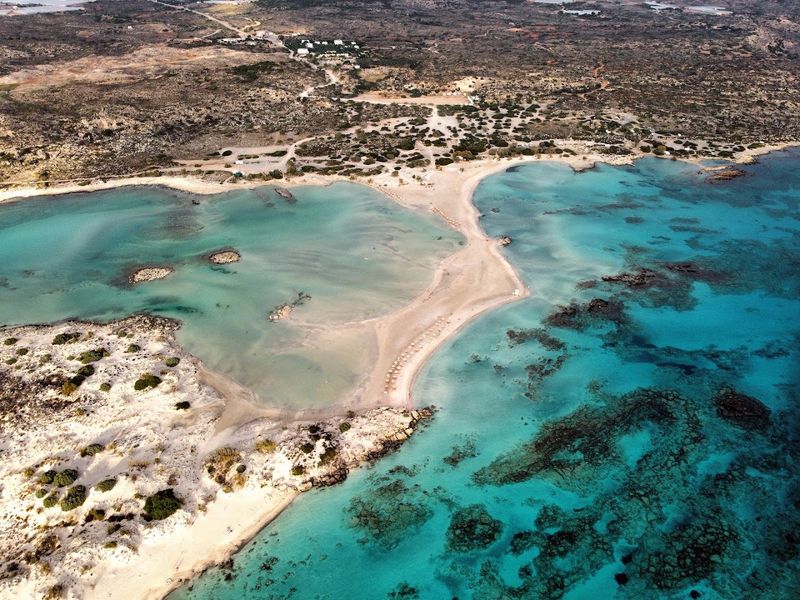
Pink sand sounds like something from a fantasy novel, but Elafonissi Beach in Crete is the real deal. The blush-colored shoreline gets its dreamy hue from millions of crushed shells and tiny coral fragments mixed into the sand.
Standing at the water’s edge, you might feel like you’ve accidentally wandered onto another planet.
The lagoons here are remarkably shallow, often no deeper than waist height, which makes Elafonissi perfect for families with young children. The warm, calm water stays comfortable for swimming throughout the summer months.
On busy days, the lagoon looks like a living postcard — colorful towels, laughing kids, and water that shifts between every shade of turquoise imaginable.
Because the area is a protected nature reserve, visitors are asked to stay on marked paths and avoid disturbing the delicate dune vegetation. Rare plant species grow along the sandy ridges, and the reserve provides important habitat for local wildlife.
The beach can get crowded in July and August, so arriving before 9 a.m. makes a real difference. A small snack bar operates nearby during peak season, but bringing extra supplies is always a smart move.
Praia de Monte Clérigo – Algarve, Portugal
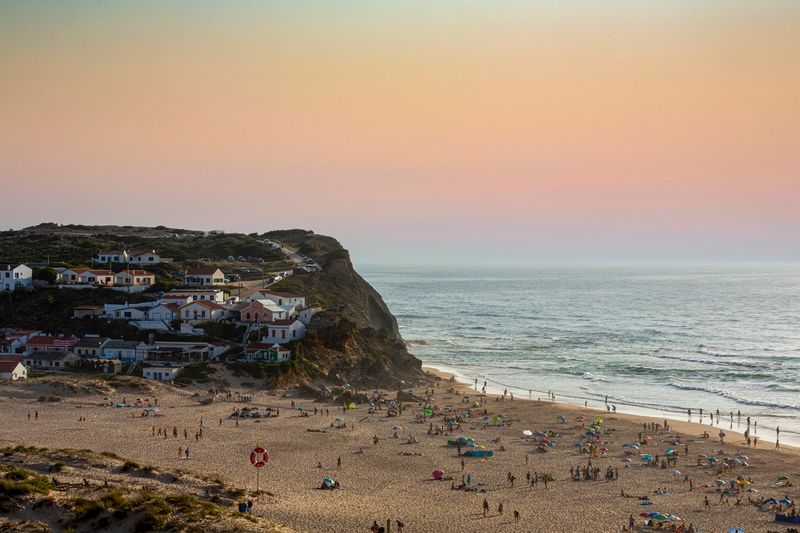
Not every great beach is about flat, calm water and sunbathing. Praia de Monte Clérigo on Portugal’s wild Costa Vicentina is the kind of place that makes your heart beat faster the moment you see it.
Golden cliffs tower above the shoreline, Atlantic waves roll in with satisfying power, and the air smells like salt and freedom.
Surfers absolutely love this spot. The consistent swells attract beginners and experienced wave-riders alike, and a surf school operates nearby during summer.
Even if you never touch a surfboard, watching skilled surfers carve through the waves from the clifftop path is genuinely entertaining. The sunsets here are legendary among locals and regular visitors.
Monte Clérigo sits within the Southwest Alentejo and Costa Vicentina Natural Park, one of Europe’s largest and most protected coastal areas. That protection means the landscape stays gloriously unspoiled year after year.
The village behind the beach is tiny and charming, with a handful of restaurants serving fresh grilled fish. Parking can fill up quickly in summer, so arriving before 10 a.m. is strongly recommended.
Off-season visits in spring or autumn offer a quieter, almost meditative experience that regular visitors swear by.
Navagio Beach – Zakynthos, Greece
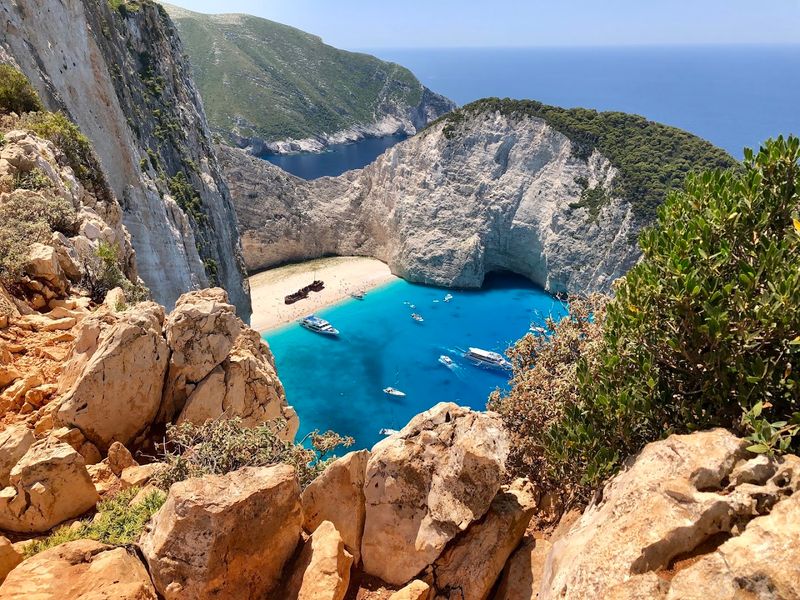
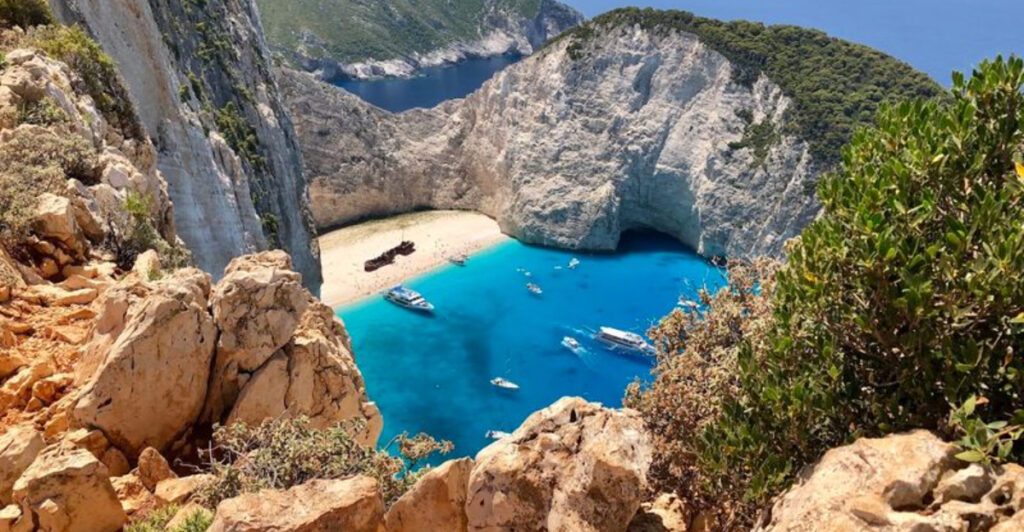
There is a shipwreck sitting on one of Greece’s most beautiful beaches, and somehow that only makes the place more spectacular. Navagio Beach on the island of Zakynthos is completely enclosed by sheer white limestone cliffs that rise hundreds of feet above the sand.
The only way in is by boat, which adds a genuine sense of adventure to every visit.
The MV Panagiotis ran aground here in 1980, allegedly while smuggling contraband cigarettes. Today the rusting hull has become one of the most photographed objects in all of Europe.
The wreck sits dramatically against the brilliant white pebble beach and electric blue water, creating a contrast so vivid it barely looks real in photographs.
Boat trips from the nearby port of Porto Vromi run regularly throughout the day during summer. Most tours allow around 30 to 45 minutes on the beach itself, which is enough time for photos and a swim but leaves you wanting more.
Crowds peak between noon and 3 p.m., so booking an early morning tour makes a noticeable difference. The clifftop viewpoint above the beach is also worth visiting for a completely different perspective on this already jaw-dropping location.
La Pelosa Beach – Stintino, Sardinia, Italy
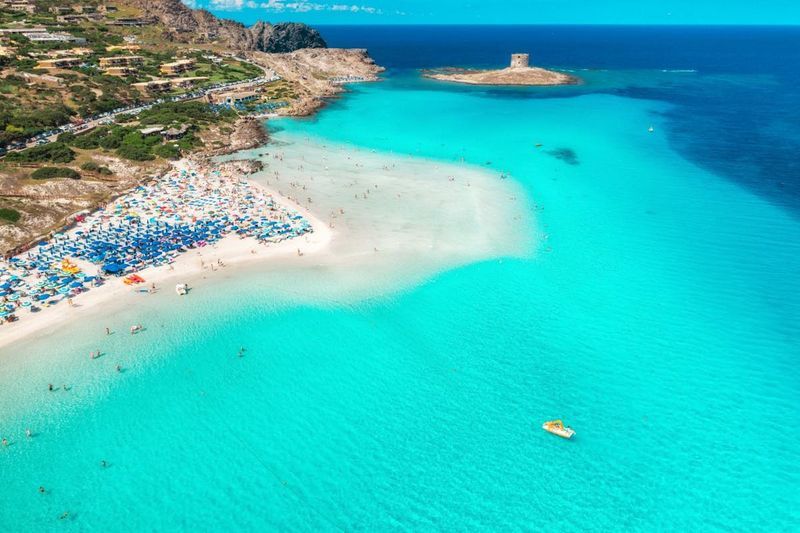
Sardinia shows up twice on this list, and La Pelosa is exactly why the island has such a devoted following among beach lovers. The water here is the kind of turquoise that travel photographers dream about — shallow, warm, and so clear that even the deepest sections look like swimming pools.
A medieval watchtower stands at the far end of the beach, giving the whole scene a storybook quality.
La Pelosa became so popular that Italian authorities introduced a daily visitor cap to protect the fragile white sand from erosion. Visitors now need to book a spot in advance during peak summer months, and beach mats must be placed on special protective pads rather than directly on the sand.
It sounds strict, but the system genuinely works — the beach looks as pristine today as it did decades ago.
The shallow water makes La Pelosa a top choice for families, snorkelers, and anyone who just wants to float peacefully without worrying about strong currents. The nearby town of Stintino is small but well-equipped with restaurants and accommodation.
Arriving at sunrise, before the crowds gather, offers a genuinely surreal experience. The water glows with an almost neon quality in the early morning light.
Praia da Falésia – Algarve, Portugal
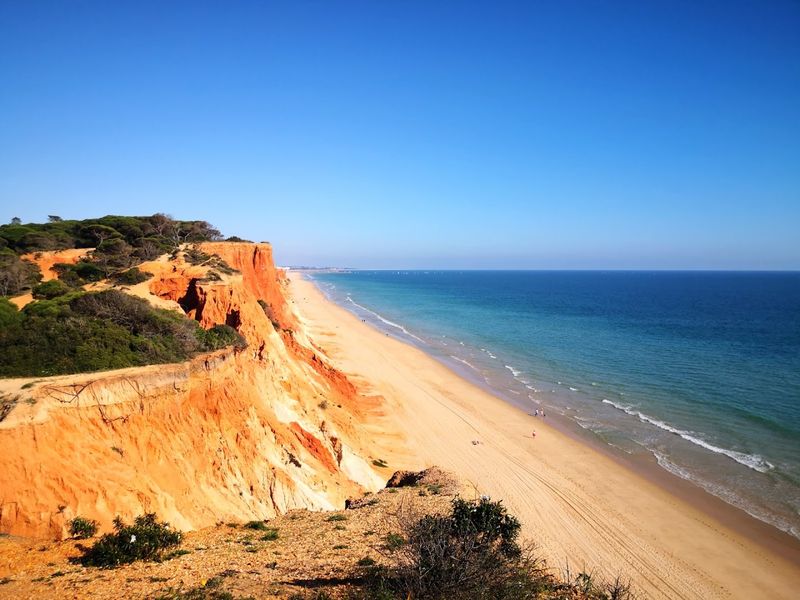
Walking along Praia da Falésia feels like wandering through a natural art gallery. The cliffs that line this long Atlantic beach are striped in brilliant shades of red, orange, and ochre, carved by centuries of wind and rain into dramatic, layered formations.
The contrast with the deep blue sea below is genuinely breathtaking at every turn.
Stretching for nearly six kilometers, Falésia is one of the longest beaches in the Algarve. Because it covers so much ground, it rarely feels overcrowded even during the busiest summer weeks.
Different sections of the beach have different characters — some are lively with sunbathers and beach bars, while quieter stretches feel almost private. The firm, golden sand is excellent for long walks.
Access points are spread along the clifftop, with wooden staircases leading down to the shore. Wear sturdy footwear on the stairs because the sand can make them slippery.
Falésia faces the open Atlantic, so waves can be stronger here than on more sheltered Algarve beaches. The clifftop path above offers sensational views and is popular with joggers and cyclists.
Sunset turns the entire cliff face into a glowing wall of amber and copper, making the last hour of daylight the most spectacular time to visit.
Myrtos Beach – Kefalonia, Greece
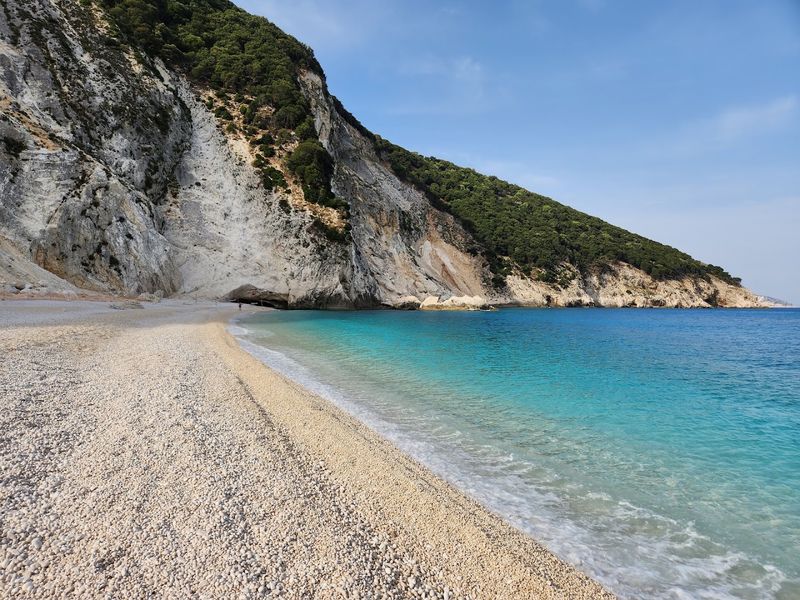
Few beaches in Europe can match the sheer drama of Myrtos. Steep, pine-covered mountains plunge almost vertically to a shoreline of white pebbles, and the Ionian Sea between them burns with an almost electric shade of blue.
Locals say the color changes depending on the time of day, shifting from pale turquoise in the morning to deep cobalt by afternoon.
The clifftop viewpoint above Myrtos is one of the most photographed spots in all of Greece. Most visitors stop there before descending to the beach itself, and it is genuinely hard to pull yourself away from the panorama.
The drive down the winding road to the shore is an adventure in itself, with hairpin turns and heart-stopping views at every corner.
Myrtos has a strong undertow and waves that can catch swimmers off guard, so it is better suited to confident swimmers than young children. Loungers and umbrellas are available for hire, and a beach bar operates during summer.
The pebbles can be sharp underfoot, so water shoes are a worthwhile investment. Visiting in late September or early October gives you warm water, thinner crowds, and softer golden light that makes the famous blue water look even more extraordinary.
Zlatni Rat (Golden Horn) – Brač, Croatia
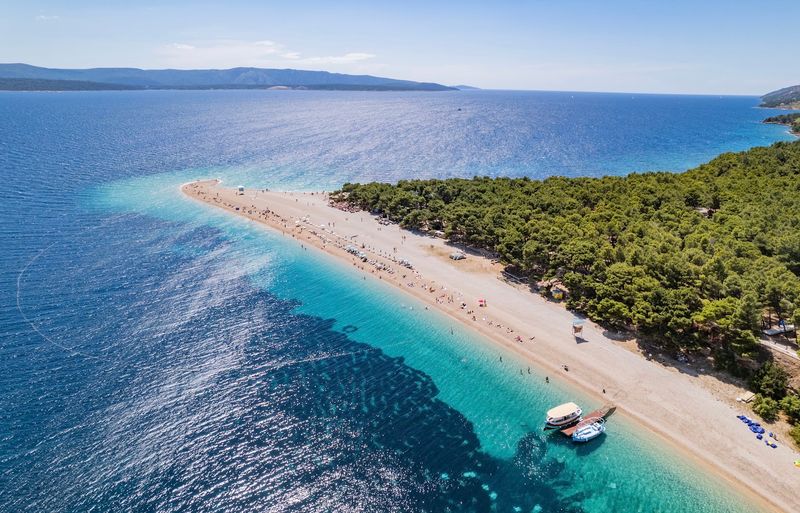
Zlatni Rat does something no other beach on this list can claim — it literally moves. Strong winds, tidal shifts, and seasonal currents gradually change the shape and direction of its famous pebble spit, meaning the beach you visit today looks slightly different from the one someone visited last summer.
That restless quality gives Zlatni Rat a personality all its own.
The beach juts out into the Adriatic like a narrow white finger, lined on both sides by clear turquoise water and backed by a dense canopy of pine trees. The shade those pines provide is a welcome bonus on hot August afternoons.
Windsurfers and kitesurfers flock here because the reliable maestral wind that shapes the beach also makes it one of the best spots for water sports in the Adriatic.
Zlatni Rat sits a short walk from the town of Bol, which has plenty of restaurants, bars, and accommodation. Regular ferry and catamaran services connect Brač to Split on the mainland, making it easy to include in a wider Croatian holiday.
The beach gets very busy in July and August, but the pine forest provides enough shade to keep things comfortable. Early morning swims before the crowds arrive are genuinely peaceful and highly recommended by regular visitors.
Haukland Beach – Lofoten Islands, Norway
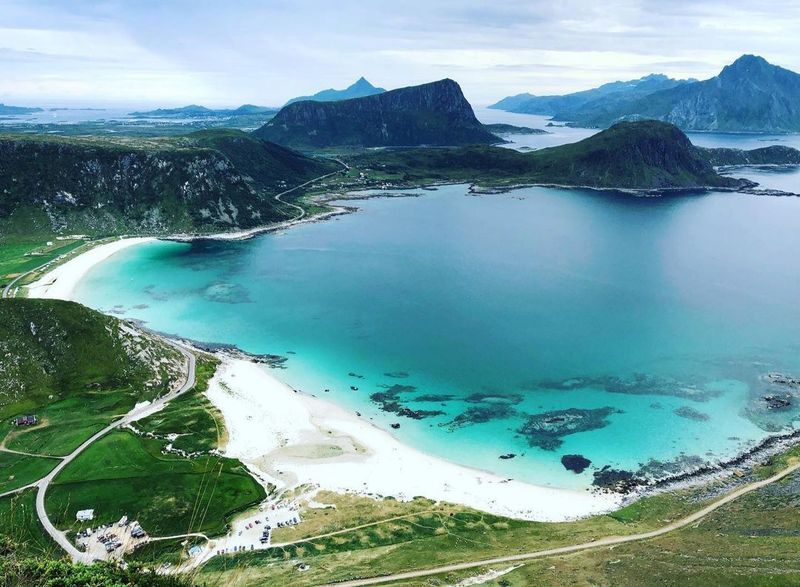
White sand, emerald water, and mountains so dramatic they look like they belong in a fantasy film — Haukland Beach proves once and for all that stunning beaches are not a Mediterranean monopoly. Located in Norway’s Lofoten Islands above the Arctic Circle, this beach delivers scenery that stops visitors in their tracks, regardless of how many coastlines they have already seen.
The water temperature here is brisk even in summer, hovering around 15 to 18 degrees Celsius on a good day. Brave swimmers love it.
Less brave visitors prefer to simply stand at the shoreline and stare at the surrounding peaks reflected in the glassy shallows. Either approach is completely valid.
The Northern Lights occasionally appear above the beach in autumn and winter, turning an already extraordinary place into something almost indescribable.
Haukland is part of a stunning stretch of coastline that includes neighboring Uttakleiv Beach, and a short walk connects the two. Wild camping is permitted nearby under Norway’s outdoor access laws, making this a dream destination for adventurous travelers.
Parking fills up quickly during the brief summer season, so arriving before 8 a.m. is wise. The Lofoten Islands are best reached by flying into Leknes or Svolvær, both of which have regular domestic connections from Oslo.
Spiaggia dei Conigli (Rabbit Beach) – Lampedusa, Italy
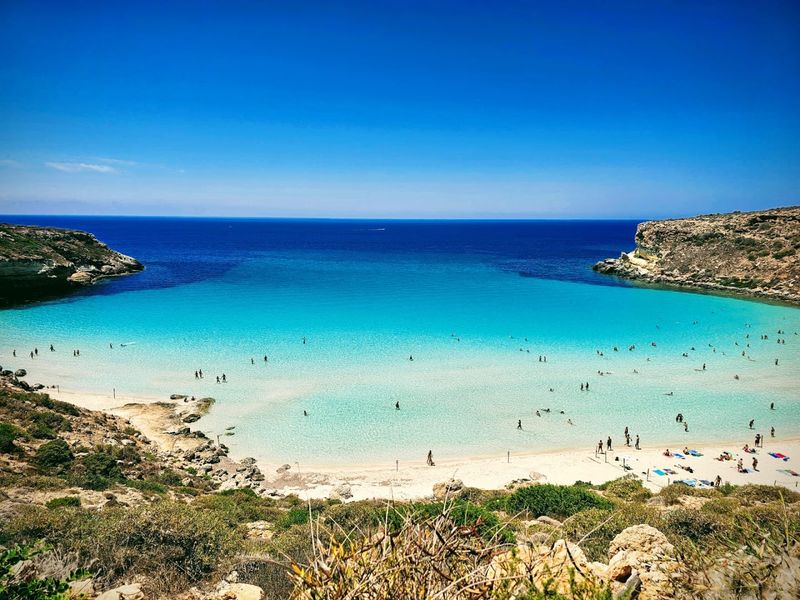
Lampedusa sits closer to Tunisia than it does to mainland Italy, which gives Rabbit Beach a distinctly North African warmth and clarity of water that most European beaches simply cannot match. The sea here is so transparent that boats appear to hover in mid-air above the sandy seabed.
Multiple travel organizations have ranked it among the top beaches in the entire world, not just Europe.
The beach gets its charming name from the wild rabbits that once populated the small rocky islet just offshore. Today that islet is a protected marine reserve, and the surrounding waters are home to an astonishing variety of sea life.
Loggerhead sea turtles nest on the beach each summer, and conservation teams monitor the nests carefully to protect the hatchlings on their journey to the sea.
Visitor numbers are managed to protect both the beach ecosystem and the turtle nesting sites. Swimming near marked nesting areas is restricted during nesting season, so checking current rules before visiting is important.
The water is warm enough for comfortable swimming from June through October. Lampedusa is reached by short flights from Palermo or Rome, or by overnight ferry from Sicily.
The island itself is small and relaxed, with excellent seafood restaurants and a genuinely unhurried pace of life.
Share this story