Pennsylvania is full of surprises, but not all of them are found in its busy cities or famous landmarks. Scattered across the state are entire communities that were once buzzing with life, only to be left behind by history. Some were swallowed by industrial collapse, others by fire, flooding, or forces stranger than fiction. A few were even surrendered to the federal government during wartime, their residents given little choice but to pack up and go.
What makes these places so compelling is not just the ruins they left behind, but the human stories etched into every crumbling foundation and overgrown road. From a town sitting above a fire that has been burning for over sixty years to a village now resting quietly under a lake, Pennsylvania’s ghost towns are genuinely unlike anything else in America. Get ready to explore ten of the most fascinating forgotten communities the Keystone State has to offer.
1. Centralia, Columbia County, Pennsylvania
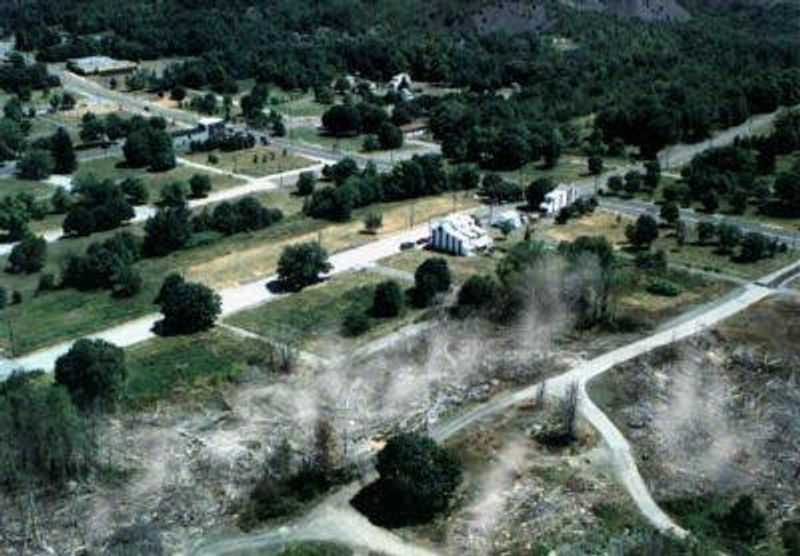
An underground coal fire that started in 1962 has been burning beneath this Columbia County town for over six decades, and experts say it could keep going for another 250 years.
Centralia once had nearly 2,800 residents at its peak in 1890, but the slow creep of toxic gases and unstable ground forced almost everyone out. Congress approved $42 million for voluntary relocations in 1984, and Pennsylvania later condemned the remaining properties through eminent domain.
Visitors still come from around the world to see what remains of the town, walking the quiet streets and photographing the eerie landscape where entire neighborhoods once stood. The contrast between the peaceful surroundings and the extraordinary disaster unfolding underground makes Centralia one of Pennsylvania’s most unforgettable destinations.
Today, fewer than ten people remain, living under a unique agreement that lets them stay until they pass away. Streets still exist, but the lots they once served are now open fields. St. Mary’s Ukrainian Greek-Catholic Church still holds weekly services, standing as one of the last original structures in a town that refuses to be entirely forgotten.
2. Pithole City Historic Site, Pleasantville, Pennsylvania
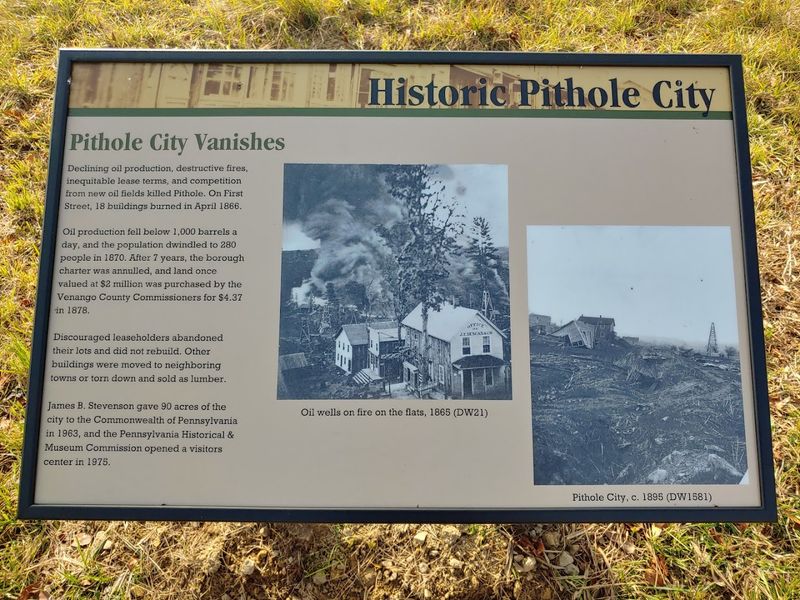
Few places in American history managed to go from empty farmland to a city of 15,000 people in just 90 days, but Pithole City pulled it off during Pennsylvania’s first great oil boom in 1865.
At its wildest peak, the town had 57 hotels, three theaters, and the third busiest post office in all of Pennsylvania. Samuel Van Syckel introduced the world’s first oil pipeline here in 1866, a detail that tends to stop visitors in their tracks.
The collapse was just as dramatic as the rise. Oil dried up, fires tore through the wooden buildings, and by 1870 fewer than 50 households remained. The Pennsylvania Historical and Museum Commission now maintains the site, where grassy paths trace old streets and a detailed diorama inside the visitor center shows Pithole in its unforgettable prime.
Interpretive signs throughout the site help visitors imagine where hotels, businesses, and homes once stood, transforming an open field into one of America’s greatest boom-and-bust stories. It is difficult to believe such a bustling city could disappear so completely in just a few short years.
3. Yellow Dog Village, Worthington, Pennsylvania
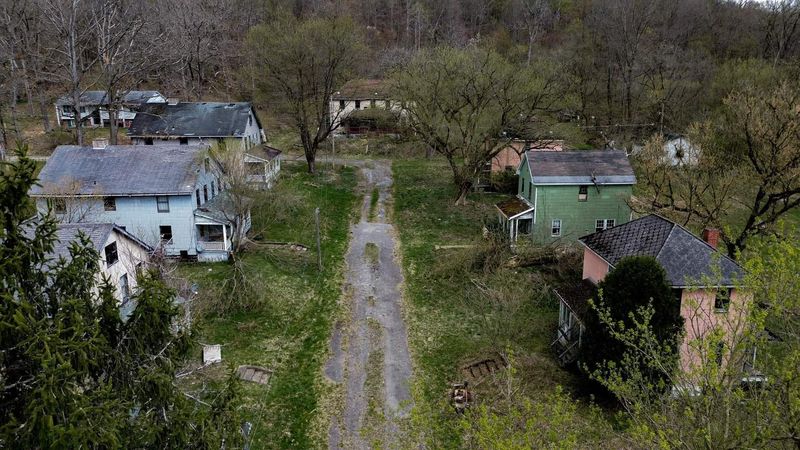
The name alone raises eyebrows, but Yellow Dog Village earned its quirky title from the anti-union contracts miners were forced to sign when the Pittsburgh Limestone Company built this Armstrong County community between 1910 and 1930.
Rather than treating the name as an insult, residents wore it proudly as a badge of community identity. The village had duplexes, single-family homes, a boarding house, and all the basics a working family needed. Operations wound down after the mines closed in the 1950s, but people kept living there until an E. coli water contamination crisis forced a final evacuation around 2009 to 2012.
New owners took over in 2022 with plans to restore the property and develop it into a farm and vacation destination. Paid tours are available, and visitors must sign a waiver before exploring the remarkably preserved, time-capsule interiors.
Many of the buildings still contain original furnishings, household items, and everyday objects left behind by former residents, giving the village an unusually authentic atmosphere. Walking through the preserved homes feels less like visiting ruins and more like stepping into a forgotten moment in time.
4. Rausch Gap, Lebanon County, Pennsylvania
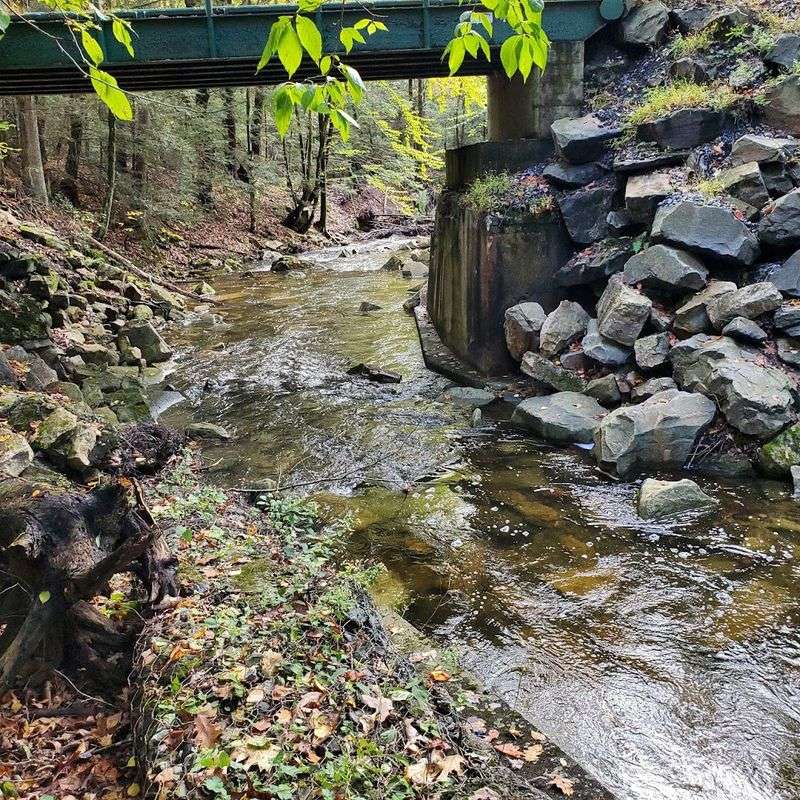
Hidden inside State Game Lands 211, Rausch Gap started as a shantytown in 1828 and grew into a genuine rail center of around 1,000 people by 1860, serving coal miners and railroad workers who were mostly English and Irish immigrants.
The railroad headquarters relocated to Pine Grove in 1872, and that single move effectively ended the town’s reason for existing. By 1900, Rausch Gap was virtually deserted, and the tracks were pulled up entirely by 1945.
Hikers and bikers exploring the area today can still find stone house foundations, an abandoned well, and a small cemetery with headstones dating to the 1850s. An Appalachian Trail shelter nearby makes the site accessible for overnight visitors. Environmental restoration efforts since 1986 have brought aquatic life back to Rausch Creek, adding a hopeful chapter to a quietly melancholy history.
Thick forests now cover most of the former town, making the surviving foundations feel like discoveries rather than obvious landmarks. The peaceful surroundings create a striking contrast with the busy railroad community that once occupied the same valley.
5. Alvira, Union County, Pennsylvania
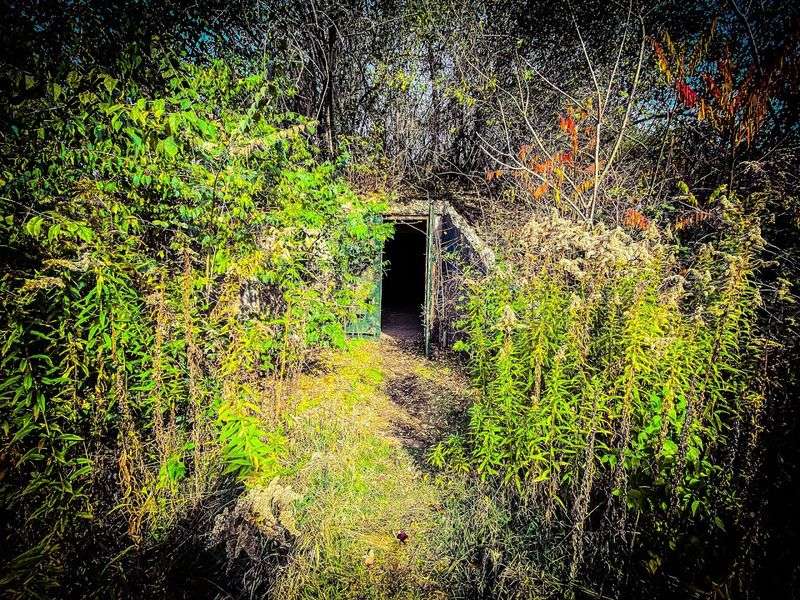
When the federal government decided it needed land for a TNT manufacturing plant during World War II, the farming community of Alvira in Union County did not get much of a say in the matter.
Over 8,500 acres were seized through eminent domain in 1942, and more than 100 families were displaced. The Pennsylvania Ordnance Works produced up to 768,000 pounds of TNT daily at its peak, and four of its bunkers secretly stored 50 tons of uranium waste connected to the Manhattan Project. Radiation testing in 2011 confirmed no lingering contamination.
The facility closed after just eleven months. Today, State Game Lands 252 is dotted with over 100 distinctive concrete igloo-style bunkers, now partially reclaimed by forest. Christ Lutheran Church, the only original village building still standing, sits within the adjacent federal prison grounds and opens only for special events.
6. Byrnesville, Conyngham Township, Columbia County, Pennsylvania
Just a few miles down the road from Centralia, Byrnesville shared the same underground mine fire problem and ultimately the same fate, though its story tends to get overshadowed by its more famous neighbor.
Founded in 1856 by Irish Catholic immigrants, the village had around 75 residents and 29 homes as recently as 1985. Congress approved buyouts for Byrnesville families in 1983, and the relocation process was deeply painful for a community with multiple generations of roots in the same neighborhood. The last home was demolished in 1996.
Today the area is open fields and overgrown lots, with almost nothing left to indicate a neighborhood once stood there. The most visible survivor is a roadside Shrine to the Blessed Virgin Mary built by the Reilley family in the early 1950s, which continues to be maintained and visited. Byrnesville stands as a quieter but equally sobering chapter in Columbia County’s mine fire saga.
7. Celestia, Davidson Township, Sullivan County, Pennsylvania
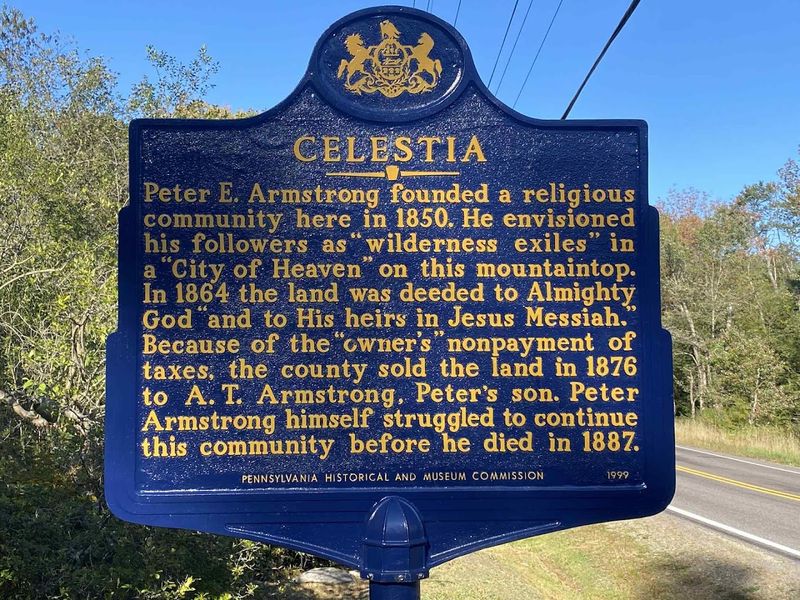
Peter E. Armstrong founded Celestia in 1850 with an extraordinary goal: to build a City of Heaven in the wilderness of Sullivan County where true believers could await the Second Coming of Christ and, ideally, avoid death altogether.
Armstrong deeded the land in 1864 directly to Almighty God, fully expecting the property to be exempt from taxes. Sullivan County disagreed, issued a tax bill in 1876, and the community began its slow unraveling. Armstrong passed away in Celestia in 1887 with his grand temple unbuilt and most of his followers long gone.
By the early 1900s the settlement was fully abandoned. Today a Pennsylvania historical marker along Route 42 points visitors toward the site, and the Sullivan County Historical Society maintains a five-acre portion with a walking tour brochure. Faint foundation traces, a natural spring, and ghost apple orchard outlines are all that remain of one of Pennsylvania’s most unusual social experiments.
8. Frick’s Lock, East Coventry Township, Pennsylvania
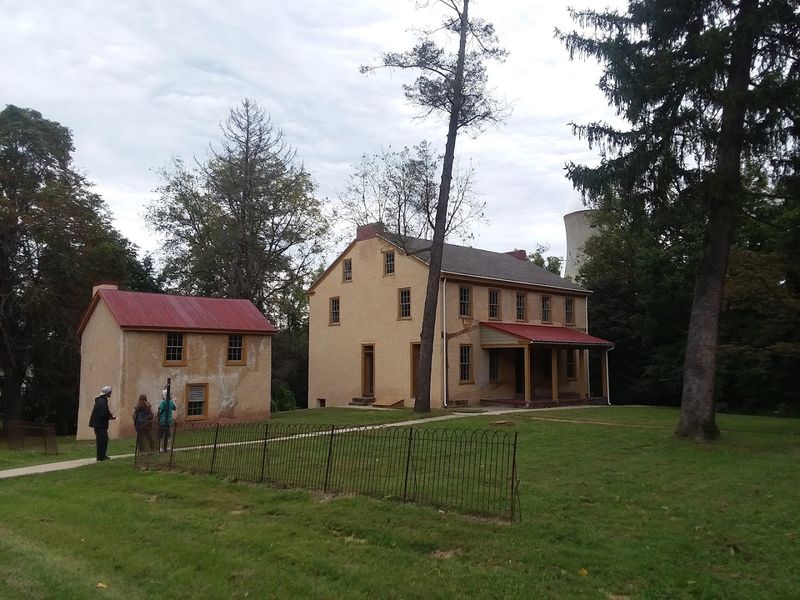
Built along the Schuylkill Canal in the early 1800s, Frick’s Lock once handled up to 1,400 canal boats annually, making it a vital stopover for coal and agricultural goods moving through Chester County.
The canal’s decline after flood damage in 1925 hurt the village, but residents kept living there until the 1960s, when Philadelphia Electric Company began building the Limerick Nuclear Power Station directly across the river. By 1986, when the plant went operational, all residents had been relocated and the buildings boarded up.
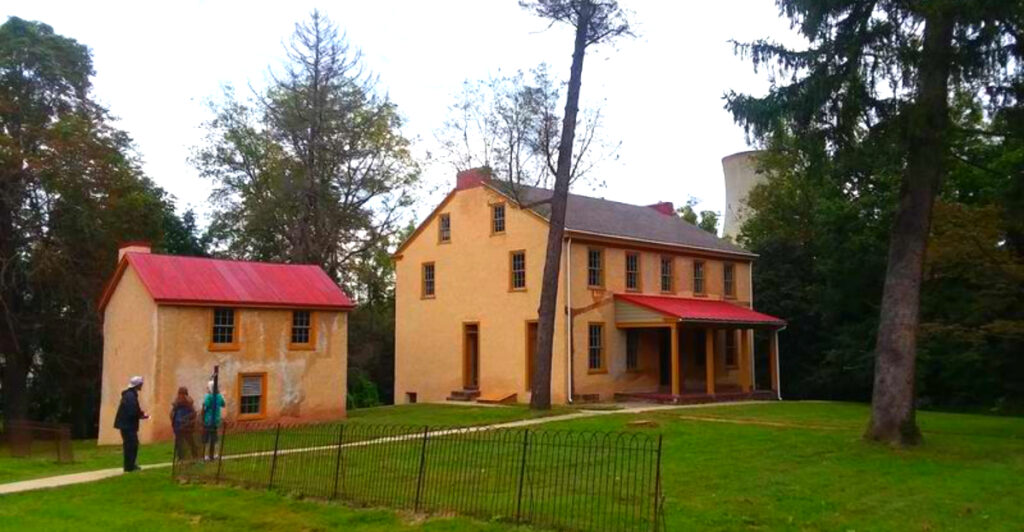
Roughly ten historic structures survive today, including an 1817 lock tender’s house and an 1824 barn. Exelon Corporation now owns the property, and the East Coventry Historical Commission offers free guided tours on select Saturdays from May through October. Some buildings even feature printed photographic facades in place of original windows, a creative preservation detail worth seeing.
9. Livermore, Westmoreland County, Pennsylvania
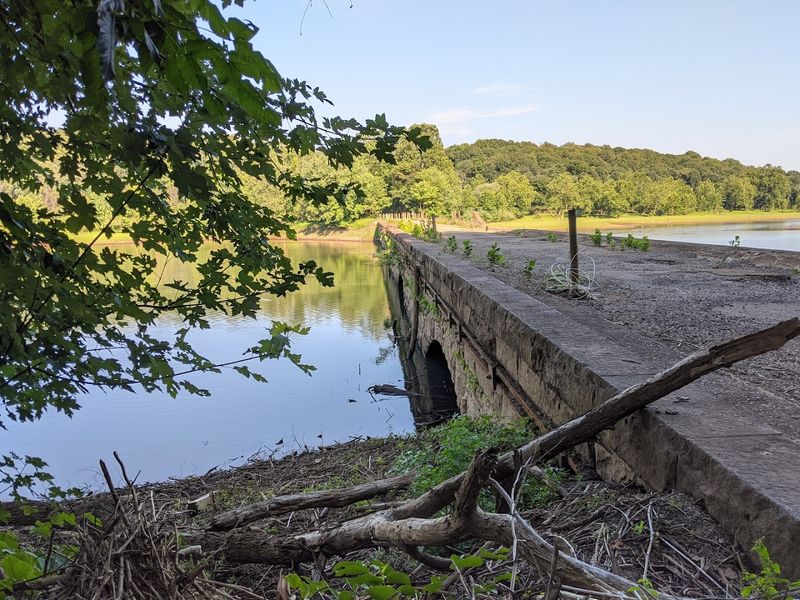
Most ghost towns are abandoned on land, but Livermore took a more dramatic exit: the entire community was deliberately flooded in 1952 to create Conemaugh River Lake as part of a federal flood control project.
Founded in 1827 along the Pennsylvania Canal, Livermore had a train station, several churches, a school, and the historical distinction of being the birthplace of Samuel Martin Kier, a pioneer in American petroleum refining. The catastrophic St. Patrick’s Day Flood of 1936 submerged the town under 18 feet of water and sealed its fate.
Today only the relocated Livermore Cemetery survives above ground. The William Penn Trail passes near the former town site, and the Army Corps of Engineers visitor center at Conemaugh River Lake tells the full story through exhibits on floods and dam history. Urban legends about witches cursing the town have added a layer of folklore to an already remarkable history.
10. Landrus, Delmar Township, Tioga County, Pennsylvania
Landrus holds a remarkable technical footnote in history: its coal mines, established around 1888, are believed to have been among the first in the world to use electric power, running a 60-horsepower locomotive off a steam-generated electrical system.
Founded in 1882 and named after Blossburg Coal Company manager Henry J. Landrus, the town had 62 homes, two churches, a company store, a sawmill, a school, and a post office. Once the hemlock forests were clear-cut and the timber economy collapsed, a fire tore through the wooden structures and the community unraveled quickly. By 1915 the population had reached zero.
Tioga State Forest now covers the former town site. Landrus Road, an unpaved forest route alongside Babb Creek, passes through the area and offers access to Bear Run Trail and the scenic Lick Creek Falls. Stone foundations, old railroad abutments, and a weathered cemetery are the quiet rewards for visitors willing to travel the rough road in.
Share this story