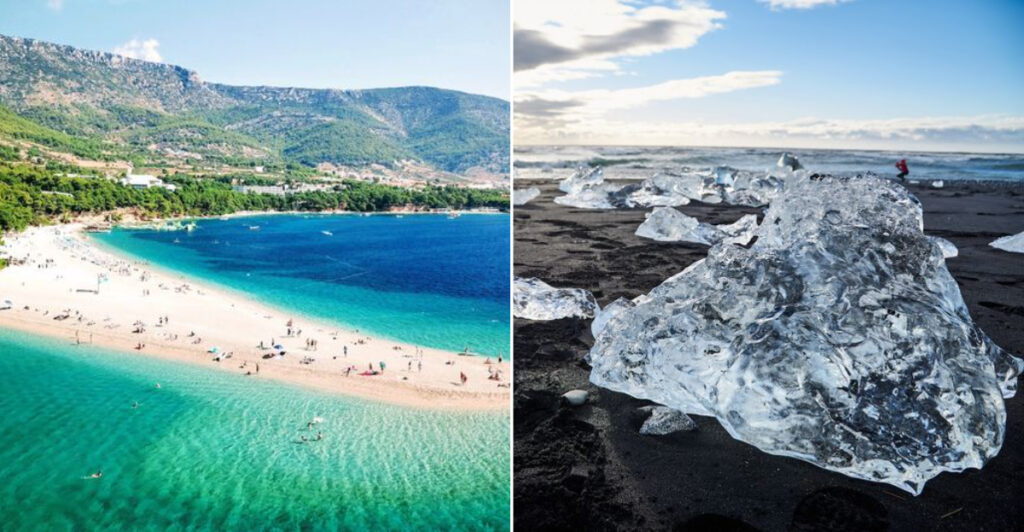
Most beaches have sand, waves, and sunshine. But some beaches around the world look like they belong in a movie set or another planet entirely.
From shorelines covered in smooth glass and billions of shells to beaches where penguins waddle past sunbathers and planes fly inches overhead, the variety is genuinely mind-blowing. This list covers 20 real beaches that will make you do a double-take, question what you know about coastlines, and maybe start planning a trip you never expected to take.
Whitehaven Beach, Whitsunday Island, Australia
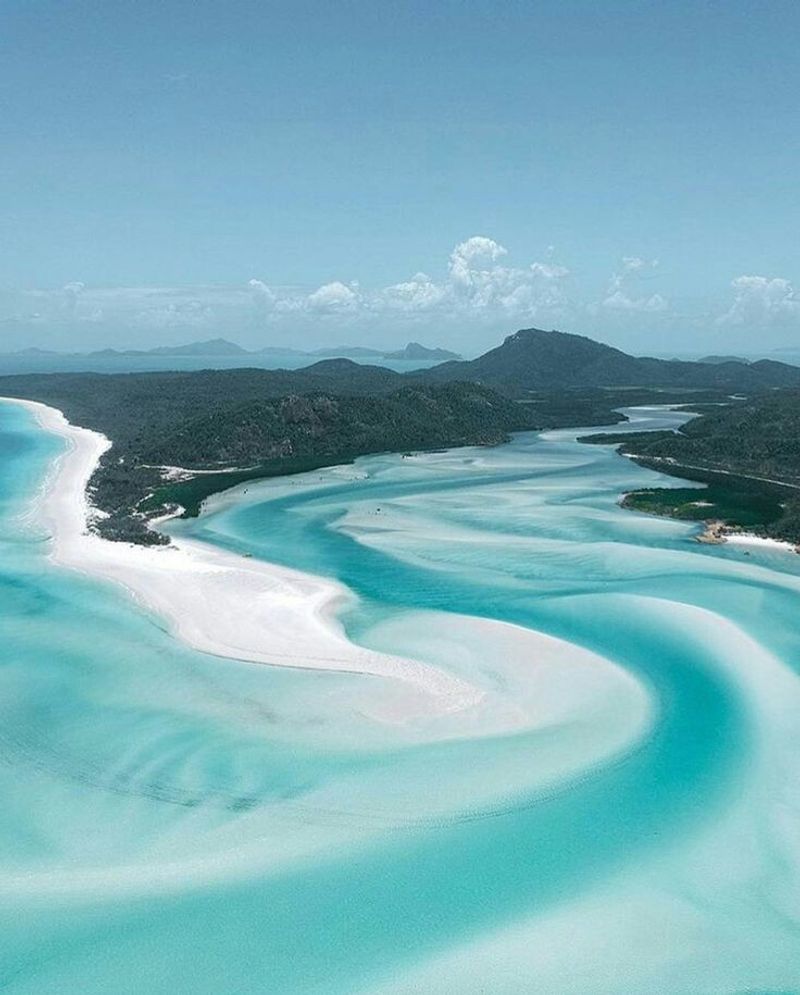
The sand at Whitehaven Beach is so white and pure that it barely heats up in direct sunlight, which is not something most beach visitors ever stop to consider. That quality comes from the silica content, which is unusually high and gives the shoreline its almost blinding brightness.
Located inside Whitsunday Islands National Park in Queensland, the beach stretches over seven kilometres of undisturbed coastline.
The most photographed view is from Hill Inlet, where the tidal movement swirls white sand and turquoise water into patterns that shift throughout the day. The Queensland Parks site lists it as a day-use area with 24-hour access, though checking current park alerts before heading out is always smart.
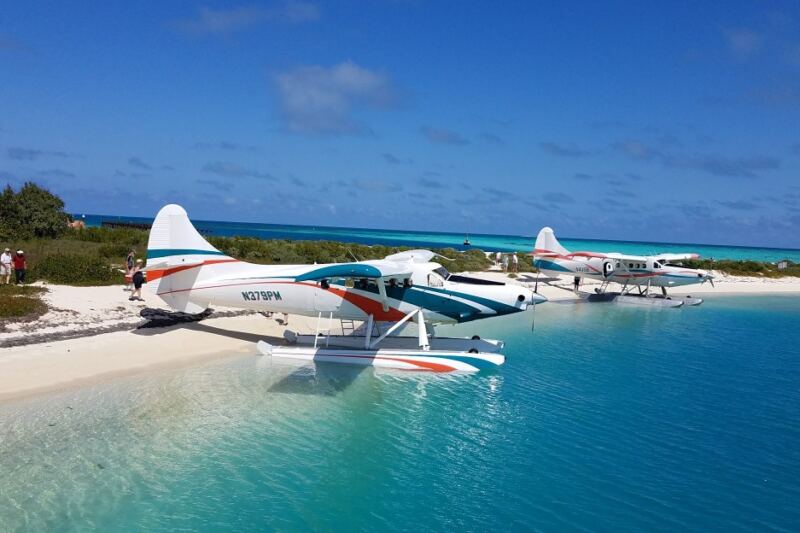
No roads reach it directly, so most visitors arrive by boat or seaplane.
That remoteness is part of what keeps it looking this extraordinary. It is the kind of beach that earns its reputation every single time the tide moves.
Pink Sands Beach, Harbour Island, Bahamas
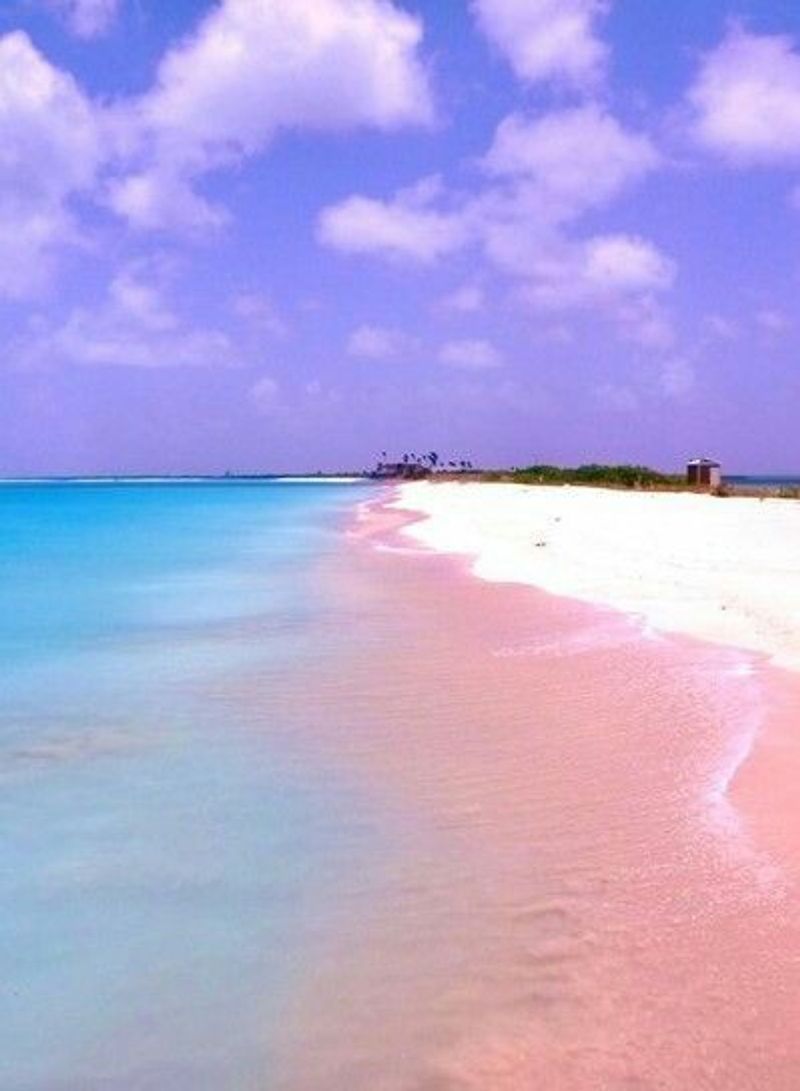
The blush color at Pink Sands Beach is not a filter or a trick of the light. It comes from crushed fragments of a tiny marine organism called Foraminifera, which has a pink-to-red shell that mixes into the white sand over time.
The Bahamas tourism site calls it one of the country’s most remarkable natural features, and it is easy to see why once you are standing on it.
The beach runs for roughly three miles along the Atlantic side of Harbour Island, with calm, clear water and public access points along the way. It is not a busy, resort-crowded stretch.
The island itself has a laid-back, almost timeless atmosphere that fits well with the unusual shoreline.
For slow travelers who want something genuinely different without chasing extreme geography, this beach delivers. The color is subtle in some lights and vivid in others, which means no two visits look exactly the same.
Glass Beach, Fort Bragg, California
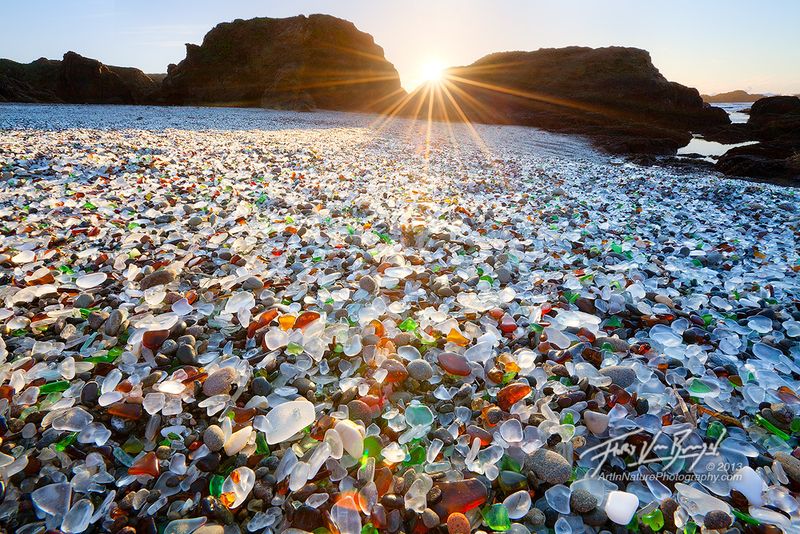
Glass Beach has one of the stranger origin stories on this list. For decades, the area near Fort Bragg was used as a dump site, and glass, pottery, and other discarded materials ended up in the ocean.
Over time, the relentless motion of the Pacific smoothed those fragments into rounded, frosted pieces of sea glass that now cover the shoreline in a mosaic of greens, browns, and occasional blues and whites.
It sits near MacKerricher State Park along the Mendocino Coast, which California State Parks manages as an active public area. Visitors are welcome to walk the beach and photograph the glass, but removing pieces is strongly discouraged because the supply is finite and does not replenish itself.
What makes Glass Beach worth a stop is the visual contrast between the rough coastal setting and the smooth, jewel-like fragments underfoot. It is one of those places that tells an environmental story without needing a single sign to explain it.
Reynisfjara Black Sand Beach, Vik, Iceland
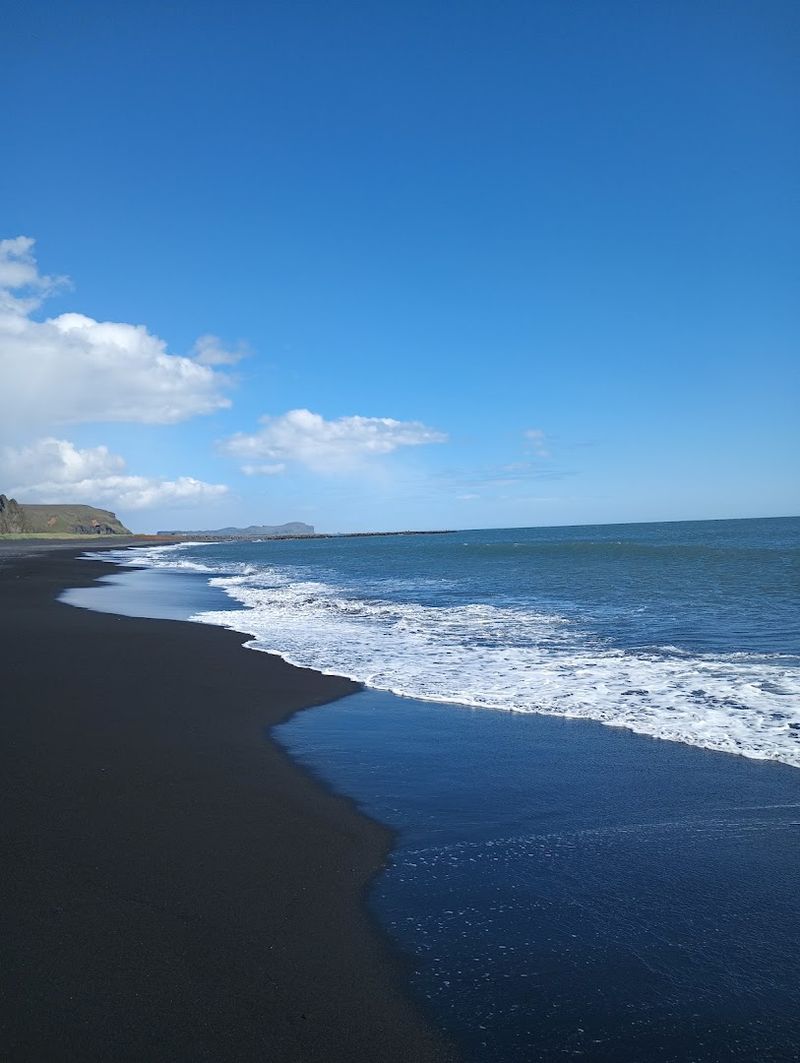
Reynisfjara does not look like a beach. It looks like the edge of the world.
The sand is jet black from volcanic basalt, the water crashes in with serious force, and the towering Reynisdrangar sea stacks rise from the ocean like something out of a Norse legend. Near Vik in South Iceland, this beach is one of the country’s most visited natural landmarks.
The basalt columns along the cave walls are hexagonal and stacked in a pattern that looks almost engineered, though they formed naturally through lava cooling. South Iceland tourism updates confirm the beach remains open to visitors, but safety rules are strict and genuinely important here.
Sneaker waves can appear without warning and have injured visitors who stood too close to the water.
This is not a swimming beach or a place to relax with a towel. The real draw is the raw, volcanic drama of the landscape itself.
Few beaches anywhere look this otherworldly without any filters involved.
Boulders Beach, Cape Town, South Africa
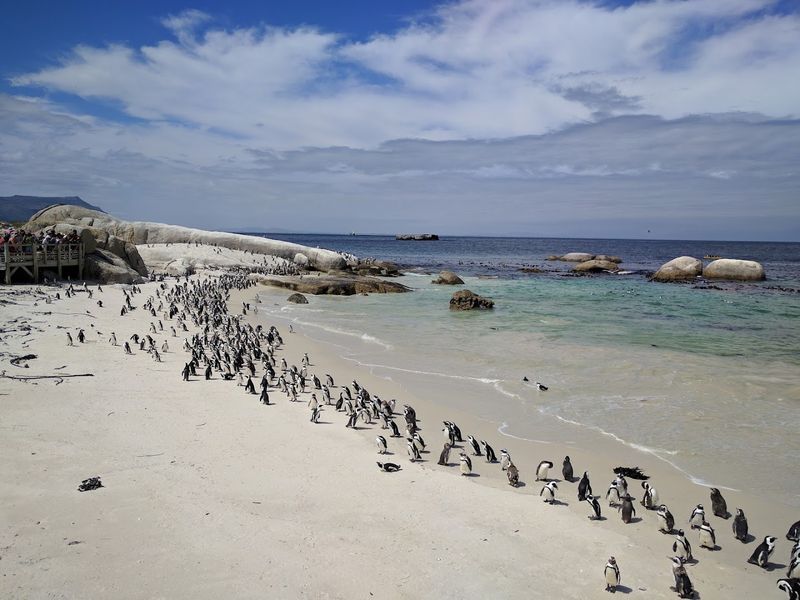
Most beach trips involve sunscreen and maybe some waves. A trip to Boulders Beach involves African penguins waddling past at close range, which is a considerably different experience.
SANParks lists the Boulders Penguin Colony as part of Table Mountain National Park, and it is one of the only places in the world where visitors can see African penguins in a land-based colony setting.
Boardwalks and designated viewing areas allow people to observe the penguins without disturbing their nesting and resting behavior. The colony has grown significantly since penguins first settled here in the 1980s, and it now numbers in the thousands.
The beach itself is sheltered by large granite boulders, which create calm, swimmable water alongside the penguin zones.
There is an entrance fee through SANParks, and it is worth every cent. Seeing penguins in their natural habitat against a backdrop of blue ocean and smooth boulders is the kind of moment that does not need much explanation.
It speaks entirely for itself.
Shell Beach, Shark Bay, Western Australia
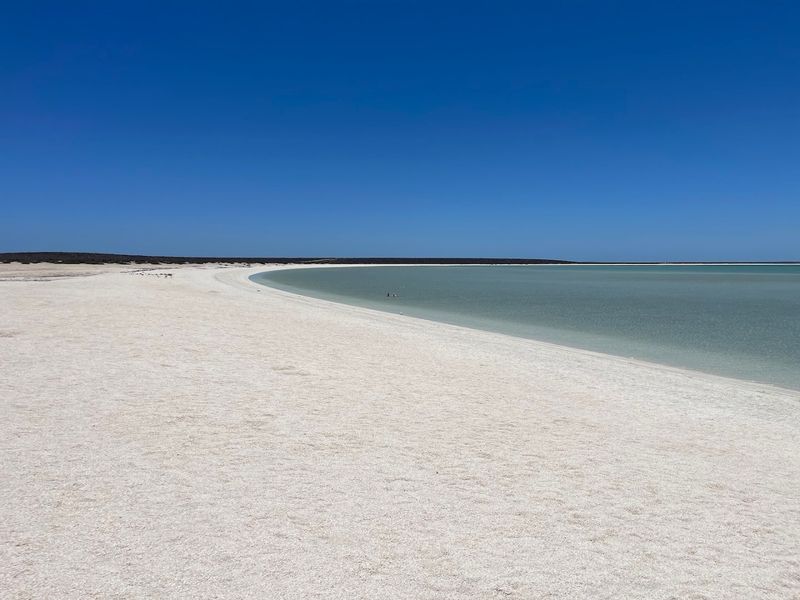
From a distance, Shell Beach looks like a perfectly normal white-sand beach. Up close, the illusion breaks completely.
The entire shoreline is made of billions of tiny cockle shells, packed so densely that some deposits reach several metres deep. There is no sand here at all.
Western Australia’s official tourism site places it firmly within the Shark Bay World Heritage Area, one of only a handful of places on Earth with this kind of shell accumulation.
The reason the shells built up so dramatically is the high salinity of the water in this part of Shark Bay, which limits predators and allows cockle populations to thrive and accumulate over thousands of years. Walking on it feels completely different from any other beach because of the crunch underfoot and the way the shells reflect light.
Historically, locals even cut shell blocks from the beach to use as building material. Some structures built from Shell Beach cockle blocks still stand in the region today.
Praia da Marinha, Algarve, Portugal
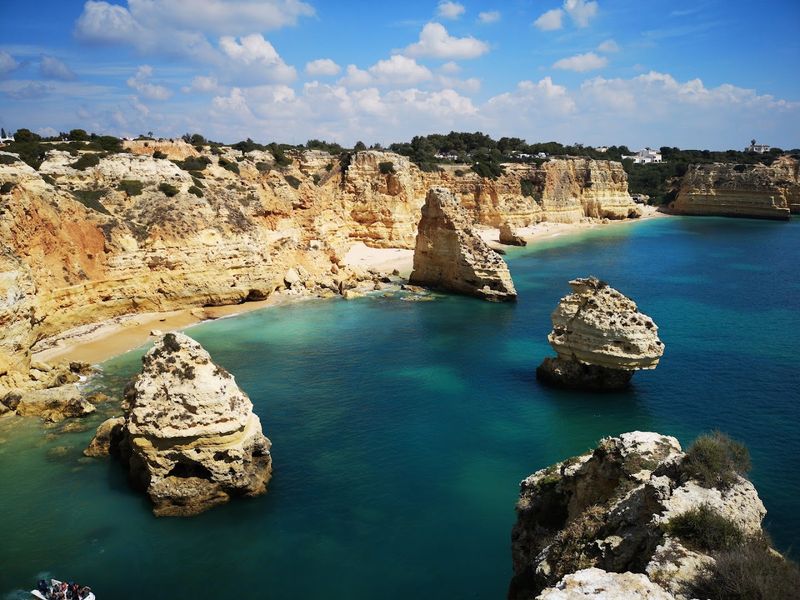
Praia da Marinha earns its reputation not from unusual sand colors or wildlife, but from the sheer drama of its cliff architecture. The golden limestone formations surrounding this Algarve beach have been carved by centuries of Atlantic erosion into arches, grottoes, and sculpted walls that frame the water in a way that feels almost theatrical.
Travel guides across multiple platforms consistently rank it among the most visually striking beaches in southern Portugal, and that consistency says something. The beach itself is relatively small, accessed by a steep staircase from the clifftop.
The water is clear and calm enough for snorkeling around the rock formations when conditions allow.
Visiting at different times of day changes the color of the cliffs dramatically. Morning light gives them a warm amber tone, while midday sun bleaches them toward cream and gold.
For anyone traveling the Algarve coast, skipping Marinha would mean missing one of the region’s most genuinely striking natural formations. It rewards a visit at any time of year.
Playa de las Catedrales, Galicia, Spain
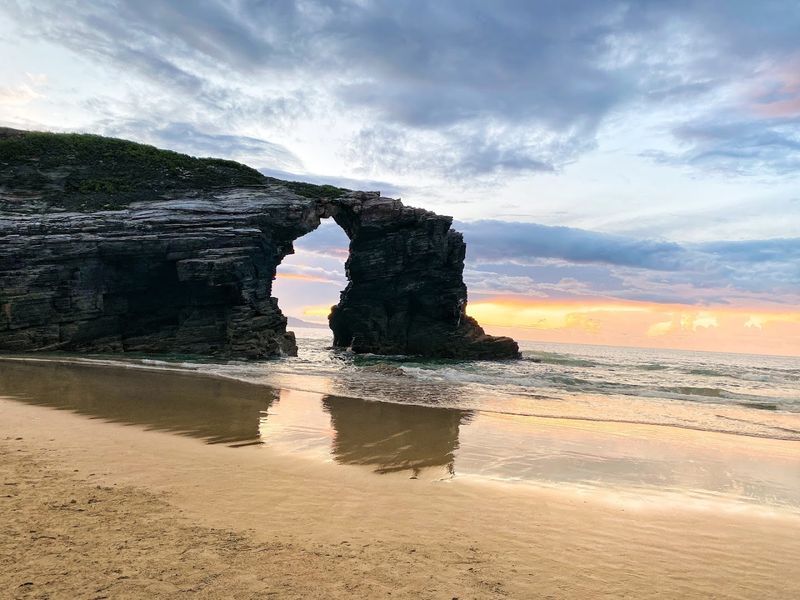
At high tide, Playa de las Catedrales looks like a striking but fairly standard northern Spanish beach. At low tide, it transforms into something else entirely.
Enormous natural rock arches emerge from the sand, some reaching up to 30 metres high, creating corridors and cathedral-like formations that you can walk through directly on the beach. The name, which translates to Beach of the Cathedrals, fits perfectly.
Access is managed carefully by Galicia’s regional tourism system, especially during summer when demand is high. Temporary restrictions can apply, so planning ahead and checking the official booking site before visiting is not optional.
Showing up unannounced during peak season may mean being turned away.
The best experience happens at low tide when the arches are fully accessible and the rock corridors are dry enough to explore. The formations are made of slate and schist, and their layered textures add to the visual weight of the whole scene.
It is one of Europe’s most architecturally dramatic natural coastlines.
Hot Water Beach, Coromandel, New Zealand
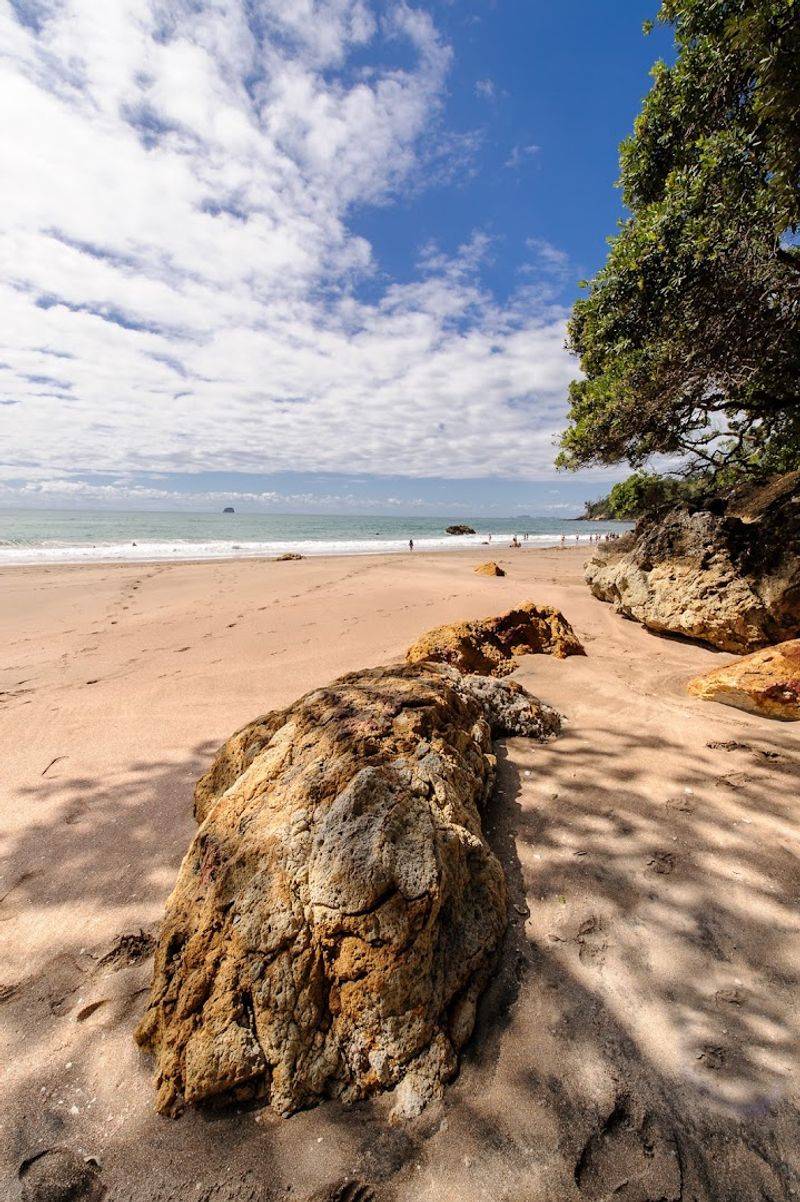
Hot Water Beach operates on a simple but genuinely strange premise: bring a spade, find the right spot near low tide, and dig yourself a hot pool in the sand. Geothermal water rises from beneath the beach surface in a small zone between the tides, warm enough to create a natural soak with the Pacific Ocean just metres away.
New Zealand’s official tourism site calls it a Coromandel highlight, and the timing window matters considerably. The hot water zone is accessible roughly two hours before and after low tide, so checking tide charts before making the drive is essential.
Spades can usually be rented from a nearby shop.
The experience is part novelty, part nature, and entirely unique to this stretch of coastline. Families, solo travelers, and couples all show up with the same goal: dig a hole, feel the warmth, and enjoy the strange reality of a beach that doubles as a geothermal spa.
No booking required, just good timing.
Punaluu Black Sand Beach, Hawaii
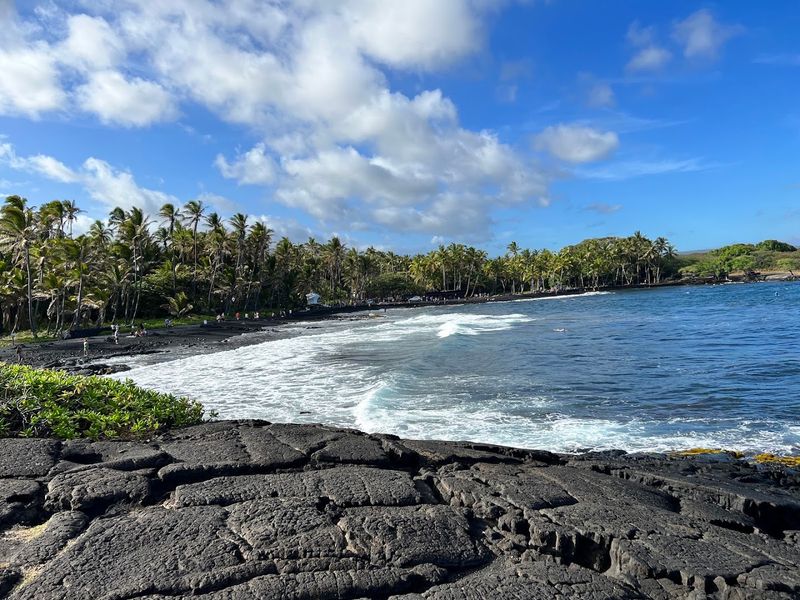
Punaluu Black Sand Beach on Hawaii Island is one of the most visually striking shorelines in the United States. The sand is made from basaltic lava that cooled rapidly when it hit the ocean and shattered into fine, dark grains.
The result is a beach that looks like it was painted in charcoal, set against bright blue water and green coastal vegetation.
What makes Punaluu especially memorable is the sea turtles. Hawaiian green sea turtles, known locally as honu, regularly haul out onto the beach to rest and warm themselves in the sun.
They are protected under federal law, and visitors are required to keep a respectful distance and never approach or touch them.
The beach is accessible by road and free to visit, which makes it one of the more straightforward stops on this list. Seeing a turtle resting on black volcanic sand with the ocean behind it is exactly the kind of image that stays with you long after the trip ends.
Zlatni Rat, Brac, Croatia
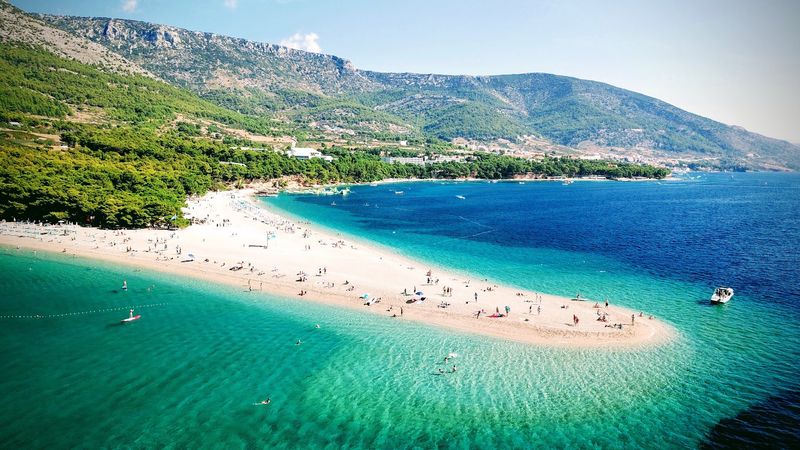
Zlatni Rat, translated as the Golden Horn, is one of those beaches that looks completely different from ground level versus aerial view. From above, it appears as a long, tapered spit of white pebbles reaching into the Adriatic like a pointed finger.
From the water, it looks like a crescent-shaped peninsula lined with pine trees.
What makes it scientifically interesting is that the tip of the spit actually moves. Wind, waves, and sea currents shift the end of the beach by several metres over time, meaning the shape you see today is not quite the same shape it was last season.
Visit Brac describes it as a protected natural area about two kilometres from the town of Bol, popular with windsurfers and kite-surfers who use the reliable Adriatic winds.
The pebble surface and clear water make it a favorite for swimming and snorkeling as well. For a beach that is essentially just stone and sea, it generates a remarkable amount of visual interest from every angle.
Diamond Beach, Iceland
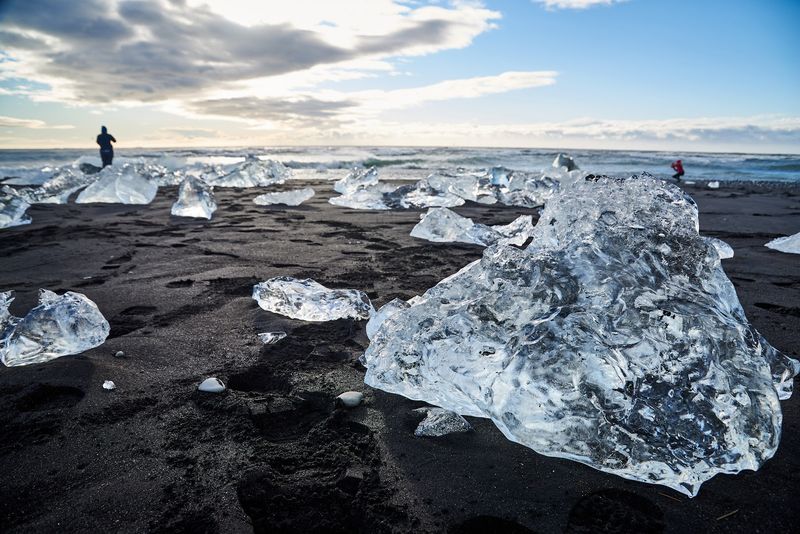
Diamond Beach sits right beside Jokulsarlon Glacier Lagoon in southeast Iceland, and the combination of the two makes for one of the most visually surreal landscapes in Europe. Chunks of glacier ice break off from the lagoon and wash onto the black volcanic sand, where they sit like enormous scattered crystals before the ocean eventually reclaims them.
The contrast between the clear or blue-tinted ice and the dark sand is stark and constantly changing. No two visits look the same because the ice pieces are always different in size, shape, and position.
Guide to Iceland describes the scene as icebergs scattered across the shore, and that description holds up in person.
Visitors should stay aware of the waves and ice conditions, as both can be unpredictable. The beach is accessible by road and free to visit, which makes it one of the most accessible surreal landscapes in Iceland.
Photographers and casual visitors alike find it endlessly compelling, especially in low winter light when the ice seems to glow from within.
Anse Source d’Argent, La Digue, Seychelles
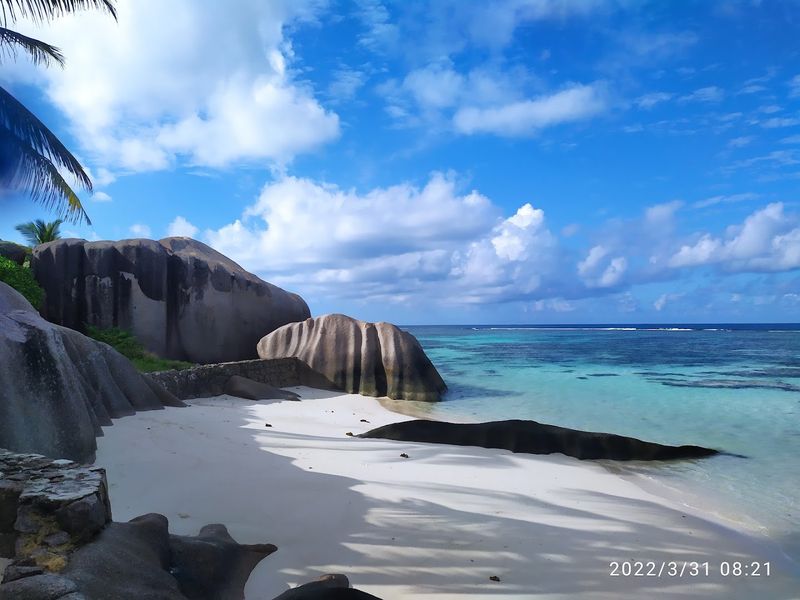
Anse Source d’Argent is one of the most photographed beaches in the entire Indian Ocean, and the granite boulders are the reason. These are not small rocks or scattered pebbles.
They are massive, smooth, ancient formations that rise from the sand in rounded shapes, creating natural frames and sheltered pools of incredibly clear, shallow water.
Access is typically through L’Union Estate, a working heritage estate on La Digue island, which may charge an entrance fee. The estate also offers glass kayak tours directly in the area, confirming it remains an active and well-maintained visitor destination.
The shallow water near the boulders is calm enough for children and non-swimmers.
The Seychelles as a whole is not a budget destination, but Anse Source d’Argent is the kind of place that justifies the effort. The combination of prehistoric-looking granite, pale sand, and that particular shade of Indian Ocean blue creates a setting that looks digitally enhanced even when you are standing right in it.
Playa del Amor, Marietas Islands, Mexico
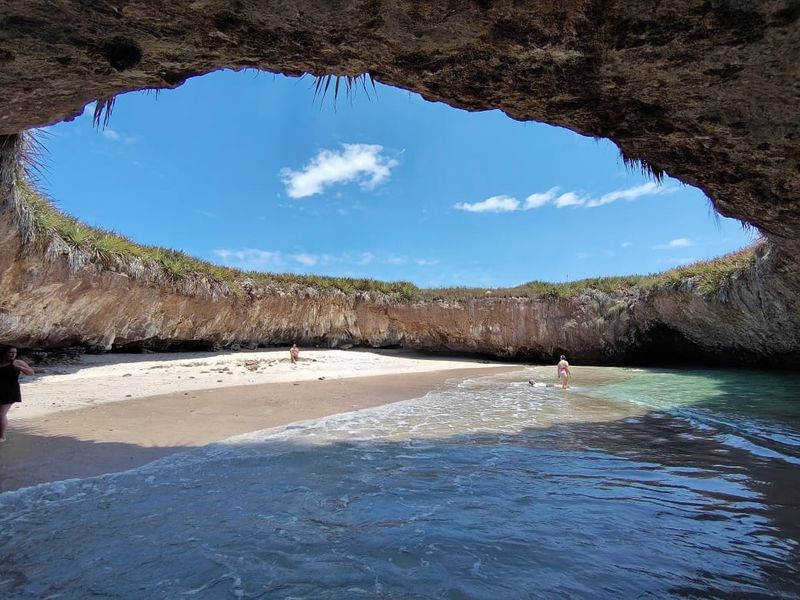
Playa del Amor is not a beach you stumble onto. Tucked inside a natural open-roofed formation on the Marietas Islands off Mexico’s Pacific coast, it is completely hidden from the outside.
The only way in is through a water tunnel, either swimming or floating through on a controlled tour, which means casual access is simply not possible.
The Mexican government designates the Marietas Islands as a protected biosphere reserve, and access is strictly limited to authorized tour operators with permits. Current visitor guides confirm this remains the case, and the restrictions are enforced to protect both the fragile ecosystem and the beach itself.
Booking through a licensed operator well in advance is the only realistic approach.
Once inside, the beach is small, sheltered, and unlike anything else. The circular opening above lets in sky and light while the surrounding rock walls create a natural amphitheater effect.
It is genuinely one of the most unusual beach environments in the world, and the controlled access is the reason it still looks that way.
Vaadhoo Island Beach, Maldives
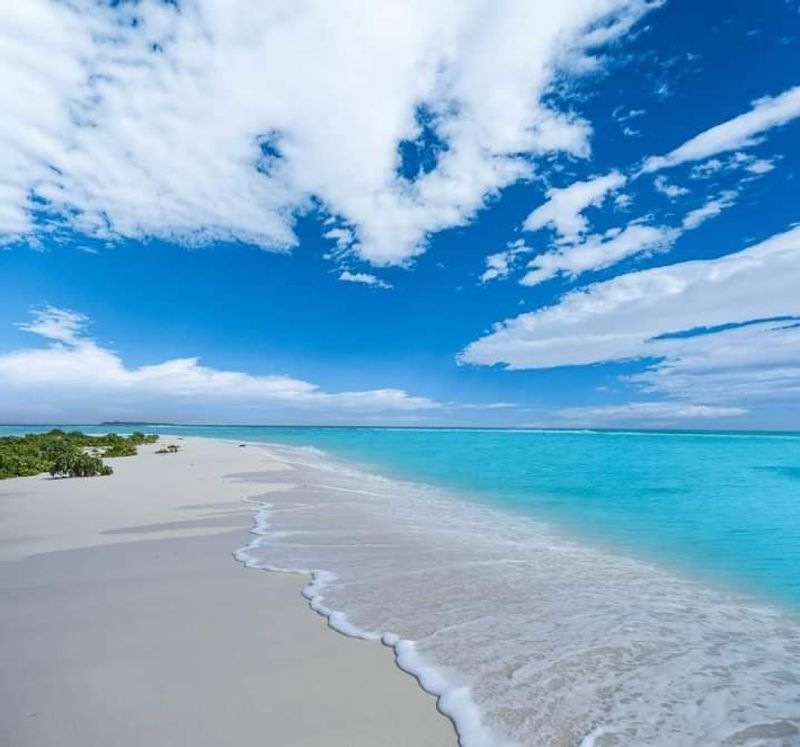
Vaadhoo Island in the Maldives is known for one of the most remarkable natural light shows on Earth. After dark, the water near the shoreline can glow a vivid blue, produced by bioluminescent phytoplankton that emit light when disturbed by wave motion.
The phenomenon is real, documented, and genuinely breathtaking when conditions cooperate.
The key phrase is when conditions cooperate. The glow is entirely natural and depends on plankton density, water temperature, darkness, and wave activity.
No tour operator can guarantee you will see it on any given night. Maldives travel guides describe Vaadhoo as a local island where guesthouses offer stays, making it accessible without requiring a private resort budget.
The best strategy is to stay for multiple nights and walk the beach after dark when the moon is minimal. Some nights produce a faint shimmer, others produce a vivid blue wash across the entire shoreline.
Either way, standing on a beach watching the ocean glow is one of those experiences that is very difficult to put into ordinary words.
Horseshoe Bay Beach, Bermuda
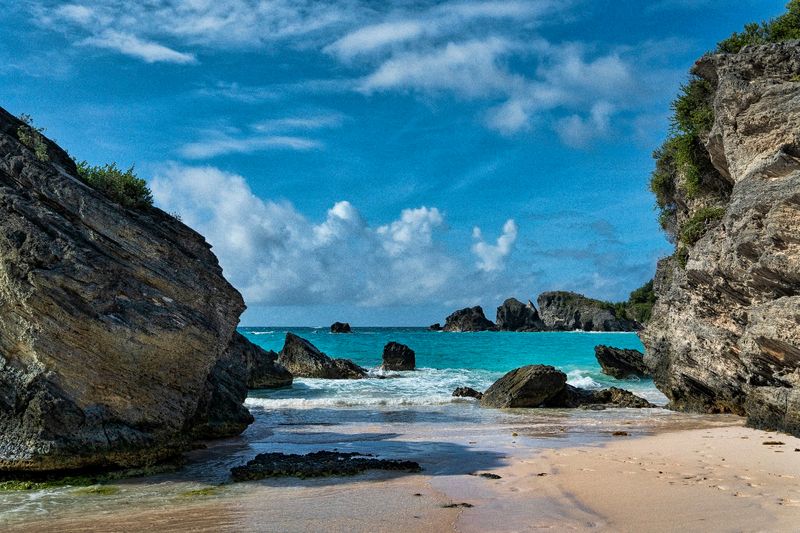
Horseshoe Bay Beach is Bermuda’s signature shoreline, and the pink sand is the feature everyone comes to see first. The color comes from a combination of crushed coral and the shells of tiny red marine organisms called Foraminifera, which mix into the white sand and give it a consistent rosy tone that varies from pale blush to deeper pink depending on light and moisture.
Go To Bermuda describes it as one of the island’s most accessible beaches, reachable by public bus from Hamilton. Lifeguard services and equipment rentals are available during peak season, which makes it a practical choice for families or first-time visitors who want a genuinely unusual beach without a complicated logistics plan.
The rock formations along the edges of the bay create natural pools and alcoves worth exploring at lower tide. Bermuda’s beaches are generally well-maintained and the water is warm by Atlantic standards.
Horseshoe Bay delivers on its reputation consistently, and the pink sand really does look that color in real life.
Lucky Bay, Western Australia
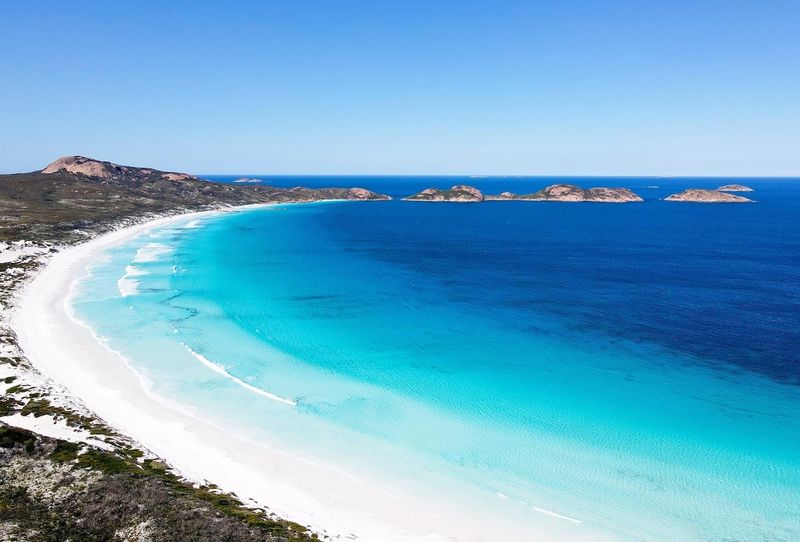
Lucky Bay has the kind of scene that looks photoshopped until you realize it is entirely real. Kangaroos regularly come down to the beach and rest on the sand, completely unbothered by the ocean or the people nearby.
The beach itself is inside Cape Le Grand National Park, about 45 minutes by road from the town of Esperance in Western Australia.
Western Australia’s tourism site confirms the kangaroos are a genuine part of the Lucky Bay experience, not a managed attraction. They simply live in the area and have grown comfortable with the beach environment.
Feeding or approaching them is still discouraged for the safety of both the animals and visitors.
The sand at Lucky Bay is also worth noting on its own. It is some of the whitest and finest in Western Australia, and the water color shifts from pale aqua near shore to deep blue further out.
It is the combination of all three elements together, white sand, clear water, and kangaroos in the frame, that makes Lucky Bay look like something a travel photographer staged on purpose.
Maho Beach, Sint Maarten
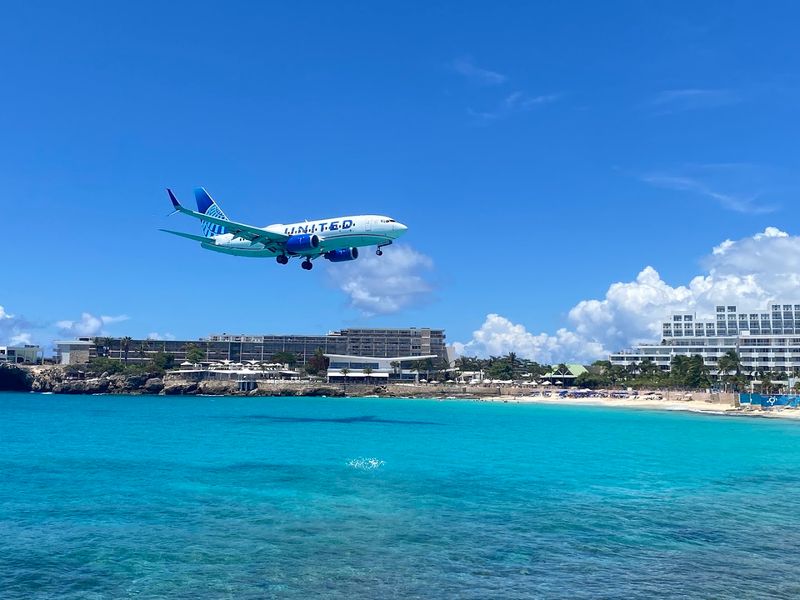
Maho Beach is loud, windy, and crowded, and that is exactly the point. The beach sits directly at the end of the runway for Princess Juliana International Airport, which means commercial aircraft pass overhead at extremely low altitude on final approach.
The planes are close enough that the jet blast can knock people over if they stand in the wrong spot behind the fence.
Visit St. Maarten officially refers to it as the island’s airplane beach, and it is listed as one of the top visitor experiences on the island. Warning signs are posted clearly, and the jet-blast zone behind the runway fence is genuinely dangerous when large aircraft depart.
Watching from the beach itself during landings is the safe and spectacular option.
There is a bar and restaurant at the beach that posts flight schedules, so visitors can plan their timing around specific arrivals. For anyone who finds aviation fascinating or simply wants to experience something completely unlike any other beach in the world, Maho delivers without any exaggeration needed.
Elafonisi Beach, Crete, Greece
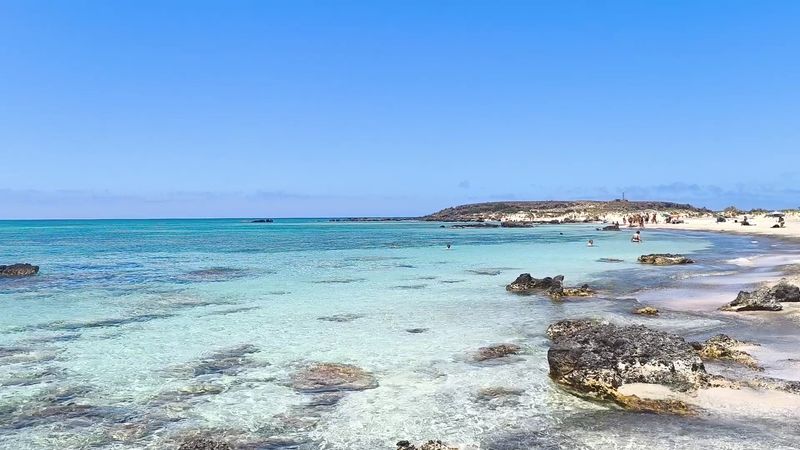
Elafonisi sits at the southwestern tip of Crete and offers something rare for a Mediterranean beach: pink-tinted sand and shallow lagoon-style water that stays warm and calm well into the season. The pink color comes from crushed shells and coral fragments, similar to other pink-sand beaches on this list, but the setting here is distinct because of the surrounding protected dunes and the small islet you can wade out to at low tide.
Local destination guides highlight the shallow water as one of its most appealing features, especially for families with younger children. The lagoon area is gentle and clear, with sandy patches and small rock formations visible beneath the surface.
It can get very busy in July and August, when parking fills early and the beach becomes crowded by midday.
Visiting outside peak season, or arriving early in the morning during summer, makes a significant difference. The protected landscape means there is no resort development immediately surrounding it, which keeps the natural character intact.
Elafonisi rewards visitors who treat it carefully and arrive with some patience.
Moeraki Boulders, Koekohe Beach, New Zealand
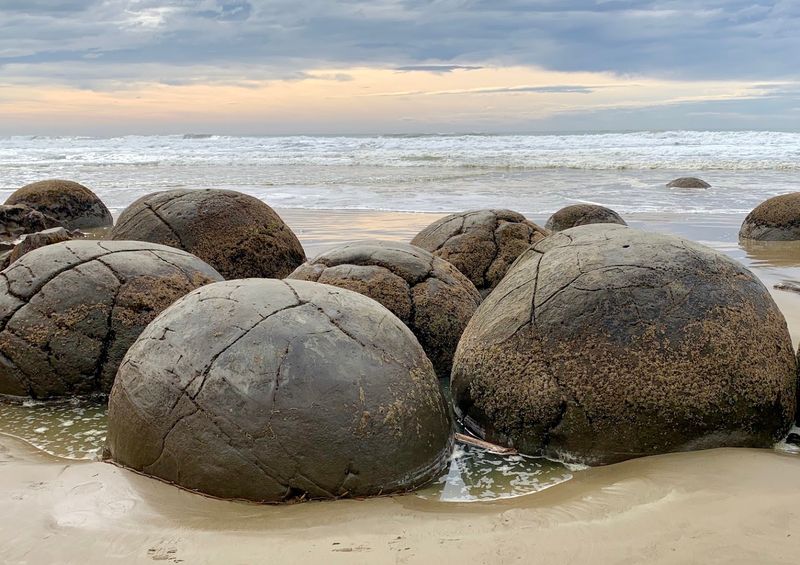
The Moeraki Boulders look like they were placed on the beach by someone with very specific intentions. They are enormous, nearly spherical, and scattered across Koekohe Beach on New Zealand’s South Island in a way that defies any casual explanation.
New Zealand’s official tourism site clarifies that they are calcite concretions, meaning they formed gradually from minerals cementing around a core over approximately 65 million years.
Some boulders reach up to two metres in diameter. Several have cracked open, revealing a crystalline interior that adds another layer of visual interest.
The beach is best visited around low tide when more of the boulders are exposed and easier to walk around and photograph without wading.
A small cafe nearby has operated for years as a stopping point for visitors making the coastal drive between Dunedin and Oamaru. The site is free to access from the beach, though a viewing platform with a small fee exists nearby.
Either way, the boulders are the kind of geological curiosity that makes you reconsider how strange natural processes can actually be.
Share this story