 Unearth The Voyage
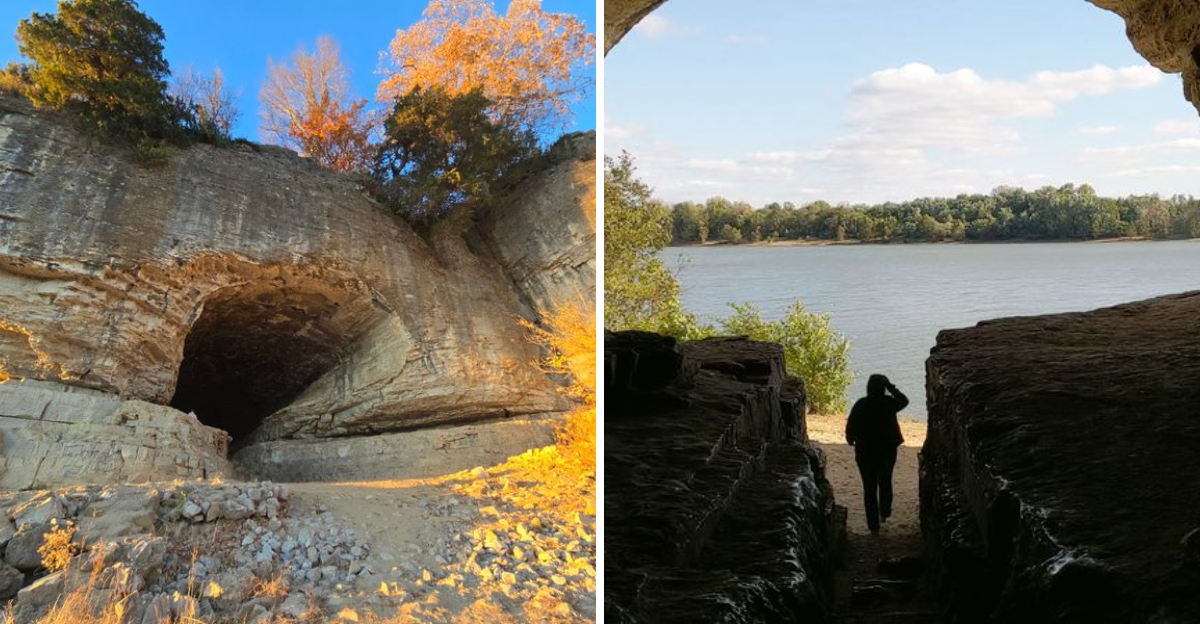
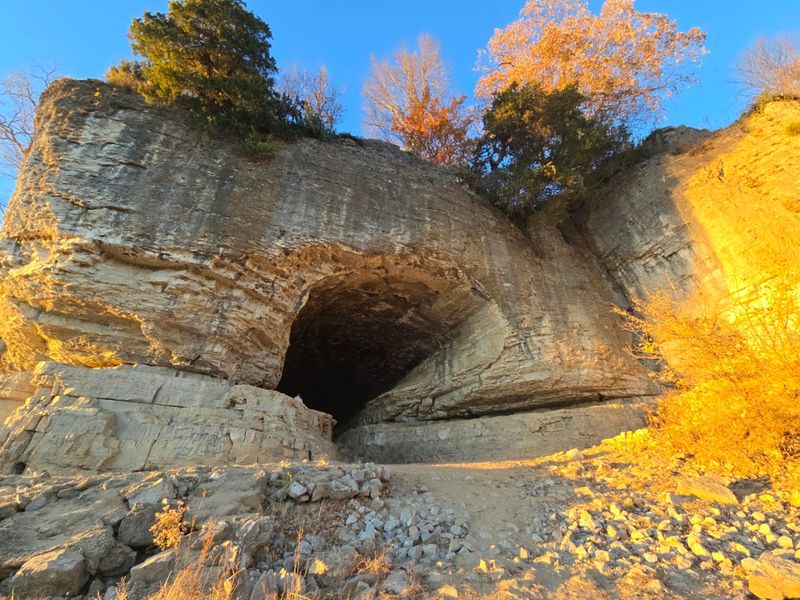
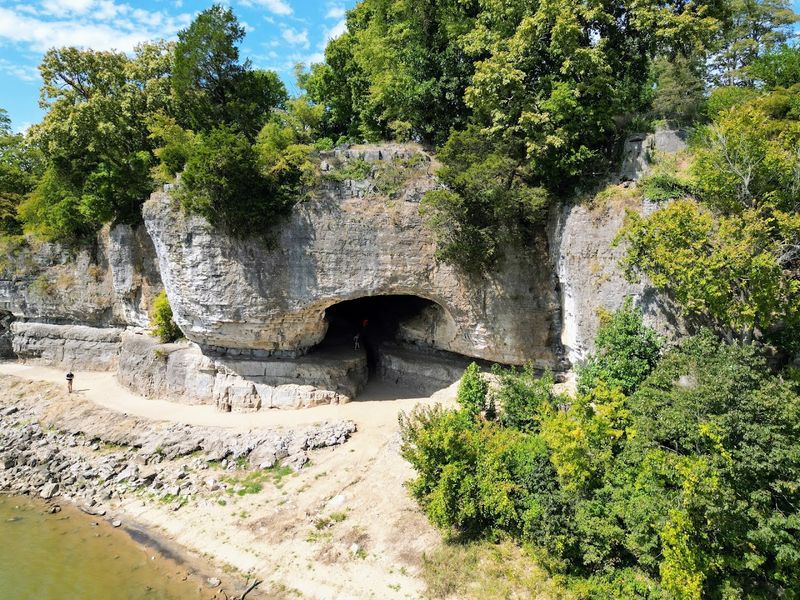
There is a cave carved into a limestone bluff along the Ohio River in southern Illinois that has been drawing curious travelers for centuries, and not always the law-abiding kind. The cave entrance stretches 55 feet wide, which is wide enough to park several school buses side by side, and it burrows roughly 100 feet into the earth.
Outlaws, river pirates, and frontier bandits once used this natural shelter as a base of operations during the late 1700s and early 1800s. Today, Cave-in-Rock State Park preserves that wild history and opens the cave to anyone who wants to walk inside, free of charge, with sweeping Ohio River views thrown in as a bonus.
Where to Find This Hidden Riverside Treasure
The park sits at 1 New State Park Rd, Cave-in-Rock, IL 62919, tucked into the far southeastern corner of Illinois where the state nearly touches Kentucky across the Ohio River. Getting there feels like a small adventure in itself, with narrow winding roads cutting through dense woodland before the river suddenly appears below you.
The town of Cave-in-Rock is tiny, quiet, and refreshingly uncommercial. There are no massive resort signs or souvenir shops crowding the entrance.
The park is managed by the Illinois Department of Natural Resources, and its hours run from 6 AM to 10 PM every day of the week, making it accessible for early risers and late-afternoon explorers alike.
One important parking tip that saves a lot of walking: pull into the first parking lot you see when entering the park, the one with stairs leading up a small hill. From there, the cave is only a three-minute walk.
Following GPS directions to the restaurant area instead adds about 20 minutes of walking each way, which is worth knowing before you lace up your shoes.
The Outlaw History That Made This Cave Famous
Few natural landmarks in the American Midwest carry as much criminal history as this particular cave. During the late 1700s and early 1800s, the cave served as a hideout and base of operations for river pirates who preyed on flatboats traveling the Ohio River loaded with goods and settlers heading west.
One of the most notorious groups associated with the cave was a gang that lured unsuspecting river travelers inside under the pretense of offering shelter or entertainment, then robbed them. The cave’s wide mouth and deep interior made it a perfect staging ground for ambushes, since it was invisible from the river until a boat was already too close to turn back.
Names like Samuel Mason and the Harpe Brothers are linked to this stretch of the Ohio River, and local history suggests the cave changed hands among various criminal outfits over several decades. Some visitors also connect the site to Jesse James folklore, though historians treat those claims with some skepticism.
Either way, the cave’s dark past gives every visit a layer of storytelling that no museum exhibit could quite replicate.
What the Cave Actually Looks Like Up Close
The first view of the cave opening stops most visitors mid-step. The entrance arches roughly 55 feet across and about 20 feet tall, which creates a cathedral-like frame around the Ohio River beyond it.
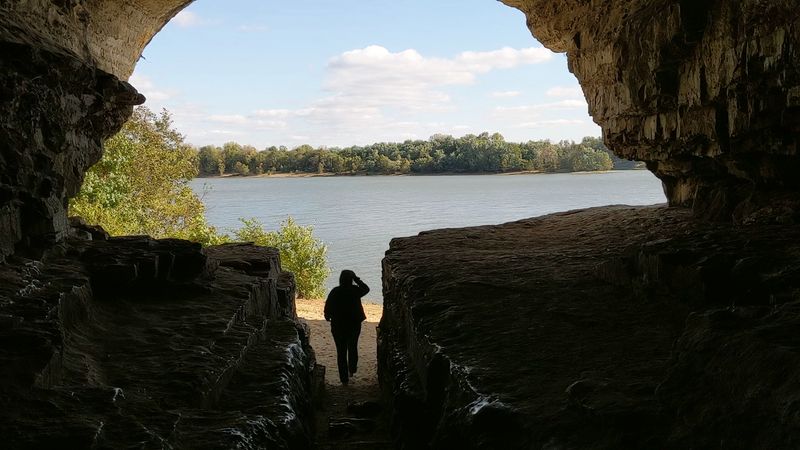
Standing inside the mouth and looking outward, the river fills the entire picture like a painting hung in a stone gallery.
The cave extends approximately 100 feet into the bluff, which is shallower than some people expect, but the width more than compensates. A natural crack in the ceiling near the back allows sunlight to pour straight down during midday hours, lighting up the rear of the cave in a way that no flashlight could ever match.
The effect is genuinely striking.
The floor inside is uneven and can be muddy after rain, so sturdy shoes are a smart choice. The rock walls and ceiling carry decades of inscribed names and dates, some going back well over a century, which adds an unplanned historical texture to the space.
The cool, damp air inside offers a welcome break during summer heat, and the sheer scale of the cavern makes even a short visit feel like something worth remembering.
The Ohio River Views From Above the Cave
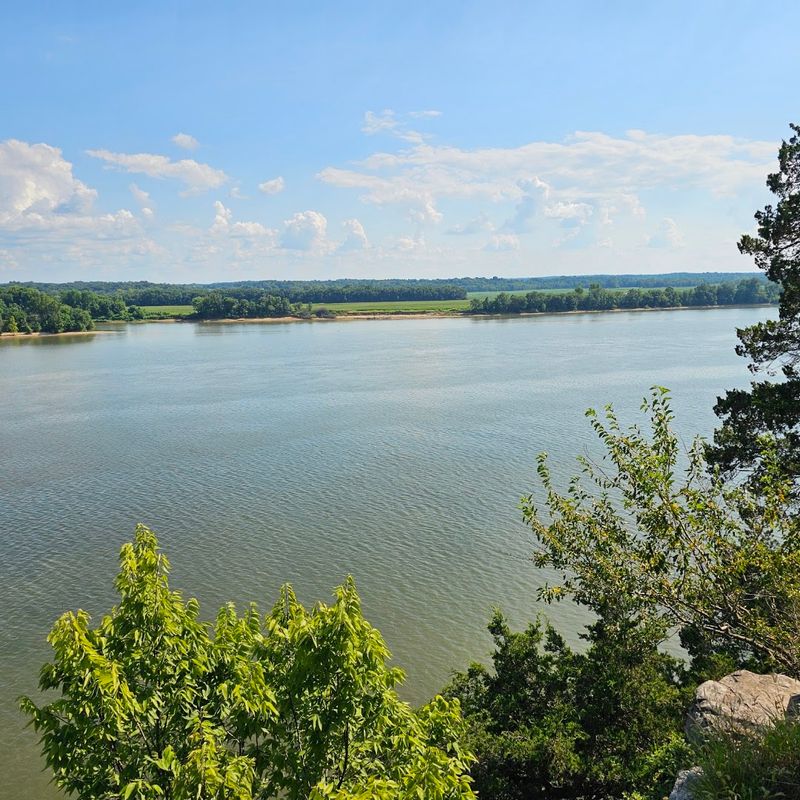
Right above the cave entrance, a short trail leads to a bluff overlook that delivers one of the more underrated river views in the entire Midwest. The Ohio River stretches wide and slow below, with the Kentucky shoreline visible on the far bank and tree-covered hills rolling off into the distance.
The overlook is not a developed observation deck with guardrails and interpretive signs. It is raw and natural, which is exactly what makes it feel special.
The limestone edge drops sharply, so keeping a safe distance from the rim is genuinely important, especially with children or dogs along for the trip.
Morning visits tend to offer the clearest air and softest light on the water, while late afternoon turns the river surface into something closer to hammered copper. The contrast between the peaceful river scene and the cave’s turbulent history directly below creates an odd but satisfying tension.
Photographers tend to linger here longer than they plan to, and honestly, that is a completely reasonable response to a view that earns every extra minute you give it.
Getting Down to the Cave: The Stairs and the Shore
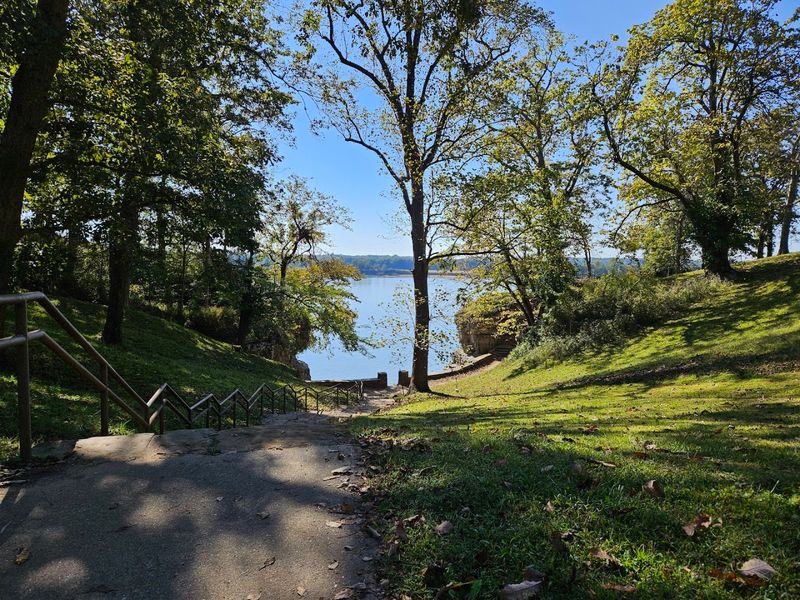
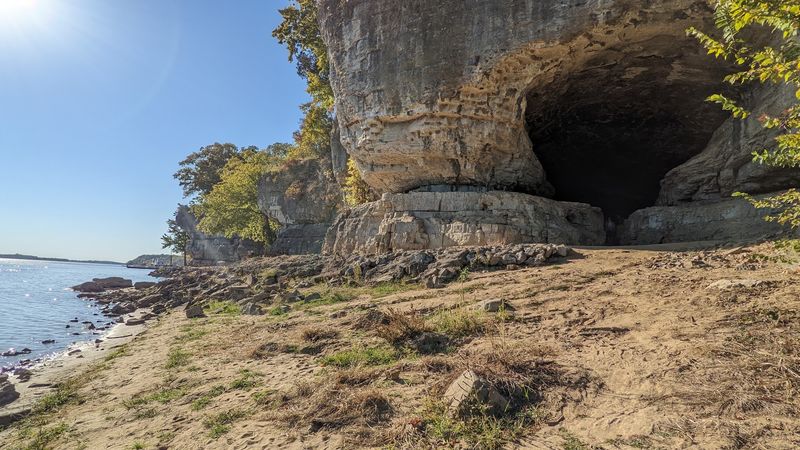
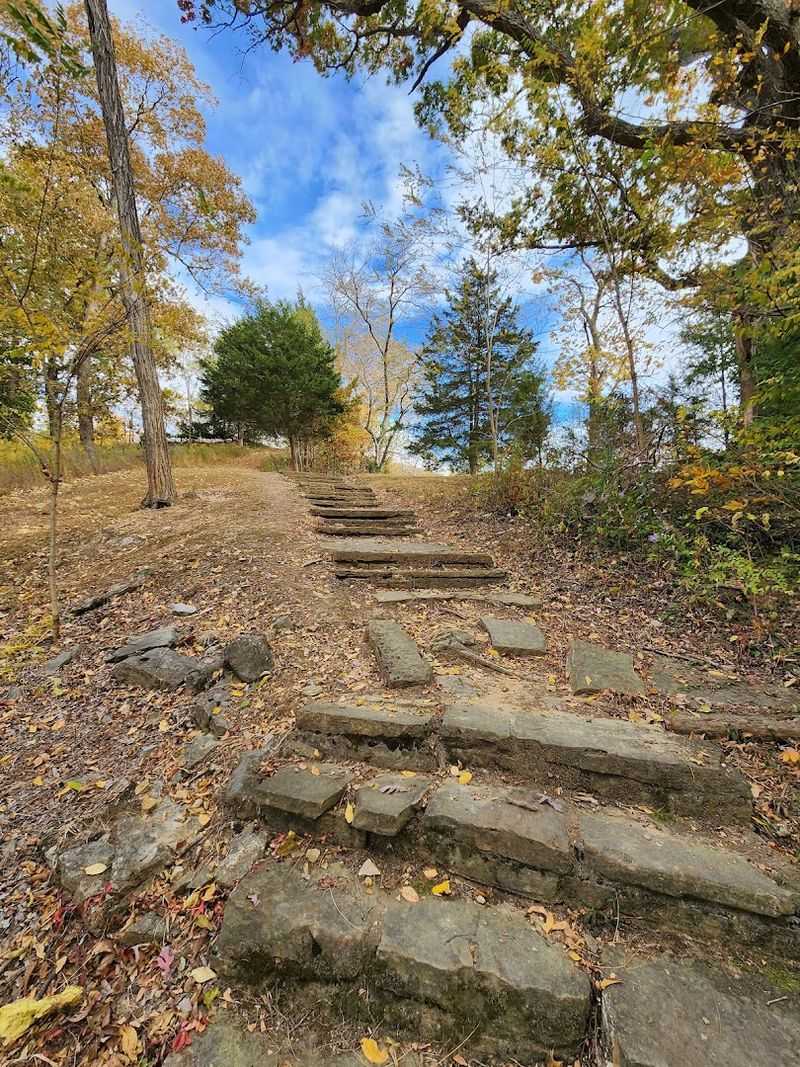
Reaching the cave requires a short but memorable descent. From the main parking area, stairs lead up and over a small wooded ridge, then down the other side to a narrow sandy beach along the Ohio River.
The whole walk takes about five to ten minutes at a comfortable pace, and the trail is well-worn enough that no map is needed.
At the bottom of the stairs, turning left along the beach puts the cave entrance directly in front of you within about 30 seconds. The shoreline itself is worth a moment of attention.
Smooth river stones, driftwood, and the occasional dried fish create a textured landscape that feels nothing like a manicured park path.
The stairs have a moderate number of steps, and while they are manageable for most visitors, anyone with significant mobility limitations should plan accordingly. The park does offer an ADA-accessible campsite, though the cave path itself is not fully accessible.
Dogs are welcome on the trail and seem to genuinely enjoy the whole experience, from the shaded stairway to the rocky beach, based on the enthusiastic tail-wagging that tends to happen at every stage of the walk.
Camping at the Park: What to Expect Overnight
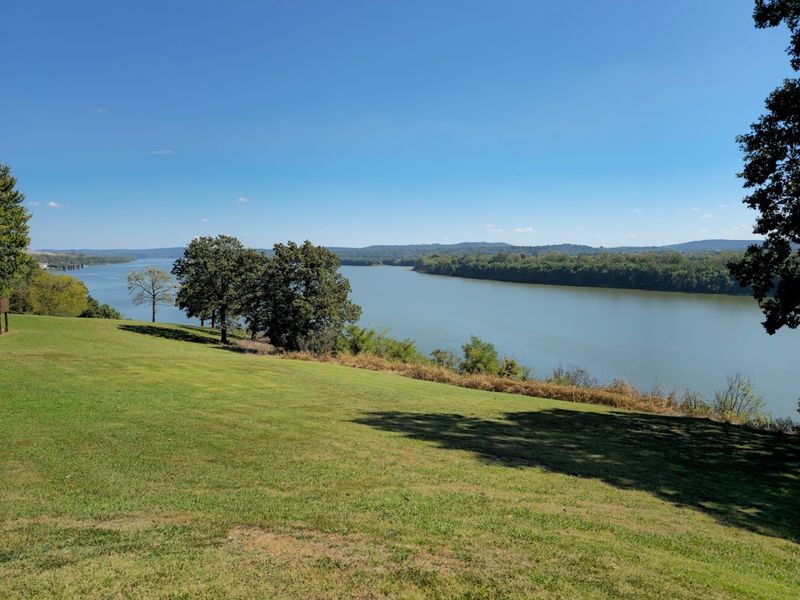
The campground at Cave-in-Rock State Park runs on a first-come, first-served basis, which keeps things refreshingly simple. There are 34 RV sites, including two ADA-accessible spots, and the camp host manages check-in and payment directly on-site.
Cash and checks are accepted, but credit cards are not, so arriving with bills in hand is a practical necessity.
Nightly rates land at $20 for weeknights and $30 for weekends and holidays, which is a fair price for a campground that sits this close to a historically significant cave and a beautiful river. Sites are arranged in a one-way loop with easy back-in access, and most pads are asphalt, though the ADA sites use concrete.
Electric hookups offer 50, 30, and 20-amp service.
The bathhouse has two showers and two restroom stalls per side, and while it is functional and generally clean, it shows its age in a few spots. A dump station and potable water fill point sit near the end of the loop.
The interior of the loop is open and grassy, giving campers room to spread out, and the surrounding trees provide shade that makes summer nights noticeably cooler and more comfortable.
Picnicking, Playgrounds, and Free Family Fun
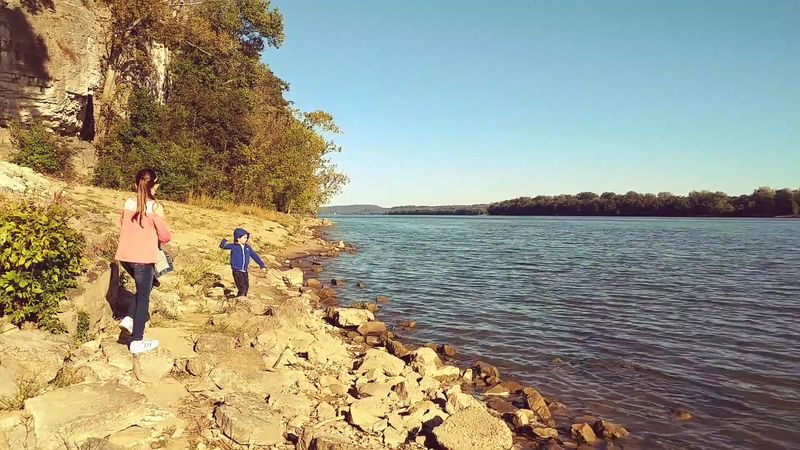
Beyond the cave itself, the park offers a genuinely pleasant setup for a full day out with family. Picnic shelters are scattered across the grounds, providing shaded spots to spread out a meal without fighting the sun.
A playground near the campground gives younger kids something to do while adults set up food or take in the river scenery.
Everything at Cave-in-Rock State Park is free to visit. There is no admission fee, no parking charge, and no ticket booth.
That price point makes it one of the better deals in Illinois state parks, and it removes any hesitation about stopping in for even a short visit during a road trip through the region.
The park draws a genuinely mixed crowd, from young families with strollers to older couples on motorcycles to road-trippers who stumbled across it on a map. The atmosphere is calm and unhurried, which suits the setting perfectly.
Restroom facilities are available in the form of pit toilets at various points around the park. They are functional rather than fancy, but their presence at multiple locations around the grounds keeps things convenient during longer visits.
The Ohio River Ferry: A Bonus Adventure Nearby
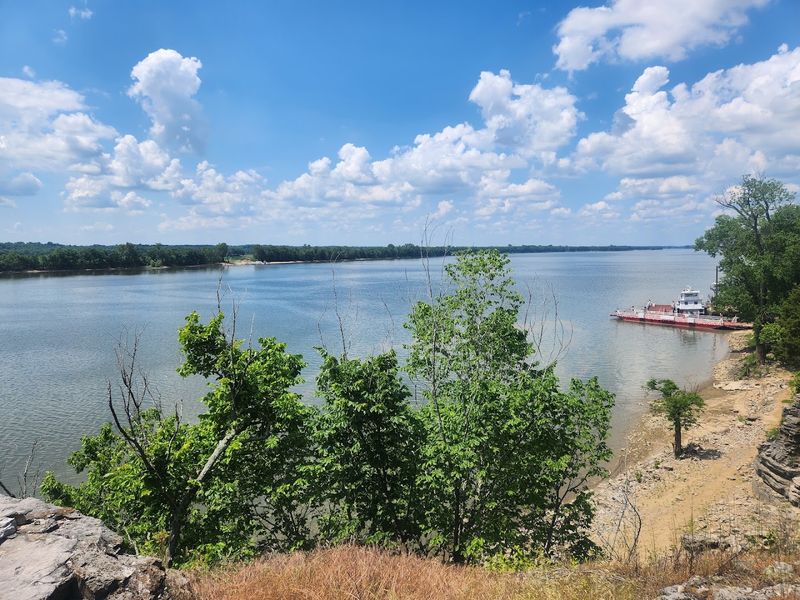
A short drive from the park leads to one of the more unexpected travel experiences in the region: a free car ferry crossing the Ohio River between Cave-in-Rock, Illinois and Elizabethtown, Kentucky. The ferry is operated separately from the state park but sits close enough that combining the two into a single outing is easy and logical.
Boarding the ferry feels like stepping back several decades. Cars, motorcycles, and occasionally cyclists load onto a flat vessel and drift across the wide river while the current pushes gently from the side.
The crossing takes only a few minutes, but the experience of riding on open water between two states is oddly satisfying in a way that driving across a bridge simply is not.
The ferry runs seasonally and operates during daylight hours, so checking its schedule before building a full day around it is worth doing. The ride is free, which is the kind of detail that feels almost too good to be true the first time you hear it.
Motorcyclists in particular seem to love the crossing, and the boat ramp area on the Illinois side often has a small cluster of bikes parked nearby on busy weekend afternoons.
Wildlife, Trails, and the Natural Setting Around the Cave
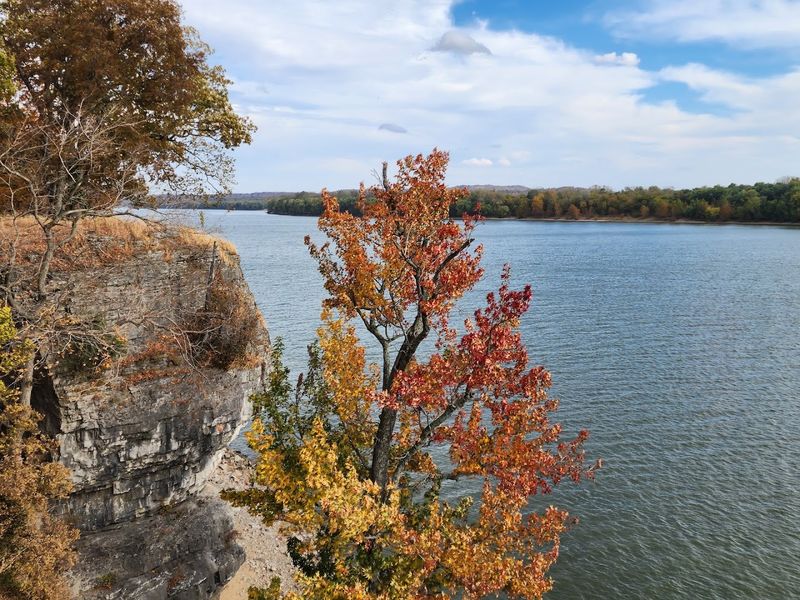
The cave gets most of the attention at this park, but the surrounding woodland trails offer their own quiet rewards. Short paths wind through the forested bluffs above the river, offering glimpses of the water through the trees and the occasional dramatic limestone outcropping along the ridgeline.
The trails are not long or technically demanding, but they are genuinely scenic.
The forest here is typical of southern Illinois, with a mix of oaks, hickories, and other deciduous species that turn spectacular colors in October. Spring visits bring wildflowers along the lower paths near the river, and the bird activity in the canopy during migration seasons is worth pausing to notice.
The riverbank itself functions as a natural wildlife corridor. Great blue herons are a common sight along the Ohio River shoreline, and turtles sun themselves on exposed logs near the water’s edge.
Dogs are allowed on the trails and seem to find every scent along the way deeply fascinating. The dried fish that sometimes wash up on the beach are less charming for human noses, but the dogs tend to feel very differently about that particular feature of the shoreline experience.
Best Times to Visit and What to Bring
Spring and fall are the most comfortable seasons to visit. Temperatures in southern Illinois sit in a pleasant range during April, May, September, and October, and the crowds are noticeably thinner than during the peak summer weeks.
Fall adds the bonus of leaf color along the bluffs, which turns the already-attractive river views into something genuinely photogenic.
Summer visits are entirely doable, and the cool interior of the cave offers real relief from the heat, but midday in July can be genuinely hot on the exposed beach and stairs. Arriving early in the morning on summer days makes the experience significantly more comfortable.
The park opens at 6 AM, which leaves plenty of time to reach the cave before temperatures climb.
A few items make the visit smoother: sturdy closed-toe shoes handle the uneven cave floor and rocky beach better than sandals, a flashlight or phone torch helps in the deeper sections of the cave, and a water bottle is worth carrying on warm days. The cave floor can be muddy after rain, so checking the forecast before heading out helps avoid the kind of shoe situation that is funny only in hindsight.
Photography Inside and Around the Cave
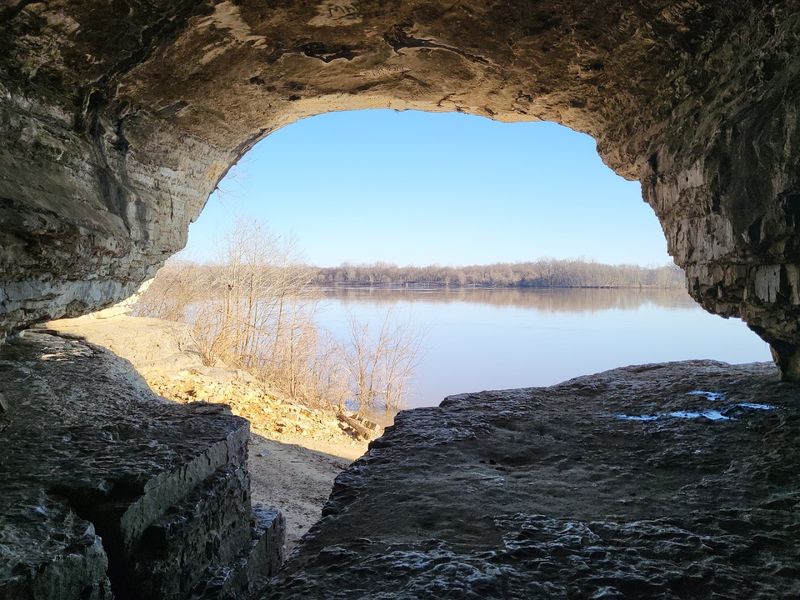
The cave is one of those rare natural subjects that photographs well from almost every angle. The wide entrance creates a natural frame around the river beyond it, and the contrast between the dark interior stone and the bright water outside produces the kind of light that camera sensors and film alike tend to handle beautifully.
Midday is the best time to capture the natural skylight effect inside the cave. A crack in the ceiling near the rear of the cave allows a shaft of sunlight to fall straight down onto the cave floor, creating a dramatic spotlight that requires no filters or editing tricks to look impressive in a photo.
The bluff overlook above the cave is equally rewarding for landscape shots, especially in early morning when mist sometimes sits on the Ohio River surface. Wide-angle lenses make the most of the cave interior, while a telephoto pulls in the Kentucky hills across the water with satisfying compression.
Even a smartphone camera produces strong results here, because the location does most of the compositional work on its own, leaving very little heavy lifting for the photographer.
Why This Park Deserves More Than a Quick Stop
A lot of travelers treat Cave-in-Rock as a quick roadside curiosity, spend 20 minutes at the cave entrance, and move on. That approach misses most of what makes the place worth visiting.
The full experience, including the trail walk, the cave exploration, the bluff overlook, and time on the riverbank, takes at least an hour and rewards every minute of it.
The park carries a rare combination of natural beauty and genuine historical weight. The cave is not a reconstruction or a themed attraction.
It is the actual limestone hollow where real outlaws sheltered and real travelers were robbed during a violent chapter of American frontier history. That authenticity is harder to find than it sounds.
The rating of 4.7 stars across more than 2,000 reviews reflects something that marketing language rarely captures: a place that consistently delivers on what it promises without overcharging or overcrowding. Cave-in-Rock State Park sits quietly in the far southern corner of Illinois, asking nothing from visitors except their time and attention, and giving back a cave, a river, a piece of history, and a view that stays with you longer than most.



