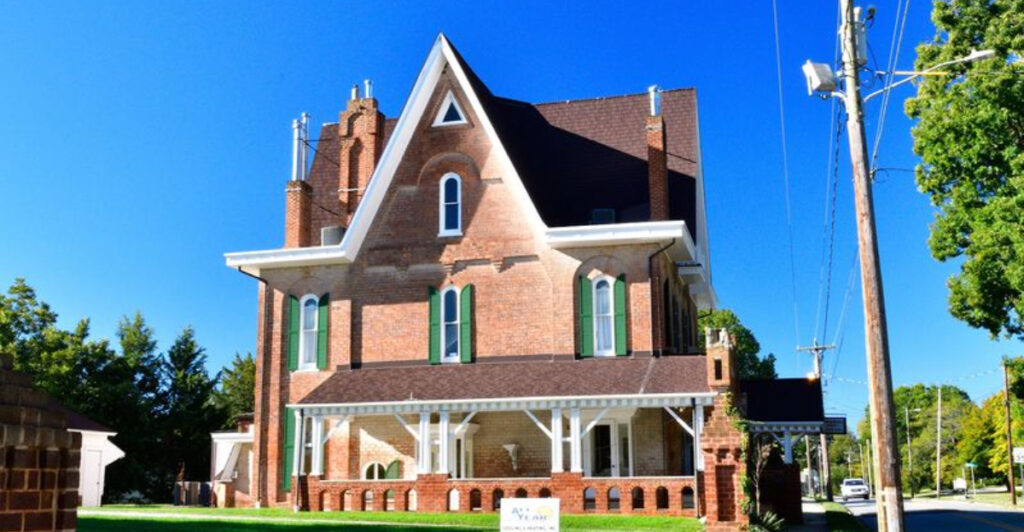
There is a house in North Carolina that breaks nearly every rule of conventional architecture, and once you hear about it, you will not be able to stop thinking about it. Jule Gilmer Körner, a creative force in 19th-century interior design, built a personal residence so unconventional that his neighbors called it a folly.
The name stuck, and honestly, it fits perfectly. With 22 rooms spread across seven levels, 15 fireplaces tucked into nearly every corner, ceilings that range from cozy to cathedral-height, and a private little theater that holds the title of America’s first, this Victorian marvel in Kernersville, North Carolina, is unlike anything else you will ever tour.
Keep reading, because every section of this article reveals something more surprising than the last.
The Story Behind the Man Who Built It All
Jule Gilmer Körner was not your average Victorian-era homeowner. Born in 1851, he grew up to become one of the most forward-thinking interior designers in the United States, at a time when that profession barely had a name.
He made his early reputation working for the Bull Durham Tobacco Company, designing their advertising campaigns with a flair that turned heads across the country. But his true passion was architecture and interior decoration, and he poured every ounce of that passion into his personal home.
Construction on the house began in 1878 and continued for years, with Körner constantly adding, modifying, and reinventing spaces to suit his evolving ideas. He used the house as a living showroom, a place where clients could see his design sensibilities in action across dozens of different rooms.
Each room became a kind of experiment, showcasing different ceiling heights, molding styles, wallpaper patterns, and color combinations. Körner was not building just a home.
He was building a statement, and that statement has lasted well over a century.
Finding the Address and Getting There
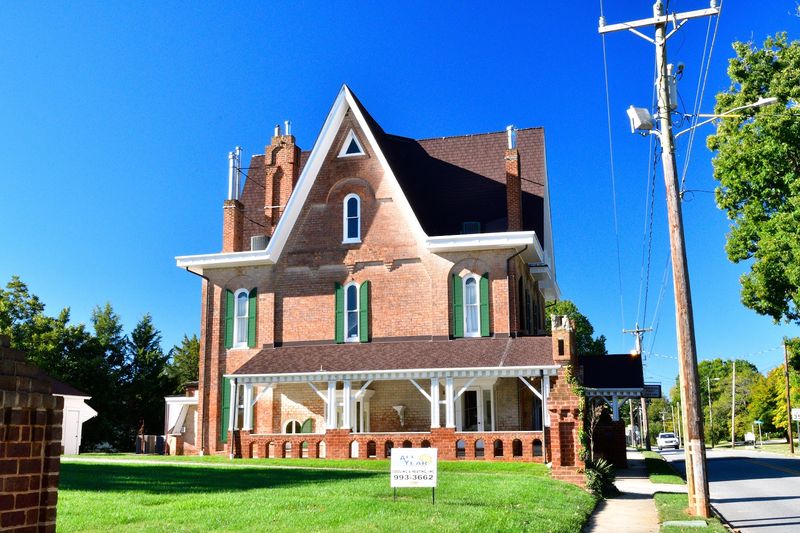
Körner’s Folly sits at 413 S Main St, Kernersville, NC 27284, right in the heart of a small town that sits conveniently between Greensboro and Winston-Salem. The drive from Winston-Salem takes roughly ten minutes, making it an easy addition to any day trip in the Piedmont Triad region.
Parking is available near the visitors center, and the staff recommends leaving your car there and walking to the house itself. The visitors center is a great first stop because it has a short introductory video that gives you context before you set foot inside the house.
Tours run Tuesday through Saturday from 10 AM to 4 PM, and on Sundays from noon to 4 PM. The house is closed on Mondays.
Buying tickets in advance is strongly encouraged, especially on weekends, because the rooms are cozy and large groups can fill them quickly.
You can reach the museum by phone at 336-996-7922 or visit kornersfolly.org to book your visit. The ticket prices are reasonable, and the experience you get in return is genuinely hard to put a dollar value on.
22 Rooms That Each Tell a Different Story
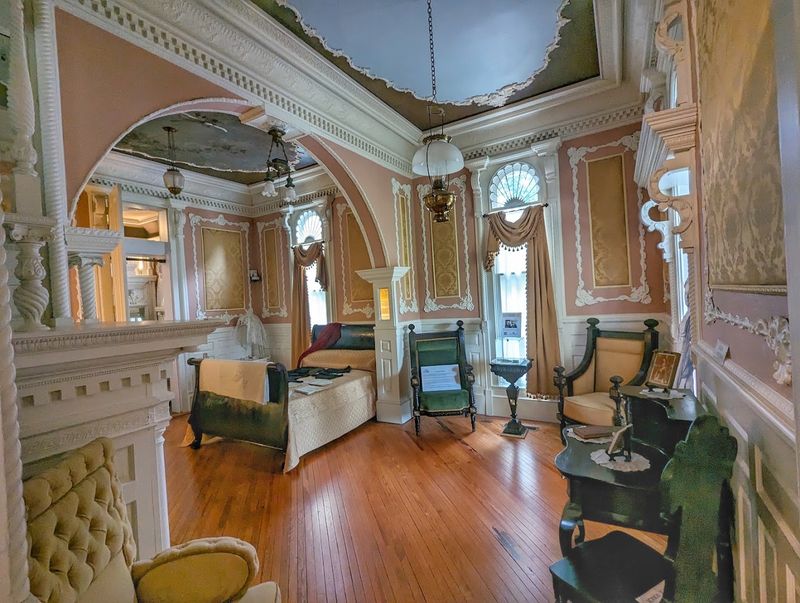
Most houses have rooms that look and feel pretty similar to one another. Körner’s Folly is the opposite of that.
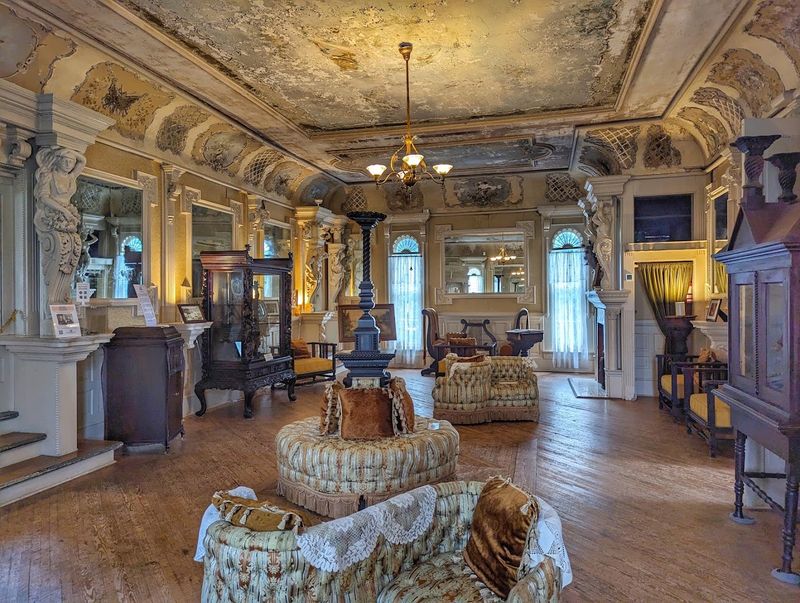
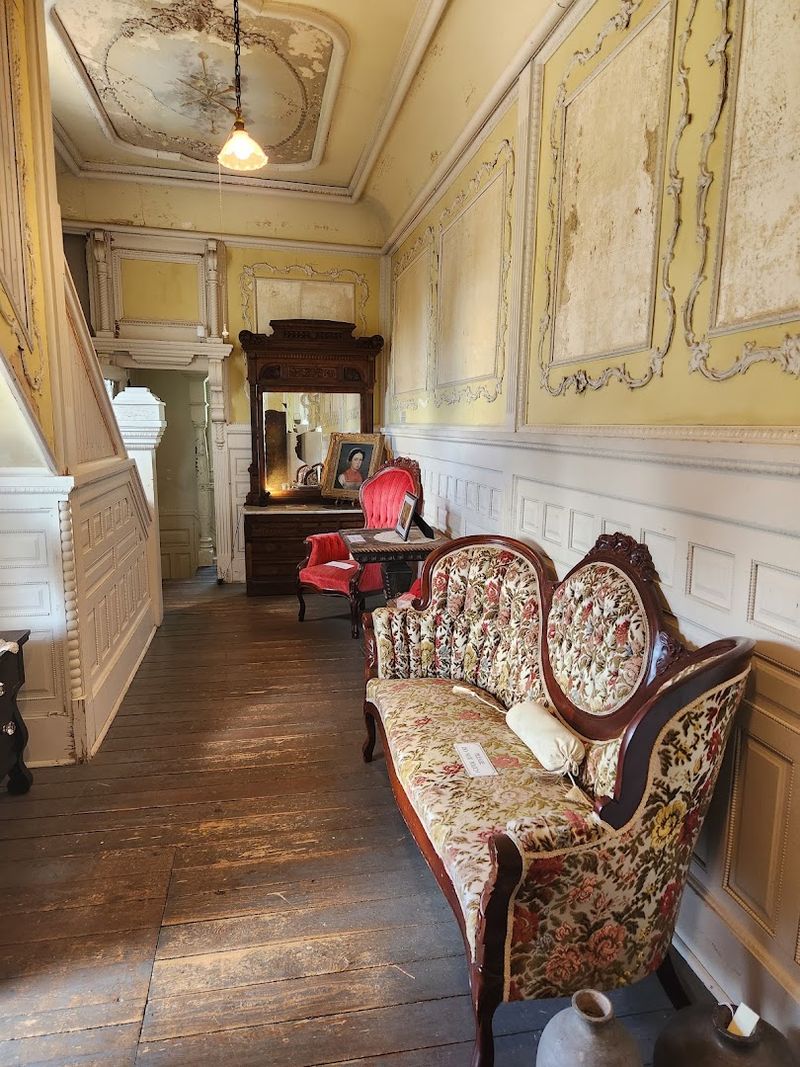
Each of the 22 rooms has its own distinct personality, its own ceiling height, its own decorative style, and its own purpose within the larger story of the house.
Some rooms feel grand and theatrical, with soaring ceilings and richly patterned walls. Others are surprisingly intimate, with low ceilings and narrow doorways that make you feel like you have stumbled into a secret corner of the Victorian era.
The variety is part of what makes the tour so engaging, because just when you think you have figured out the house, another room surprises you.
Each space contains period-appropriate furnishings and explanatory cards that help visitors understand what they are looking at. The layers of detail reward slow, careful exploration.
Visitors who rush through miss the small carved details, the unusual hardware, and the clever design choices tucked into every corner.
Plan to spend at least 90 minutes, and give yourself permission to linger. The rooms are genuinely worth every extra minute you can spare.
Seven Levels of Pure Architectural Surprise
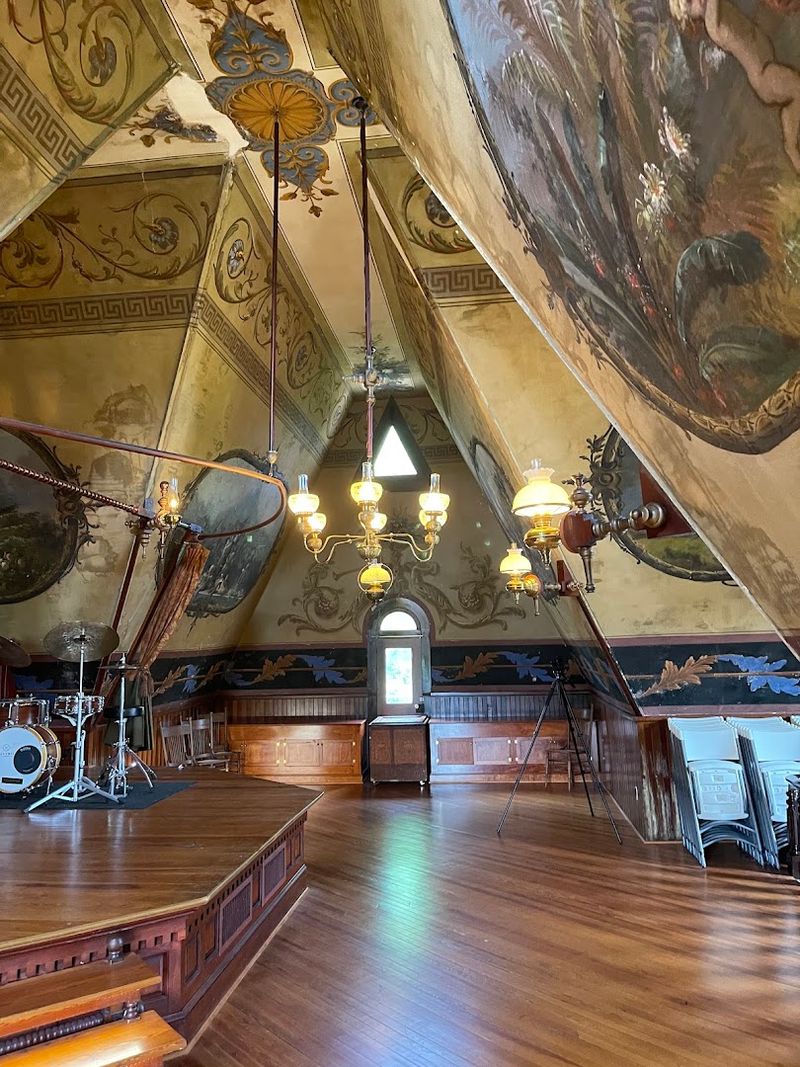
Seven levels sounds like a skyscraper, but Körner’s Folly achieves this feat in a building that looks relatively modest from the street. The levels do not all correspond to full floors in the traditional sense.
Instead, the house shifts up and down in half-levels and split-levels, creating a spatial puzzle that keeps you slightly off balance in the most delightful way.
The staircases connecting these levels are narrow and sometimes steep, so comfortable shoes are a genuine necessity here. Visitors who have difficulty with stairs or low ceilings should plan accordingly, because the house does not shy away from compact passageways and tight turns.
What this unusual vertical layout accomplishes is a sense of constant discovery. You finish one room, climb a short staircase, duck through a doorway, and suddenly you are in a completely different world with a different ceiling height and a different decorative mood.
Körner clearly loved the element of surprise, and the seven-level structure is his most playful architectural trick.
Taller visitors may need to duck in a few spots, which only adds to the feeling that this house was built according to its own set of rules.
Fifteen Fireplaces and the Warmth They Still Carry
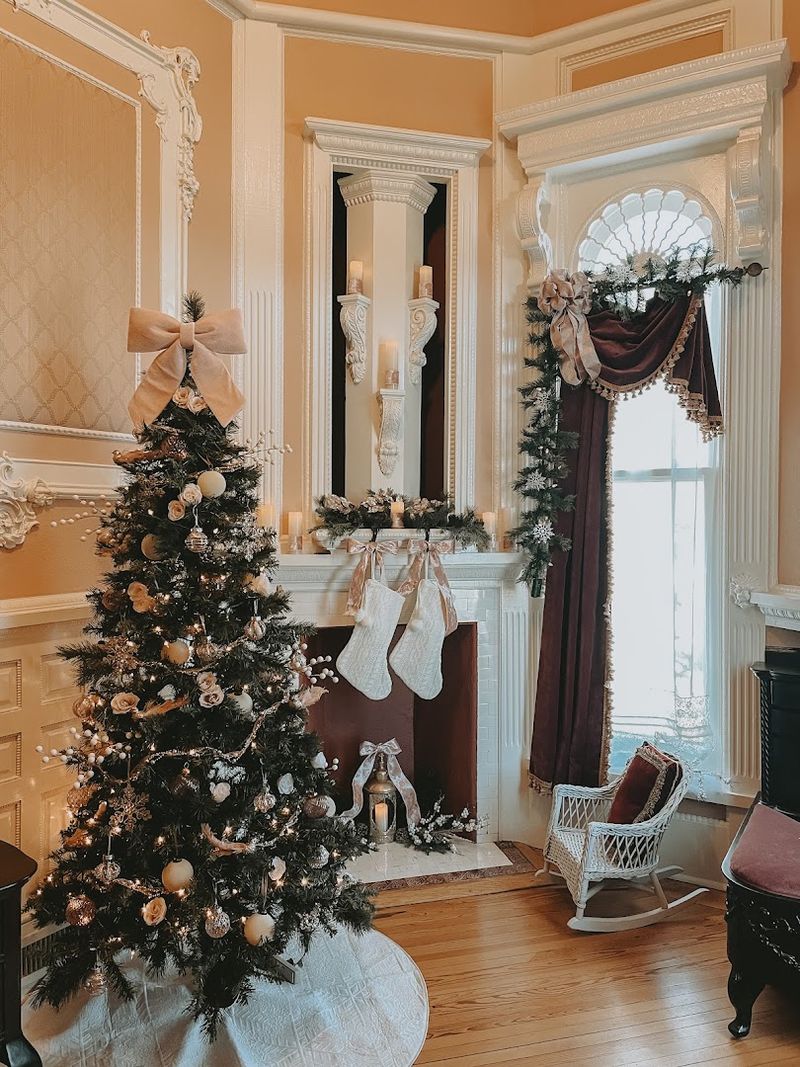
Fifteen fireplaces in a single private residence is not a number you hear every day. In the 19th century, fireplaces were both practical heating sources and major design statements, and Körner treated every one of his as an opportunity to show off his decorative instincts.
No two fireplaces in the house are exactly alike. Each one has its own mantel design, its own tile work, and its own surrounding decorative scheme.
Some are bold and heavily ornamented, with carved wooden surrounds and colorful tile inserts. Others are more restrained, fitting neatly into smaller rooms without overwhelming them.
The variety of fireplace designs across the house functions almost like a catalog of Victorian decorative possibilities. Körner was showing clients what could be done, and he held nothing back.
The fireplaces are among the most photographed elements of the house, and it is easy to understand why.
Even when they are not lit, they radiate a kind of warmth through their craftsmanship alone. Standing in front of one and studying the details is one of those small pleasures that makes a visit to Körner’s Folly feel genuinely rewarding rather than just educational.
America’s First Private Little Theater
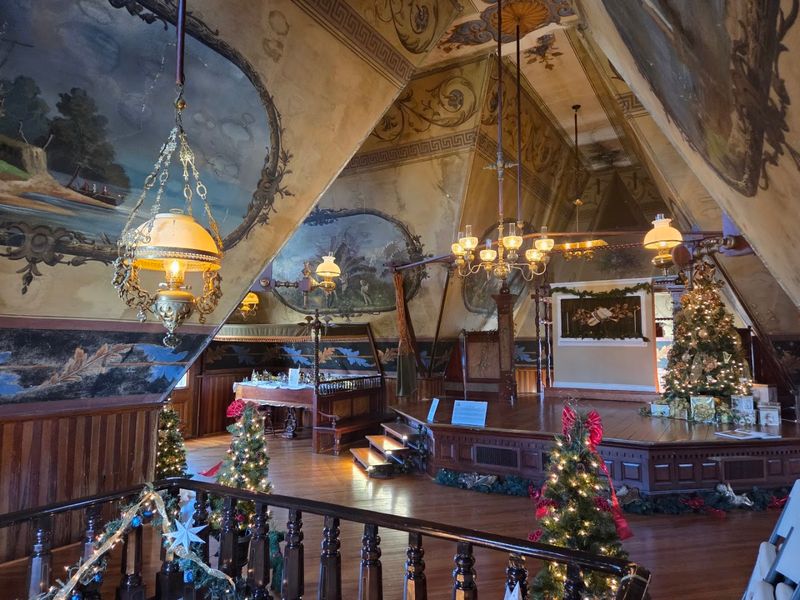
The crown jewel of the entire house sits at the top of it all, a fully realized private theater that Körner built for his family and friends. Known as Cupid’s Park Theater, it holds the distinction of being the first private little theater built in the United States, a genuinely remarkable claim that holds up under historical scrutiny.
The theater features a proper stage with a proscenium arch, painted ceiling panels, and enough seating to host a real performance. Körner’s children performed plays here, and the space served as a creative hub for the family throughout the late 19th century.
The ceiling paintings in the theater are particularly striking, featuring cherubs and decorative motifs that feel more like a European opera house than a private home in North Carolina. Körner painted many of these himself, adding another layer to his already impressive list of creative talents.
Visitors consistently describe the theater as the most jaw-dropping room in the house, and after seeing everything else on the tour, that is saying quite a lot. The theater alone justifies the trip from anywhere in the Piedmont Triad, and honestly, from much farther away than that.
The Architecture as a Living Design Showroom
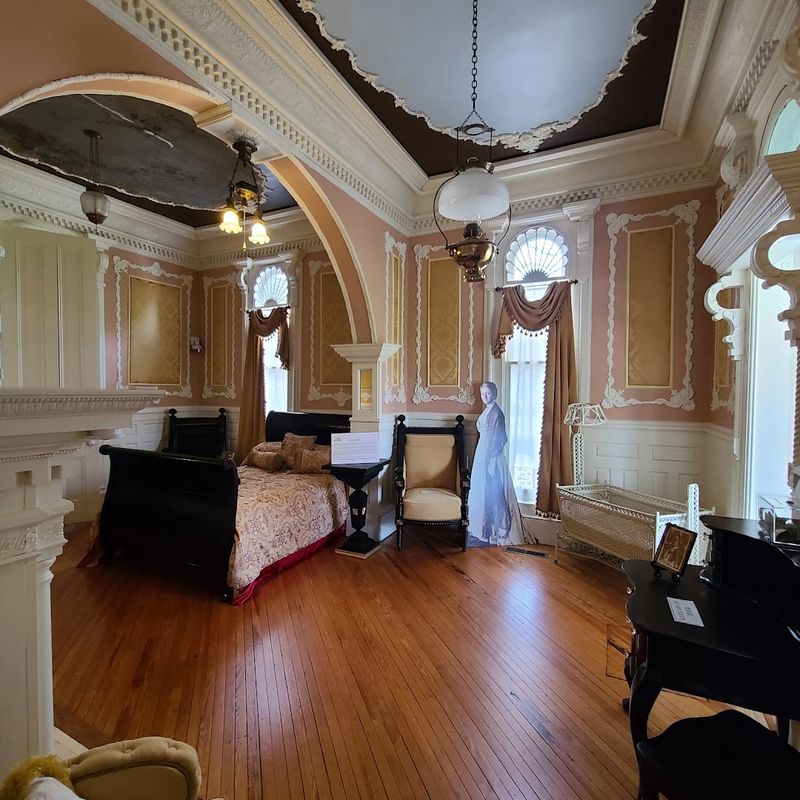
Körner did not build this house purely for personal comfort. He built it as a working portfolio, a three-dimensional catalog of his design abilities that potential clients could walk through and experience firsthand.
The concept was remarkably modern for its time.
Every room demonstrates a different approach to interior decoration. One might showcase a particular molding style, while the next highlights a specific color palette or wallpaper technique.
The house functioned as a hands-on presentation of what Körner could do for wealthy clients who wanted custom interiors.
The result is a space that feels more like a curated collection than a lived-in home, though it was absolutely both. The authentic furnishings and personal objects scattered throughout the rooms remind you that real people ate breakfast here, raised children here, and entertained guests here over many decades.
Historians and architecture enthusiasts find the house particularly valuable because it preserves design techniques and materials that rarely survived elsewhere. The restoration work ongoing at the property ensures that these details remain visible and legible for future generations.
The house is, as one longtime admirer put it, a work in progress that never stops revealing new layers.
Christmas at the Folly Is a Whole Other Experience
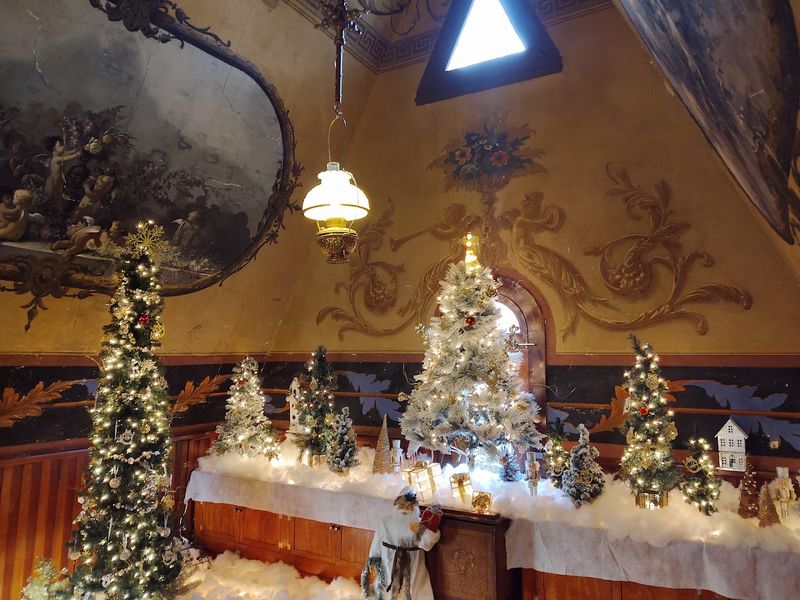
If you visit Körner’s Folly during the holiday season, you are in for something that regular-season visitors simply do not get to experience. The entire house transforms into a Christmas showcase, with each room decorated according to a different artistic theme inspired by a specific work of art.
The decorating scheme changes every year, which means repeat visitors always have something new to discover. Some rooms get towering trees draped in period-appropriate ornaments.
Others feature elaborate tableaux that connect the holiday mood to the room’s existing Victorian character in genuinely creative ways.
The Christmas display draws visitors from across North Carolina and beyond, and for good reason. The combination of the house’s already extraordinary architecture with layer upon layer of festive decoration creates an atmosphere that feels unlike any holiday experience you have had before.
Tickets during the Christmas season tend to sell out quickly, so booking well in advance is not just a suggestion but a necessity. The museum staff puts enormous effort into the annual display, and the results speak for themselves in the faces of visitors who step through the front door and stop dead in their tracks.
The Scavenger Hunt and Interactive Elements
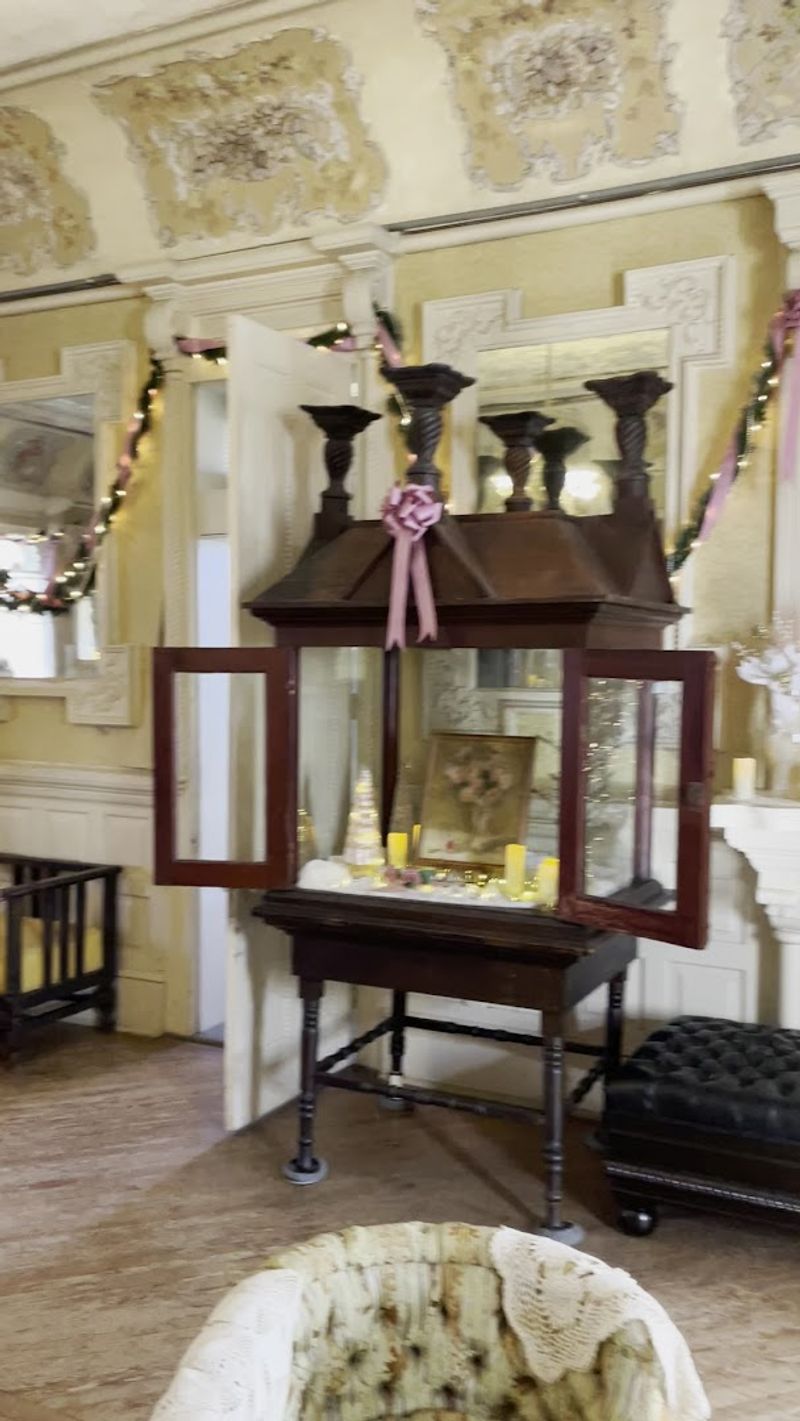
History museums can sometimes feel passive, like you are just walking past things behind glass. Körner’s Folly actively fights that tendency with a scavenger hunt that gives visitors a reason to look closely at every detail in every room.
The scavenger hunt is especially popular with younger visitors, but adults get just as caught up in it once they start. The house is packed with so many small, unexpected details that the hunt feels genuinely challenging rather than like a simple checkbox exercise.
Beyond the scavenger hunt, the self-guided tour format gives visitors a lot of freedom to move at their own pace. Explanatory cards in each room provide context without overwhelming you, and the staff members stationed throughout the house are happy to answer questions and share additional stories about specific rooms or objects.
The combination of structured exploration through the scavenger hunt and free-form discovery through the self-guided tour makes the visit work well for groups with mixed interests and attention spans. Families, couples, and solo visitors all tend to find their own rhythm inside the house, which is a credit to how thoughtfully the museum has been organized.
Ongoing Restoration and What It Means for Visitors
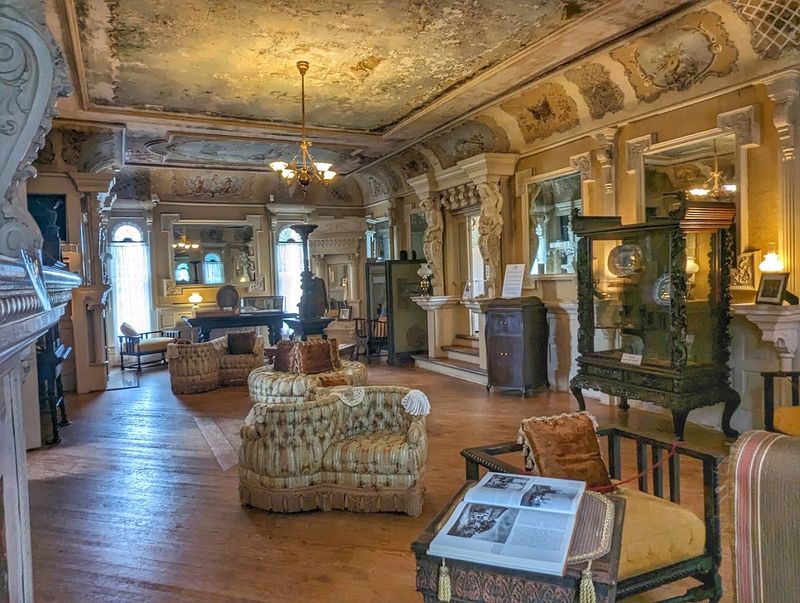
Körner’s Folly is not a frozen-in-time museum that stopped changing decades ago. The house has been under active restoration for years, and the work continues to reveal new details and restore spaces that had deteriorated over more than a century of use.
Visitors who came years ago and return today often remark on how much has changed for the better. Rooms that were once closed or partially visible are now fully accessible, and the quality of the restored surfaces and furnishings continues to improve with each phase of work.
The restoration team approaches the house with careful attention to historical accuracy, using period-appropriate materials and techniques wherever possible. This commitment to authenticity means that what you see is not a generic Victorian interpretation but a genuine effort to return the house as closely as possible to Körner’s original vision.
A new visitors center has recently been added to the property, giving guests a comfortable orientation space before they enter the house. The center includes exhibits and the introductory video that helps first-time visitors understand what they are about to experience.
The addition has been warmly received and genuinely improves the overall flow of the visit.
Practical Tips for Planning Your Visit
A little planning goes a long way at Körner’s Folly. The house operates Tuesday through Saturday from 10 AM to 4 PM, and on Sundays from noon to 4 PM.
Self-guided tours are available right up until 3 PM, giving you a full hour to explore before closing time.
Buying tickets online in advance is the smartest move, particularly on weekends or during the Christmas season when visitor numbers spike. The rooms are cozy by design, and large groups can make the narrow hallways feel quite tight, so scheduling ahead helps the museum manage the flow of visitors.
Comfortable, flat shoes are a must. The house has multiple staircases, low ceilings in certain rooms, and narrow doorways that require a bit of agility.
Visitors who use mobility aids or have difficulty with stairs should call ahead so the staff can advise on accessibility.
Strollers can be left at the entrance porch, and the staff is accommodating about helping families navigate the visit. The gift shop carries creative items worth browsing on your way out.
And if you are visiting with a skeptical companion who thinks old houses are boring, the theater alone will change their mind.
Why This House Deserves a Spot on Your Travel List
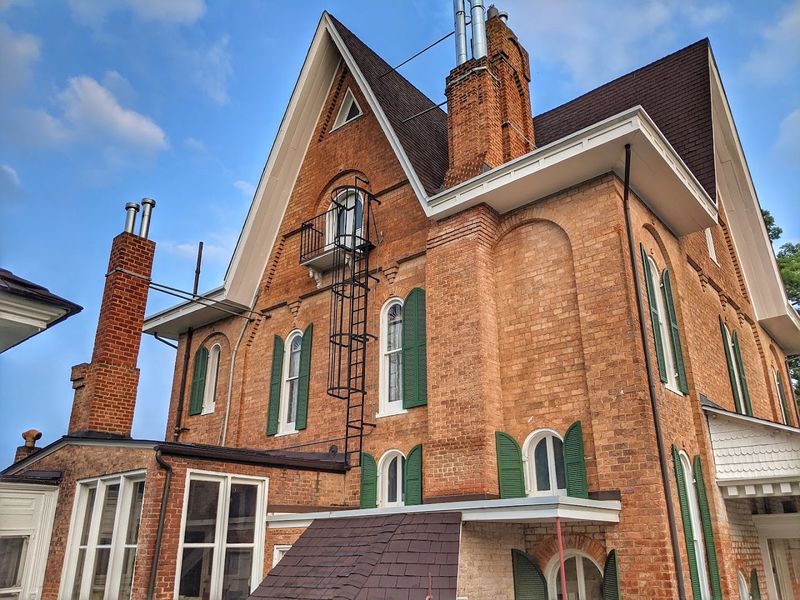
There are plenty of historic houses across the United States, but very few of them combine genuine architectural innovation, personal artistic vision, and outright eccentricity the way this one does. Körner’s Folly earns its place on any serious traveler’s list not because it is famous, but because it is genuinely one of a kind.
The house carries a 4.8-star rating from nearly 560 reviews, which is the kind of consistency that speaks louder than any single glowing endorsement. Visitors ranging from architecture students to families with teenagers to church groups consistently leave impressed, which tells you something about the breadth of the experience on offer.
The location in Kernersville puts it within easy reach of both Greensboro and Winston-Salem, making it a natural anchor for a day of exploring the Piedmont Triad. You could combine it with a walk through Kernersville’s small-town downtown or pair it with other regional attractions for a full and satisfying day out.
Körner’s Folly rewards curiosity, patience, and a willingness to look closely at things. The more attention you bring to it, the more it gives back, and that is a quality that the best travel destinations always share.
Share this story