 Unearth The Voyage
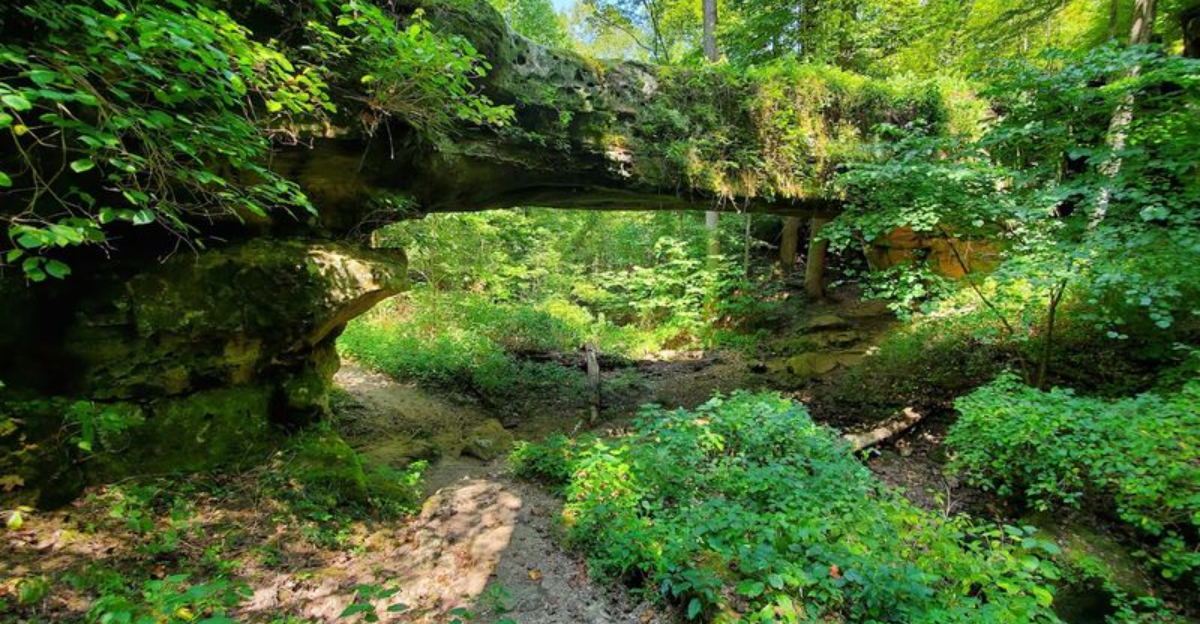
There is a trail in southern Illinois where you walk across the top of a natural stone bridge that stretches 90 feet over open air, and most people in the state have never heard of it. Tucked inside the Shawnee National Forest near Pomona, this loop hike takes you down into a canyon carved by centuries of water, past towering sandstone cliffs, and through a rocky creek bed that feels more like the American Southwest than the Midwest.
The trail earns its bold nickname honestly. By the time you finish, your legs will feel it, your camera roll will be full, and you will absolutely want to come back.
Where the Trail Begins: Location and Access
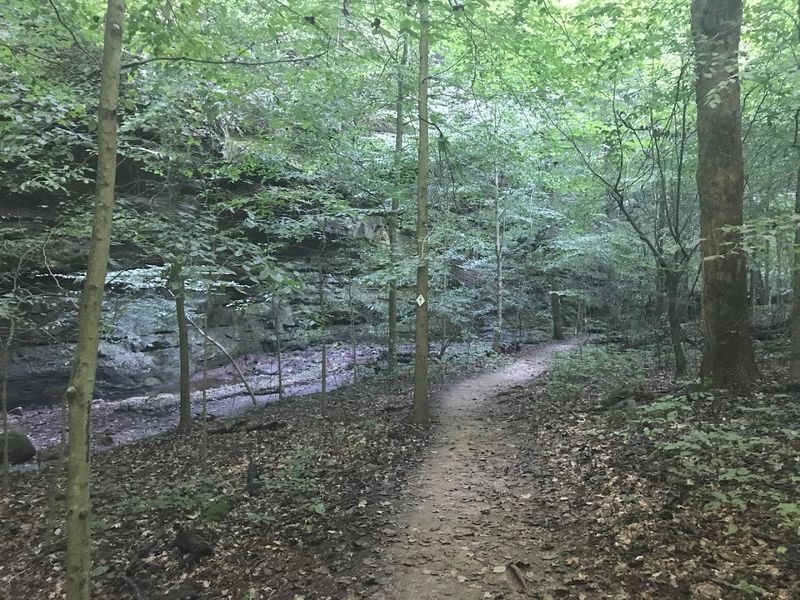
The address is Pomona, IL 62975, and the trailhead sits inside the Shawnee National Forest in Jackson County, deep in the southern tip of Illinois. Getting there requires navigating a series of rural roads that wind through farmland and thick forest, but the drive alone sets the mood for what is ahead.
Two small parking lots sit side by side at the trailhead. Each one gives access to a different section of the loop, and both have restroom facilities nearby, which is a welcome detail when you are heading out for a hike that can take up to three hours.
The trail is open 24 hours a day, seven days a week, and there is no entry fee, which makes it an easy choice for a spontaneous weekend outing. For questions, the ranger station can be reached at (618) 253-7114.
The official site through the U.S. Forest Service also has current conditions worth checking before you go.
The Natural Stone Bridge: A 90-Foot Span in the Sky
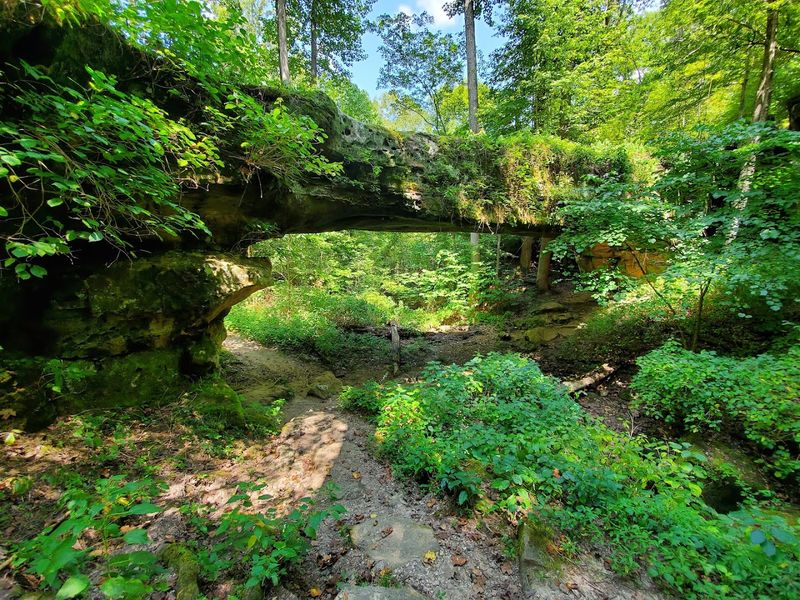
The crown feature of this trail is a natural stone bridge that stretches roughly 90 feet across a gap in the canyon wall. You do not look at it from below like a tourist attraction.
You walk across the top of it, and the drop on either side is very real.
The bridge is made of layered sandstone, shaped over thousands of years by water cutting through softer rock below. The surface is wide enough to cross comfortably, but the exposure on both sides gives your stomach a gentle reminder that you are not in a park with guardrails.
Most hikers do not realize they are standing on a natural bridge until they look back and see where they just walked. That delayed recognition is part of what makes this spot so memorable.
It is not dramatized with signage or fencing. The trail simply leads you across it, matter-of-factly, as if crossing a 90-foot stone arch over a canyon is a perfectly ordinary Tuesday activity.
The Loop Layout: Understanding the Trail Structure
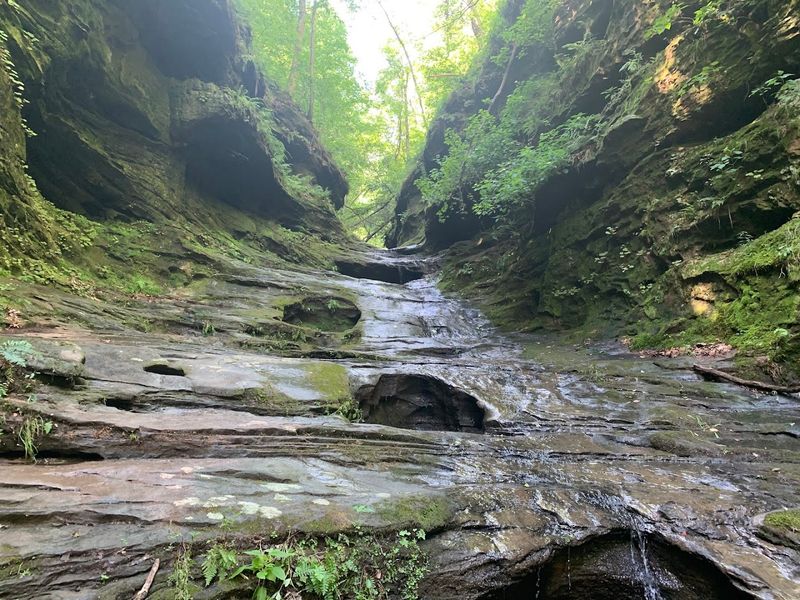
The full loop at Little Grand Canyon is commonly listed at around 3.4 miles, though some hikers report it feels closer to five or six miles once you factor in the terrain. The trail is not a straight out-and-back.
It circles through two distinct canyon sections, each with its own personality.
The lower parking lot leads to an easier descent into a shorter canyon with some slippery spots but manageable terrain for most adults. The upper parking lot connects to the longer, steeper canyon that truly earns the Little Grand Canyon name, with narrow ridgeline paths and rocky scrambles that demand real attention.
White trail markers painted on the trees guide the route throughout. Paying close attention to those markers matters more than it might seem.
Several groups have accidentally followed other hikers off the official path without noticing. Going counterclockwise is a popular choice among experienced visitors because it puts the steepest climb earlier in the hike rather than saving it for tired legs at the end.
Canyon Geology: Sandstone Cliffs and Ancient Rock Formations
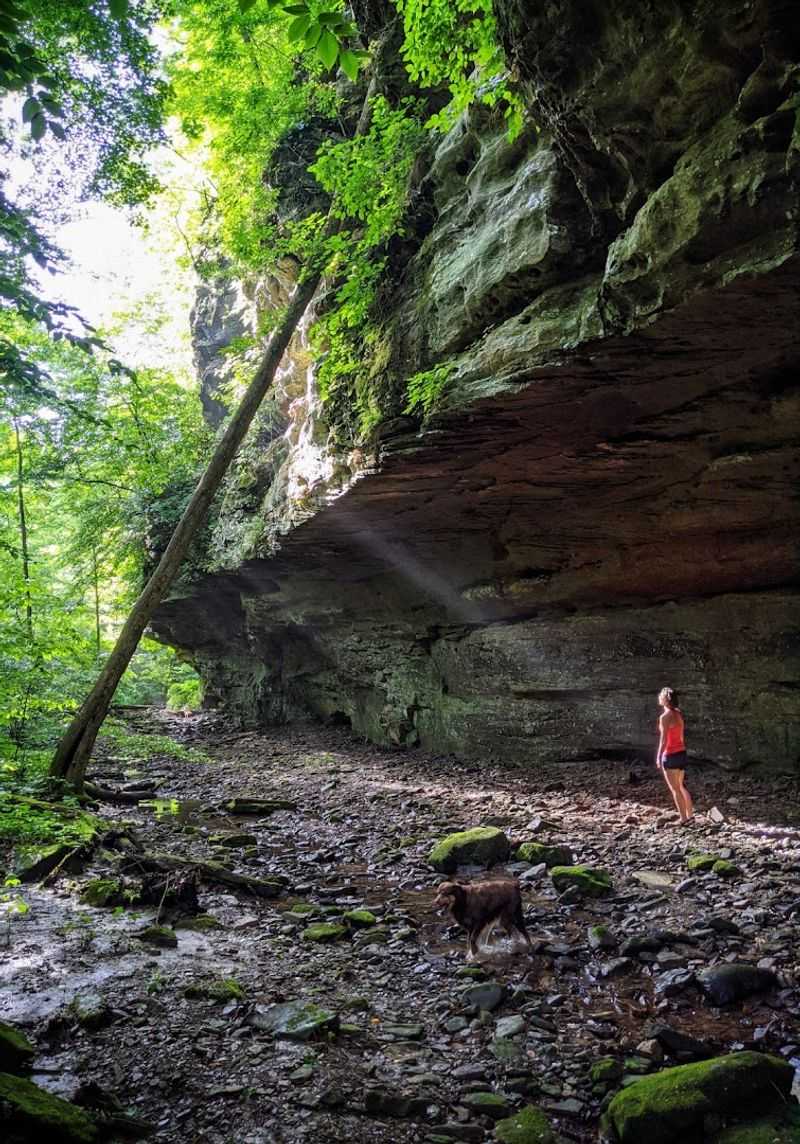
The rock walls here tell a story that goes back hundreds of millions of years. The canyon was carved through sandstone and shale laid down during the Pennsylvanian period, when much of the Midwest sat beneath shallow seas.
Water did the slow, patient work of cutting through layers of softer rock over millennia to create what hikers walk through today.
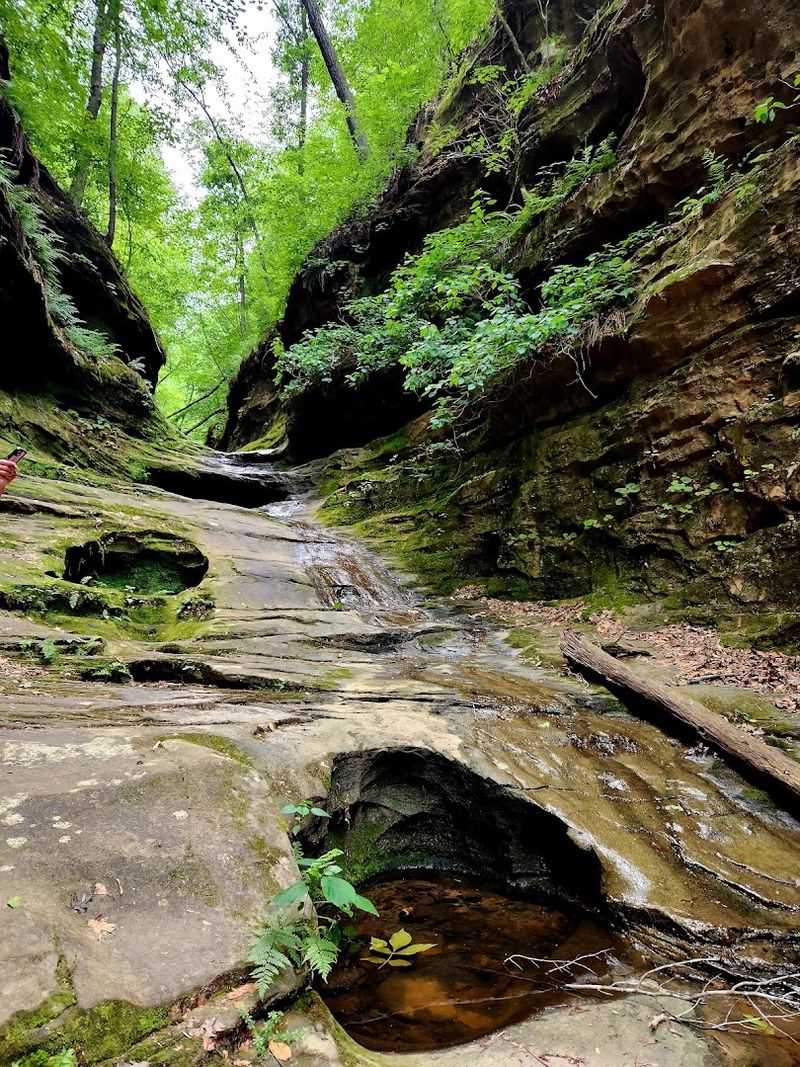
The walls rise dramatically in places, with horizontal bands of color running through the stone in shades of tan, rust, and pale gray. Some sections are streaked with black mineral staining where water has seeped through cracks for centuries.
Up close, the texture is rough and grainy, and chunks of the canyon wall occasionally break away and pile at the base.
The rock formations along the upper ridge are especially striking. Some lean outward over the trail at odd angles, creating natural overhangs that feel sheltering on a hot afternoon.
The variety of shapes and surfaces means nearly every turn in the trail offers something visually different from the last, which keeps the hike feeling fresh even when your legs are getting tired.
The Canyon Floor: Creek Crossings and Rocky Terrain
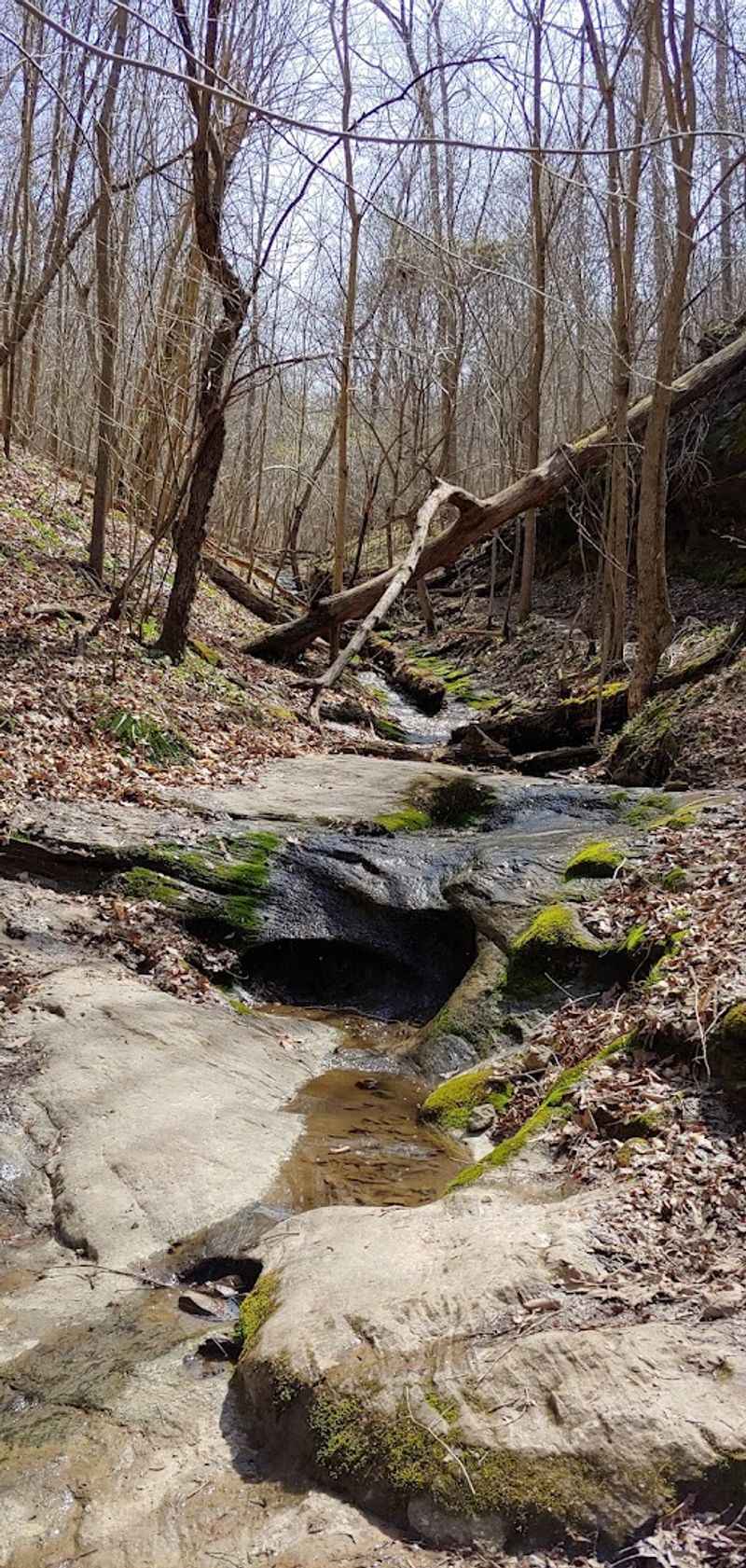
Once you drop into the canyon bottom, the trail transforms completely. The smooth dirt path disappears and is replaced by a wide riverbed of exposed rock, boulders, and shallow flowing water.
You cross the creek multiple times using stepping stones, and in dry conditions, it is a fun puzzle of foot placement rather than a genuine obstacle.
After significant rain, the story changes. The creek rises, the rocks get slick, and what was a manageable crossing becomes genuinely risky.
Several reviewers have noted that wet conditions make certain sections of the canyon floor dangerous enough to skip the hike entirely. Checking weather in the days before your visit is not optional.
It is the difference between a great day out and a very bad one.
The creek bed section is where the hike earns its moderate-to-hard rating. Boulders require careful footwork, and some drops demand that you lower yourself down using both hands.
The payoff is a canyon floor that feels remote and wild, surrounded by walls that block out most of the sky and create a cool, shaded corridor even on warm days.
The Overlook: A Valley View Worth Every Step
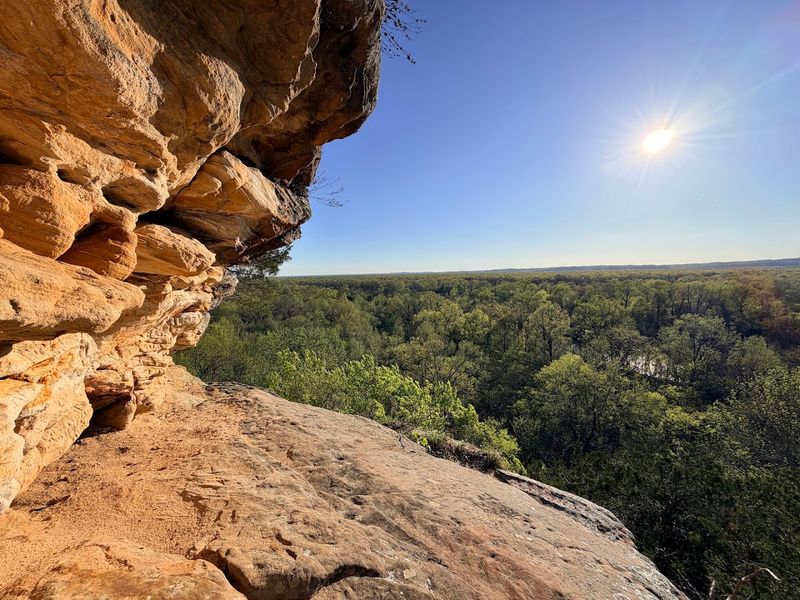
Partway through the loop, the trail reaches a lookout point that stops most hikers in their tracks. From the edge of the bluff, a winding stream cuts through a lush valley far below, framed by dense forest on every side.
On a clear day, the view stretches far enough to feel genuinely expansive for a state better known for flat cornfields than dramatic landscapes.
The overlook sits at the far end of the longer canyon section and arrives after a stretch of trail that narrows along a steep ridge. The contrast between the tight, technical path leading up to it and the open sky at the edge makes the view land harder than it might otherwise.
You earn it, and the view knows it.
Early morning visits offer the best light, with soft golden tones hitting the valley below and mist sometimes sitting in the low spots between the trees. Late afternoon works well too, when the shadows deepen and the colors in the sandstone walls become richer.
The overlook is also a good spot to rest and eat before tackling the return portion of the trail, so pack a snack worth saving for this moment.
Wildlife and Nature Along the Trail
Southern Illinois sits in a biological crossroads zone where species from the South, East, and Midwest all overlap, and the Shawnee National Forest reflects that diversity. The trail passes through several habitat types in one loop, from shaded canyon bottoms to exposed ridgeline, and each zone hosts its own cast of residents.
Hikers have spotted armadillos along this trail, which surprises most visitors who do not expect to see them this far north. Timber rattlesnakes and copperheads are present in the area, which is why trail guides consistently advise watching where you place your hands and feet, especially when climbing rocks or reaching into crevices.
Awareness, not fear, is the right response.
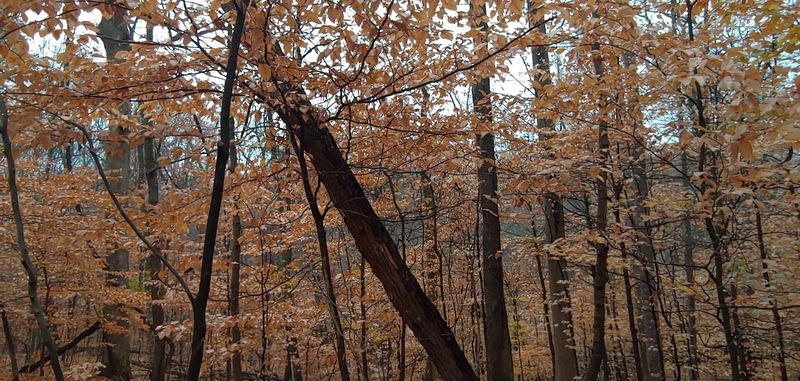
Birds are abundant throughout the hike, with the canyon acoustics amplifying their calls in interesting ways. Wildflowers appear along the upper trail sections in spring, and the fall foliage transforms the forest into a layered display of amber, orange, and deep red that reflects off the sandstone walls.
Every season offers a different version of the same trail, which is part of why so many visitors return more than once.
Difficulty Level: What to Expect Physically
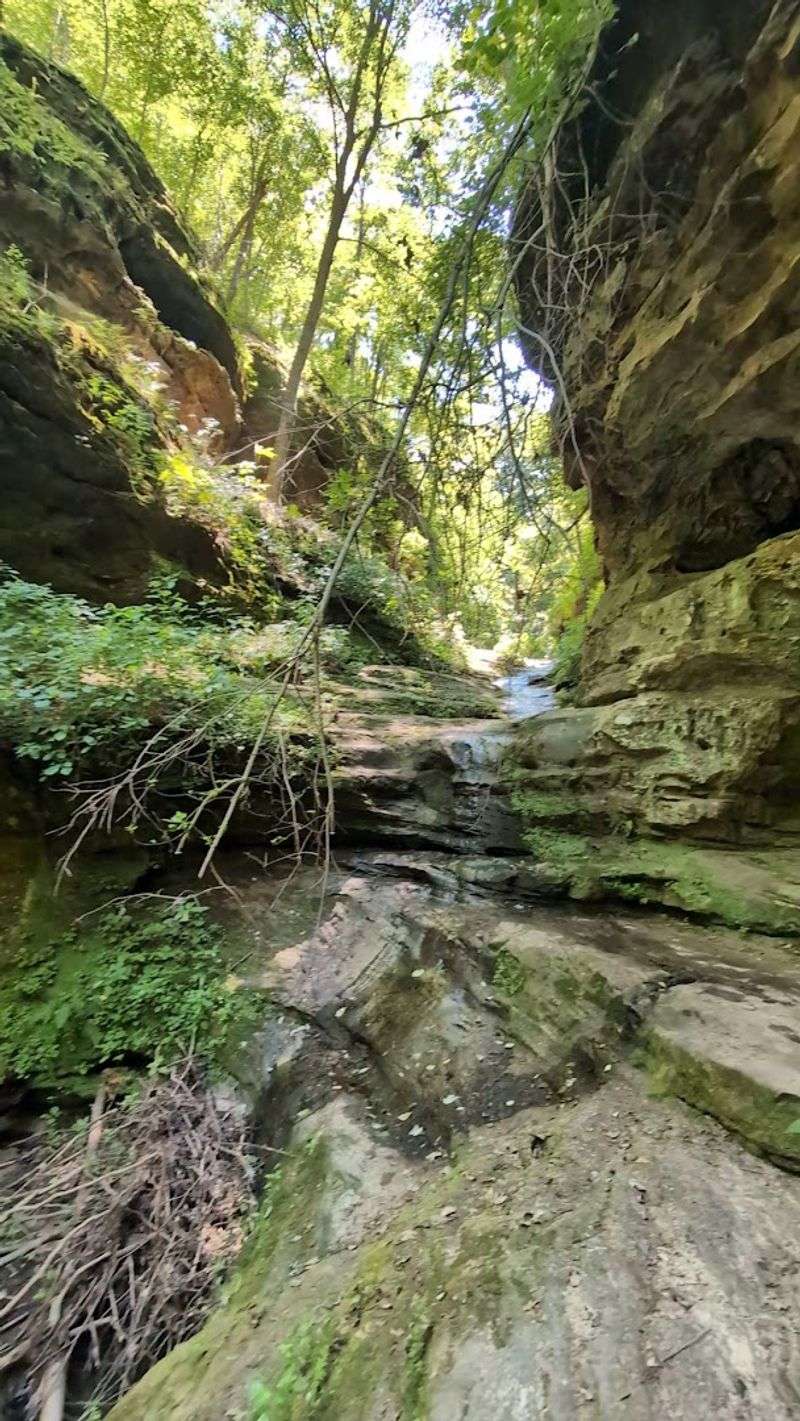
This trail sits firmly in the moderate-to-hard category, and that rating is not padding. The terrain shifts constantly between wide forest paths, narrow ridge walks, steep boulder scrambles, and creek crossings that require balance and upper body engagement.
It is not a casual stroll, and showing up unprepared makes a significant difference in how the experience goes.
The canyon entry and exit points are the hardest sections. Going down into the canyon involves lowering yourself over large rock steps, and coming back up requires pushing through the same terrain in reverse with tired legs.
Cut steps have been carved into some of the steeper sections, but they are not evenly spaced, which can be challenging for shorter hikers.
The hike typically takes between two and three hours for a steady group, though slower paces or longer rest stops can push that to four. Younger children and older adults can manage parts of the trail, particularly the upper rim section, but the canyon descent is not suitable for anyone with limited mobility or a strong fear of heights.
Honest self-assessment before the trailhead saves a lot of trouble later.
Gear and Preparation: What to Bring
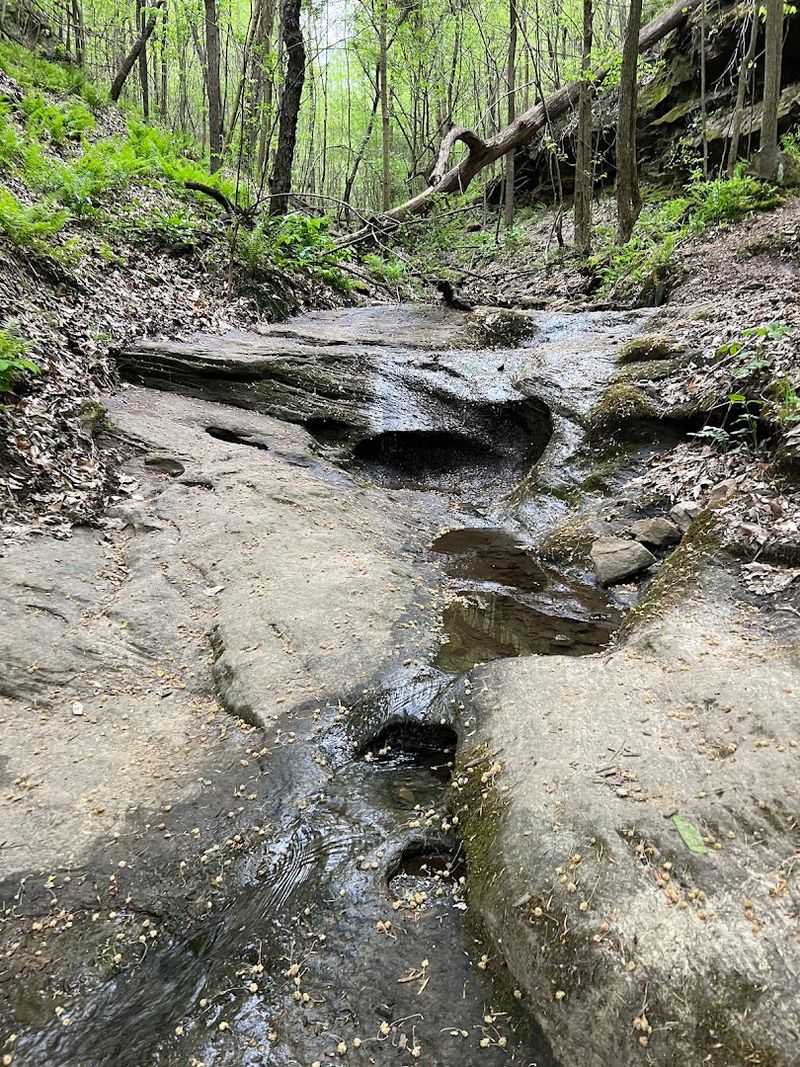
Good footwear is the single most important thing you can bring on this trail. Trail runners work, but proper hiking boots with ankle support and grippy soles make the wet rock sections significantly safer.
Sandals and casual sneakers are a genuine hazard on the canyon floor, and the rocks do not care how confident you feel when you set out.
Water is the second non-negotiable. The hike is longer and more physically demanding than it looks on paper, and there is no water source on the trail itself.
A minimum of two liters per person is a reasonable starting point, and more in warm weather. Snacks with some protein help sustain energy through the longer canyon sections.
Bug spray is worth packing from spring through fall. Ticks are active in this region, and the dense undergrowth along the trail bottom creates ideal habitat for them.
Trekking poles are not required but earn their weight on the steep descents. A small first aid kit, a fully charged phone, and a paper map of the trail round out a sensible kit.
The trail is marked, but having a backup never hurts.
Bringing Dogs: A Practical Guide
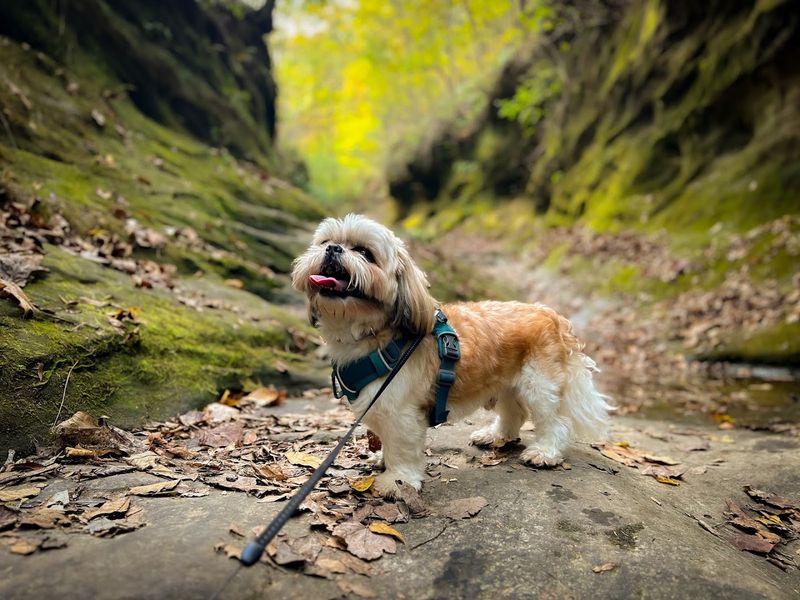
Dogs are allowed on this trail, and plenty of owners bring them. The honest assessment from experienced visitors, though, is that the canyon sections create real challenges for four-legged hikers, especially at the steep boulder drops where a large step down is required.
Dogs that cannot handle that transition need to be lifted, which is awkward on a narrow, slippery ledge.
Smaller dogs and dogs with short legs tend to have the hardest time. Larger, athletic dogs can often manage the terrain, though some still need guidance and encouragement through the trickiest sections.
Going clockwise reportedly makes the waterfall section easier for dogs than the counterclockwise direction, based on the angle of approach.
If your dog is not accustomed to technical terrain, this trail is worth scouting on your own first before bringing them along. The upper rim section is flat and accessible enough for most dogs, so a partial hike along the top can still be a good outing without committing to the full canyon descent.
Keep your dog on a leash near the bluff edges, where the drop-offs are serious and the trail narrows considerably.
Best Times to Visit and Seasonal Conditions
Dry weather is the single biggest factor in how enjoyable this hike turns out to be. The canyon rocks become dangerously slippery after rain, and even a shower a day or two before your visit can leave the creek bed and boulder sections coated in a thin film of wet grit that is hard to trust.
Checking rainfall data for the days leading up to your trip is a habit worth building.
Spring offers wildflowers and lush greenery but also the highest chance of wet conditions. Summer is warm and buggy, but the canyon stays noticeably cooler than the surrounding forest thanks to the shade and airflow.
Fall is widely considered the best season, when dry air, comfortable temperatures, and vivid foliage combine to make every section of the trail look like it was staged for a photograph.
Winter visits are possible since the trail is open year-round, and the bare trees actually open up views that are hidden during leafy months. Ice on the rocks is a serious concern in January and February, so microspikes are worth considering for cold-weather trips.
Weekdays in any season offer a quieter experience with fewer cars in the lot and more solitude on the trail.
Why This Trail Belongs on Your Illinois Bucket List
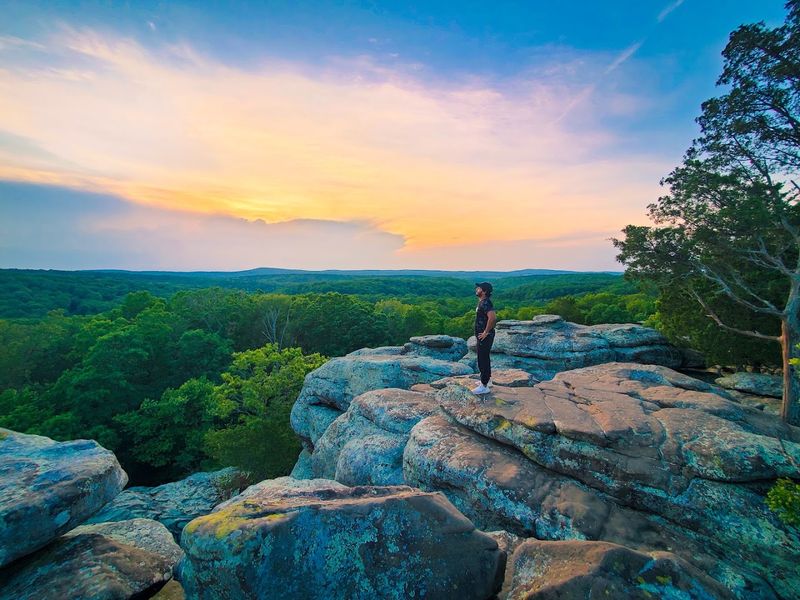
Illinois does not have a reputation as a hiking destination, and that gap between expectation and reality is exactly what makes this trail so satisfying to discover. The state’s southern tip holds terrain that most residents of Chicago or Springfield have never seen, and Little Grand Canyon is the headline act in that landscape.
The combination of geological features packed into one loop is genuinely rare for the region. A natural stone bridge, two canyons, a cliff-edge overlook, a boulder-strewn creek bed, and a ridgeline trail with serious exposure all connect into a single outing.
Few trails in the Midwest offer that range of experiences without leaving the state.
The 4.7-star rating across hundreds of reviews is not the result of low expectations. Hikers who have done trails across the country regularly describe this one as a standout.
The trail does not hand you the experience. It makes you work for every view, every crossing, and every step across that stone bridge.
That effort is the whole point, and the canyon at the bottom of it all is the reward that makes the soreness the next morning feel completely worth it.



