 Unearth The Voyage
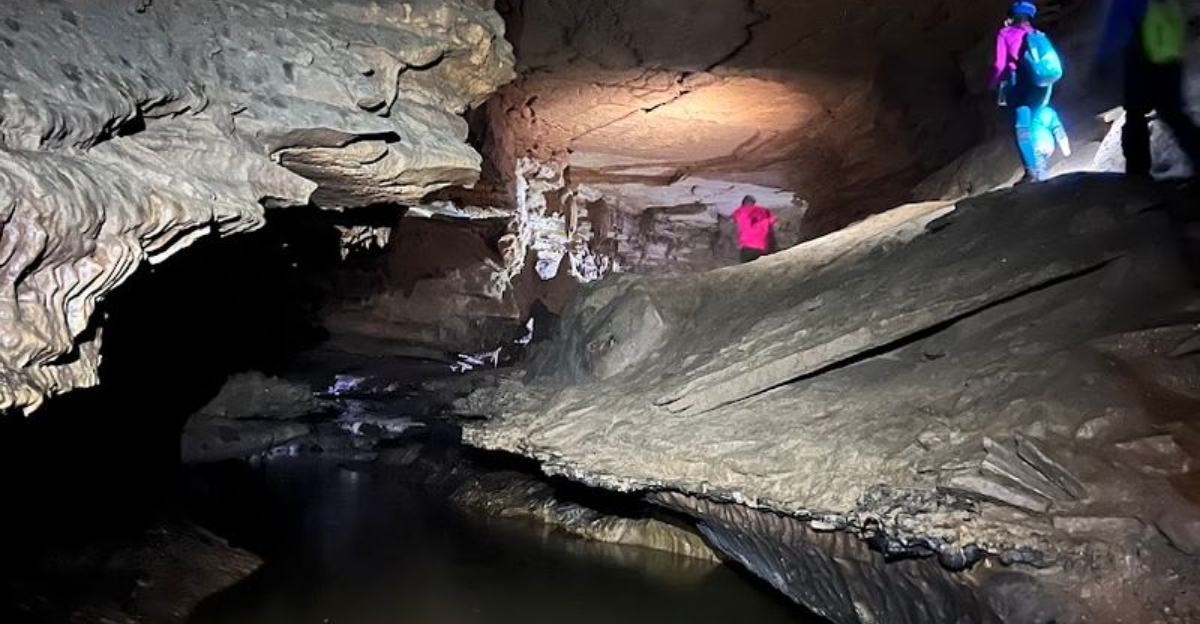
There is a cave in southern Illinois that most people have never heard of, and that is exactly what makes it so worth knowing about. Deep beneath the bluffs of Monroe County, a limestone cave stretches for nearly six miles of mapped passages, filled with underground streams, stunning formations, and total darkness that makes every headlamp feel like a lifeline.
This is not a guided tour with handrails and gift shops. The rules are clear: you need at least four people in your group, three light sources each, a signed waiver, and a genuine sense of adventure before you ever set foot underground.
Where to Find This Underground World
The cave that has been quietly earning a reputation among spelunking enthusiasts across the Midwest sits at 4369 G Road in Waterloo, Illinois 62298, right in Monroe County in the southwestern corner of the state.
Monroe County is about 30 miles southeast of St. Louis, Missouri, and the drive out there takes you through rolling farmland and wooded bluffs that hint at the dramatic geology hiding just below the surface.
The official name is Illinois Caverns State Natural Area, and it is managed by the Illinois Department of Natural Resources. The site is open Wednesday through Saturday from 8:30 AM to 4:30 PM, and on Sundays from 8:30 AM to 4:00 PM.
Monday and Tuesday are closed.
You can reach the site by phone at 618-458-6268 or check the official DNR page before heading out, since hours and access can occasionally change. The road leading in is rural, so GPS is your best friend, and arriving early gives you the most time underground.
The Geology Behind the Cave
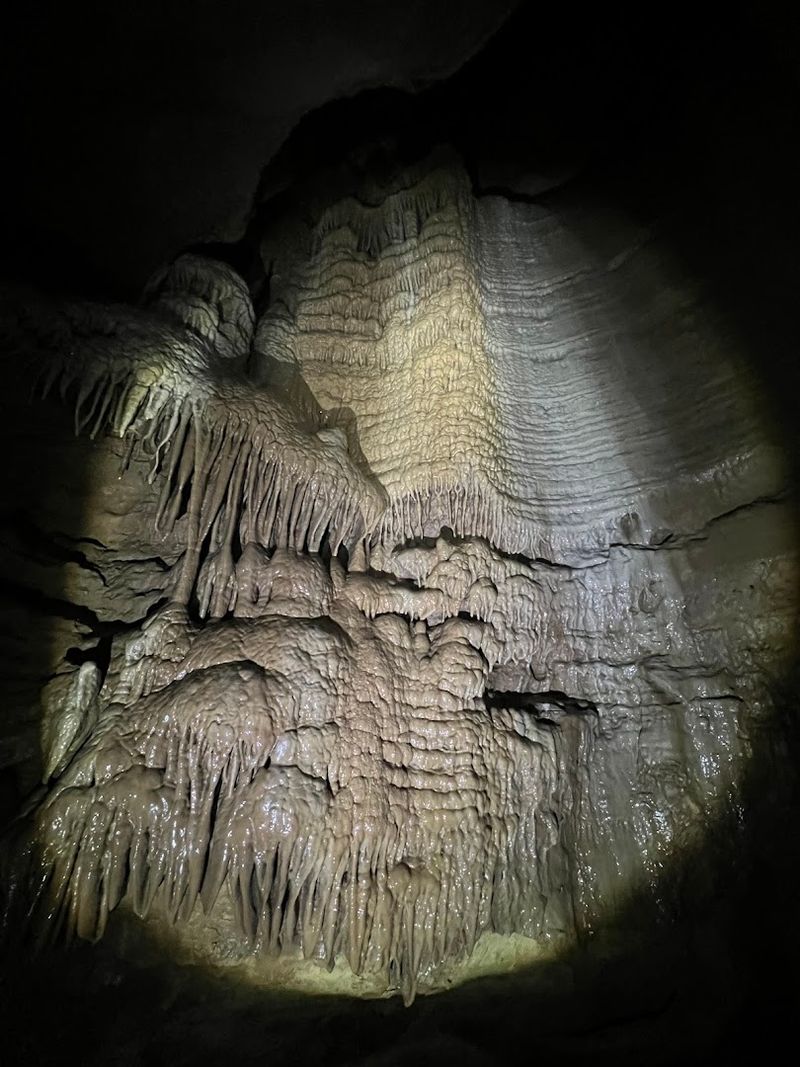
The cave formed over millions of years as slightly acidic groundwater slowly dissolved the thick limestone bedrock beneath the bluffs of Monroe County. This process, called karstification, carved out a network of passages, rooms, and channels that now stretch for nearly six miles of mapped terrain.
The cave sits within the Salem Limestone formation, a rock layer that dates back roughly 340 million years to the Mississippian period, when much of Illinois was covered by a shallow tropical sea. The shells and marine organisms that settled on that ancient seafloor eventually became the rock that water later hollowed out into passages you can walk through today.
An underground stream still flows through the cave, which means the formation process is technically still ongoing, just at a pace too slow for any human to notice. The cave maintains a steady temperature of about 58 degrees Fahrenheit year-round, which is a direct result of its depth and the insulating properties of the surrounding rock.
That constant chill is a geological feature as much as a practical one, and it keeps the cave feeling like a different world no matter what season you visit.
The Four-Person Minimum Rule and Why It Exists
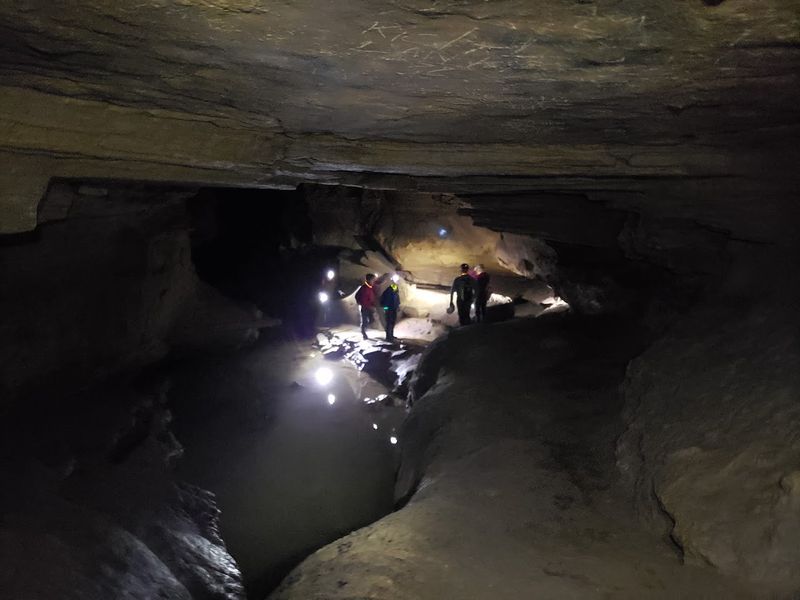
Before you even think about heading underground, there is one rule that applies to every single visitor without exception: you must arrive with a group of at least four people. This is not a suggestion or a guideline that staff might bend on a slow day.
The four-person minimum exists for genuine safety reasons. The cave is completely self-guided, meaning there are no rangers walking the passages with you once you head down.
If someone gets hurt or disoriented, having multiple people in the group ensures that one or two can stay with the injured person while others go for help.
The rule also encourages better group decision-making underground, since four people are more likely to catch navigation mistakes than one or two. The passages are dark, the rocks are slippery, and the underground stream adds a layer of unpredictability that solo or paired explorers should not face alone.
Groups that show up with fewer than four people will not be permitted to enter, so coordinate your crew carefully before making the trip. Think of the minimum as the cave setting its own terms, and honestly, the terms are fair.
The Three Light Sources Requirement
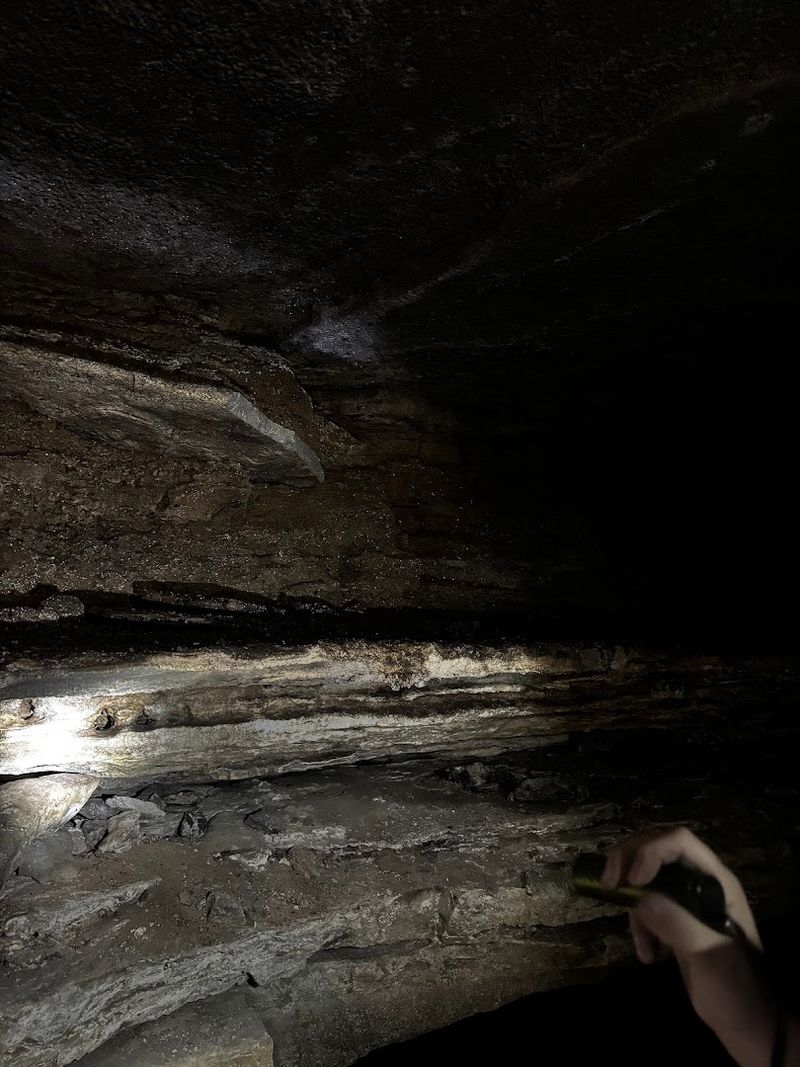
Right alongside the four-person rule comes another non-negotiable requirement: every single person in your group must carry three independent light sources before stepping into the cave. That means a headlamp counts as one, a flashlight counts as two, and a backup flashlight or lantern counts as three.
Cell phone flashlights do not count, and staff at the check-in station will make sure you are properly equipped before issuing your permit. The reason for this rule becomes obvious the moment you are standing in the passage with your lights off.
The darkness is total and absolute, the kind that makes you feel like your eyes are not even open.
Bringing backup batteries for each device is strongly recommended, especially if you plan to explore deep into the cave system. A group of four spending four to five hours underground will drain batteries faster than most people expect, particularly when everyone is relying on their lights constantly.
The check-in station does provide helmets free of charge, which is another piece of gear you should absolutely wear since the ceiling drops suddenly in several sections and the rock has no interest in being polite about it.
What the Cave Actually Looks Like Inside
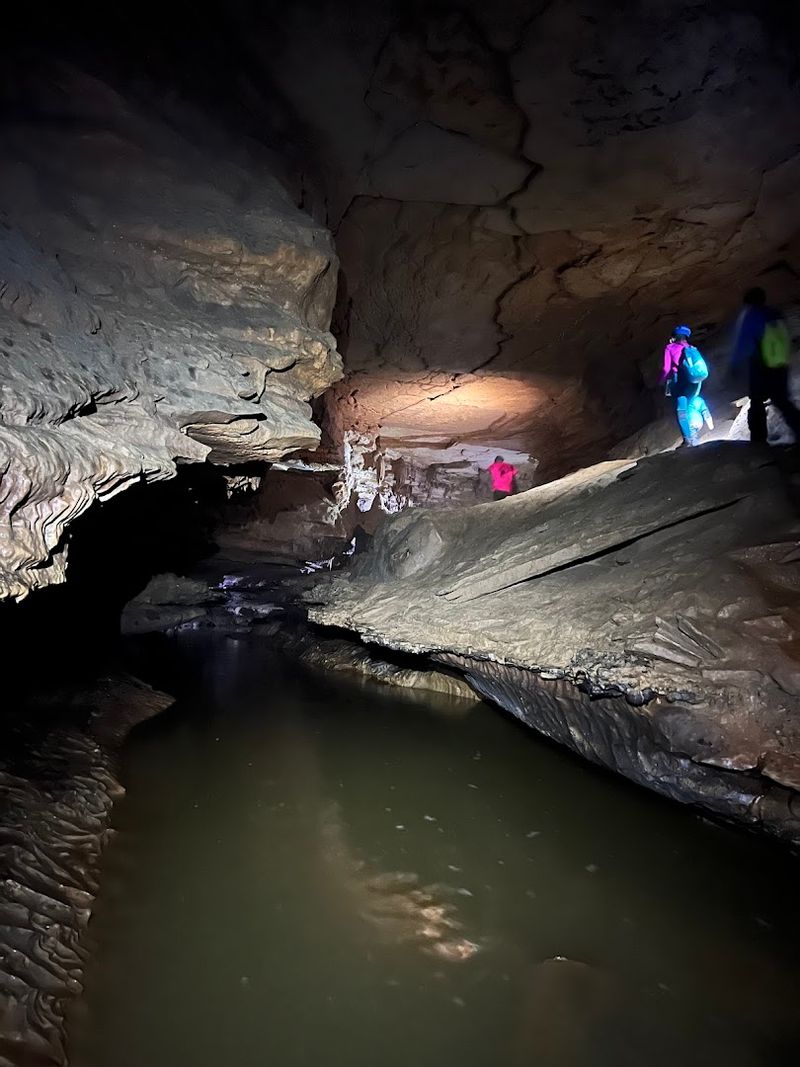
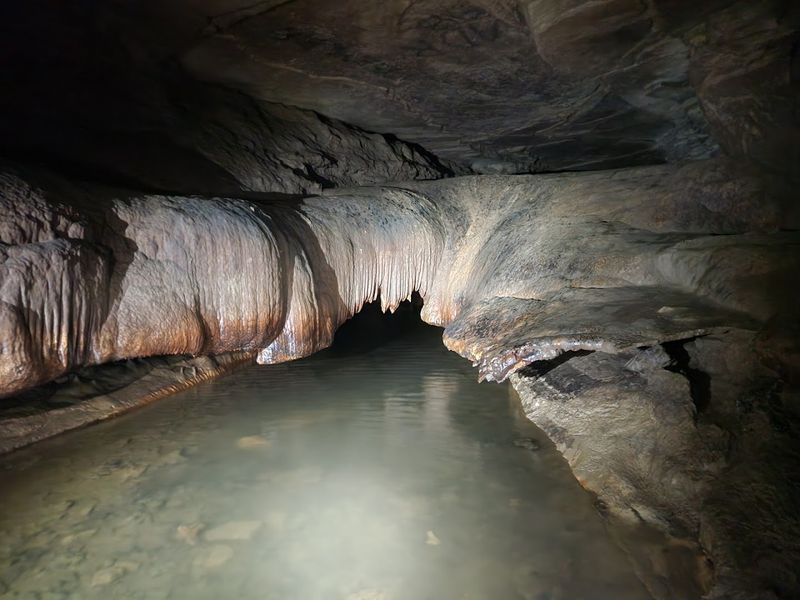
The inside of the cave is genuinely impressive in a way that photographs struggle to capture. The passages wind through chambers lined with stalactites, stalagmites, columns, and flowstone formations that have been building up over thousands of years, one tiny drip at a time.
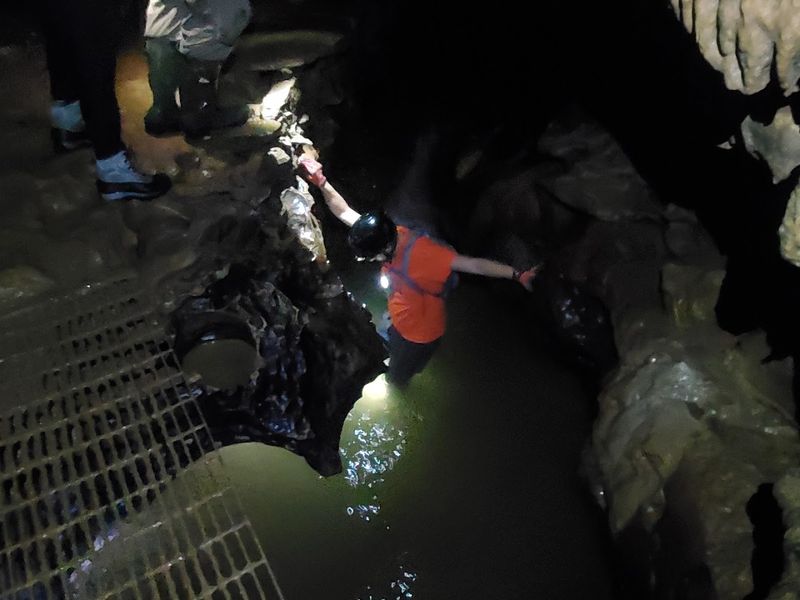
Most of the main route follows the underground stream, which means you will be wading through water for a significant portion of your visit. The depth varies, but knee-high water is common, and if you push toward the back sections and the waterfall, mid-thigh depth is entirely possible.
The walls and ceiling are close in certain sections, requiring you to crouch or squeeze through, while other areas open up into larger rooms where you can stand fully upright and sweep your headlamp across impressive formations. Side passages branch off from the main route and reward explorers who take the time to investigate them.
The cave floor is a mix of gravel, mud, and submerged rock, all of which are slippery enough to demand careful footing at every step. The reward for that careful navigation is a close-up look at formations that most people will never see in their lifetimes.
The Underground Waterfall
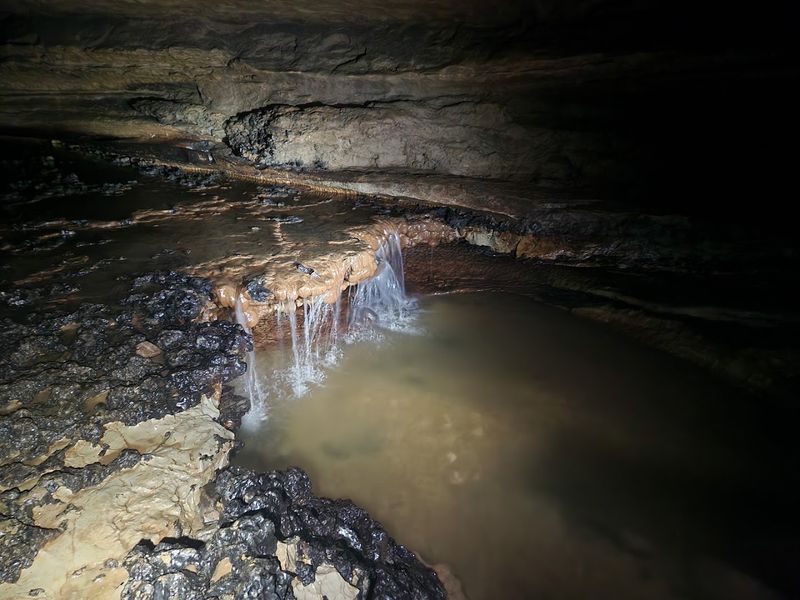
One of the most talked-about features deep inside the cave system is an underground waterfall, and reaching it is considered a worthy goal for groups willing to push further into the passages. The waterfall is not a roaring cascade, but seeing flowing water inside a cave lit only by headlamps is a genuinely striking experience.
Getting to the waterfall means committing to deeper water, and reviewers who have made the trek report that the water level can reach mid-thigh or higher, particularly near the base of the falls. Some visitors have even climbed up the waterfall itself, which requires solid footing and a willingness to get thoroughly soaked.
The effort involved in reaching that section of the cave is part of what makes it memorable. This is not a destination you stumble across by accident.
You earn it by navigating slippery passages, wading through cold water, and keeping your light sources dry and functional throughout the journey.
Waterproof boots or neoprene waders make a significant difference here, and anyone who has tried crossing the deep sections in regular hiking shoes tends to learn that lesson the hard way, usually within the first ten minutes underground.
Wildlife Living in the Dark
The cave is not just rock and water. A variety of creatures have adapted to life in the permanent darkness, and spotting them is one of the quieter thrills of the visit.
Salamanders are among the most commonly seen residents, clinging to wet rock surfaces and moving slowly through the shallows of the underground stream.
Cave-adapted fish and shrimp have also been spotted by visitors exploring the deeper sections of the system. These animals have evolved over generations to survive without light, which often means reduced pigmentation and, in some species, reduced or absent eyes that serve no purpose in total darkness.
Bats are another resident of the cave, and their presence is an important part of the ecosystem. Visitors should be respectful and avoid disturbing any bats they encounter, particularly since bat populations across North America have faced serious challenges from white-nose syndrome in recent decades.
The cave also hosts various invertebrates that thrive in the cool, humid environment. The overall biodiversity underground is a reminder that the cave is a living system, not just a geological curiosity, and treating it with care helps ensure that future visitors will find the same wild residents waiting in the dark.
Getting Geared Up Before You Go
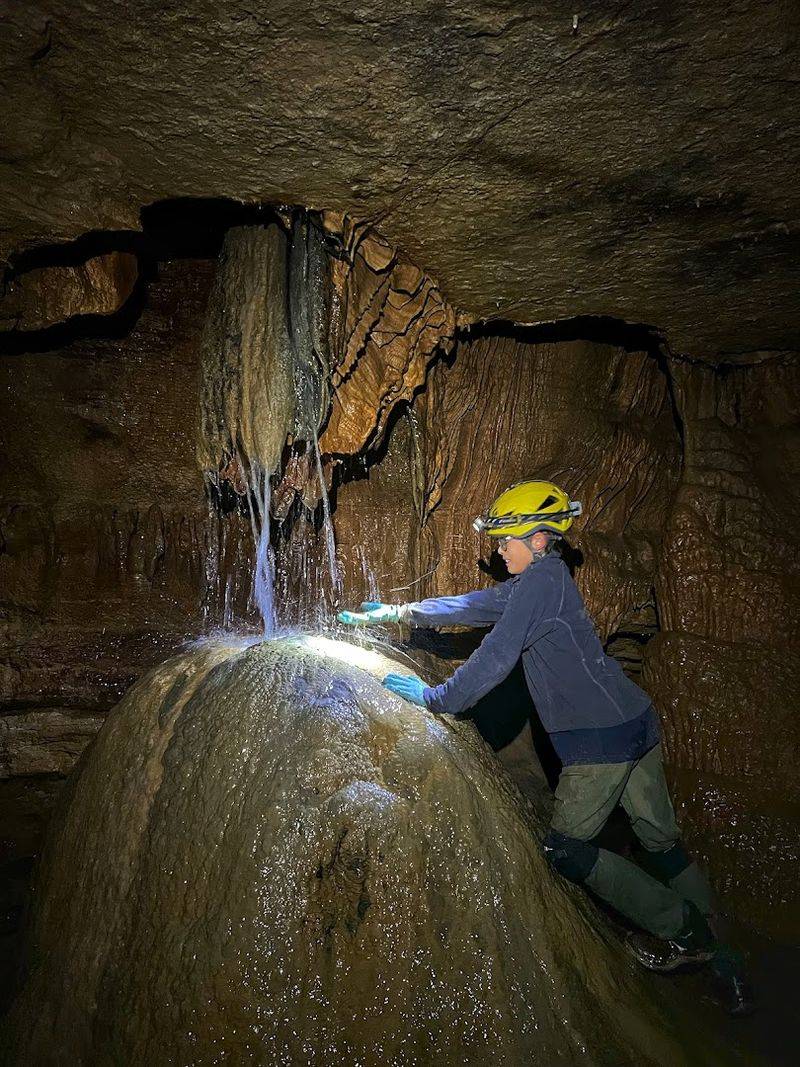
Preparation makes or breaks a visit to this cave, and the difference between a group that has a fantastic time and one that turns back early almost always comes down to what they brought with them. The single most important gear decision is footwear.
Waterproof boots are the baseline recommendation, but neoprene socks or full waders take the experience to another level, especially for groups planning to push into the deeper sections. Regular sneakers or hiking boots without waterproofing will be soaked within minutes of entering the main passage.
A dry bag or a sealed plastic bag inside your pack is essential for keeping a change of clothes protected. You will want clean, dry clothes waiting for you at the end, and the site does have a changing building with separate areas for men and women, so there is a place to use them.
Kneepads are worth considering for anyone planning to navigate the tighter passages. Helmets are provided at check-in, but bringing your own ensures a better fit.
Pack snacks and water, since a full exploration can run four to five hours, and the cold temperature of the cave can make you hungrier than you expect.
The Check-In Process and Signing the Waiver
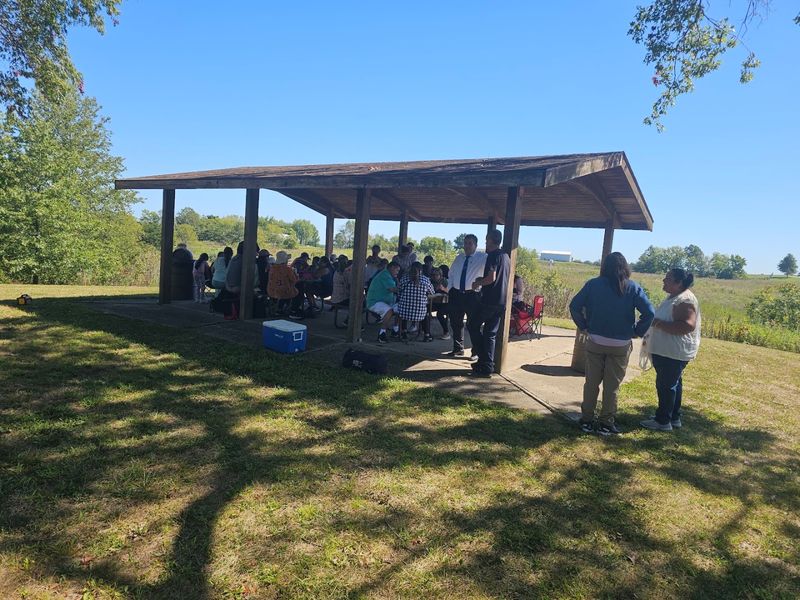
Every group that visits the cave must stop at the check-in station before heading underground. The process is straightforward but important, and the staff there take it seriously without being unfriendly about it.
Everyone in the group signs a waiver acknowledging the physical nature of the experience and the risks involved.
The staff will verify that your group meets the four-person minimum and that everyone has the required three light sources. They also hand out helmets to anyone who needs one, free of charge, which is a genuinely useful service for first-time visitors who may not own one.
The staff at the check-in station consistently receive high praise from visitors, and the enthusiasm they bring to the job is noticeable. The ranger on duty often genuinely loves the cave and is happy to answer questions about the passages, what to expect, and how far most groups tend to get.
The check-in station also posts any relevant safety notices or trail condition updates, so paying attention during that brief stop can save you from unpleasant surprises once you are underground. The whole process moves quickly, and most groups are heading toward the sinkhole entrance within a few minutes of arriving.
The Sinkhole Entrance and the Descent
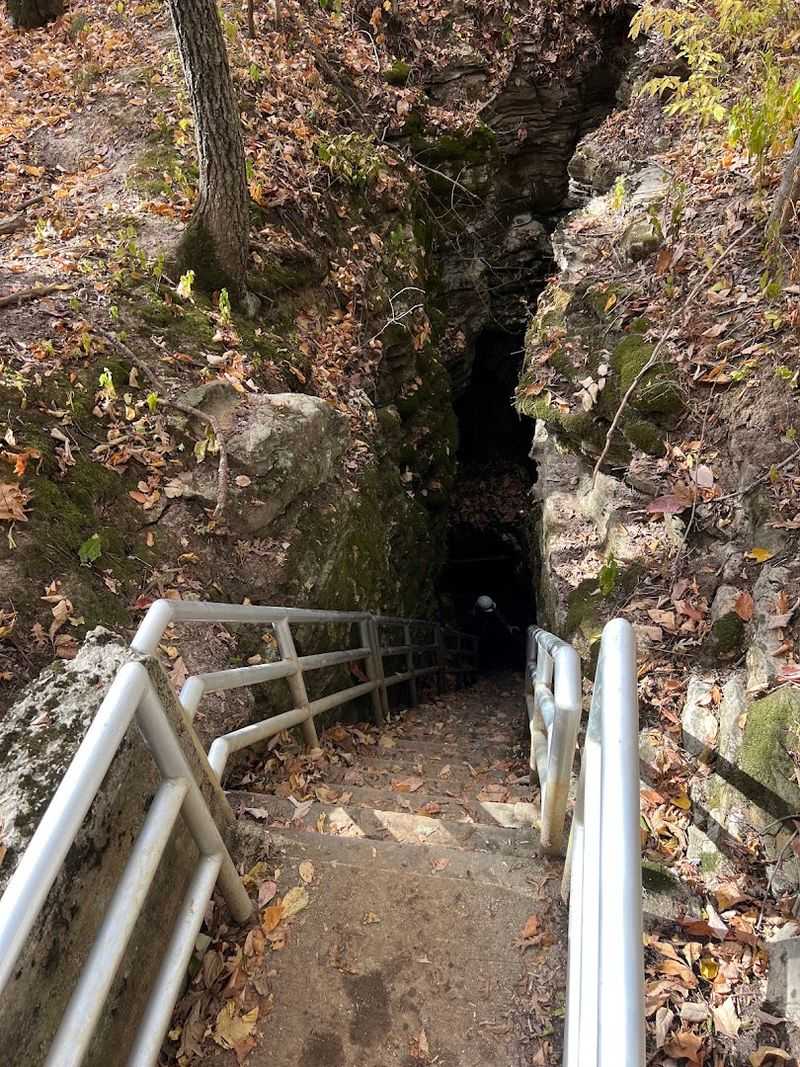
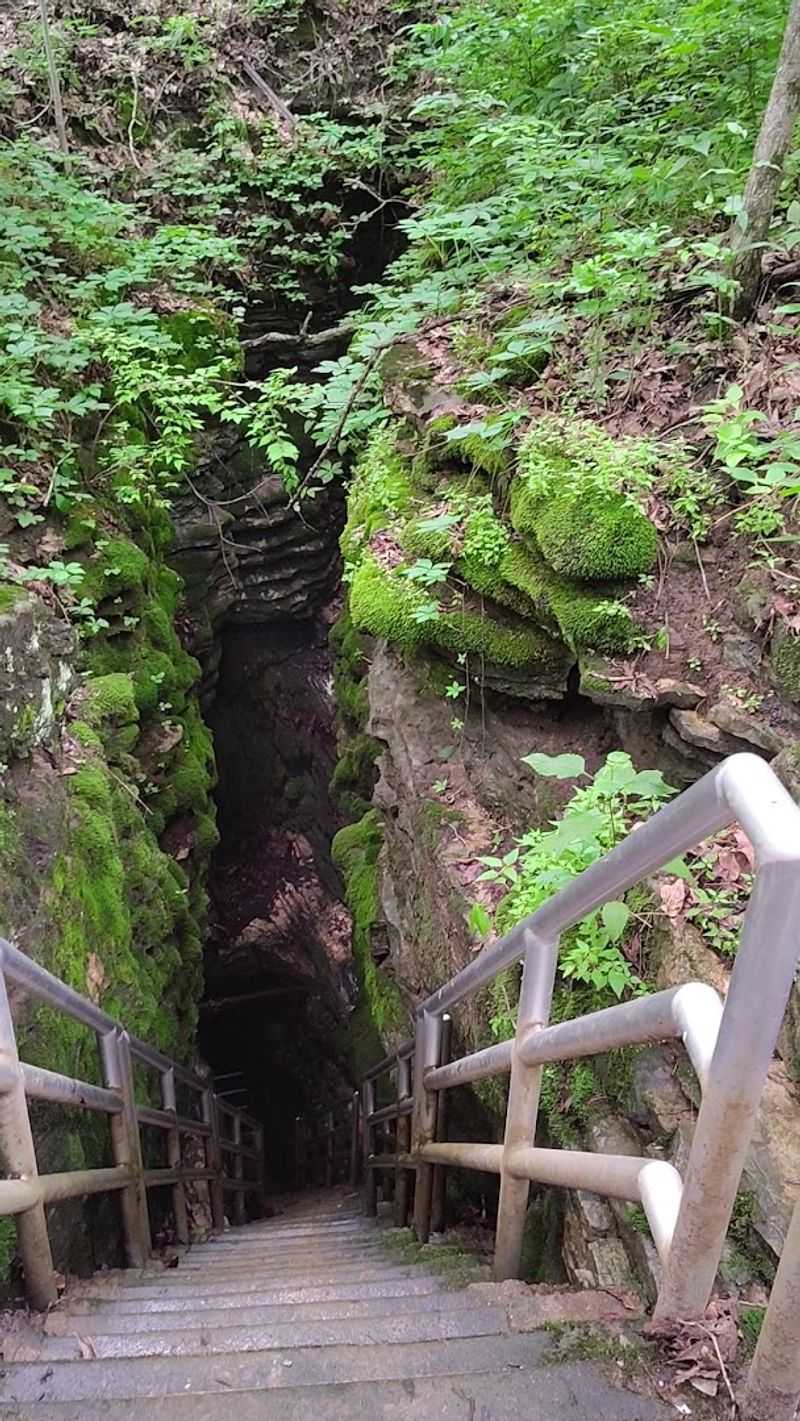
The entrance to the cave is not a door in a hillside or a wide-open cavern mouth. Access comes through a natural sinkhole, and the stairs leading down into it are steep enough that most visitors grip the railing without being asked.
The descent itself is a bit of a preview of what the cave demands from you physically.
The sinkhole walls are limestone, and the vegetation growing around the rim gives way quickly to bare rock as you descend. The air temperature drops noticeably as you approach the cave opening at the bottom, shifting from whatever the outdoor weather is doing to the cave’s steady 58-degree baseline.
The transition from the bright outdoor environment to the cave entrance is abrupt, and it is the moment when most visitors switch on their headlamps for the first time and feel the weight of what they are about to explore settle in. The passage opening at the base of the sinkhole is narrow enough to feel intentional, as if the cave is testing your commitment one last time before letting you in.
Careful footing on those stairs is essential, particularly on wet days when the stone surfaces can be slick. Coming back up after several hours underground requires whatever energy you have left.
Nearly Six Miles of Mapped Passages
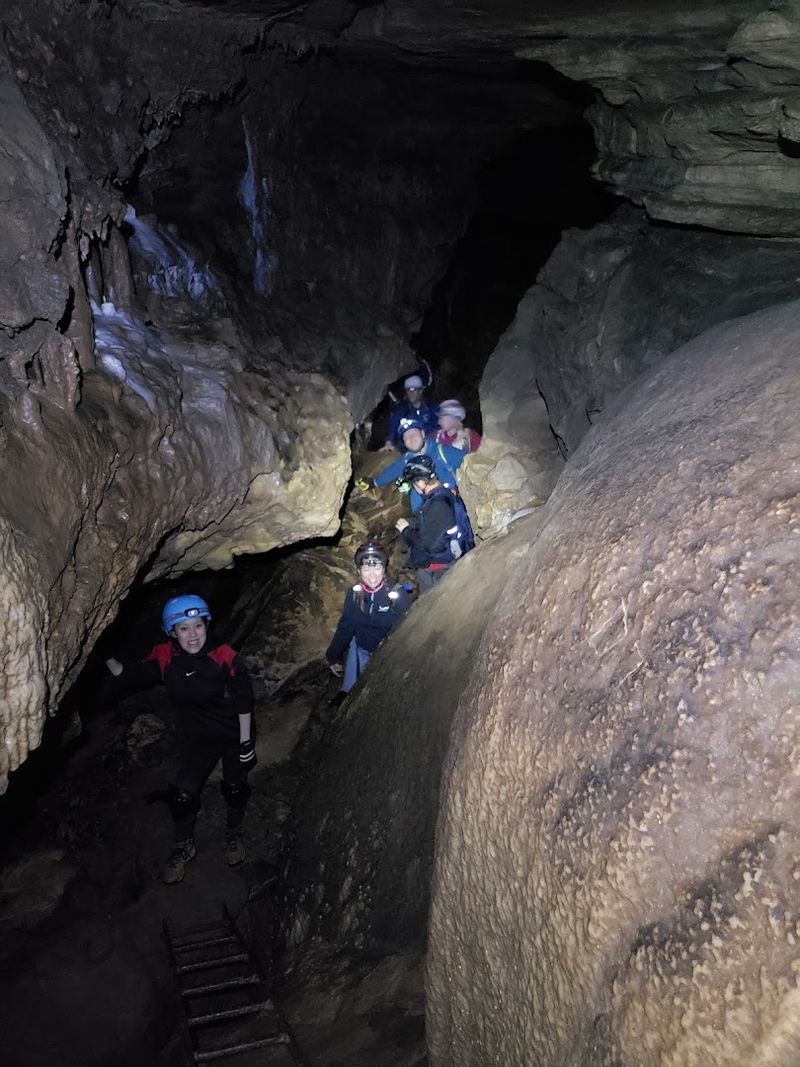
The full extent of the cave system is something that takes multiple visits to even begin to appreciate. Nearly six miles of passages have been mapped within the cave, making it one of the most extensive cave systems accessible to the public in the entire state of Illinois.
Most visitors do not come close to covering all of it in a single trip. A typical group exploring at a moderate pace covers about one and a half miles in each direction, which already adds up to a three-mile round trip over four to five hours underground.
The passages branch, loop, and dead-end in ways that reward careful navigation and punish overconfidence.
The mapped sections include the main river passage, several large side rooms, and a number of smaller crawlways that connect different parts of the system. The unmapped or less-explored sections exist beyond what most casual visitors reach, and they are best left to experienced cavers with proper technical skills.
The sheer scale of the cave is part of what makes it feel so different from a standard tourist attraction. There is always more to find, another side passage to check, another room to peer into, and that sense of genuine exploration is exactly what keeps people coming back year after year.
Tips for Making the Most of Your Visit
A visit to this cave rewards planning, and a few practical habits separate the groups that have an unforgettable time from the ones that cut their trip short. Calling ahead to confirm hours and any access restrictions before making the drive is always a smart first step, especially since the cave has a history of temporary closures.
Arriving early gives your group the most time underground and the best chance of having the passages to yourselves. The cave is not heavily trafficked compared to commercial cave tours, but weekends can see more visitors, and sharing narrow passages with multiple groups can slow everyone down.
Bringing a waterproof case for your phone protects it from the water and mud while still letting you take photos. The formations and underground stream are genuinely photogenic, and the contrast of headlamp light against wet limestone creates images that are hard to replicate anywhere else.
Pack more food and water than you think you need, dress in layers you do not mind destroying, and leave the cave exactly as you found it. The no-trace ethic that visitors have maintained here is a big part of why the cave stays open and accessible, and keeping that tradition alive is something every visitor can contribute to.



