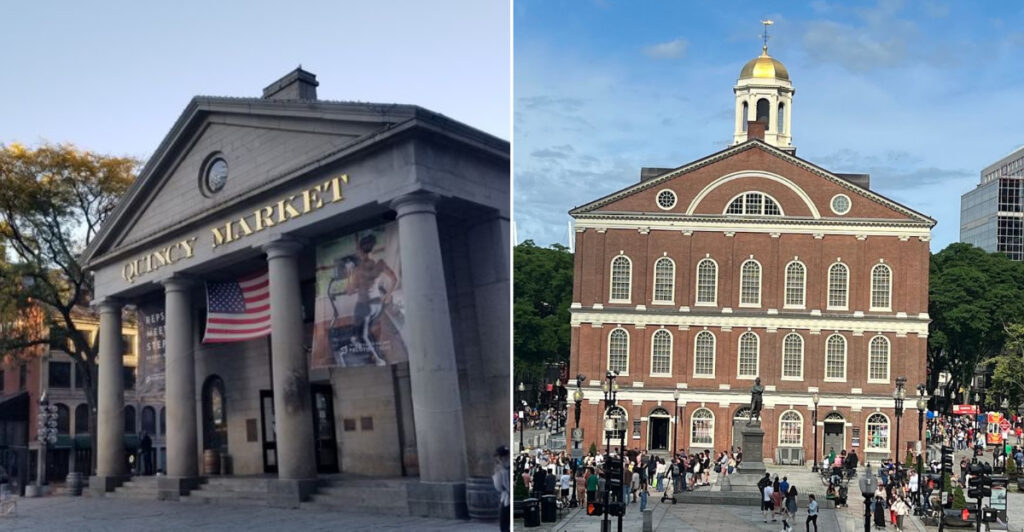
Boston has plenty of landmarks, but few of them pull off the rare trick of being genuinely historic and genuinely fun at the same time. Right in the heart of the city, there is a marketplace that has been drawing crowds since the 1820s, and it still manages to feel relevant, lively, and completely alive today.
Three historic buildings, a buzzing outdoor plaza, street performers, and a jaw-dropping variety of food all come together in one place that locals and out-of-towners keep returning to. This article breaks down everything worth knowing about one of Boston’s most enduring gathering spots, from its Revolutionary War roots to the famous copper grasshopper perched on its dome.
Built in 1826, Still Pulling Crowds Today
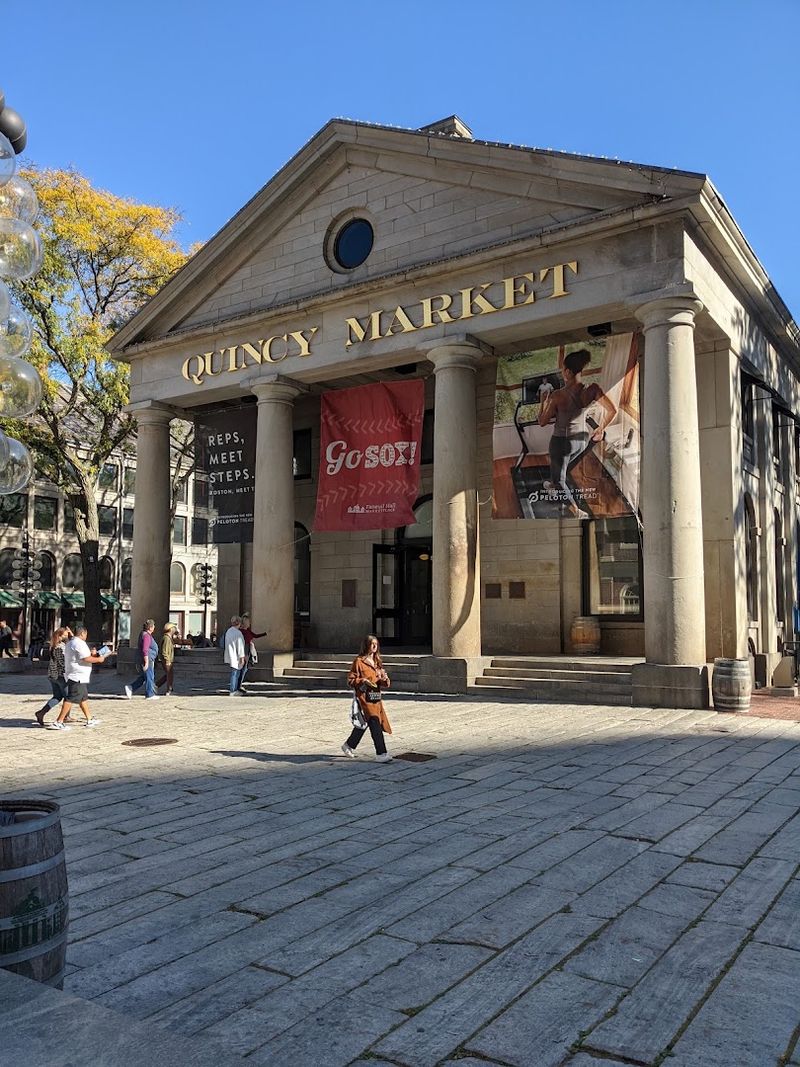
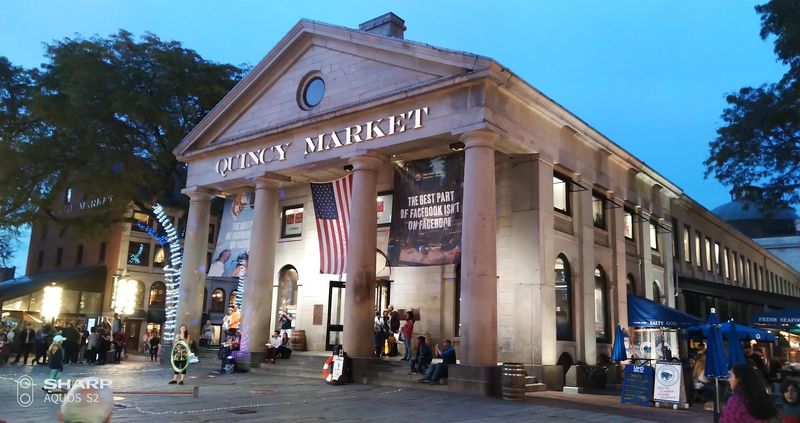
Quincy Market was completed in 1826, commissioned by Boston Mayor Josiah Quincy to address the city’s growing need for a central marketplace. The granite building with its distinctive dome and columned facade was a major construction achievement for its era, and it still commands attention today.
For much of the 20th century, the complex fell into disrepair and was nearly demolished. A major restoration effort in the 1970s brought it back to life as a festival marketplace, a concept that blended retail, food, and public gathering in a way that felt fresh at the time and still works today.
That comeback story is part of what makes the place feel special. It was not preserved behind glass as a museum piece.
Instead, it was returned to active use, keeping the bones of the original architecture while filling it with the kind of daily activity that makes a building feel genuinely alive rather than just old.
The Grasshopper on the Dome Has a Story Worth Knowing
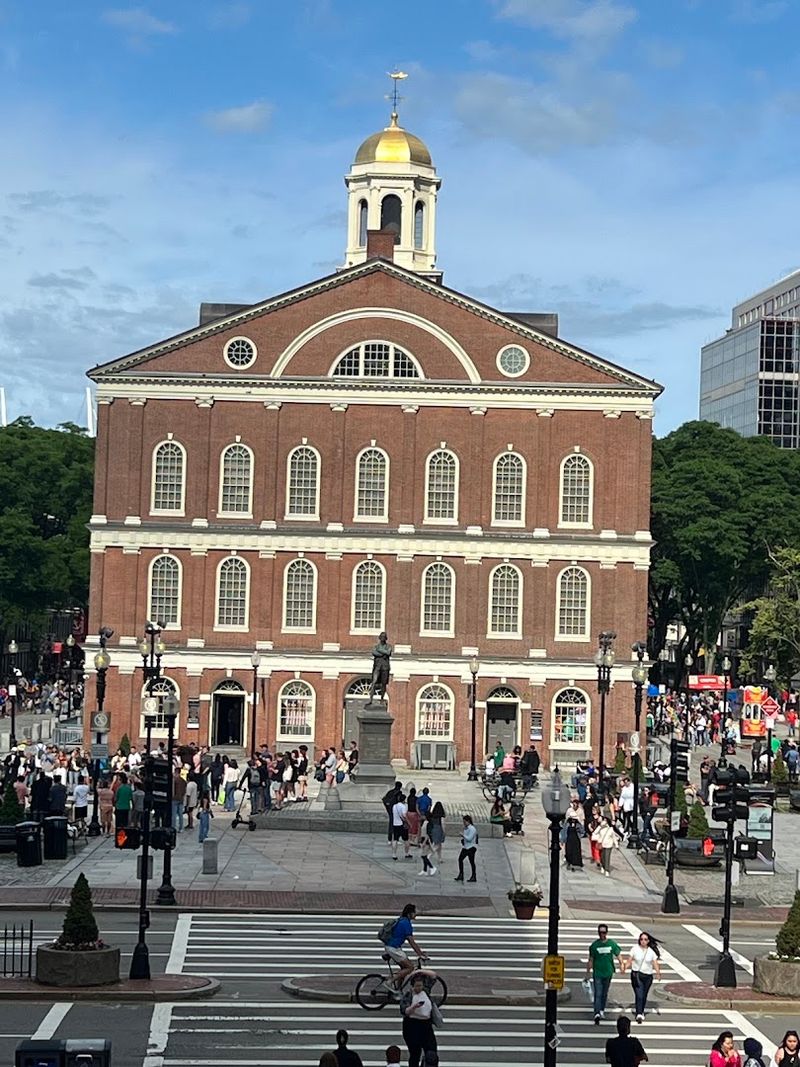
One of the most talked-about details at Faneuil Hall is something most people walk right past without noticing: a gilded copper grasshopper perched on top of the building’s dome. Created in 1742 by craftsman Shem Drowne, this weathervane has been a Boston landmark for nearly three centuries.
The grasshopper is not just decorative. During the Revolutionary War, it reportedly served as a loyalty test.
Strangers who could not identify the weathervane were considered suspicious, since any true Bostonian would know the famous symbol atop the hall. That detail alone makes it one of the more interesting artifacts hiding in plain sight in the city.
Inside the grasshopper, coins and notes have been placed over the years, turning it into a kind of time capsule. Faneuil Hall was added to the National Historic Register in 1960 and serves as Freedom Trail stop number 14, giving the building an official place in America’s founding story.
A Hall That Still Does Real Democracy
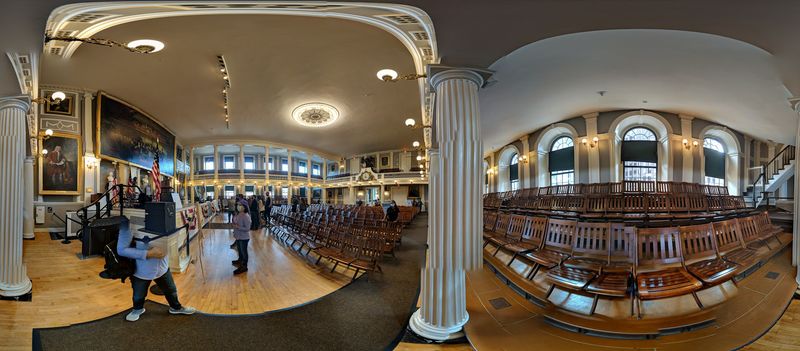
Most people know Faneuil Hall as a marketplace, but the building’s upper floor tells a completely different story. The Great Hall, managed by the National Park Service, has been a site of political debate, public rallies, and civic ceremony for close to 300 years.
The space has hosted debates over abolition, speeches by figures central to American independence, and more recently, naturalization ceremonies where new citizens are sworn in. Political rallies and concerts still take place there, keeping the tradition of public assembly very much alive.
National Park Service rangers and docents are stationed inside and offer talks and information about the building’s history. There is also a video about the Underground Railroad that gives context to the building’s complicated and important past.
The Great Hall is free to enter, which means anyone passing through the marketplace can step upstairs and stand in a room where American history was genuinely made.
Three Buildings, Each With Its Own Personality
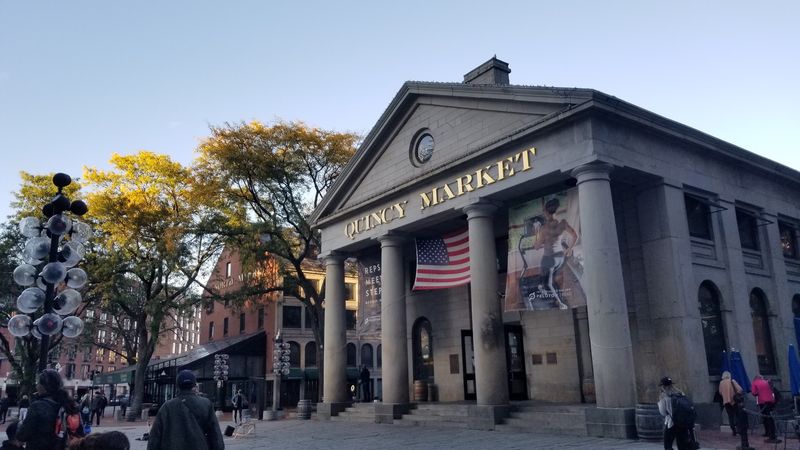
The Faneuil Hall Marketplace complex is made up of three separate structures, and each one offers something a little different. Quincy Market, the central and largest building, is best known for its food hall, where dozens of vendors line the interior with options ranging from New England seafood to Greek, Korean, Mexican, and Middle Eastern dishes.
North Market and South Market flank Quincy on either side and lean more toward retail. Clothing, souvenirs, specialty goods, and well-known brands fill the storefronts, giving shoppers a range of options that goes beyond the typical tourist trap setup, though plenty of that exists here too.
All three buildings are filled with natural light thanks to large glass windows that run along their lengths, which keeps the interior from feeling closed off or dim. The layout encourages wandering, and it is easy to spend time moving between all three without a specific plan, just following whatever catches your eye from one section to the next.
The Food Hall That Refuses to Pick Just One Cuisine
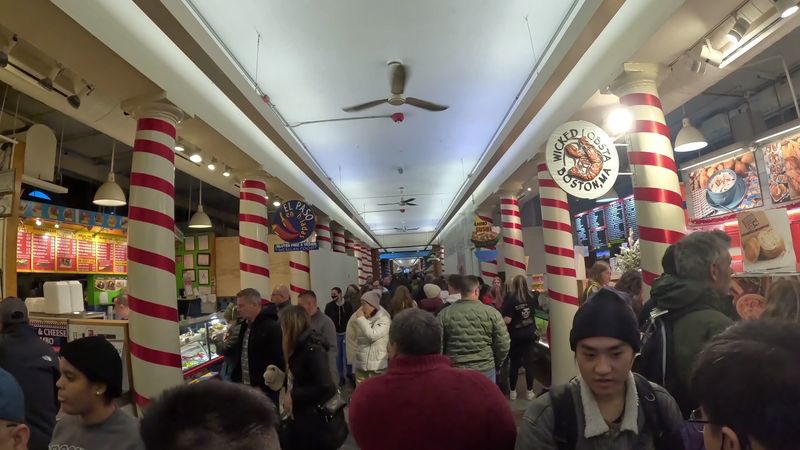
The food situation inside Quincy Market is genuinely hard to categorize. In one long stretch of building, vendors offer clam chowder, lobster rolls, sushi, gyros, bakery items, gelato, sandwiches, pastries, and a rotating cast of other options that makes choosing a meal feel like a small adventure.
The variety is one of the most frequently mentioned things about the place, and for good reason. It is rare to find this many different culinary traditions packed into a single historic building without the whole thing feeling chaotic.
The layout keeps things organized enough that browsing the options before committing to something is easy and expected.
Seating is concentrated in the center of the building and fills up quickly during peak hours, so arriving earlier in the day or later in the afternoon tends to work better for finding a spot. Some people eat standing up or head outside to the plaza, which works fine when the weather cooperates.
Street Performers Who Actually Stop Traffic
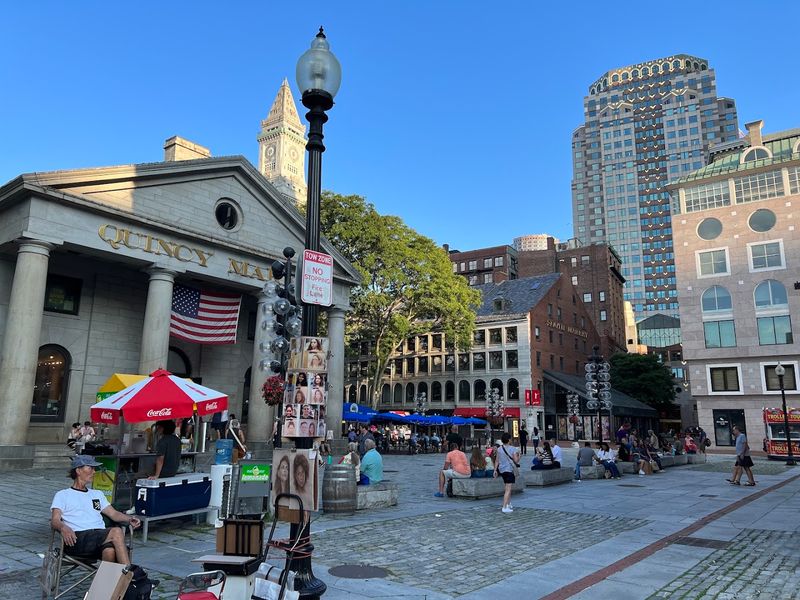
The outdoor plaza at Faneuil Hall Marketplace operates as an unofficial stage for some of Boston’s most skilled street performers. Jugglers, musicians, comedians, acrobats, and artists set up in the open space between the buildings and draw genuine crowds, not just polite glances from passersby.
The performances tend to be high energy and audience-interactive, which means standing around for a few minutes often turns into a much longer stay. It is the kind of entertainment that does not require a ticket or a schedule, just a willingness to stop and watch.
On warmer days especially, the plaza fills up with people eating outside, watching performers, and moving between the market buildings. The combination of foot traffic, live entertainment, and the historic backdrop of the surrounding architecture gives the outdoor space a character that is hard to replicate.
Even without a specific performer drawing a crowd, the plaza itself stays active and worth exploring on any given visit.
The Freedom Trail Runs Right Through Here
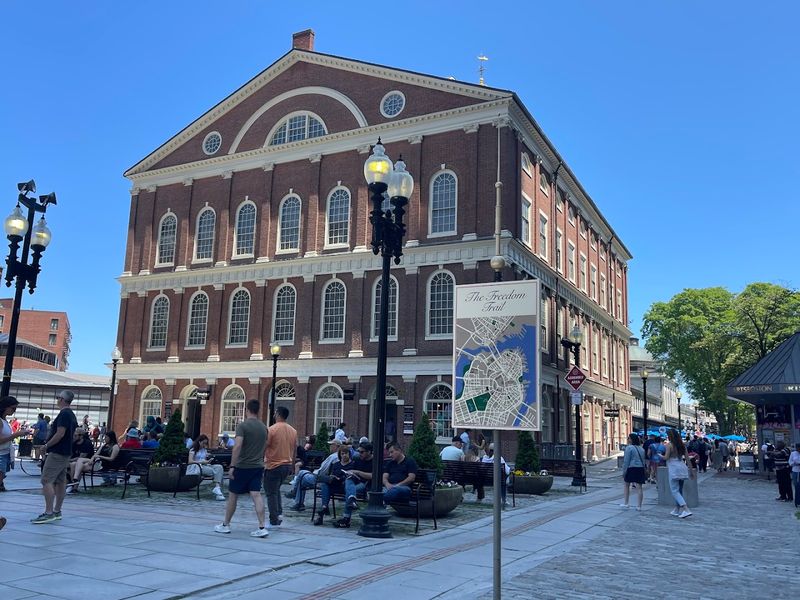
Faneuil Hall is not just near the Freedom Trail, it is actually part of it. The trail, which connects 16 historically significant sites across Boston, marks Faneuil Hall as stop number 14, placing it firmly in the sequence of places that shaped the country’s founding.
The red-brick path of the Freedom Trail leads directly to the hall, making it a natural stop for anyone walking the full route. For those who are not doing the entire trail, the marketplace still serves as a useful anchor point since several other trail stops are within easy walking distance in multiple directions.
Walking the Freedom Trail at a relaxed pace through this section of downtown gives a sense of how concentrated Boston’s historic core really is. Faneuil Hall, the Old State House, and Quincy Market are all clustered in a way that makes the neighborhood feel layered with history rather than just dotted with occasional landmarks separated by blocks of ordinary city streets.
What the Outdoor Promenade Gets Right
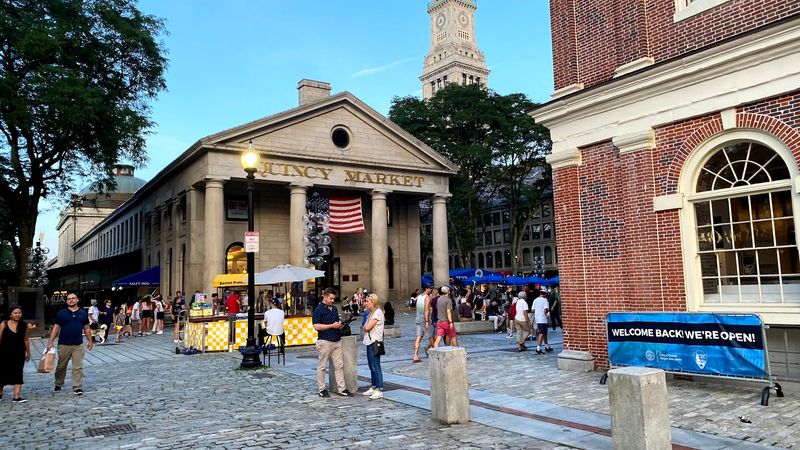
The promenade running alongside the market buildings is one of the more underrated parts of the whole complex. Cart vendors line the exterior on both sides of the buildings, selling everything from handmade goods to clothing to accessories, giving the outdoor walkway its own distinct shopping experience separate from what is available inside.
The architecture along the promenade is worth paying attention to. The historic brick facades and the scale of the buildings give the walkway a sense of grandeur that feels earned rather than staged.
It does not look like a replica of something old; it is the actual thing, which registers differently once that fact sinks in.
Public art installations and interactive structures around the plaza also give the outdoor area a playful quality. These pieces tend to attract people who want to take photos and engage with the space in a more lighthearted way, adding a layer of fun to what is otherwise a very historically significant stretch of real estate.
Getting There Without Losing Your Mind
Parking near Faneuil Hall Marketplace is limited and expensive, with nearby garages typically running $20 or more. The honest advice from most people who visit regularly is to skip the car entirely and use public transit instead, which is both faster and far less frustrating in this part of downtown Boston.
The MBTA Blue and Green Lines both have stops within easy walking distance of the marketplace, and the area is extremely walkable once you arrive. The neighborhood is dense with things to do and see, which means arriving on foot or by transit actually makes the visit more enjoyable since you are not mentally tracking a parking meter the whole time.
Rideshare drop-off works well here too, with plenty of designated spots nearby. For anyone staying in central Boston, the marketplace is close enough to reach on foot from many hotels, making it an easy addition to a day already built around exploring the city’s historic core.
Winter Visits Have Their Own Kind of Appeal
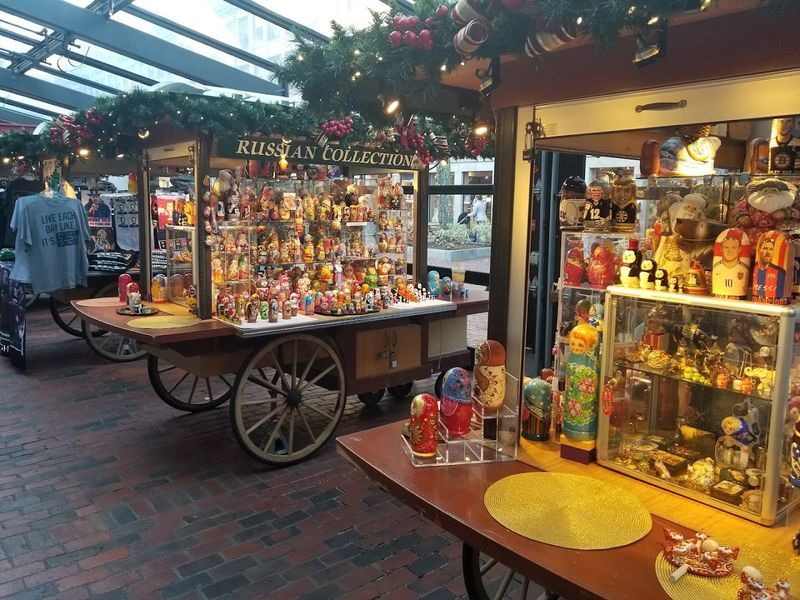
The marketplace does not shut down when the temperature drops. Winter visits have a different character than summer ones, with smaller crowds and a quieter energy that actually makes it easier to appreciate the architecture and the historical exhibits without navigating through a packed plaza.
The food vendors inside Quincy Market operate year-round, so the interior stays a warm and active destination even in February. The building’s large glass windows keep the inside bright even on gray winter days, and the variety of food options makes it a practical mid-day stop during a cold-weather walk through downtown Boston.
Holiday decorations during the winter season add a visual layer to the already striking exterior of the buildings. The marketplace has hosted winter events and seasonal programming over the years, which keeps the space feeling relevant and active across all four seasons rather than operating primarily as a warm-weather destination.
The History of Slavery Is Addressed Here Too
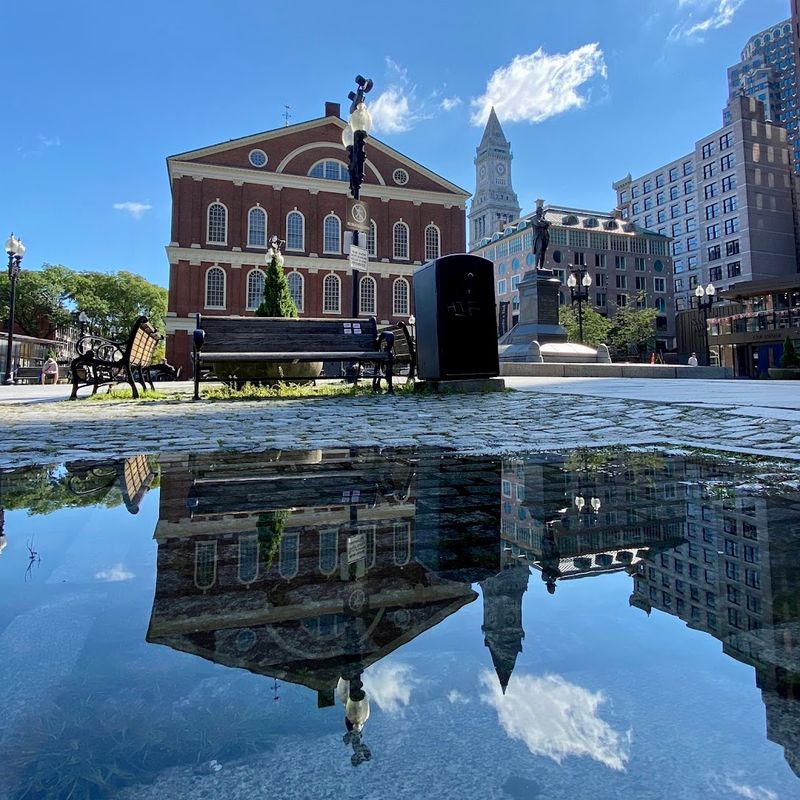
Faneuil Hall’s history is not purely celebratory, and the site does not shy away from the more complicated parts of its past. The National Park Service manages exhibits inside the hall that address the history of slavery and the Underground Railroad, providing context that goes well beyond the standard patriotic narrative.
A video about the Underground Railroad is available for visitors and has been noted as a genuinely informative and moving part of the experience. The presence of this material inside a building so closely associated with American liberty gives the visit a kind of moral weight that most tourist attractions do not attempt to carry.
The nearby African and Native American history exhibits referenced in the surrounding area add further depth for anyone interested in a more complete picture of Boston’s past. The marketplace, taken as a whole, ends up being a more layered and thoughtful destination than its reputation as a food hall and shopping center might initially suggest.
Why This Place Has Stayed Relevant for Nearly 200 Years
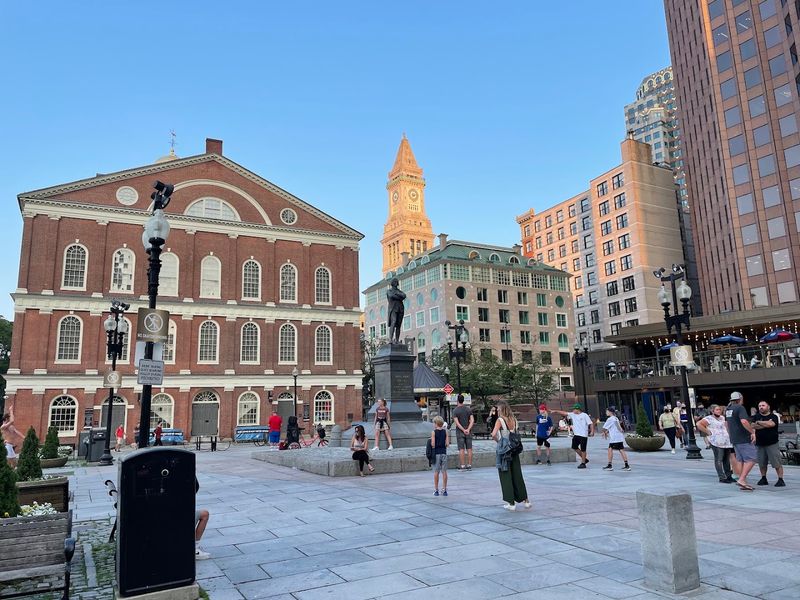
Not many places manage to stay genuinely relevant for close to two centuries, but Faneuil Hall Marketplace has pulled it off by resisting the urge to become a pure museum or a pure mall. It occupies a rare middle ground where history and daily life coexist without one overwhelming the other.
The combination of real historical significance, a constantly rotating cast of vendors and performers, and a location that connects naturally to the rest of Boston’s historic core keeps the place from ever feeling static. There is always something new happening in the plaza, a new vendor in the food hall, or a new exhibit upstairs in the Great Hall.
What keeps people coming back, whether they are lifelong Boston residents or first-time visitors, is harder to pin down in a single reason. The marketplace functions less like an attraction and more like a place where the city simply happens to show up every day, which is exactly what has made it Boston’s living room for nearly 200 years.
Where History and Everyday Life Share the Same Address
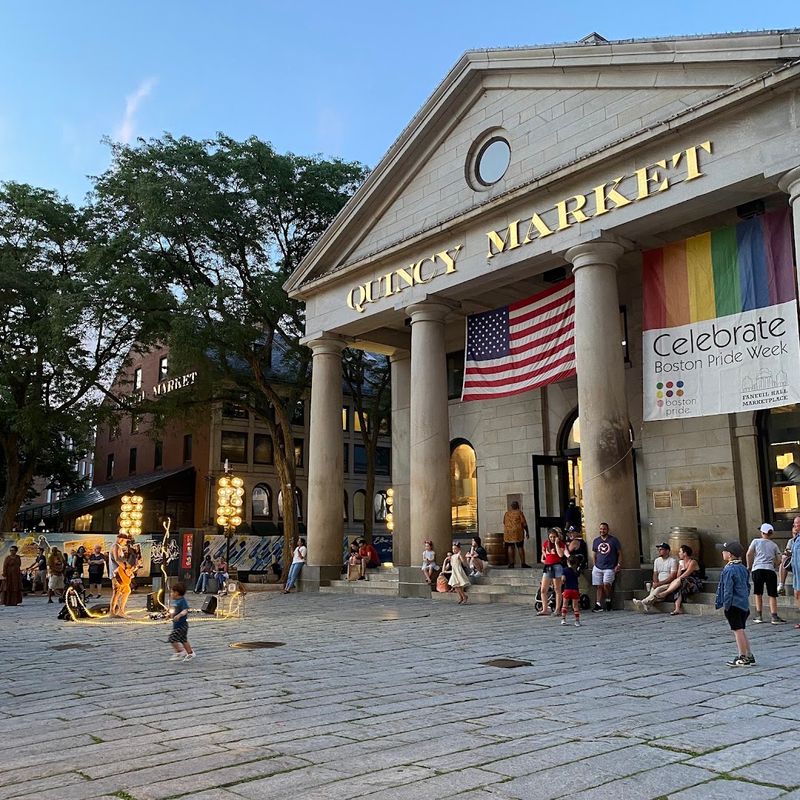
Few addresses in America carry as much weight as this one. Faneuil Hall Marketplace sits at Boston, MA 02109, right in the thick of downtown Boston, steps away from the waterfront and a short walk from some of the city’s most recognized landmarks.
The marketplace is made up of three historic market buildings: Quincy Market in the center, flanked by North Market and South Market. Each building has its own character, but together they form a connected complex that functions as both a shopping destination and a living piece of American history.
Getting there is straightforward by public transit, and parking garages are nearby, though they come with a cost. The area is extremely walkable, which makes it easy to pair a visit here with nearby attractions along the waterfront or the Freedom Trail.
Open Monday through Saturday from 10 AM to 9 PM, and Sunday from 11 AM to 7 PM.
Share this story