 Unearth The Voyage
There is a restaurant in Chicago where you can grab a flaky black truffle croissant at 9 in the morning and return months later for a 13-course tasting menu that might genuinely make you emotional. That kind of range is rare, and it has earned this spot a devoted following that stretches far beyond the city.
People line up outside before the sun fully rises, sometimes in freezing temperatures, just for a shot at the pastry display. By night, the same space becomes one of the hardest dinner reservations to land in the entire country, backed by two Michelin stars and a place on the list of the world’s best restaurants.
Where You Will Find Kasama and Why the Address Matters
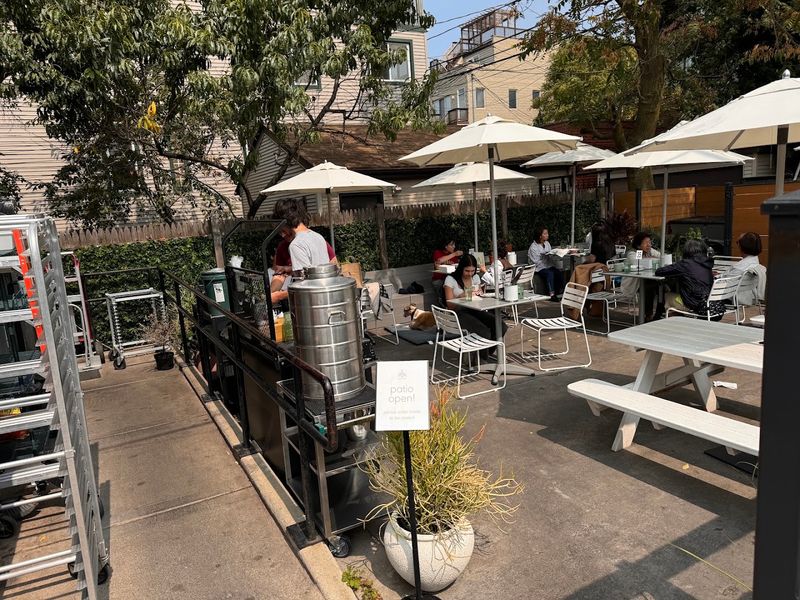
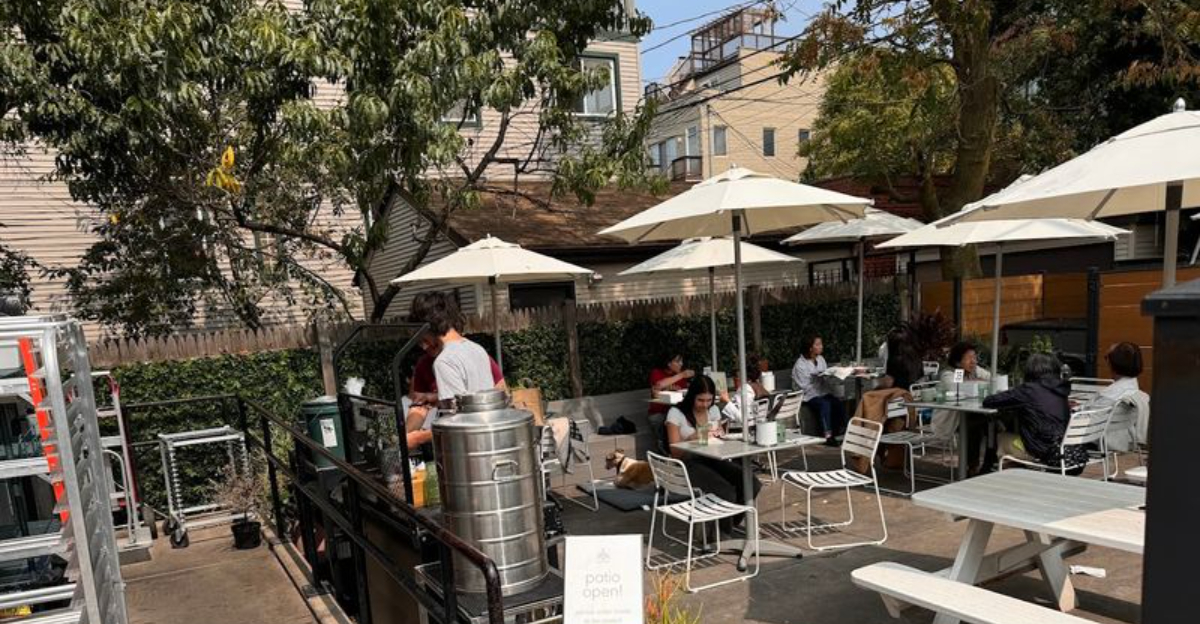
Tucked into the Ukrainian Village neighborhood on the northwest side of Chicago, Kasama sits at 1001 N Winchester Ave, Chicago, IL 60622, a corner that has quietly become one of the most talked-about addresses in American dining. The surrounding block feels residential and unhurried, which makes the scene outside the restaurant all the more striking when a line of eager visitors stretches down the sidewalk before the doors even open.
The location matters because it tells you something about the restaurant’s character. Chef-owners Tim Flores and Genie Kwon did not set up shop in a flashy downtown corridor.
They planted their flag in a neighborhood, and the community has embraced them fully in return.
Getting there is straightforward by car or by the Chicago Transit Authority’s Blue Line, with the Western stop placing you within a short walk. The phone number for the restaurant is 773-697-3790, and the website kasamachicago.com is the best place to check current hours and to attempt securing those coveted dinner reservations before they disappear.
The Story Behind the Restaurant and Its Historic Milestone
Kasama made history as the first Filipino restaurant in the world to earn a Michelin star, a milestone that carried enormous weight for the Filipino community both in Chicago and globally. The restaurant is co-owned by husband-and-wife team Tim Flores and Genie Kwon, two chefs whose combined backgrounds in high-level fine dining gave them the technical foundation to reimagine Filipino cuisine at the highest level.
Their story is not one of overnight success. The couple built Kasama with a clear vision: create something that honored Filipino culinary traditions while pushing those traditions into exciting new territory.
The daytime bakery model gave the community accessible entry points, while the evening tasting menu demonstrated just how sophisticated Filipino flavors could become in the right hands.
The restaurant also gained wider visibility through its association with the television series The Bear, which brought a new wave of curious visitors to the front door. Kasama currently holds two Michelin stars and ranks among the top restaurants in the world, sitting at number 31 on a prestigious global best restaurants list.
That trajectory, from neighborhood bakery to world-recognized destination, is the kind of story that does not happen by accident.
The Dual Concept That Sets This Place Apart From Everything Else
Most restaurants commit to a single identity. Kasama runs two entirely different concepts under one roof, and the transition between them is part of what makes the place so fascinating.
During daylight hours, the space operates as a counter-service bakery and cafe, casual and approachable, with a pastry display that draws gasps and a savory menu rooted in Filipino breakfast staples.
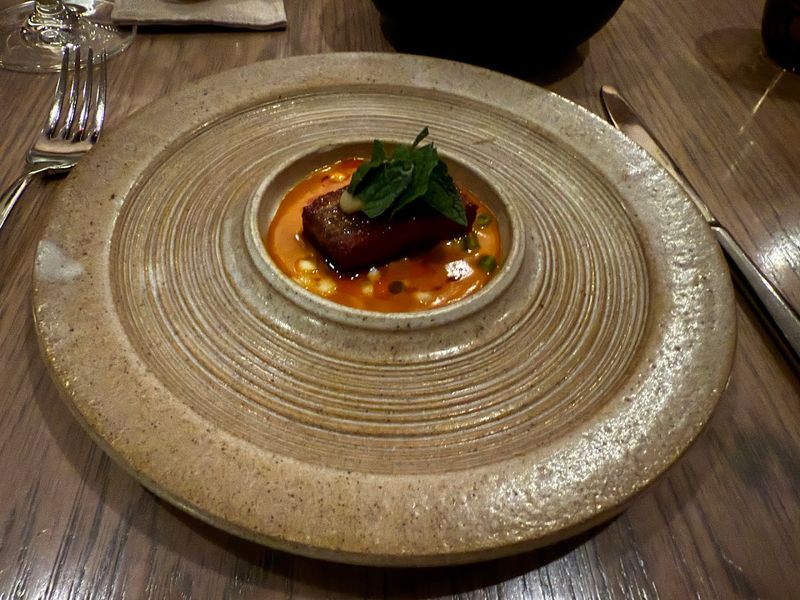
Once evening arrives, the restaurant shifts into a reservation-only fine dining experience offering a multi-course tasting menu that has earned two Michelin stars. The same physical space that hosted a morning crowd of croissant lovers becomes an intimate dining room where every plate is a carefully considered expression of Filipino culinary heritage.
This two-restaurant model is genuinely unusual in the American dining landscape. It means that Kasama is simultaneously one of the most accessible and one of the most exclusive restaurants in Chicago, depending entirely on when you show up.
The daytime visit costs you patience and a spot in line. The evening visit costs you months of planning and a reservation that disappears within minutes of becoming available.
Both versions are worth every bit of the effort they require.
Pastries That Genuinely Justify the Wait Outside
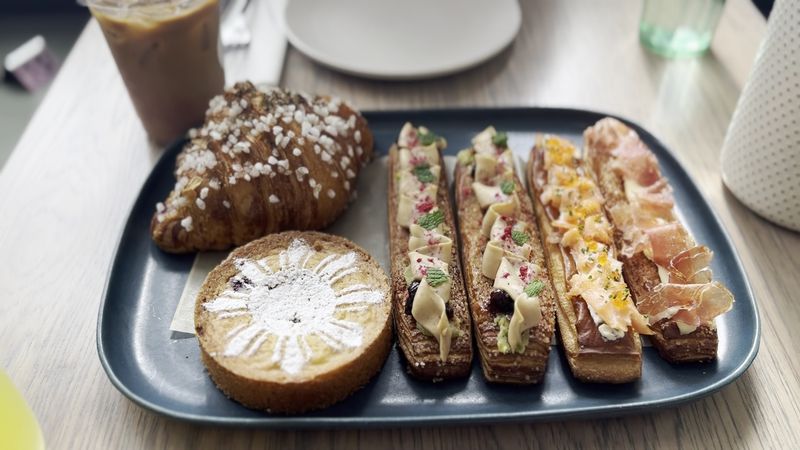
The pastry case at Kasama is the kind of display that makes you forget you have been standing outside in the cold for ninety minutes. The black truffle croissant is the most frequently mentioned item, and for good reason.
It is laminated with precision, deeply buttery, and finished with pearl sugar and freshly shaved truffle on top, creating a sweet-savory contrast that feels both indulgent and restrained at the same time.
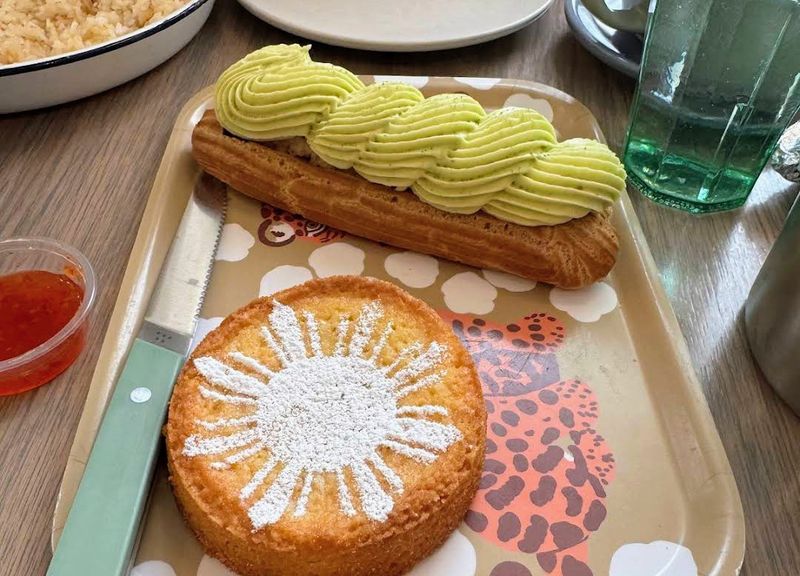
The ube and huckleberry basque cake has developed a following of its own. The cake is light in texture rather than dense, filled with ube pastry cream and huckleberry jam that together strike a balance between fruity brightness and rich butteriness.
The matcha pandan eclair adds another layer of creativity, with toasted rice inside the pastry that provides a nutty, chewy element alongside the floral cream on top.
Other highlights from the pastry menu include a banana cream tart with concentrated natural banana flavor, a passionfruit and sesame tart built on a crisp buttery shell, and a Boston cream brioche that has been described as the star of the entire display. Every item feels deliberately crafted rather than assembled, and the quality of the ingredients is evident in every bite.
The Breakfast Sandwich That Has Become a Chicago Legend
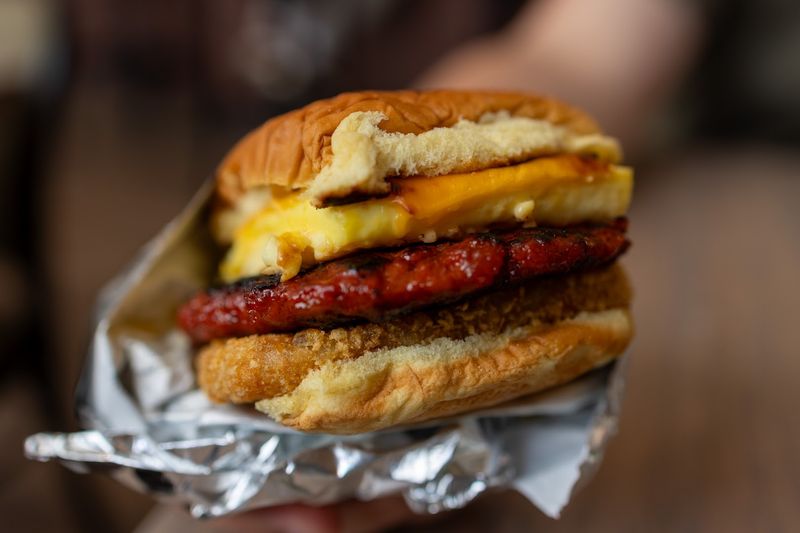
Ask almost anyone who has visited Kasama during the day what they ordered, and the longanisa breakfast sandwich will come up within the first sentence. The sandwich is built on a toasted potato roll that stays soft despite the heat, layered with steamed eggs that are extraordinarily fluffy, melted cheese, a griddled longanisa sausage patty, and a hashbrown that adds a satisfying crunch to every bite.
Longanisa is a traditional Filipino sausage, slightly sweet and deeply savory, and its flavor profile works beautifully against the richness of the egg and cheese. The hashbrown is not an afterthought here.
It is a structural and textural component that completes the sandwich in a way that feels intentional rather than optional.
Not every visitor agrees that it is the best breakfast sandwich they have ever eaten, but the consensus leans heavily in that direction. The ingredient combination sounds straightforward on paper, but the execution transforms familiar components into something that feels genuinely new.
Adding the hashbrown is strongly recommended by nearly everyone who has ordered the sandwich, and skipping it would mean missing a key part of what makes this particular breakfast such a memorable one.
Filipino Breakfast Dishes and Savory Daytime Offerings
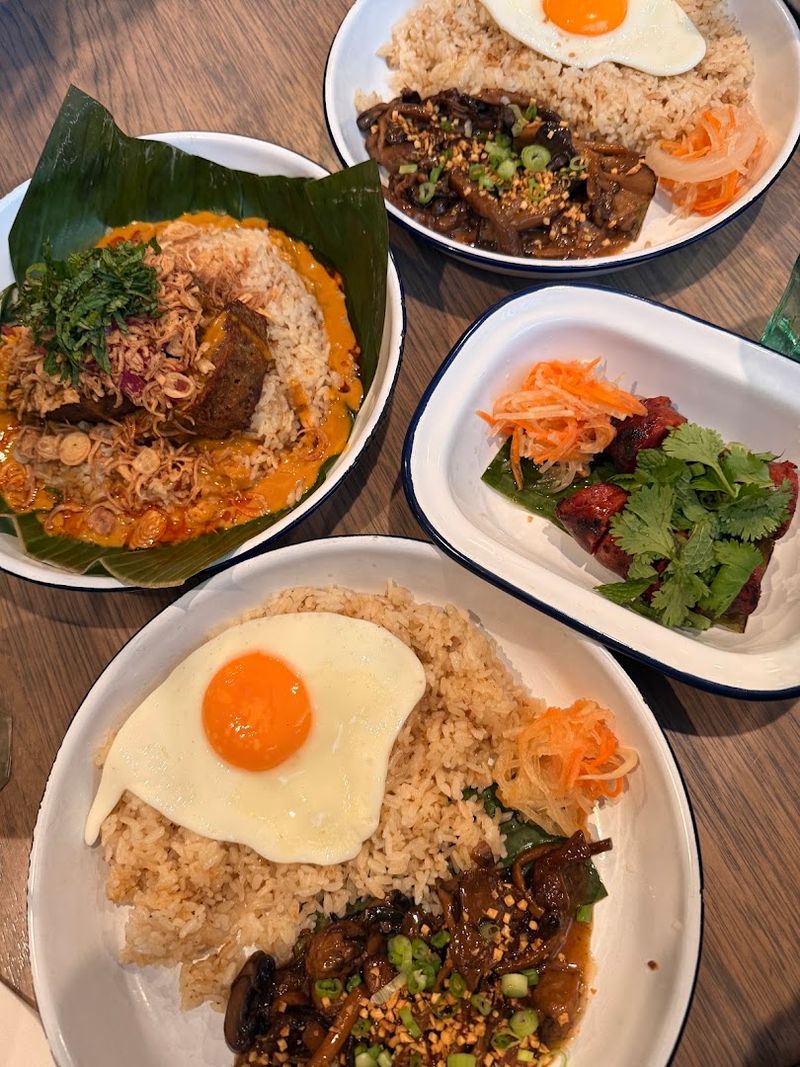
Beyond the sandwich, the daytime menu at Kasama leans into Filipino breakfast traditions with dishes that feel both familiar and refined. The Filipino breakfast plate features longaniza alongside garlic fried rice and egg, a combination that is a staple of morning meals across the Philippines and one that the kitchen executes with care.
The garlic rice is fragrant and well-seasoned, and the longaniza is cooked to a point where its natural sweetness caramelizes slightly around the edges.
The chicken adobo is another standout from the savory side of the menu, finished with a coconut sauce that adds a gentle sweetness to the dish’s characteristic tang. The mushroom adobo offers a plant-forward alternative that holds its own in terms of depth and flavor.
Lumpia, the Filipino spring roll, arrives well-seasoned and satisfyingly crunchy, with a texture that holds up from the first bite to the last.
The kare-kare meatloaf is a more experimental offering that reimagines a traditional Filipino stew in a completely different form. Reactions to it are more mixed than to the other savory dishes, with some visitors loving the creative interpretation and others preferring a more traditional approach.
The daytime coffee program, using beans from Dark Matter, rounds out the savory experience with lattes that include ube, coconut, and hot yam variations.
The Evening Tasting Menu and What to Expect From a Two-Michelin-Star Experience
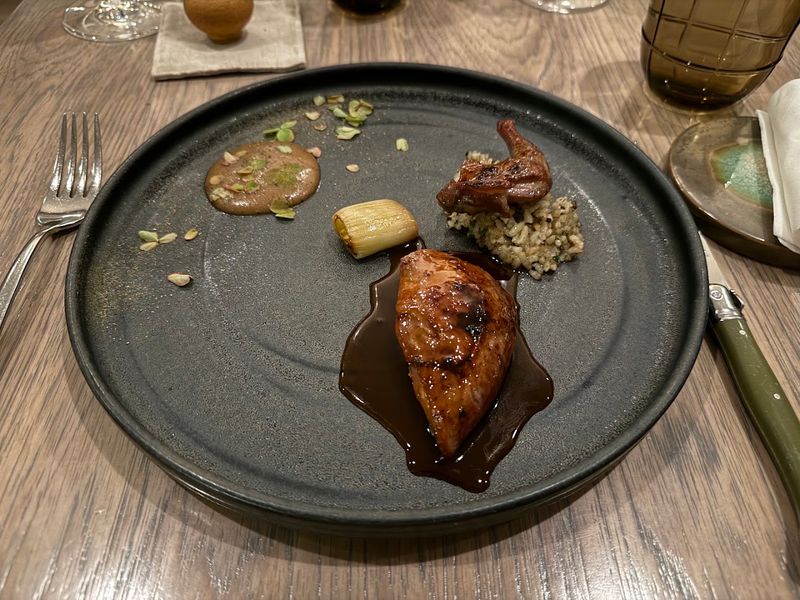
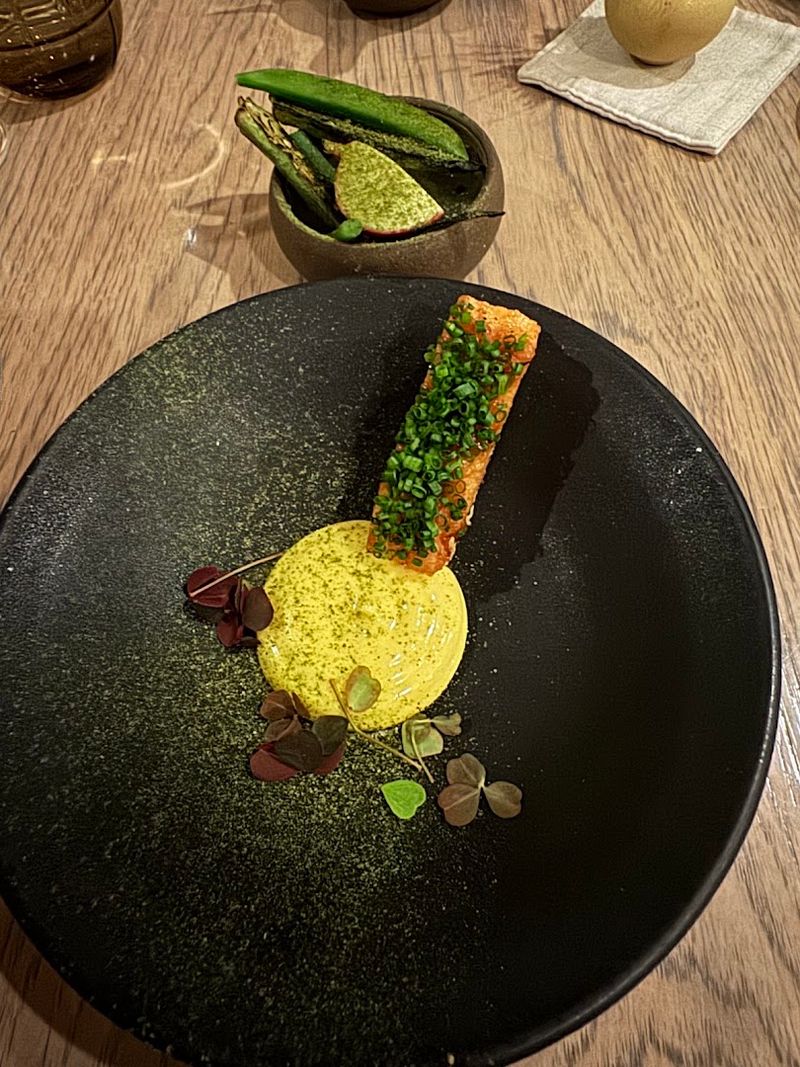
Securing a dinner reservation at Kasama is a competitive exercise that requires planning well in advance. The evening tasting menu is a 13-course journey through Filipino culinary heritage, reinterpreted through the lens of two chefs who trained at the highest levels of fine dining.
The menu changes seasonally, so no two visits are identical, but the commitment to showcasing Filipino flavors in unexpected and technically impressive ways remains constant.
Dishes on past menus have included foie gras siomai, kinilaw prepared in the style of Filipino ceviche, elevated versions of pancit and adobo, and courses inspired by pulutan, the snack foods traditionally enjoyed in Filipino social settings. A5 wagyu has appeared in some iterations of the menu, used to heighten the richness of dishes like kare-kare in ways that feel earned rather than gratuitous.
The pacing of the meal runs approximately two and a half hours, and by the final dessert course, guests are comfortably full despite the small size of individual plates. The staff throughout the evening are attentive and knowledgeable, able to speak to the cultural context behind each dish.
For many diners, the experience goes beyond a meal and becomes something closer to a cultural education served one beautiful plate at a time.
The Atmosphere Inside and How the Space Feels on Both Visits
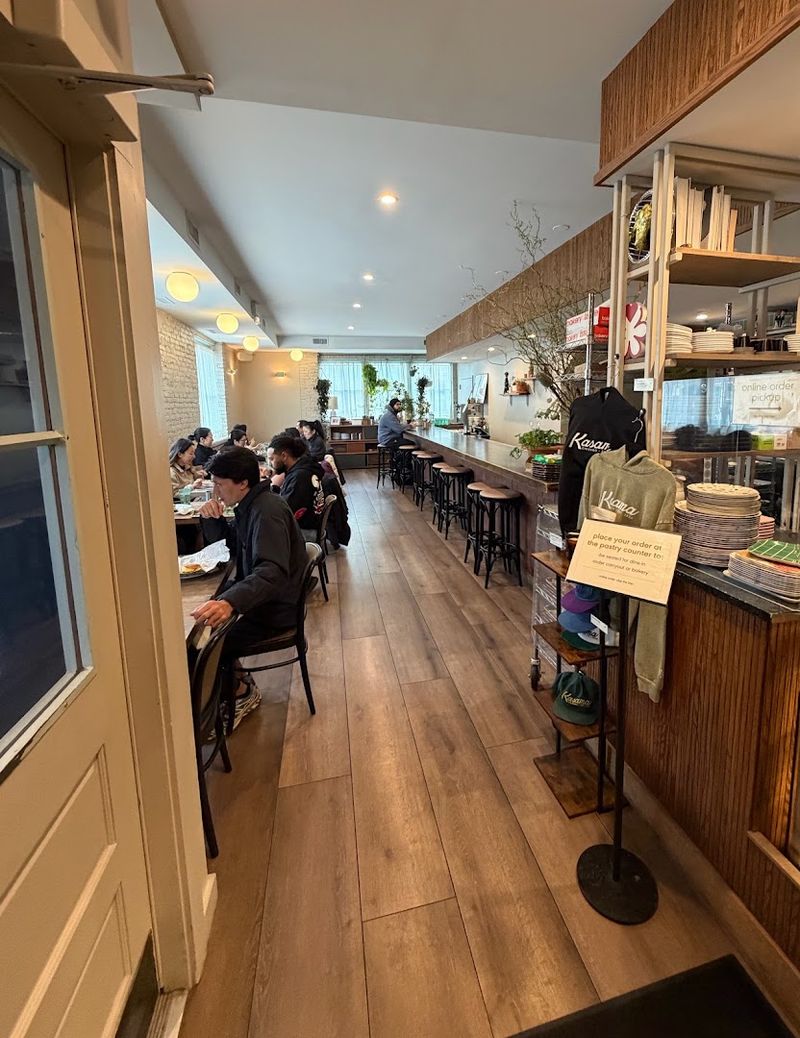
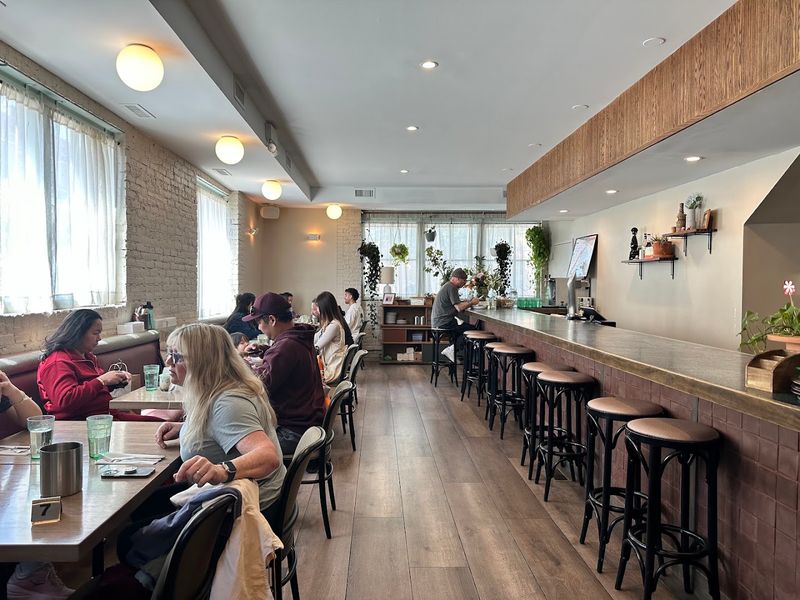
The interior of Kasama is compact and thoughtfully arranged. A central bakery display anchors the room, with table seating and bar-style counters running along the left and right walls.
The decor is minimal but warm, with enough visual intention to feel polished without tipping into the kind of sterile elegance that makes you afraid to enjoy your food.
During the daytime, the energy inside is buzzing and social. Customers are excited, phones are out, and the staff navigate the rush with a patience and friendliness that multiple visitors have specifically called out as one of the highlights of the experience.
The ordering process is organized enough that even on the busiest mornings, the flow inside the restaurant feels manageable once you get through the door.
The evening transformation is significant. The same room that felt lively and casual at 10 in the morning becomes intimate and focused by dinner service.
The lighting shifts, the noise level drops, and the pace of the meal slows to allow each course its proper moment. It is a genuine dual identity, and the fact that the physical space supports both versions of the restaurant speaks to how deliberately the whole concept was designed from the beginning.
Practical Tips for Visiting Without Losing Your Mind in Line
The line at Kasama is real, and it does not care about the weather. On weekend mornings, visitors have reported arriving ninety minutes before the 9 AM opening and still finding dozens of people ahead of them.
The wait can stretch to two hours or more on busy days, which is a significant commitment before you have even had your first sip of coffee.
The most practical strategy is to order online for pickup. The restaurant accepts pickup orders placed through its website, and many visitors have found that ordering around 8:45 AM results in their food being ready by around 9:15 or 9:20 AM.
Pickup orders allow you to skip the dine-in line entirely, though you will eat outside at the benches near the restaurant rather than at an indoor table.
If dine-in is important to you, arriving well before 8 AM on weekdays tends to result in a shorter wait than weekend visits. Thursday and Friday mornings are generally calmer than Saturday and Sunday.
The restaurant is closed on Mondays and Tuesdays, so plan accordingly. For the evening tasting menu, reservations open through the website and move extremely quickly, so setting a reminder for when new slots become available is the most reliable approach to securing a spot.
Why Kasama Represents Something Bigger Than a Great Meal
There is a reason visitors describe their experience at Kasama in terms that go beyond food quality. For many members of the Filipino community, eating here carries a kind of pride that is difficult to separate from the meal itself.
The restaurant exists as proof that Filipino cuisine belongs at the highest levels of global fine dining, a statement that feels meaningful in a culinary world that has historically overlooked it.
The tasting menu in particular draws on dishes that many Filipino diners grew up eating at home, sinigang, kare-kare, adobo, and nilaga, and presents them in a context that reframes those familiar flavors as worthy of serious attention. One diner described the experience as similar to the famous scene in the film Ratatouille, where food transports someone straight back to a cherished memory from childhood.
That kind of emotional resonance is not something a restaurant can manufacture. It has to be earned through genuine craft and cultural honesty.
Kasama earns it. Whether you visit for a truffle croissant on a Thursday morning or manage to secure a seat at the tasting menu on a special occasion, you leave with a clearer sense of what Filipino cuisine is capable of and a strong desire to come back for more.



