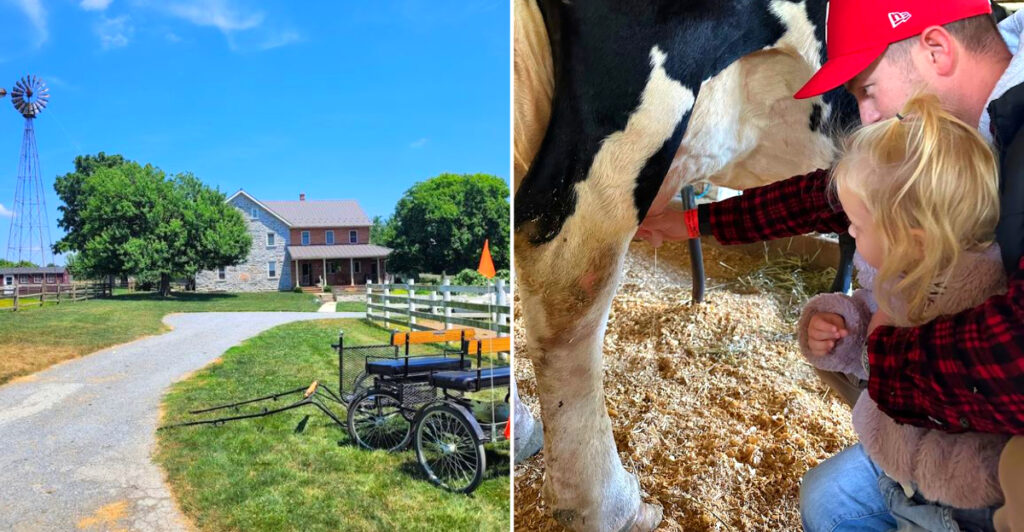
In the heart of Lancaster County, Old Windmill Farm offers visitors a hands-on look at everyday Amish farm life. Guests can bottle-feed calves, milk dairy cows, cuddle piglets, gather fresh eggs, enjoy a horse-drawn hayride, and learn about Amish traditions from the family who has worked the farm for generations.
Beyond the farmyard, visitors can explore historic barns, beautiful countryside, seasonal gardens, family-led tours, and traditional activities like pressing apples for fresh cider. Whether you’re visiting Pennsylvania Dutch Country for the first time or returning for another trip, Old Windmill Farm is one of the state’s most memorable farm experiences.
Where to Find Old Windmill Farm and How to Arrive
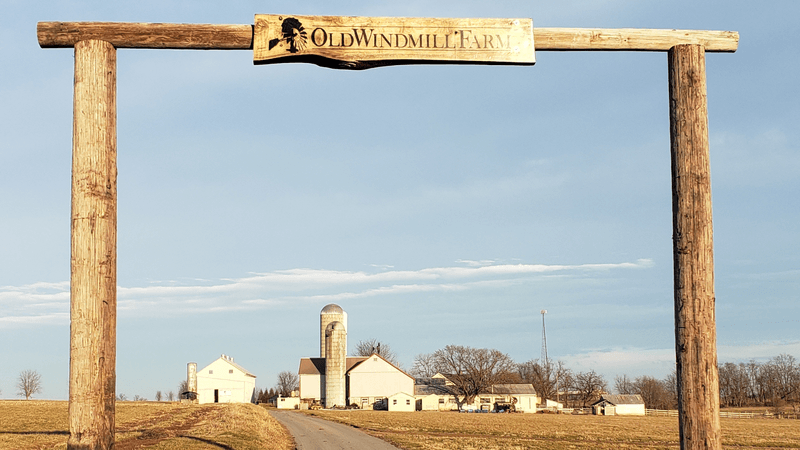
The address is straightforward enough: 262 Paradise Ln, Ronks, PA 17572, but the approach feels like something out of a countryside daydream. The farm shares a driveway with the Li’l Country Store, and a series of clear, hand-painted signs guide you down a quiet lane that immediately signals you are somewhere unhurried and purposeful.
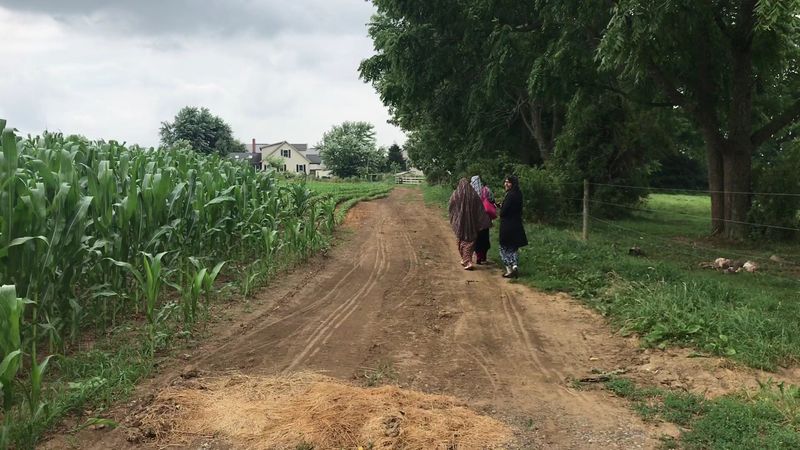
Lancaster County sits in the heart of Pennsylvania Dutch Country, a region celebrated for its scenic farmlands, covered bridges, and tight-knit Amish communities. The farm itself covers 60 acres of neatly kept fields, with barns standing tall against the open sky. Arriving here, you notice the absence of noise from traffic and the presence of something far more pleasant, birdsong, rustling crops, and the occasional moo from the dairy barn.
Old Windmill Farm operates Thursday through Monday, with hours ranging from 9 AM to 4 PM depending on the day. Booking your tour online in advance is strongly recommended, as popular time slots fill up quickly.
A Four-Generation Amish Family Opens Its Doors
Most farm tours give you a guide with a script. Here, you get the actual family. Jesse and Anna, along with their children, are the heart of Old Windmill Farm, and their warmth is not a performance but a genuine reflection of how they live every single day.
The farm has been in their family for over four generations, meaning the knowledge passed down during your tour is not rehearsed trivia but lived experience. Their daughters lead barn activities with a patience and enthusiasm that visitors consistently notice and appreciate. Moses, who handles the butter-churning sessions, has a gift for easy conversation that makes the whole experience feel like a visit to a relative’s home rather than a paid attraction.
What stands out most is the openness. Questions about Amish beliefs, daily routines, and farming practices are welcomed without hesitation. That kind of direct, honest engagement is rare, and it transforms a simple farm visit into a genuinely meaningful cultural exchange that stays with you long after you leave.
The 40-Foot Windmill and What It Once Powered
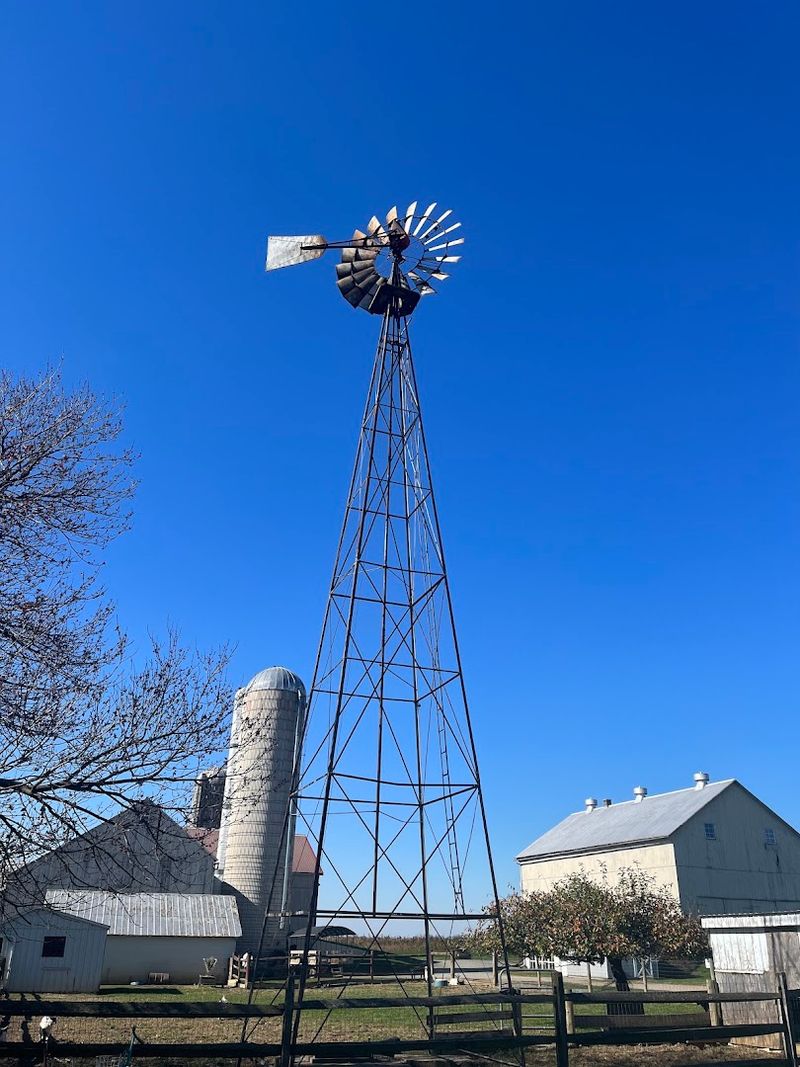
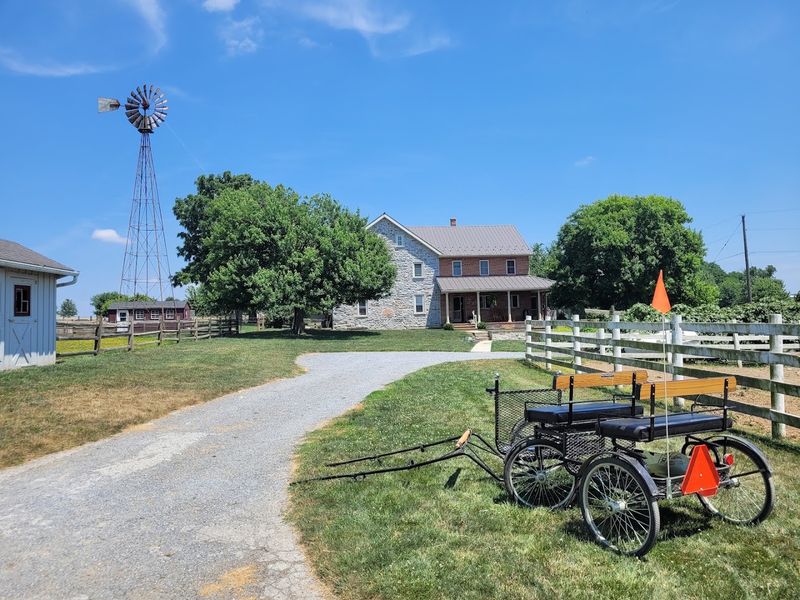
That towering structure visible from the lane is not just a charming backdrop for photographs. The windmill at Old Windmill Farm stands 40 feet high and once served as the farm’s primary water supply system, with each full stroke of its blades pulling two gallons of water from the well below.
The pumped water traveled up to a holding tank positioned on a hill, and from there, gravity carried it down to both the farmhouse and the barn. It was a clever, self-sufficient system that required no electricity, no fuel, and no monthly utility bill. Today, the pump has been updated to run on solar energy, a practical adaptation that respects both the farm’s heritage and its need to keep operations running smoothly.
The windmill itself remains standing as a proud landmark, a symbol of the ingenuity that defines Amish farming culture. Visitors often linger near it, looking up at its blades and imagining the generations of daily life it once quietly supported. It is one of those details that makes the farm feel genuinely historic rather than simply old.
The Late 1700s Barn That Still Works Every Day
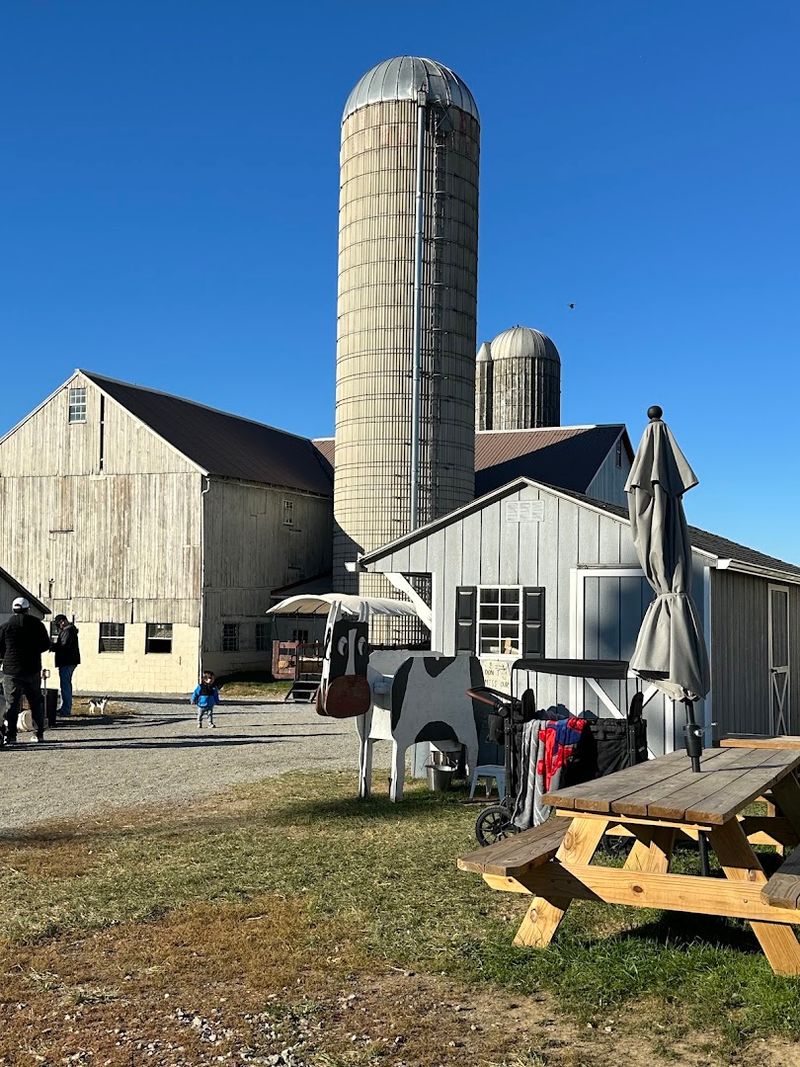
Some buildings earn their age gracefully, and the main barn at Old Windmill Farm is a prime example. Dating back to the late 1700s, this structure has weathered more than two centuries of Pennsylvania seasons while continuing to serve as the working heart of the farm.
Heavy timber beams, worn smooth by generations of hands and tools, run the length of the ceiling. The smell of hay and livestock is immediate and earthy, the kind of sensory detail that no museum exhibit can replicate. Animals are housed here year-round, and the daily rhythm of feeding, cleaning, and caring for them happens within these same walls that have hosted countless seasons of farm life before yours.
Touring this barn with a family guide brings the history to life in a way that plaques and photographs simply cannot. The structure itself becomes a conversation starter, prompting questions about how it was built, who built it, and what life on this land looked like before the modern world arrived at its doorstep. The answers are always worth hearing.
Bottle-Feeding Calves and Milking a Real Dairy Cow
There is something unexpectedly moving about holding a bottle while a calf latches on with surprising enthusiasm, its whole body swaying slightly as it drinks. This is one of the first hands-on moments visitors experience at Old Windmill Farm, and it tends to set the tone for everything that follows.
The calves are young, curious, and remarkably friendly. Their soft noses and eager pulling make the experience instantly memorable, especially for younger visitors who may never have been this close to a farm animal. For adults, the moment carries a different kind of weight, a quiet reminder of where food actually comes from and the daily effort behind it.
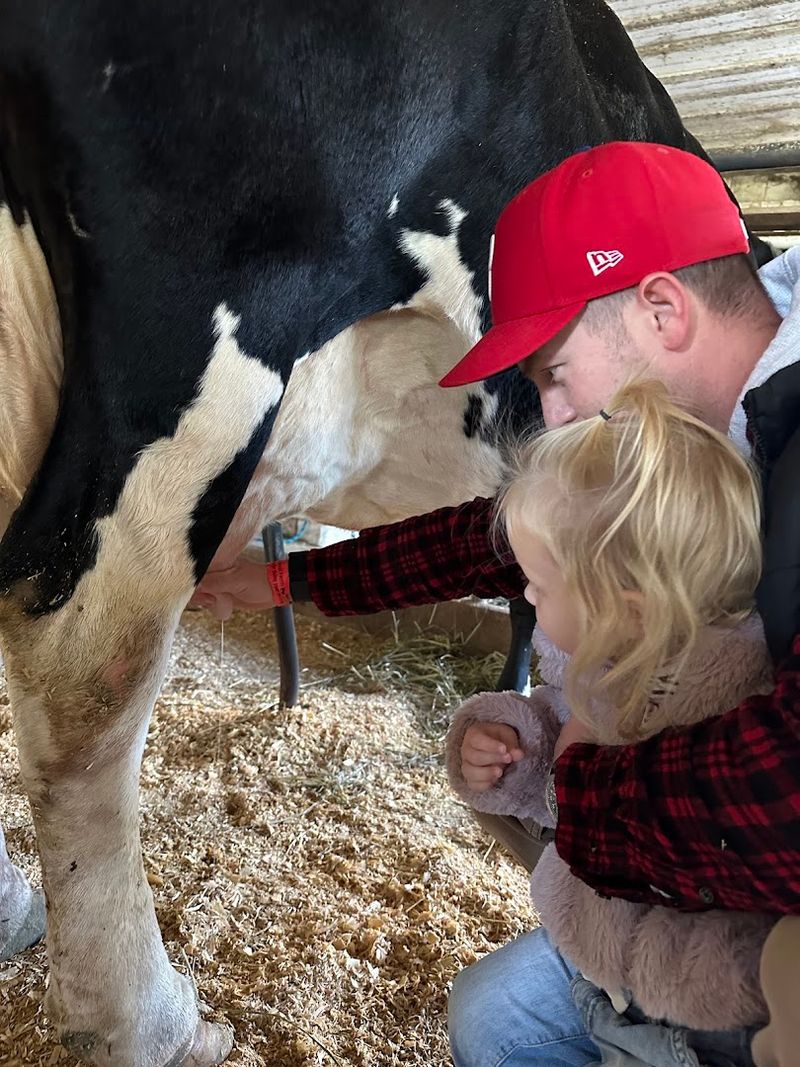
Milking a cow by hand is another activity offered during the tour, and it comes with a sticker to commemorate the achievement, which sounds small but is genuinely delightful. The technique requires patience and a gentle grip, and most first-timers laugh at how much coordination it actually demands. Guests who complete a successful milking leave with a new respect for dairy farmers and a story worth telling at dinner.
Baby Piglets, a Custom Slide, and the Cuddling Experience
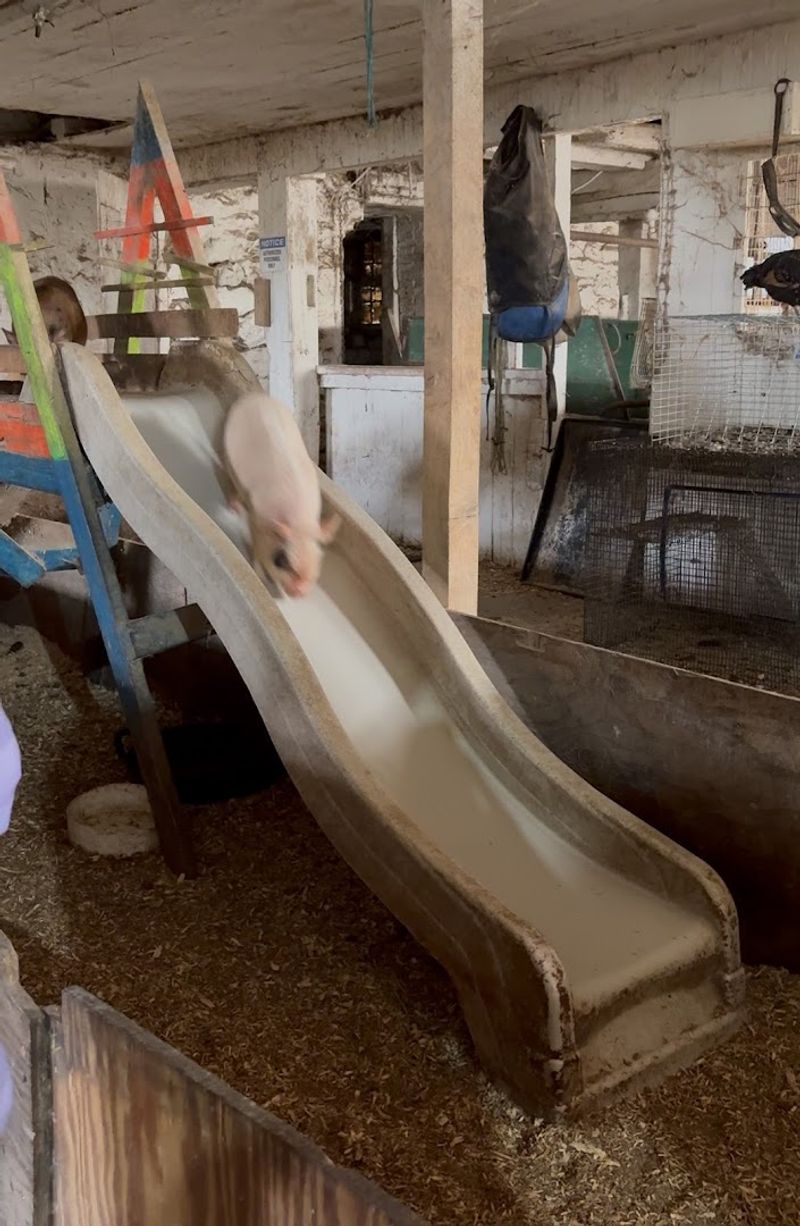
Baby pigs are objectively entertaining, but watching them gleefully ride down a custom-built slide is a level of farm fun that nobody quite prepares you for. The piglets at Old Windmill Farm have become something of a signature attraction, and it is easy to understand why they earn so many mentions in visitor reviews.
Beyond the slide antics, the farm offers a dedicated piglet cuddling experience as an optional add-on. During this session, visitors get up-close time with the piglets in a relaxed setting, and guides often bring along baby bunnies and kittens to join the fun. The combination of warm, wriggling animals and attentive staff creates an atmosphere that feels genuinely joyful rather than rushed or scripted.
The piglets are notably more energetic than most of the other farm animals, which adds an element of unpredictable charm to the encounter. Families with young children consistently rate this portion of the visit as a standout highlight. It is the kind of spontaneous, giggle-inducing moment that reminds you why hands-on experiences beat passive sightseeing every single time.
The Hayride That Lets Kids Take the Reins
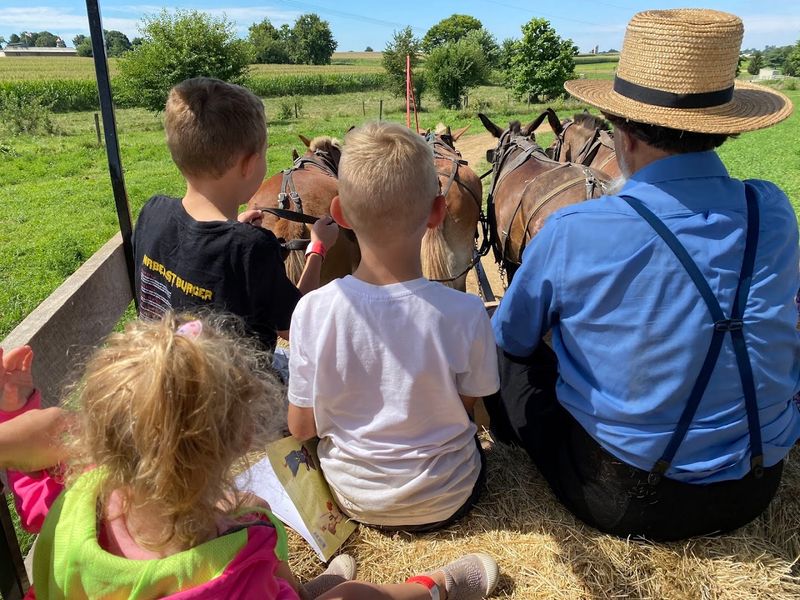
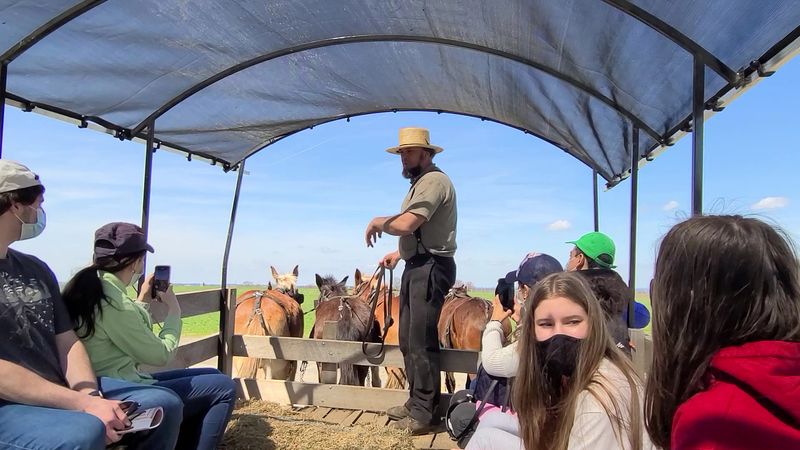
Few things capture the spirit of a working farm quite like a horse-drawn hayride, and this one comes with a twist that visitors clearly adore. Children are invited to hold the reins and guide the horse themselves, under the careful watch of a knowledgeable guide who shares stories about the farm’s history and the land they are crossing.
The wagon rolls through parts of the property that reveal the full scale of the 60-acre farm, passing fields of growing crops and offering views that feel genuinely pastoral. Farm dogs sometimes trot alongside or even hop aboard, which adds a layer of spontaneous charm that no tour script could plan for. On snowy days, the scene takes on a completely different kind of magic, with quiet fields and the soft crunch of hooves on frozen ground.
The guide on the hayride often shares passages of scripture, creating a reflective and peaceful atmosphere that complements the natural setting beautifully. It is a calm, unhurried start to the tour that sets an ideal tone for everything that follows, and children who hold those reins tend to talk about it for weeks afterward.
Gathering Eggs and Meeting the Chickens Up Close
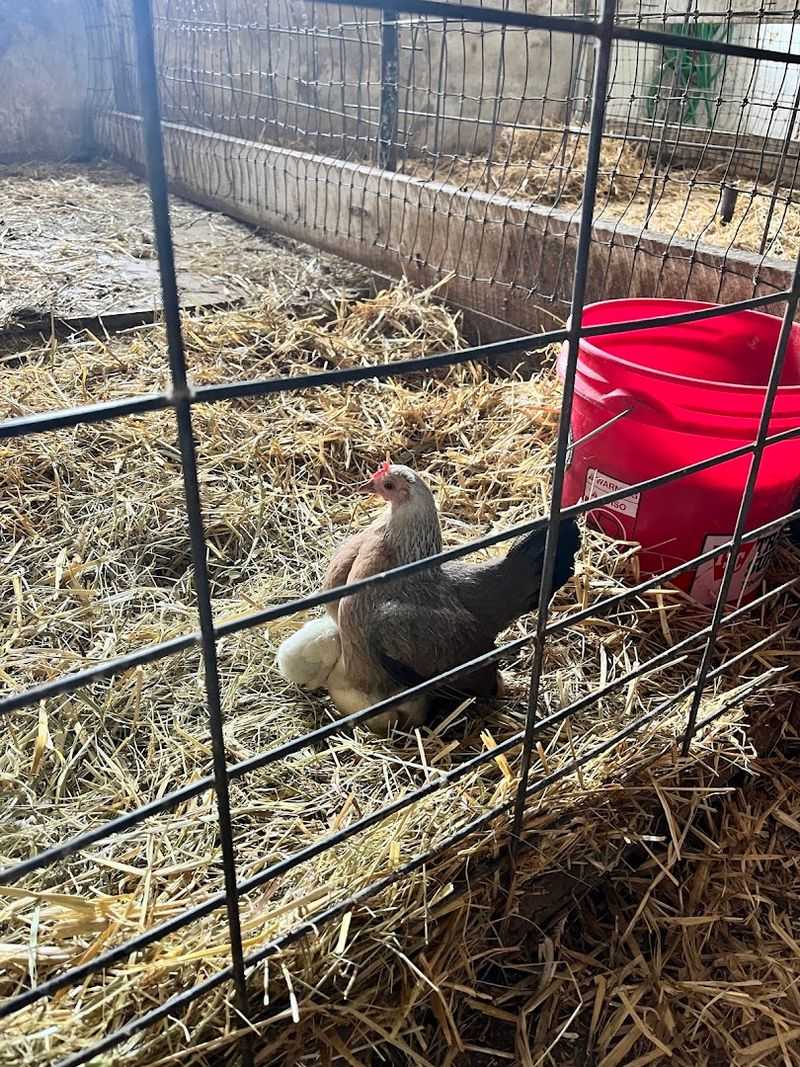
Collecting eggs from a chicken coop sounds simple until you are actually crouching down beside a nesting box, reaching in carefully, and pulling out a warm egg that was laid just minutes ago. That small moment of discovery carries a surprising amount of delight, and it tends to resonate with visitors of every age.
The chickens at Old Windmill Farm include miniature hens alongside the standard flock, which adds visual variety and endless curiosity for younger guests. Feeding the chickens is part of the experience as well, and the birds are approachable and calm, making the interaction easy even for children who might be nervous around animals for the first time.
This portion of the tour connects visitors directly to one of the most fundamental aspects of farm life, the daily rhythm of caring for animals and collecting what they provide. There is nothing glamorous about it, and that is precisely the point. The egg you gather here feels entirely different from the dozen sitting in your refrigerator at home, and that shift in perspective is quietly powerful.
The Garden Tour and Fresh Seasonal Produce
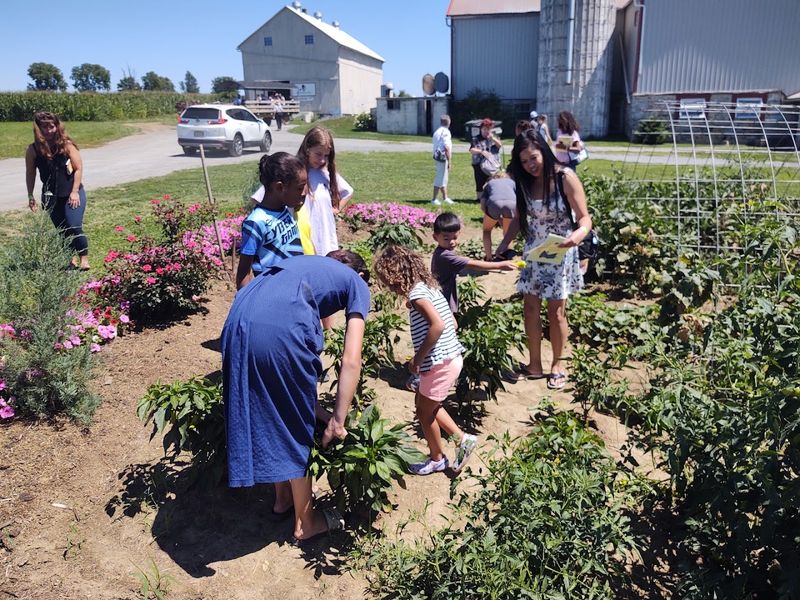
The Farm and Garden Tour, also called the Farm Fun Combo, expands the experience beyond the barn and into the fields where the family grows much of their own food. The garden is expansive and impressively organized, with seasonal produce at various stages of growth depending on when you visit.
Concord grapes, raspberries, strawberries, sweet corn, green beans, zucchini, broccoli, kale, cabbage, carrots, red beets, and sunflowers all have their place in the rotation. Herbs and a dedicated flower garden add color and fragrance to the walkthrough, making the whole experience feel as much like a sensory stroll as an educational tour. Visitors on this combo tour can take home samples of seasonal vegetables, which is a genuinely satisfying way to end a morning on the farm.
Seeing where food is grown, harvested, and eventually prepared puts the entire farm experience into clearer focus. The garden is not a decorative addition but a functional, productive space that feeds a family and community. That distinction matters, and the guides communicate it with a quiet pride that is both informative and genuinely moving.
Accessibility, Pricing, and Practical Visitor Tips
Old Windmill Farm is notably inclusive in its approach. The farm is wheelchair accessible, and staff members actively ensure that visitors with mobility needs are fully included in activities. One guest who uses a mobility scooter described being personally guided to accessible areas of the barn and handed a bottle to feed the cows, a thoughtful gesture that reflects the family’s genuine hospitality.
Pricing is refreshingly reasonable. Adult admission runs around $22, and children aged four and under enter free. The Farm Fun Combo, which adds the garden tour and extended animal time, is also available at a modest upgrade. Groups of 15 or more are encouraged to call ahead for reservations to ensure a smooth experience for everyone involved.
The farm operates Thursday through Monday, closed on Tuesdays and Wednesdays. Hours vary slightly by day, so checking the website at oldwindmillfarm.com before visiting is a smart move. Rainy days are not a dealbreaker here, as the barn activities continue regardless of weather, and the animals, unsurprisingly, do not mind the rain one bit.
Why This Farm Stays With You Long After You Leave
Most tourist attractions leave you with a photograph and a receipt. Old Windmill Farm tends to leave visitors with something harder to quantify, a shifted perspective on simplicity, community, and the quiet dignity of working the land with your hands and your family beside you.
The farm’s 4.9-star rating across nearly 1,900 reviews is not the result of flashy marketing. It reflects the cumulative effect of a family that genuinely wants every visitor to feel welcome, engaged, and better informed about a way of life that is easy to romanticize but even better to understand directly. The honesty of the experience, the real chores, the real animals, the real conversations, is what separates it from every staged alternative in the region.
Families return year after year, and school groups from as far as Texas make it a regular stop on their trips to Lancaster. Whether your visit lasts an hour or an entire afternoon, Old Windmill Farm in Ronks, Pennsylvania, offers the kind of authentic, unhurried experience that feels increasingly rare and, because of that, increasingly valuable.
Share this story