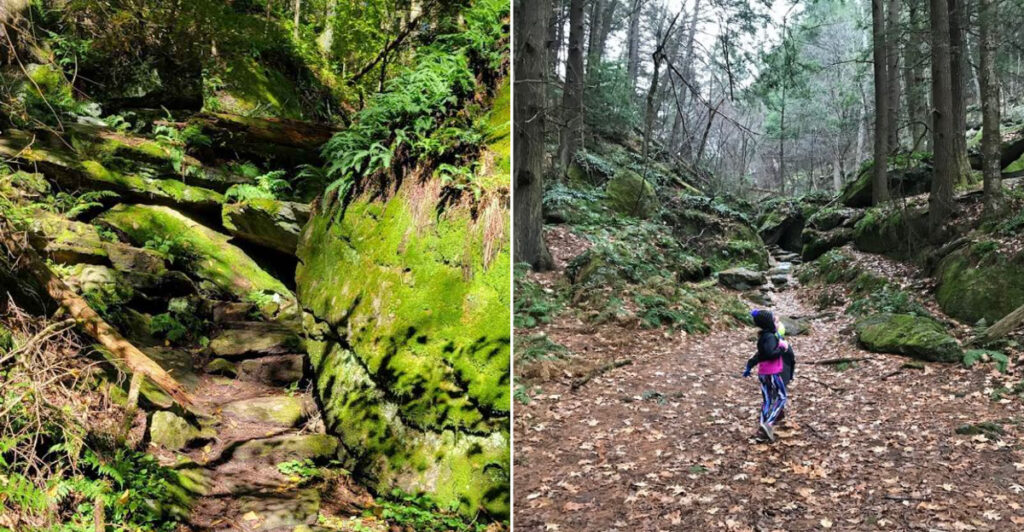
Tucked away in the Berkshires of western Massachusetts, there is a trail that stops people mid-step the moment they enter it. Massive boulders draped in thick moss stack up on either side of a narrow ravine, creating a corridor that feels more like a puzzle than a path.
This is the kind of place that makes you forget you are still in New England and not somewhere far more ancient and wild. The trail is roughly 1.25 miles long, takes about an hour to complete, and has been drawing curious hikers for centuries.
Herman Melville even referenced it in Moby Dick, writing about this place. That alone should be enough to get your hiking boots on and your curiosity fired up for what waits at the end of Park Street in Stockbridge.
A Literary Landmark Hidden in Plain Sight
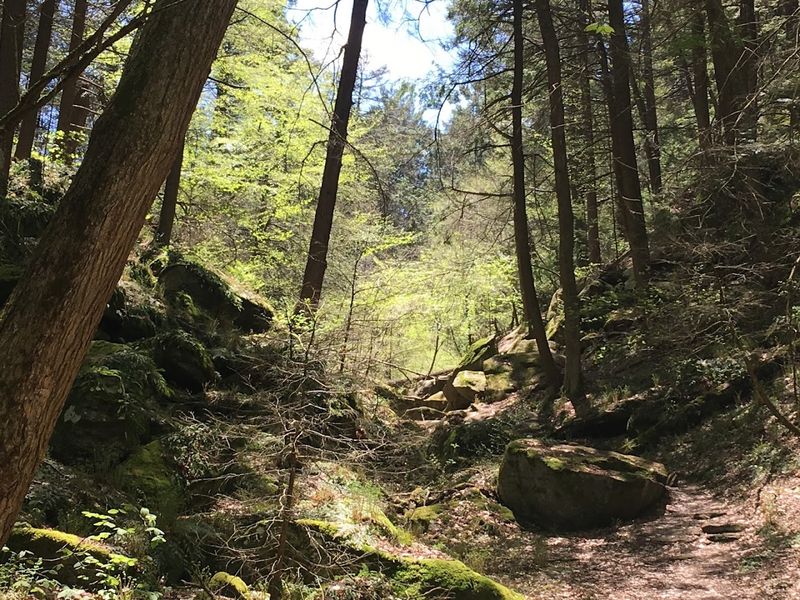
Not many hiking trails can claim a mention in one of the most celebrated American novels ever written, but Ice Glen can.
Herman Melville referenced the glen directly in Moby Dick, writing the now-famous line: “The wood was green as mosses of the Icy Glen.” That single line has drawn literature lovers and hikers alike to this Berkshire ravine for generations.
Melville lived in the region during the mid-1800s and was clearly moved enough by the landscape to work it into his epic seafaring novel. The connection between a landlocked mossy ravine and a story about the open ocean is unexpected, which makes it all the more interesting.
For anyone who enjoys the intersection of nature and literary history, this trail carries an extra layer of meaning that most outdoor spots simply cannot offer. A short hike here doubles as a small pilgrimage through American literary geography.
What the Terrain Actually Looks Like Up Close
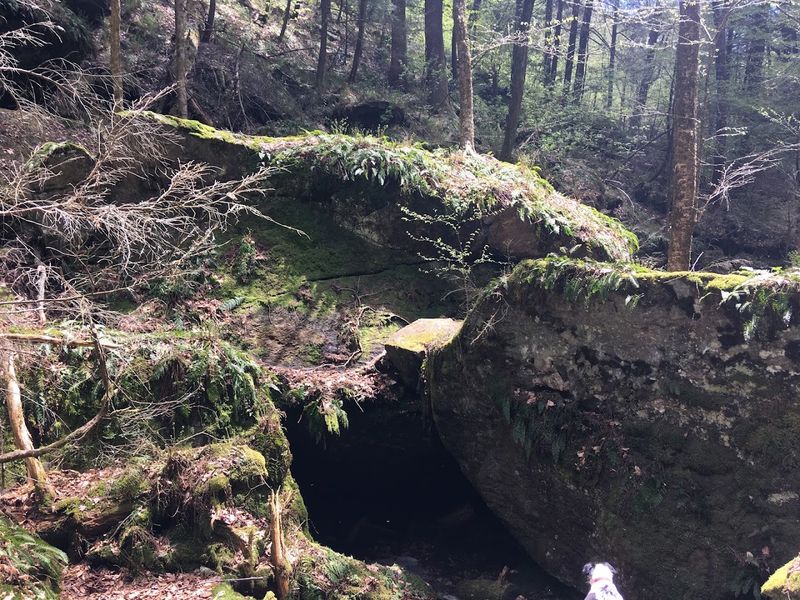
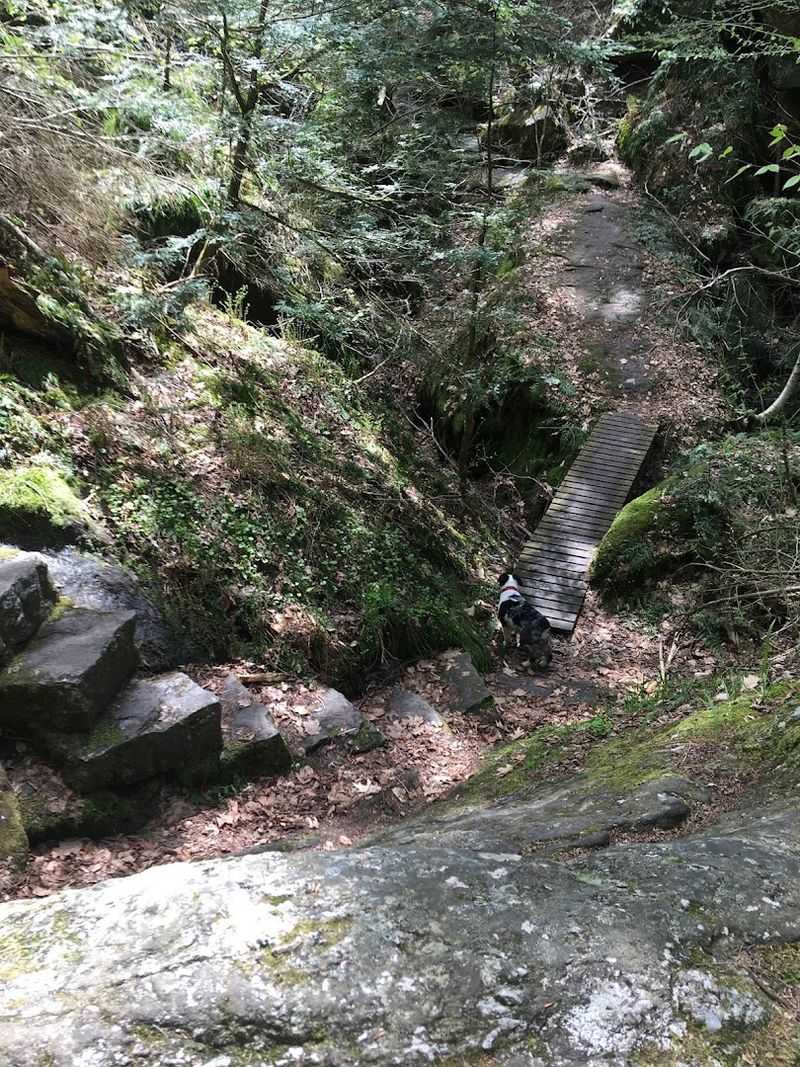
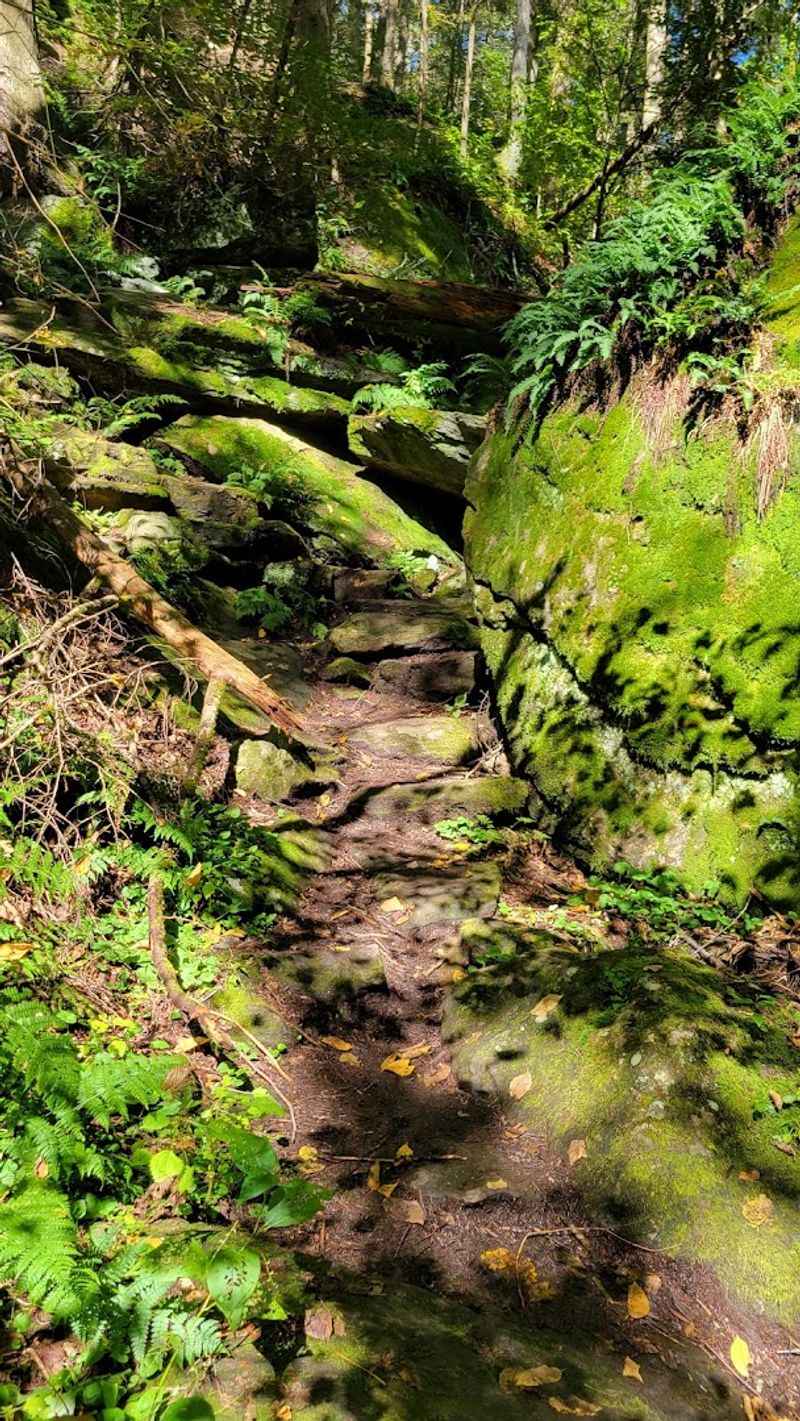
The boulders inside Ice Glen are not small. Some are the size of small cars, and many are stacked at odd angles that create natural caves and overhanging ledges along the trail.
Thick green moss covers a large portion of the rock surfaces, giving the entire ravine a deep, layered texture that makes the walls look almost soft despite being solid granite.
The trail itself is not paved or groomed. Hikers navigate over, around, and sometimes between rocks, using both hands and feet to make their way through the more technical sections.
This is not a casual stroll.
The combination of irregular rock formations, tight passageways, and vertical walls on either side creates an enclosed, almost underground quality to the experience. Even on a bright day, the canopy and rock walls keep much of the ravine in deep shade, which plays a direct role in one of the glen’s most unusual features.
The Ice That Refuses to Melt
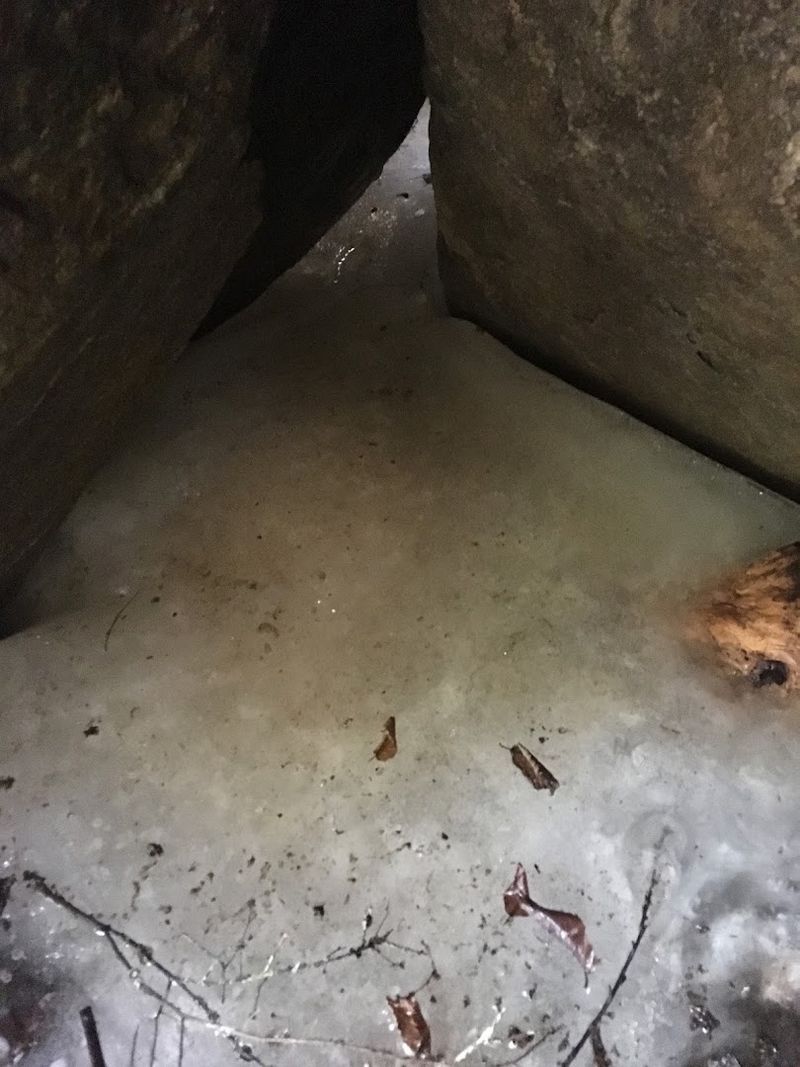
Here is the detail that surprises most people who visit for the first time: Ice Glen holds actual ice beneath its rocks well into the summer months.
The ravine is so deep and so well shaded that cold air becomes trapped between and beneath the boulders. Even when temperatures outside are warm, the microclimate inside the glen stays cold enough to preserve ice that formed during winter.
This is not a minor frost dusting. Hikers have reported finding genuine ice formations tucked under rocks as late as June and sometimes even July.
The name Ice Glen is not poetic license. It is a straightforward description of a real geological phenomenon.
Scientists refer to this type of feature as a cold air trap or natural refrigerator effect, where dense cold air settles in low-lying, shaded areas and resists warming. For hikers, it means a natural cooldown mid-trail on a warm day, which is a genuinely welcome surprise.
How Difficult Is the Hike, Really
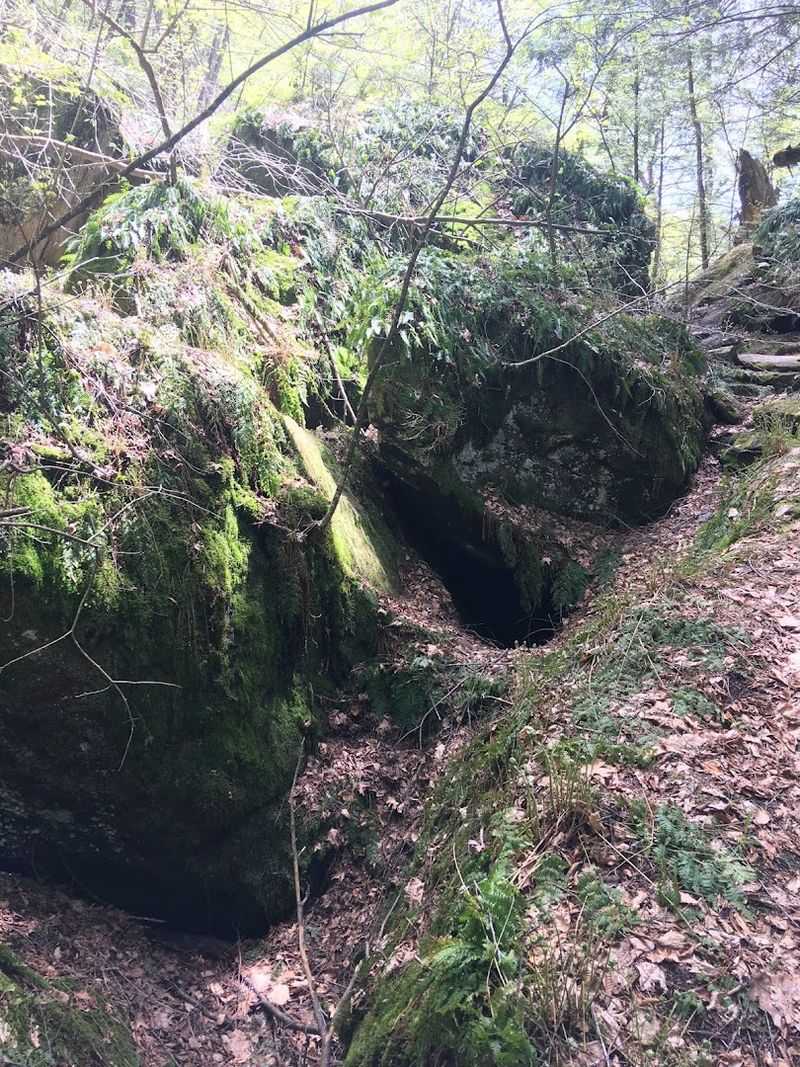
The trail measures approximately 1.25 miles in total length, which sounds short enough for almost any fitness level. The difficulty, however, comes from the terrain rather than the distance.
Several sections of the trail require hikers to use both hands and feet to navigate over and between large boulders. There are no handrails, no steps, and no smooth surfaces in the more technical parts of the ravine.
The climb through the glen is rated as moderate, but that rating assumes the hiker is wearing proper footwear and is comfortable with some light scrambling. Wet or icy conditions make this trail significantly more challenging and genuinely risky, so checking the weather before heading out is a practical necessity.
Most hikers complete the full loop, including the exit onto Ice Glen Road and the walk back along Route 7 to Park Street, in about one to two hours depending on pace and how much time is spent exploring the caves and rock formations.
The Right Gear Makes All the Difference
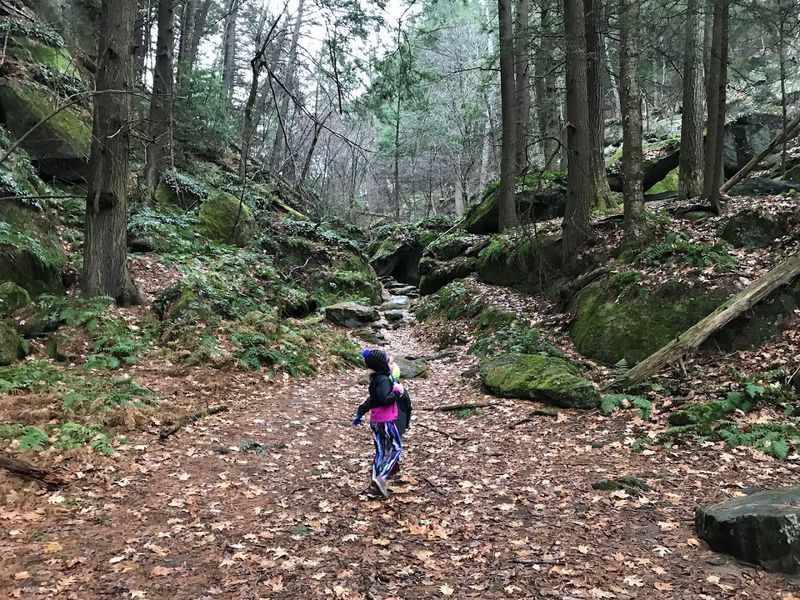
Footwear is the single most important piece of gear for this trail, and that point cannot be overstated. Sandals, sneakers, and flat-soled shoes are genuinely poor choices here.
Sturdy hiking boots with ankle support and grippy soles are the standard recommendation from experienced hikers who have navigated the boulder sections. The rocks can be slippery even when dry, and the moss adds another layer of unpredictability underfoot.
Beyond footwear, wearing layers is a smart call. The temperature inside the ravine drops noticeably compared to the surrounding forest, thanks to the cold air trap effect.
A light jacket packed in a day bag handles that shift without any trouble.
Trekking poles are optional but useful for balance during the rockier sections, especially on the descent. Bringing water is always a good idea on any trail, and a small first aid kit tucked in a pack is a habit worth keeping for terrain this uneven and rugged.
The Caves Along the Trail
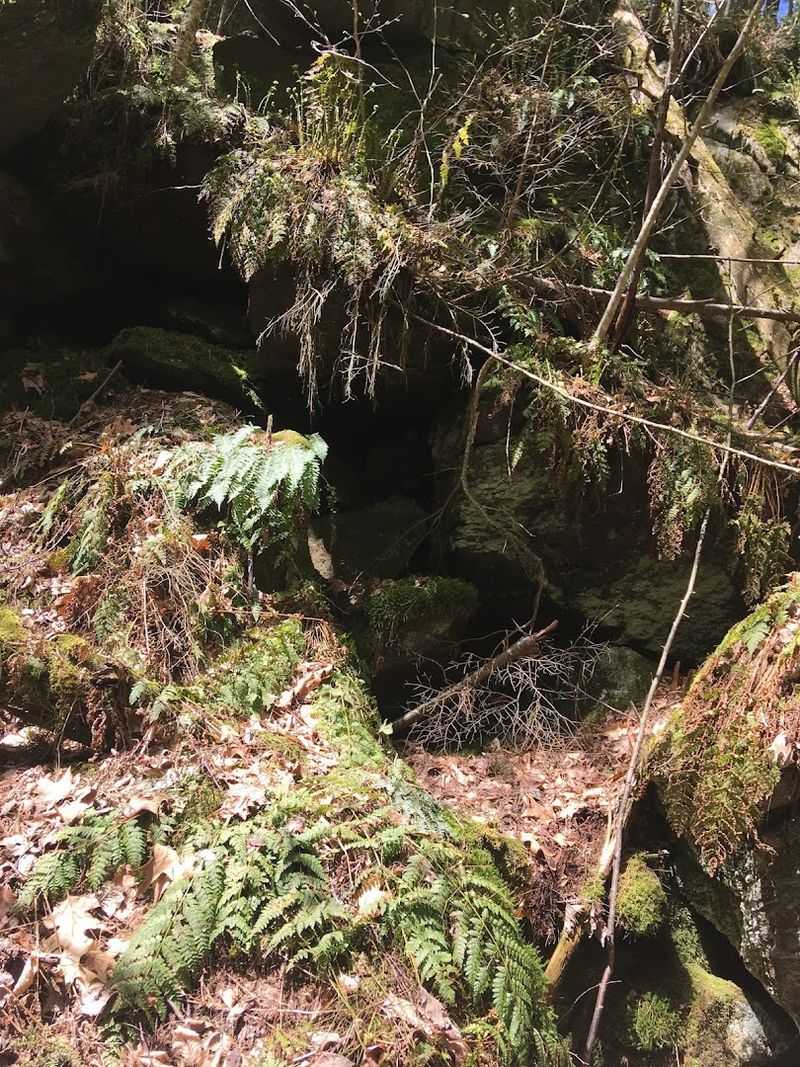
One of the most talked-about features of the Ice Glen trail is the presence of natural caves formed by the massive stacked boulders throughout the ravine.
These are not deep caves that require equipment or serious spelunking experience. They are passageways and chambers created where large rocks lean against each other, forming enclosed spaces that hikers can peer into or sometimes squeeze through.
The caves add a real sense of exploration to the hike. Finding a dark gap between two mossy boulders and realizing it opens into a small chamber on the other side is exactly the kind of discovery that makes this trail feel different from a standard forest walk.
Children tend to find these formations especially compelling, and many families visit specifically because the cave-like features give younger hikers a tangible goal to work toward. That said, the scrambling required to reach some of them means small children need close supervision throughout the trail.
Best Times of Year to Visit
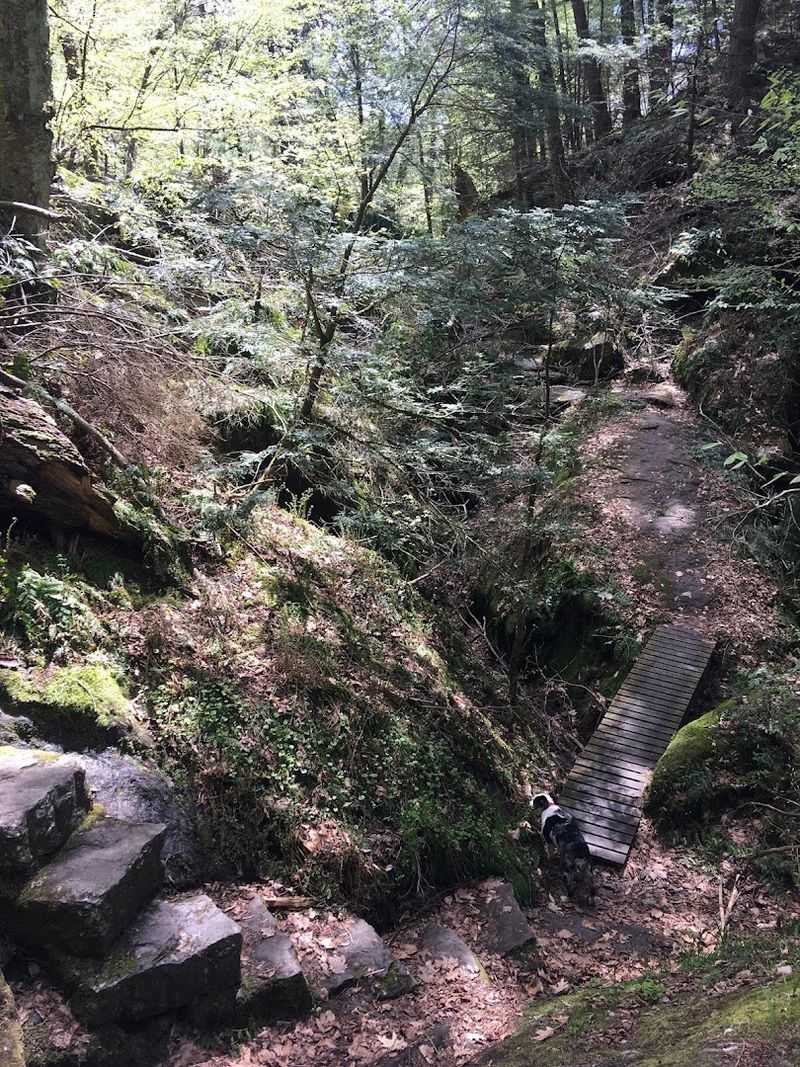
The trail is open year-round, but the experience changes significantly depending on when you go. Each season brings something different to the ravine.
Spring and early summer are popular because the moss is at its most vivid during those months, and the ice phenomenon under the rocks is still active. The forest canopy is full, and the ravine feels lush and enclosed in a way that differs from any other time of year.
Autumn is arguably the most visually striking season to visit. The surrounding Berkshire hills erupt in color, and the contrast between the golden foliage above and the grey-green moss below creates a striking layered effect throughout the trail.
Winter visits are possible but come with serious caution. Ice on the rocks makes the already-challenging terrain genuinely hazardous.
Wet weather in any season adds risk to the boulder sections. Dry days in spring, summer, or fall represent the safest and most rewarding windows for visiting this trail.
Stockbridge: The Town Around the Trail
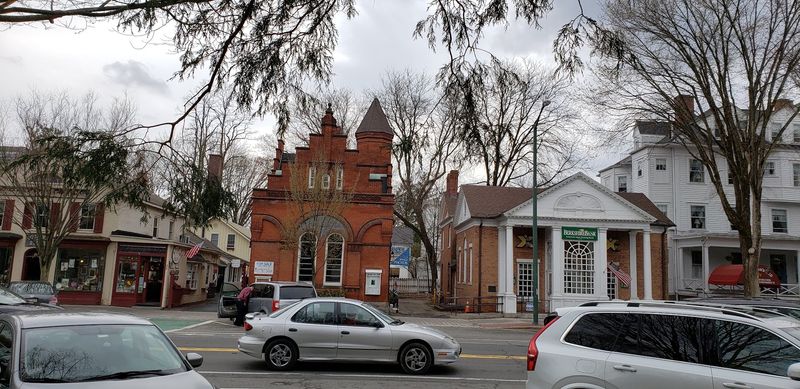
Stockbridge is not just a convenient starting point for the hike. The town itself is worth exploring before or after hitting the trail.
Known as one of the most picturesque small towns in New England, Stockbridge has a Main Street that looks almost exactly as Norman Rockwell painted it, which makes sense given that Rockwell lived and worked there for decades. The Norman Rockwell Museum is located just outside the town center and draws visitors from across the country.
The town also sits along the Housatonic River, which hikers cross via the bridge at the start of the Ice Glen trail. That river corridor adds a natural frame to the entire area, connecting the trail to the broader landscape of the Berkshires.
After a hike through the glen, the nearby town offers a quiet place to rest and regroup. The combination of outdoor activity and small-town New England character makes Stockbridge a genuinely well-rounded day trip destination from almost anywhere in the region.
Wildlife and Forest Life in the Ravine
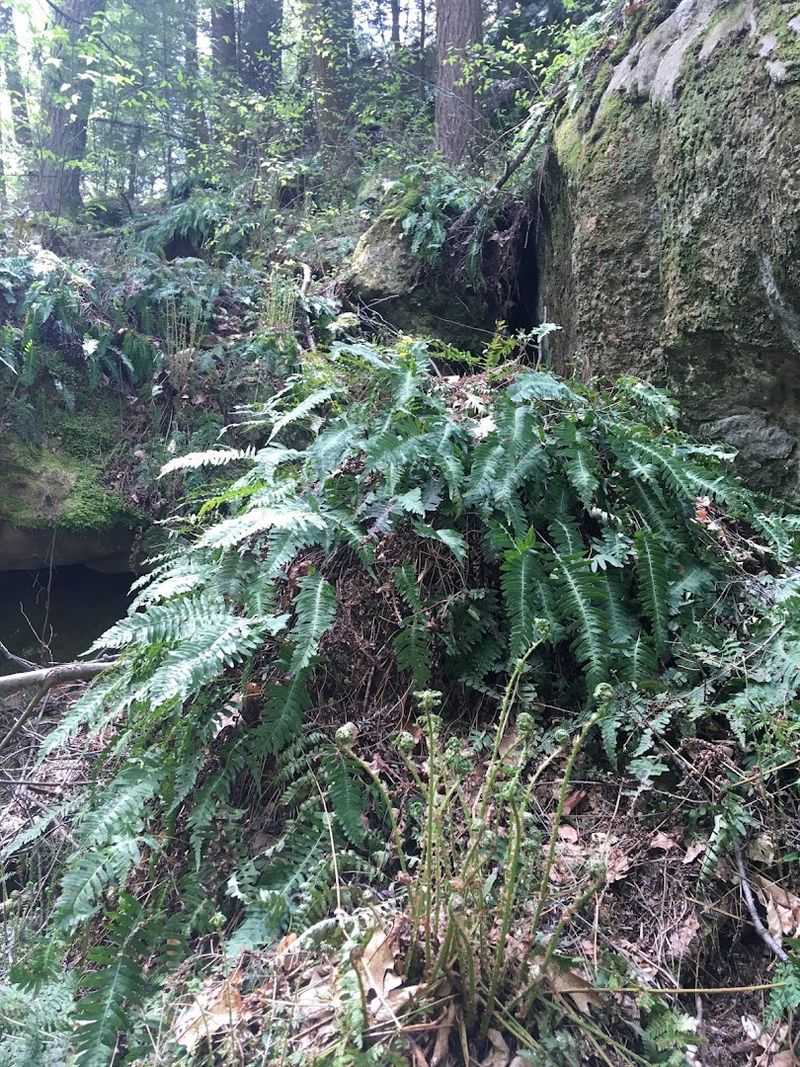
The dense, shaded environment inside Ice Glen creates habitat conditions that differ from the surrounding forest, and that difference shows up in the wildlife found along the trail.
The ravine’s consistent cold temperatures and high moisture levels support a rich variety of mosses, ferns, and lichens that cover nearly every available surface. This kind of plant life provides shelter and food for small mammals, insects, and birds that prefer cool, shaded woodland conditions.
Chipmunks and red squirrels are commonly spotted along the trail, darting between boulders with their characteristic speed. Bird activity is steady throughout the warmer months, with species typical of northeastern hardwood forests moving through the canopy above the ravine.
The trail does not pass through open meadows or wetlands, so the wildlife here is specifically adapted to dense forest and rocky terrain. That specialization makes the ecosystem inside the glen somewhat distinct from the broader Berkshire landscape immediately surrounding it.
How to Navigate the Full Loop
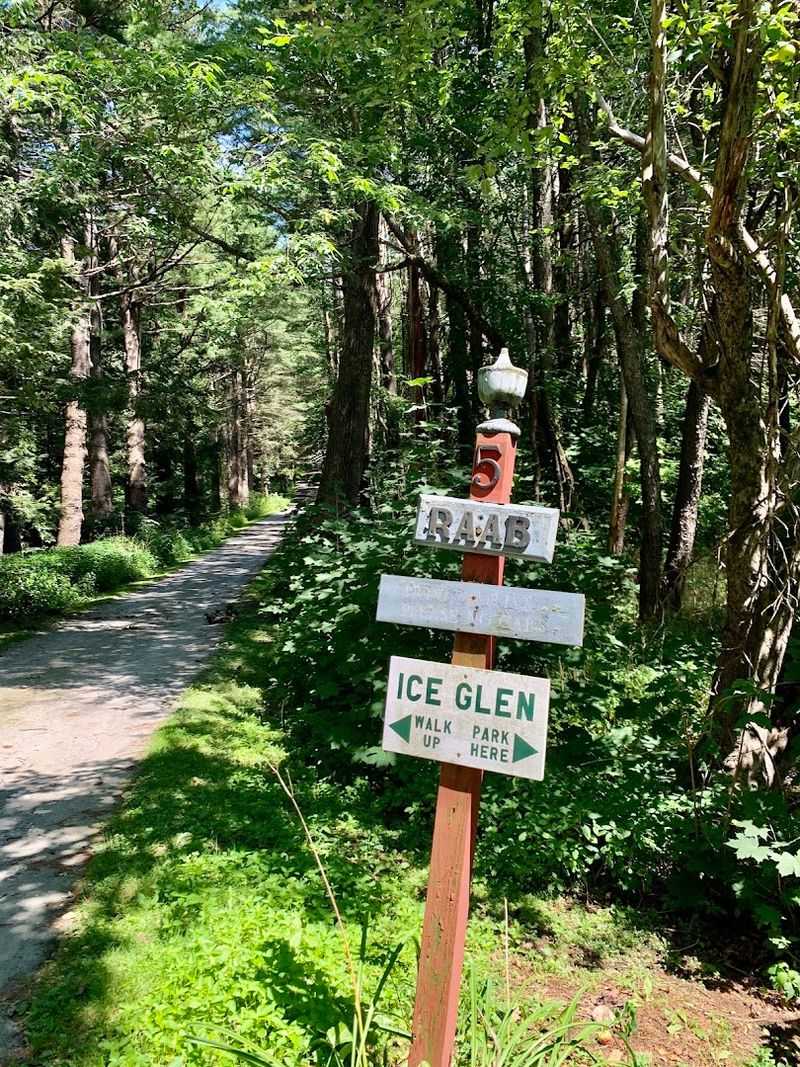
The full Ice Glen loop is straightforward once you know the sequence, and following it correctly means you end up back at your car without any backtracking.
Start at the dead end of Park Street, cross the bridge over the Housatonic River, and follow the trail signs into Ice Glen. Move through the ravine from one end to the other, navigating the boulder sections as they come.
At the far end of the glen, the trail exits onto Ice Glen Road. Turn right onto Ice Glen Road, follow it to Route 7, then take a right onto Route 7, and finally a right back onto Park Street to return to the parking area.
The whole loop covers approximately 1.25 miles.
The exit onto Ice Glen Road also offers open views of the surrounding Berkshire hills, which provides a welcome change in scenery after the enclosed ravine section. That shift from tight rocky corridor to open road view gives the loop a satisfying sense of variety and completion.
Why Kids and Families Keep Coming Back
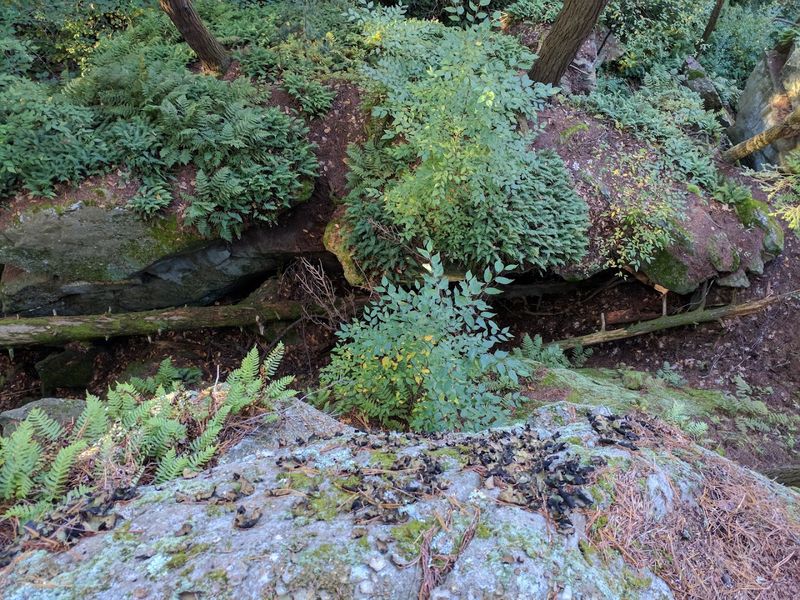
There is something about a trail that requires actual climbing and problem-solving that holds children’s attention in a way that flat, easy paths simply do not.
Ice Glen delivers that kind of engagement in full. The boulder scrambles, the cave openings, and the cold air pockets under the rocks all give younger hikers specific things to discover and react to rather than just miles to cover.
The relatively short distance, around 1.25 miles total, keeps the outing manageable for families with kids who have a reasonable level of fitness and coordination. The trail is not suitable for strollers or very young children, but kids who are comfortable on uneven terrain generally handle it well with adult supervision.
Families who combine Ice Glen with a stop in Stockbridge afterward have reported that the full day holds together really well as a structured outing. The hike provides the physical challenge, and the town provides the wind-down that rounds out the experience nicely.
Why This Short Trail Stays With You
Most trails that are only 1.25 miles long do not leave much of a lasting impression. Ice Glen is a clear exception to that pattern.
The combination of literary history, unusual geology, natural ice formations, cave-like boulder structures, and a microclimate that operates by its own rules gives this short trail a density of character that much longer hikes rarely match.
There is also something to be said for a trail that has been drawing people for centuries without needing to change or improve itself. The glen is exactly what it has always been, and that consistency is part of its appeal.
Whether you are a Melville reader looking to walk through a passage of literary history, a geology enthusiast curious about cold air traps, or simply someone who wants a trail that feels genuinely different from everything else in the region, Ice Glen delivers on all of those fronts without asking for more than an hour of your time.
Where Exactly This Mossy Maze Begins
The trail begins at the dead end of Park Street in Stockbridge, MA 01262, a quiet residential road that gives almost no hint of what lies just beyond the tree line.
Hikers park at the end of Park Street, cross a wooden bridge over the Housatonic River, and then follow a clearly marked trail that leads directly into the ravine.
Stockbridge itself is a small, historically rich town in Berkshire County, Massachusetts, sitting in the heart of the Berkshires region. The surrounding area is known for its cultural landmarks, rolling hills, and outdoor spaces.
Ice Glen is classified as a ravine, which means the trail runs through a deep, narrow valley carved between towering rock walls. The trailhead is easy to find, parking is free, and there are no entry fees.
That accessibility is a big part of why this place has stayed popular for well over a hundred years.
Share this story