 Unearth The Voyage
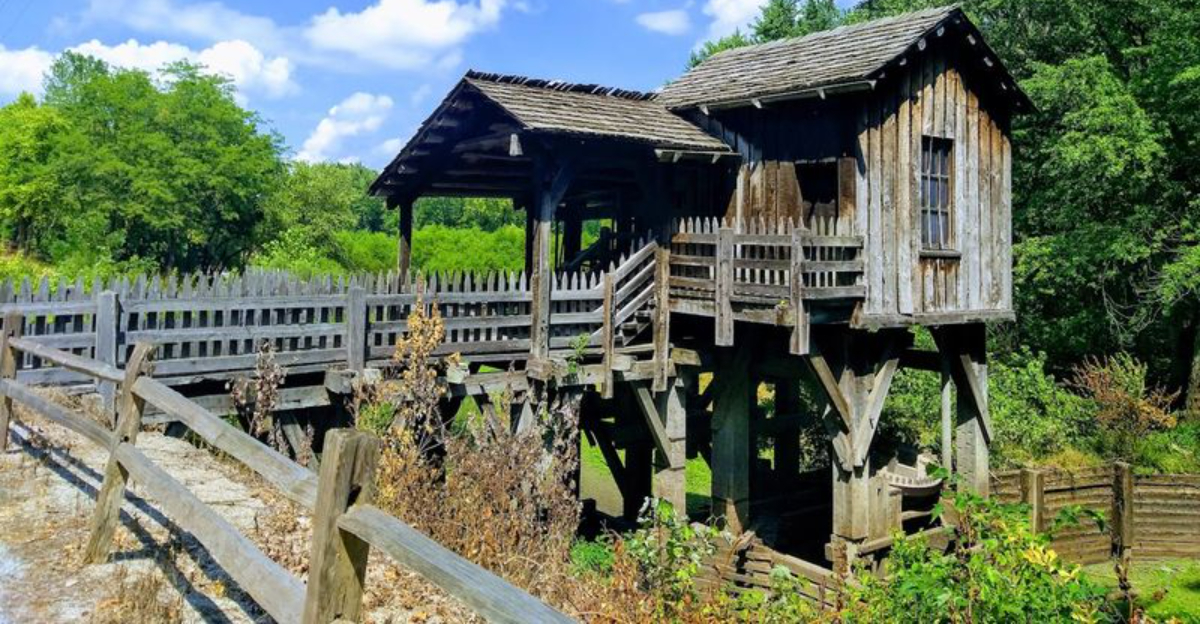
There is a place in central Illinois where time genuinely seems to stand still, and where the story of a young man who would one day change the country becomes surprisingly personal. A recreated 1830s frontier village sits on a bluff above the Sangamon River, and walking through it feels less like a history lesson and more like a conversation with the past.
The log cabins, the blacksmith shop, the general store, each one tells a chapter of a story that started long before the White House. I visited on a clear weekday morning and left with a much deeper appreciation for just how ordinary, and how extraordinary, Abraham Lincoln’s early years really were.
Finding the Village: Address, Location, and Getting There
Right off Illinois Route 97, just outside the small town of Petersburg, Lincoln’s New Salem State Historic Site sits at 15588 History Lane, Petersburg, IL 62675, about 20 miles northwest of Springfield. The drive itself is pleasant, winding through rolling central Illinois countryside that still feels surprisingly rural.
The parking lot is spacious, free, and accommodates RVs, which is a nice touch for road-trippers. From the parking area, you walk toward the visitor center first, and that is genuinely the best way to start your visit before heading out to explore the village grounds.
The site is managed by the Illinois Historic Preservation Agency, and the address is easy to find using any GPS app. Phone number on file is +1 217-632-4000, and the website at lincolnsnewsalem.com has current hours and event schedules.
The site is open Tuesday through Saturday, 9 AM to 5 PM, and closed Sunday and Monday, so plan your visit accordingly.
The Story Behind New Salem and Why Lincoln Came Here
In 1831, a 22-year-old Abraham Lincoln arrived in New Salem, Illinois, described by some accounts as coming like a piece of driftwood floating down the Sangamon River. He had no real plan, no formal education beyond a few months of schooling, and no notable connections.
What he did have was curiosity, a sharp mind, and an ability to talk with just about anyone.
New Salem was a tiny frontier town at the time, home to roughly 100 to 150 people. It had a mill, a tavern, a few stores, and the kind of tight-knit community where everyone knew your business.
Lincoln worked here as a store clerk, a postmaster, a surveyor, and eventually began studying law on his own.
By 1837, he had earned his law license and won a seat in the Illinois state legislature. He left New Salem for Springfield, and the town itself faded away shortly after.
The six years he spent here shaped nearly everything about the leader he would become, making this site one of the most historically meaningful in the entire country.
The Reconstructed Village: Log Cabins Built on Real Foundations
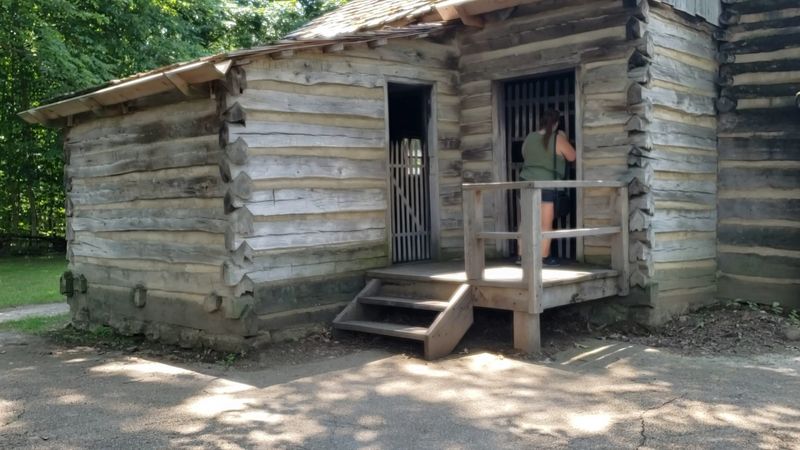
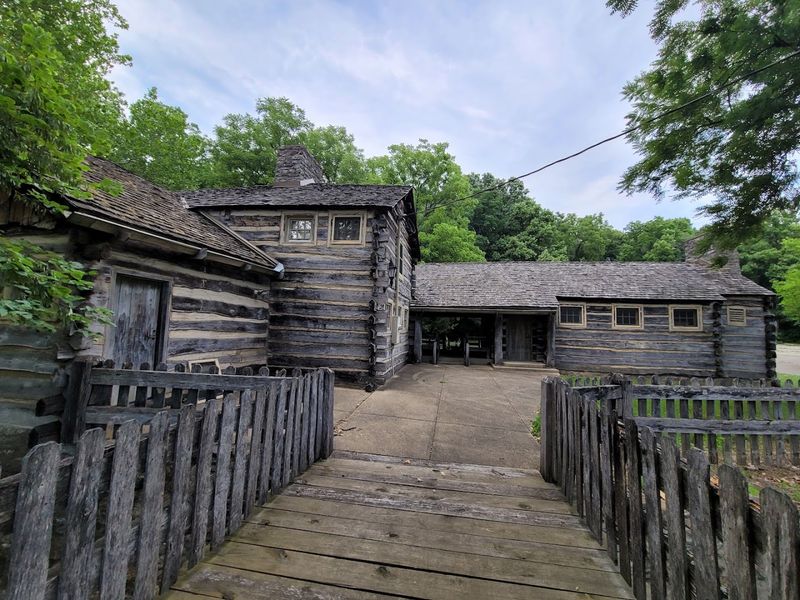
One of the most impressive things about this site is that the buildings were not just built to look old. Each structure was reconstructed directly on its documented, archaeologically verified original foundation.
That means when you stand inside one of these cabins, you are standing in the exact spot where a real family cooked, slept, and worked nearly 200 years ago.
The village includes over 20 reconstructed buildings, ranging from simple one-room homes to a cooper shop, a carding mill, a tavern, and a school. Each building has a plaque outside explaining who lived or worked there and what their daily life looked like.
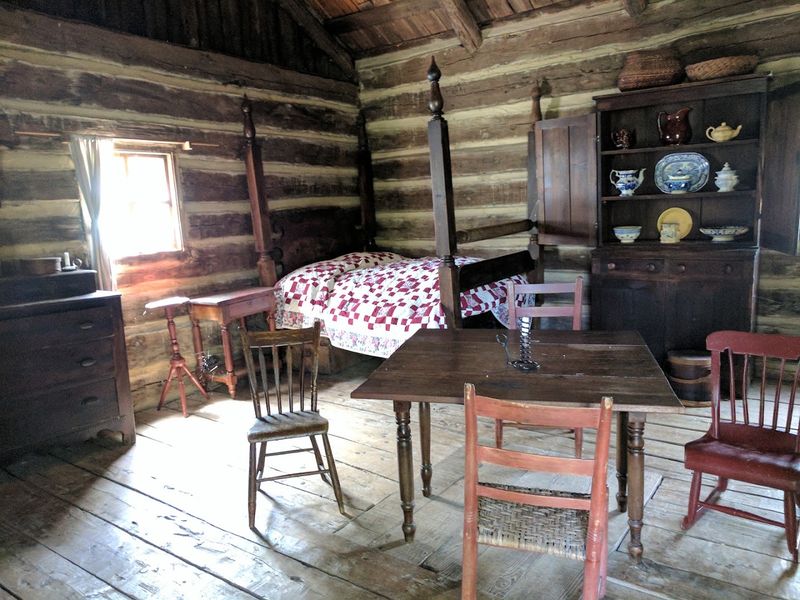
Inside, the furnishings are period-accurate, giving the spaces a genuine, lived-in feel rather than a polished museum aesthetic.
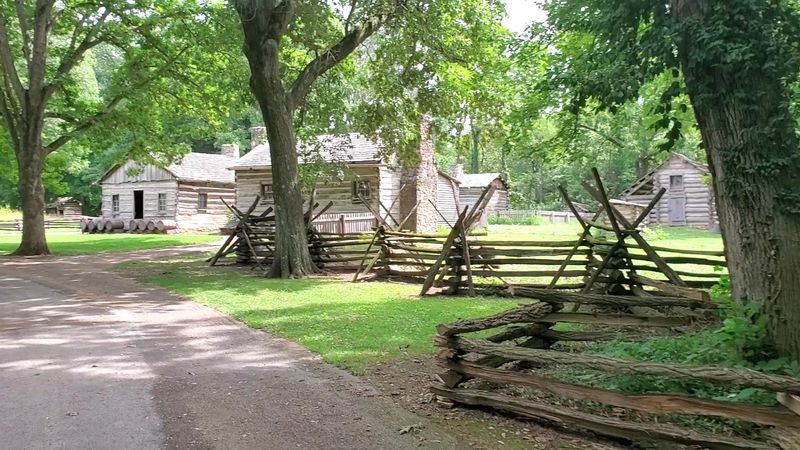
The cabins are spaced along a gentle path that winds through the bluff, so the walk between them feels natural and unhurried. On a clear day, the surrounding trees and open sky make the whole setting feel genuinely removed from the modern world.
It is the kind of place where you find yourself slowing down without even realizing it.
The Costumed Interpreters Who Bring 1830s Life to the Present
Plaques and exhibits can tell you facts, but the costumed interpreters at New Salem do something different. They make you feel like you have just interrupted someone in the middle of their actual workday.
On the day I visited, a woman in a long dress and apron was explaining the daily routine of a frontier household with the kind of confident detail that only comes from real study and genuine enthusiasm for the subject.
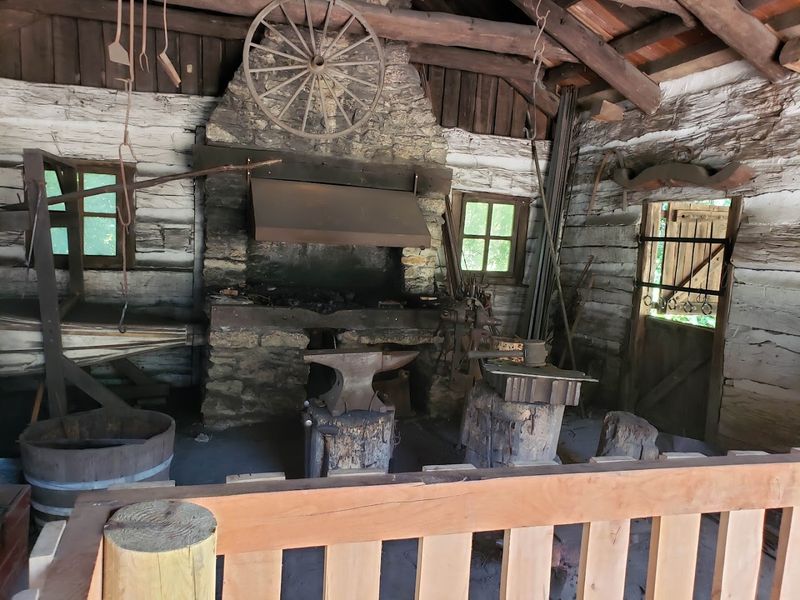
Elsewhere, a gentleman demonstrated yarn dyeing using natural plant materials, explaining the process with the patience of someone who has answered every possible question and still finds it interesting. The blacksmith shop is a particular highlight, with live demonstrations that draw visitors in and hold their attention completely.
The number of interpreters on site varies by season, with more available during summer months and special events. Even on quieter days, the few who are present are remarkably knowledgeable and approachable.
Talking with them adds a layer of understanding that no sign or exhibit can fully replicate. Their presence turns a self-guided walk into something much closer to a real conversation with the past.
The Visitor Center, Museum, and That Excellent Short Film
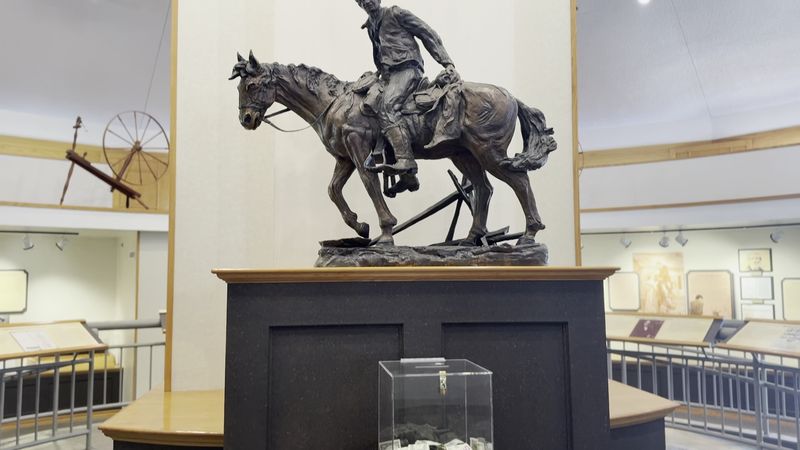
Before heading out to the village, the visitor center is worth at least 30 to 45 minutes of your time. The building is clean, air-conditioned, and well-organized, with a small but genuinely informative museum dedicated to Lincoln’s years in New Salem.
The exhibits cover his work as a postmaster, his early political campaigns, and his self-directed legal education.
The 17-minute film shown in the on-site theater is a solid introduction to the history of the village and Lincoln’s time there. It sets the context well without feeling like a lecture, and it gives first-time visitors a clear picture of what they are about to see on the grounds.
Families with kids will find it especially useful for keeping younger visitors engaged before the outdoor walk.
Admission to the visitor center, museum, and the village itself is free, though a suggested donation of about four dollars per person is appreciated and genuinely worthwhile. The staff inside are friendly and happy to answer questions, point out highlights, or suggest how to spend your time based on how long you have available.
Starting here makes the rest of the visit noticeably richer.
The Blacksmith Shop and Other Working Craft Demonstrations
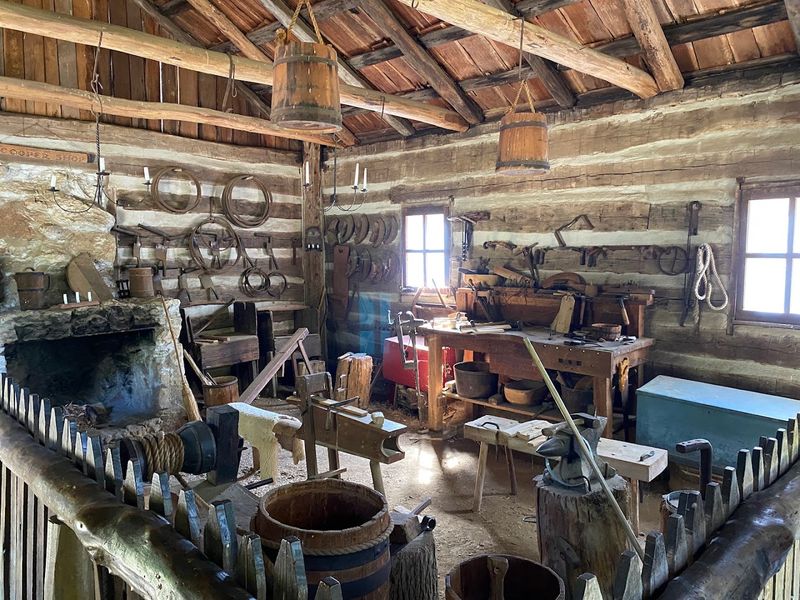
The blacksmith shop at New Salem is one of those spots where you stop walking and just stay for a while. Watching a skilled demonstrator work hot metal at an open forge, shaping tools with steady, practiced strikes, is genuinely captivating in a way that is hard to put into words.
The heat, the sound, the smell of the fire, it all adds up to something that feels far more alive than a typical museum display.
Beyond the blacksmith, the site features demonstrations of other period crafts depending on the day and season. Quilting, yarn spinning, and early medicine have all been part of the demonstration rotation.
These activities give visitors a concrete sense of how labor-intensive daily life was in the 1830s, and they tend to spark real conversations between visitors and interpreters.
Special event days, including militia demonstrations and period music performances, bring even more of these crafts and traditions to life. Checking the site’s calendar before your visit is a smart move if you want to catch a specific demonstration.
The Sangamon County Militia events in particular have earned strong praise from visitors who have been lucky enough to attend on those days.
The Rail Splitter Eatery and Gift Shop
After a couple of hours walking the village path, a stop at the Rail Splitter Eatery feels well-earned. The cafe sits right next to the visitor center, making it easy to grab something before or after exploring the grounds.
The food is straightforward and satisfying, with options that work well for a midday stop without requiring a long wait or a big commitment.
The menu is not elaborate, but the quality is solid. The eatery has earned consistent compliments from visitors who appreciated having a decent meal available on-site rather than having to drive back into town.
For families with children or visitors doing a longer stay, having food available makes the whole experience more comfortable and relaxed.
Right next door, the gift shop carries a solid selection of Lincoln-themed souvenirs, books, and educational items. Prices are reasonable, and the selection leans toward items that are actually useful or meaningful rather than generic tourist trinkets.
A few of the books available make excellent reading companions for anyone who wants to dig deeper into Lincoln’s New Salem years after the visit. The staff at both the eatery and the shop are consistently friendly and helpful.
The Interactive Kids Area and Family-Friendly Features
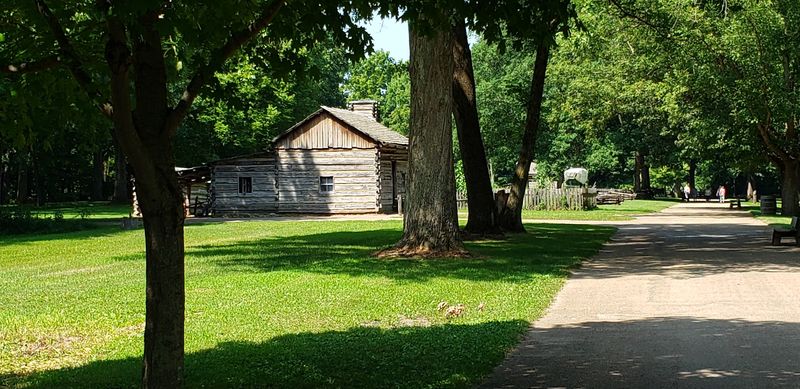
New Salem does a genuinely good job of making history accessible for younger visitors. The interactive kids area gives children a chance to try on period-specific costumes, handle replica tools, and engage with the story of frontier life in a hands-on way that holds their attention far better than a typical exhibit.
Parents consistently mention that their kids stayed interested and curious throughout the visit.
The paved pathways throughout the site make it stroller-friendly, and the wide, open grounds mean children have room to move around without feeling confined. Dogs on leashes are welcome on the outdoor paths, which makes it easier for families who want to bring the whole crew along for the day.
Restrooms are available both in the visitor center and at a midpoint on the village path, which is genuinely helpful for families with young children. Picnic tables and covered pavilions are scattered around the grounds, so bringing your own lunch and making a full afternoon of it is a completely reasonable plan.
The combination of free admission, outdoor space, and hands-on activities makes this one of the better family day trips in central Illinois.
Best Times to Visit and What to Expect Each Season
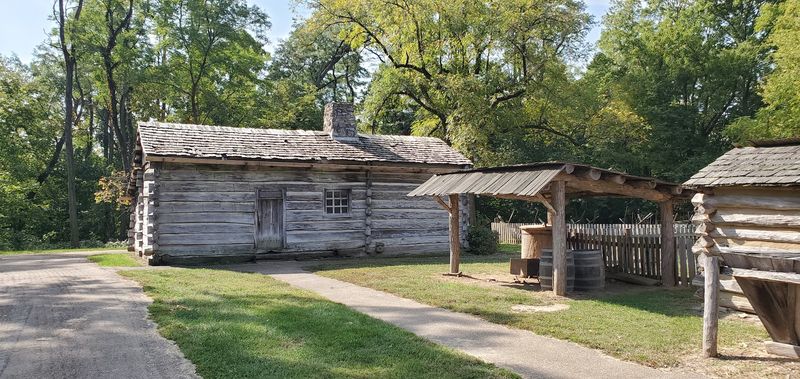
Each season at New Salem offers a noticeably different experience. Summer brings the most activity, with a full roster of costumed interpreters, craft demonstrations, and special events.
The grounds are lively and can get crowded on weekends, so arriving early in the morning gives you a calmer start. Bug spray is a practical must-have during the warmer months, especially in the wooded sections of the path.
Spring and fall are quieter and, in many ways, more atmospheric. The surrounding trees put on a strong show in October, and the cooler temperatures make the long walk through the village genuinely pleasant.
Weekday visits in the shoulder seasons often mean fewer crowds and a more personal experience with the interpreters who are present.
Winter visits are limited since the site is only open Tuesday through Saturday, 9 AM to 5 PM, and some programming is reduced outside of peak season. That said, even a quiet off-season visit to the reconstructed village has its own kind of charm.
The site is closed on Sundays and Mondays year-round, so double-checking the schedule at lincolnsnewsalem.com before making the trip is always a good idea.
Camping, Geocaching, and Extending Your Stay
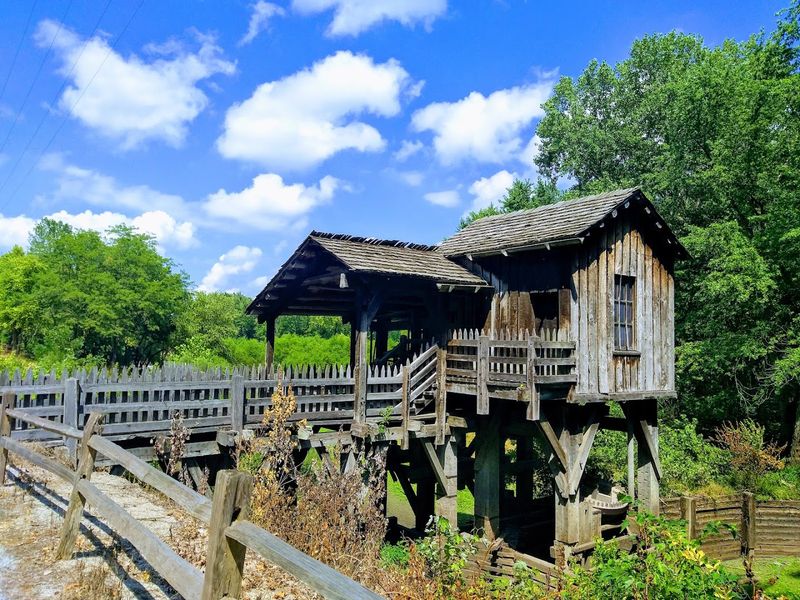
Not everyone realizes that New Salem is more than a single-afternoon destination. A well-maintained campground sits just around the corner from the main parking lot, offering shaded sites that are consistently praised for their quiet, peaceful atmosphere.
It is a genuinely appealing option for anyone who wants to spend more than a day in the area or is road-tripping through central Illinois.
The campground has room for both tent campers and RVs, and the wooded setting gives it a relaxed, removed-from-everything feel. Waking up near a site this historically significant adds a layer to the experience that a same-day visit simply cannot match.
The surrounding Sangamon River bluff scenery makes early morning walks around the grounds especially rewarding.
For geocachers, New Salem is a particularly fun find. The interactive nature of the site means that searching for caches takes you through different parts of the village and grounds, adding a discovery element on top of the history.
Visitors who geocache here often report learning more than they expected simply because the hunt leads them to corners of the site they might otherwise have walked past. It is a clever way to explore a place that already rewards curiosity.



