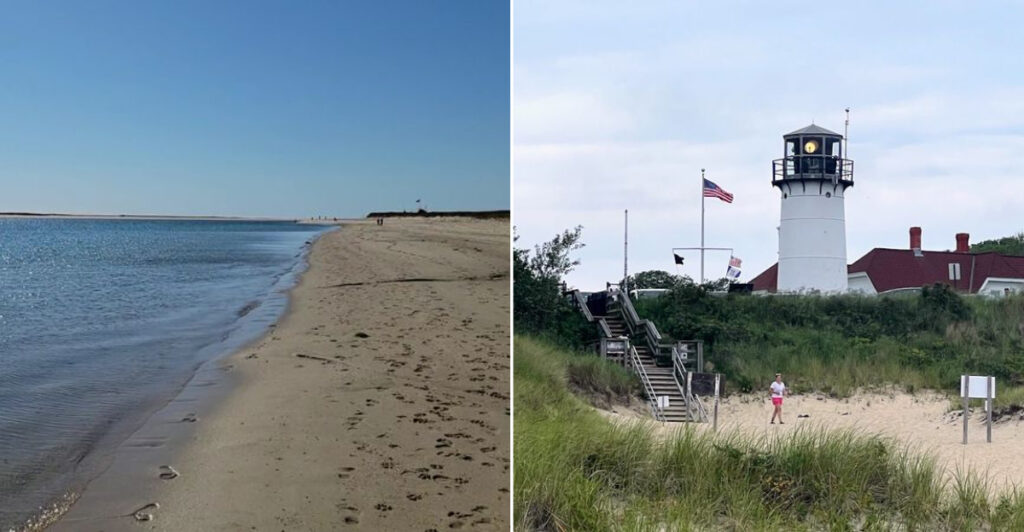
On the outer elbow of Cape Cod, there is a beach that does something most beaches cannot: it shares its shoreline with a fully operational lighthouse that has been standing since 1877. That alone makes Chatham, Massachusetts worth a detour.
The beach stretches below the lighthouse bluff, flanked by rolling sand dunes, a barrier island, and a sandbar where seals regularly haul out in plain sight. Strong currents, white shark warning signs, and a Coast Guard station nearby add a layer of drama that keeps things interesting long after the novelty of the lighthouse wears off.
This article covers everything worth knowing before visiting, from parking and tides to wildlife and history, so there are no surprises when you arrive.
The 1877 Lighthouse That Defines the Whole Place
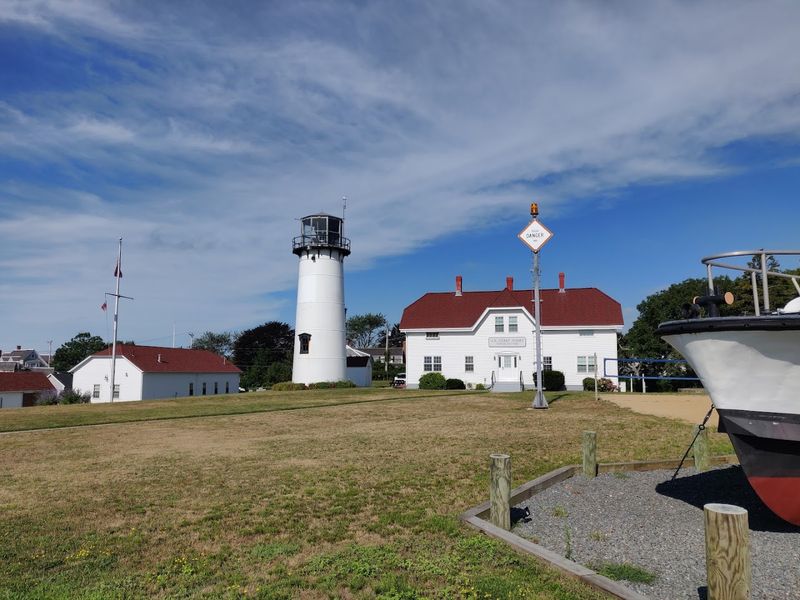
There have actually been lighthouses on this bluff since 1808, but the structure standing today dates to 1877, making it well over a century old and still fully operational.
The current Chatham Light is a white cylindrical cast-iron tower standing 48 feet tall. The U.S.
Coast Guard maintains it, and its light is visible for roughly 28 nautical miles on a clear night. That is not a decorative antique sitting behind a velvet rope; it is a working navigational aid used by mariners today.
Historical plaques near the lighthouse and parking area explain the major events connected to the site, including the dramatic 1987 breach that reshaped the barrier beach and altered the local coastline significantly.
The lighthouse grounds are occasionally open for tours, typically on select Saturdays during summer months, through the Chatham Historical Society. Even when tours are not running, the view from the bluff above the beach is well worth the trip on its own.
What the Beach Actually Looks Like Up Close
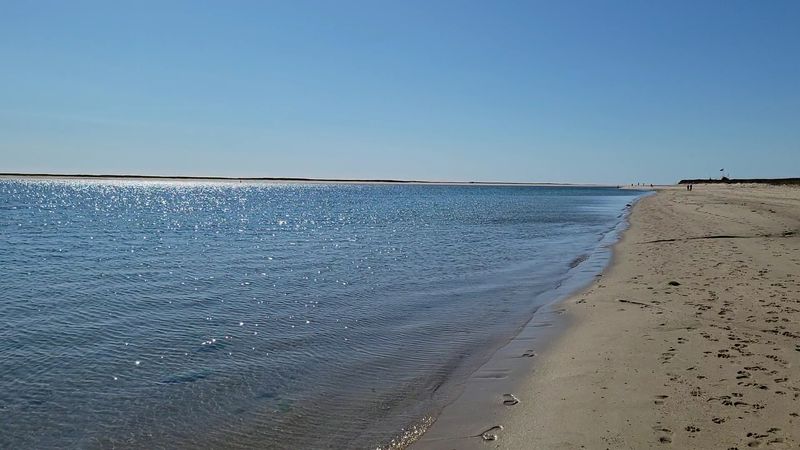
The sand here is soft and notably clean, with very few rocks or shells cluttering the shoreline, which makes walking barefoot along the waterline a straightforward and comfortable experience.
Most people leave their shoes at the base of the stairs and head off in one direction or the other. Walking to the right after descending takes you along a stretch where the dunes have been carved into interesting shapes by wind and water over time.
A barrier island sits just offshore, visible from the beach and separated by a channel of calmer water. That sheltered strip between the main beach and the island creates gentler wave action close to shore, which is one reason the beach tends to attract families with younger children.
At low tide, the beach expands considerably, revealing more sand and making the walk longer and more rewarding. High tide shrinks the usable beach significantly, so timing your visit around the tide chart makes a real difference.
The Seals That Steal the Show
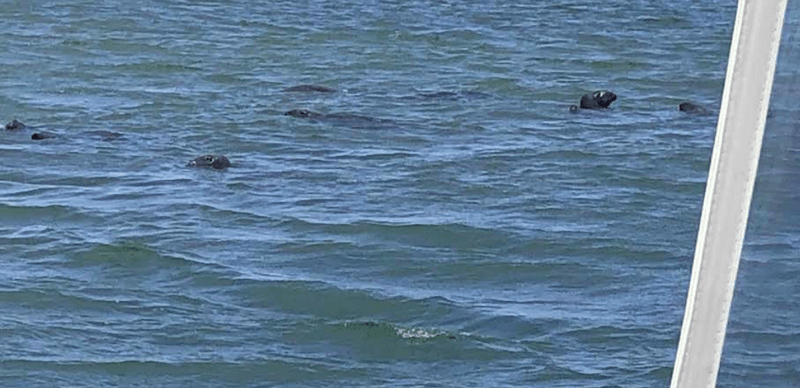
Few beaches on Cape Cod offer a seal sighting as reliably as this one. The sandbars just offshore from Lighthouse Beach have become a well-known haul-out spot for gray and harbor seals, and during peak months they can be seen in large numbers lounging in the sun.
Summer and early fall tend to offer the best viewing, with seals visible from both the bluff overlook above and from the beach below. Binoculars are helpful but not required; on calm days the seals are close enough to see clearly with the naked eye.
The seal population here is not incidental. It is one of the reasons white shark activity increases in the waters off Chatham during warmer months, as sharks follow their prey.
Warning signs are posted at the beach, and local authorities take the situation seriously.
Swimming is not recommended near the sandbars where seals congregate, but watching them from the beach or the overlook above is a genuinely memorable part of any visit to this stretch of coastline.
Strong Currents and White Shark Warning Signs
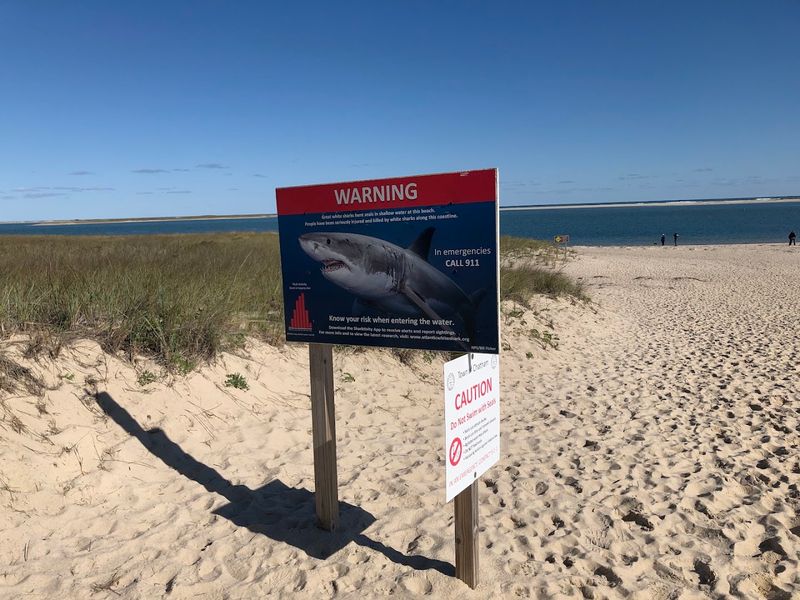
The waters off Lighthouse Beach are not calm recreational swimming territory. Strong currents run through the channel between the main beach and the barrier island, and they can move faster than most people expect.
White shark warning signs are posted visibly at the beach, and they are not there for atmosphere. The shark population off Chatham has grown steadily over the past two decades, directly tied to the recovering seal population that congregates on the nearby sandbars.
Local authorities and the Atlantic White Shark Conservancy track shark activity in the area, and beach closures do happen when sharks are spotted close to shore. Checking current conditions before swimming is a practical step, not an overreaction.
That said, the beach draws plenty of people who have no intention of swimming. Walkers, photographers, birdwatchers, and history enthusiasts all find reasons to spend time here that have nothing to do with getting in the water.
The drama of the place comes standard whether you go near the surf or not.
Parking Logistics You Need to Know Before You Go

Parking at Lighthouse Beach is one of the more discussed aspects of visiting, and for good reason. The lot directly across from the lighthouse on Main Street is free but small, and it fills up quickly on summer mornings.
During the day, parking near the lighthouse overlook is limited to 30 minutes, which is enough for a quick look but not a full beach walk. A paid lot in town charges around $15 and offers a shuttle bus to the beach, which is a reasonable option during peak season.
After 5 p.m. or 6 p.m., depending on the season, the scenic overlook lot across from the lighthouse becomes free with no time limit. Evening visits have a lot going for them, including softer light, fewer people, and the lighthouse beacon becoming visible as dusk settles in.
Getting dropped off is another popular approach if someone in your group does not mind a brief wait. It sidesteps the parking challenge entirely and lets everyone focus on the beach rather than the lot.
The Staircase Down to the Beach
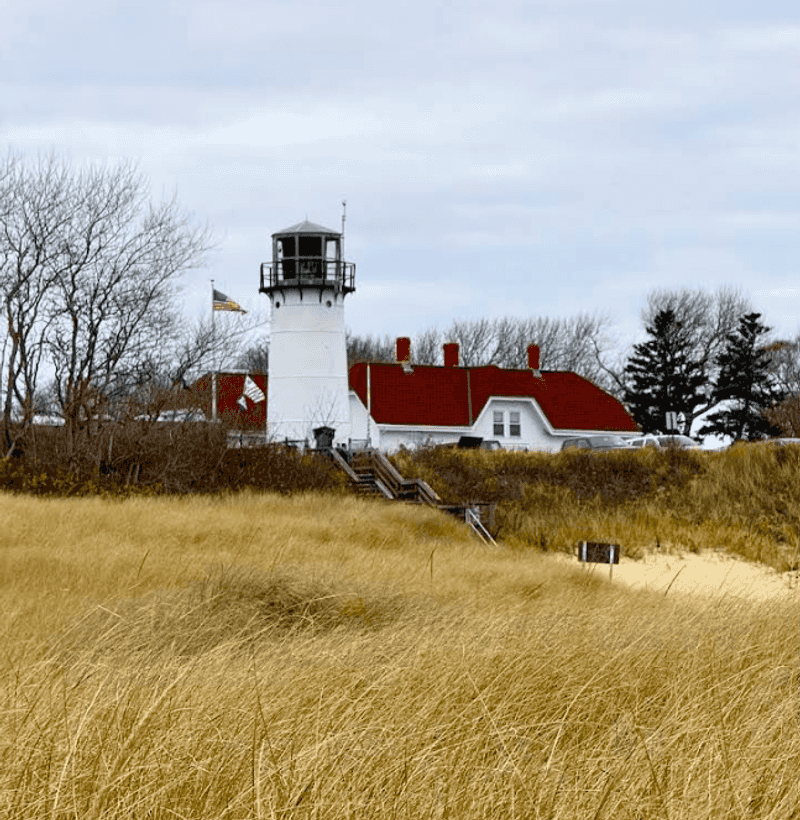
Getting to the beach requires descending a staircase from the bluff above, and it is worth knowing about before you arrive, especially if anyone in your group has mobility limitations.
The stairs are described as steep, and they do not have a gentle incline. There is a platform partway down that gives people a place to pause and take in the view before continuing to the sand below.
The total descent is not extremely long, but it is not a casual ramp either.
The beach itself is not wheelchair accessible due to the staircase and the soft sand conditions below. That is a practical reality of the site’s natural geography, not an oversight.
At the top of the bluff, before descending, there are benches where people can sit and look out over the beach and ocean without making the trip down the stairs. That overlook has its own appeal and attracts people who simply want to watch the water, the seals, or the lighthouse beacon without going all the way to the sand.
Tide Timing and Why It Changes Everything
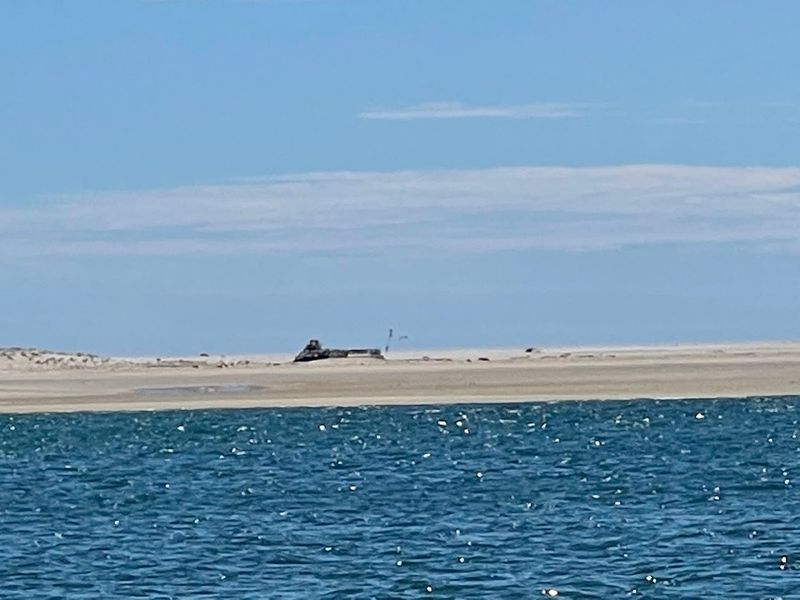
The difference between high tide and low tide at Lighthouse Beach is dramatic enough that it genuinely changes the experience of being there.
At high tide, the usable beach narrows considerably, and in some spots there is very little dry sand between the waterline and the base of the dunes. It is still a worthwhile visit, but the walking room shrinks noticeably.
Low tide is when the beach earns its reputation. The sand stretches further, the sandbars become more prominent, and the seals on those bars are easier to see.
Shellers also find more to work with at low tide, as slipper shells accumulate along the waterline in notable quantities when the water pulls back.
Free tide charts are available through multiple apps and websites, and checking the schedule before heading out takes about thirty seconds. Arriving an hour or two before low tide gives the best combination of open sand and active wildlife on the sandbars.
That small bit of planning pays off significantly on a busy summer day.
The Coast Guard Station Next Door
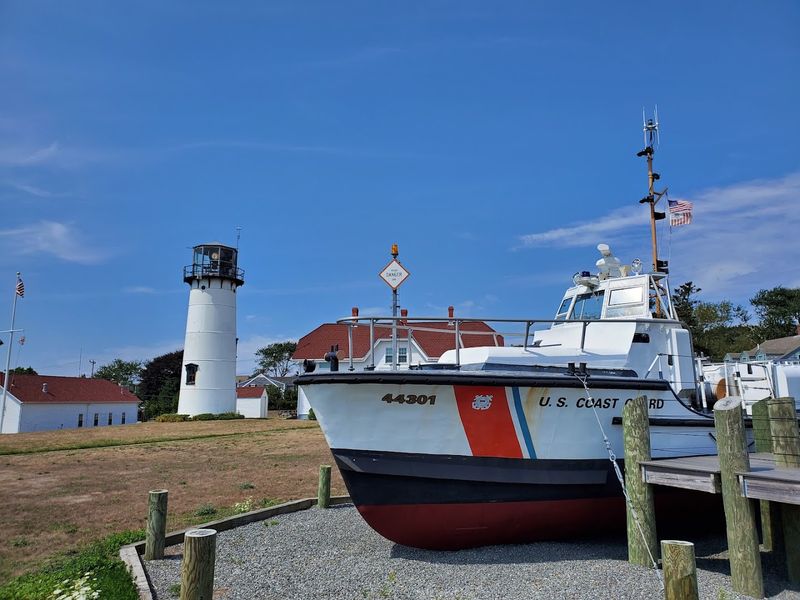
Right alongside the lighthouse stands the Chatham Coast Guard Station, an active federal facility that adds a working, present-tense dimension to what might otherwise feel like a purely historical site.
The station has been part of the Chatham waterfront for well over a century, and its presence reflects the genuine maritime hazards that have always made this stretch of coast demanding for navigators. The waters off the outer Cape have claimed a significant number of vessels over the centuries, which is precisely why the lighthouse was built and why the Coast Guard maintains a presence here today.
Visitors cannot access the station itself, but it is clearly visible from the beach and the overlook above. Coast Guard vessels operating out of the station can sometimes be seen moving through the channel, which gives the whole scene an added layer of active maritime life beyond the seals and fishing boats.
Historical plaques near the parking area and lighthouse document key events connected to the station and its role in Cape Cod’s maritime past, making it easy to piece together the history without needing a guided tour.
Best Times of Year to Visit
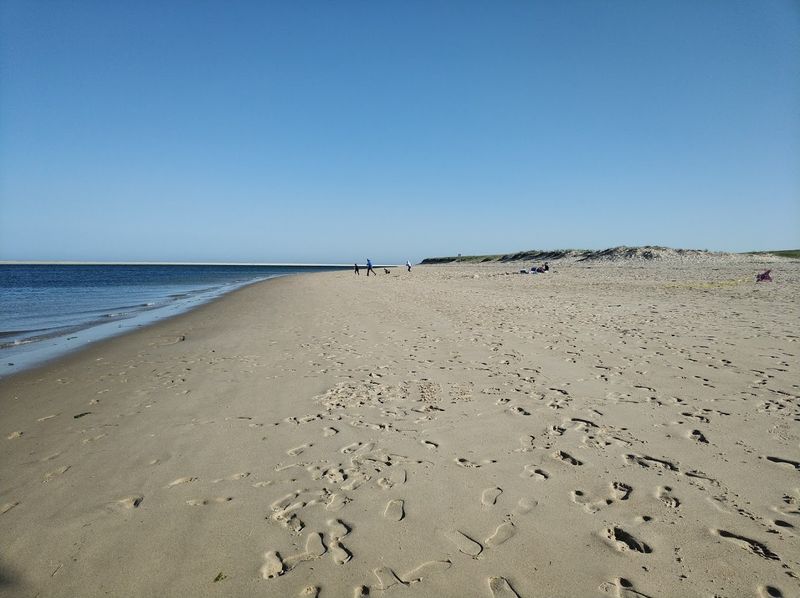
Summer is the busiest season at Lighthouse Beach, with July and August drawing the largest crowds. Parking becomes competitive early in the morning, and the beach fills up quickly on clear weekends.
Spring and fall offer a noticeably different experience. The beach is quieter, the light is different, and the overall pace slows down considerably.
Early October in particular tends to deliver clear skies, comfortable temperatures for walking, and far fewer people competing for parking or beach space.
Dogs are not allowed on the beach during the summer season, but off-season rules are more permissive, making fall and early spring popular with dog owners who want to bring their pets along for a walk on the sand.
March visits are possible and have their own appeal, with clean water and soft sand on display even in the off-season. Winter visits are less common but not unheard of, particularly for people who want the bluff overlook and lighthouse view entirely to themselves without navigating summer crowds.
Shells, Driftwood, and Things to Find Along the Shore
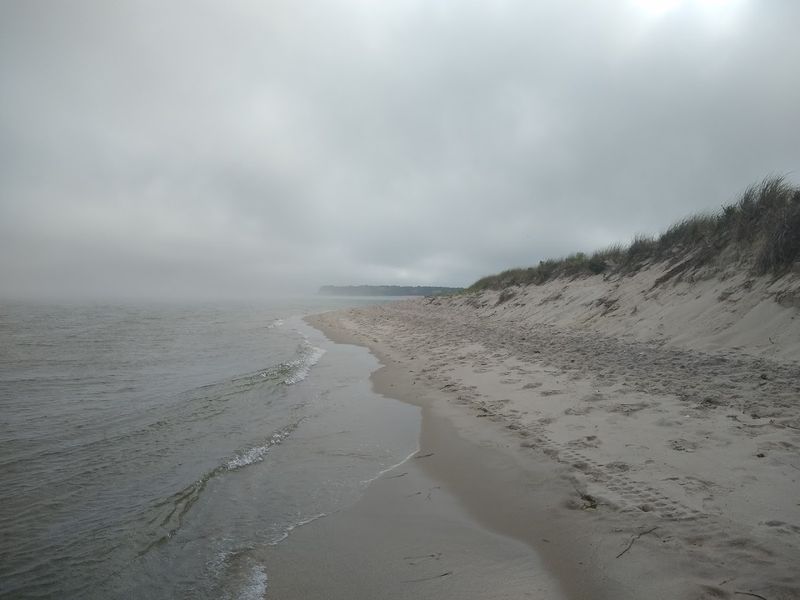
Beachcombing at Lighthouse Beach has a specific character. The sand is notably clean and relatively free of rocks, but slipper shells accumulate along the waterline in impressive quantities, especially at low tide.
Slipper shells are a common find on Cape Cod beaches, but the volume here is enough that shelling enthusiasts specifically mention this beach as a reliable spot. They stack naturally on top of one another and wash up in clusters, making them easy to collect in quantity if that is your goal.
Beyond shells, the dunes themselves are a draw. Wind and water carve paths through the dune formations, and walking those natural corridors has a different quality than simply walking the flat waterline.
The dune landscape changes from season to season as weather and tides reshape the terrain.
Driftwood pieces also appear along the shore, and in past years a creative driftwood structure near the beach attracted attention as an informal artistic landmark built from contributions left by different visitors over time. The beach has a way of accumulating interesting things if you are paying attention.
Wildlife Beyond the Seals
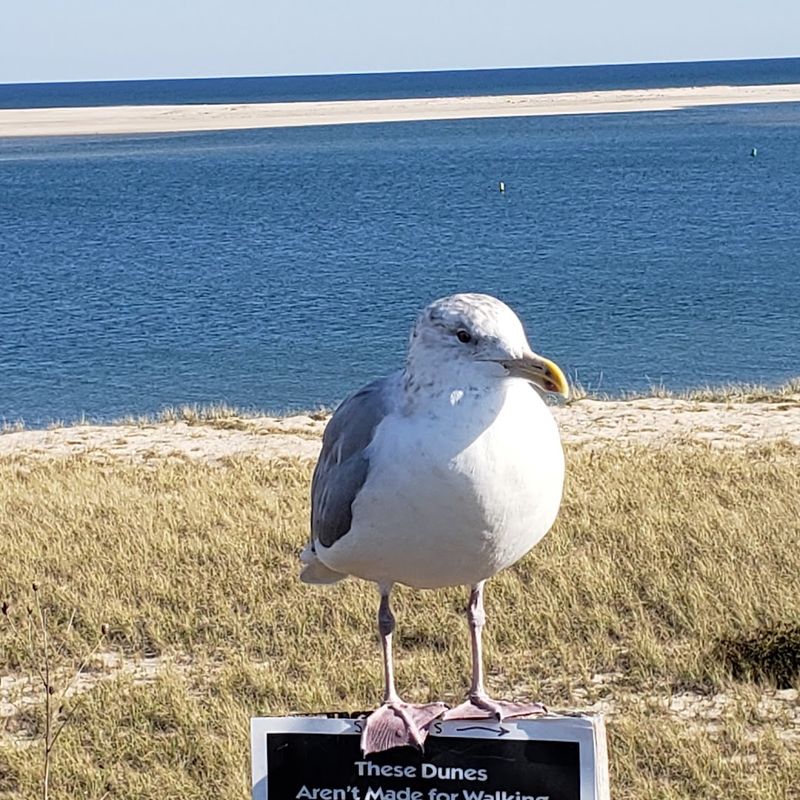
The seals get most of the wildlife attention at Lighthouse Beach, but the broader ecosystem here supports a range of species worth watching for during a visit.
Shorebirds work the waterline regularly, and the dune and marsh areas near the beach provide habitat for a variety of bird species that move through Cape Cod during migration seasons. Spring and fall bring the widest variety of bird activity, which gives birdwatchers an additional reason to visit outside the summer peak.
The ecology of the outer Cape is genuinely interesting at a broader level. The combination of open ocean, sheltered sound, barrier beach, sandbar, and dune habitat creates a compressed version of several distinct coastal environments within a short walking distance of each other.
The white shark presence, while not something most visitors will directly observe, reflects the overall health of the marine ecosystem in these waters. A recovering seal population and active shark presence signal a functioning food chain, which is something coastal ecologists have been tracking closely in this part of Massachusetts for years.
Why Lighthouse Beach Stands Apart on Cape Cod
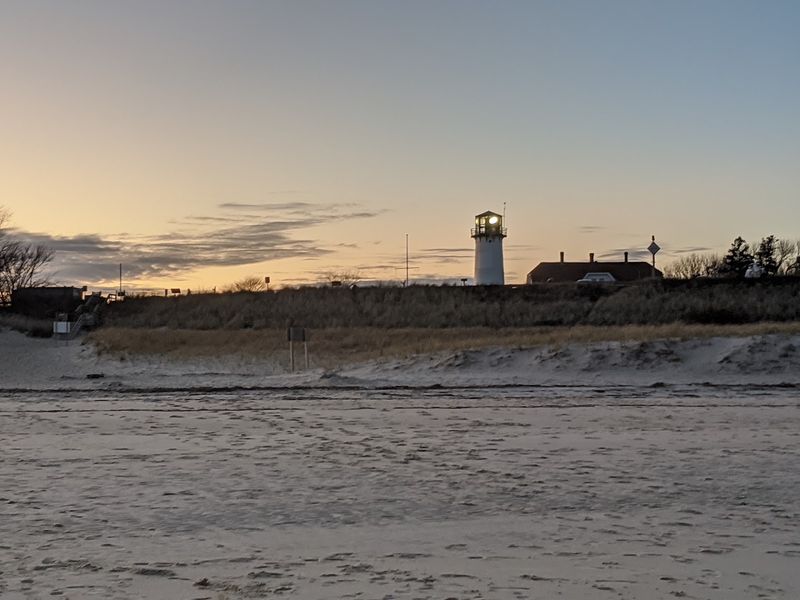
Cape Cod has no shortage of beaches, and most of them are genuinely good. What separates Lighthouse Beach from the broader inventory is the combination of elements that happen to exist in one compact place.
A working 1877 lighthouse, an active Coast Guard station, a visible seal population, a barrier island, strong currents, white shark warnings, and a historically significant coastline all converge at a single address on Main Street in Chatham. That density of interesting things is unusual even by Cape Cod standards.
The beach is also free to access, which is not always the case on the Cape during summer. Parking costs are the main variable, and those can be managed with timing or the shuttle option from town.
Chatham itself is a well-maintained, historically rich town with a working waterfront, a vibrant Main Street, and a character that feels distinct from the more commercialized parts of the Cape. Lighthouse Beach fits that character exactly, combining genuine history, active ecology, and an unhurried coastal atmosphere that rewards anyone willing to make the trip out to the elbow of the Cape.
Where Exactly This Beach Is Located
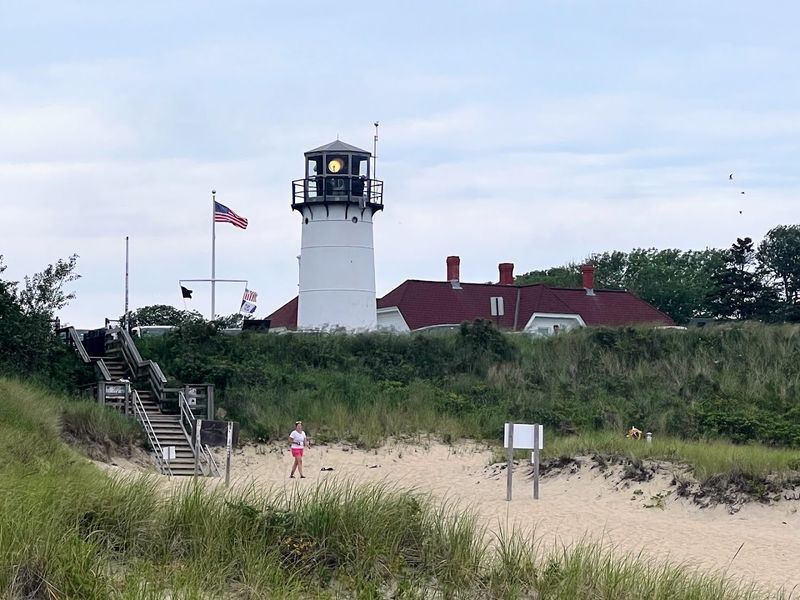
Lighthouse Beach sits at 30 Main St, Chatham, MA 02633, right at the southeastern tip of Cape Cod’s elbow, overlooking Nantucket Sound.
Chatham is one of the more distinctive towns on the Cape because it faces the open Atlantic on one side and a more sheltered sound on the other. That geography shapes everything about this beach, from its currents to its wildlife to its ever-shifting sandbars.
The beach itself is accessed via a staircase that descends from the bluff where the lighthouse and Coast Guard station stand. Once you are down those stairs, the shoreline opens up in both directions, with dunes rising behind you and a barrier island visible just offshore.
The town of Chatham is easy to reach from Route 6 on the Mid-Cape Highway, and the beach is less than a mile from the main shopping district on Main Street, making it a natural stop on any Cape Cod itinerary.
Share this story