Pennsylvania’s living history museums bring the state’s past to life through historic villages, working farms, restored industrial sites, and interactive demonstrations. Instead of simply viewing artifacts, visitors can experience the daily lives, traditions, and skills that shaped Pennsylvania across the centuries.
Whether you’re interested in colonial history, early industry, Native American heritage, or rural life, these 14 museums offer memorable, hands-on experiences for all ages. Each provides a unique window into the people and stories that helped shape the Keystone State.
1. Landis Valley Village & Farm Museum, Lancaster, Pennsylvania
Few museums in Pennsylvania cover as much ground, literally and historically, as Landis Valley Village and Farm Museum in Lancaster County.
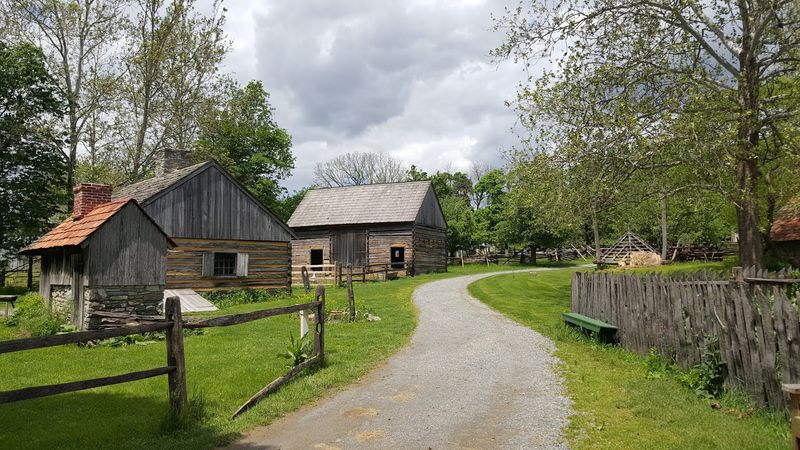
The site recreates a Pennsylvania German crossroads village using dozens of historic structures, period gardens, farm animals, and one of the most extensive collections of everyday rural objects in the state.
Visitors do not simply walk past labeled exhibits. Depending on the day or scheduled event, they may watch open-hearth cooking, traditional weaving, or agricultural work performed by costumed interpreters who explain each step.
The layout of the village makes a real difference. Moving from building to building across the grounds feels more like exploring a working community than touring a conventional gallery.
The sheer variety of trades and domestic skills on display gives visitors a concrete sense of how much knowledge and labor went into ordinary life across generations of Lancaster County history.
2. Old Bedford Village, Bedford, Pennsylvania
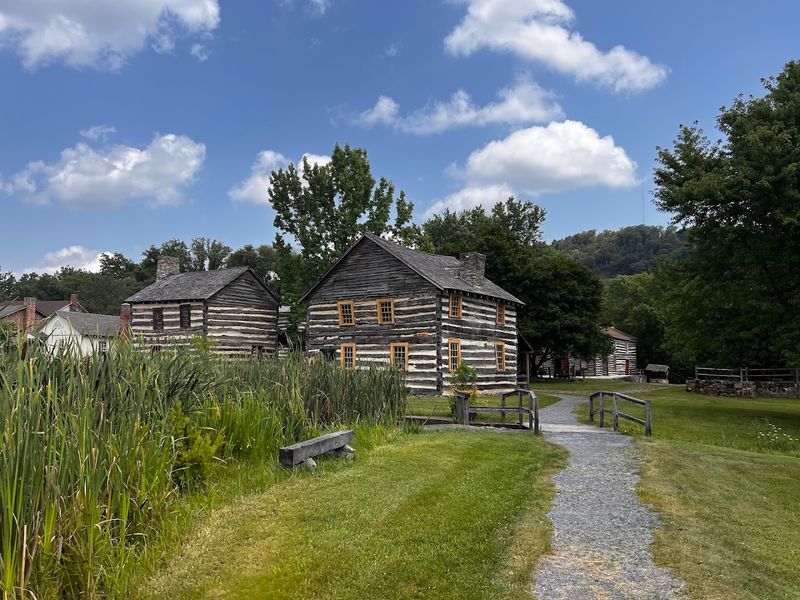
Tucked into the Allegheny Mountains, Old Bedford Village gathers more than three dozen preserved and reconstructed structures along wooded lanes that genuinely look like they belong to a different century.
Historical interpreters in period clothing demonstrate the trades and crafts that defined rural Pennsylvania before modern industry arrived, covering everything from pottery and weaving to woodworking and blacksmithing.
The village regularly hosts reenactments and seasonal programs that add movement and context to an already visually striking setting.
One detail that separates Old Bedford from many similar sites is its collection of Native American artifacts and a diorama depicting a pre-colonial village, which broadens the historical timeline considerably.
Military reenactments, colonial craft festivals, and themed events throughout the year give visitors multiple reasons to return rather than treating it as a single-visit destination.
3. Quiet Valley Living Historical Farm, Stroudsburg, Pennsylvania
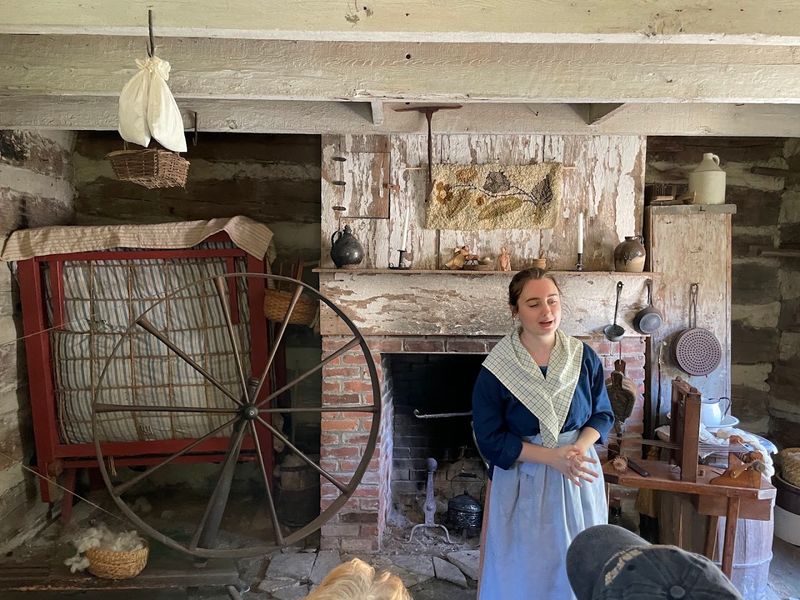
Across 114 acres of Pocono Mountain pasture and woodland, Quiet Valley Living Historical Farm operates as one of Pennsylvania’s most committed preservation efforts for 19th-century agricultural life.
Costumed interpreters portray descendants of the original Depper family, who settled the land in the 1760s, sharing daily routines that ranged from food preservation to textile production.
The farm’s collection of original structures, including a springhouse, log cabin, ice house, and 1850s bank barn, are listed on the National Register of Historic Places, lending the site genuine historical weight rather than a reconstructed feel.
Heritage livestock including cows, pigs, goats, sheep, and horses give visitors a tangible connection to the animals that sustained early farm households.
Seasonal events such as the Farm Animal Frolic, the Harvest Festival, and lantern-lit Old Time Christmas tours make this a destination worth visiting across multiple seasons.
4. Meadowcroft Rockshelter and Historic Village, Avella, Pennsylvania
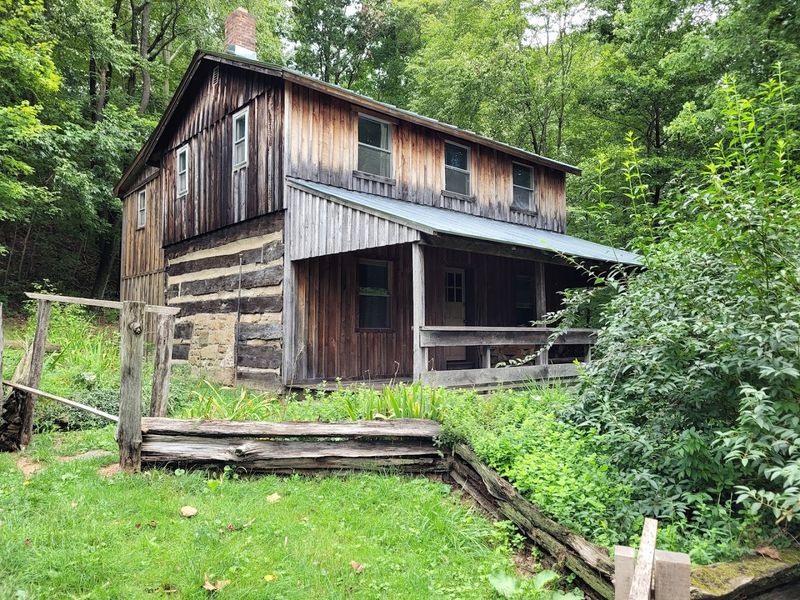
Nineteen thousand years of human history compressed into a single site sounds improbable, but Meadowcroft Rockshelter in Avella delivers exactly that.
The massive rock overhang at the center of the property is the oldest confirmed site of human habitation in North America, and visitors can observe the ongoing archaeological excavation up close.
Beyond the rockshelter, the site recreates distinct historical eras in sequence. A 16th-century Eastern Woodland Indian Village includes a wigwam and hands-on demonstrations of ancient tools. An 18th-century frontier section features a log cabin and trading post, while a 19th-century village adds a church, schoolhouse, and working blacksmith shop.
This affiliate of the Heinz History Center manages the unusual challenge of connecting prehistoric archaeology to colonial and frontier history within a single visit, and it handles that challenge more effectively than almost any comparable site in the region.
5. Colonial Pennsylvania Farmstead, Media, Pennsylvania
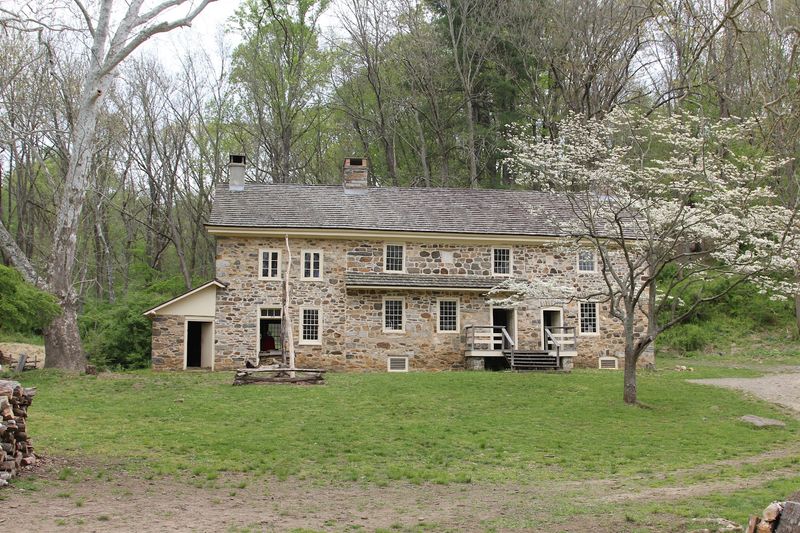
Hidden inside Ridley Creek State Park, the Colonial Pennsylvania Farmstead interprets rural life in southeastern Pennsylvania between 1760 and 1790 with a level of hands-on detail that goes well beyond signage and glass cases.
Costumed interpreters demonstrate open-hearth cooking, textile processing, food preservation, and field crop management, skills that were not optional hobbies but genuine survival requirements for 18th-century farm families.
Special programs expand the calendar with pottery workshops, cider-making demonstrations, sheep shearing events, and occasional historical conflict reenactments that give the site a different energy depending on when you visit.
The blacksmith forge and an on-site apiary add further layers of authentic agricultural and craft history.
Operating largely through volunteer support, the farmstead maintains an authentically restored character that feels genuinely removed from suburban Philadelphia, even though the two exist just a short drive apart.
6. Eckley Miners’ Village Museum, Weatherly, Pennsylvania
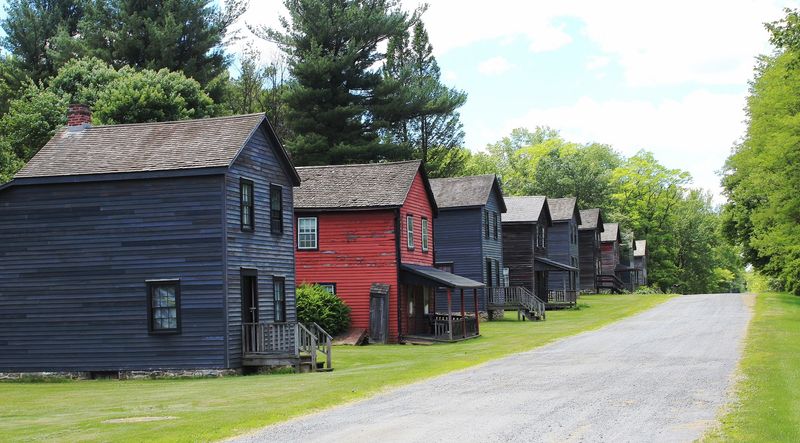
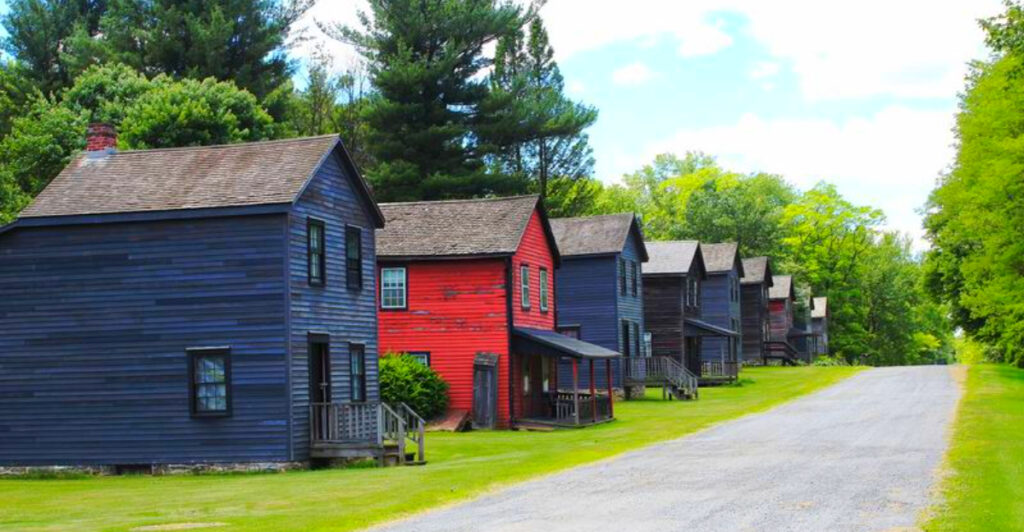
Eckley Miners’ Village is not a reconstruction. It is an actual 19th-century anthracite community that has survived largely intact, which makes walking through it feel qualitatively different from visiting a recreated site.
Rows of workers’ homes, company buildings, and local churches line the streets of a village built entirely around the demands of coal production, where the company controlled housing, commerce, and much of daily life.
The surrounding mountain landscape reinforces how isolated these communities were, dependent on the mine for income and on each other for everything else.
Interpretive programs at the museum focus on the immigrant communities, primarily from Ireland, Wales, and Eastern Europe, who made up the workforce and shaped the village’s cultural character.
For visitors interested in Pennsylvania’s industrial past, Eckley offers something rare: a physical place where the social history of labor and community can be read directly from the buildings themselves.
7. Pennsbury Manor, Morrisville, Pennsylvania
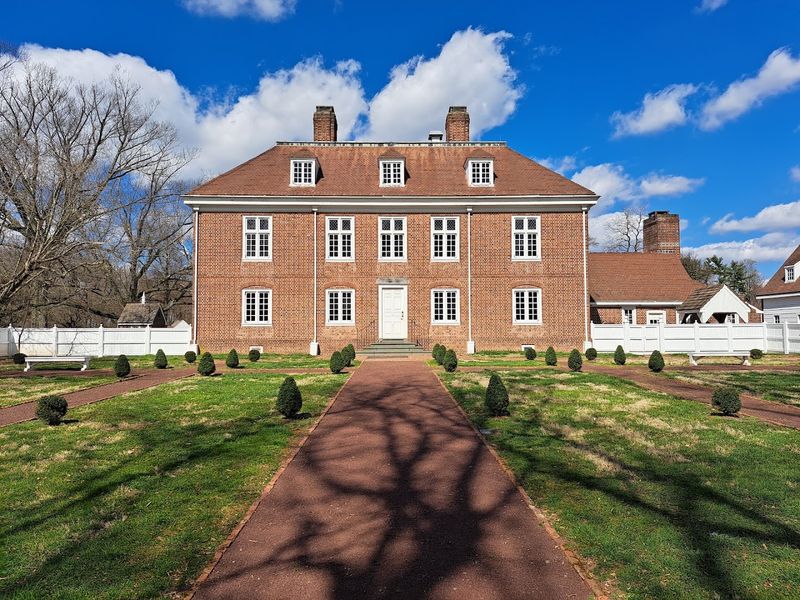
Running a prosperous colonial estate in the 17th century required managing workers, livestock, crops, trade relationships, and household production simultaneously, and Pennsbury Manor makes that logistical complexity visible in a way that most historical biographies do not.
The reconstructed Delaware River estate of Pennsylvania founder William Penn includes a substantial manor house, outbuildings, formal grounds, and period-appropriate animals, all maintained with careful attention to historical accuracy.
Demonstrations and interpreter-led programs address the complicated realities of colonial estate life, including the diverse workforce Penn employed and the agricultural systems that kept the property running.
The riverside location gives Pennsbury a visual elegance that contrasts pointedly with the demanding labor required to sustain it, a contrast that interpreters use to good effect.
As an introduction to Pennsylvania’s foundational period, the manor provides a concrete, site-specific context that goes well beyond what any portrait or document can convey.
8. Daniel Boone Homestead, Birdsboro, Pennsylvania
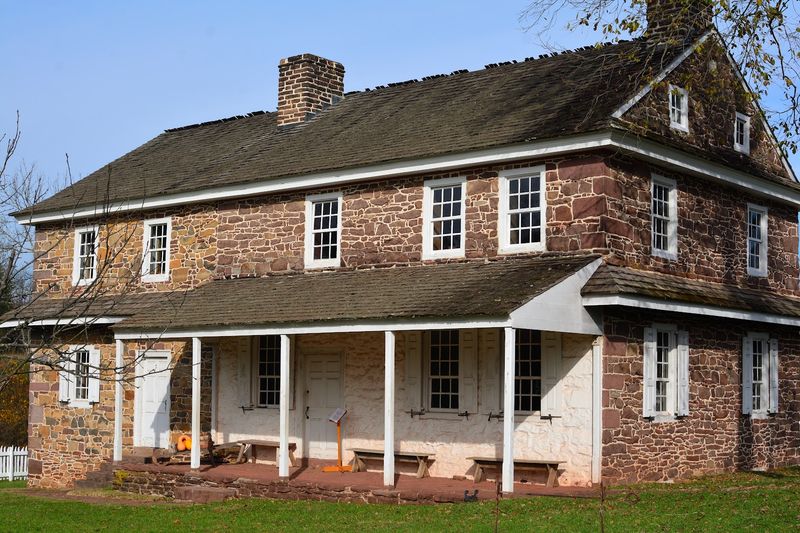
Long before Daniel Boone became a symbol of the American frontier, he grew up in Pennsylvania’s Oley Valley, a region defined by cultural diversity and productive farmland that shaped his early outlook in ways the legend rarely mentions.
The Daniel Boone Homestead explores that formative period through tours of preserved historical buildings connected to the Boone, Maugridge, and DeTurk families who occupied the property across different eras.
Trails across the grounds connect the structures and give visitors a sense of the landscape that surrounded daily life in this corner of 18th-century Pennsylvania.
Special programs regularly feature hands-on demonstrations of period skills including open-hearth cooking, sheep shearing, quill writing, and operation of the historic water-powered sawmill, each activity grounded in the actual practices of the era rather than staged for novelty.
The homestead offers a genuinely nuanced portrait of early American life that complicates and enriches the familiar Boone mythology.
9. Hopewell Furnace National Historic Site, Elverson, Pennsylvania
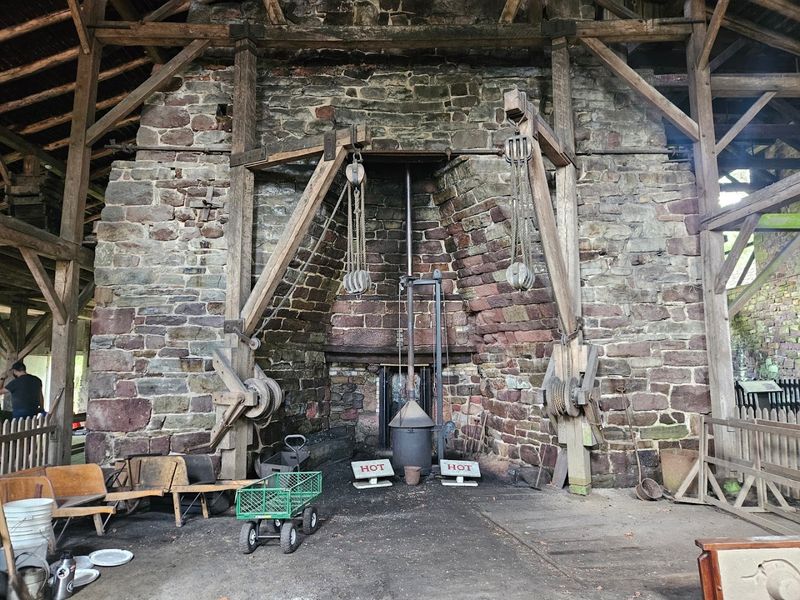
From 1771 to 1883, Hopewell Furnace operated as a self-contained iron-making community where workers shoveled tons of charcoal, iron ore, and limestone into a towering furnace to produce cast iron goods sold across the young nation.
The site preserves the furnace complex alongside workers’ homes, a functioning blacksmith shop, barns, and a company store, giving visitors a complete picture of how industry, agriculture, and community life were interwoven in a single location.
During ranger-led demonstrations, molten iron is tapped from the furnace and poured into sand molds, producing the pots, pans, stoves, and tools that made Hopewell commercially significant throughout its operational years.
The furnace also supplied iron goods to the Continental Army during the Revolutionary War, a detail that connects this rural site directly to national history.
Ranger programs explain all of it clearly, making Hopewell one of the most informative industrial history sites in the mid-Atlantic region.
10. Historic Hanna’s Town, Greensburg, Pennsylvania
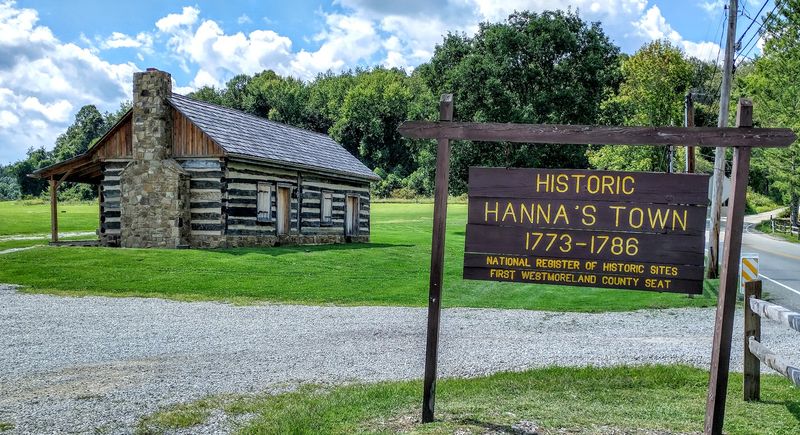
Westmoreland County’s first seat of government was not a grand courthouse but a rough-hewn frontier settlement where survival, law, and commerce shared space inside a wooden stockade, and Historic Hanna’s Town preserves that unglamorous reality with clarity.
Reconstructed log buildings, a protective stockade, and a period tavern recreate the built environment of a Revolutionary War-era outpost on the western Pennsylvania frontier, where isolation was a daily condition rather than a romantic concept.
Living history programs address the full range of concerns that occupied frontier residents: legal proceedings, trade, military defense, and domestic routines that had to function under constant uncertainty.
Interpreters bring specific roles to life, from the innkeeper managing travelers to the local official maintaining order in a community far from established colonial centers.
The site’s honest, unvarnished setting makes it one of the more thought-provoking frontier history destinations in western Pennsylvania, particularly for visitors interested in early American governance.
11. Compass Inn Museum, Laughlintown, Pennsylvania
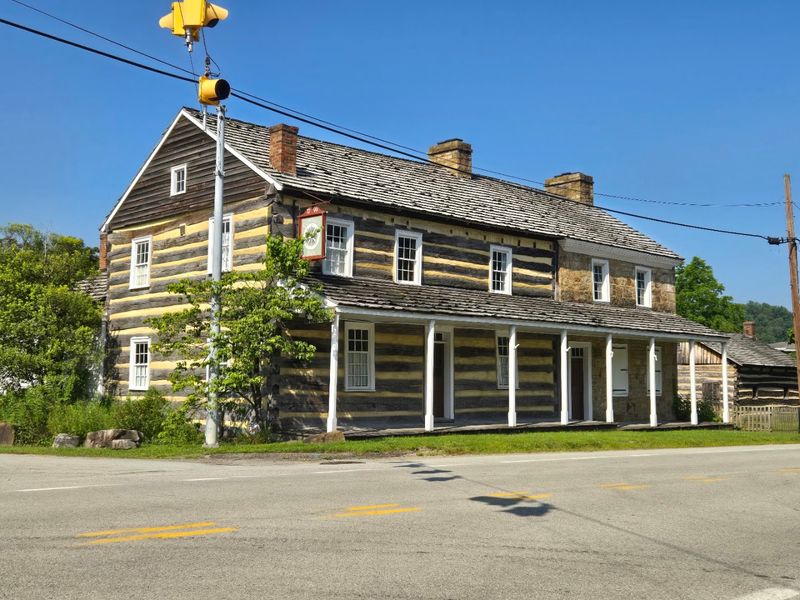
Before interstate highways existed, a well-run inn along a major stagecoach route was as essential as a gas station is today, and the Compass Inn in Laughlintown served exactly that function for travelers crossing Pennsylvania between Philadelphia and Pittsburgh.
Docent-led tours move through the original log and stone inn, its furnished rooms, and a series of outbuildings that reveal the full operation of a busy early 19th-century roadside establishment.
The working cookhouse with its beehive oven, the functioning blacksmith forge, and a barn housing a restored stagecoach and Conestoga wagon with a six-horse bell hitch give the site a mechanical and material depth that goes well beyond furniture and decor.
Interpreters share the origins of common phrases from the era, adding a linguistic layer to the historical content that tends to stick with visitors long after the tour ends.
The museum also served as a filming location for a major motion picture, which says something about the quality of its historical accuracy.
12. Somerset Historical Center, Somerset, Pennsylvania
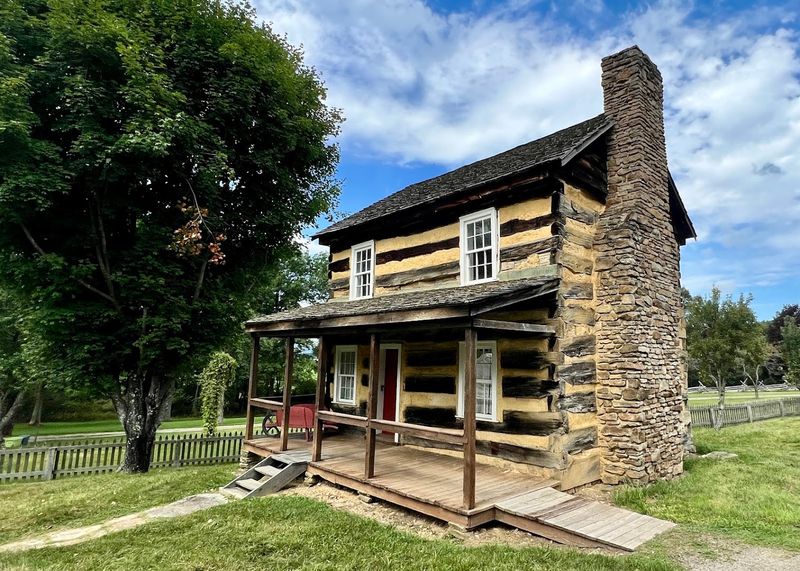
One hundred fifty acres is a lot of ground to cover, and the Somerset Historical Center uses every bit of it to tell the story of southwestern Pennsylvania’s rural heritage across multiple centuries.
Outdoor exhibits and reconstructed structures spread across the landscape, covering frontier settlement, evolving farming methods, and the skilled trades that kept communities running through periods of significant change.
Workshops and guided tours give visitors structured ways to engage with the material, while a genealogical research library inside the Visitors Center serves those tracing their own family connections to the region.
The annual Mountain Craft Days festival brings more than 125 craft artisans, musicians, and historical demonstrators to the site, transforming the grounds into a vivid and crowded celebration of regional heritage that draws visitors from well beyond Somerset County.
13. Historic Ephrata Cloister, Ephrata, Pennsylvania
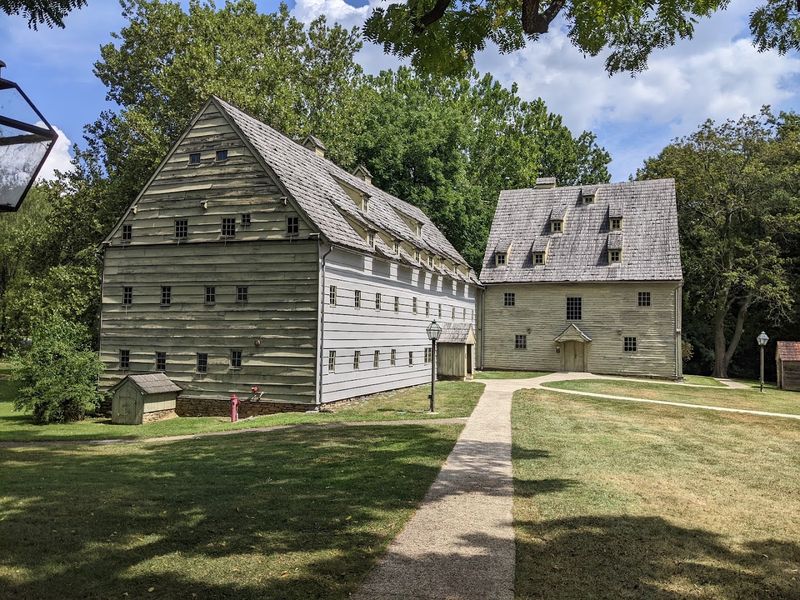
Founded in 1732 by German pietist Conrad Beissel, the Ephrata Cloister operated as a monastic community in Lancaster County whose daily practices were unlike nearly anything else in colonial Pennsylvania.
Members of the celibate Brotherhood and Sisterhood slept on narrow wooden benches with wooden block pillows, wore distinctive white robes, and organized their lives around communal work, prayer, and artistic production.
The steeply roofed Germanic structures and spare interiors survive in remarkable condition, giving tours a visual authenticity that reinforces the community’s commitment to simplicity.
Beyond the architecture, Ephrata made substantial cultural contributions: its members developed Frakturschriften, the first American folk art form, composed over a thousand original a cappella musical works, and operated a printing press that published significant colonial-era texts including the 1,500-page Martyrs Mirror.
The Cloister also served as a military hospital during the Revolutionary War, caring for Continental soldiers, a detail that adds unexpected historical complexity to its otherwise contemplative story.
14. Washington Crossing Historic Park, Washington Crossing, Pennsylvania
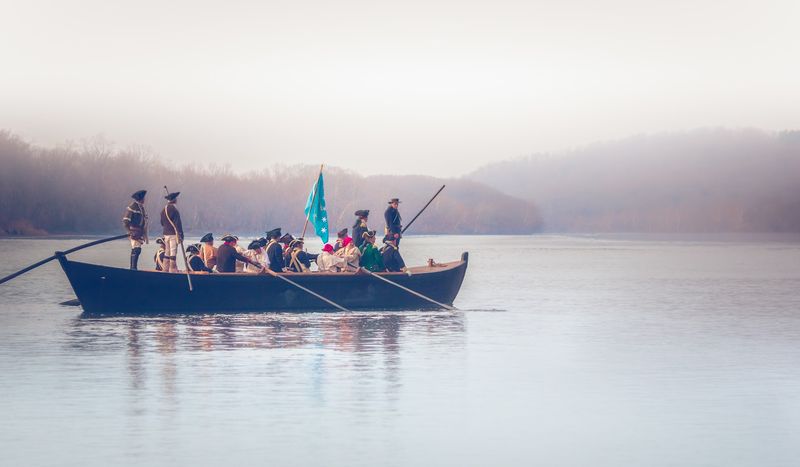
On Christmas night in 1776, George Washington led roughly 2,400 soldiers across a frozen and ice-choked Delaware River into New Jersey, and the Pennsylvania side of that crossing is exactly where Washington Crossing Historic Park stands today.
The park preserves historic buildings from the period, including homes and taverns that existed during the preparations for the campaign, giving the familiar story a physical address and a set of actual structures to walk through.
The annual reenactment of the crossing draws participants and spectators each December, providing a direct visual reference for the scale and difficulty of what Washington’s forces actually attempted.
Standing beside the river, the geography itself becomes part of the interpretation, making the event feel far more concrete than any textbook account manages to convey.
Share this story