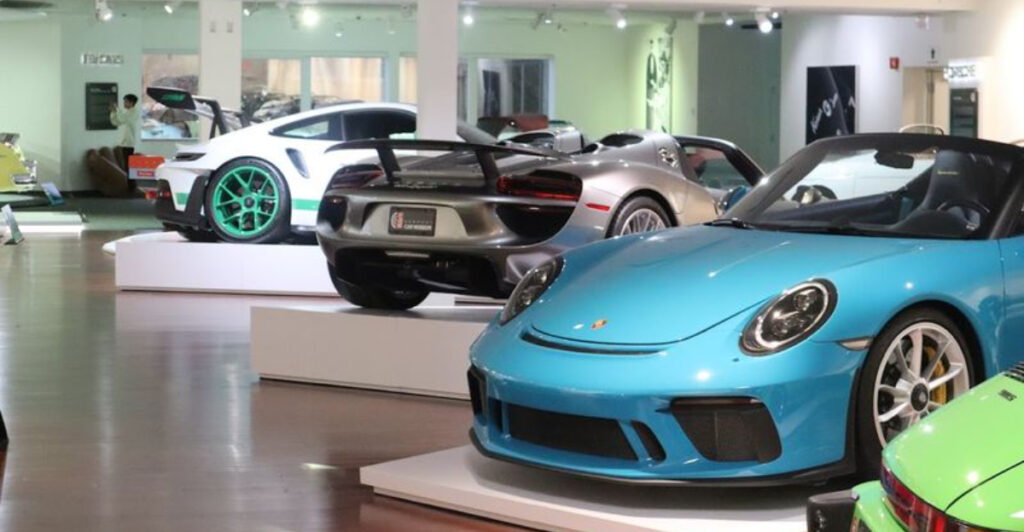
Rhode Island is packed with historic mansions, coastal views, and cultural attractions, but tucked along West Main Road in Portsmouth sits a museum that does something most history spots cannot quite pull off: it makes car history genuinely beautiful. This museum houses over 100 meticulously curated vehicles, and the whole place feels closer to a high-end art gallery than a traditional garage.
The lighting, the layout, the music playing softly in each room, all of it is designed to make even a non-car person stop and stare. Whether you are planning a rainy-day outing with kids or hunting for a unique date idea, this museum keeps delivering surprises around every corner.
A Private Collection Gone Public in the Best Possible Way
What makes the Newport Car Museum unusual is its origin story. The collection started as a private passion project and eventually grew so large and so impressive that opening it to the public became the natural next step.
That private-collector DNA still shows in how the cars are displayed: with genuine love and personal pride rather than corporate detachment.
The museum currently holds over 100 vehicles, and the range is genuinely striking. From classic American muscle to modern European exotics, the collection covers decades of automotive history without feeling scattered or unfocused.
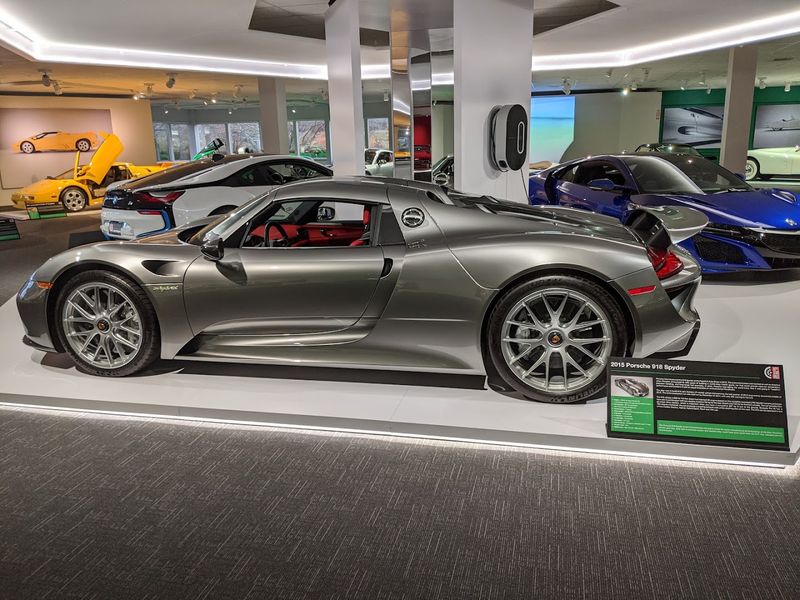
Each car has been maintained in mint condition, and detailed plaques accompany every vehicle with history, specifications, and fun facts.
There is a curatorial intelligence at work here that separates it from roadside novelty museums. The cars are grouped thoughtfully, the flow between rooms makes sense, and the overall experience rewards curiosity at every turn.
Automotive history, it turns out, can be curated with the same care as fine art.
The Gallery Feel That Sets This Museum Apart
Most car museums lean hard into the industrial aesthetic: concrete floors, fluorescent lights, and cars parked bumper to bumper. The Newport Car Museum takes a completely different approach.
The lighting is dramatic and precise, the layout is spacious, and the overall design language borrows heavily from contemporary art galleries.
Designer sofas are placed throughout the halls, giving the space a lounge quality that encourages visitors to slow down and actually absorb what they are looking at. Coordinating music plays in each section, matching the era or origin of the cars on display.
It is a detail that seems small but completely changes the atmosphere of the visit.
The walls feature artwork that complements the vehicles rather than competing with them. Everything feels intentional, right down to how much space surrounds each car.
That breathing room allows visitors to walk around each vehicle, appreciate the lines and proportions, and understand why automotive design is, at its core, a serious art form.
The Shelby and Ford Section That Stops People Cold
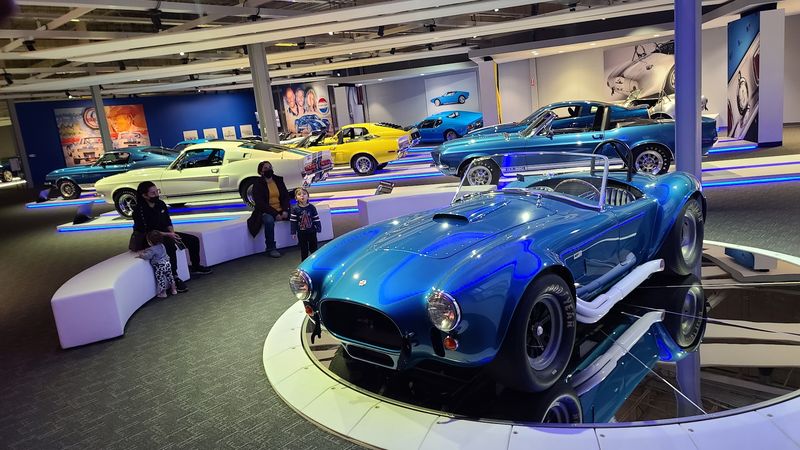
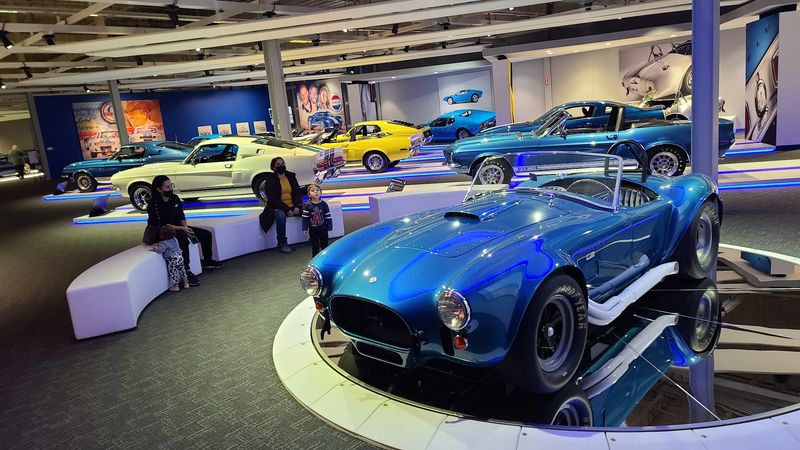
The Shelby and Ford section of the museum has a reputation that precedes it, and it delivers on every bit of that reputation. Shelby Mustangs from multiple eras are lined up in a dedicated space that treats these machines with the reverence they have earned over decades of motorsport history and pop culture legend.
Carroll Shelby’s partnership with Ford produced some of the most celebrated performance cars ever built in America, and seeing so many examples gathered in one room makes that legacy feel tangible. Each car comes with detailed history notes that explain the context behind its creation, from racing origins to road versions.
For anyone who grew up watching muscle cars tear across movie screens or race tracks, this room carries a particular weight. The collection spans from early GT350 models through later generations, showing how the Shelby formula evolved while keeping its core identity intact.
Ford fans consistently name this section as the highlight of their entire visit.
Corvettes, Porsches, and the Rooms Dedicated to Icons
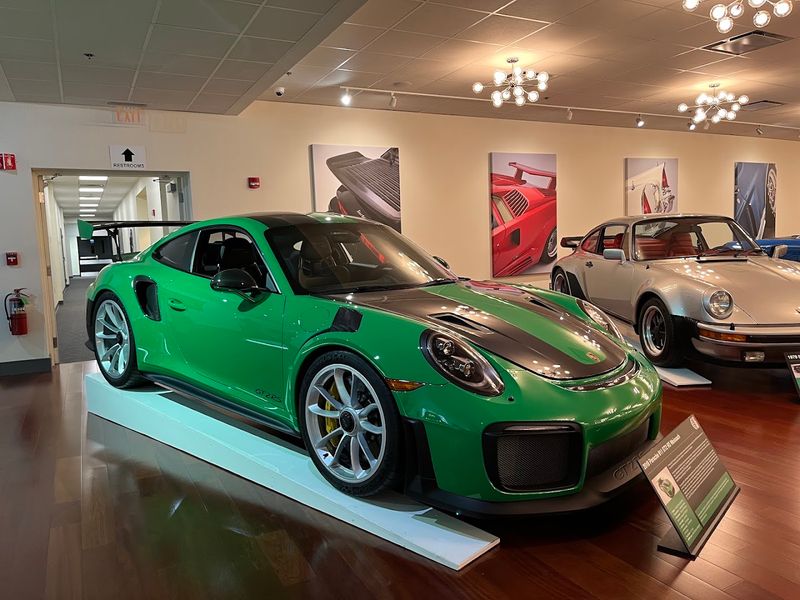
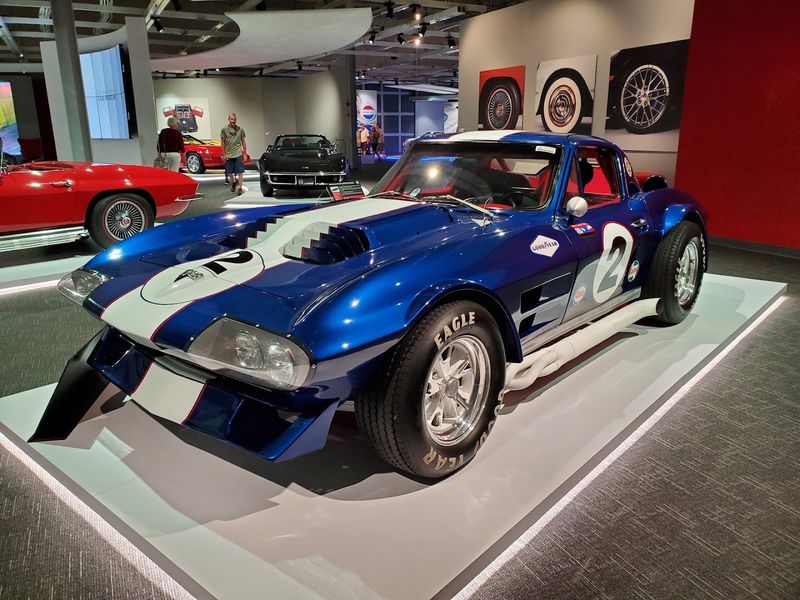
Dedicated rooms for Corvettes and Porsches are a bold curatorial choice, and both rooms earn their square footage. The Corvette section traces America’s most iconic sports car across generations, from the rounded curves of the 1950s originals through the sharper geometry of later decades.
Seeing them lined up chronologically is a quick visual education in how design trends shift over time.
The Porsche room has developed a particular following among car enthusiasts who visit the museum. Multiple generations of the 911 are represented, and the consistency of Porsche’s design philosophy becomes obvious when the cars are placed side by side.
It is a display that rewards close attention.
Both rooms benefit from the same gallery-quality lighting that defines the rest of the museum. The cars are positioned so that visitors can walk fully around each one, which matters when the design details are this good.
These are not just cars on a floor; they are arguments for why automotive engineering and visual design have always been inseparable disciplines.
The 1957 BMW Isetta That Keeps Stealing the Show
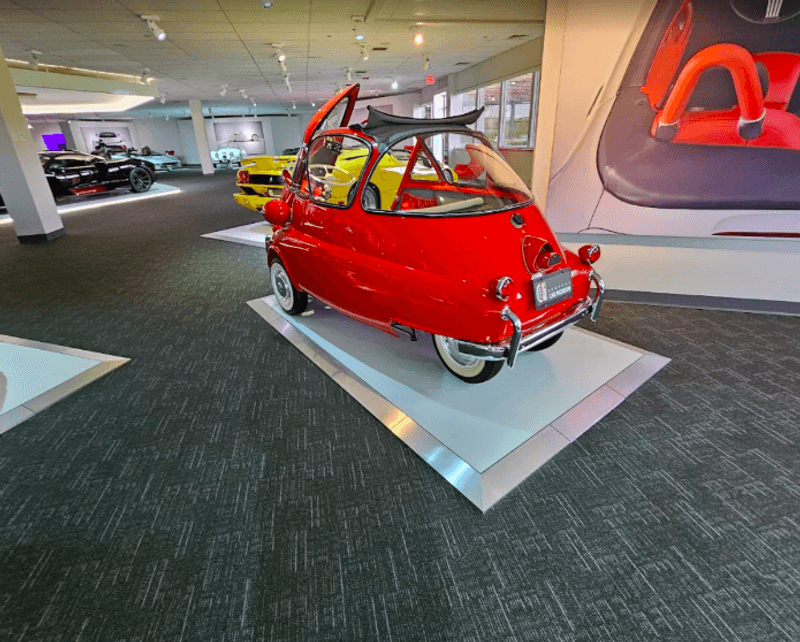
Among all the supercars and muscle machines, the 1957 BMW Isetta has emerged as one of the most talked-about vehicles in the entire collection. It is tiny, round, and utterly charming, a microcar from an era when fuel economy and compact urban design were genuine engineering priorities in postwar Europe.
The Isetta’s most distinctive feature is its front-opening door, which doubles as the entire front of the car. The steering wheel swings out with the door to allow entry, a design solution that strikes most visitors as either brilliant or completely baffling, sometimes both at once.
It consistently draws laughter and extended conversation near its display spot.
What the Isetta does for the museum is provide tonal relief. Surrounded by roaring muscle cars and million-dollar exotics, this little BMW reminds visitors that automotive history is also a story of creativity, constraint, and occasionally delightful weirdness.
It is proof that the best museum collections make room for the unexpected alongside the legendary.
Hood-Up Weekends and the Mechanical Side of the Collection
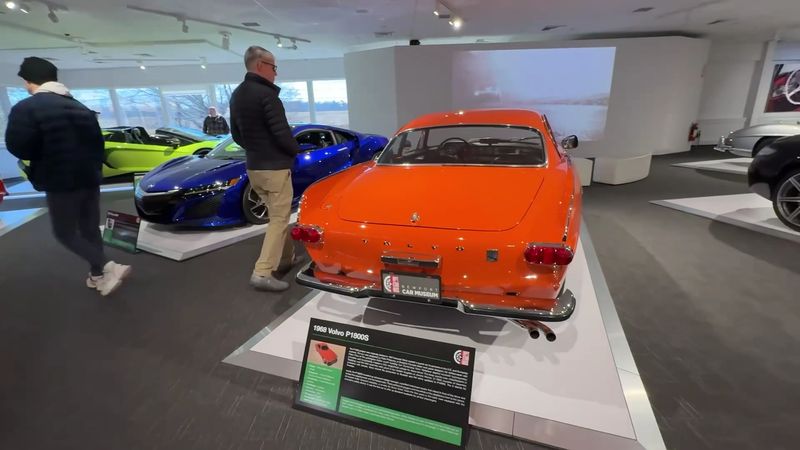
On the second weekend of every month, the museum raises the hoods on all the cars so visitors can see the engines. It is a simple idea with a significant impact.
The difference between looking at a car’s exterior and peering into its engine bay is the difference between appreciating a painting and understanding how the paint was mixed.
For families with kids who are more interested in how things work than how they look, this monthly event is a genuine draw. The engines on display range from classic American V8s to finely engineered European powerplants, and the museum’s knowledgeable staff are available throughout to answer questions about what everything does.
Planning a visit around this hood-up weekend is worth the extra coordination effort. The cars are impressive in their standard display configuration, but seeing the mechanical complexity underneath adds a layer of context that deepens the whole experience.
It turns a visual tour into something closer to an engineering lesson, and that distinction matters for curious visitors of all ages.
Short Films and the Stories Behind the Cars
The Newport Car Museum does not just display cars; it contextualizes them. Short films are woven into the museum experience, giving visitors background on the history, racing heritage, and cultural significance of the vehicles they are walking past.
This approach transforms a visual tour into something more like a documentary experience.
The films are brief enough to hold the attention of younger visitors while still delivering real historical content. They cover topics ranging from the origins of specific car models to the broader story of how American and European automotive industries developed alongside each other through the 20th century.
This storytelling layer is part of what gives the museum its art-gallery quality. Great museums do not just show things; they explain why those things matter.
The Newport Car Museum understands that a car without its story is just a machine, but a car with its full history becomes a cultural artifact worth understanding. The films make that distinction clear without ever feeling like homework.
Why Families With Kids Actually Enjoy This Place
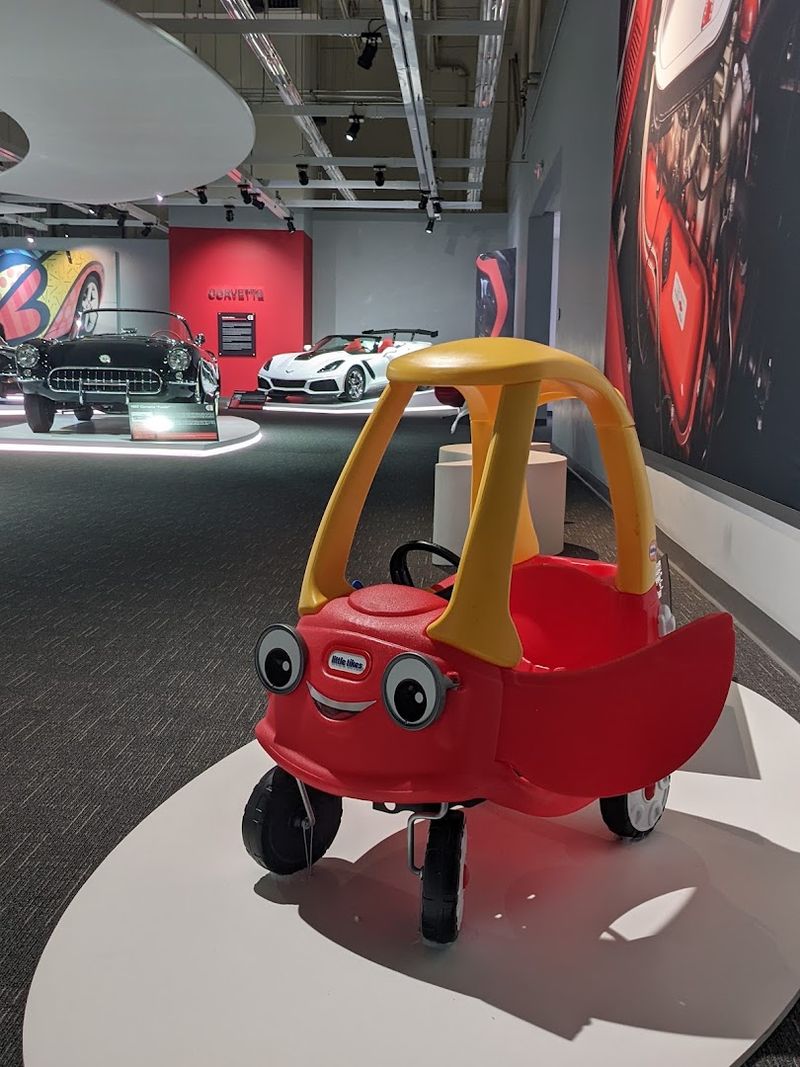
Bringing children to a museum full of irreplaceable cars sounds like a recipe for anxiety, but the Newport Car Museum handles the challenge well. The no-touching rule is clearly communicated from the moment of arrival, and most kids adapt quickly once they understand the stakes.
The staff are patient and clear without being stern about it.
The variety of cars on display works in the museum’s favor with younger visitors. Children who have no interest in a Ferrari might become completely captivated by the BMW Isetta or a classic American muscle car they recognize from a movie or video game.
The range of the collection is wide enough that almost every kid finds something that catches their eye.
The coordinating music in each room adds an element of fun that keeps energy levels up during the walk-through. Most families complete the tour in about an hour to ninety minutes, which is the right length for keeping younger attention spans engaged without anyone hitting a wall before the gift shop.
Accessibility and Practical Details That Matter
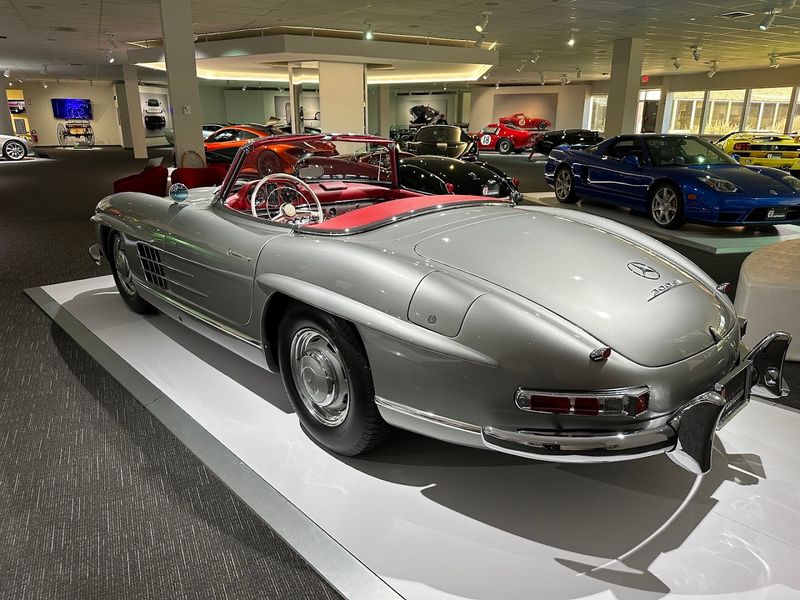
Accessibility at the Newport Car Museum goes beyond the basics. Complimentary wheelchairs are available for guests who need them, a detail that reflects genuine consideration for visitors with mobility challenges.
The wide hallways and open floor plan make navigation comfortable for wheelchairs and strollers alike.
Free parking eliminates one of the most common friction points in museum visits, especially for families arriving by car. The location on West Main Road in Portsmouth is straightforward to reach from Newport and from the broader Rhode Island highway network, making it a practical day trip option from Connecticut, Massachusetts, and beyond.
The museum runs seven days a week from 10 AM to 5 PM, which removes the frustration of planning around limited operating days. Senior and veteran discounts are available, and the base admission price of $20 per person represents strong value given the scale of the collection.
Checking the museum’s official website before visiting is the best way to confirm current pricing and any special events on the calendar.
How This Museum Compares to Other Car Museums in New England

New England has no shortage of museums, but car-focused institutions of this caliber are genuinely rare in the region. Many car museums in the northeastern United States lean toward a single marque or era, which limits their appeal to a narrower audience.
The Newport Car Museum deliberately avoids that trap by assembling a collection that spans decades, countries, and vehicle categories.
The emphasis on sports cars and exotics gives the collection a specific personality without making it exclusionary. Muscle cars, classics, and rare limited-production vehicles sit alongside the European supercars, creating a breadth that satisfies enthusiasts with very different tastes.
What consistently gets mentioned by people who have visited multiple car museums is the presentation quality at Newport. The gallery-style layout and lighting are not standard in this category of attraction.
Most car museums prioritize volume over experience, but this one inverts that priority, and the result is a place that feels worth traveling across state lines to visit, which many guests do exactly that.
The Atmosphere That Keeps People Coming Back
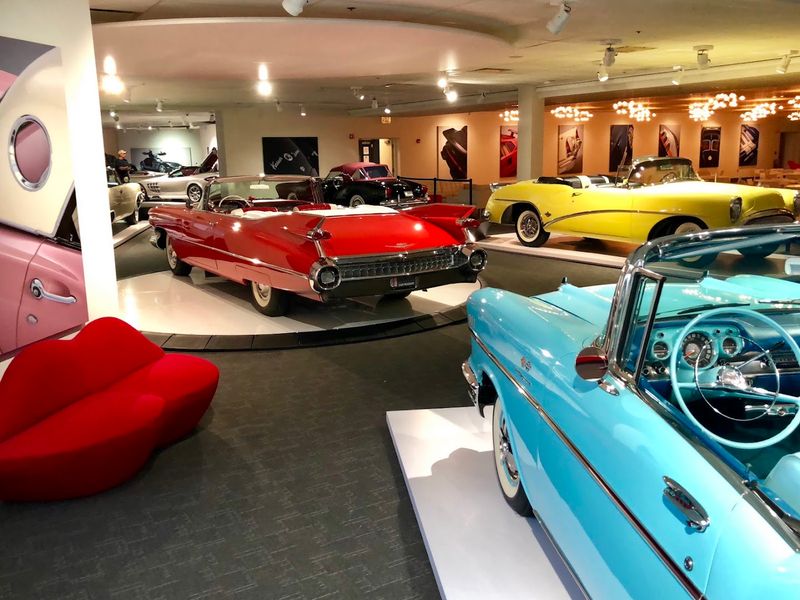
Repeat visits to the Newport Car Museum are common, and the reasons are easy to understand. The collection evolves over time, with different vehicles appearing on the floor and the occasional special display adding something new to an already strong rotation.
There is always a reason to come back and see what has changed.
The staff contribute meaningfully to the atmosphere. They are described consistently as friendly and knowledgeable without hovering, which is a balance that many museums struggle to strike.
Questions get real answers, and the enthusiasm of the people working there is genuine rather than scripted.
The combination of world-class cars, gallery-quality presentation, accessible admission pricing, and a staff that clearly loves what they do creates an atmosphere that is difficult to replicate. Museums can acquire great objects, but the feeling of a place comes from how all the elements work together.
At the Newport Car Museum, those elements have been assembled with the same care as the cars themselves.
Planning Your Visit and Making the Most of the Experience
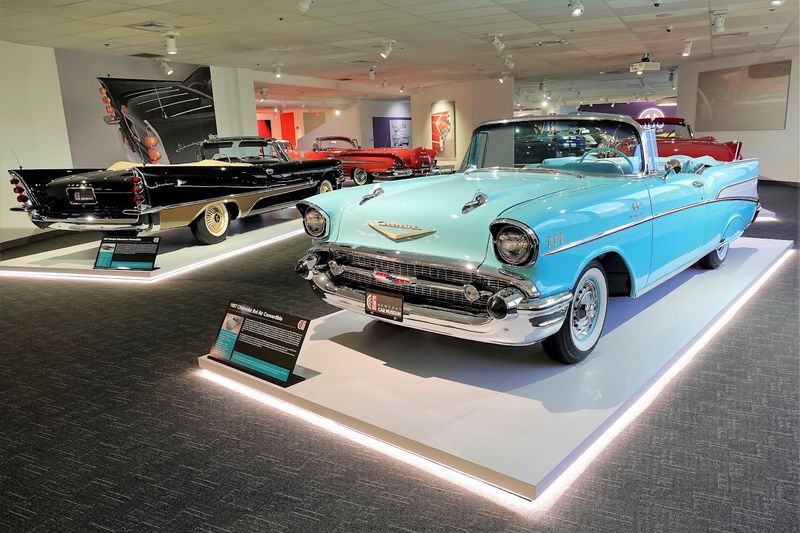
Getting the most out of a visit to the Newport Car Museum starts with a few simple planning decisions. Arriving close to the 10 AM opening time on a weekday gives visitors the quietest possible experience, with more space to move freely around each car and more access to staff for questions.
Saturday crowds are manageable but noticeably busier.
Checking the museum’s website at newportcarmuseum.org before visiting is worth the two minutes it takes. Special events, the hood-up weekends, and any updates to admission pricing or hours are posted there.
The museum does not require advance booking for general admission, but larger groups may want to reach out ahead of time.
Budget at least ninety minutes for a comfortable tour, and more if the group includes serious car enthusiasts or curious kids who want to read every plaque. The museum rewards patience and attention to detail, and rushing through it means missing the very thing that makes it special: the stories behind every single car on the floor.
Where to Find It and What to Expect at the Door
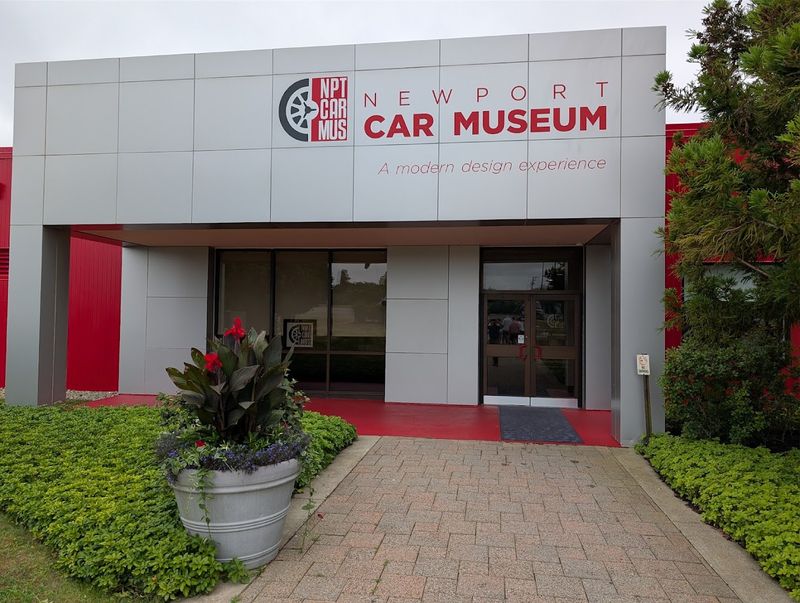
The Newport Car Museum sits at 1947 W Main Rd, Portsmouth, Rhode Island 02871, and it is easier to reach than most people expect. Free parking is available on-site, which is a welcome relief when planning a family day out.
The museum is open every day of the week from 10 AM to 5 PM, making it flexible enough to fit into almost any travel itinerary.
Admission is priced at $20 per person, with discounts available for seniors and veterans. That price point is genuinely hard to argue with when you consider the scale of what is inside.
Most people spend between one and two hours exploring, though dedicated car fans have been known to stretch that into a full afternoon.
The staff at the front entrance set a welcoming tone right away, and wheelchairs are available on request for guests who need them. It is a thoughtful touch that signals how seriously this museum takes the experience of every guest who walks through the door.
Share this story