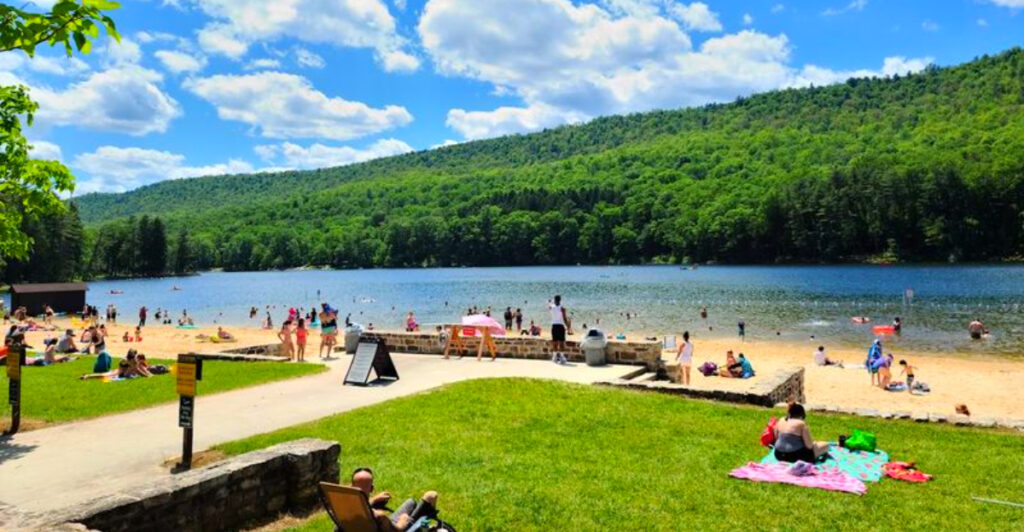
Tucked between two forested mountain ridges, one remarkable Pennsylvania state park offers a peaceful lake, scenic hiking trails, historic cabins, and the kind of quiet escape that feels far removed from everyday life. Visitors come for calm paddling, excellent fishing, shaded campgrounds, beautiful overlooks, family-friendly beaches, and miles of woodland paths that showcase the beauty of every season. It’s the kind of place where a few hours outdoors easily turn into an entire weekend of relaxation and adventure.
The experience extends far beyond the lake. Historic Civilian Conservation Corps cabins, mountain wildlife, picturesque picnic areas, tranquil forests, fascinating local history, year-round recreation, and breathtaking views have made this one of Pennsylvania’s favorite outdoor destinations. Whether you’re planning a camping trip, a day hike, or simply looking for a peaceful place to unwind, it’s easy to understand why visitors return season after season.
Here’s why Cowans Gap State Park has become one of Pennsylvania’s most beloved mountain escapes and one of the best places in the state to enjoy hiking, camping, fishing, and lakeside relaxation.
A Mountain Sanctuary With a Real Address
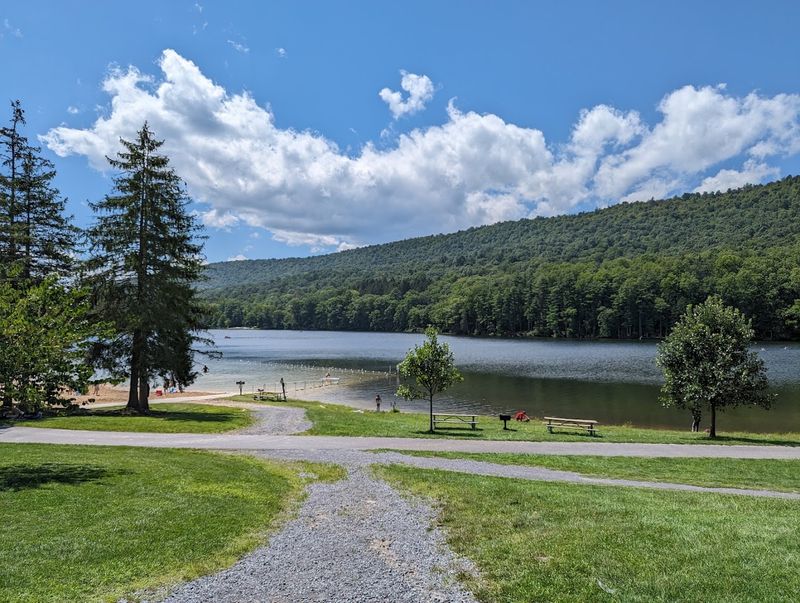
My first visit to Cowans Gap State Park began with a winding drive that felt like the park was testing my patience before rewarding it handsomely. The full address is 6235 Aughwick Road, Fort Loudon, Pennsylvania 17224, and the park sits comfortably within Allens Valley, tucked between Tuscarora Mountain to the east and Cove Mountain to the west.
This 1,085-acre haven straddles Fulton and Franklin counties, and the landscape already feels elevated before you even park the car. The roads curl through second-growth forest, past mossy rock walls and dappled light, hinting at everything waiting inside.
The park is open daily from 6 AM to 8 PM, and there is no entrance fee, which still surprises me every time. You can reach the park office at 717-485-3948 for reservations or seasonal information. That combination of accessibility and natural grandeur is rare, and it sets the tone for everything that follows the moment you step out of the car.
The 42-Acre Lake That Defines the Whole Park
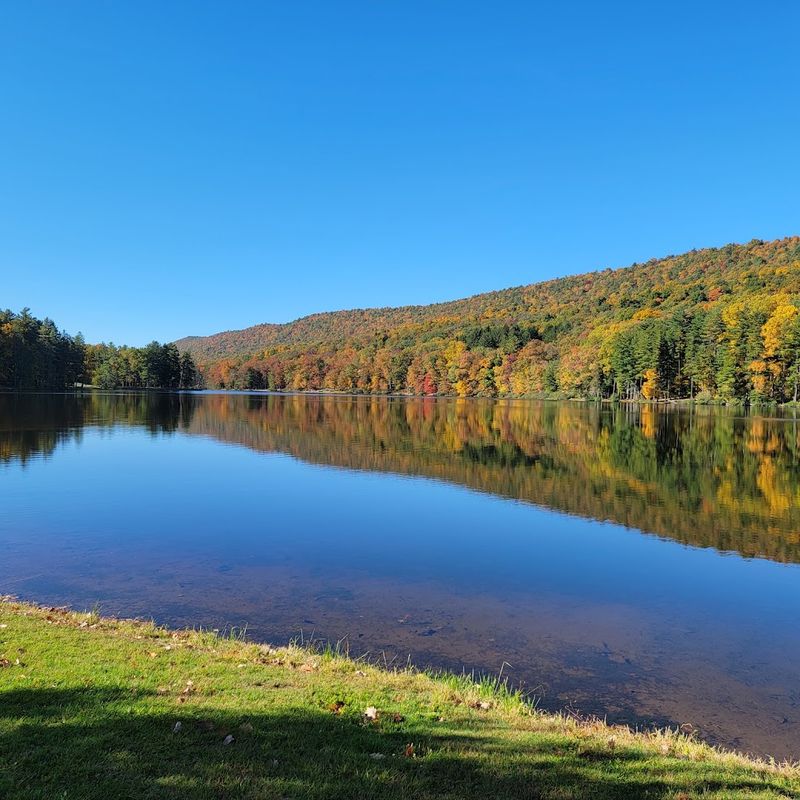
Everything at this park orbits around water. The 42-acre Cowans Gap Lake anchors the entire landscape like a mirror dropped into a bowl of mountains, and its glassy surface has a way of making even the most restless visitor slow down and simply look.
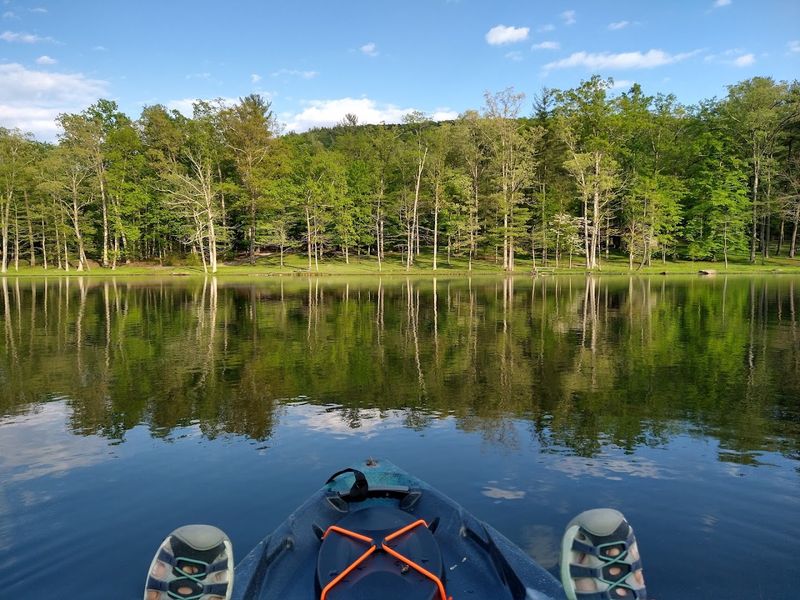
The lake supports non-motorized boating, and rowboats, kayaks, and paddleboats are available for rent during summer months. Electric motors are permitted for personal watercraft, keeping the atmosphere quiet and the experience genuinely peaceful. Two ADA-accessible fishing piers jut out over the water, and the lake holds trout, bass, panfish, perch, and catfish for anglers of every skill level.
A valid Pennsylvania fishing license is required, so plan accordingly before arrival. The 500-foot sandy beach opens from late May through mid-September, offering swimming, sunbathing, and easy wading for younger visitors. There are no lifeguards on duty, but park staff make regular rounds. The lake is the kind of place where an afternoon disappears without apology.
How Cowans Gap Got Its Name
The story behind the name Cowans Gap is genuinely one of the more entertaining origin tales attached to any Pennsylvania state park. John and Mary Cowan eloped after their families, one Loyalist and one Patriot, objected to their union during the Revolutionary War era. They were headed to Kentucky when their wagon broke down near Fort Loudon.
Rather than turning back, John reportedly traded the broken wagon and horses to a Tuscarora Indian chief in exchange for rights to the land, sealing the deal with a peace pipe and tomahawk agreement marked by three slashes on a chestnut tree. It is the kind of founding story that sounds invented but is documented in local historical accounts.
Before the Cowans arrived, the gap itself served as a strategic military pass during the French and Indian War, used by British forces moving through Tuscarora Mountain. The land later became a significant iron mining hub, with nearby furnaces driving extensive clear-cutting of the surrounding forests through the 1800s. History here runs surprisingly deep.
What the Civilian Conservation Corps Left Behind
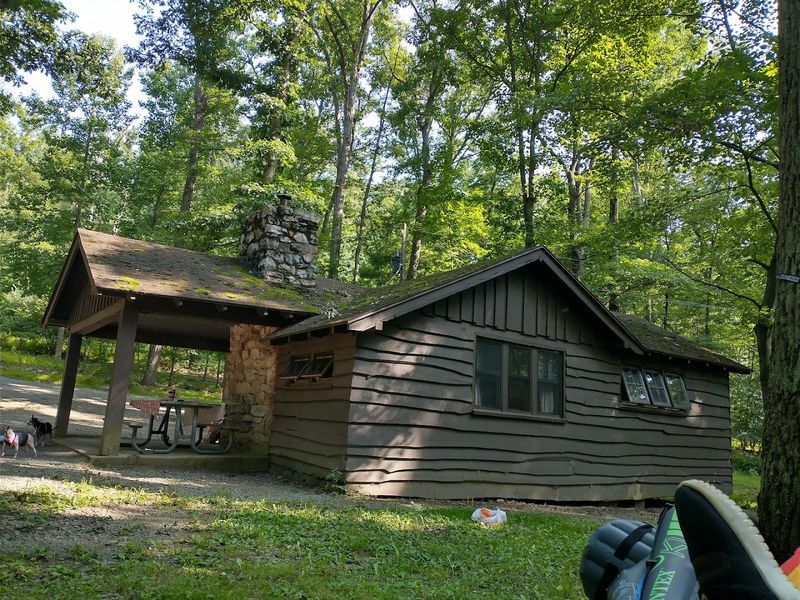
In 1933, young men arrived at what was then a recovering, largely barren landscape and began building something that would outlast most of what their generation created. The Civilian Conservation Corps spent eight years at Cowans Gap, transforming the eroded hillsides into the forested park visitors enjoy today.
Their accomplishments read like an infrastructure wish list: 30 miles of roads, four bridges, 32 miles of fire trails, 11 miles of telephone lines, and three years of labor to construct the dam that created the lake itself. The rustic cabins they built using local hemlock and stone remain in active use and are listed on the National Register of Historic Places.
Walking past one of these structures, you notice the careful stonework around the fireplace or the way the cabin blends naturally into the hillside, and it becomes clear these were craftsmen, not just laborers. Their picnic shelters, many still featuring original stone fireplaces, are scattered along the eastern lakeshore. The CCC did not just build a park here; they essentially created the conditions for a forest to return.
Trails That Take You From Lakeside to Overlook
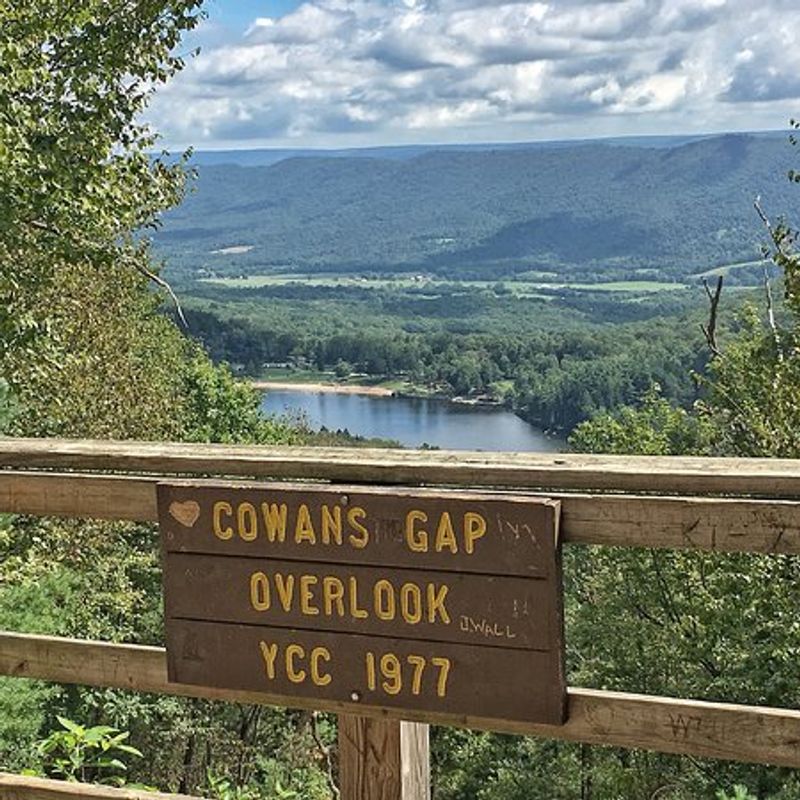
The trail network at Cowans Gap covers approximately 13 miles, and the range of difficulty means there is genuinely something for every pace and fitness level. The most popular route is the 1.5-mile Lakeside Trail, a relatively flat loop that circles the lake and delivers continuous water views along with frequent wildlife sightings, especially in the early morning when mist still sits on the surface.
For those willing to earn their views, the Knobsville Road Trail follows an old CCC road up to the Cowans Gap Overlook, where the valley stretches out below in a way that justifies every uphill step. The Three Mile Trail along Tuscarora Mountain is particularly rewarding in early June when mountain laurel lines the path in pink and white blossoms.
Segments of the 80-mile Standing Stone Trail and the Tuscarora Trail, a spur of the Appalachian Trail, also pass through the park for hikers seeking longer routes. If you plan an overnight hike, check in at the park office for parking arrangements beforehand. The trails here reward curiosity more than speed.
The Wildlife That Calls These Ridges Home
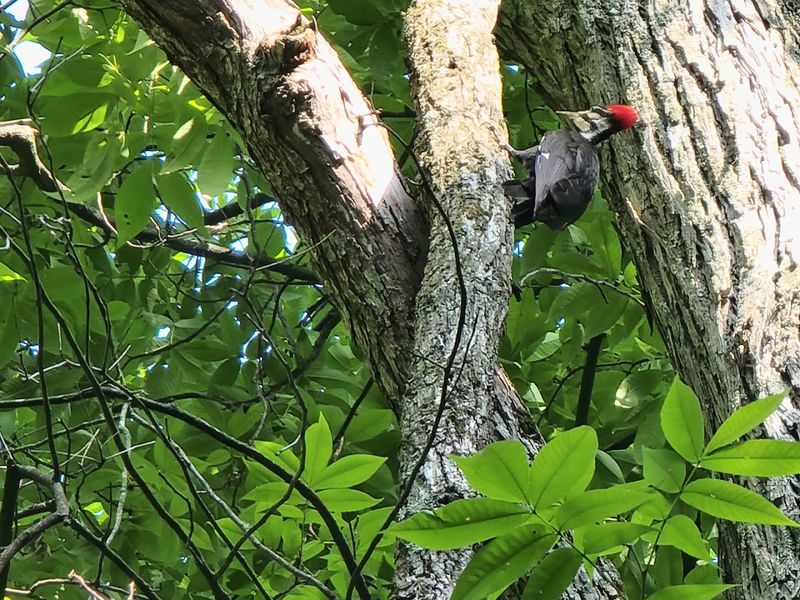
Few things recalibrate your sense of the world quite like watching a white-tailed deer step out of the treeline thirty feet from your picnic table. At Cowans Gap, that kind of encounter is not unusual, and the park’s position between two mountain ridges creates a corridor of habitat that supports a genuinely diverse array of species.
Black bears occasionally appear during berry season, box turtles cross sun-warmed paths in midsummer, and the lake edges come alive at dusk with the deep calls of bullfrogs and the twanging notes of green frogs. Bats emerge at twilight to skim the lake surface, drawn in part by the park’s designated bat boxes installed along the shoreline.
Birdwatchers will find the park particularly rewarding, with species like the ovenbird, eastern towhee, veery, and wood thrush providing a near-constant soundtrack on forested trails. On summer nights, whippoorwills repeat their distinctive call hundreds of times without apparent fatigue. Penn State researchers have reportedly identified 312 different wild mushroom varieties in the area, which gives the forest floor an entirely new layer of interest for curious visitors.
Camping Options That Actually Fit Different Travelers
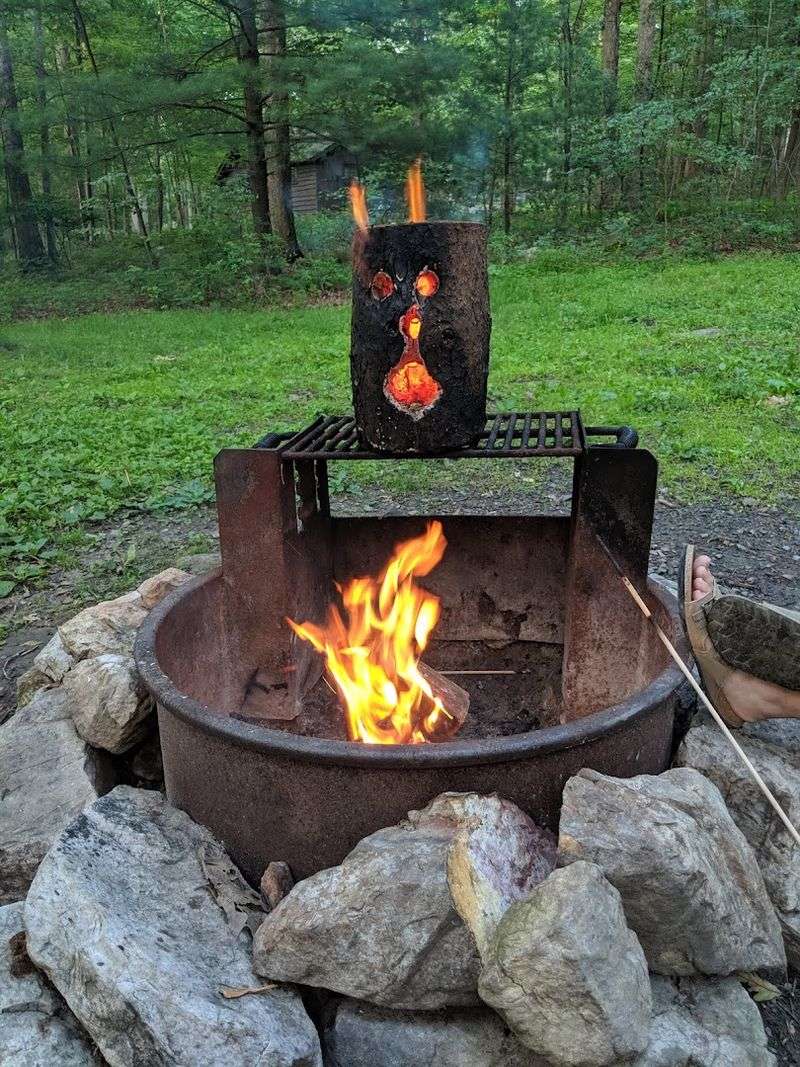
Two campgrounds with a combined 201 sites give Cowans Gap a flexibility that many smaller parks simply cannot match. Sites range from basic tent setups to full electric hookups with 30 and 50 amp service, and some loops can accommodate RVs up to 82 feet, though tighter sections work better for rigs under 35 feet.
Seven walk-in tent sites offer a more secluded experience for campers who prefer a bit of distance from RV neighbors. The campgrounds are generally open from mid-April through mid-December, with modern restroom facilities featuring flush toilets and hot showers centrally located for easy access. A sanitary dump station is available, though its layout requires some navigation planning, particularly for campers in higher-numbered sites.
Pet-friendly designated sites mean the family dog does not have to stay home, and a courtesy overnight boat mooring area is provided for registered campers arriving by water. The absence of cell service, which surprises nearly every first-time visitor, quickly transforms from an inconvenience into the best part of the stay. Download your maps before you arrive and embrace the quiet.
Rustic Cabins With a Story Built Into Every Wall
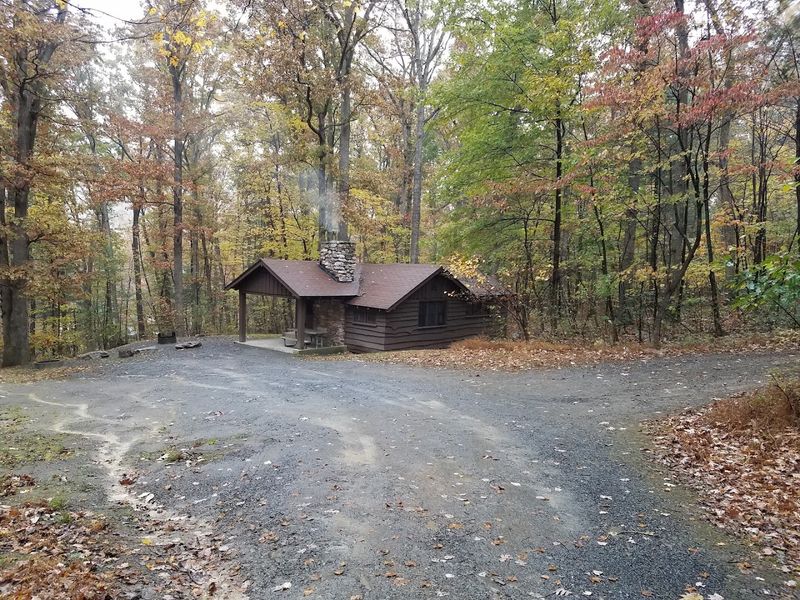
Tent camping is not for everyone, and the ten rustic cabins at Cowans Gap offer a middle ground that feels far more charming than a standard motel room. Each cabin was built by the Civilian Conservation Corps in the 1930s using hemlock siding and local stone, and they have been maintained well enough to feel historic without feeling decrepit.
Inside each three-room cabin, you will find two sets of bunk beds for up to four guests, a stone indoor fireplace, a refrigerator, stove, microwave, and ceiling fan. The rustic label is accurate in one specific way: there is no indoor plumbing, so an outdoor water faucet and a short walk to a central restroom with hot showers are part of the experience.
Some cabins are designated as pet-friendly for an additional fee, and availability runs from spring through fall, with occasional winter openings. Cabin K, tucked away in a particularly secluded corner, has hosted deer visitors grazing just outside the window, which is the kind of bonus amenity no hotel can promise. Reservations fill quickly, so booking early is strongly advised.
A Park That Earns Its Keep in Every Season
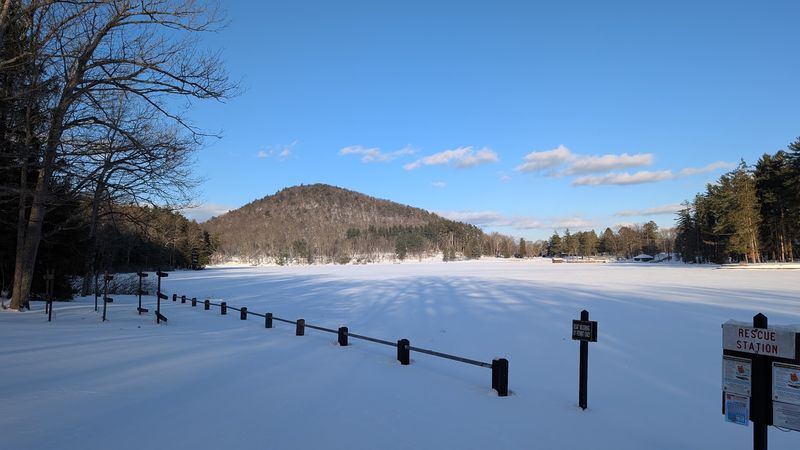
Many parks have a peak season and then essentially coast for the rest of the year. Cowans Gap operates differently, offering a genuinely distinct experience in each of the four seasons without forcing you to pretend that off-season visits are just as good as summer ones, because they actually are, just differently.
Summer centers on the lake, with swimming, boating, fishing, and campfire evenings filling the calendar naturally. Autumn brings the ridges alive in red, gold, and orange, and migrating raptors ride the updrafts along Tuscarora Mountain in numbers that make birdwatchers very happy. The trails are less crowded, the air is sharper, and the foliage reflections on the lake are worth the drive alone.
Winter transforms the park into a quieter but equally compelling destination. Hiking trails and unmaintained roads become cross-country ski routes, and a safely frozen lake surface opens up ice skating and ice fishing near the beach area. Mountain laurel and rhododendron stay green through the cold months, adding unexpected color to the snow-covered slopes. Spring brings trout opening weekend, which draws enthusiastic anglers from across the region.
Picnicking, Playing, and Slowing Down on Purpose
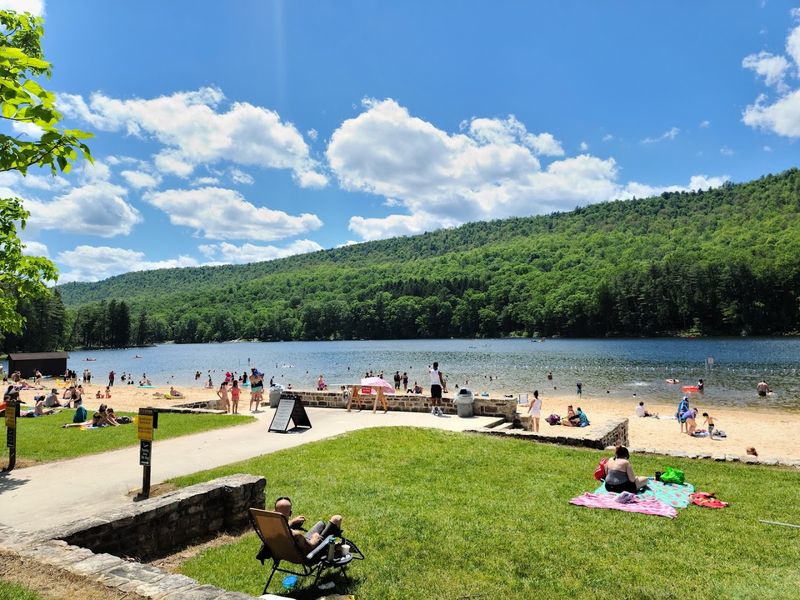
Not every great park experience involves a strenuous hike or a full day on the water. Some of the best hours I have spent at Cowans Gap involved nothing more ambitious than a picnic blanket, a good book, and the sound of the lake doing its thing a few yards away.
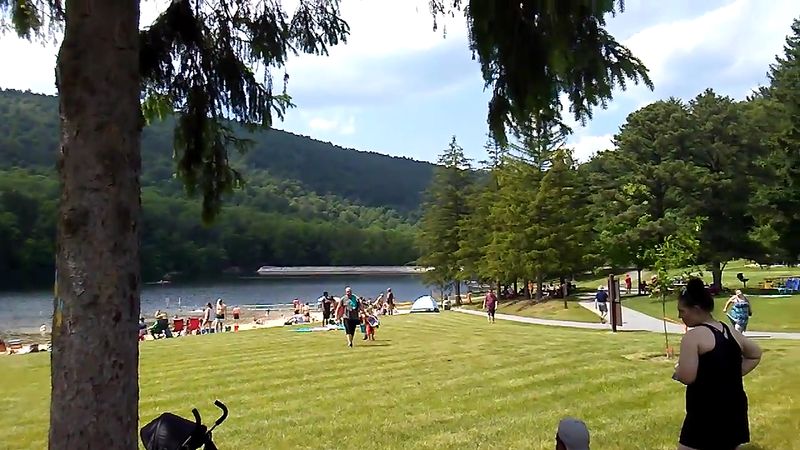
Picnic areas run along the eastern shore of the lake, shaded by mature trees and equipped with CCC-era stone fireplaces and charcoal grills. Four picnic pavilions are available for reservation, some featuring original stone hearths that make them feel like outdoor living rooms rather than standard park infrastructure. A recently updated playground near the beach area keeps younger visitors entertained between swims.
A concession stand operates during summer months, offering snacks, hot food, and essentials like ice and firewood, so you do not need to pack everything in. For more substantial supplies, Fort Loudon is about seven miles away with a Dollar General and gas stations. The park also hosts an amphitheater for seasonal programs, adding a community dimension that gives the place a warm, neighborly character.
Practical Tips That Make the Visit Go Smoothly
A few logistical details can make the difference between a seamless trip and an avoidable frustration at Cowans Gap. Cell service is essentially nonexistent throughout most of the park, which visitors consistently describe as either alarming or liberating, sometimes both within the same afternoon. Download offline maps and any reservation confirmations before leaving home.
Campsite and cabin reservations can be made up to 11 months in advance through the Pennsylvania State Parks website or by calling the park directly. Summer weekends and trout opening weekend in spring fill up fast, so early planning is genuinely important rather than just a polite suggestion. Fishing requires a valid Pennsylvania Fish and Boat Commission license, available online before your trip.
For winter ice activities, exercise caution away from the designated monitored area near the beach. A general guideline is four inches of solid ice for a single person and seven inches for small groups, though checking with park staff before venturing out is always the smarter move. The park charges no entrance fee, and most facilities are well-maintained, making the overall value exceptional for a full weekend of outdoor activity.
Share this story