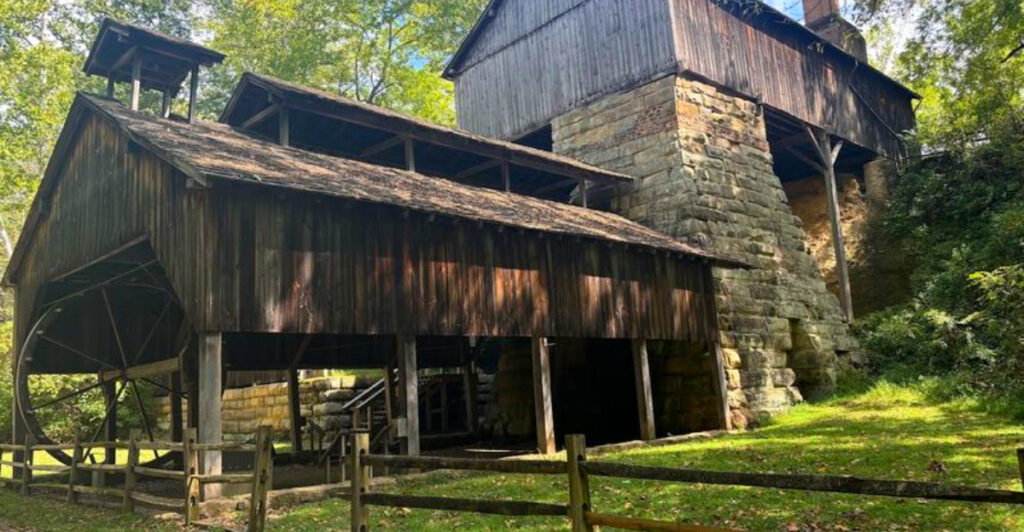
Most people drive through southern Ohio without realizing they are passing one of the most remarkably preserved industrial relics in the entire state. Tucked along an unpaved road in Jackson County, a massive stone furnace that has been standing since 1852 still rises from the landscape almost exactly as it did when workers fired it up to produce iron more than 170 years ago.
The structure is so intact you can walk right up to it, read about how it worked, and actually see the enormous wooden wheel that powered the operation. Few places in Ohio give you this kind of direct, hands-on connection to 19th-century industrial history, and that is exactly what makes Buckeye Furnace State Memorial worth knowing about.
A Furnace That Time Forgot
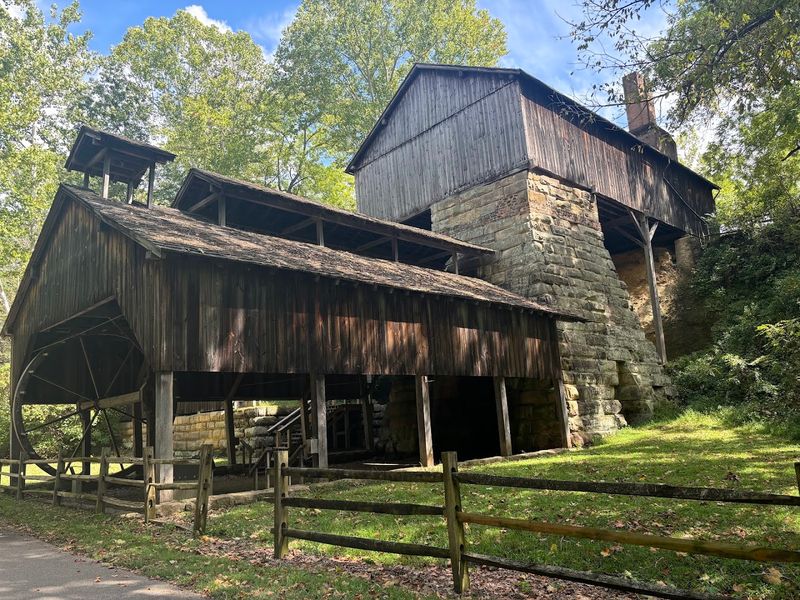
There is something quietly astonishing about standing in front of a structure built in 1852 that still looks like it could fire back up tomorrow. Buckeye Furnace State Memorial, located at 123 Buckeye Park Rd, Wellston, OH 45692, is one of the best-preserved charcoal iron furnaces in the entire state of Ohio, and it is managed by the Ohio History Connection.
The furnace was originally constructed as part of the Hanging Rock Iron Region, a stretch of southern Ohio that was once a powerhouse of American iron production. At its peak, this furnace ran around the clock, producing iron that fed a rapidly growing nation.
What sets Buckeye apart from other furnace ruins scattered across Vinton and Jackson counties is that so much of the original structure remains intact. You are not looking at a pile of old stones.
You are looking at real industrial history still standing on its own feet.
The Hanging Rock Iron Region and Why It Mattered
Before Pittsburgh became synonymous with American steel, southern Ohio was already deep in the iron business. The Hanging Rock Iron Region stretched across parts of Ohio and Kentucky and was one of the most productive iron-making zones in the country during the mid-1800s.
Charcoal-fueled blast furnaces like the one at Buckeye were the backbone of this industry. They consumed enormous amounts of timber from the surrounding hills, which is why the region’s forests were heavily harvested throughout the 19th century.
Iron produced here was used in everything from railroad equipment to household tools, and the demand kept furnaces running day and night for decades. Understanding this regional context makes a visit to Buckeye Furnace feel less like a trip to a museum and more like a window into an era that shaped modern America.
The furnace was not just a local curiosity. It was part of something enormous.
What Pig Iron Actually Means
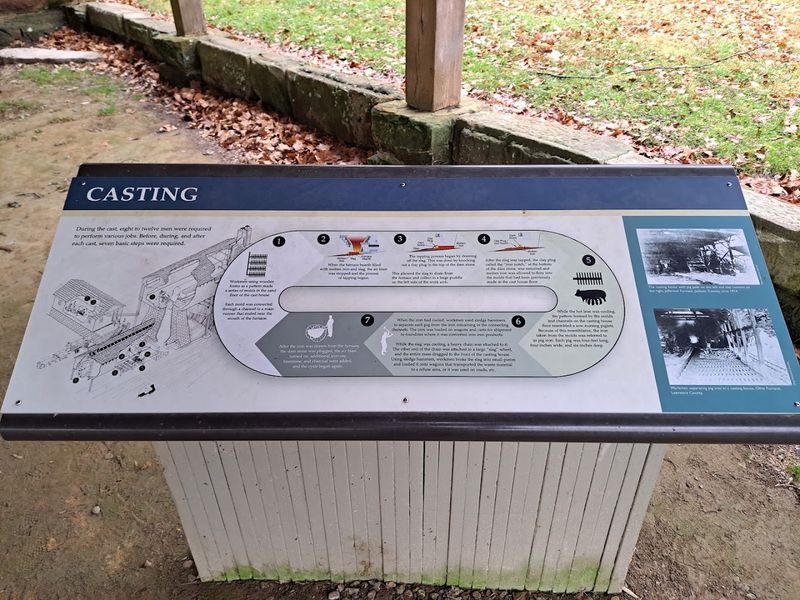
One of the most memorable things you learn at Buckeye Furnace is something most people have never thought about: why is it called pig iron? The answer is explained right on site, and once you hear it, you will never forget it.
When molten iron was released from the furnace, it flowed into a central channel called the sow. From that main channel, smaller molds branched off on either side.
When the iron cooled and hardened, workers broke the individual pieces, called pigs, away from the sow. The whole arrangement looked like a sow nursing her piglets, and the name stuck.
This kind of storytelling detail is exactly what makes Buckeye Furnace stand out. The informational signs throughout the site are genuinely interesting rather than dry and technical.
You leave knowing things you never expected to learn, and that makes the visit feel rewarding long after you have driven home.
The Giant Wooden Wheel That Ran the Operation
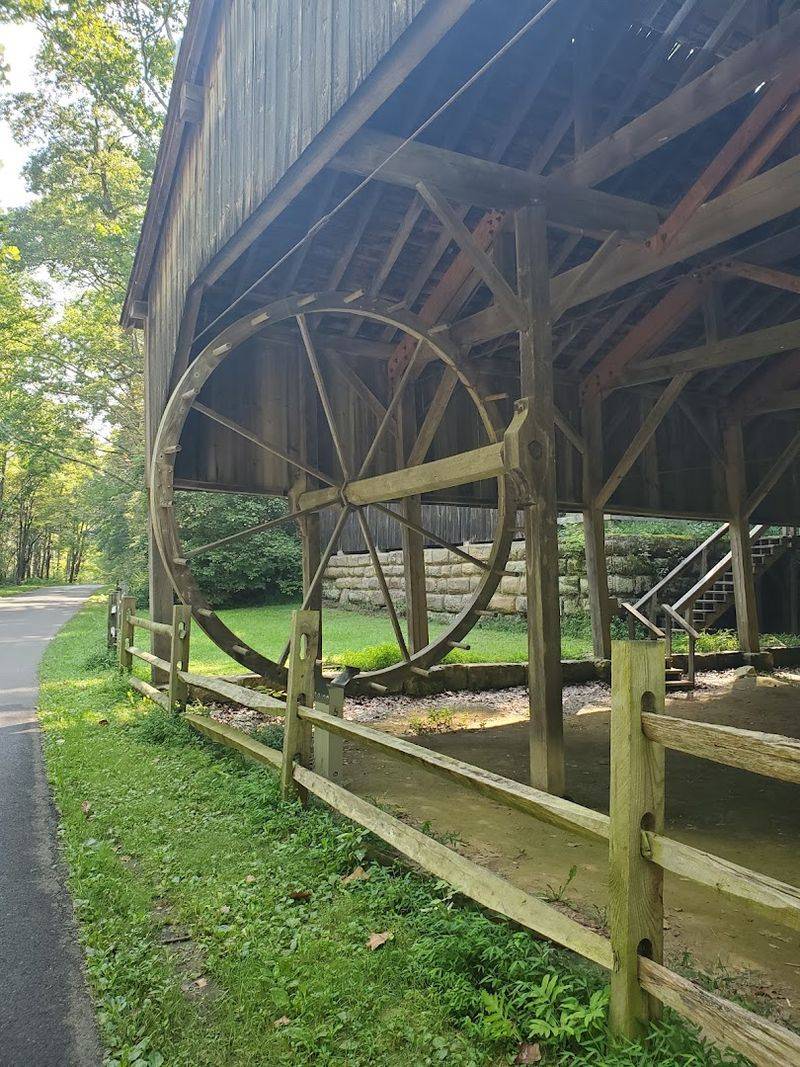
One of the most jaw-dropping things at Buckeye Furnace is the enormous wooden wheel that was part of the furnace’s original blowing equipment. It is not a replica.
It is the real thing, and seeing it in person gives you an immediate sense of the physical scale of iron production in the 1800s.
The wheel was used to power the bellows that forced air into the furnace, keeping the fire hot enough to melt iron ore. Workers would walk inside the wheel to turn it, using their own body weight as the driving force.
It was exhausting, relentless work that went on in shifts around the clock.
Standing next to this wheel and understanding what it took to operate it adds a human dimension to the history that no textbook can fully capture. You start to appreciate the labor, the ingenuity, and the sheer physical effort behind every piece of iron this furnace ever produced.
The Condition of the Furnace Compared to Others Nearby
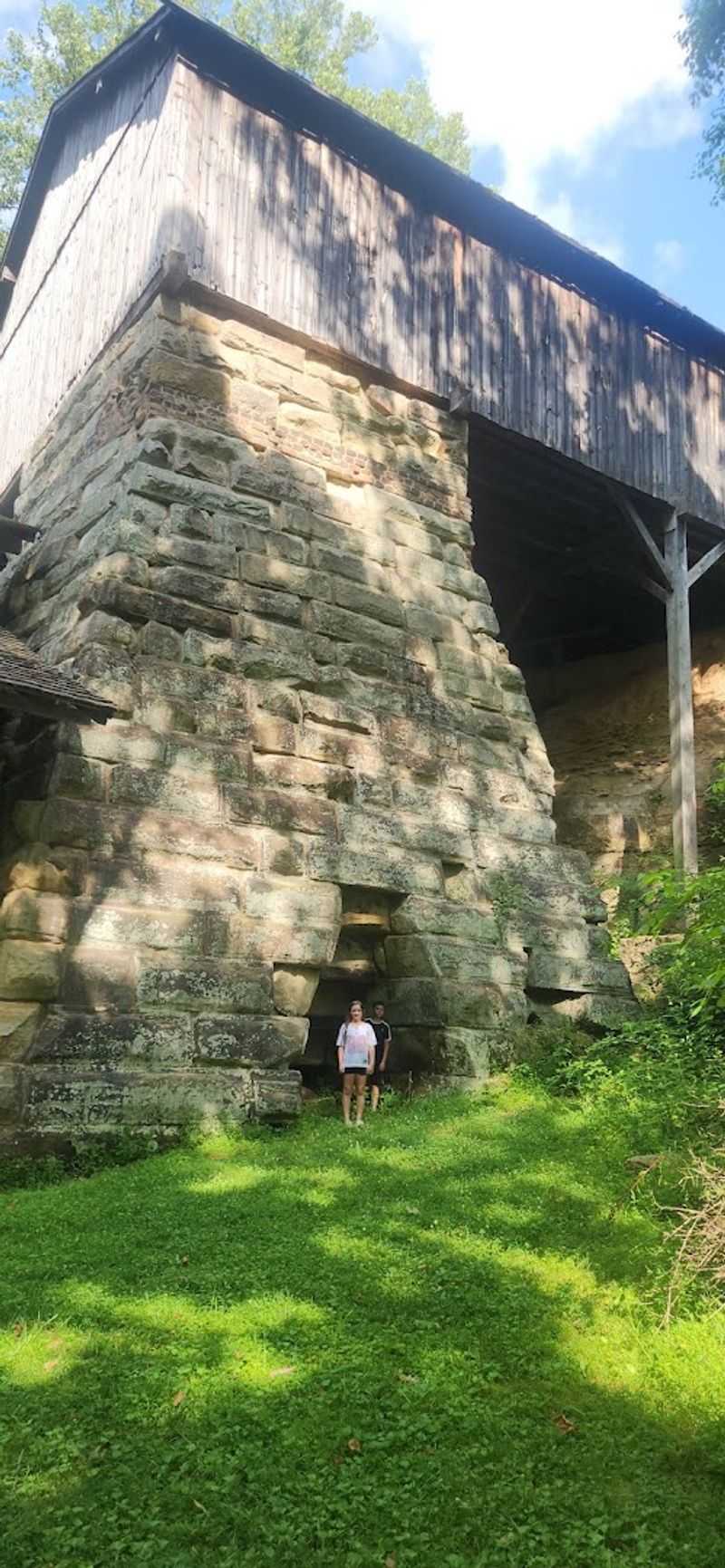
Jackson and Vinton counties have several remnants of old iron furnaces scattered across their hills and hollows, but most of them are little more than crumbling stone walls reclaimed by vegetation. Buckeye Furnace is in a completely different category.
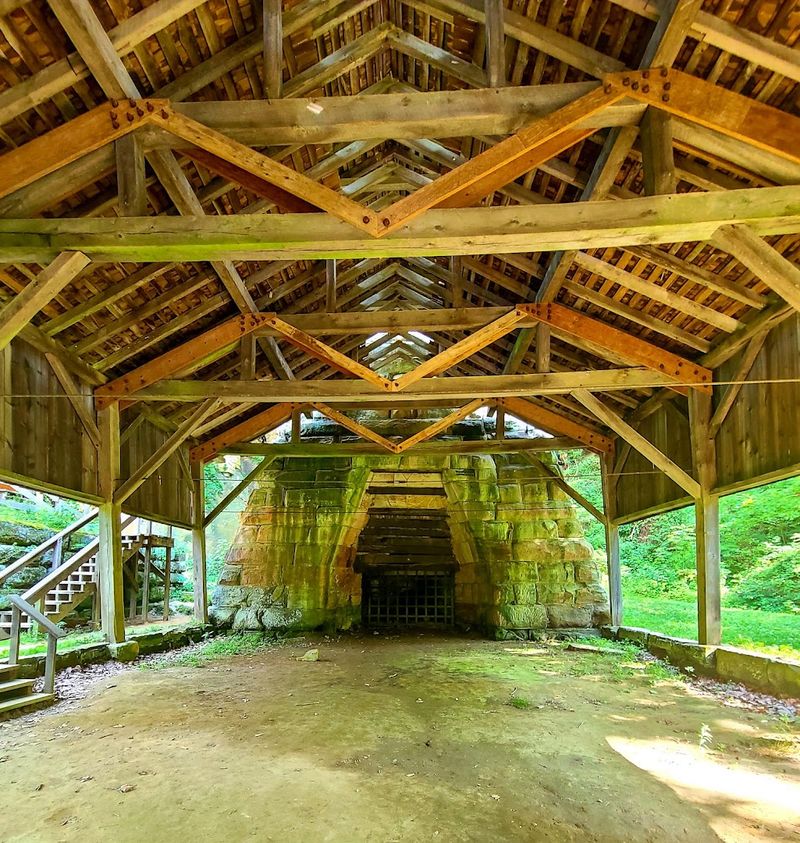
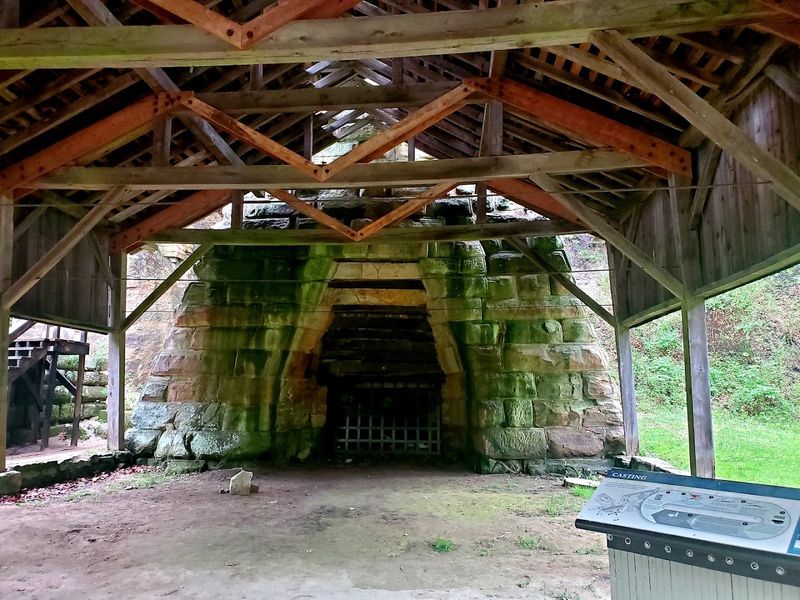
The main furnace stack, the casting shed, and several surrounding structures have been preserved in a condition that allows visitors to actually understand how the complex worked as a whole. You are not left guessing what things used to look like.
The evidence is right in front of you, largely intact.
This level of preservation is genuinely rare. Most industrial sites from this era have either been demolished or left to deteriorate beyond recognition.
The fact that Buckeye survived in such good shape, and that Ohio History Connection has maintained it for public access, makes it one of the more valuable historical sites in the entire region. Comparable sites simply do not exist at this level of completeness.
Exploring the Casting Shed and Surrounding Structures
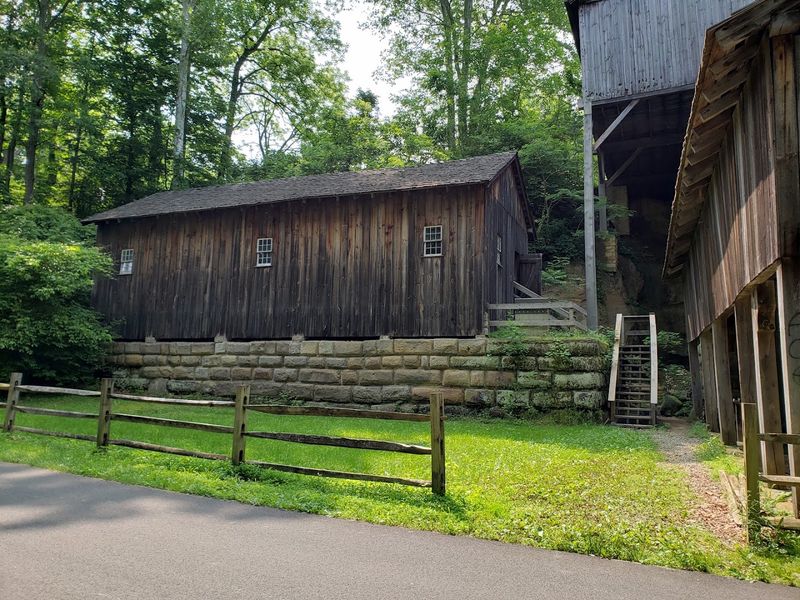
The furnace stack itself gets most of the attention, but the casting shed alongside it is equally worth your time. This is the building where molten iron was received, shaped, and cooled after flowing from the furnace, and the structure gives you a tangible sense of the workflow that defined daily operations here.
The shed is a weathered, functional-looking building that feels completely authentic. Nothing about it has been over-restored or made to look prettier than it actually was.
That honest presentation is part of what makes the site feel so credible as a historical record.
Walking through and around these structures, you begin to notice small details everywhere: the thickness of the stone walls, the layout of the casting floor, the way the building is positioned relative to the furnace. Each detail tells you something about how the operation was designed for efficiency.
It is the kind of site that rewards slow, attentive exploration rather than a quick walkthrough.
The Wetlands Area That Surprises Most Visitors
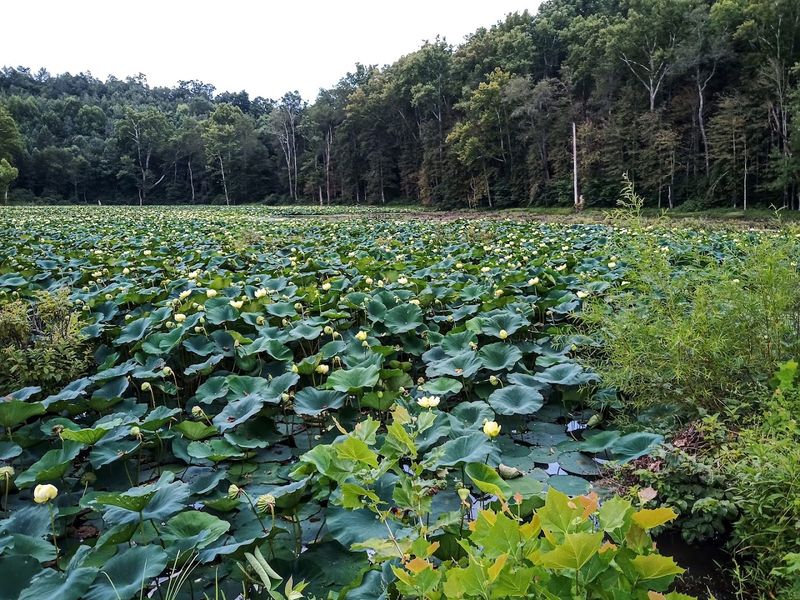
Most people come to Buckeye Furnace for the history and leave pleasantly surprised by the natural setting. Alongside the furnace complex, there is a wetlands area that adds a completely different dimension to the visit and is genuinely beautiful in its own right.
The wetlands attract birds and other wildlife, making the site appealing to anyone who enjoys nature alongside history. On a quiet weekday morning, the combination of the old stone furnace and the peaceful wetland landscape creates an atmosphere that feels almost cinematic.
Families with children tend to find that the wetlands give kids an extra reason to stay engaged after they have finished exploring the furnace buildings. There is something for both the history-minded visitor and the one who just wants to be outside in a pretty spot.
The fact that both experiences exist in the same small area makes Buckeye Furnace feel more complete than its modest size might suggest at first glance.
A Picnic Area With a Historic Backdrop
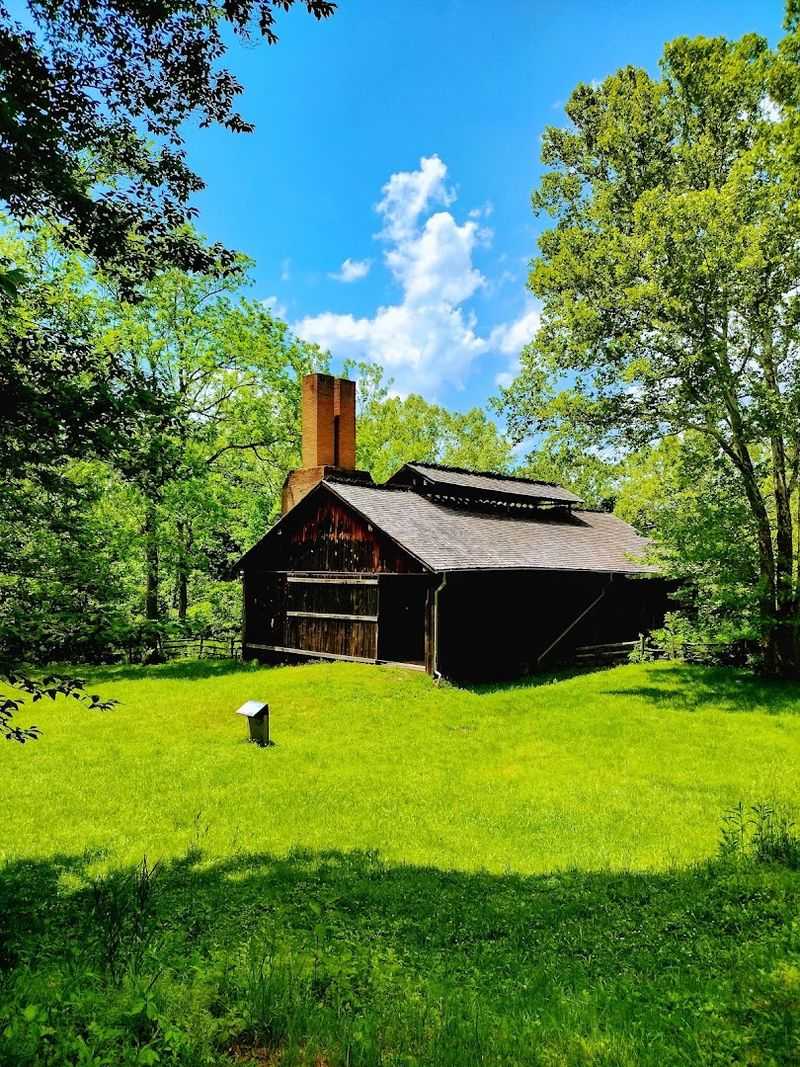
After walking the grounds and absorbing a couple of centuries worth of industrial history, sitting down at one of the picnic tables on site feels like a natural way to extend the visit. The picnic area is simple and well-placed, offering a pleasant outdoor setting with the furnace complex visible nearby.
Bringing your own lunch is the practical move here, since there are no food vendors or concessions on site. The area is quiet enough that you can actually hear the surrounding woods, which makes for a genuinely relaxing midday break.
It is also worth noting that restroom facilities are not available at the site, so planning ahead before you arrive is a good idea. The lack of amenities is a minor trade-off for a site that has been preserved with such care and kept accessible without heavy commercialization.
Packing a cooler and making an afternoon of it is a completely reasonable approach to visiting Buckeye Furnace.
Getting There and What the Road Tells You
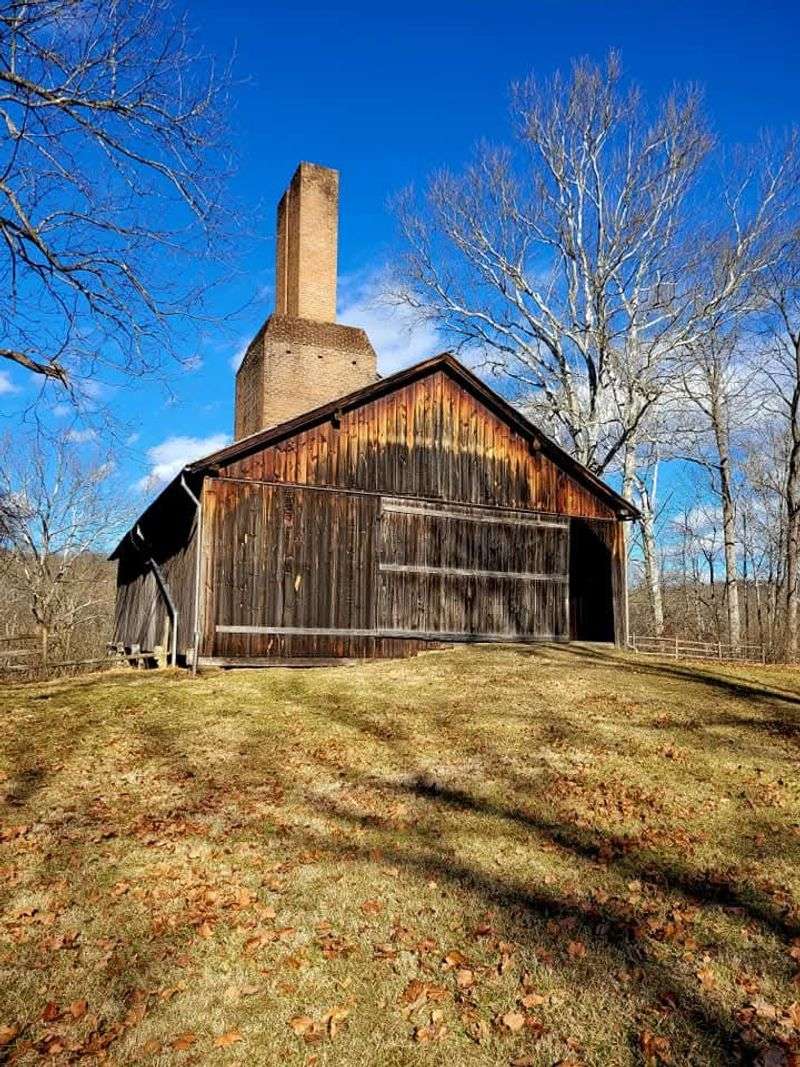
The drive to Buckeye Furnace is part of the experience. The road back to the site is unpaved, winding through the kind of rural southern Ohio landscape that has not changed dramatically in a very long time.
Tall trees line the route, and the whole approach feels appropriately unhurried.
Following the posted signs is the reliable strategy since GPS can occasionally be inconsistent in this area. The unpaved road is manageable for standard vehicles in normal conditions, though it is worth keeping that in mind if you are driving something low to the ground.
That slightly off-the-beaten-path quality is actually part of the site’s appeal. Arriving at Buckeye Furnace does not feel like pulling into a theme park.
It feels like finding something real. The modest approach road sets the right tone before you even step out of the car, and it gives the whole visit a sense of genuine discovery that more polished attractions rarely deliver.
Visiting Hours and Seasonal Availability
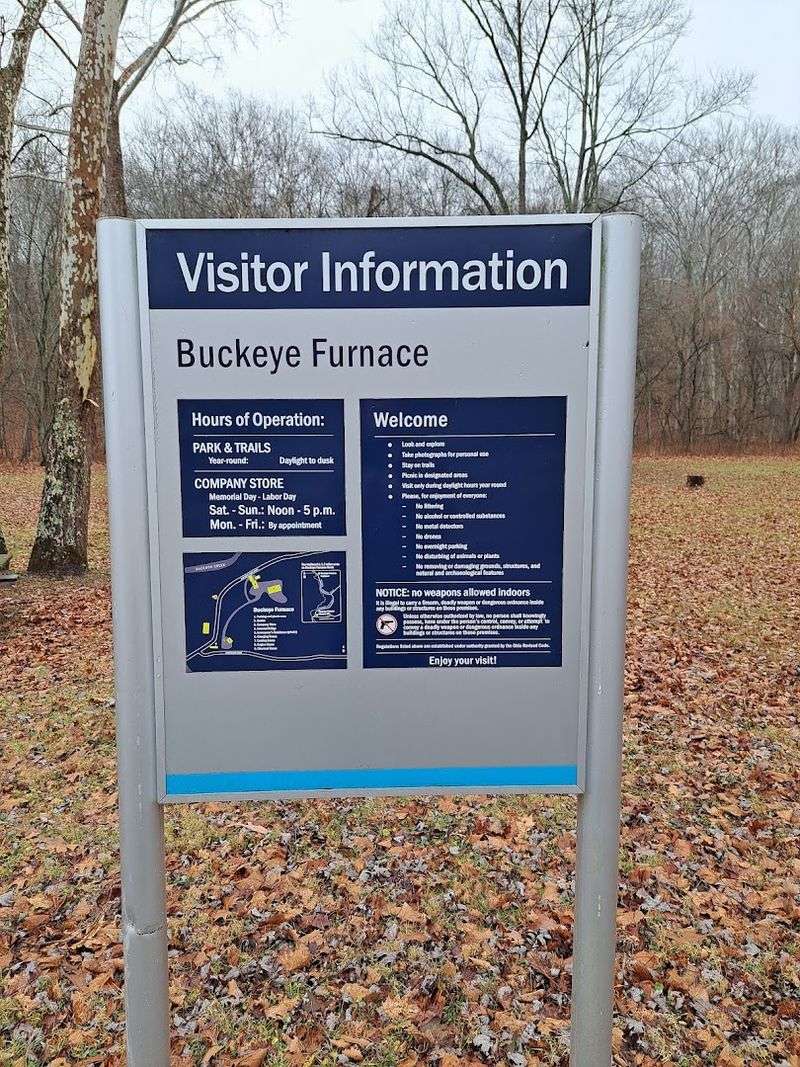
Buckeye Furnace operates on limited hours and is not open year-round, so checking the current schedule before making the trip is genuinely important. The Ohio History Connection manages the site, and their website at ohiohistory.org has up-to-date information on seasonal availability and tour times.
Guided tours are available during the regular season and are led by a knowledgeable curator who is well-regarded for making the history engaging and accessible, particularly for younger visitors. If you arrive on a day when guided tours are not running, the on-site information plaques still make a self-guided walk worthwhile.
Planning around the open season and arriving during a tour window gives you the fullest experience the site has to offer. The combination of a well-informed guide and the physical presence of the furnace itself is hard to beat for an afternoon of genuine historical learning.
Checking hours in advance is simply the smartest first step.
Why This Site Stays With You After You Leave
Some historical sites are interesting while you are there and forgettable by the time you hit the highway. Buckeye Furnace is not that kind of place.
The specificity of what you learn here, from the origin of the term pig iron to the mechanics of that massive wooden wheel, tends to stick with you in a way that generic museum exhibits rarely do.
There is also something powerful about seeing a structure that has endured since 1852 without being rebuilt or heavily reconstructed. The authenticity of the place carries real weight.
You are standing where 19th-century workers stood, looking at the same stone walls they worked beside every day.
That kind of direct connection to the past is increasingly rare and increasingly valuable. Buckeye Furnace earns its place as one of southern Ohio’s most honest and rewarding historical sites, not because it tries to impress you, but because the real history it holds is impressive enough entirely on its own.
Share this story