There is a place in San Antonio, Texas, where you can stand on the very ground where one of America’s most dramatic and defining moments played out. More than 180 years ago, a small group of fighters held their position inside the crumbling walls of an old Spanish mission for 13 days against an army many times their size.
That story became a battle cry, a legend, and eventually a symbol of courage that still resonates across the country today. What makes this site so remarkable is that the building itself still stands, and walking through it feels less like a museum visit and more like stepping directly into history.
The Origins of Mission San Antonio de Valero
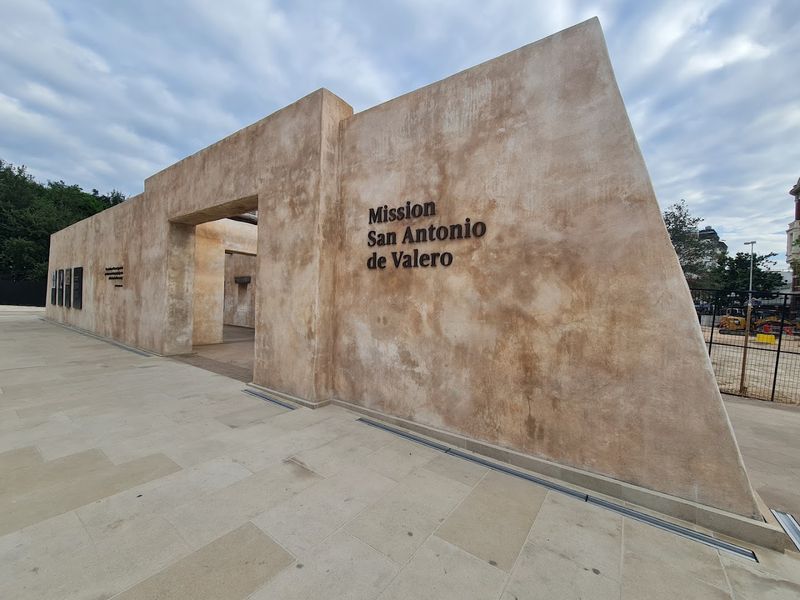
Long before it became one of the most recognized landmarks in the United States, this site had a completely different purpose. Mission San Antonio de Valero was founded in 1718 by Franciscan friar Antonio de Olivares, making it the oldest of the five Spanish colonial missions established in what is now San Antonio, Texas.
Its original mission was religious, built to convert the indigenous Coahuiltecan people to Christianity and teach them European agricultural and craft skills. The mission moved locations twice before settling at its current site at 300 Alamo Plaza, San Antonio, TX 78205.
The compound included a church, a convento for the priests, and housing for the native converts. Understanding this founding purpose completely changes how you see the place when you walk through its gates today.
How a Mission Became Known as the Alamo
Most people know this place simply as the Alamo, but that nickname has an interesting origin. The name likely comes from the Spanish word for cottonwood tree, and it was used to describe a Spanish cavalry unit from Alamo de Parras in Mexico that was stationed here in the early 1800s.
By the time Texas settlers began fighting for independence from Mexico in 1835, the mission had long been secularized and repurposed as a military outpost. That shift from sacred space to fortress is one of the most fascinating transformations in American architectural history.
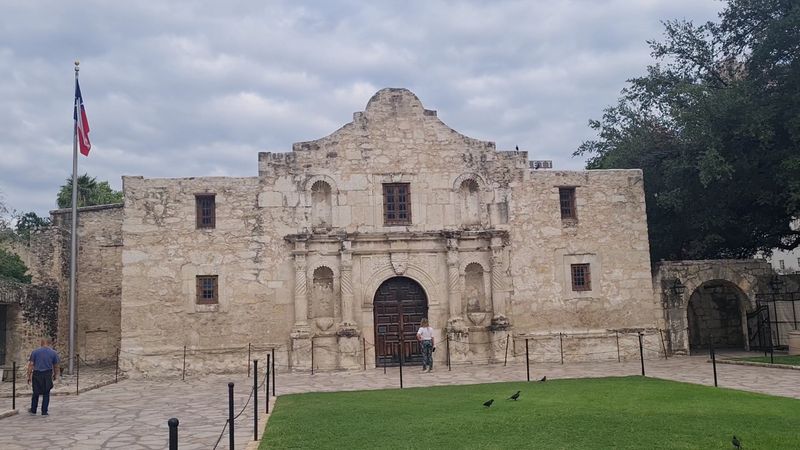
When you look at the famous curved parapet on the front of the church today, it helps to know that it was actually added by the U.S. Army during renovations in the 1840s and 1850s, long after the famous battle had already taken place.
The 13-Day Siege That Changed Texas Forever
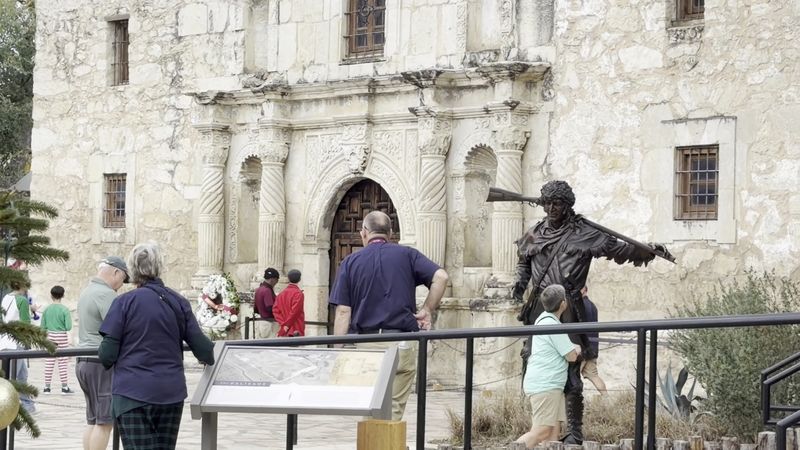
The battle that made this place legendary began on February 23, 1836, when General Antonio Lopez de Santa Anna arrived in San Antonio with a large Mexican army. A group of Texian and Tejano defenders, estimated at fewer than 200 fighters, took refuge inside the mission walls and refused to surrender.
For 13 days, they held their ground. On the morning of March 6, 1836, Mexican forces breached the walls and the battle ended.
Among the most well-known defenders were Jim Bowie, William Barret Travis, and frontiersman Davy Crockett.
The phrase “Remember the Alamo” became a rallying cry for Sam Houston’s army, which defeated Santa Anna just six weeks later at the Battle of San Jacinto, securing Texas independence. That sequence of events gives this small stone building an outsized place in the story of American expansion.
What the Church Building Looks Like Up Close
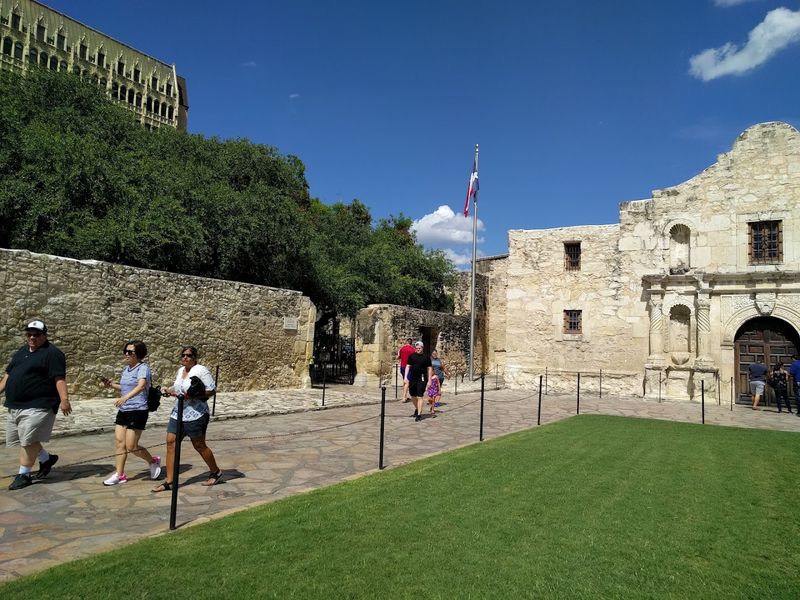
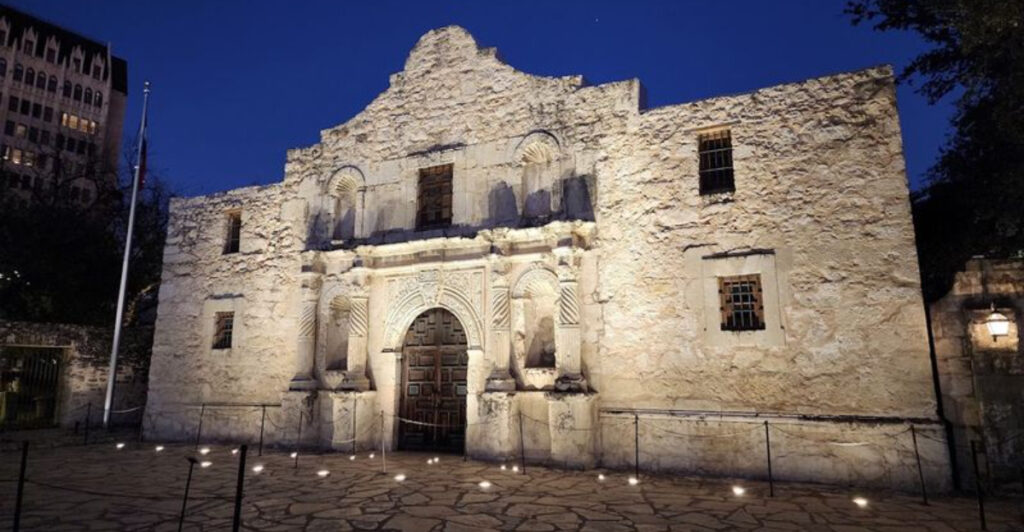
There is something quietly powerful about seeing the Alamo church in person for the first time. The building is made of soft limestone, and centuries of weathering have given the stone a warm, almost golden tone that photographs simply cannot capture accurately.
The carved details around the main doorway are surprisingly intricate for a frontier structure. You can make out figures, scrollwork, and shell motifs that reflect the Spanish Baroque style popular in the early 18th century.
The craftsmanship required to create those carvings in this remote location is genuinely impressive.
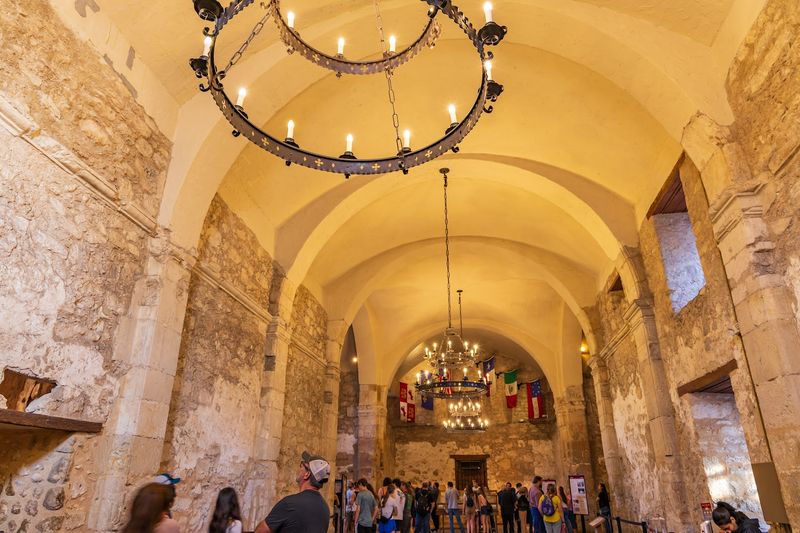
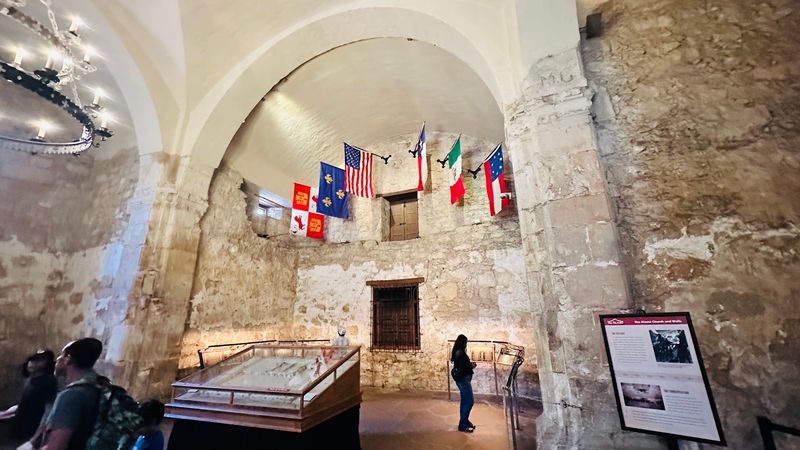
The interior of the church is cool, quiet, and relatively spare. There are no pews.
The walls are thick enough to muffle the noise of the busy plaza outside, which creates an unexpected sense of stillness the moment you step through the door. That contrast alone is worth the visit.
The Alamo Exhibit and Its Two-Story Museum
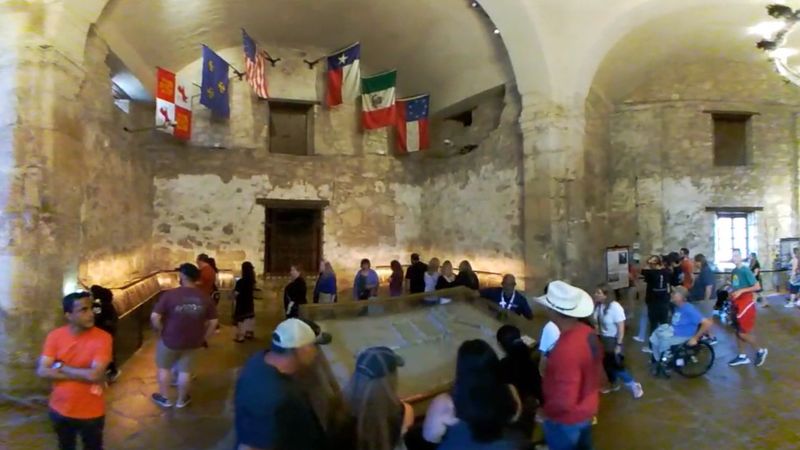
Right next to the church, the main Alamo Exhibit fills two full stories with artifacts, documents, weapons, and detailed displays that trace the full history of the site from its mission origins through the Texas Revolution and beyond.
The exhibits are well-organized and bilingual, with captions in both English and Spanish. That thoughtful detail reflects the multicultural history of the site itself, where Spanish, Mexican, Tejano, and Anglo-American stories all intersect.
Most visitors find that planning at least one hour for this building alone is the right call.
Some of the most compelling pieces on display include personal items recovered from the site, period weapons, and maps showing the layout of the compound during the 1836 siege. Seeing the actual scale of the fortification on those maps helps explain just how difficult the defense really was and why the story still resonates so deeply.
Walking the Grounds of Alamo Plaza
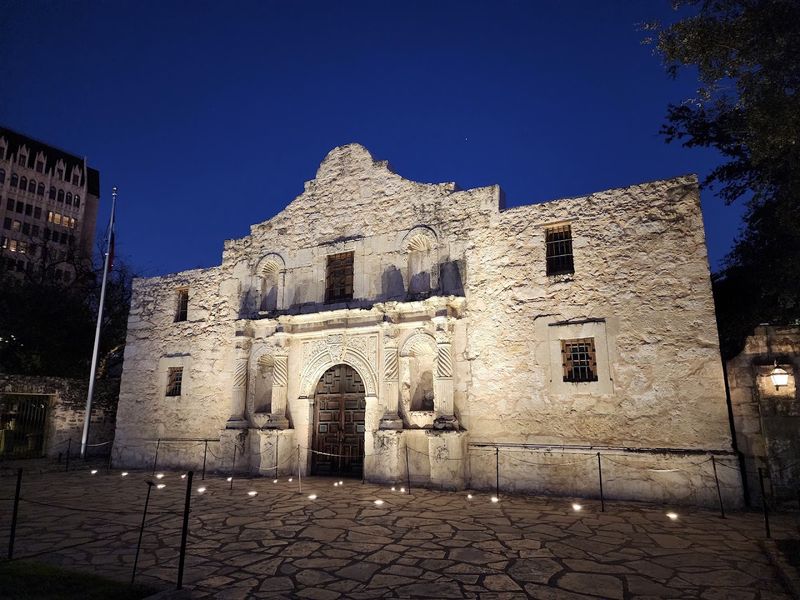
The outdoor plaza surrounding the mission is just as much a part of the experience as the buildings themselves. Statues, historical markers, and informational panels are spread throughout the grounds, making it easy to explore at your own pace without feeling rushed or overwhelmed.
One detail that many first-time visitors miss is the cannon display positioned off to the side of the main compound. There is also a 16-pound cannon mounted on what remains of the old fort wall, and it gives you a tangible sense of the military reality of this place in a way that indoor exhibits sometimes cannot.
The plaza is open and walkable even when the buildings are closed, which means an evening stroll around the exterior is entirely possible. The lighting at night shifts the mood dramatically and gives the old limestone walls a completely different character than you see during the day.
The Role of Tejano Defenders in the Battle
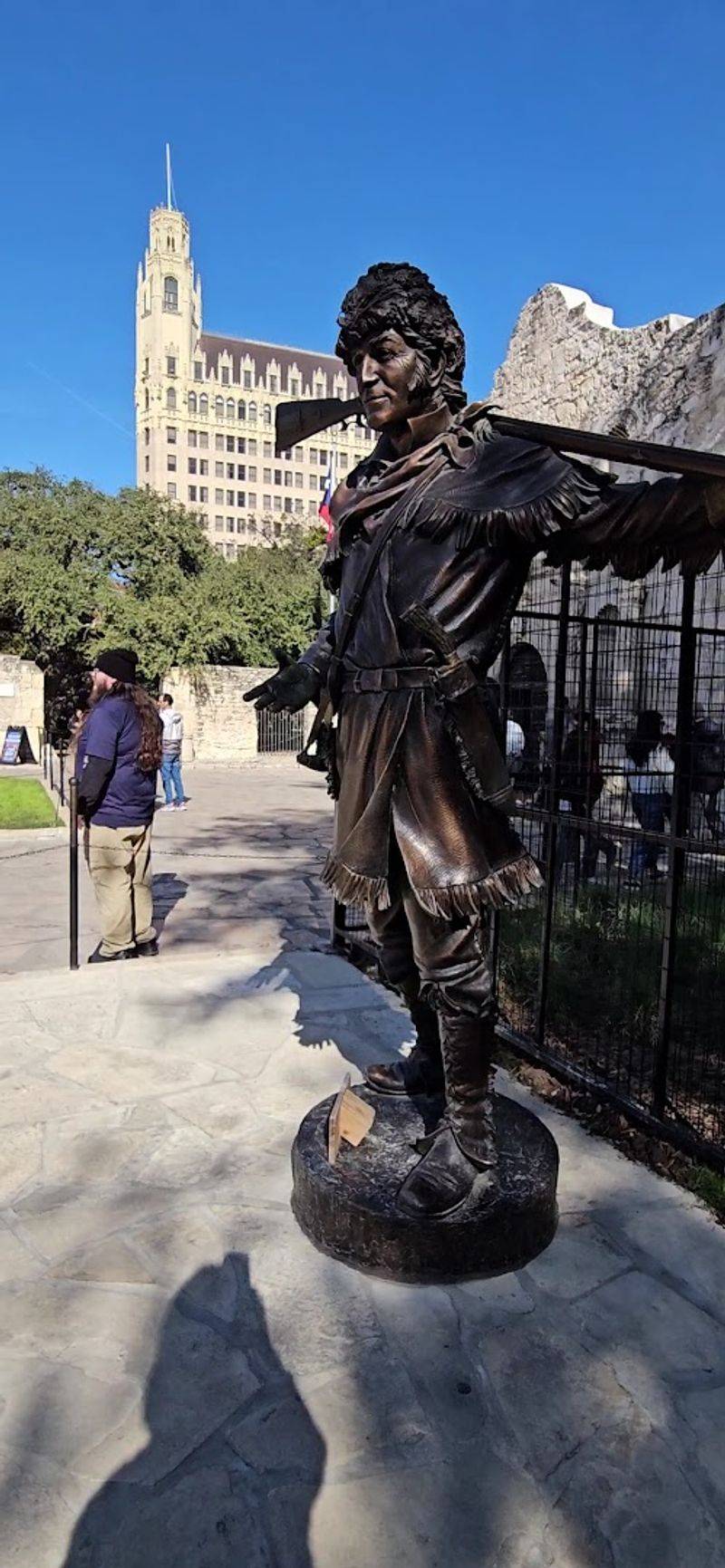
One of the most important stories told inside the Alamo today is one that was overlooked for many decades. Tejano fighters, Texans of Mexican descent, stood alongside Anglo-American settlers during the 1836 siege and shared the same fate as their fellow defenders.
Among the most notable was Juan Seguin, a Tejano officer who was sent out of the Alamo before the final assault to seek reinforcements. He survived and later served as mayor of San Antonio.
His story, and the stories of other Tejano defenders, are now prominently featured in the exhibits.
This fuller picture of who actually fought and what they were fighting for adds real depth to the visit. The Alamo is no longer presented as a single-sided story, and that honesty makes the experience more meaningful for visitors who want to understand the complicated layers of Texas history.
The Peaceful Courtyard and Garden Area
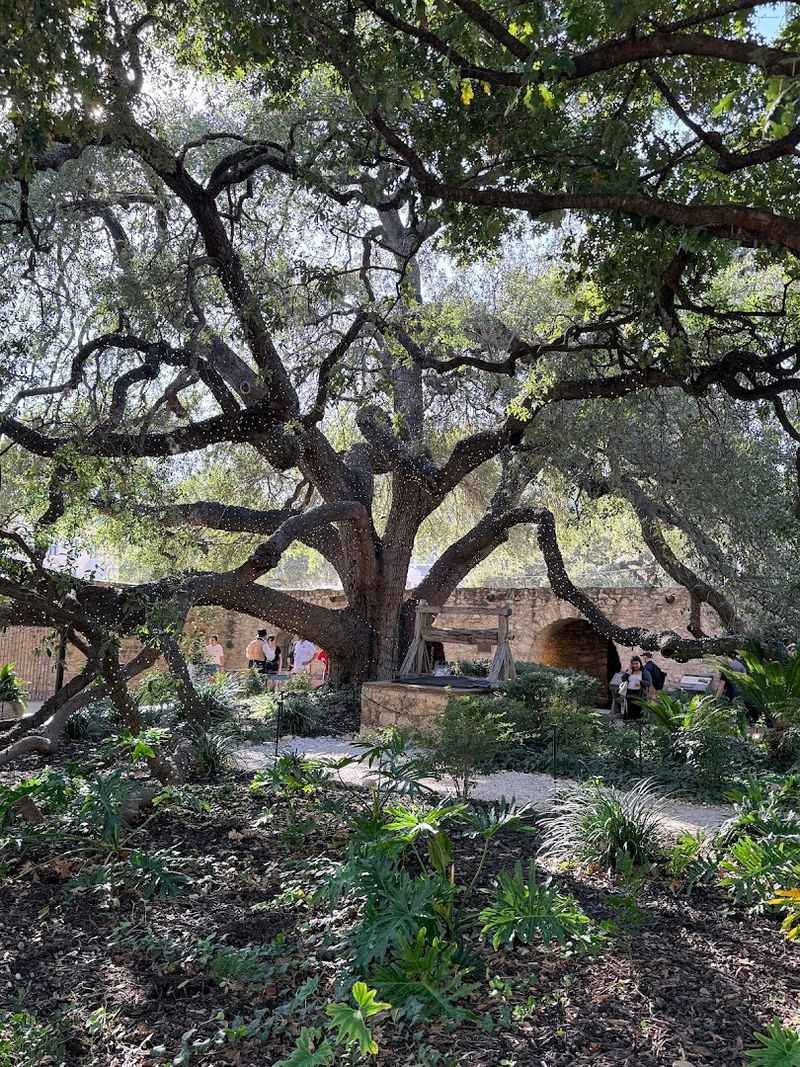
Beyond the church and the exhibit building, a courtyard area offers a quieter corner of the property that many visitors breeze past too quickly. Native plants, stone pathways, and the old mission walls create a genuinely peaceful atmosphere that feels removed from the busy commercial energy of the surrounding streets.
The garden is free to walk through, and it is a good spot to slow down and absorb the scale of the original compound. The mission complex was once much larger than what survives today, and the courtyard gives you a sense of how the space was organized when it functioned as a fully operational religious and agricultural community.
Early morning visits are particularly rewarding here. The crowds are thinner, the light is softer, and the space feels more contemplative.
It is one of those rare moments in a major tourist destination where you can actually hear yourself think.
Admission, Hours, and Practical Visiting Tips
The Alamo is open daily from 9 AM to 5:30 PM, which gives you a solid window to explore without feeling rushed. Entry to the church itself is free, though you will need to pick up a free admission ticket, which is available nearby.
Tickets for the full Alamo Exhibit and guided tours are available for purchase. If you are interested in the video presentation shown in one of the rooms, build in extra time because queues can get long, especially on weekends and during peak travel seasons.
Practical note: the bathrooms are clean and located just behind the main exhibit building, which is a detail worth knowing before you spend a couple of hours exploring. Parking is available on nearby streets, and the site is also an easy walk from the San Antonio River Walk, which is less than ten minutes away on foot.
The 3D Map That Shows How the Site Changed Over Time
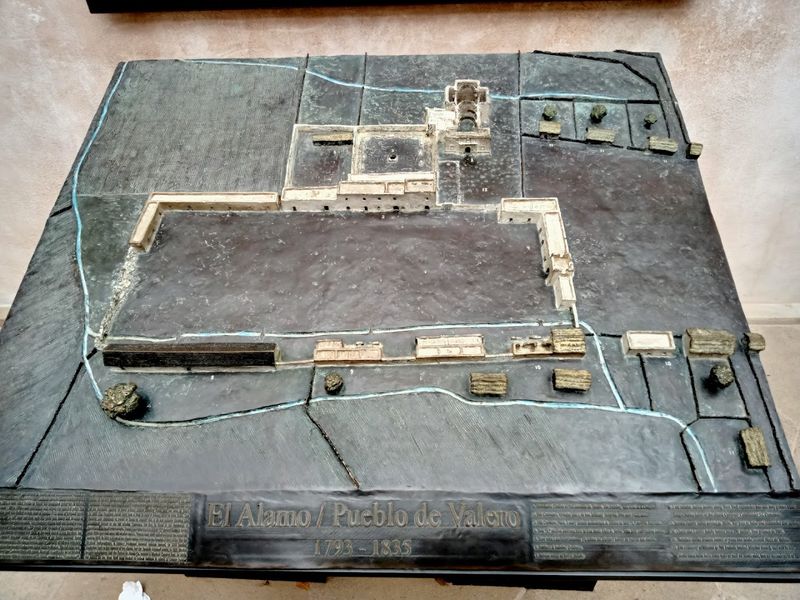
One of the most talked-about features inside the Alamo exhibit is a detailed 3D map that shows how the mission complex changed over the centuries. Seeing the site evolve from a working religious compound to a military fortification to the preserved landmark it is today makes the history feel genuinely three-dimensional.
The map traces the expansion and destruction of various structures across different eras, including the parts of the compound that no longer exist. That visual context is incredibly helpful for understanding why the current footprint feels smaller than many visitors expect based on photographs and popular culture depictions.
This is one of those exhibit elements that works especially well for younger visitors, who often respond more to spatial and visual storytelling than to written panels. It is also free to view, which makes it an easy addition to any visit regardless of how much time or budget you have available.
The Alamo as Part of a UNESCO World Heritage Site
The Alamo does not stand alone in the historical landscape of San Antonio. It is one of five Spanish colonial missions in the city, and together they were designated a UNESCO World Heritage Site in 2015, recognizing their outstanding universal value as examples of the cultural exchange between Spanish and indigenous cultures in the Americas.
The other four missions, Mission Concepcion, Mission San Jose, Mission San Juan, and Mission Espada, are all located south of downtown along the San Antonio River. Visiting all five gives you a much richer picture of how the mission system worked and how it shaped the region’s culture, architecture, and agriculture.
The Alamo’s fame sometimes overshadows the others, but anyone with a genuine interest in the history of the American Southwest will find the full mission trail deeply rewarding. Each site has its own character, and the collective story they tell is remarkable.
Making the Most of Your Visit to the Alamo
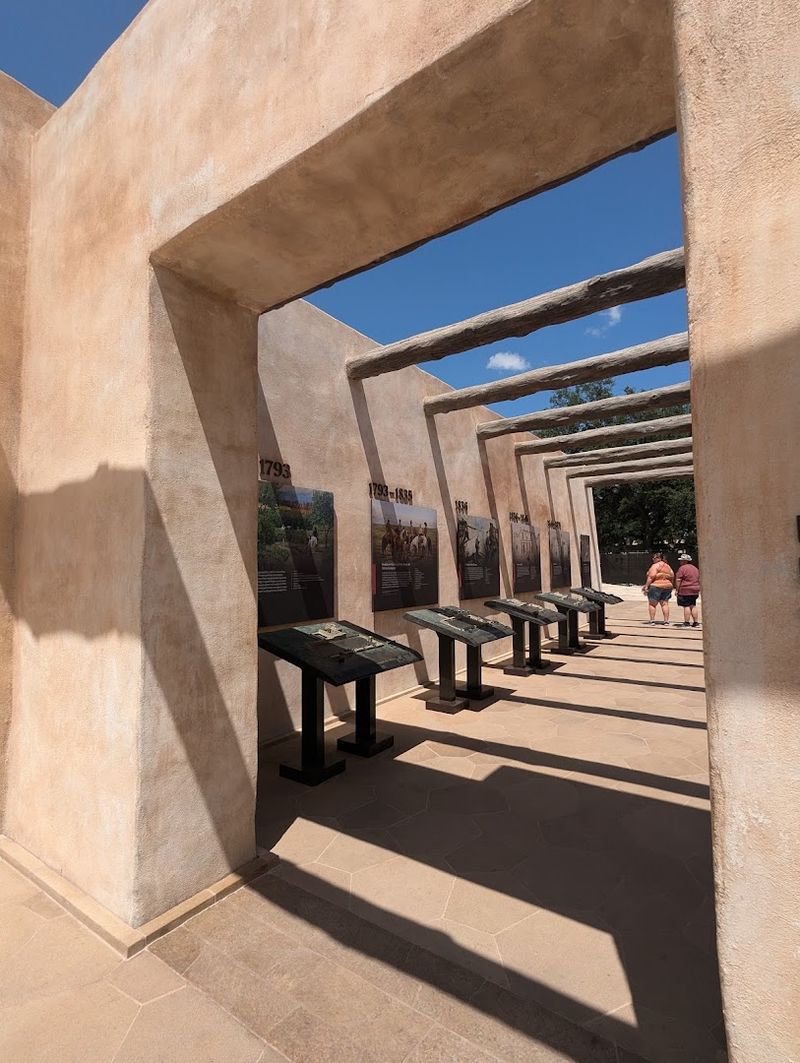
A well-planned visit to the Alamo rewards curiosity. Most people who feel underwhelmed afterward admit they moved through too quickly without reading the panels or taking the guided tour.
Slowing down genuinely changes the experience.
Plan for roughly two to two and a half hours if you want to see the church, walk the grounds, explore the full two-story exhibit, and browse the Alamo Shop. The shop is well-stocked with books, maps, and historically focused merchandise that makes for more meaningful souvenirs than the typical tourist fare.
After your visit, the San Antonio River Walk is a natural next stop, just a short walk away. The broader Alamo Plaza area also puts you close to several other historically significant sites worth exploring.
The Alamo works beautifully as the starting point for a full day of discovery in one of Texas’s most historically layered cities.
Share this story