A bird hospital in New Jersey may not sound like a day-trip idea until the lineup includes owls, hawks, vultures, falcons, and eagles. In Millington, one nonprofit turns wildlife care into a low-key outing that feels useful, local, and surprisingly easy to fit into a weekend. Admission is free, with a small suggested donation, so families and curious nature lovers can stop by without planning a big-ticket trip. The best part is that the place is not trying to be a zoo, and that difference is exactly what makes it worth knowing.
A Millington bird hospital with public pathways
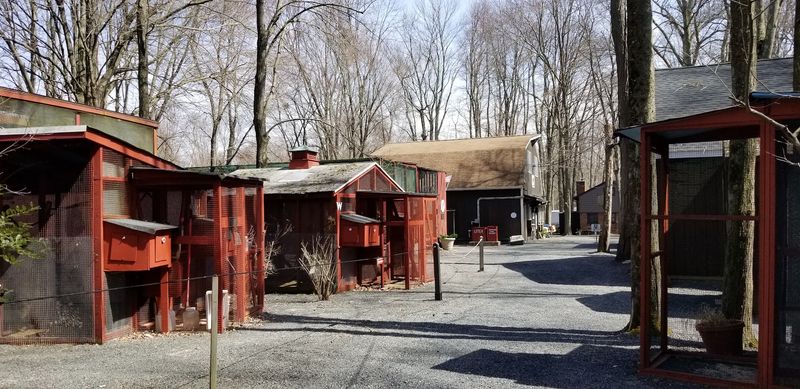
The address is simple enough to put straight into the map: The Raptor Trust, 1390 White Bridge Rd, Millington, NJ 07946. Tucked in Morris County near the Great Swamp area, the nonprofit organization operates as a bird rehabilitation center while also allowing the public to view some of its permanent ambassador birds.
That combination is the key to understanding the place. A stop here is not built around rides, performances, or a full-day attraction schedule, but around a working facility that cares for injured and disabled birds.
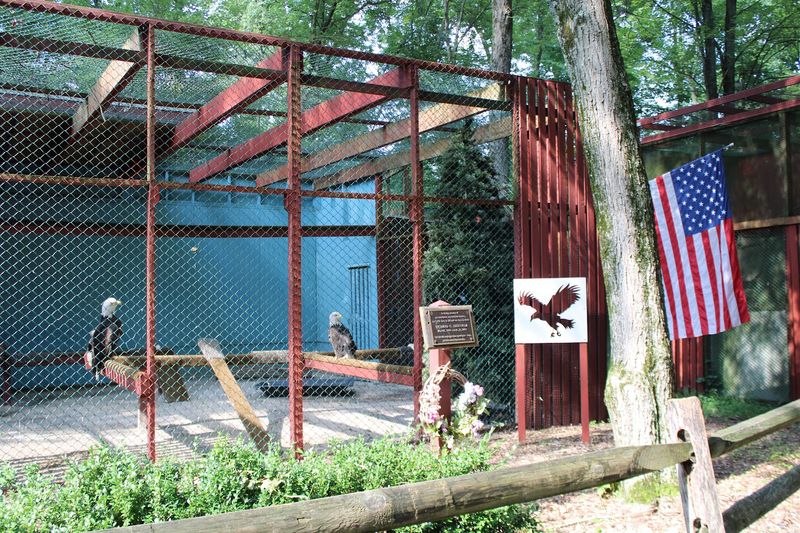
Public areas include pathways around bird enclosures where guests can see raptors and other birds that are part of the center’s education mission. The setting has a practical, nonprofit feel, with the focus staying on care, learning, and respectful viewing rather than entertainment for entertainment’s sake.
Many people treat it as a quick local stop, while others linger longer at each enclosure and read the plaques. Either approach works, which makes the place especially handy for New Jersey residents who want something meaningful without turning the day into a production.
A rescue mission behind the bird enclosures
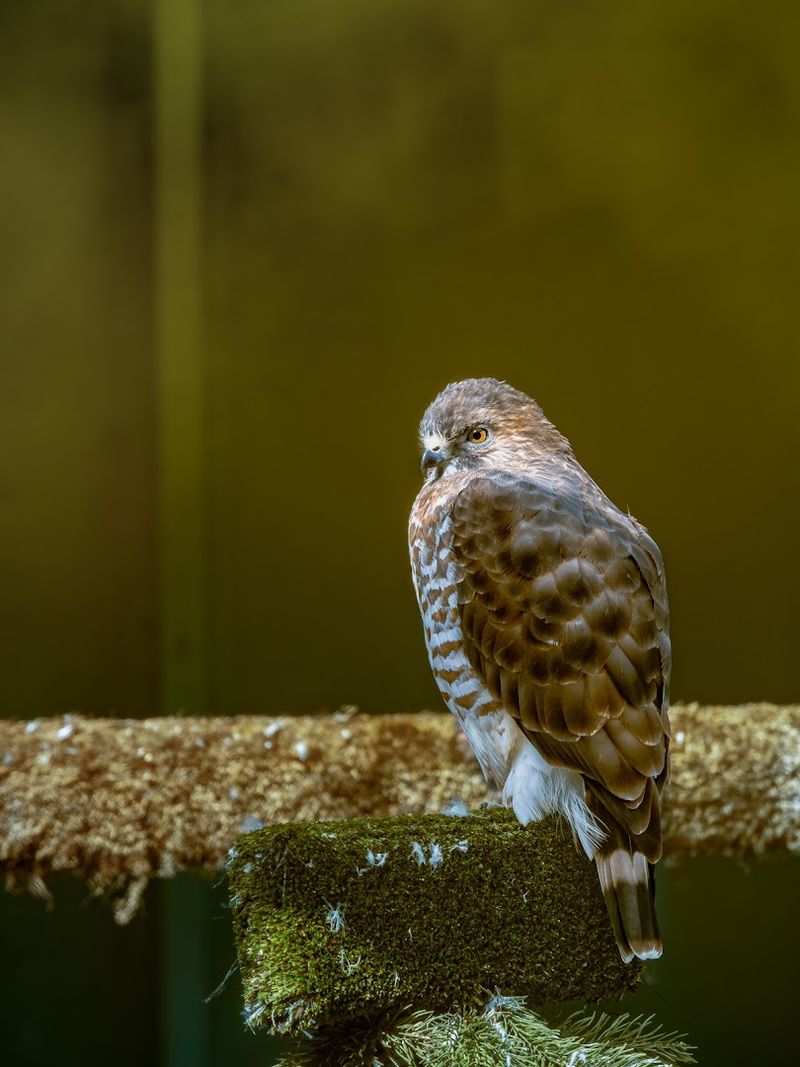
Behind the public walkway sits the reason people speak about this place with more affection than a typical animal stop. The Raptor Trust is known as a nonprofit that helps rehabilitate birds, including birds of prey, and people also bring in injured smaller birds when guidance or care is needed.
That mission shows up in small but important ways. Some people describe contacting the organization after finding a bird that had fallen from a nest or struck a building, then receiving practical advice or being able to bring the bird in for help.
The center’s work also explains why the public experience has limits. Certain birds are visible because they cannot be released, while others may be receiving care away from public areas.
That difference matters for expectations. A bird may be there because it is rehabilitating, disabled, or serving as an education ambassador, not because the facility is collecting animals for display.
For a local day-tripper, that gives the visit a little more weight. The free entry is nice, but the real point is seeing a New Jersey organization built around giving wild birds professional care and a second chance whenever possible.
Eagles, owls, hawks, falcons, and vultures up close
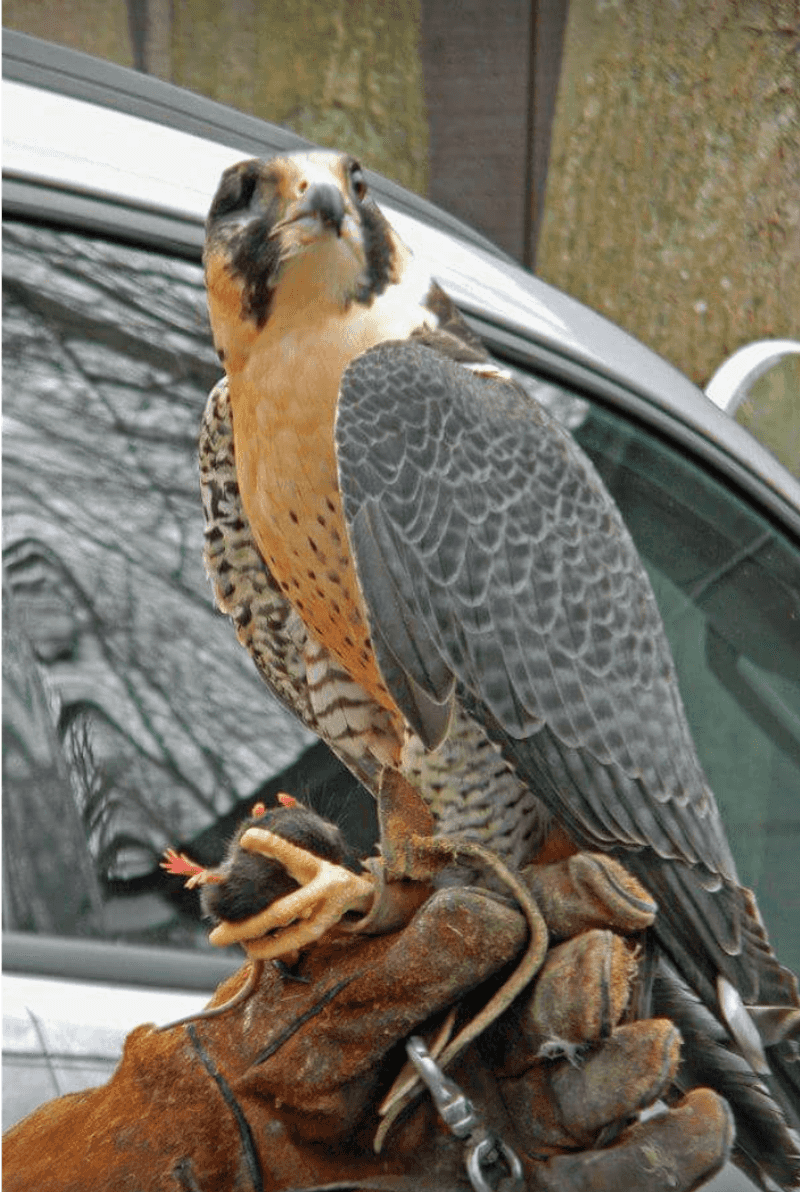
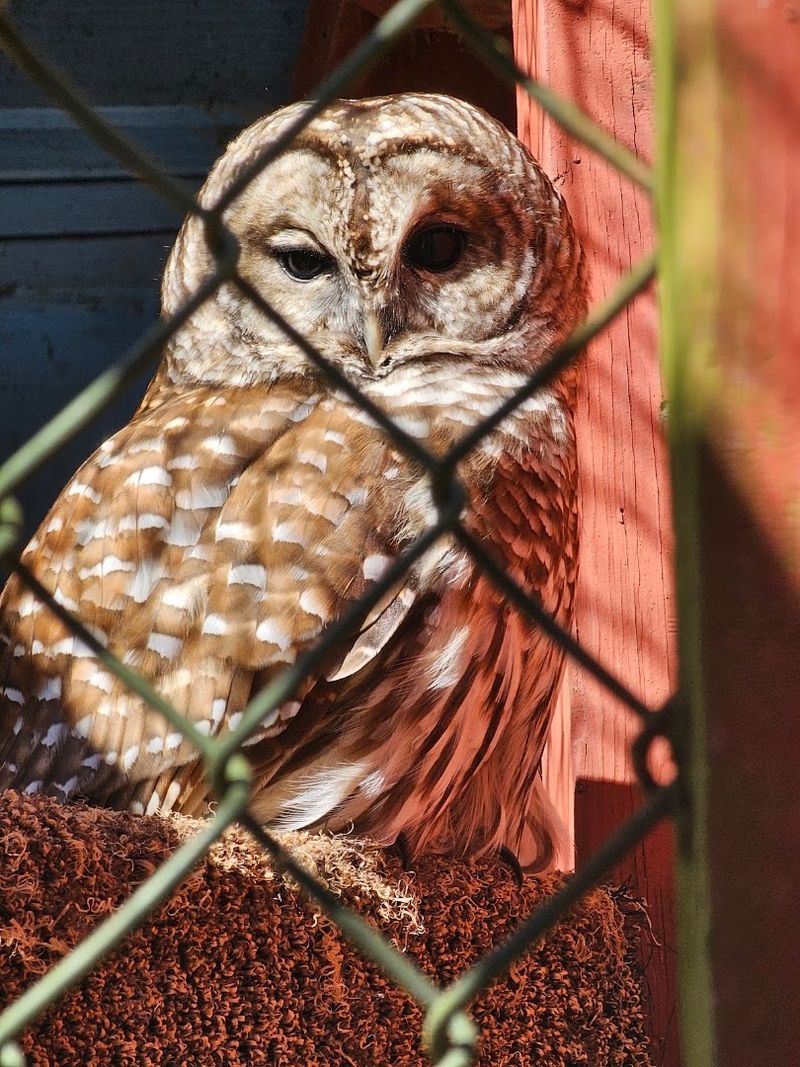
Big birds have a way of making adults suddenly act like the field trip was secretly for them all along. At The Raptor Trust, the public viewing areas may include birds such as eagles, owls, hawks, falcons, vultures, ravens, and other raptors noted by people who have spent time along the paths.
The appeal is partly access. Many New Jersey residents can go years without seeing these birds clearly in everyday life, so the chance to stand near an enclosure and study their size, posture, and features can feel unusually direct.
Informational plaques help turn that curiosity into an actual lesson. Instead of simply pointing and moving on, guests can connect each bird with its species and the broader purpose of the organization.
The setup is modest rather than flashy, and that works in its favor. Enclosures, signs, and pathways keep the experience focused on the birds and the rescue work behind them.
Photography can be tricky because protective fencing is there for the birds’ safety. That small inconvenience is a useful reminder that the center’s first responsibility is care, not camera perfection.
A free stop with a suggested donation
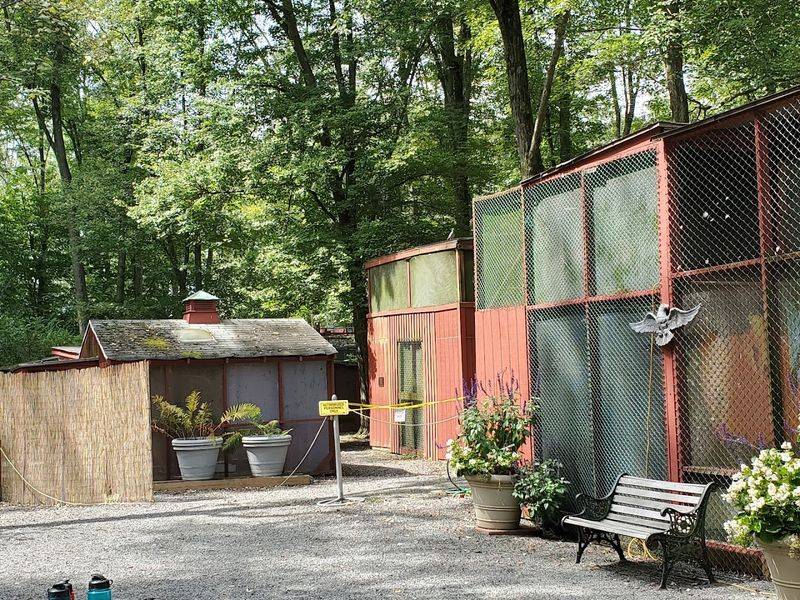
Free admission gives this place a rare kind of New Jersey day-trip power. The Raptor Trust can be visited without buying tickets, and available information mentions a suggested donation of $2, which keeps the stop accessible while still pointing people toward supporting the work.
That detail is part of the charm, but it also comes with an unspoken responsibility. The birds, facilities, care, education programs, and rehabilitation work all need support, so the donation idea is not just a polite extra.
Families may appreciate the low barrier most. A parent can bring a child for a short learning stop without committing to a costly outing, and adults can still feel like the trip has substance.
The experience can be brief, too. Some people spend around 15 minutes, while others stretch the visit closer to an hour or more by reading signs and moving slowly between enclosures.
That flexibility makes it easy to recommend as a local add-on. It is the kind of stop where a few dollars, a little time, and genuine curiosity can all go further than expected.
A family-friendly lesson without the classroom feeling
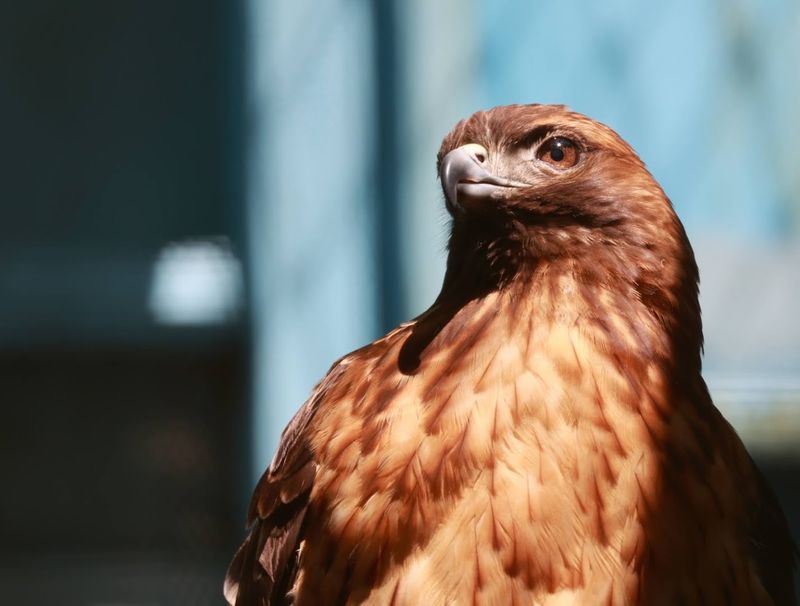
Kids do not need a worksheet to learn here, which may be the strongest argument for bringing them. The Raptor Trust gives families a way to talk about wildlife care, local birds, and responsible behavior around animals without turning the outing into homework.
The place is especially appealing for children who like animals but may not have much patience for long, structured programs. The paths allow families to move at their own pace, pause at birds that catch their attention, and keep going when younger attention spans start flapping away.
Adults get plenty out of it, too. Birds such as owls, hawks, eagles, and vultures can spark questions about migration, injuries, habitats, and why some animals cannot return to the wild.
Private tours and educational programs are mentioned by people who have participated, so families who want a deeper experience may have options beyond a casual walk. The updated Education Center has also been noted as part of the learning side of the facility.
For New Jersey parents, the best part may be the simplicity. No complicated itinerary is needed, just enough time to let curiosity do the steering.
A wooded setting near the Great Swamp
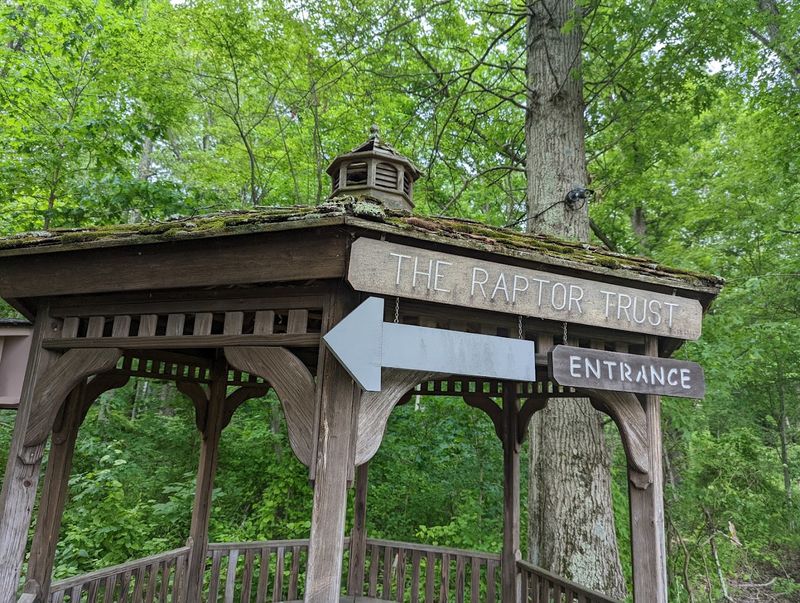
Not every worthwhile New Jersey stop needs a main street, boardwalk, or skyline in the background. The Raptor Trust sits near the Great Swamp area, and people often pair a visit with time outdoors nearby, especially when they want a nature-focused half day.
The facility itself has gravel pathways tucked into a wooded setting. That matters for both the mood and the practical side of visiting, since the paths are part of the public experience and may be affected by weather.
After storms or difficult conditions, checking the organization’s website before heading out is a smart move. The center has explained that its wooded gravel paths can take longer to recover after major weather events than more open public spaces.
That is not a drawback so much as a clue about what kind of place this is. The Raptor Trust is a real working site with outdoor access, not a sealed indoor attraction designed to run exactly the same every day.
Combined with nearby nature plans, the visit can feel like a compact New Jersey wildlife outing. Keep it simple, keep it flexible, and let the birds be the reason the route has a purpose.
Accessible paths, parking, benches, and a small gift shop
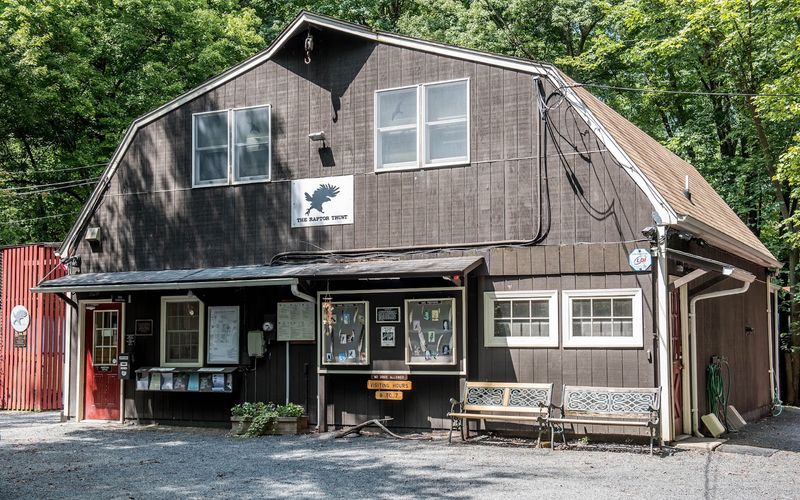
Practical comforts rarely get applause, but they can decide whether a quick stop feels easy or frustrating. The Raptor Trust has been described as having a decent-sized parking area, including a crushed-stone lot, along with clear walking paths and benches around the facility.
Public facilities have also been described as ADA-accessible, which is an important note for planning. Since conditions can change outdoors, checking ahead is still sensible for anyone who needs specific access details on the day of a visit.
The walking route is not presented as a giant attraction, and that is part of its usefulness. People can make a short circuit, pause where they want, and avoid the feeling of being trapped in a schedule.
A gift shop adds a lighthearted finish without taking attention away from the mission. Items mentioned by guests include shirts, books, mugs, hats, plush toys, and other bird-themed merchandise.
That shop also gives supporters another way to contribute beyond the suggested donation. A small owl plush or raptor-themed item may leave with a child, while the money stays connected to the birds that made the visit matter.
Daily hours and smart timing notes
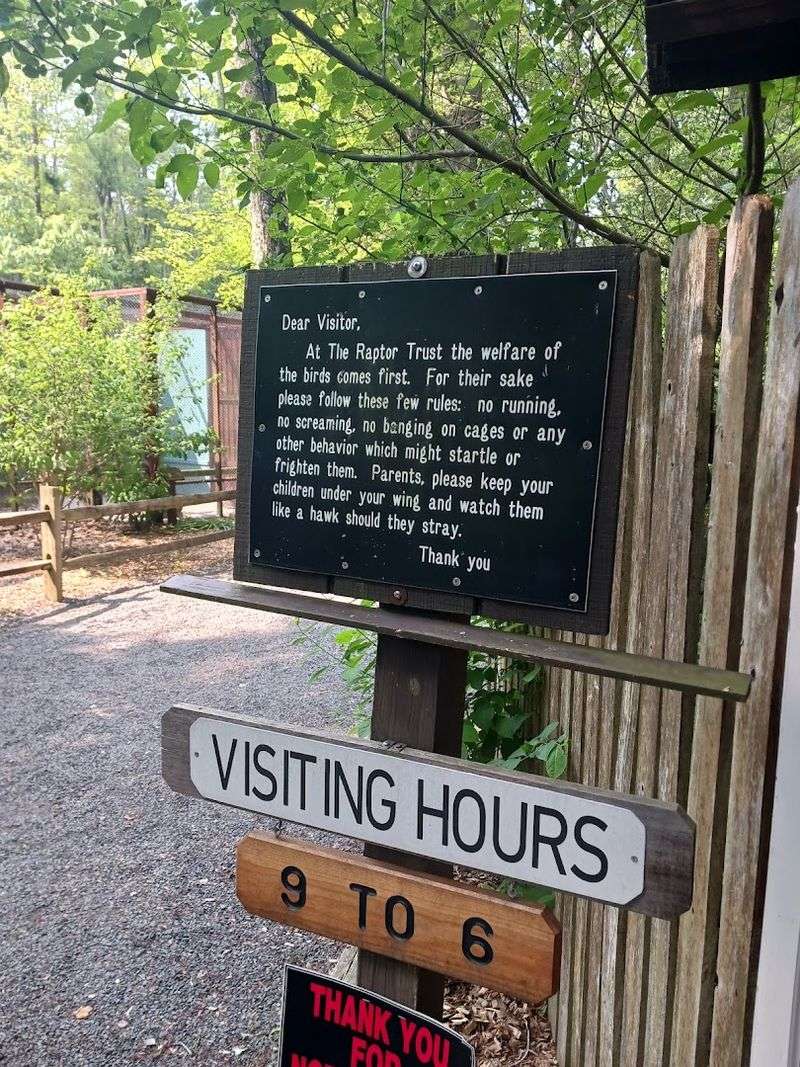
Hours are refreshingly straightforward when the facility is operating normally. The Raptor Trust is listed as open from 9 AM to 6 PM every day of the week, including Thursday, Friday, Saturday, Sunday, Monday, Tuesday, and Wednesday.
Still, an outdoor nonprofit wildlife facility deserves a little planning respect. Weather can affect access, and the organization has noted closures during serious conditions when pathways or safety concerns make public visiting difficult.
The smartest move is to check the official website before leaving, especially after storms or during uncertain weather. That small step can save a wasted drive and helps set expectations for what will be available once there.
Timing also depends on how deeply someone wants to engage. A quick stop may take 15 minutes, while a more patient visit with plaques, bird-by-bird pauses, and a look in the gift shop may take closer to an hour or more.
Because entry is free, there is no pressure to wring every possible minute from the visit. Treat it as a flexible local stop, and it becomes easier to enjoy it for what it is rather than what it never claimed to be.
A soft verdict for a very New Jersey kind of outing
New Jersey does understated places better than outsiders give it credit for, and The Raptor Trust fits that category neatly. It is not loud, oversized, or built around spectacle, but it gives residents a real reason to feel proud of a local nonprofit doing specialized work.
The strongest reason to go is the mix of access and purpose. Free admission makes the visit easy, the suggested donation keeps the mission visible, and the birds give people a close look at wildlife they may rarely encounter in daily life.
It suits families, bird enthusiasts, animal lovers, nature-minded day-trippers, and anyone already exploring the Millington or Great Swamp area. It also suits people who prefer a meaningful short stop over an expensive outing with too many moving parts.
The key is to arrive with the right expectations. This is a rehabilitation and education facility, not a zoo, so the experience is modest, respectful, and centered on the birds’ care.
For a no-admission New Jersey outing with owls, raptors, and a mission worth supporting, The Raptor Trust earns its place on the local must-know list. Bring curiosity, check the hours, and consider leaving a donation for the feathered residents who made the trip memorable.
Share this story