There is a building in downtown Springfield, Illinois, that holds more American history per square foot than almost anywhere else in the country. The halls inside once echoed with the voice of a young lawyer-turned-politician who would go on to change the nation forever.
Abraham Lincoln stood at a podium here in 1858 and delivered words that still send a chill down your spine today. The Old State Capitol is not just a pretty historic building; it is the place where one of the most pivotal speeches in American political history was born, and visiting it feels like touching something real and irreplaceable.
The Address and Setting of a Historic Landmark
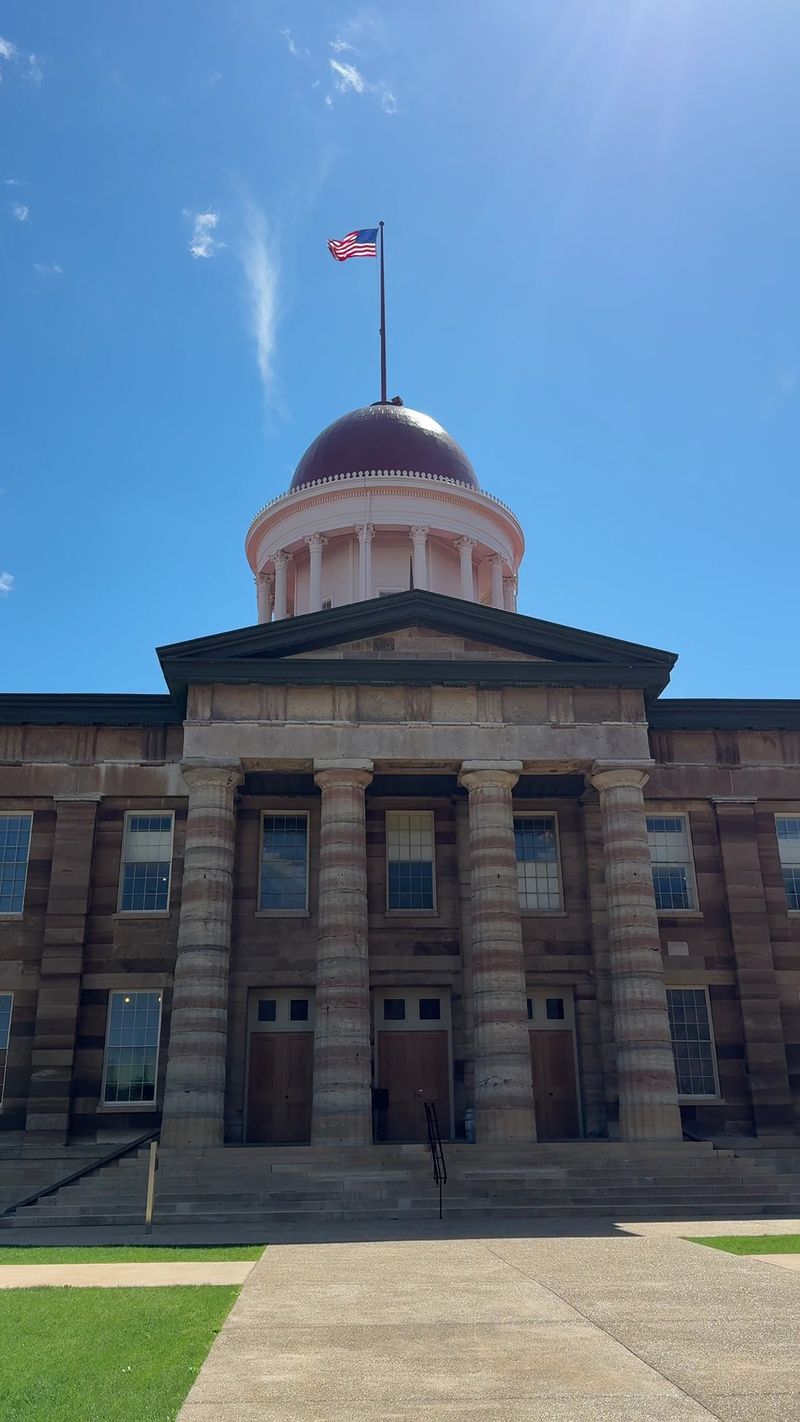
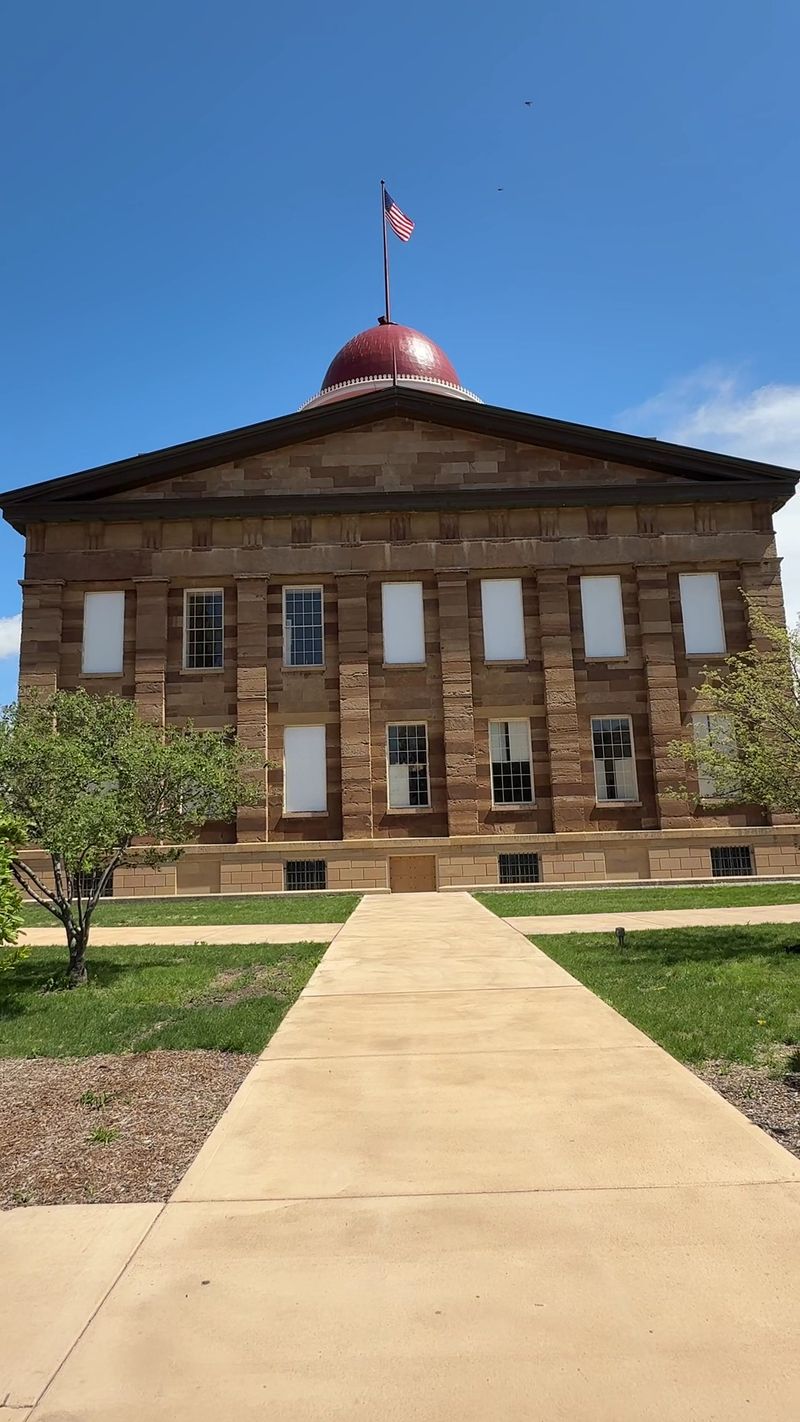
Right in the heart of downtown Springfield, at 526 E Adams St, Springfield, IL 62701, the Old State Capitol State Historic Site rises with quiet authority above the surrounding streets. The building is a striking example of Greek Revival architecture, with tall stone columns and a symmetrical facade that commands attention from every angle.
Springfield is the capital of Illinois, and this historic site sits just minutes from the current state capitol building. The contrast between the two structures tells the whole story of how the city and state have grown over more than a century and a half.
The surrounding downtown area provides an interesting backdrop, with shops and other historic sites nearby. Visitors can easily combine a stop here with other Lincoln-related landmarks scattered throughout the city, making it a natural anchor for any Springfield history tour.
The building is open Tuesday through Saturday from 9 AM to 5 PM, and admission is free, though a donation of five dollars per person is encouraged to help support ongoing preservation efforts.
The House Divided Speech That Changed American History
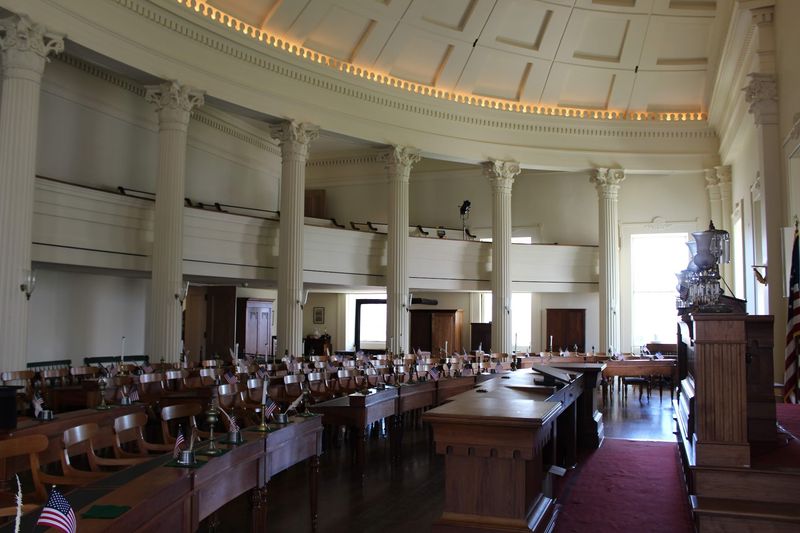
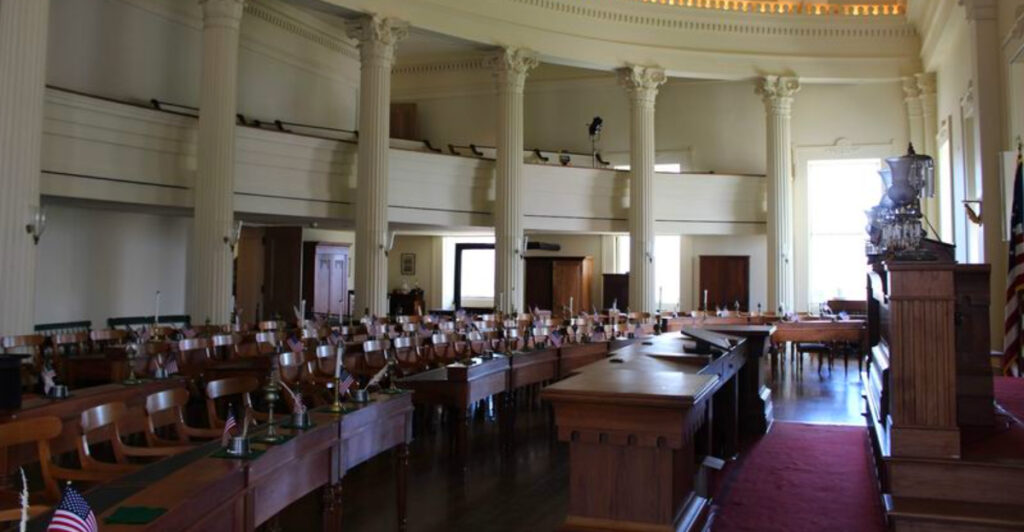
On June 16, 1858, Abraham Lincoln stood in the Hall of Representatives inside this very building and delivered one of the most quoted political speeches in American history. He accepted the Republican Party’s nomination for U.S.
Senate and opened his address with words that became legendary: “A house divided against itself cannot stand.”
Lincoln was in his late 40s at the time, already a seasoned Illinois lawyer and legislator, but not yet the national figure he would soon become. The speech was a direct challenge to the expansion of slavery and set the tone for the famous Lincoln-Douglas debates that followed that same year.
Standing in the actual room where those words were first spoken is a powerful experience that no history book can fully replicate. The chamber has been carefully restored to reflect its 1850s appearance, with period-appropriate furniture and architectural details that help transport visitors back to that charged political moment.
Many people describe it as one of the most moving stops on any Lincoln heritage trail in Illinois.
A Building With a Surprisingly Short Political Career
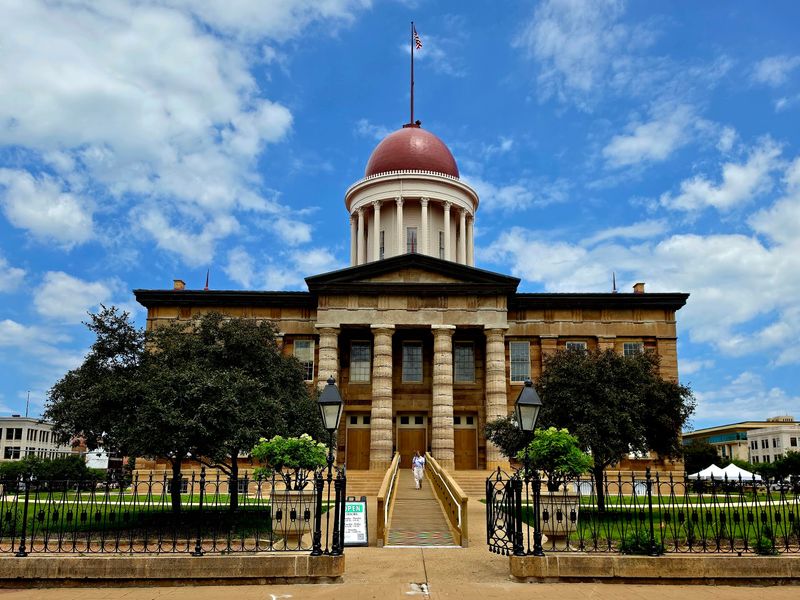
For a building that carries so much historical weight, the Old State Capitol had a relatively brief run as the actual seat of Illinois government. Construction was completed in 1837, and the building served as the state capitol until 1876, when the new and much larger capitol building opened just a few blocks away.
That is fewer than four decades of active political service, yet the events that unfolded within those walls were enough to cement its place in American history forever. Lincoln served multiple terms in the Illinois House of Representatives here, argued cases before the Illinois Supreme Court, and used the building as a platform for his rising political career.
After the government moved out, the building went through several changes in ownership and use before eventually being recognized for its enormous historic value. A major restoration effort in the 1960s and 1970s brought the structure back to its 1840s-to-1860s appearance.
A more recent multi-million-dollar renovation has refreshed and improved the site further, making it one of the best-preserved 19th-century political buildings anywhere in the Midwest.
The Architecture and Natural Light That Define the Space
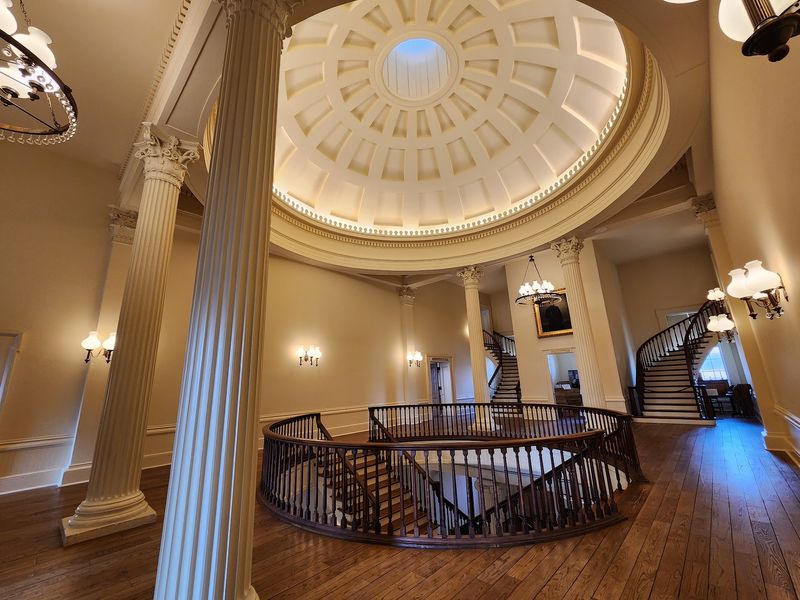
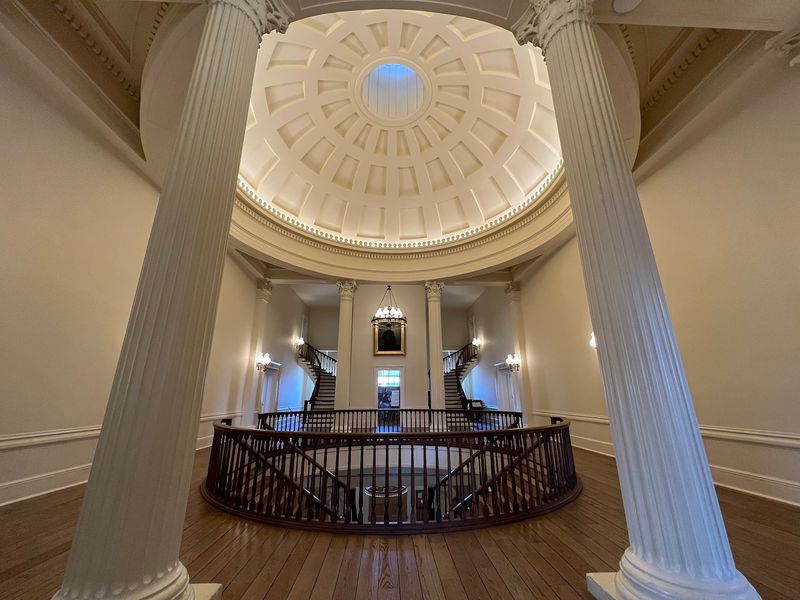
One of the first things you notice when you walk through the front doors is how much natural light fills the interior. The building was designed and constructed before gas or electric lighting existed, so the architects had to rely entirely on large, carefully placed windows to illuminate the chambers and hallways.
The result is a space that feels surprisingly open and warm, even on overcast days. The tall arched windows draw your eye upward, and the quality of light gives the rooms a kind of soft, painterly quality that photographs barely capture.
It is a genuinely beautiful architectural achievement for its era.
The plasterwork throughout the building is another highlight, with ornate ceiling details and decorative moldings that reflect the craftsmanship of mid-19th-century construction. The outer walls are the only original stonework remaining from the original structure; everything else inside is a meticulous reconstruction, but the attention to period accuracy is impressive throughout.
Visitors with an interest in architecture will find plenty to study and appreciate beyond the purely historical significance of the site.
Lincoln’s Legal Career Within These Walls
Before Lincoln became a president, he was a lawyer, and a very good one at that. The Old State Capitol housed the Illinois Supreme Court, and Lincoln argued cases before that court on multiple occasions during his legal career.
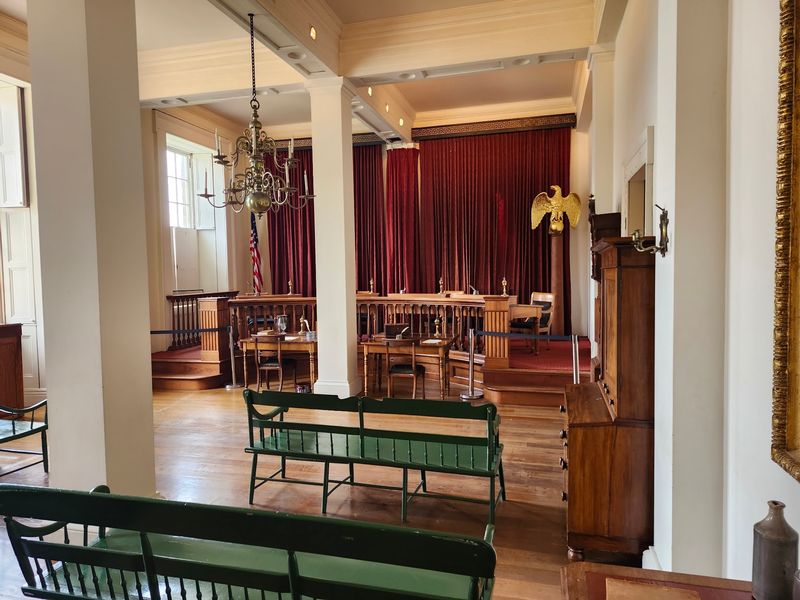
The Supreme Court chamber has been restored and is one of the most visually impressive rooms in the building.
Seeing the courtroom where Lincoln practiced law adds a different dimension to the visit. Most people know him primarily as a president and speechmaker, but his years as a practicing attorney in Springfield shaped his thinking, his communication style, and his understanding of law and justice in profound ways.
The chamber features period-appropriate judicial furniture and display materials that explain how the court functioned during the 1840s and 1850s. Guides on-site are generally happy to share specific stories about Lincoln’s legal work and the kinds of cases he handled.
For anyone who wants to understand Lincoln the man rather than just Lincoln the legend, this room is an unexpectedly rich starting point.
The Underground Railroad Exhibit and a Deeper Story
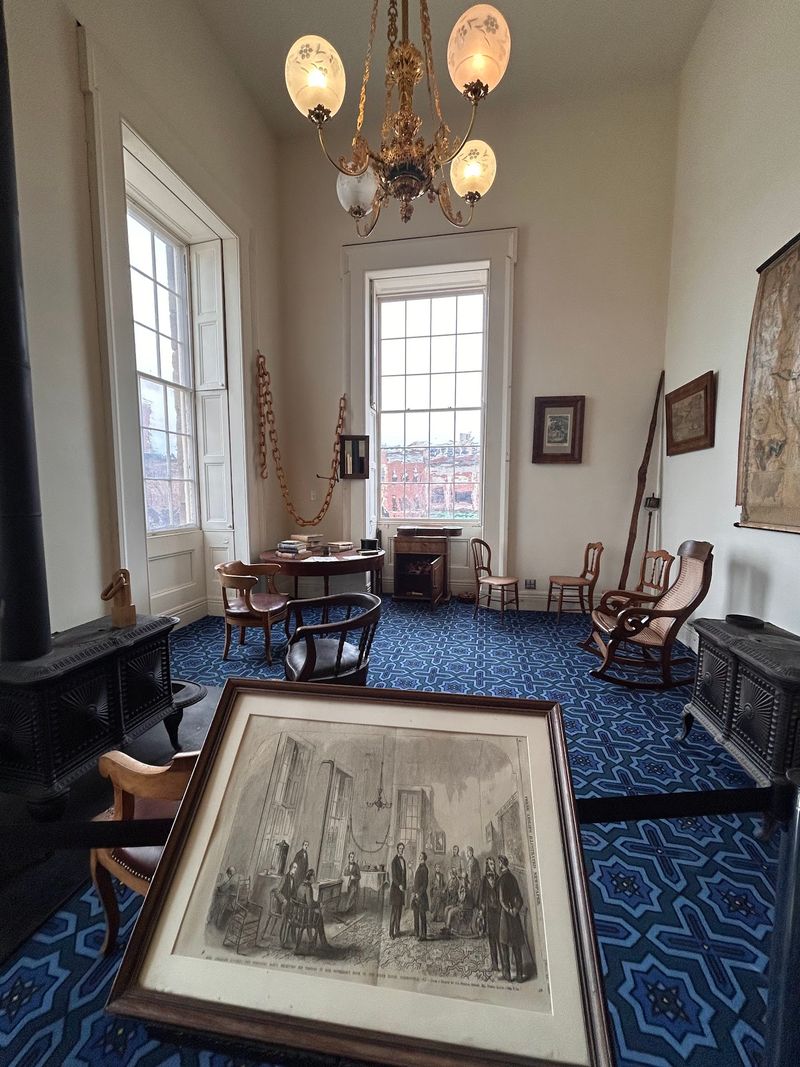
History at the Old State Capitol goes well beyond Lincoln’s famous speech. One of the more thought-provoking features of the building is the Underground Railroad display housed in the old Supreme Court chambers.
This exhibit explores the network of people and safe houses that helped freedom-seekers escape from the South before and during the Civil War era.
Illinois played a complicated and important role in that story, and the exhibit does not shy away from the tensions and contradictions of the period. The displays include historical artifacts, maps, and narrative panels that provide real context for the broader struggle over slavery that Lincoln’s own speeches were responding to.
This portion of the visit tends to spark genuine conversation among families and school groups, and the staff members nearby are knowledgeable and willing to answer follow-up questions. It is a reminder that the building was not just a backdrop for famous political moments but an active participant in the social and moral debates that defined its era.
The exhibit makes the overall visit feel more complete and emotionally resonant than a purely political history tour would.
Where Lincoln Lay in State Before His Burial
Few people realize that the Old State Capitol was the last public place Abraham Lincoln rested before his burial. After his passing in April 1865, his body was brought back to Springfield by train on a long and somber journey from Washington, D.C.
The building served as the site where the public could pay their final respects.
Lincoln’s coffin was placed in the Hall of Representatives, the same room where he had delivered the House Divided speech just seven years earlier. Thousands of Springfield residents and visitors from across Illinois came to the building during those days to honor him.
His son Willie, who had passed away earlier during Lincoln’s presidency, was also brought back to Springfield at the same time and laid to rest alongside his father.
That connection between the speech and the farewell gives the Hall of Representatives a layered emotional weight that is hard to articulate but easy to feel when you are standing in it. The guides at the site are thoughtful about sharing this part of the story, and it tends to leave a lasting impression on nearly every visitor who hears it.
The Guided Tours and Knowledgeable Staff
One of the consistent highlights that visitors mention is the quality of the people working inside the building. The guides and security staff at the Old State Capitol tend to be genuinely enthusiastic about the history they are sharing, and that enthusiasm is contagious.
Tours run on a flexible schedule, sometimes every half hour and sometimes as soon as a group is ready, depending on how busy the day is.
Interns and volunteer guides often have specific areas of expertise, and conversations with them can lead to fascinating details that are not printed on any placard. The Lincoln Troubadours, a vocal group, occasionally perform in the rotunda and the old House chamber, adding a memorable musical layer to the experience that catches many visitors pleasantly off guard.
The staff is also genuinely helpful for visitors who prefer to explore on their own rather than follow a formal tour. Self-guided options are available, and the rooms are laid out in a logical sequence that makes it easy to move through the building at your own pace.
Plan to spend at least an hour to see everything comfortably, and do not hesitate to ask questions along the way.
The Voting Chambers and Government Rooms
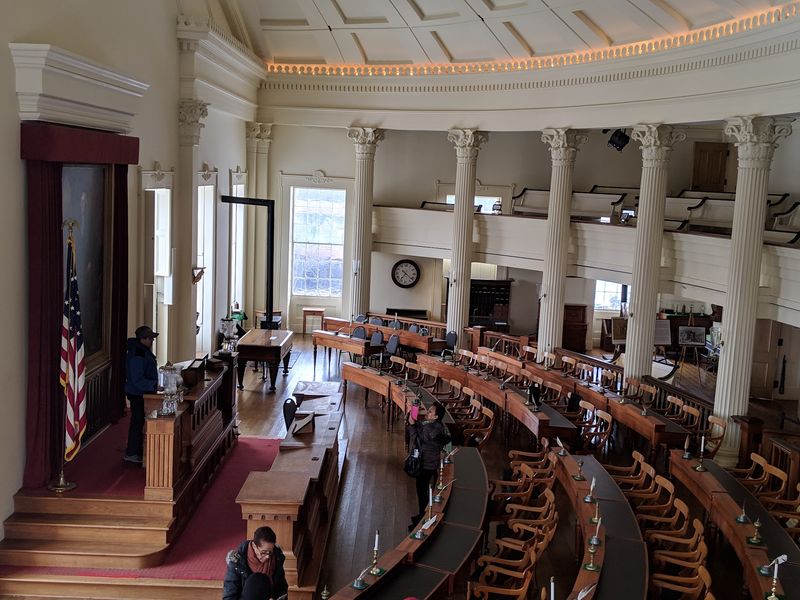
The Old State Capitol housed the full working machinery of Illinois state government during its active years, and many of those rooms have been restored to their period appearance with impressive detail. The House of Representatives chamber, the Senate chamber, the Secretary of State’s office, and the Supreme Court room are all accessible to visitors and each tells a slightly different story about how Illinois governed itself in the 19th century.
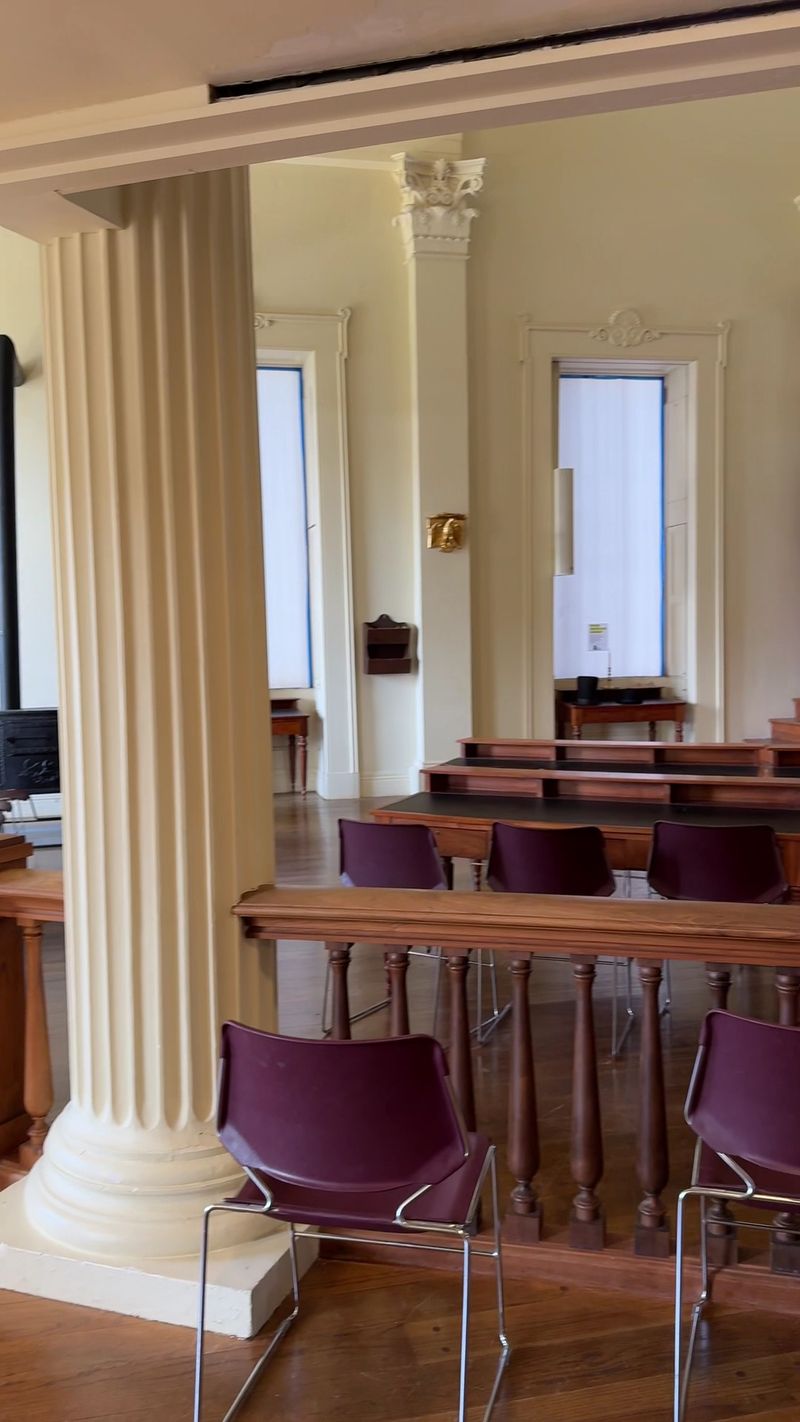
The voting chambers are particularly interesting because they show how small and relatively intimate the legislative process was compared to modern government buildings. The desks are arranged closely together, and it is easy to imagine the debates, negotiations, and arguments that filled the air during heated legislative sessions.
Lincoln himself sat at one of those desks as a member of the Illinois House of Representatives.
Some rooms were still undergoing renovation during recent visits, with the Senate chamber temporarily closed, but the rest of the building remained fully accessible and richly detailed. The combination of antique furniture, period artifacts, and careful architectural restoration makes each room feel like a genuinely preserved slice of the 1840s and 1850s rather than a staged recreation.
Free Admission and a Donation-Based Model
Here is something that genuinely surprises most first-time visitors: admission to the Old State Capitol is completely free. The site is managed by the Illinois Department of Natural Resources Historic Preservation Agency, and it operates on a donation-based model that encourages visitors to contribute five dollars per person if they are able to do so.
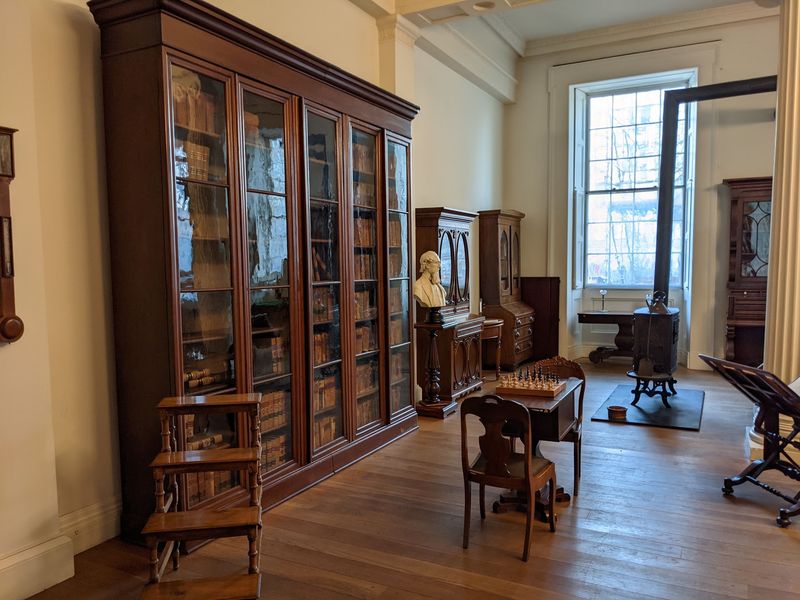
For a historic site of this caliber, that pricing structure feels almost too good to be true. The building contains genuine antique furniture, restored architectural details, original stonework on the exterior walls, and exhibits that cover everything from Lincoln’s legal career to the Underground Railroad.
The value you receive for a voluntary five-dollar contribution is exceptional by any standard.
The free admission also makes the Old State Capitol a practical stop for families, school groups, and budget-conscious travelers who want to experience Springfield’s rich history without stretching their finances. The phone number for the site is 217-785-7960, and the website at dnrhistoric.illinois.gov has updated information about hours and any temporary closures due to ongoing renovation work.
Calling ahead during renovation periods is a smart move to confirm which rooms are open before you visit.
The Ongoing Renovation and What It Means for Visitors
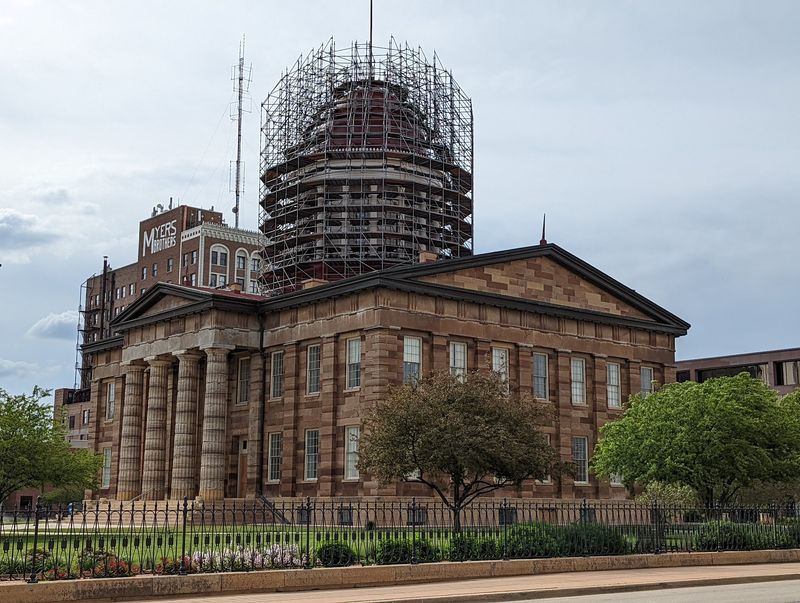
The Old State Capitol has been undergoing a significant multi-million-dollar renovation in recent years, and the work reflects a serious commitment to preserving the building for future generations. Some visitors have arrived to find certain chambers temporarily closed, including the Senate chamber at various points, but the majority of the building has remained accessible and impressively maintained throughout the process.
The renovation has focused on both structural integrity and period accuracy, ensuring that the restored spaces reflect the specific decades when Lincoln was most active in the building. Recent visitors who returned after a gap of a few years have noted visible improvements in the quality and detail of the exhibits and room restorations.
The ongoing nature of the work actually adds an interesting layer to the visit for those curious about historic preservation. Seeing a building actively being cared for and improved is a reminder that history requires ongoing effort and investment to survive.
The exterior stonework, which is the only original material remaining from the 1837 construction, is being carefully maintained as the anchor of the entire restoration project, and its weathered texture tells a story that no exhibit panel can fully capture.
Planning Your Visit and Making the Most of the Experience
The Old State Capitol is open Tuesday through Friday from 9 AM to 5 PM and on Saturday from 9 AM to 5 PM as well. The building is closed on Sundays and Mondays, so planning your visit around those days is essential to avoid a frustrating trip to a locked door.
Arriving early on a weekday gives you the best chance of having the rooms mostly to yourself, which makes the experience feel more personal and unhurried.
Parking is one practical challenge worth knowing about in advance. Street parking in the downtown area can be tight, especially on weekday afternoons, so building in extra time to find a spot is a smart move.
The surrounding blocks have metered parking, and there are public parking garages within a short walk of the building.
The Old State Capitol pairs naturally with other nearby Lincoln sites, including Lincoln’s Home National Historic Site and the Abraham Lincoln Presidential Library and Museum, both of which are within easy walking or driving distance. Spending a full day in Springfield moving between these sites creates a genuinely rich and connected experience that brings Lincoln’s story to life in a way that no single destination can accomplish on its own.
Share this story