Wrightsville Beach is one of North Carolina’s most visited stretches of coastline, and on a hot July weekend you can feel that popularity in the parking line and the shoulder-to-shoulder sand. Just across Masonboro Inlet, though, sits a barrier island that almost nobody drives to, because driving there is not an option. Understanding what that neighbor actually offers, and what it does not, saves you from a frustrating surprise and might point you toward exactly the kind of day you were hoping for.
Wrightsville Beach draws visitors, but not uniformly
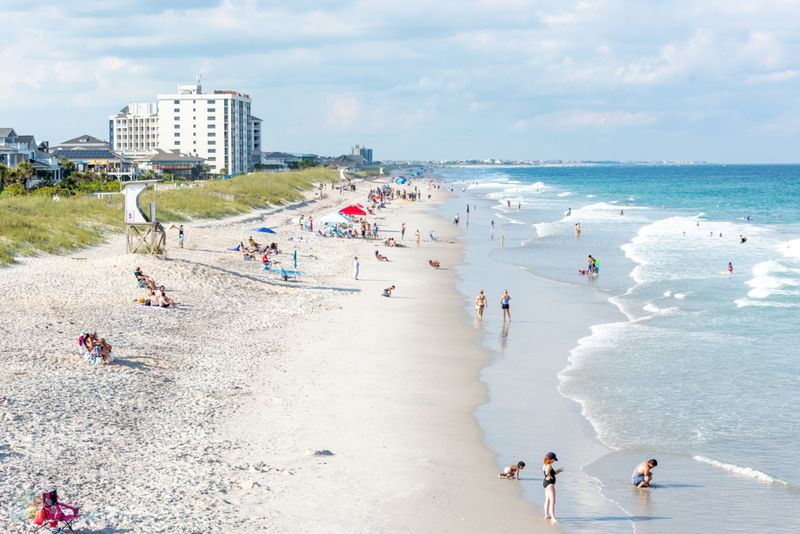
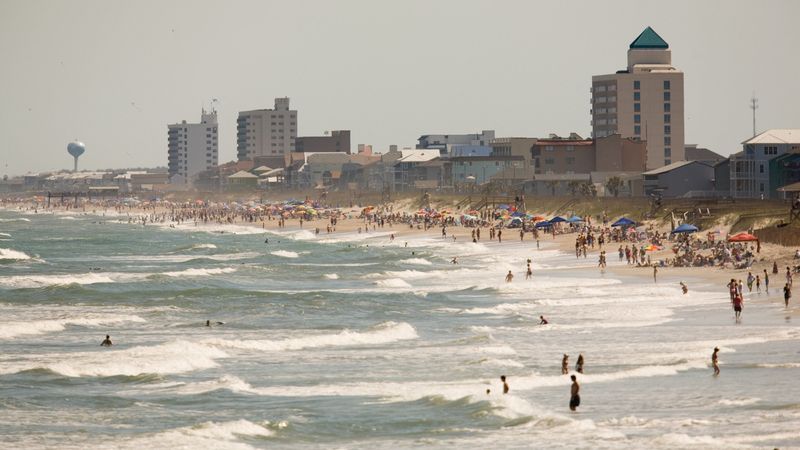
Summer at Wrightsville Beach moves fast. Parking fills up near the most popular accesses, particularly around the central and south-end areas, and the town runs a paid parking program from March 1 through October 31. Current town parking rates sit at $5 per hour for standard spaces and $6 per hour for premium spaces, with announced 2026 changes that bring daily caps to $25 and $30 respectively, so budget planning matters if you are driving in on a peak day.
That said, calling the entire beach uniformly packed would overstate things. Local guides to Wrightsville Beach surf spots point out that the north end and less-central accesses tend to attract smaller crowds, especially early in the morning before the parking lots fill. Someone willing to arrive at sunrise or walk a few extra blocks from a less convenient access point can find breathing room on the same beach that feels wall-to-wall by noon.
The broader pattern is still real. A visitor profile study for the Wilmington and Beaches region found that parking cost and beach crowding are recognized concerns across the area’s developed beaches, not just at Wrightsville. The result is that many visitors start asking whether a nearby alternative might offer a different feel, and that question is worth answering carefully rather than with a sweeping promise.
Masonboro Island is the geographically closest alternative
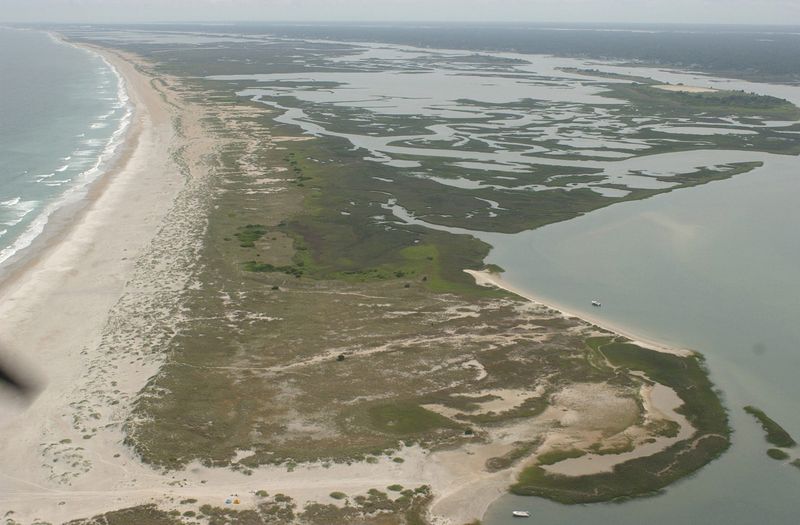
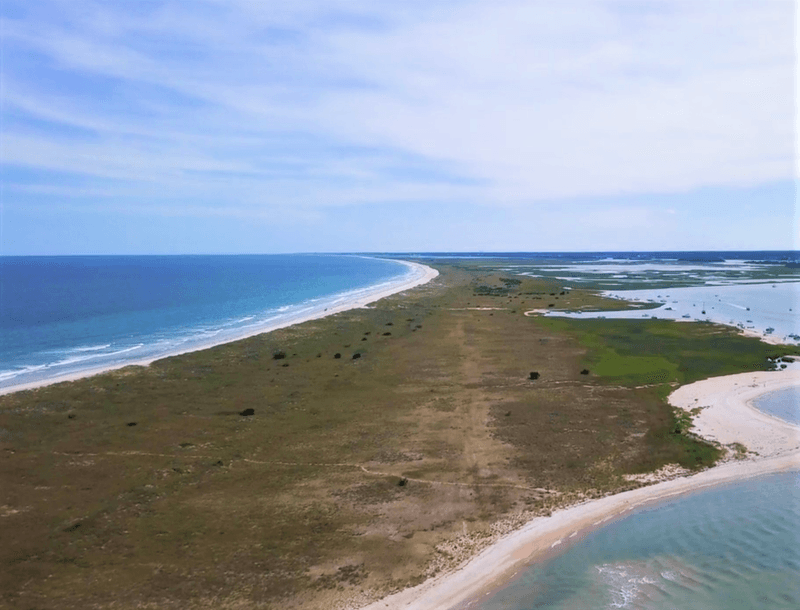
Masonboro Island Reserve sits immediately south of Wrightsville Beach, separated by Masonboro Inlet to the north and bounded by Carolina Beach Inlet to the south. North Carolina’s Coastal Reserve program describes it as the largest undisturbed barrier island along the southern North Carolina coast, covering roughly 5,653 acres and offering miles of ocean beach that visitors can walk in either direction without passing a hotel, a snack bar, or a paved road.
Geographic adjacency here means something specific. The island is close as the crow flies, visible from parts of Wrightsville Beach, and it shares the same broader barrier-island system. “Next door,” however, does not mean connected by a bridge or a boardwalk. Masonboro Inlet lies between the two, and there is no road or pedestrian path linking them. Calling the sand “the same” works as a regional or visual shorthand, the way you might say two neighboring towns share the same river valley, but no source establishes that the sand texture, beach width, or shoreline profile are scientifically identical.
Tides, storm patterns, inlet movement, and erosion shape each beach differently over time.
What the reserve does offer is genuine geographic proximity to Wrightsville Beach combined with a setting that is almost entirely undeveloped. No hotels, no boardwalk, no concession stands, no paved paths. The protected status of the reserve means that character is not going to change with the next construction season. For visitors who find Wrightsville Beach’s developed amenities to be part of the appeal, Masonboro will feel like a very different kind of outing.
For visitors specifically seeking undeveloped shoreline near Wilmington, it is the closest option available.
Boat access may explain the quieter feel
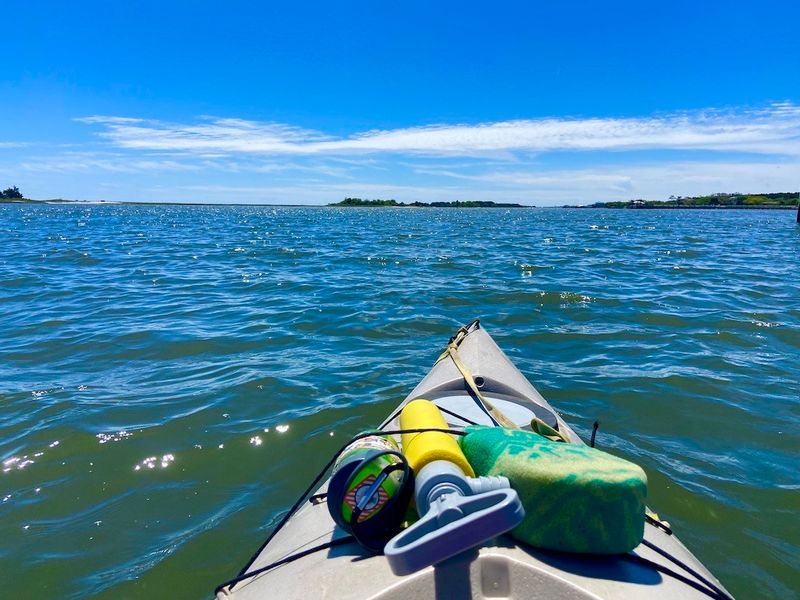
Getting to Masonboro Island requires a boat, full stop. There is no bridge, no ferry terminal with a ticket window, and no road that gets you close enough to wade across. Public and private boat ramps near Wrightsville Beach, Carolina Beach, and Trails End Park provide access for people with their own vessels, and private fee-based water-taxi or ferry services also operate seasonally. That logistical requirement means every single visitor has to arrange transportation before arriving, which filters out a large share of casual day-trippers who might otherwise pull into a parking lot on impulse.
That barrier is a likely reason the island can feel substantially quieter than a developed beach, but it would be an overstatement to call it a proven, measured cause. No comparable attendance data was found establishing exactly how many people visit Masonboro on a given day versus Wrightsville Beach. What the boat-only requirement clearly does is raise the effort threshold. Anyone who wants to spend the day there has to plan ahead, secure a vessel, load supplies, and navigate to a landing spot, all before setting foot on the beach.
Tides add another layer of planning. NC Coastal Reserve guidance for Masonboro Island notes that the island’s midsections can be tide-limited, meaning your ability to reach certain areas on foot depends on where you land and what the water is doing when you arrive. Landing on the sound side and then crossing to the ocean beach requires knowing the current tidal stage. Checking a tide chart before departure is not optional, it is the kind of practical step that separates a smooth trip from a frustrating one.
Plan Masonboro as a remote beach outing
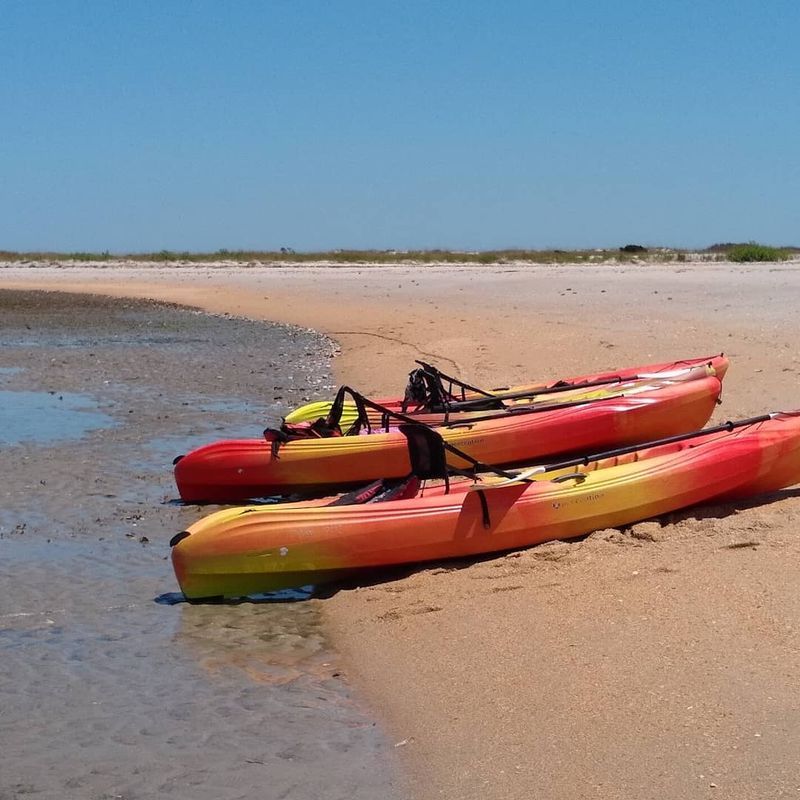
Treating Masonboro Island like a typical beach day will leave you in trouble fast. There are no water fountains, no restrooms, no snack shacks, and no one to call if your boat has a problem. The planning list starts with the basics: bring more drinking water than you think you need, pack all your food, and carry adequate sun protection because there is very little shade on an open barrier island in July. A fully charged phone with emergency contacts saved and a way to reach someone onshore is not optional gear.
Weather and tides need to be checked the morning of your trip, not the night before. Conditions on the open water between the mainland and the island can shift quickly, and a rising tide can affect both your landing spot and your return trip. The official NC Coastal Reserve visiting guide for Masonboro Island specifically advises knowing tide and weather conditions before you go and cautions against drinking alcohol while swimming or boating. These are not fine-print warnings; they are the difference between a good day and a dangerous one.
Trash is your responsibility entirely. Pack-out rules mean everything you carry onto the island comes back with you: food wrappers, bottles, containers, and anything else you bring ashore. The island has no waste collection. Camping at Masonboro Island is permitted on a primitive basis for no more than two consecutive nights, and campers are expected to use previously disturbed sites rather than clearing new areas in dunes or vegetation.
For a day trip or an overnight stay, building a realistic supply checklist before you leave the dock is the single most important piece of preparation you can do.
Protect the reserve and respect its water hazards
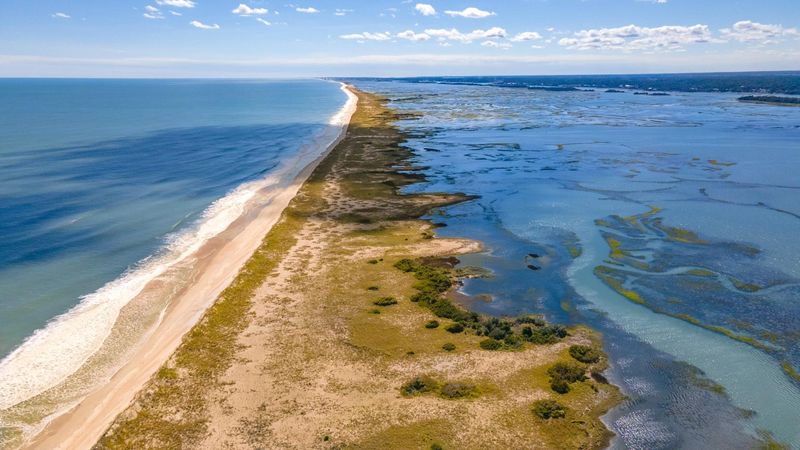
Masonboro Island’s undeveloped character comes from its protected status, not from being remote by accident. The reserve contains sensitive dunes, coastal marshes, eelgrass beds, shorebird habitat, and sea-turtle nesting areas. NC Coastal Reserve rules require visitors to stay on established trails, avoid dunes and vegetated areas, stay clear of marked nesting sites, and keep dogs on a leash at all times. These are not suggestions; they are enforceable conditions of visiting a protected reserve.
Camping adds specific responsibilities. Campers must use previously disturbed sites, avoid setting up in dune or marsh vegetation, and pack out every piece of waste they bring. The visiting guide reinforces that leaving food scraps or trash behind harms wildlife and degrades the habitat that makes the island worth visiting. Off-trail walking through dunes or marsh is not a minor infraction; it can damage root systems that hold the island together against storm erosion.
Water safety requires equal attention. Masonboro Island has no lifeguards, and visitors should not expect any. Swimming there means relying entirely on your own judgment and the people in your group. NC State Parks safety guidance notes that rip currents can develop at any beach with breaking waves, and they are especially dangerous near inlets, piers, and jetties.
Masonboro Inlet sits at the northern tip of the island, and swimming near it carries real risk. Check the National Weather Service rip-current awareness page for the Carolinas before you go, heed any flag warnings posted at nearby developed beaches, and stay well away from the inlet and any fixed structures when you enter the water.
The food-and-value angle points to Carolina Beach
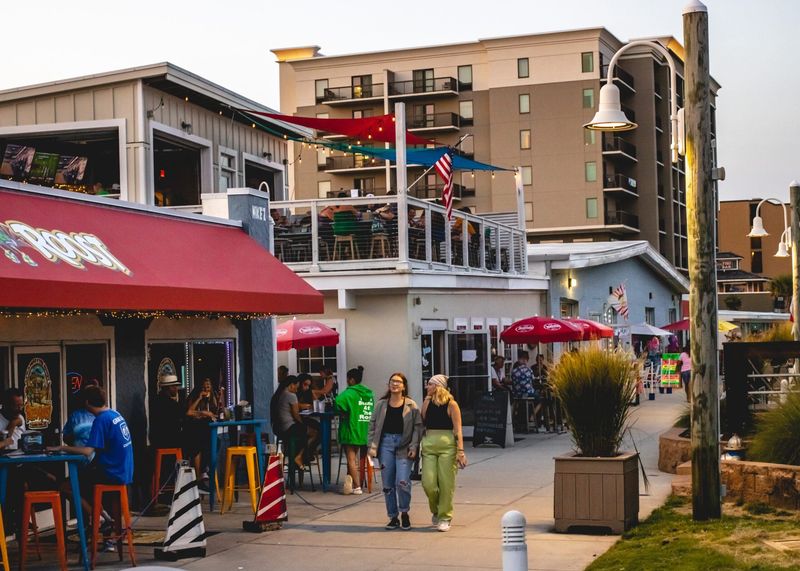
Masonboro Island has no restaurants, no food vendors, and no concession stands of any kind. Any premise that connects Wrightsville’s crowded neighbor to cheaper eats is pointing at a completely different place. The food-and-value story belongs to Carolina Beach, a developed beach town on Pleasure Island that sits south of Masonboro Island and offers a genuinely different dining scene.
The Carolina Beach boardwalk has seafood shacks, pizza, burgers, ice cream, and Britt’s Donuts, a local institution that has been drawing lines for generations. The Carolina Beach restaurant listing covers a range of styles and price points, and local recommendations for eating in Carolina Beach skew toward casual and unpretentious spots. The tourism marketing describes options for “every budget,” which is an honest description of the variety available, though it does not prove that a given meal costs less there than an equivalent one in Wrightsville Beach. Prices, seasonal surcharges, and menu changes make that a comparison worth checking in person rather than assuming.
Parking is similarly worth verifying before you go. Carolina Beach’s 2026 parking rates list $6 per hour or $25 per day for standard lots and $7 per hour or $35 per day for premium lots. Depending on where you park and when you arrive, Carolina Beach is not automatically cheaper than Wrightsville Beach. Kure Beach, promoted by its local tourism authority as having an uncrowded beach and small-town pace, offers another quieter conventional option farther south on Pleasure Island.
It is not Wrightsville Beach’s direct neighbor, but it is a reasonable choice for someone who wants a slower day without the boat logistics of Masonboro.
Choose solitude, services, or a slower conventional beach
Three genuinely different options exist in this stretch of the North Carolina coast, and each one suits a different kind of day. Masonboro Island Reserve is the right answer if you want geographic proximity to Wrightsville Beach, miles of undeveloped shoreline, and a setting that can feel considerably quieter because of its boat-only access and protected status. It is not the right answer if you want restaurants, measured crowd reductions, guaranteed savings, or a low-effort outing.
If food, a boardwalk, and ordinary beach amenities matter to your group, Carolina Beach is the practical choice. The Carolina Beach boardwalk delivers a developed beach-town experience with casual dining and a livelier atmosphere. For a quieter conventional setting without the boat trip, Kure Beach sits just south and carries a slower, small-town feel that its own tourism authority describes as genuinely uncrowded.
Masonboro’s appeal is real, but it comes with clear terms. The visiting guide lays out the planning, safety, and stewardship responsibilities that make a trip there work. Accept those terms and you get one of the most undisturbed barrier-island beaches on the southern North Carolina coast. The island does not reward spontaneity, but it does reward preparation.
Share this story