Just half an hour outside Boston, a red water wheel keeps turning in a quiet Sudbury clearing, doing exactly what it did back in 1929. The stone mill inside still grinds real cornmeal and flour using nothing but the push of running water, and yes, you can carry a bag of it home with you.
Most people never expect to find a fully working piece of living history tucked down a country road so close to the city. There is no ticket booth demanding your money, no crowds elbowing for space, and no need to plan a big trip.
What follows is a room-by-room, path-by-path look at a spot that many locals quietly treasure and are in no hurry to share.
A Country Road Landmark in Sudbury
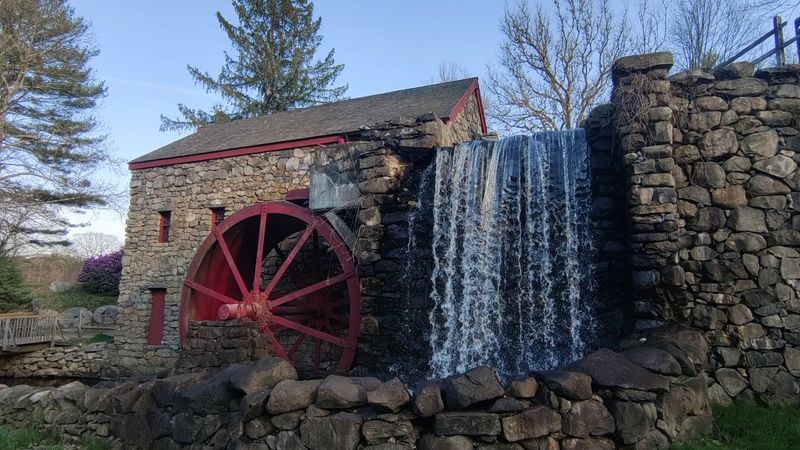
Down a winding lane in the town of Sudbury, Massachusetts, a stone mill house with a bright red water wheel sits at 72 Wayside Inn Rd, Sudbury, MA 01776. The setting feels far removed from the busy highways nearby, yet it rests only a short drive west of Boston.
The mill is part of the larger Wayside Inn property, a historic complex that also holds a chapel, an old red schoolhouse, and a working inn. Visitors often arrive expecting a quick photo stop and end up staying much longer.
Free parking is available along the roadside, and the grounds sit open for walking well beyond the mill’s own hours. That easy access is a big part of the charm, since there is no gate or admission fee standing between you and the view.
Regulars mention that the drive out from the city takes about thirty minutes, which puts it comfortably within reach for an afternoon outing. The whole area rewards slow exploring, and the mill anchors it all as the most photographed structure on the property.
Henry Ford’s 1929 Reconstruction
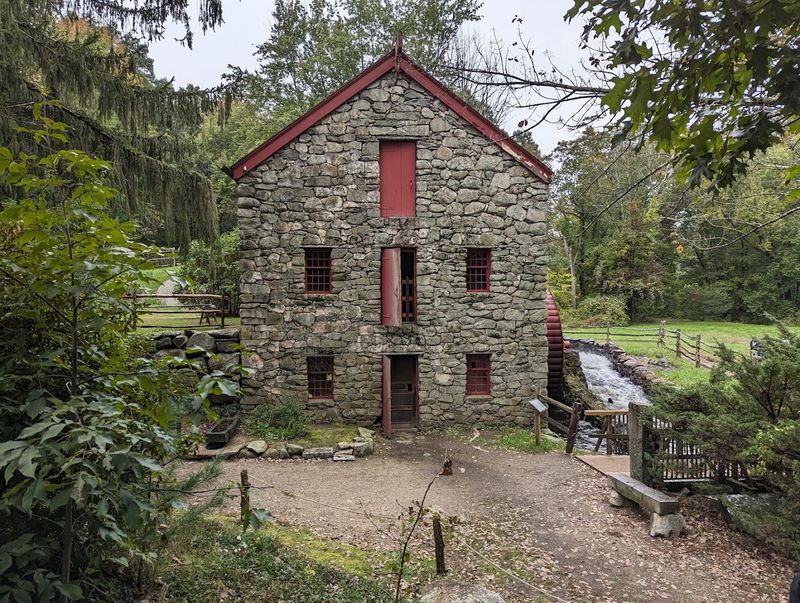
Long before the current building existed, a grist mill stood on this same site along Hop Brook, dating back to the early 1700s and built by the Howe family to serve local farmers. Time and neglect eventually left the older structure in poor shape.
In 1923 the automobile pioneer Henry Ford purchased the Wayside Inn and set out to preserve a slice of New England colonial culture. His plans included a brand new grist mill, designed to look and operate like a traditional eighteenth-century mill.
Construction wrapped up in 1929, and the mill first ground grain on Thanksgiving Day of that year. Ford also reinforced the original dam that created the mill pond, a feature roughly traced back to the 1720s.
The cornmeal and flour it produced went straight to the Wayside Inn and to a boys school Ford ran on the property. Knowing that the picturesque mill in front of you was a careful recreation rather than the crumbling original makes the visit feel like a story with two chapters.
The Water Wheel That Still Turns
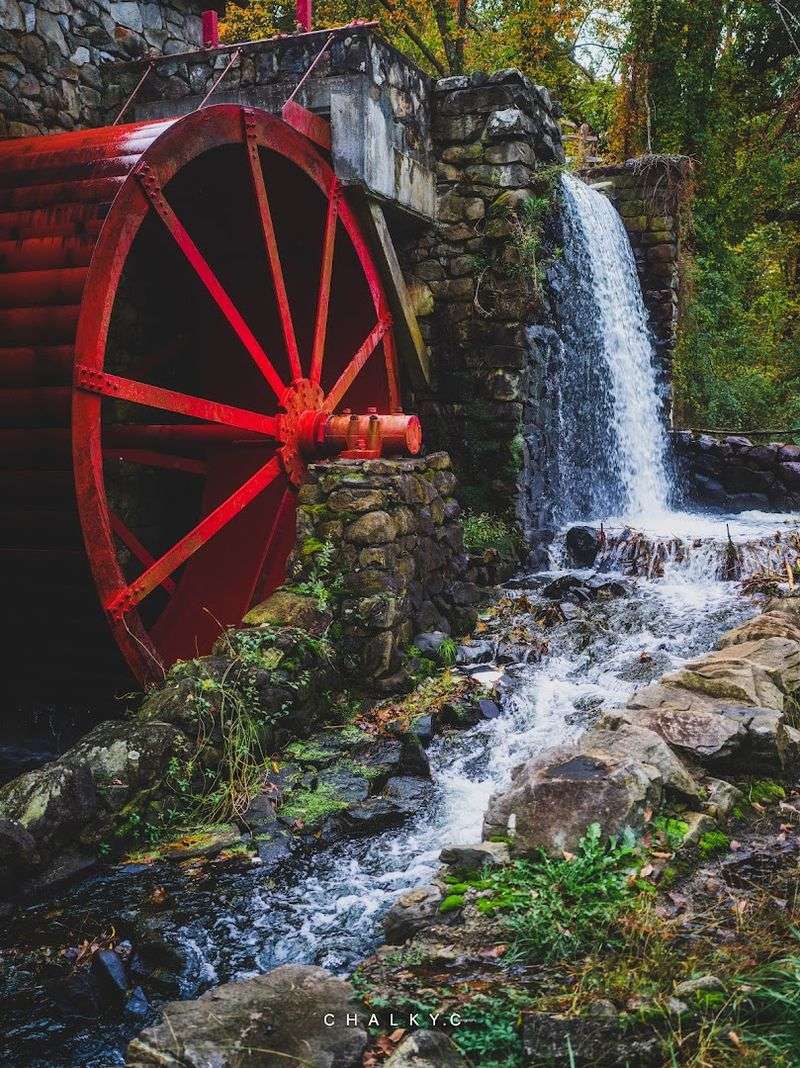
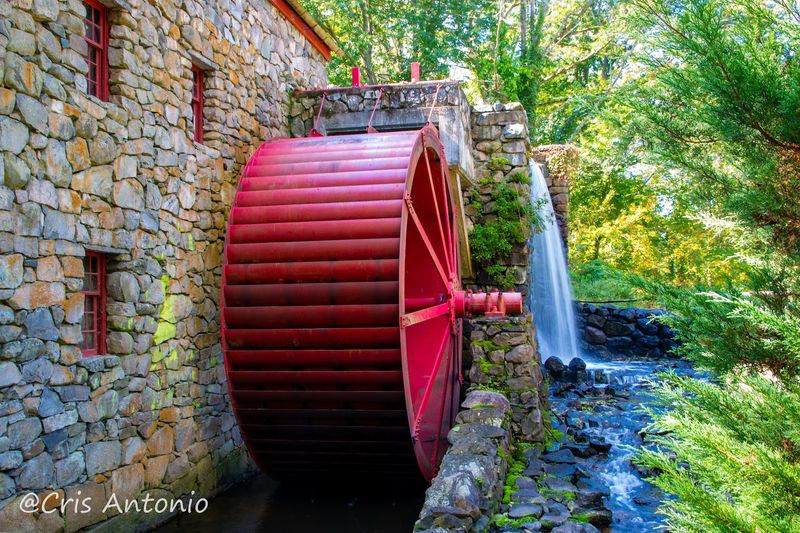
Bright red and impossible to miss, the wheel on the side of the mill is the star of the show. When the water is flowing and the mill is running, it turns slowly and steadily, powered by nothing but the brook feeding it from above.
Catching it in motion takes a bit of luck, since the wheel does not spin every hour of every day. Guests who time it right get to watch water push each wooden paddle in a rhythm that has barely changed in nearly a century.
The flow of water gives the whole scene a sense of life, and the wheel is the reason so many people pull over in the first place. Even standing still, it makes for a striking sight against the stone walls.
Regulars mention that seeing the big wheel actually working is one of the highlights of the trip. It is a rare chance to watch old machinery do its job the honest way, using gravity and moving water instead of an engine.
Inside the Grinding Room
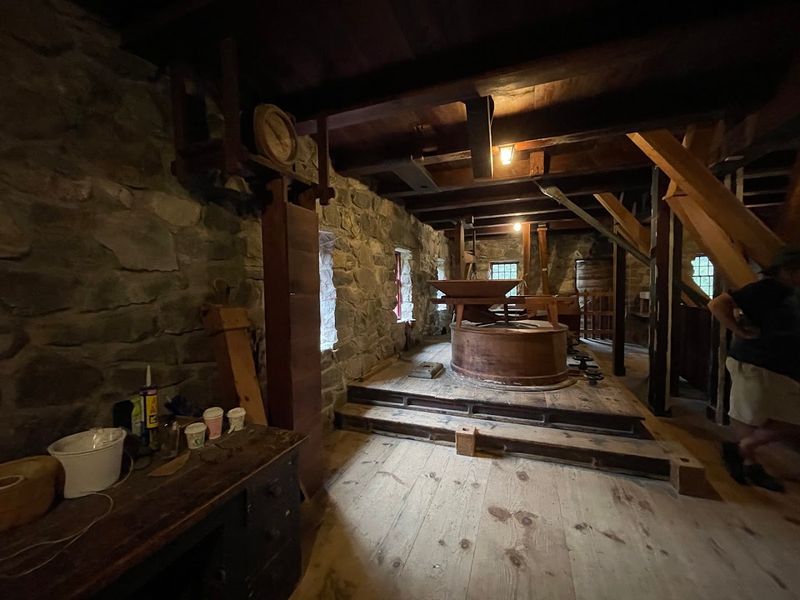
Climb the stairs to the back of the top floor and you reach the part of the mill where the real work happens. The millstones sit here, ready to grind corn and wheat into meal and flour just as they have for generations.
A tighter set of stairs leads down to a lower room packed with metal gears. That gear room takes the energy from the turning wheel and passes it up to the stones above, a clever bit of engineering worth pausing over.
Not every visit lines up with the machinery in motion, and sometimes the stones sit quiet. Even then, seeing how the pieces connect gives you a real appreciation for how the mill converts flowing water into finished grain.
Displays and a small museum area inside share more about the process and the mill’s past. The interior is compact, so a slow walk through covers the grinding floor and the gears without rushing anything.
Cornmeal and Flour You Can Bring Home
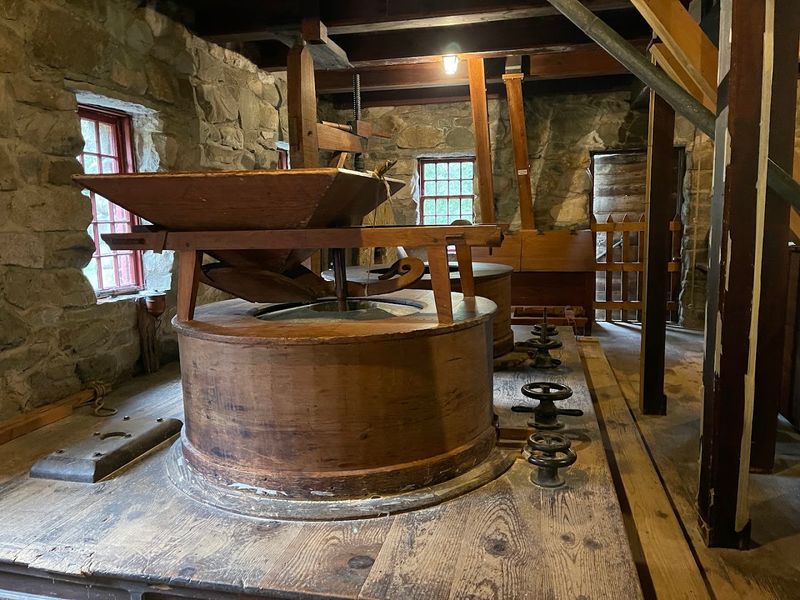
The best souvenir here is not a keychain. Since 1969 the Wayside Inn has run the mill’s operations with its own miller, and the stones still grind grain in limited amounts, producing flour and cornmeal used by the Inn and sold to guests.
Taking a bag home means carrying off something genuinely made on the property, ground the slow, water-powered way. It is a tangible piece of the visit that outlasts any photo.
The mill has a long track record of serious grinding. Back in 1952 Pepperidge Farm leased it and kept a full-time miller busy producing large batches of stone-ground whole wheat flour for about fifteen years.
After that, the mill even turned out flour for King Arthur Flour for a short stretch. That history of feeding well-known bakers adds a little pride to the small bag you tuck under your arm on the way out.
The Mill Pond and Hop Brook
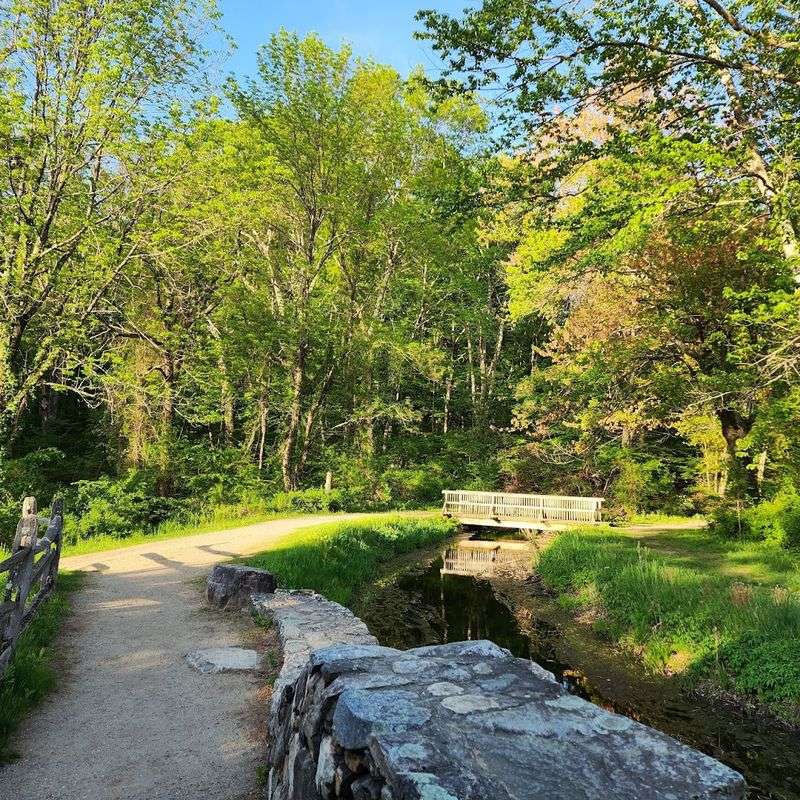
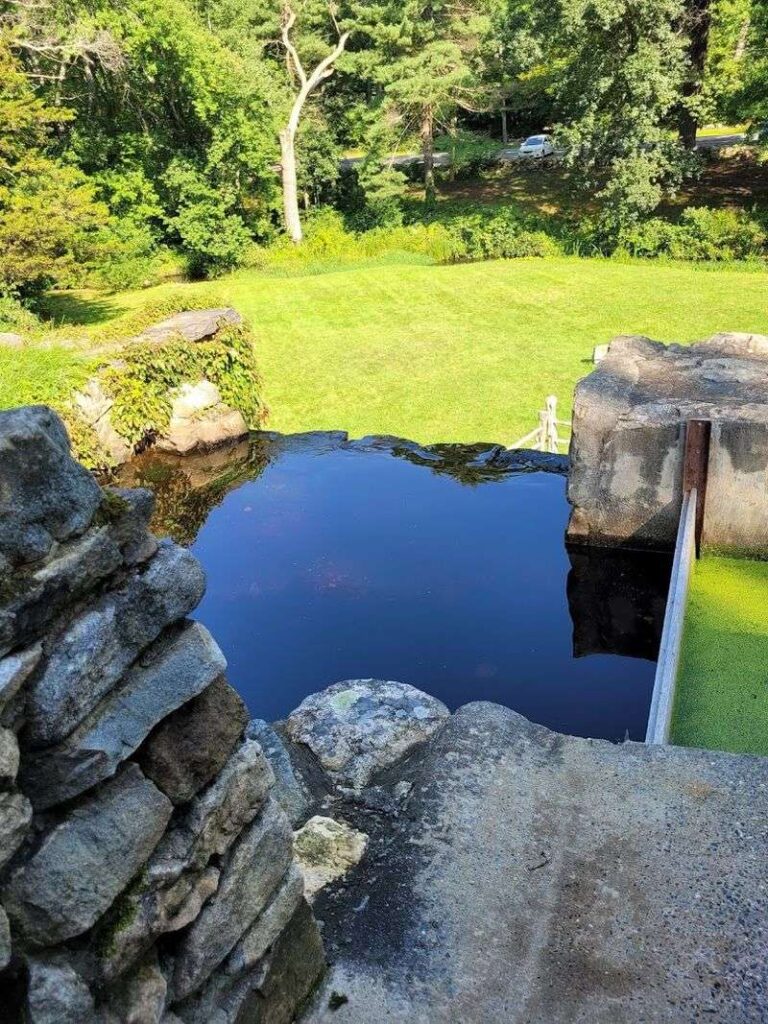
Walk up behind the mill and you find the pond that feeds the whole operation. Water gathers there before spilling down through the stream that once powered the wheel, and the view over the pond earns plenty of admiration.
Hop Brook winds through the grounds, and the dam holding back the pond traces back roughly to the 1720s, later reinforced by Ford himself. That long lineage of water management is easy to overlook but central to why the mill exists at all.
Several small trails run along the stream, giving you a peaceful loop to wander. The moving water gives the setting a calm, unhurried feeling that pulls people back again and again.
Benches and quiet corners near the water make for a fine spot to sit for a while. Regulars mention coming here simply to slow down and enjoy the sound of the flowing brook, no grand plan required.
A Photographer’s Favorite Backdrop
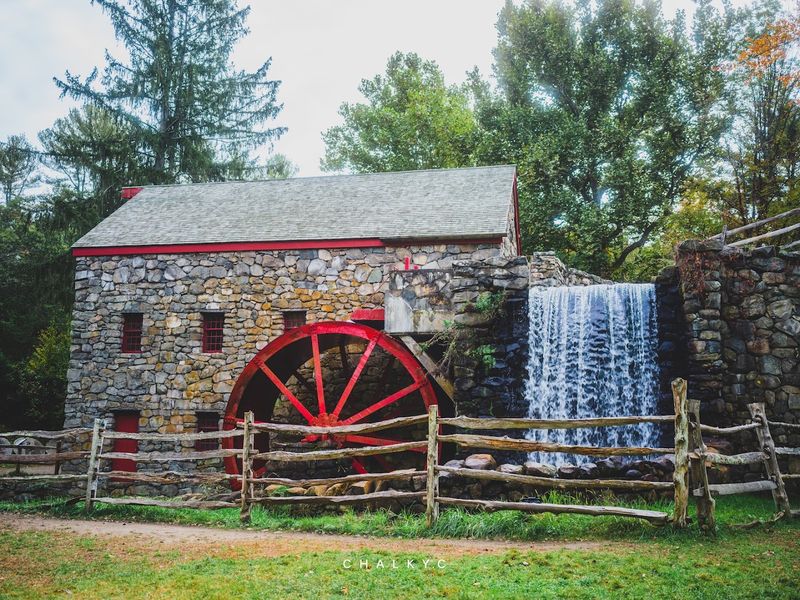
Cameras come out the moment people spot the red wheel against the stone walls. The mill house, the waterfall, the wooden fences, and the surrounding greenery combine into a scene that draws photographers of every skill level.
Weekends often bring couples posing for engagement and wedding portraits, families gathering for group shots, and folks setting up easels to paint. The grounds handle it all gracefully because there is so much open space to spread out.
There is no charge to photograph the water mill itself, though a QR code on site lets you pay for a formal photo session if you want one. The freedom to snap away for free is part of the appeal.
The spot behind the waterfall, up on top, ranks as a favorite angle for capturing the mill and pond together. Whether you carry a phone or a full kit, the setting does a lot of the work for you.
Fall Foliage That Steals the Show
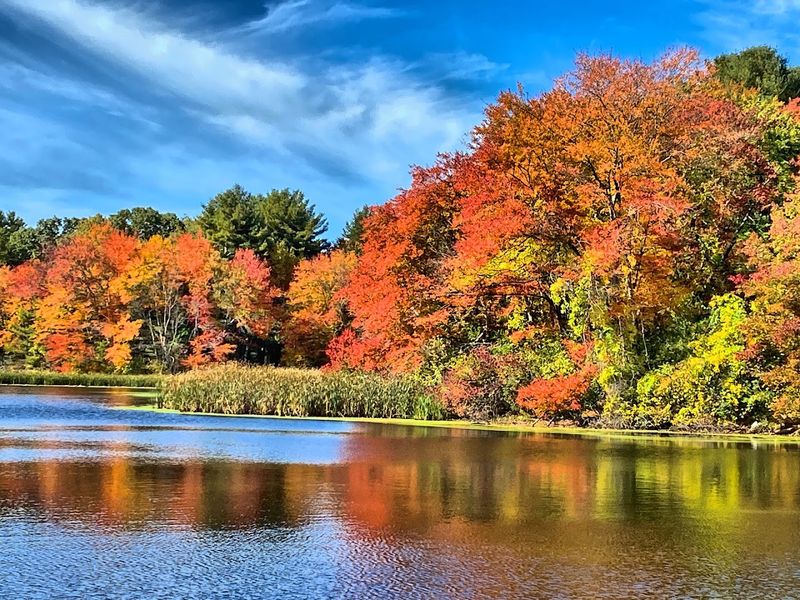
Autumn turns this corner of Massachusetts into a display of color, and the mill grounds are no exception. When the trees change, the reds and golds frame the stone building and pond in a way that feels straight off a postcard.
Foliage season pulls in painters, families, and anyone chasing that classic New England scene. The combination of the red wheel, moving water, and turning leaves is hard to beat once October arrives.
Summer holds its own appeal too, with lush greenery and comfortable walking weather. Still, plenty of regulars insist the fall visit is the one that leaves the biggest impression.
Even in the depth of winter the place keeps its magic, when the waterfall can freeze solid in the bitter cold. That range across the seasons means there is really no wrong time to make the trip out, though the leaf-peeping window is especially rewarding.
Trails and Quiet Corners to Wander
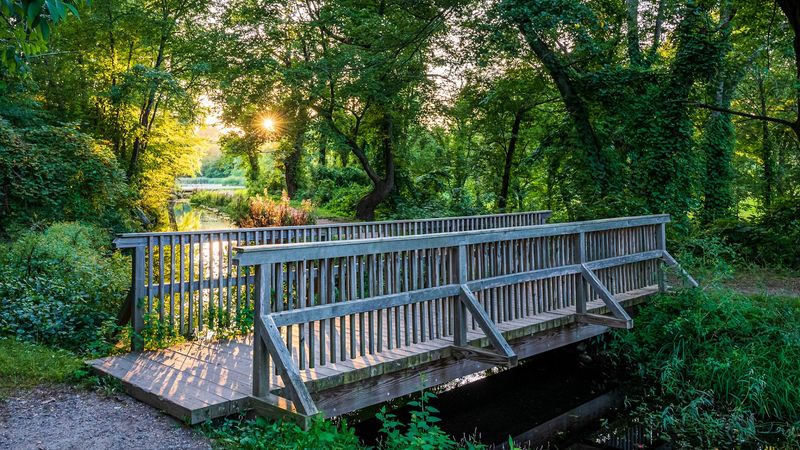
Beyond the mill itself, a network of short paths threads through the grounds. Some follow the stream, others loop toward the pond, and all of them invite a slow, easy walk with no particular destination in mind.
Dog owners bring their four-legged companions here to stretch their legs, and the sheltered trees offer protection even on windy days. The grounds are large and well kept, which keeps the walking pleasant.
People spread out across the property to picnic, paint, and simply relax. Because the space is generous, it rarely feels crowded even when several groups are enjoying it at once.
The trails give the visit a second layer beyond the historic building. You can come just for the mill, or turn it into a longer ramble through the woods and water, depending on how much time you have to spare.
The Storyteller at the Mill
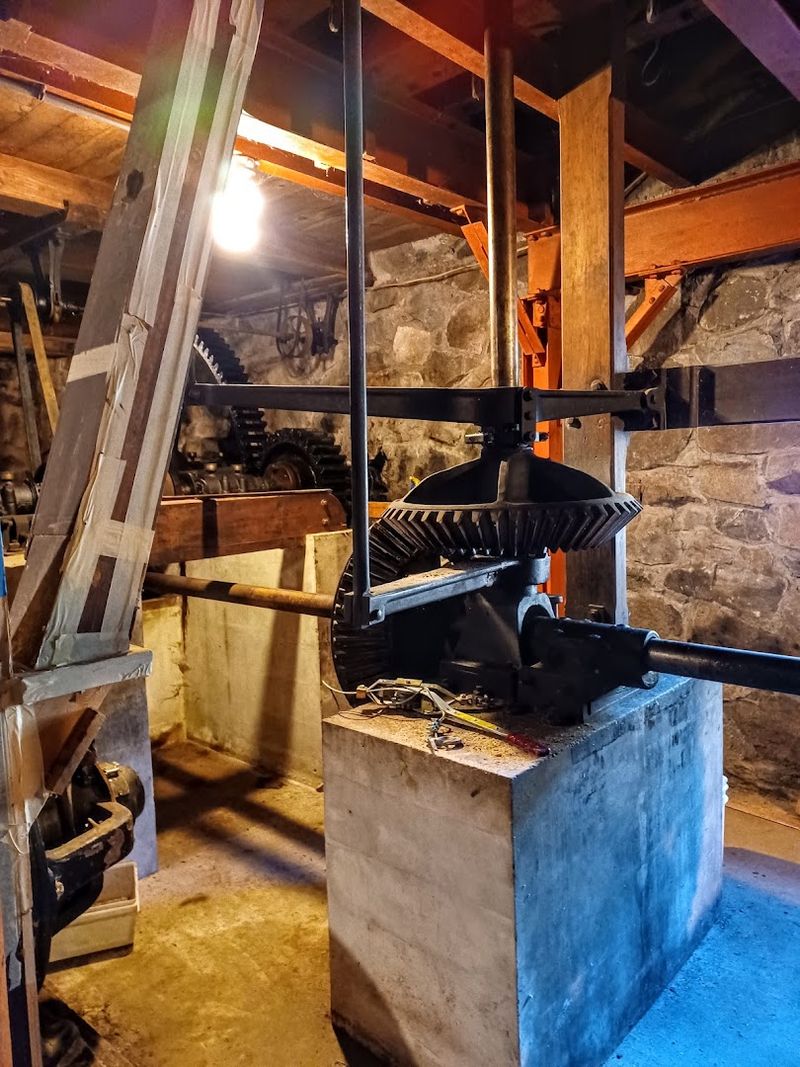
Part of what makes a stop here memorable is the person often found chatting with guests inside. The mill operator shares the workings of the machinery and the deep history of the site, and folks come away having learned far more than they expected.
Conversations here tend to be genuine and unhurried. The people staffing the mill clearly enjoy talking about the place, and their enthusiasm rubs off on anyone who lingers to ask a question.
Guests frequently point to these friendly exchanges as a highlight, calling the mill staff interesting and generous with their knowledge. It turns a quick photo stop into a real lesson in how old mills operated.
Striking up a chat is the best way to understand what you are looking at. The gears and stones make far more sense once someone who knows them well walks you through the whole process.
Millstones Scattered Across the Grounds
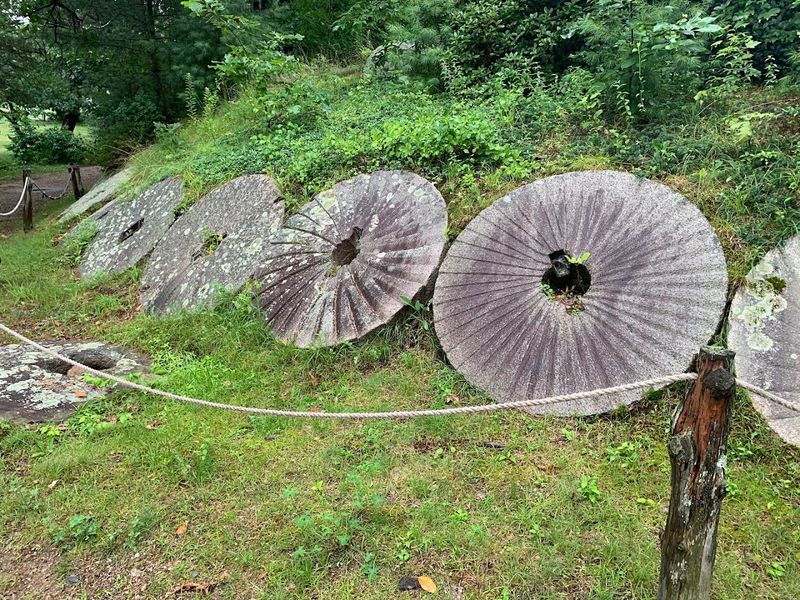
Look down as you wander and you will notice old grinding stones set carefully around the property. These retired millstones are far larger than people expect, and their scale is genuinely hard to grasp until you stand beside one.
Each stone is a piece of working history in its own right, having once done the heavy job of crushing grain. Placed along the grounds, they double as sturdy landmarks and quiet reminders of the mill’s purpose.
Kids and grown-ups alike tend to circle them, trying to picture how much muscle it took to move something so massive. They add texture to the walk and reward anyone paying attention.
Spotting the stones is a small treasure hunt built into the visit. They tie the outdoor grounds back to the grinding room inside, connecting the whole story of how corn became cornmeal on this very site.
More to See Around the Wayside Inn
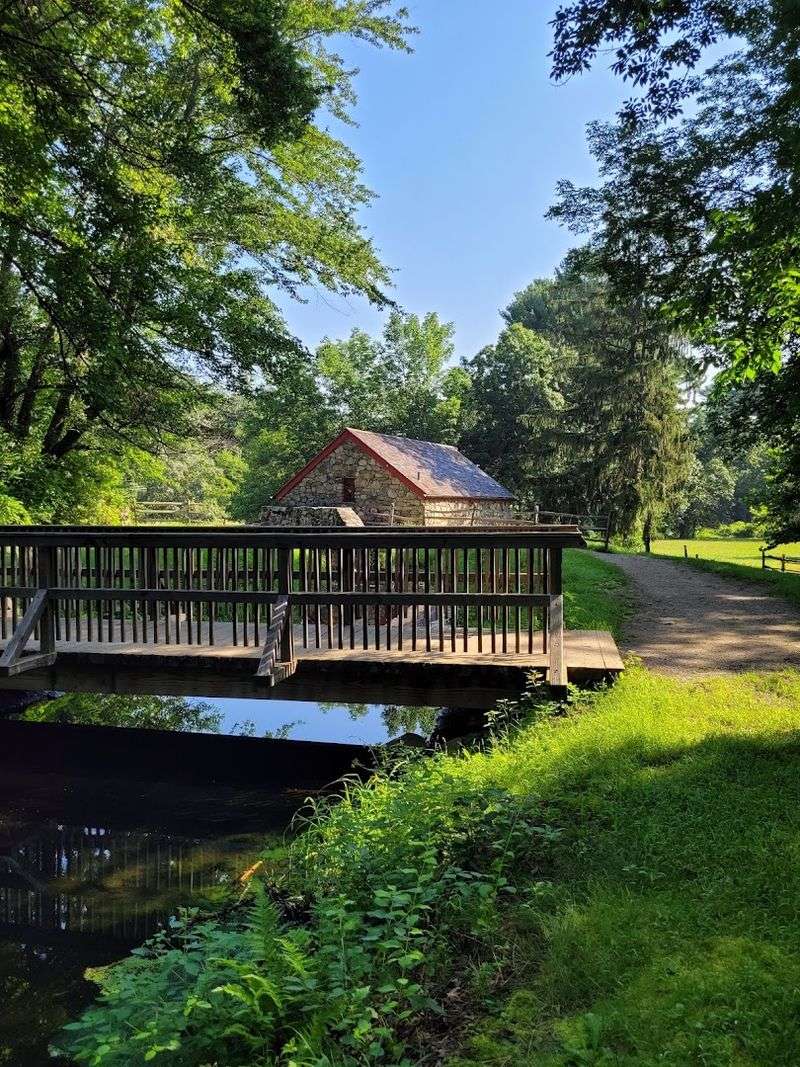
The mill is only one piece of a bigger historic puzzle. The surrounding property holds a chapel, the Wayside Inn itself, and the little red schoolhouse tied to the old children’s song about Mary and her little lamb.
Nearby you will also find a barn filled with crafts and antiques, along with a historic restaurant on the grounds. That mix means a single stop can easily fill a whole afternoon.
Ford’s larger vision was to preserve and gather historic buildings in one place, and the results are on full display as you roam from one landmark to the next. Each structure adds another thread to the story.
Making a loop of the whole complex turns the grist mill into the centerpiece of a richer outing. Regulars often advise not to leave without seeing the church, the schoolhouse, and the barn while you are there.
Planning Your Visit and Getting There
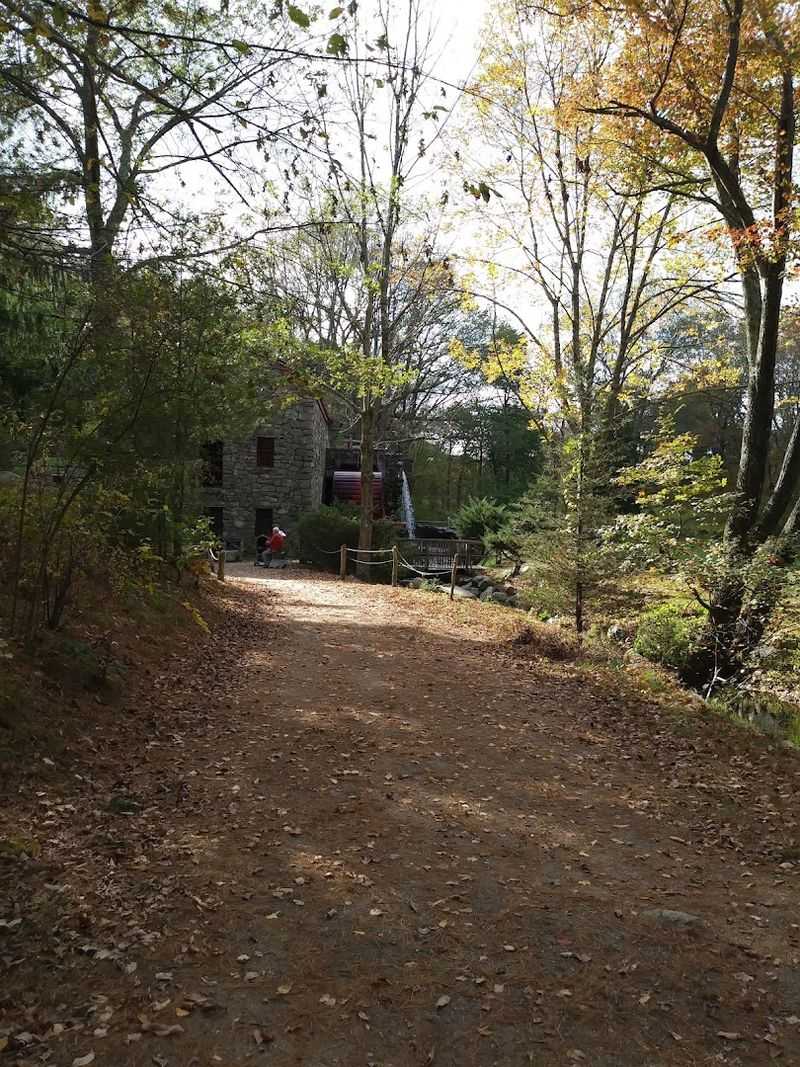
Reaching the mill is straightforward, with free roadside parking right along Wayside Inn Road. The drive from Boston runs about thirty minutes, making it an easy half-day escape without a long haul.
Visiting the mill and grounds is free, though donation boxes sit on site for anyone who wants to chip in. That budget-friendly setup is a big reason locals treat it as a go-to outing.
The grounds stay open for walking, photos, and quiet time well beyond the mill’s own schedule. The mill building itself is open seasonally during the warmer months, with tours and demonstrations typically running from around 9 to 5.
Hours can be a little unpredictable, and the interior sometimes opens later in the day than posted, so timing your trip with some flexibility helps. Weekends are often the best bet for catching the grinding demonstrations in action.
Why This Sudbury Stop Is Worth It
Few places pack this much history, scenery, and hands-on charm into one free, low-effort outing so close to home. The working mill, the turning wheel, and the peaceful grounds add up to an afternoon that feels much bigger than the short drive it takes to get there.
Families, walkers, photographers, and anyone curious about how things used to be made will all find something to enjoy. The mix of open trails, historic buildings, and a genuinely functioning grist mill gives the spot broad appeal.
Carrying home a bag of stone-ground cornmeal seals the visit with a keepsake you can actually use. That little bag turns a nice day trip into a lasting connection with the place.
Sudbury’s water-powered mill quietly rewards those who seek it out, and it holds up in every season. Come for the red wheel, stay for the story, and leave knowing you found one of the region’s most charming pieces of living history.
Share this story