A stone bridge hiding under reservoir water is not the kind of New Jersey story that waits politely for attention. It pops up only when the water drops low enough, turning a quiet corner of Oak Ridge into a history puzzle with arches, old roads, and plenty of local debate.
The bridge matters because it connects today’s Route 23 landscape to an older travel route that helped shape this part of Morris County. Keep reading and the odd little nickname starts to make sense, even if the place is more history lesson than haunted attraction.
A submerged landmark in Oak Ridge
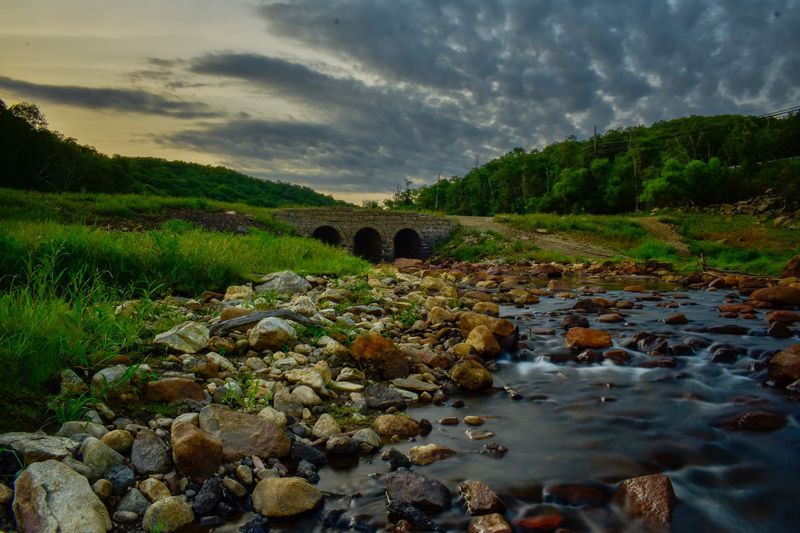
A bridge with a nickname like Ghost Bridge earns attention before anyone even reaches the map pin, but the real location is fairly specific: Ghost Bridge of Oak Ridge Reservoir, 3G96+9W, Oak Ridge, NJ 07438, in New Jersey, United States.
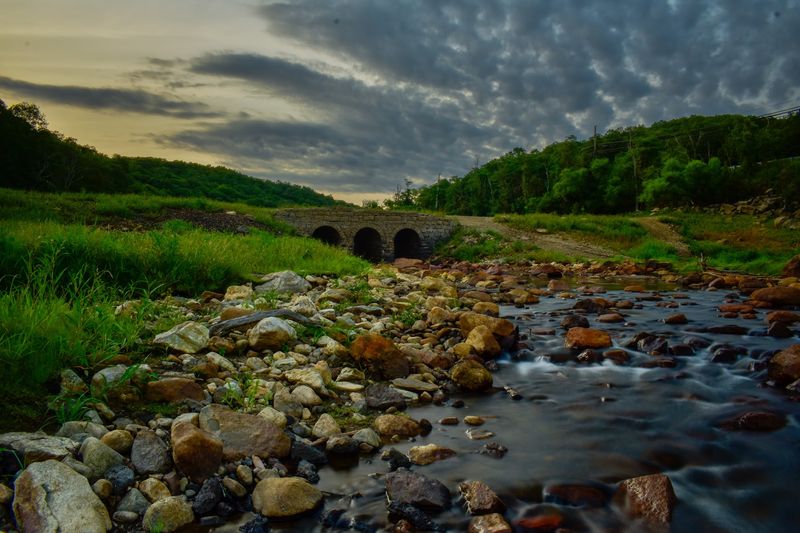
The site is listed as a historical landmark, and its identity comes from the old stone bridge that appears when the Oak Ridge Reservoir recedes enough to expose it. Most of the time, the name does plenty of dramatic work on its own, but the structure itself is the real headline.
Local interest surged because the bridge was hidden under reservoir water for decades, then became visible during unusually low water conditions and reservoir work. That sudden reappearance made it feel less like a standard roadside stop and more like a piece of infrastructure that had quietly kept its place while the landscape changed above it.
For New Jersey residents, the appeal is not just that something old exists here. Plenty of old things do.
The pull is that a familiar northern New Jersey reservoir has a buried chapter beneath it, and that chapter can sometimes be read in stone.
The old turnpike under the reservoir story
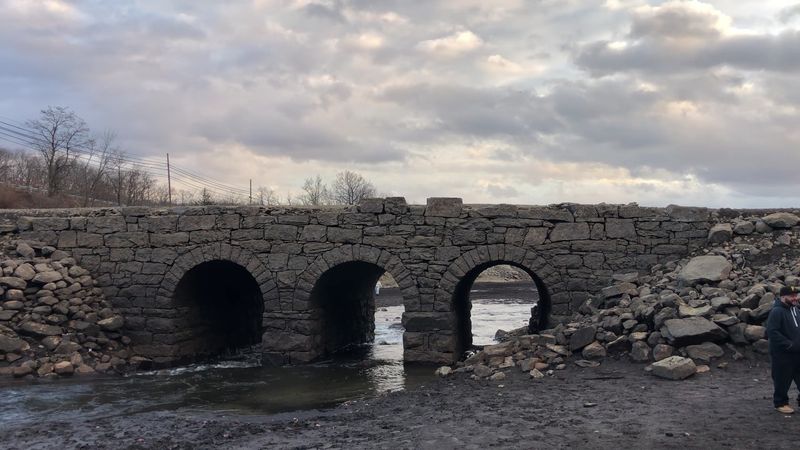
Long before the reservoir made the bridge a disappearing act, the structure served a practical job. It carried the Paterson and Hamburg Turnpike across the Pequannock River, tying the site to an older transportation route through this part of New Jersey.
The turnpike was chartered in 1806, which gives the bridge’s story a strong early nineteenth-century anchor. The exact construction date is not supplied in the available information, but local historical notes connect the bridge to that era and point out that an 1868 map of Jefferson is the earliest known map showing it.
That detail matters because it shifts the site away from simple curiosity and toward real regional history. A bridge is easy to overlook when it is doing its everyday job, yet this one outlasted the road pattern around it and became more intriguing after being covered by the reservoir.
Route 23 eventually became the modern reference point, while remnants of the older road have been noted along the east bank of the reservoir south of the bridge. In other words, the bridge is not a random leftover.
It is part of a route that New Jersey moved past, but never fully erased.
Three stone arches with uncommon staying power
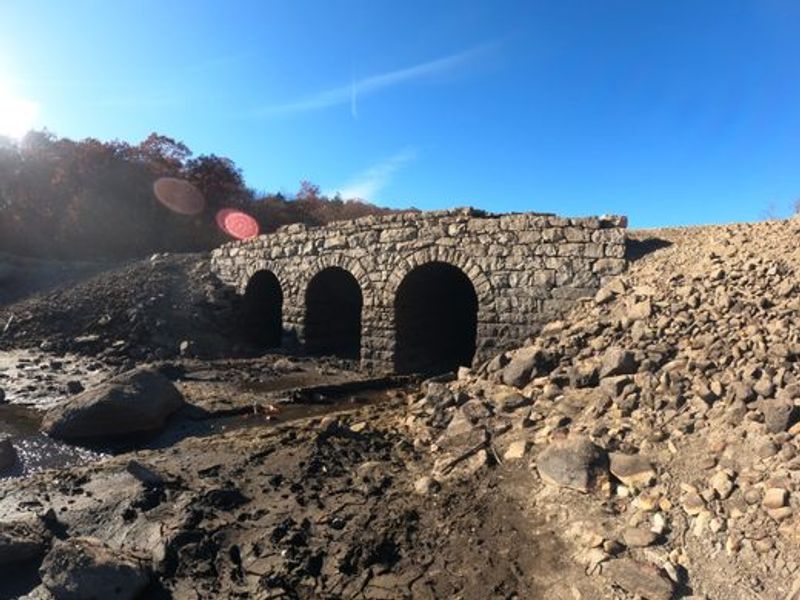
Stonework has a way of making modern schedules look a little silly. The bridge’s standout feature is its three stone arches, a form that gives the structure its most recognizable profile when the reservoir water drops low enough.
People who have seen it during exposed conditions have focused on how intact it appears after so much time below the reservoir. The available information credits the bridge’s survival partly to being submerged, which can protect some materials from constant surface-level disturbance.
There is also a timeline twist. When the reservoir was first flooded, the water level reportedly did not extend this far north, and the bridge was still shown in use in 1910.
That means its life was not simply a clean before-and-after story of turnpike, reservoir, silence.
The arches give the site its most teachable quality. They show how older builders solved a crossing problem with durable stone design, and they make the structure recognizable even to people who are not deep into local history.
No ghost is required for the bridge to feel unusual. A two-century-old road crossing, hidden for years and then visible again, already has enough plot to carry the nickname without extra theatrics.
A reservoir with more buried history
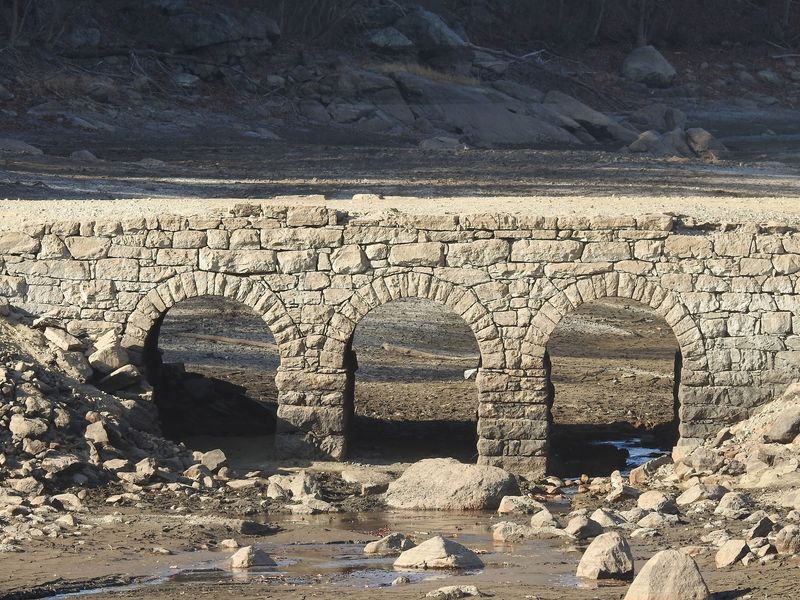
One bridge is attention-grabbing, but the reservoir’s backstory gets wider once the surrounding area enters the conversation. Available local notes mention that this is not the only hidden bridge associated with the Oak Ridge Reservoir.
Roads, bridges, and the former village area known as Wallace Corner to the south have also been described as buried below the reservoir waters. The important catch is that the water rarely falls low enough to reveal those other pieces.
That makes the Ghost Bridge feel like the most visible clue in a larger puzzle. It is the part that occasionally steps into public awareness, while other pieces remain out of view under normal conditions.
New Jersey has plenty of history hiding in plain sight, but this case is different because much of it is not in plain sight at all. The reservoir acts as both cover and archive, preserving traces of roads and crossings while keeping them out of regular reach.
For locals, that adds a strong reason to care. The site is not just an odd bridge near Oak Ridge.
It is evidence that familiar water infrastructure can sit on top of older communities, travel routes, and decisions that reshaped the map.
A rare appearance tied to low water
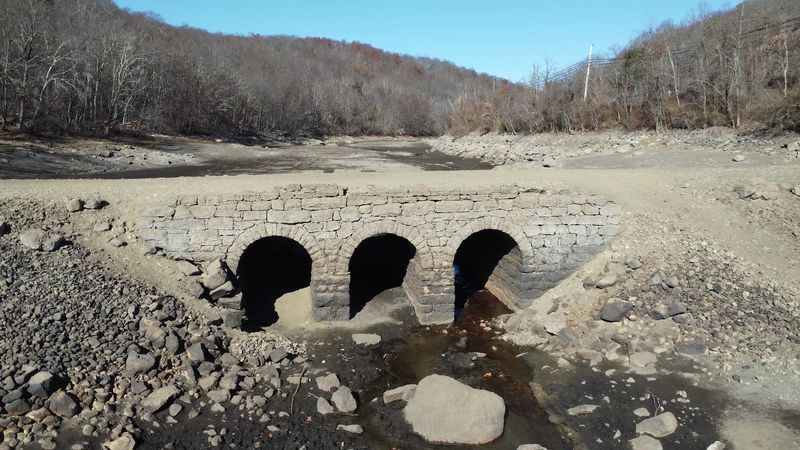
The bridge does not operate on a neat sightseeing schedule, which is both the fun and the frustration. Its visibility depends on reservoir water levels, and the available accounts point to especially low conditions during a period of dam and gatehouse maintenance.
That detail keeps expectations realistic. Someone planning a casual stop may arrive when the bridge is not visible, or only partly visible, because the structure is normally associated with the reservoir’s waterline.
Reports from the exposed period described the entire bridge being visible, while another account connected the sight to dry conditions. Together, those details explain why the reappearance felt so uncommon and why people began paying attention when photos and local talk spread.
The phrase after 50 years under dark reservoir water works because it captures the public fascination, but the more precise point is that the bridge had been out of ordinary view for many years. Its return was not a permanent reopening of an attraction.
Anyone interested in the site should treat it as a condition-based historical curiosity, not a guaranteed display. The bridge may be the star, but the reservoir still controls the curtain.
A curious stop with real limits
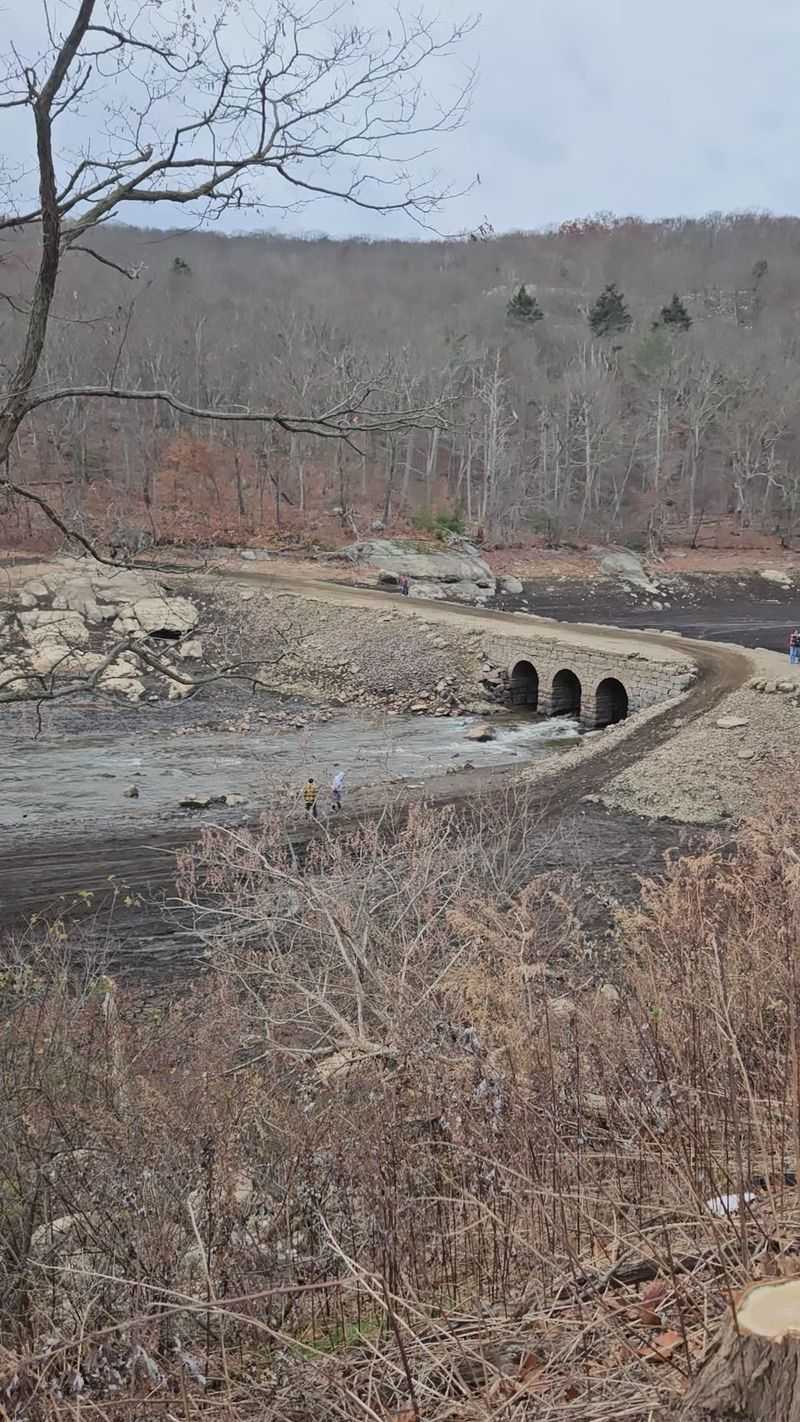
A place can be fascinating and still come with a big red caution label. The area has been described as owned and patrolled by Newark Watershed, and viewing the area has been identified in available comments as trespassing on city-owned property.
That practical warning belongs near the center of the story, not buried at the bottom. The bridge may be listed online as a landmark and open 24 hours, but that does not automatically mean people have permission to enter restricted watershed property.
Several details also make the site less like a polished day-trip stop. Available accounts mention no convenient parking, no nearby lodging, and no restrooms.
That matters for families, older travelers, and anyone who prefers a low-effort outing.
One family account described entering from the boat launch side and choosing not to continue farther with a child. That kind of decision says a lot about the setting: curiosity is understandable, but comfort levels and rules should guide the visit.
The best approach is to appreciate the story first and confirm current public access before attempting anything in person. New Jersey history is great, but it is even better when nobody has to explain their hobby to a patrol officer.
Who will appreciate the oddity most
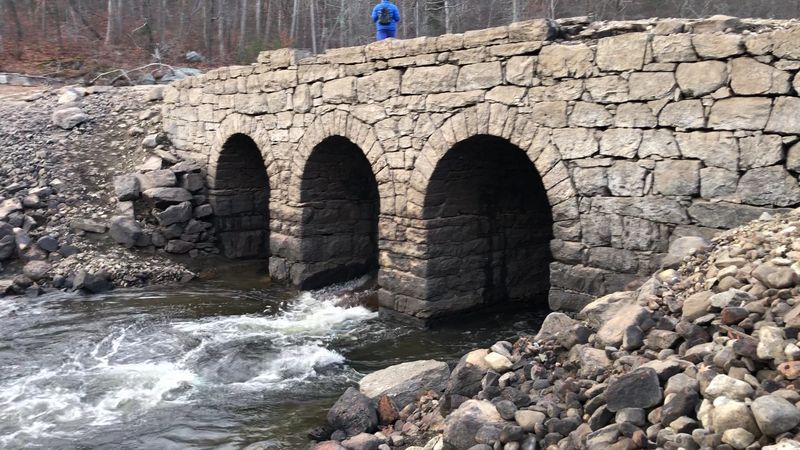
History-minded New Jersey residents are the natural audience for this place. The bridge rewards people who enjoy old maps, forgotten roads, reservoir stories, and the small shocks that come when ordinary infrastructure turns out to have a hidden past.
It can also appeal to short-hop day-trippers who like unusual local stories more than long itineraries. The site is not presented in the available information as a developed park experience, so it suits people who can enjoy learning about a place even when access is limited or conditions change.
Families may find the story engaging, especially because the bridge connects an old turnpike, a river crossing, and a reservoir into one easy-to-follow local mystery. Practical needs still matter, though, since available accounts point to no restrooms and no convenient parking.
People expecting a dramatic haunted attraction may leave with a raised eyebrow rather than a grand tale. The name Ghost Bridge is catchy, but the strongest evidence here is historical, not paranormal.
That is exactly why the spot works for New Jersey pride. It proves the state has strange, layered places where transportation history, water management, and local memory overlap in a way that feels specific to the region.
A soft verdict for careful bridge hunters
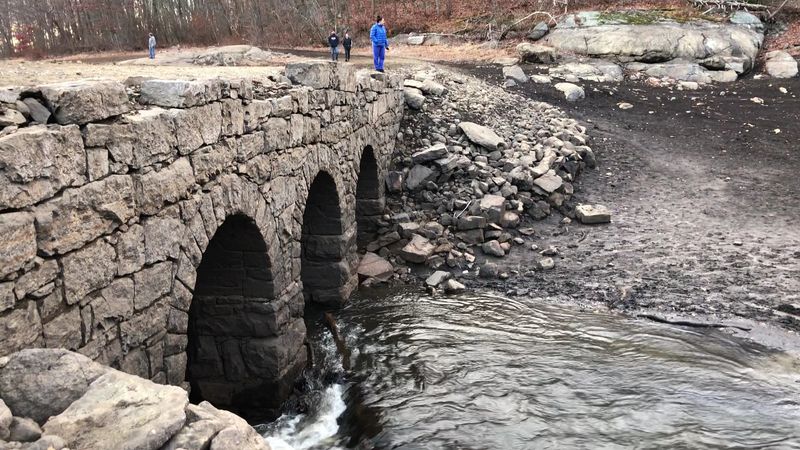
The Ghost Bridge of Oak Ridge Reservoir is not a simple attraction with a ticket window, a tidy path, and a predictable payoff. Its public listing says open 24 hours, and no admission cost is provided in the available data, but access concerns and changing water levels make planning more complicated than the listing suggests.
That does not make the place less interesting. In some ways, the uncertainty is the point.
The bridge has become a reminder that New Jersey’s landscape keeps older stories under the surface, sometimes literally.
Getting there should start with the address, 3G96+9W, Oak Ridge, NJ 07438, and then continue with a check of current rules for the Oak Ridge Reservoir and Newark Watershed property. Because available information mentions patrols and trespassing concerns, respectful distance and legal access should come before curiosity.
As a blog-worthy destination, it is strongest as a local history feature and a condition-based curiosity. It may not suit anyone looking for facilities or a guaranteed view, but it absolutely suits readers who enjoy the moment when a familiar New Jersey place turns out to have a much older road running through its story.
The verdict is gentle: learn about it, respect the boundaries, and enjoy the fact that Oak Ridge has one of the state’s better disappearing-bridge tales.
Share this story