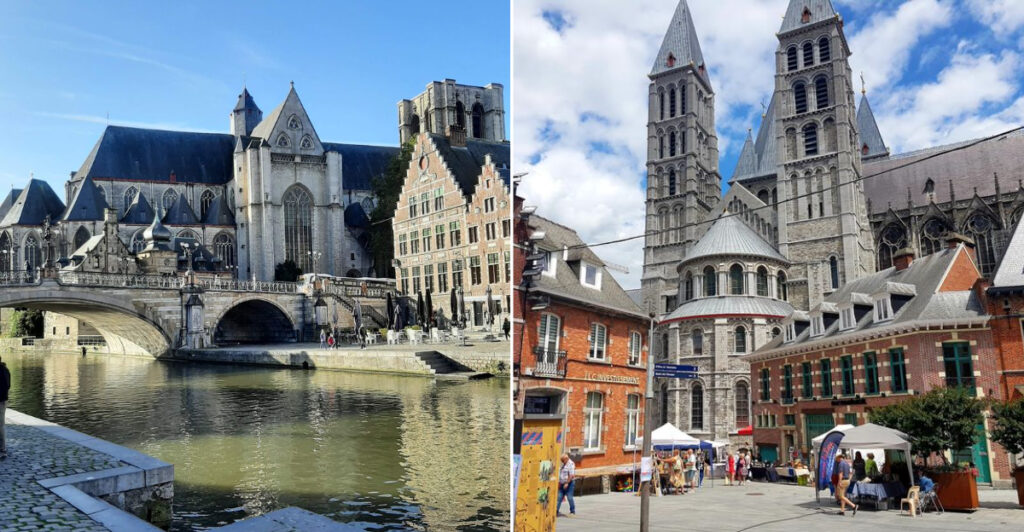
Belgium is famous for Bruges and Brussels, but the country holds a collection of smaller cities that most travelers never get around to visiting. Many of these places sit beside rivers, canals, or at the meeting point of two waterways, and their historic centers are packed with Gothic churches, medieval towers, grand market squares, and civic buildings that rival anything in Western Europe.
What makes them worth seeking out is that they feel lived-in and unhurried, rather than curated purely for tourism. Whether you are planning a dedicated trip or looking for a day trip from a larger Belgian city, this list covers twelve destinations that reward curious travelers with real history, genuine waterfront scenery, and architecture that is hard to forget.
Lier
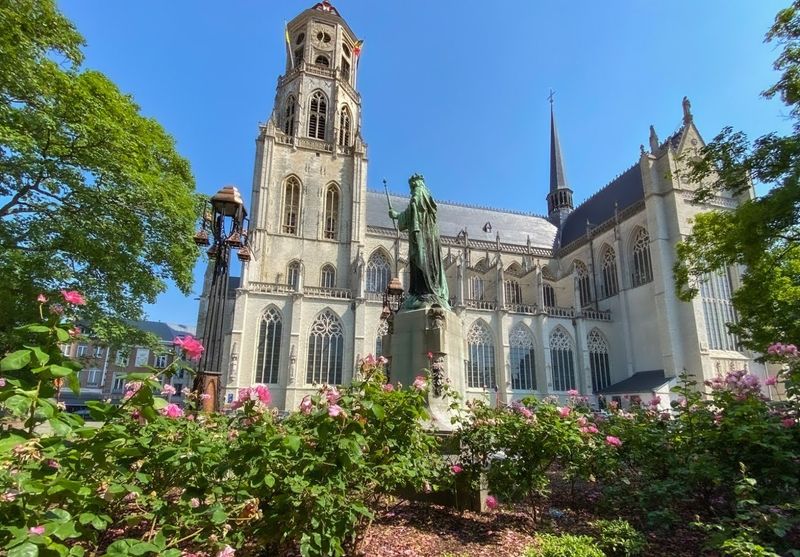
Tucked between Antwerp and Mechelen, Lier is the kind of city that makes you slow your pace the moment you arrive. Its historic center developed around the River Nete, whose branches curl around old brick houses, footpaths, and green embankments in a way that feels genuinely organic rather than arranged for postcards.
The Grote Markt is the architectural centerpiece, where an elegant 18th-century town hall stands beside a medieval belfry. The Zimmer Tower, just a short walk away, houses an elaborate astronomical clock that draws visitors curious about its moving parts and intricate design.
St. Gummarus Church introduces the city’s Brabantine Gothic heritage with its soaring interior and detailed stonework. The beguinage adds another layer, with narrow lanes, traditional houses, and secluded courtyards forming part of Belgium’s UNESCO-listed Flemish beguinages.
Compared with Bruges, the atmosphere is noticeably calmer, and the waterways feel like part of everyday city life.
Mechelen
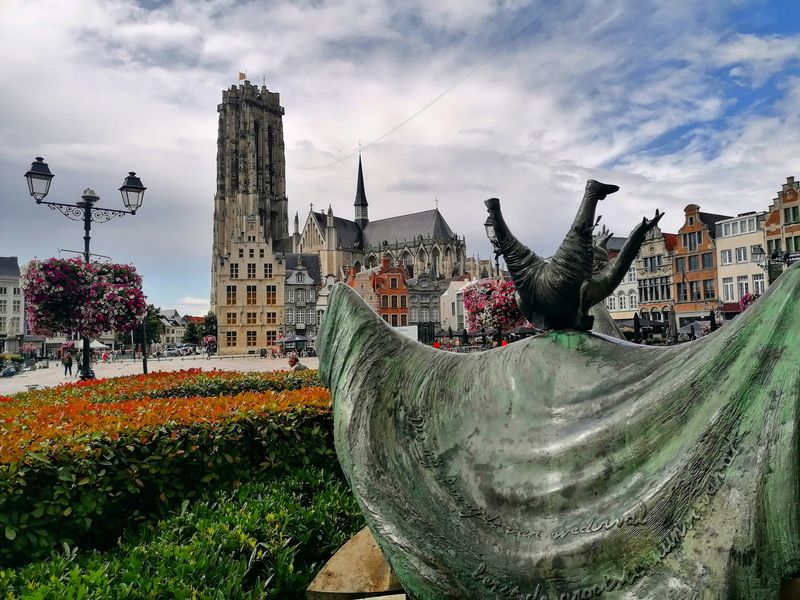
Mechelen once served as the political heart of the Burgundian Netherlands, and that prosperous chapter left a skyline worth exploring. St. Rumbold’s Cathedral and its monumental tower dominate the city from almost every angle, while the Grote Markt is framed by richly decorated historic facades that give the square a stately, unhurried character.
Palaces, beguinage streets, and grand residences connected to Mechelen’s years as a center of power are scattered throughout the compact center. What makes the city especially memorable, though, is the River Dijle.
The Dijle Path includes a floating section running directly beside and over the water between Haverwerf and the Botanical Garden. From this low perspective, visitors see the backs of old homes, waterside terraces, and quiet corners that are easily missed from street level.
The official tourism authority describes the path as a way to experience Mechelen from an entirely different angle, and that description is accurate.
Kortrijk
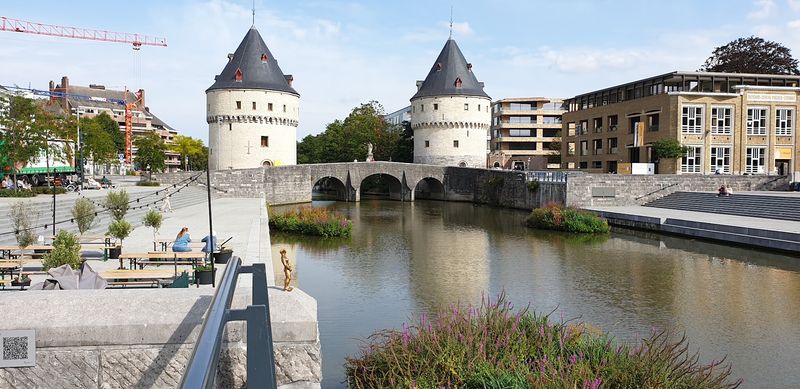
Kortrijk manages something that many Belgian cities have attempted but few have pulled off as cleanly: it combines medieval history with a modern waterfront that actually works. The River Leie runs through the center beside lowered riverbanks, pedestrian paths, and open terraces where visitors can sit and watch the city move around them.
The Broel Towers are the most recognizable feature on the riverfront. Two surviving medieval defensive towers stand on opposite sides of the Leie, creating one of Belgium’s most striking waterside compositions.
Their stone mass against the open river is the kind of scene that stops people mid-walk.
Farther into the center, the UNESCO-listed beguinage, the belfry, old churches, and former textile buildings reveal different layers of the city’s past. Contemporary structures and public spaces have been added without erasing the historic character.
Seasonal boat trips on the Leie offer a relaxed way to see the city from the water.
Dendermonde
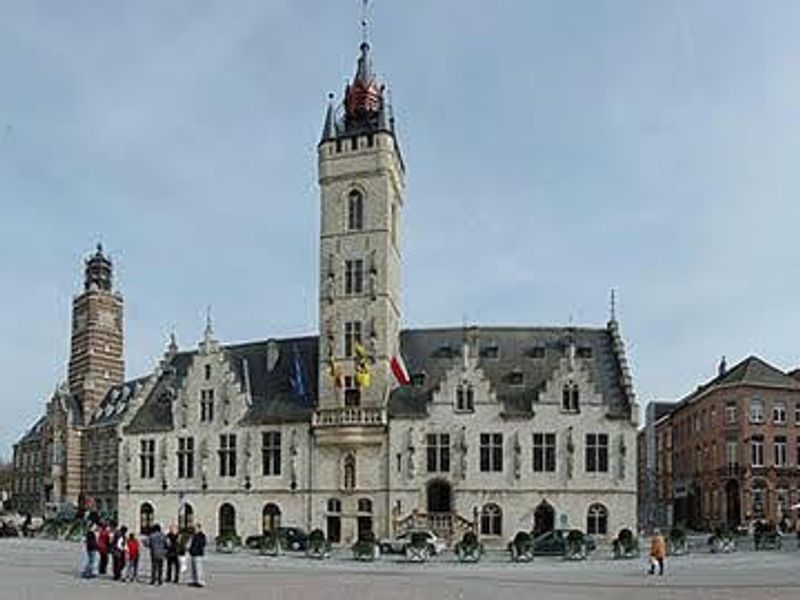
Dendermonde sits at the confluence of the River Dender and the Scheldt, giving this small East Flemish city a geography that has shaped its entire history. That position at the meeting of two rivers made it strategically valuable for centuries, and the evidence shows up in its civic architecture.
The historic center contains an impressive town hall and belfry, a traditional market square, the former Meat House, and the peaceful St. Alexius Beguinage. Both the beguinage and the belfry belong to larger UNESCO heritage listings, which places Dendermonde in distinguished company for a city of its size.
Much of what visitors see today reflects careful post-World War I reconstruction alongside surviving historic fabric, giving Dendermonde a visual character unlike cities that remained more intact. The green banks of the Dender and Scheldt provide space for walking and cycling outside the center.
Limited international tourism means the city rarely feels crowded, which is part of the appeal.
Leuven
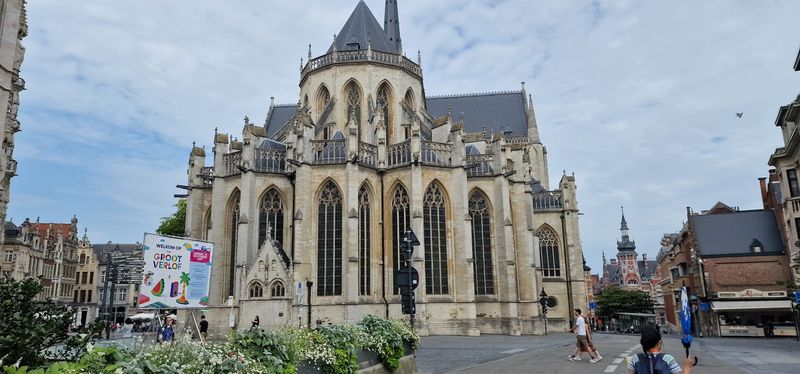
Most people hear “Leuven” and immediately think of its university, but the city’s architecture is just as compelling as its student energy. The late-Gothic town hall is covered with niches, towers, and sculpted figures across its entire facade, making it one of the most elaborate civic buildings in Belgium and genuinely difficult to take in all at once.
St. Peter’s Church stands across the square, and the university library with its soaring tower adds a third monumental landmark to a relatively compact city center. First-time visitors often underestimate how much is concentrated in a small area.
Leuven is also more connected to water than many realize. The Dijle flows through parts of the city, while the Leuven-Dijle Canal begins near the revitalized Vaartkom district, where former industrial sites have been transformed into residences, restaurants, and public spaces.
Old warehouses and canal views exist side by side in a neighborhood that rewards a slow afternoon walk.
Ghent
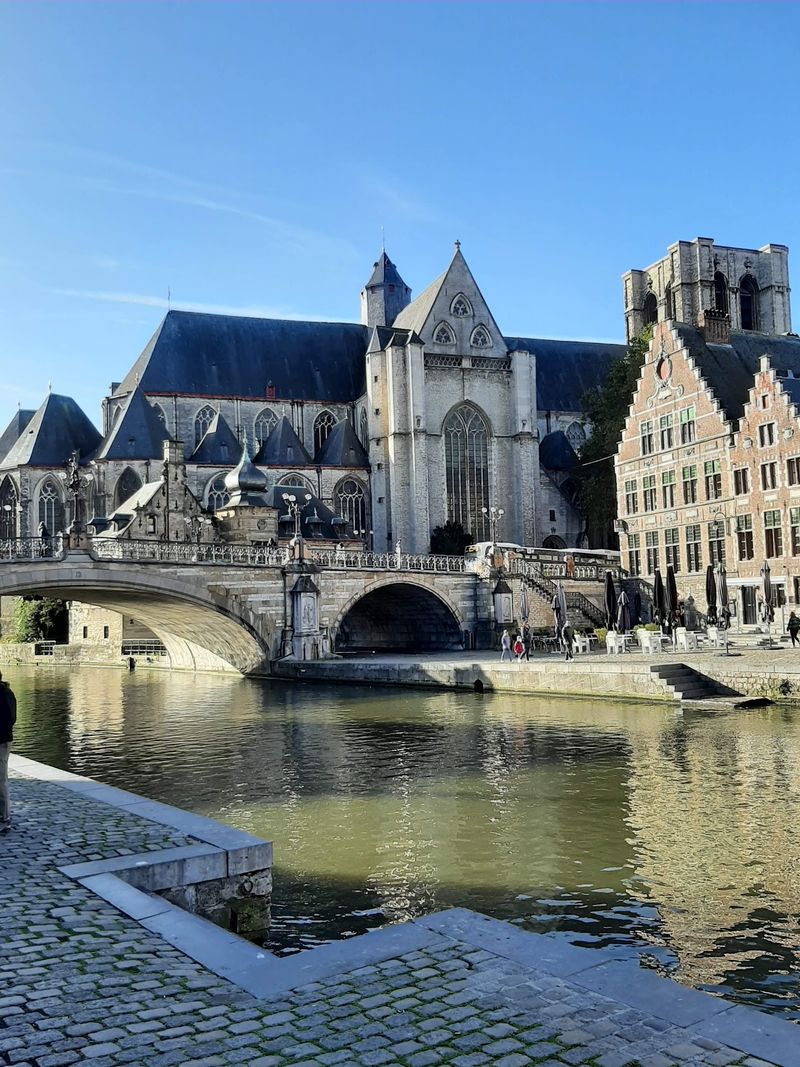
Ghent gets overshadowed by Bruges and Brussels on most first-time Belgium itineraries, and that is genuinely hard to explain once you have seen the Graslei. Along this stretch of the River Leie, medieval guild houses rise directly from the water, their stepped gables and narrow stone facades reflecting the extraordinary wealth Ghent accumulated as a major trading center during the Middle Ages.
The city’s three famous towers, St. Nicholas’ Church, the Belfry, and St. Bavo’s Cathedral, form a skyline that is unlike anything else in Belgium. Gravensteen Castle brings a full medieval fortress into the middle of a lively, populated city center, which still feels slightly surreal no matter how many times you see it.
Ghent’s waterways include both rivers and canals, and official sightseeing boat trips operate daily, offering views of old warehouses, stone bridges, grand facades, and hidden corners that are simply not visible from street level. The city rewards more than a single day.
Veurne
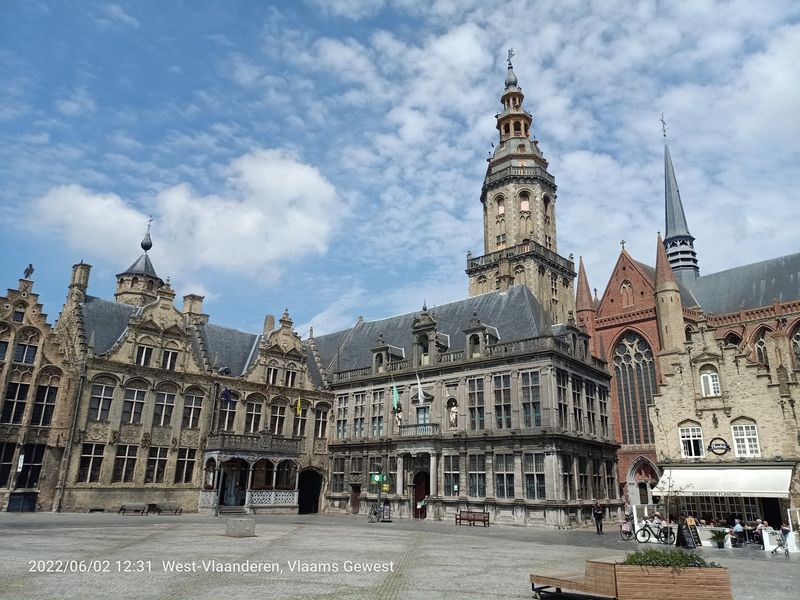
Veurne sits near Belgium’s North Sea coast in the flat, water-managed landscape of the Westhoek, and its modest size gives little hint of what the Grote Markt actually looks like. The square is lined with ornate Renaissance-style and historic buildings, including the former town hall, the Landshuis, and the belfry complex, creating a civic ensemble that seems far grander than a city of this scale should reasonably have.
Church towers rise above the rooftops on multiple sides, reinforcing that impression of unexpected architectural ambition. The surrounding region is crossed by canals, drainage channels, and waterways that have shaped agriculture and transportation for centuries.
The nearby De Moeren landscape lies below sea level, demonstrating just how closely this corner of Belgium depends on active water management. Veurne also carries a historical layer from World War I, when it was temporarily associated with Belgium’s wartime administration.
Cycling routes, city walks, and the visitor center are all currently active.
Tournai
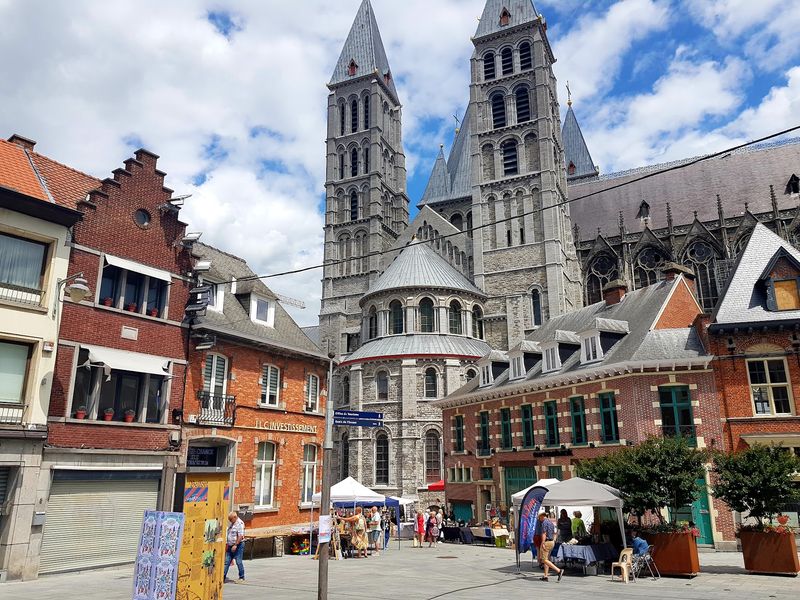
Tournai is one of Belgium’s oldest cities and one of its most architecturally significant, yet it draws a fraction of the attention it deserves from international travelers. The River Scheldt runs directly through the city, passing old quays, stone bridges, and historic neighborhoods that carry centuries of layered history.
The Pont des Trous is one of the most striking features on the waterfront. This medieval water gate once formed part of Tournai’s defensive system and remains a rare surviving example of its type in Belgium.
Above the center, the five towers of Notre-Dame Cathedral create a skyline that announces the city’s importance from a considerable distance.
The cathedral is a UNESCO World Heritage Site recognized for its combination of Romanesque and early Gothic architectural influences. Tournai’s belfry, also UNESCO-listed, is considered the oldest in Belgium.
The Museum of Fine Arts, designed by Art Nouveau architect Victor Horta, adds another significant cultural landmark to an already substantial historic center.
Namur
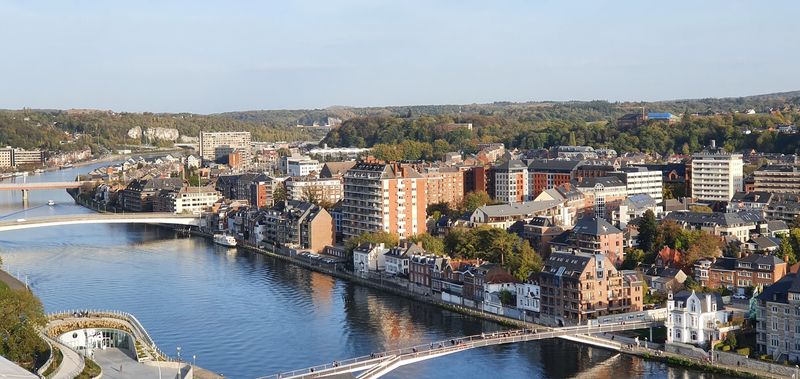
Namur occupies one of the most dramatic natural settings of any city in Belgium. Positioned at the meeting point of the Sambre and Meuse rivers, the city is watched over by a massive citadel built on a rocky hill directly above the water.
Its ramparts, tunnels, and viewpoints explain clearly why this location was fortified and fought over for centuries.
Below the citadel, the historic center contains churches, narrow lanes, traditional shops, and elegant 18th-century buildings. The contrast between the monumental fortress above, the graceful riverside below, and the compact old town in between gives Namur a character that feels distinct from Belgium’s Flemish canal cities.
Walkways and cycling routes follow both rivers, and bridges connect neighborhoods while offering views of the citadel rising in the background. The official Wallonia tourism service describes Namur as an all-year destination, and the active tourist office continues to promote its fortifications, historic center, and riverside setting to visitors.
Dinant
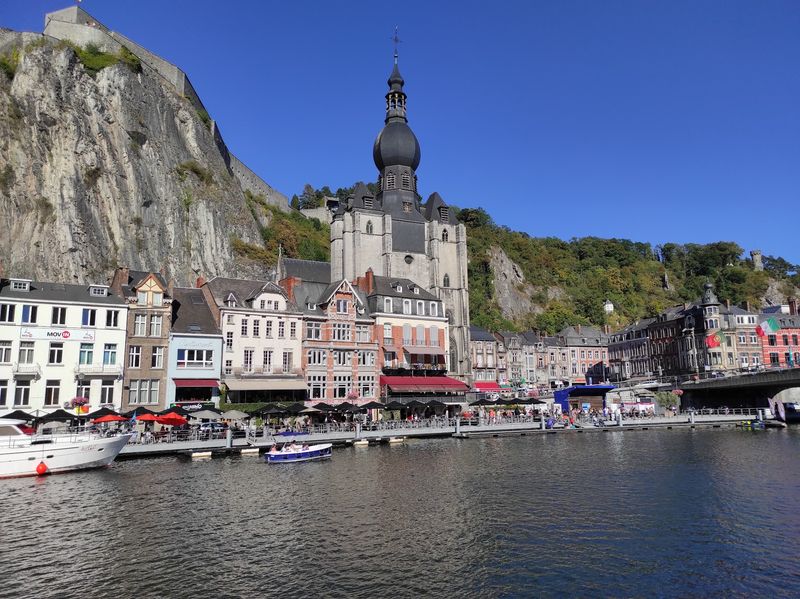
Very few small European cities have a physical setting as theatrical as Dinant. The town is pressed between the River Meuse and sheer limestone cliffs, leaving just enough room for a narrow strip of colorful buildings along the waterfront.
The onion-domed tower of the Collegiate Church of Notre-Dame rises close to the river, and the Citadel of Dinant sits high above everything on the cliff face.
Visitors can reach the citadel by stairs or cable car, and the view from the top over the church, bridges, and winding Meuse Valley is one of the more memorable in Wallonia. The citadel carries approximately 900 years of fortress history.
Dinant also holds a distinction that surprises many visitors: it is the birthplace of Adolphe Sax, the inventor of the saxophone. Colorful saxophone sculptures placed around the city add a playful, unexpected element to an otherwise historic streetscape.
Visit Wallonia actively promotes the citadel, cable car, and the city’s cultural landmarks.
Brussels Canal District
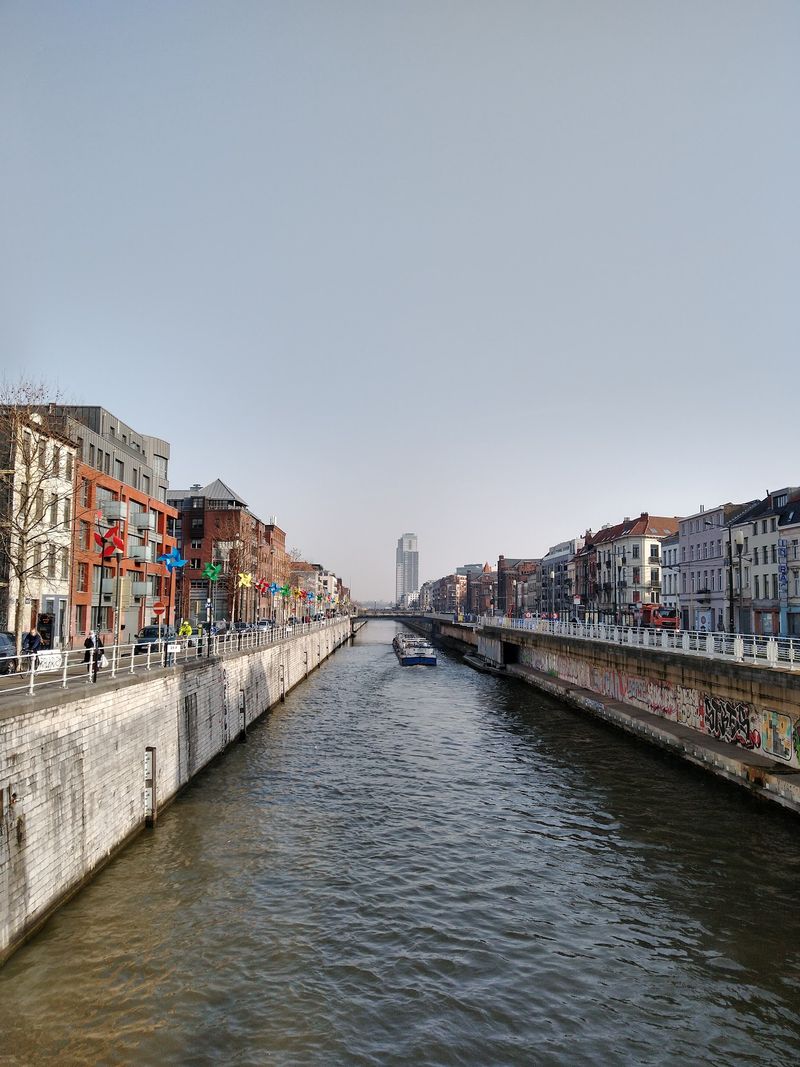
Central Brussels is famous for the Grand-Place, but the canal district operates on an entirely different architectural register. The Brussels-Charleroi Canal once supported factories, warehouses, and transportation networks connecting the capital with other industrial centers, and many of the surrounding structures reflect the large-scale brick architecture of the 19th and early 20th centuries.
Today, former industrial buildings have been adapted for cultural centers, creative workspaces, housing, and entertainment venues. Historic factories stand beside contemporary projects, creating one of Brussels’ most visually varied and evolving neighborhoods.
This is not a romantic medieval canal zone. Its appeal comes from industrial heritage, urban reinvention, and the ongoing contrast between working waterways and changing neighborhoods that are attracting new residents and institutions.
The district rewards visitors who are genuinely interested in how cities transform over time. Visit Brussels currently offers material on the area’s architecture, cultural venues, industrial history, and self-guided canal-area walks for those who want a structured starting point.
Bruges Beyond the Main Tourist Route
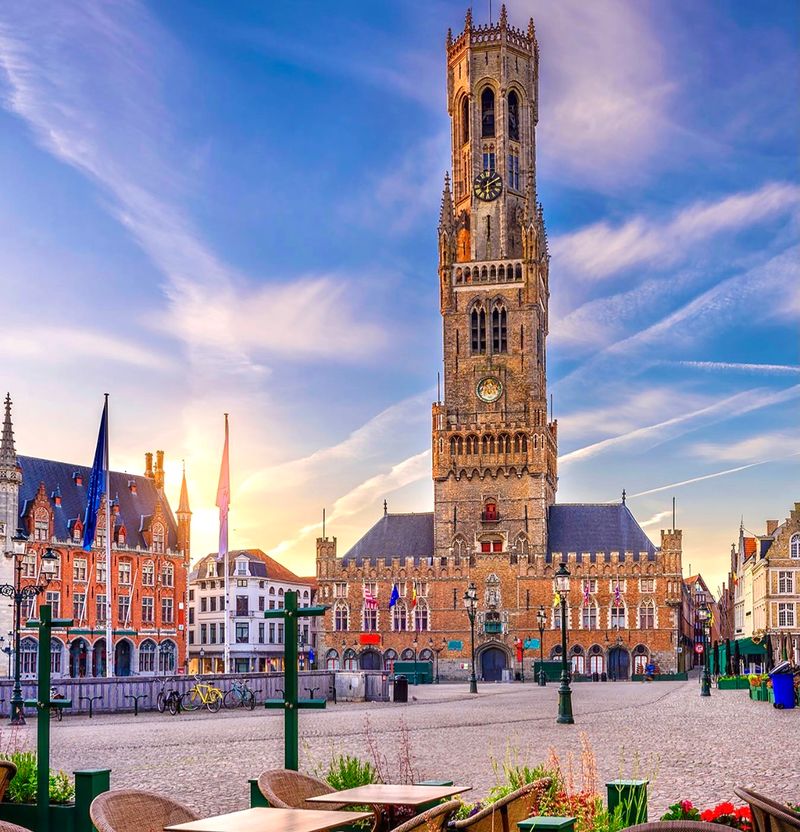
Calling Bruges underrated might raise an eyebrow, but a large portion of the city goes unnoticed by visitors who spend their time around Markt Square and Rozenhoedkaai. Walk east from the busiest center and the city shifts noticeably.
The eastern neighborhoods contain windmills, old city gates, almshouses, and peaceful sections of the outer canals that see far fewer visitors than the central waterways.
Streets around St. Anne’s Church and the Jerusalem Chapel reveal a more residential side of the medieval city, where the architecture is just as old but the atmosphere is considerably quieter. Bruges’ historic center is UNESCO-listed and remains one of Europe’s best-preserved medieval urban areas.
Official boat trips currently operate from five landing stages in the historic center, generally following a roughly half-hour route between the Jan van Eyck Square area and the Beguinage. Operations vary with weather and season, so checking locally before visiting is worth doing.
The quieter outer canals are best explored on foot.
Share this story