
Most people drive past cemeteries without a second thought, but there is one in Minneapolis that stops visitors cold the moment they step inside its chapel. The walls, ceiling, and dome are covered in more than 10 million individual mosaic tiles, hand-set by master craftspeople whose skills rivaled the great artisans of Byzantine Europe.
The sheer scale of what you see inside is hard to process at first. This is not a quiet, forgotten corner of the city.
It is a 250-acre landmark that has been drawing photographers, historians, nature lovers, and curious walkers for well over a century, and somehow most people in Minnesota have never heard of it.
A Cemetery That Surprises You From the First Step Inside

Most people associate cemeteries with solemnity and little else, but Lakewood Cemetery in Minneapolis rewrites that expectation almost immediately. The moment you pass through the entrance, the grounds open up into something that feels closer to a botanical garden than a burial ground.
Located at 3600 Hennepin Ave, Minneapolis, MN 55408, Lakewood spans 250 acres of carefully maintained landscape. Tree-lined paths curve through open fields, past quiet ponds, and around monuments that range from modest headstones to towering stone structures.
The cemetery has been welcoming visitors, walkers, and history seekers for generations. It sits right next to the bustle of the city, yet the moment you are inside, that noise disappears completely.
The grounds feel genuinely removed from urban life. That contrast alone makes the first visit memorable, and it only gets more interesting the deeper you go.
The Chapel That Holds 10 Million Mosaic Pieces
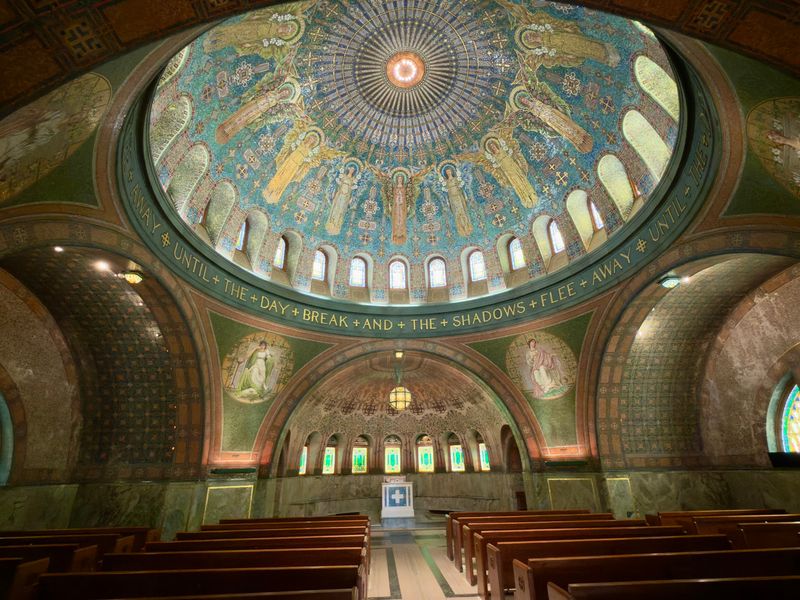
The chapel at Lakewood Cemetery is the kind of place that makes you stop walking and just stare. Every surface inside, from the arched ceiling to the walls to the sweeping dome overhead, is covered in more than 10 million individual mosaic tiles.
The work was completed by what many consider the last generation of old-school mosaic master craftspeople. The result is a level of artistry that genuinely competes with historic chapels found in Europe.
Tiny tiles in deep blues, rich golds, and warm reds form intricate figures, patterns, and scenes that shift in tone depending on where the light falls.
The chapel is listed on the National Register of Historic Places, which gives you some sense of how seriously it is regarded beyond Minneapolis. Even the exterior is worth slowing down to examine before you ever step through the door.
Byzantine Architecture in the Heart of Minneapolis
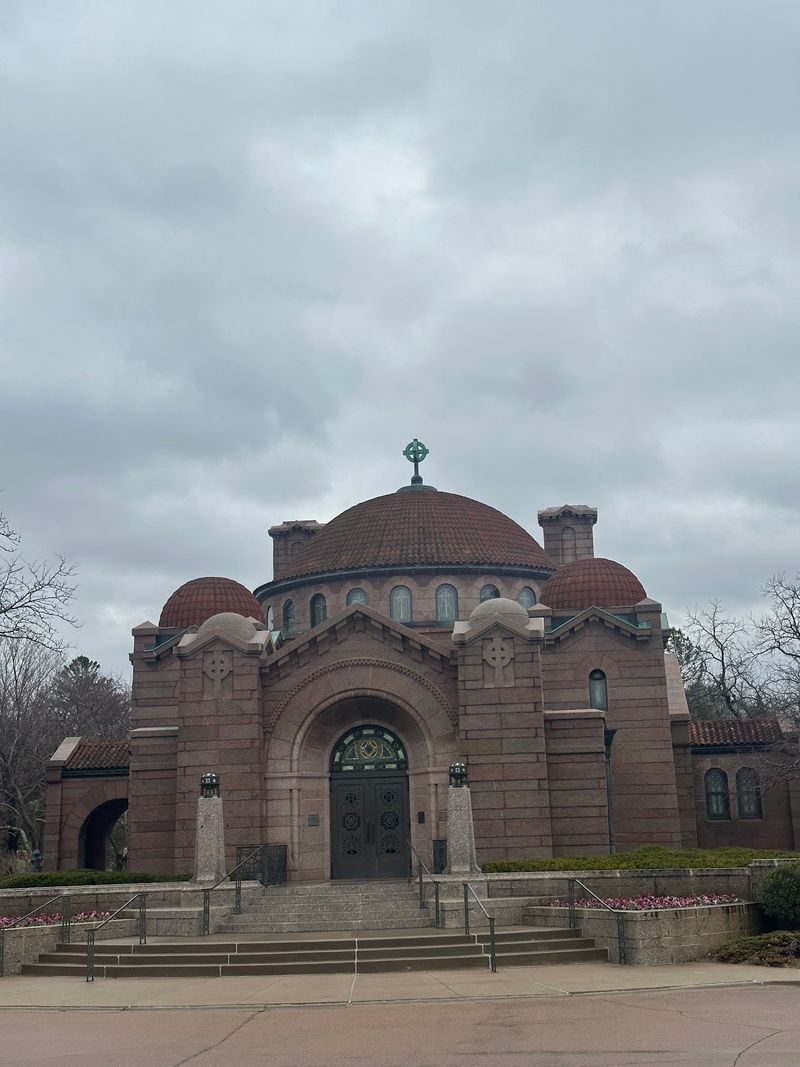
Byzantine architecture is not something most people expect to find in the American Midwest, which makes the chapel at Lakewood all the more striking. The building draws from the same design traditions that produced some of the most celebrated religious structures in Eastern Europe and the Mediterranean.
The rounded arches, the dome, the rich ornamentation, and the careful use of light all follow those classical principles. From the outside, the chapel has a compact, dignified presence.
Once you step inside, the scale of what was accomplished becomes clear.
The choice to build in this style was deliberate and ambitious. It set the chapel apart from every other building in Minneapolis and gave Lakewood a visual centerpiece that has drawn architects, artists, and travelers for decades.
Few structures in Minnesota carry this level of architectural ambition, and even fewer pull it off as convincingly as this one does.
The Mosaic Craftspeople Behind the Masterpiece

What makes the chapel mosaics so extraordinary is not just their visual impact. It is the human story behind them.
The artists who created this work belonged to what historians now recognize as the final generation of traditionally trained mosaic craftspeople in the old European style.
Their technique involved setting each tile by hand, one at a time, following patterns that required both precision and artistic intuition. The process was painstaking, time-consuming, and deeply skilled.
That level of craft is almost impossible to replicate today because the training traditions that produced it have largely faded.
Standing inside the chapel, knowing that each of those 10 million tiles was placed by a human hand, changes how you look at the work. It stops being decoration and becomes something closer to a record of human dedication.
The chapel is as much a tribute to those craftspeople as it is to anything else.
Jo Pond and the Natural Beauty of the Grounds

Beyond the chapel, Lakewood Cemetery offers something that surprises a lot of first-time visitors: genuine natural beauty spread across 250 acres of rolling landscape. Jo Pond sits near the heart of the grounds and reflects the surrounding trees in its calm surface on still days.
The pond is more than decorative. It supports a small but thriving ecosystem.
Visitors have spotted ospreys fishing there, which is remarkable given how compact the body of water is. Herons, waterfowl, deer, turkeys, and raptors have all been seen moving through the grounds at various times of year.
The cemetery has made a real commitment to nature conservancy, and it shows in the health of the trees and the variety of wildlife that calls this place home. Walking the paved paths around Jo Pond is one of the quieter pleasures Lakewood offers, and it costs nothing beyond a little time.
Walking Paths That Stretch for Miles
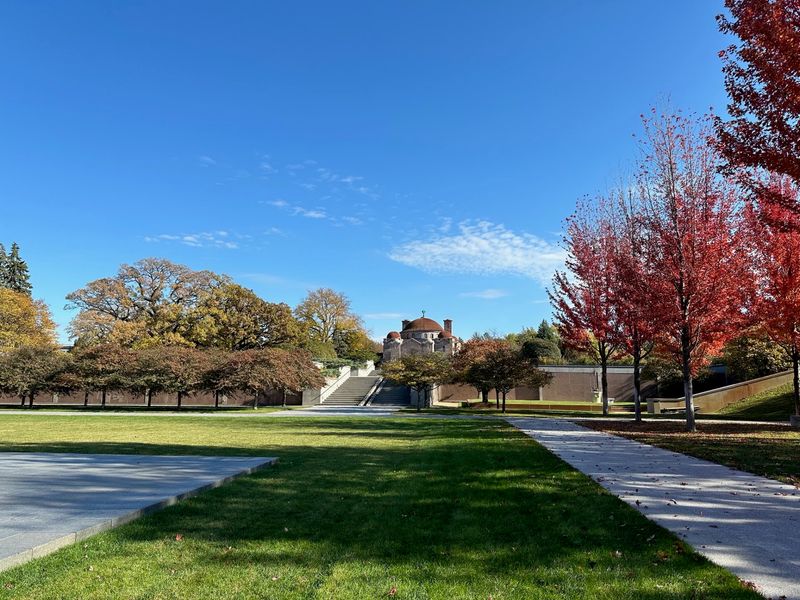
Lakewood Cemetery has roughly 2.5 miles of well-paved paths that wind through the grounds in a way that feels more like a park trail than a cemetery walkway. The routes pass through different sections of the property, each with its own character and atmosphere.
Some stretches are open and airy, with wide views across the grounds. Others pass under dense canopies of old trees that filter the light into something soft and dappled.
The paths are smooth enough for easy walking at any pace, and the terrain stays relatively gentle throughout.
Morning walkers are a regular sight here. People come to clear their heads, get some exercise, or simply enjoy the quiet.
The cemetery is open daily from 8 AM, giving early risers a peaceful window before the rest of the city gets moving. Few urban green spaces in Minneapolis offer this kind of unhurried solitude.
The History Buried Beneath Every Acre
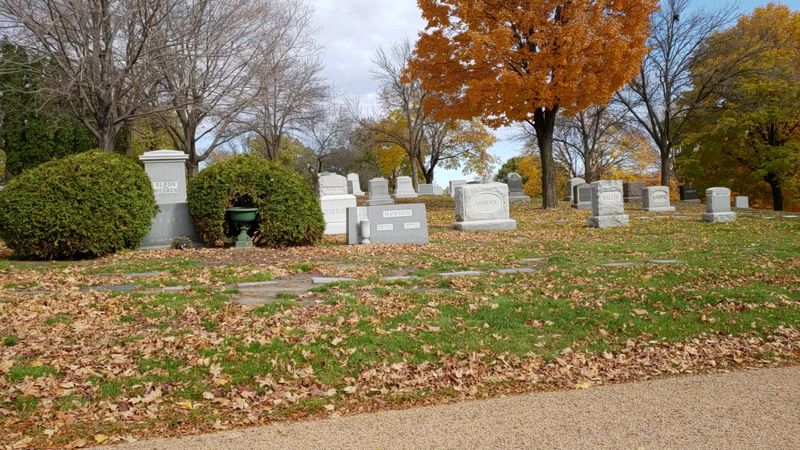
Lakewood Cemetery has been an active burial ground since the mid-1800s, and that history is visible in every corner of the property. Some of the oldest sections hold grave markers that date back well over a century, with weathered stone and inscriptions that connect visitors to an earlier version of Minneapolis.
The cemetery provides online historical maps and self-guided tour materials that help visitors understand what they are seeing as they walk through different sections. Each area of the grounds has its own era and story, and the materials make it easy to follow along without needing a guide.
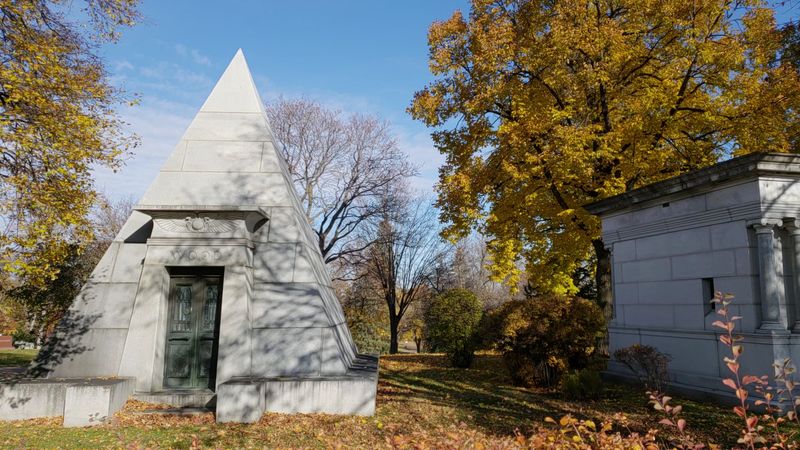
Many notable figures from Minnesota history are interred at Lakewood. The monuments range from simple headstones to enormous stone structures that reflect the ambitions and tastes of their time.
Walking through the older sections feels like moving through a physical archive of the city’s past, one name and one story at a time.
Seasonal Beauty That Changes With Every Visit

One of the things that keeps people coming back to Lakewood is how dramatically the grounds shift with the seasons. Spring brings blooming trees and fresh green growth that makes the older monuments look almost theatrical by contrast.
Summer fills the canopy overhead and turns the walking paths into shaded corridors.
Fall is widely considered the most photogenic time to visit. The old trees across the 250 acres turn brilliant shades of red, orange, and gold, and the combination of autumn color against historic stone creates a visual that photographers genuinely seek out.
Winter has its own appeal, with frost on the monuments and a stillness that feels different from any other time of year.
The cemetery hosts seasonal events and activities throughout the year, including photography contests that invite visitors to capture the grounds at their most striking. Each season offers a reason to return, even if you have visited many times before.
Wildlife You Would Not Expect in the Middle of a City

Lakewood Cemetery has quietly become one of the better urban wildlife spots in Minneapolis, and most people have no idea. The combination of mature trees, open meadow areas, and Jo Pond creates enough habitat variety to support a surprisingly wide range of species.
Deer move through the grounds with regularity. Wild turkeys have been spotted wandering between monuments.
Herons stand at the water’s edge with the patience that only herons seem to possess. Raptors circle overhead, and songbirds fill the tree canopy during warmer months.
Raccoons and squirrels are constant presences throughout the year.
The osprey sightings at Jo Pond are particularly notable. Watching a large raptor fish successfully in such a small body of water is not something you see every day, and it speaks to how healthy the ecosystem here has become.
The cemetery’s nature conservancy efforts have clearly made a real difference.
Photography and the Grounds That Draw Lens-Seekers

Lakewood Cemetery has developed a genuine reputation among photographers in the Twin Cities. The combination of historic architecture, mature trees, seasonal color, and quiet atmosphere makes it one of the more versatile shooting locations in Minneapolis.
The chapel exterior alone offers strong compositional opportunities in almost any light. The older monument sections provide texture and contrast that work particularly well in early morning or late afternoon.
The ponds and tree lines add natural framing that photographers return to across different seasons.
The cemetery runs a seasonal photo contest called Focus on the Seasons, which invites visitors to submit images taken on the grounds. The contest gives regular visitors a creative reason to keep returning and to look at familiar spots with fresh eyes.
Whether you shoot with a phone or a professional camera, the grounds consistently reward patience and attention. Few places in the city offer this much visual variety in a single location.
The Mausoleum and Its Classic Architecture

Beyond the chapel, Lakewood Cemetery includes a mausoleum that carries its own architectural weight. The building features marble floors, ornate ironwork, and wood detailing that reflect the craftsmanship standards of the era in which it was built.
The interior has a formal, dignified atmosphere that feels consistent with the rest of the cemetery’s commitment to quality. The materials used throughout the mausoleum were clearly selected with care, and the overall effect is one of quiet permanence rather than cold austerity.
The mausoleum has undergone renovation work in recent years, with the goal of refreshing worn elements while preserving the building’s historic character. It remains an active part of the cemetery and continues to serve families who choose it for their loved ones.
Visitors exploring the broader grounds often find the mausoleum worth a closer look, especially those with an appreciation for classical American memorial architecture.
Guided Tours and Self-Guided Exploration
Lakewood Cemetery makes it genuinely easy to explore at your own pace. The cemetery provides self-guided tour materials, including historical handouts and an online map that corresponds to different sections of the grounds.
Each area has its own context and story, and the materials help connect what you see to the broader history of Minneapolis.
Guided tours are also available to the public, offering a more structured way to move through the property with background information that enriches the experience. For visitors who want more than a casual walk, the tours provide exactly that kind of depth.
The grounds are open daily from 8 AM, and the open hours give visitors a long window to explore without feeling rushed. Whether you spend 30 minutes or most of an afternoon, the cemetery consistently offers more to see than most people expect on a first visit.
Returning visitors often discover things they missed entirely the first time.
A Landmark That Most Twin Cities Residents Have Overlooked

One of the more curious facts about Lakewood Cemetery is how many longtime Minneapolis and Twin Cities residents have never visited, or even heard much about it. People who have spent most of their lives in Minnesota regularly report being completely surprised by what they find when they finally make the trip.
The cemetery spans 250 acres in a city where open green space is valued, yet it sits in relative obscurity compared to other Minneapolis landmarks. The chapel alone, with its 10 million mosaic tiles and Byzantine architecture listed on the National Register of Historic Places, would be a major attraction in almost any other city.
Part of the appeal of finally visiting is that sense of discovery. Finding something this impressive, this close to home, after so many years of not knowing it existed, is a genuinely satisfying feeling.
Lakewood rewards the curiosity it takes to finally show up.
Why Lakewood Stays With You Long After You Leave

There are places you visit once and forget, and there are places that stay in your memory long after you have left. Lakewood Cemetery belongs firmly in the second category.
The combination of natural beauty, architectural ambition, living history, and genuine quiet creates an experience that is hard to replicate anywhere else in Minneapolis.
The chapel mosaics are the obvious standout, but the grounds themselves carry a weight that builds gradually as you walk. The old trees, the wildlife, the carefully tended paths, and the monuments that span more than a century of Minnesota history all add up to something that feels meaningful rather than merely scenic.
People return here for morning walks, for seasonal photography, for quiet reflection, and sometimes just because no other place in the city offers the same combination of things. Lakewood is the kind of place that earns repeat visits without ever having to ask for them.
Share this story