Rhode Island may be the smallest state in the country, but its coastline punches well above its weight when it comes to maritime history. From the rocky shores of Jamestown to the windswept bluffs of Block Island, the state is home to some of the most storied lighthouses in America.
These towers guided fishing boats, merchant vessels, and naval ships through some of the most challenging waters on the East Coast for centuries. Whether you are a history lover, a coastal explorer, or someone who just appreciates a great ocean view, this list gives you eleven real reasons to get out and explore Rhode Island’s remarkable lighthouse heritage.
Each stop offers something a little different, so there is no single right order to visit them.
Beavertail Lighthouse, Jamestown
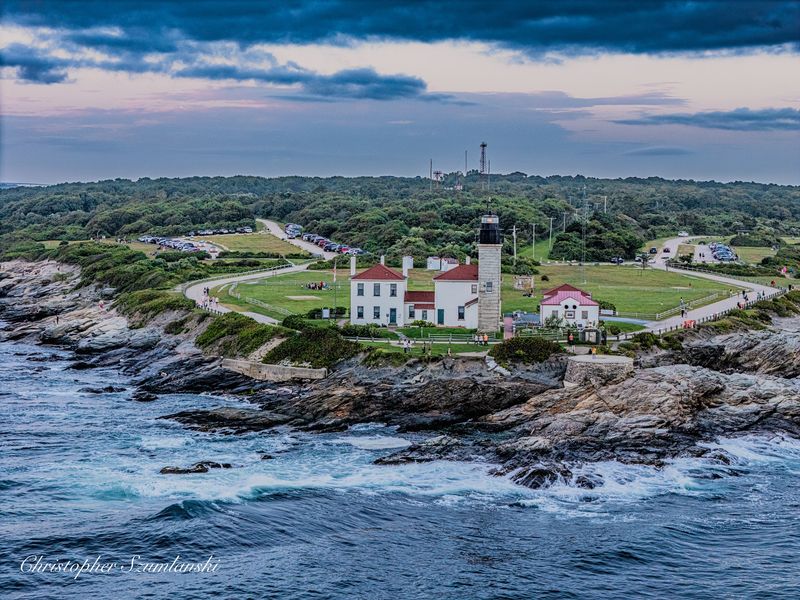
One of the oldest lighthouse sites in the entire country sits right here in Rhode Island, and most people outside the state have never heard of it. Beavertail Lighthouse traces its origins to 1749, placing it among the earliest established light stations in what is now the United States.
The granite tower standing today was completed in 1856 and still serves as an active navigational aid.
Beavertail State Park wraps around the lighthouse with rocky ledges, open lawns, tide pools, and walking paths that stretch along the coast. On a clear day, you can watch sailboats, fishing vessels, and larger ships moving between Narragansett Bay and the Atlantic.
The Beavertail Lighthouse Museum occupies former station buildings beside the tower. Exhibits cover keeper life, navigational equipment, fog signals, and shipwrecks.
In 2026, the museum operates daily during the main summer season, with special tower-climbing days on selected dates. The park grounds offer year-round exterior access.
Block Island North Lighthouse, New Shoreham
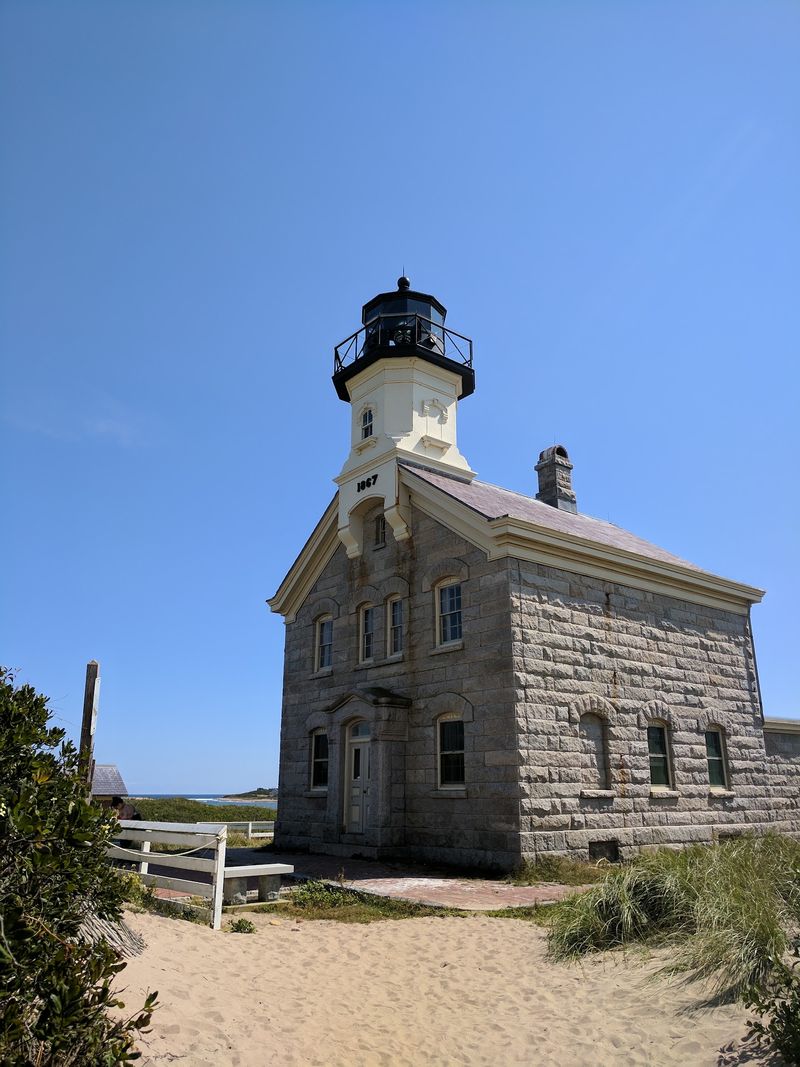
Getting to Block Island North Light takes a little planning, and that is honestly part of what makes it so satisfying to reach. Visitors park near Settler’s Rock and follow a sandy shoreline trail through the Block Island National Wildlife Refuge, passing dunes, Sachem Pond, and coastal vegetation before arriving at the lighthouse near Sandy Point.
The building completed in 1867 was actually the fourth lighthouse constructed near this shifting northern shoreline. Earlier structures were moved, threatened, or lost entirely due to erosion and unstable sand.
Builders chose heavy granite construction specifically to outlast what had defeated its predecessors.
Rather than the tall tower design most people picture, North Light looks more like a sturdy stone residence with a compact tower rising from the roof. The building now houses an interpretive center and small museum with seasonal hours.
The tower is not available for climbing, but the coastal walk alone makes the trip worthwhile.
Block Island Southeast Lighthouse, New Shoreham
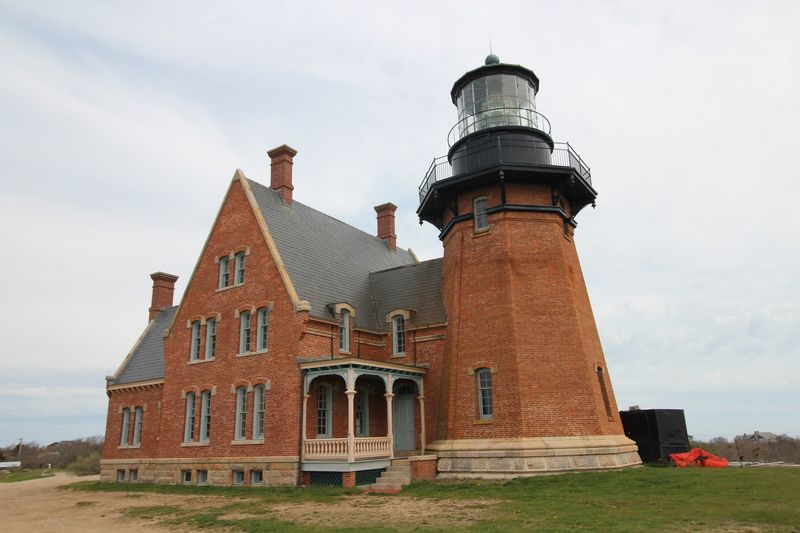
Perched above Mohegan Bluffs on the southeast corner of Block Island, this red-brick Victorian Gothic lighthouse has one of the most commanding positions of any lighthouse in New England. The tower itself is not exceptionally tall, but its location high above the water puts its light at an elevation of more than 200 feet, making it visible for miles at sea.
Completed in the 1870s, the design combined practical navigation with architectural ambition. Its substantial keeper’s dwelling, decorative brickwork, and attached tower set it apart from Rhode Island’s simpler coastal lights.
It is now recognized as a National Historic Landmark.
The lighthouse’s most dramatic chapter came in 1993, when preservationists moved the entire structure approximately 300 feet inland to save it from an eroding cliff edge. That engineering achievement is one of the most remarkable preservation stories in the state’s history.
The nonprofit Southeast Lighthouse Foundation operates the site, with interior tours offered seasonally.
Rose Island Lighthouse, Newport
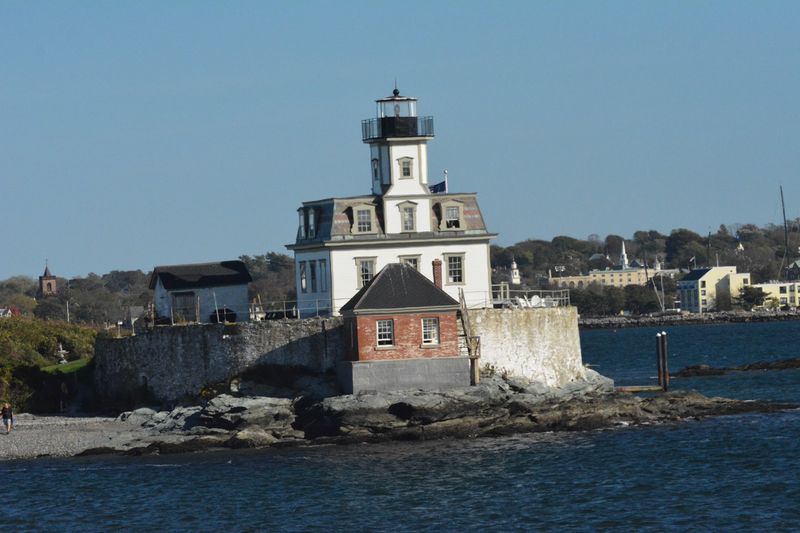
Rose Island Lighthouse offers something genuinely rare among Rhode Island’s coastal landmarks: a chance to step inside a fully restored lighthouse station and understand what life there actually looked like. The lighthouse was built in 1870 on a small island in Narragansett Bay, positioned close to the Claiborne Pell Newport Bridge between Newport and Jamestown.
After being deactivated, the property sat in poor condition for years before a dedicated preservation effort brought it back. Restored rooms now show how lighthouse keepers and their families lived, and the island also contains the remains of historic Fort Hamilton, adding depth to any visit.
Visitors reach Rose Island through organized transportation and scheduled day trips. The lighthouse organization offers day visits, overnight stays, retreats, and special programs throughout the season.
Wide views of Narragansett Bay, Newport’s shoreline, and passing sailboats make every angle of the island worth exploring. Advance reservations are generally necessary for all visit types.
Pomham Rocks Lighthouse, East Providence
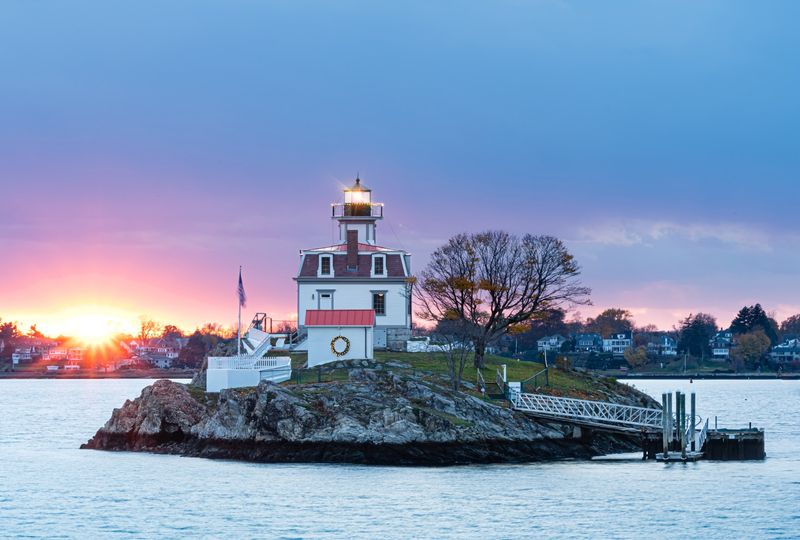
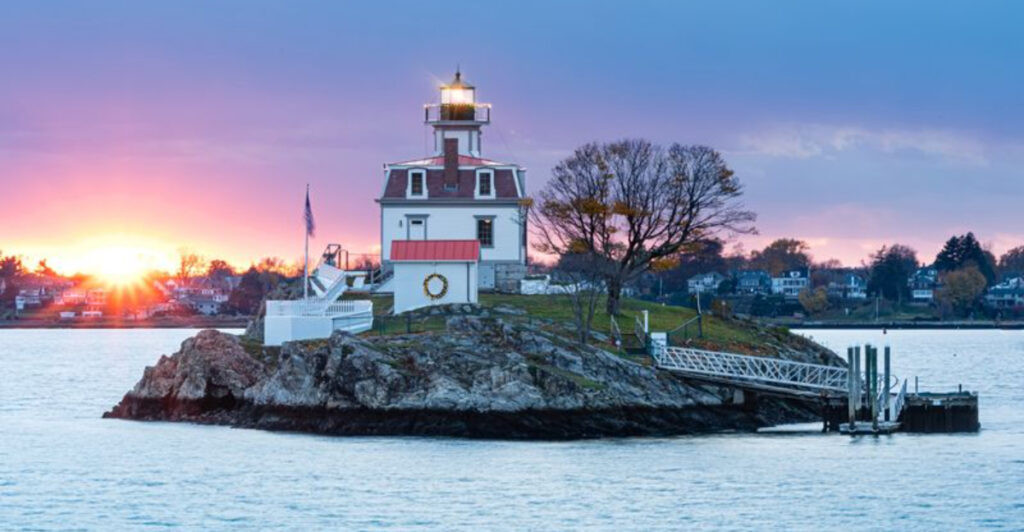
Sitting on a tiny rocky island in the Providence River just off the East Providence shoreline, Pomham Rocks Lighthouse has a quiet presence that belies its interesting history. The station was established in 1871 to help vessels navigate the upper reaches of Narragansett Bay and the river channel leading toward Providence.
Its design combines a keeper’s house and light tower into one compact Victorian structure, giving it the look of a small island cottage rather than a traditional lighthouse. For many years, it could only be admired from the mainland, but restoration work led by the Friends of Pomham Rocks Lighthouse changed that.
In 2026, the organization offers scheduled guided boat tours that allow visitors to land on the island, hear stories about the keepers and the restoration process, and explore the property under supervision. Private boats, canoes, and kayaks are not permitted for access.
Advance reservations through the Friends group are required for all visits.
Castle Hill Lighthouse, Newport
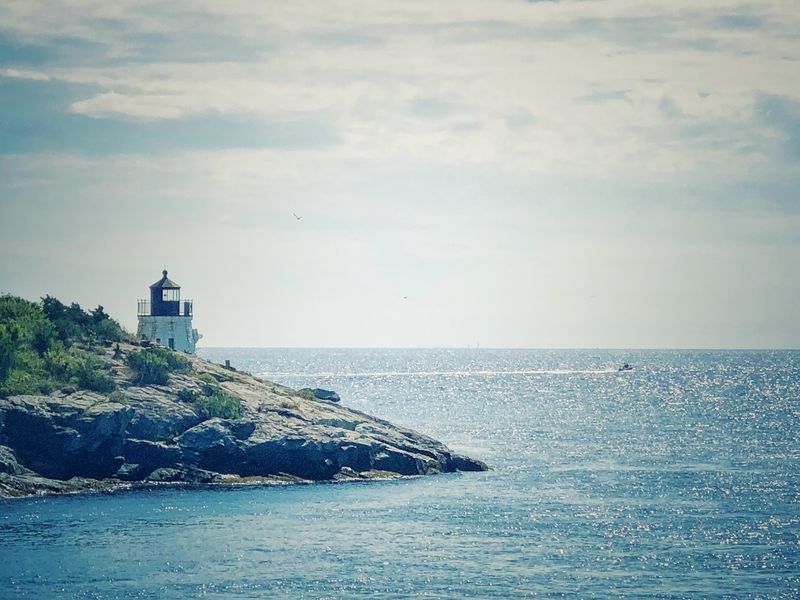
Few lighthouses in Rhode Island are as frequently photographed as the small granite tower at Castle Hill, and the reason becomes obvious the moment you see its position on the rocks. Built in 1890 at the western end of Newport’s Ocean Drive, it marks the passage between Narragansett Bay and the open waters beyond.
The lighthouse stands on property associated with Castle Hill Inn, while the U.S. Coast Guard retains ownership of the tower itself.
A walking trail provides public exterior access, letting visitors approach the structure and take in views across the bay without needing any special arrangements.
The tower is not open for interior tours, but the rocky setting more than compensates. Waves break against the ledges below, sailboats pass through the channel, and the lighthouse silhouette becomes particularly striking near sunset.
Parking is limited, especially on weekends and during private events at the adjacent property, so arriving early improves the experience considerably.
Point Judith Lighthouse, Narragansett
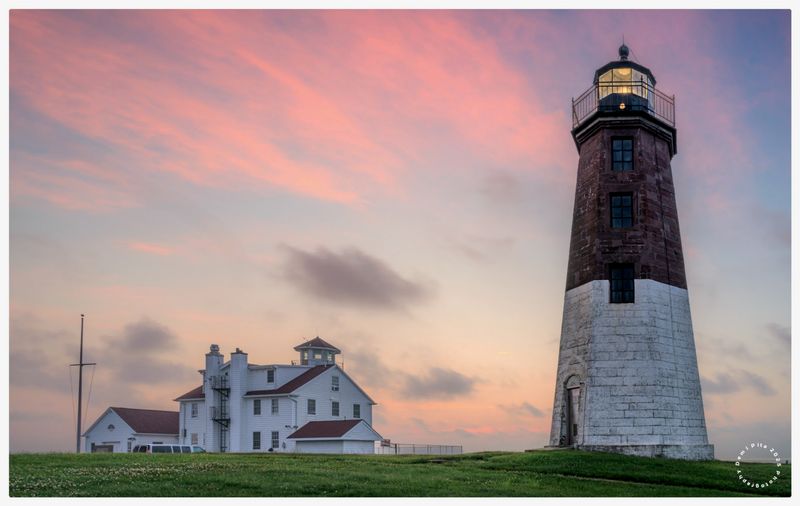
Point Judith Lighthouse guards one of the most historically significant stretches of water in Rhode Island, where Narragansett Bay meets Rhode Island Sound. The first lighthouse here was built in 1806, but the Great Gale of 1815 destroyed it.
The present brownstone tower dates to the 1850s and remains one of the state’s most recognizable maritime structures because of its octagonal shape and two-tone exterior.
The point also connects to a striking World War II event. In May 1945, the German submarine U-853 was sunk several miles offshore in one of the final naval engagements in the Atlantic before Germany’s surrender.
That history adds an unexpected layer to what already feels like an important maritime location.
Point Judith is part of an active Coast Guard station, so the tower and station buildings are restricted. Visitors are welcome in designated exterior areas, which still provide wide views of the Atlantic and the busy vessel traffic heading toward Galilee and the Block Island ferry route.
Prudence Island Lighthouse, Portsmouth
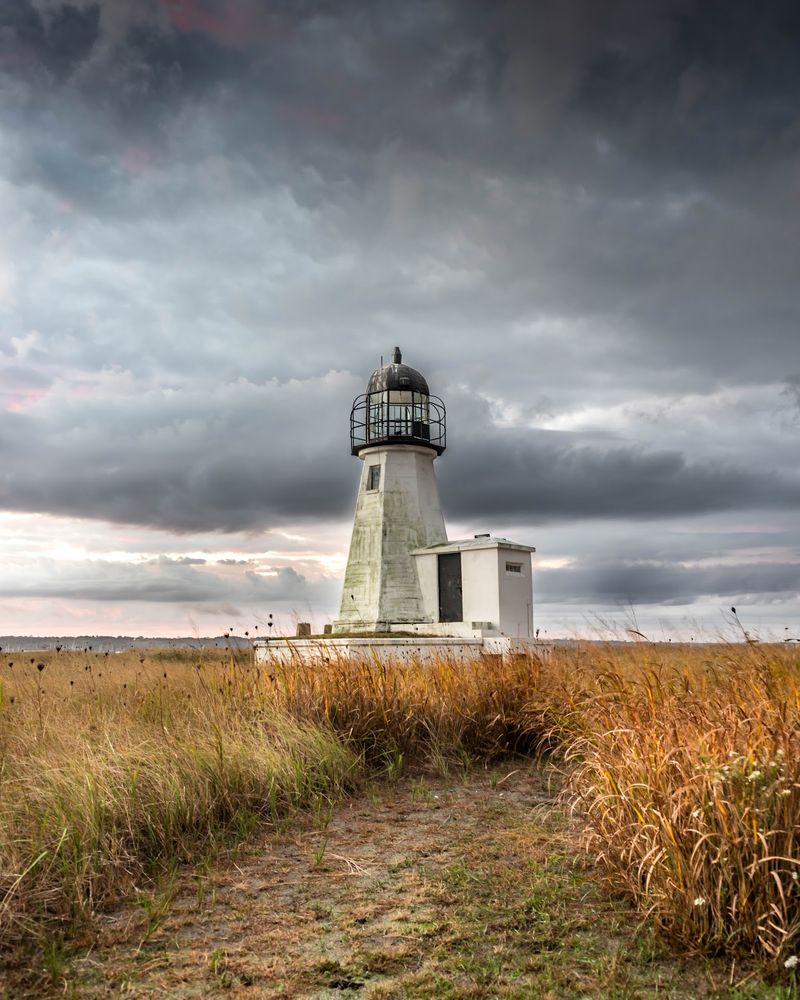
Prudence Island Lighthouse carries a backstory that sets it apart from most lighthouses in the state. The tower was not originally built on Prudence Island at all.
It first stood at Goat Island in Newport before being dismantled and relocated to Sandy Point in the 1850s, making it an unusual survivor from an earlier generation of Rhode Island lighthouse construction.
Its position on the eastern shore of Prudence Island helped guide vessels through the East Passage of Narragansett Bay, an important corridor for commercial, military, and recreational traffic. Prudence Island has no bridge to the mainland, so visitors reach it using the year-round ferry from Bristol, which carries passengers, bicycles, and a limited number of reserved vehicles.
The lighthouse can be approached from the island, though regular tower tours are not offered. Prudence Island is a quiet residential and natural environment with narrow roads and limited facilities.
Respecting private property and planning transportation carefully are both essential parts of a successful visit.
Conimicut Lighthouse, Warwick
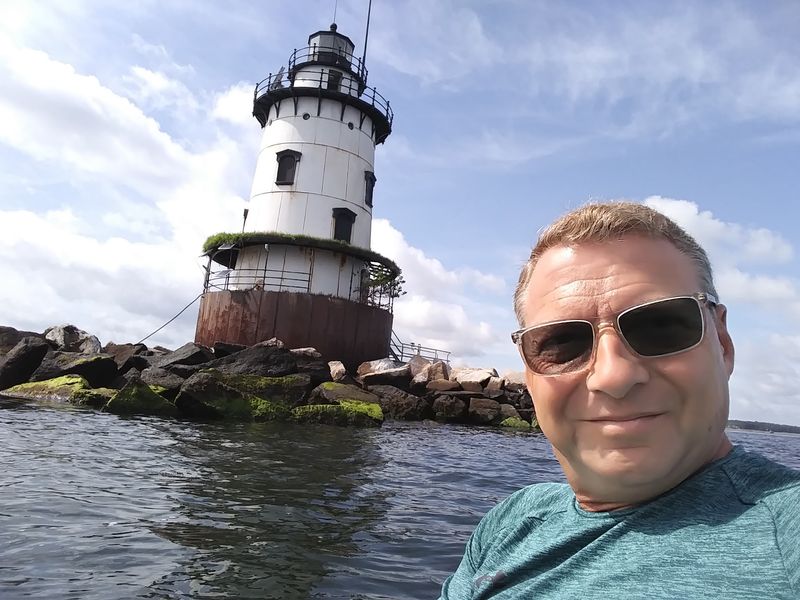
There is something genuinely striking about a lighthouse that appears to stand alone in the middle of a bay with no land in sight from its base. Conimicut Lighthouse does exactly that, rising from a shoal near the mouth of the Providence River where the channel between Conimicut Point and Nayatt Point narrows.
The current cast-iron structure was built in the 1880s, replacing an earlier station established to mark this navigational pinch point. Its white tower, dark lantern, and broad lower section create a silhouette that stands out against the water regardless of the time of day.
The lighthouse remains an active aid to navigation and is not open to the public. The best land-based viewing spot is Conimicut Point Park in Warwick, where visitors can see the lighthouse across the water while watching boat traffic on the Providence River.
Tidal currents near the point are powerful, so staying on shore is always the right call.
Newport Harbor Lighthouse, Goat Island
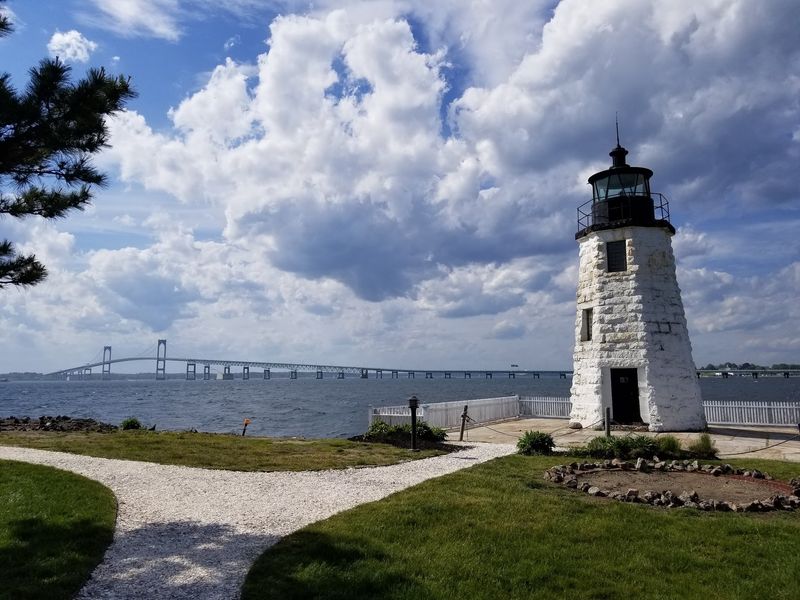
Newport Harbor Lighthouse sits on Goat Island in the middle of Newport Harbor, close enough to downtown that you can see the city skyline from its base. The stone tower dates to the 1840s and replaced an even earlier lighthouse that had occupied the island, making Goat Island one of Newport’s longest-serving navigational sites.
The island has changed dramatically since its lighthouse keeper days. Modern hotel and marina development now surrounds the tower, creating a sharp contrast between 19th-century maritime infrastructure and present-day Newport tourism.
That contrast is part of what makes it interesting rather than a drawback.
Visitors can reach Goat Island by road and explore the area on foot as part of Newport’s Harbor Walk. The tower is not generally open for climbing, but harbor cruises pass close enough to offer good views from the water.
The site is especially appealing in the evening, when harbor traffic picks up and the lights of downtown Newport reflect across the water.
Hog Island Shoal Lighthouse, Narragansett Bay
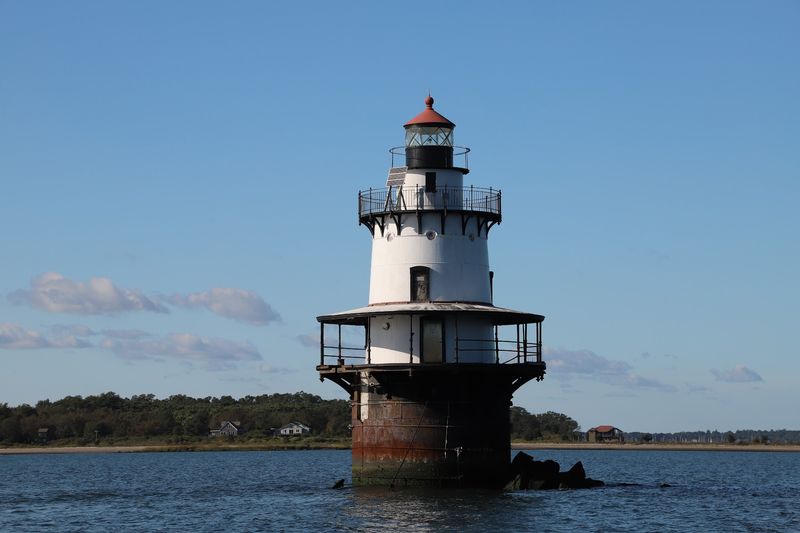
Offshore lighthouses have a different kind of appeal than their shore-based counterparts, and Hog Island Shoal Lighthouse is a good example of why. Standing in open water between Bristol and Aquidneck Island, it marks a hazardous shoal near the northern end of Hog Island with no land connection whatsoever.
The lighthouse began operating in 1901, replacing a lightship that had previously warned mariners about the shoal. Its round cast-iron tower rests on a broad foundation engineered to handle waves, ice, and the constant movement of bay waters through all four seasons.
Because there is no way to drive or walk to it, the best approach is from the deck of a boat. Narragansett Bay sightseeing tours, including Save The Bay’s lighthouse excursions and narrated cruises operating from Newport, regularly pass the lighthouse.
Seeing it from the water puts it in proper context as part of a working navigational system that still guides vessels through Rhode Island’s complex network of channels and islands.
Share this story