There is a trail in the Oregon Coast Range that makes you feel like the rest of the world has been put on mute. The trees grow tall and close, the creek rushes alongside you the whole way, and every bend in the path reveals another small waterfall tumbling over mossy rock.
Most people who visit Sweet Creek Falls come expecting a nice little hike and leave with it on their list of all-time favorites. This article walks you through everything worth knowing before you go, from the trailhead layout and parking situation to the waterfalls, wildlife, and the best times to make the trip.
Where the Trail Begins: Address, Location, and Getting There
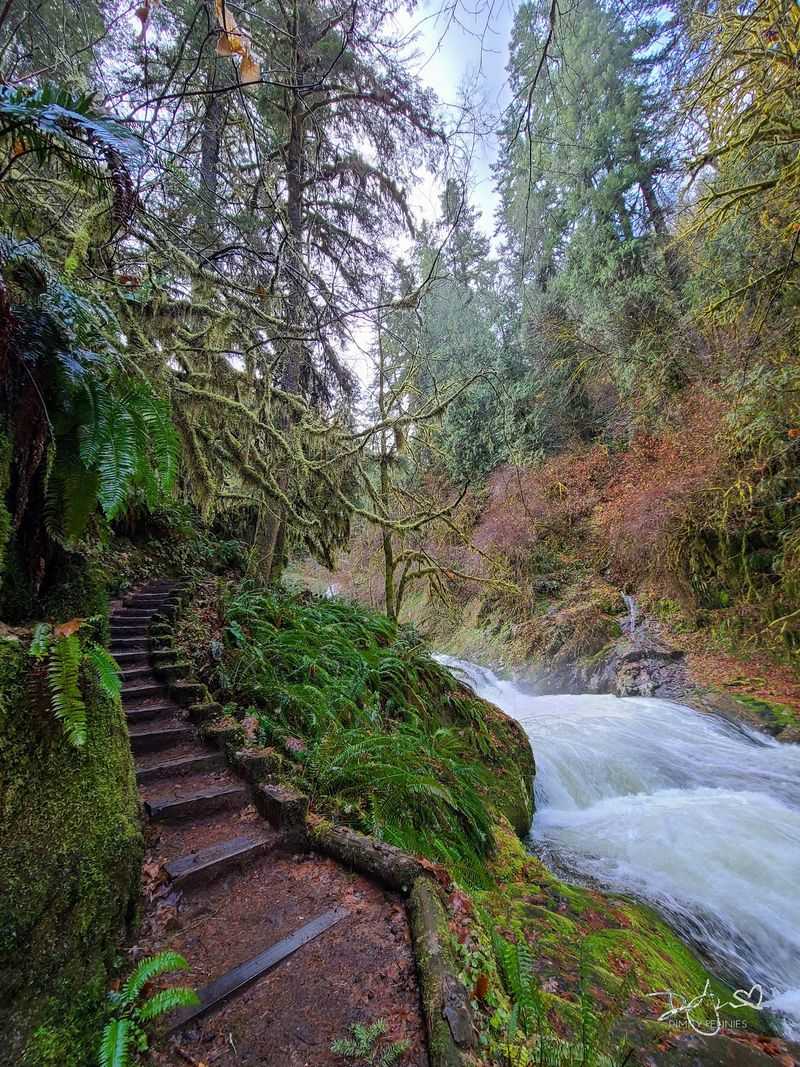
Sweet Creek Falls Trailhead sits on Sweet Creek Road in Mapleton, Oregon 97453, tucked into the Coast Range about 15 minutes off Highway 126. The phone number for the managing Siuslaw National Forest office is (541) 750-7000, and the trail is listed on the USDA Forest Service website at fs.usda.gov.
Getting there requires a drive along Sweet Creek Road, which starts as a comfortable two-lane road and then narrows to one lane past the first trailhead entrance. The road is paved the entire way, which is a relief, but the twists and turns demand your full attention, especially in winter when frost and ice can coat the surface in the early morning hours.
The trailhead is open 24 hours a day, seven days a week, and there is no entry fee for hiking. Parking is free as well, though the first lot holds only about six vehicles.
A second lot further up the road fits closer to 15 or 20 cars and puts you very close to the upper falls, making it a practical choice on busy weekend mornings.
The Forest Setting That Wraps Around You
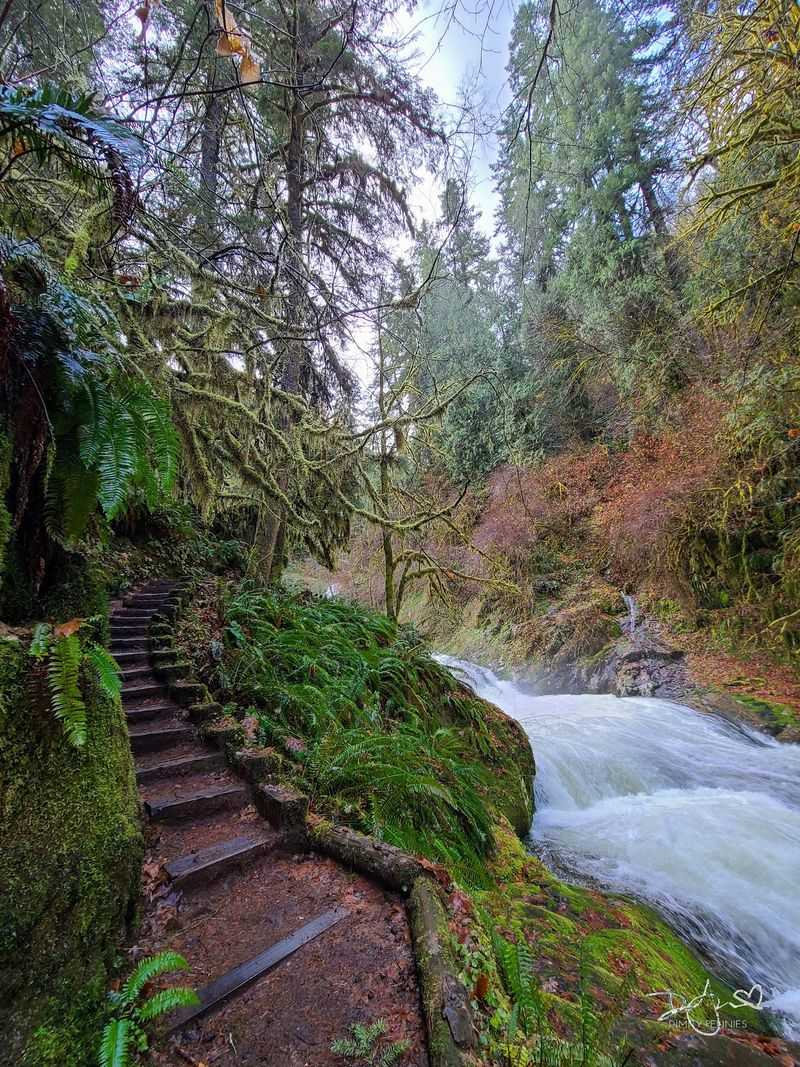
From the moment you step onto the trail, the forest closes in around you in the best possible way. Tall Douglas-fir, red alder, and big-leaf maple form a thick canopy overhead that blocks most of the direct sunlight, keeping the air noticeably cooler than the surrounding area even on warm summer days.
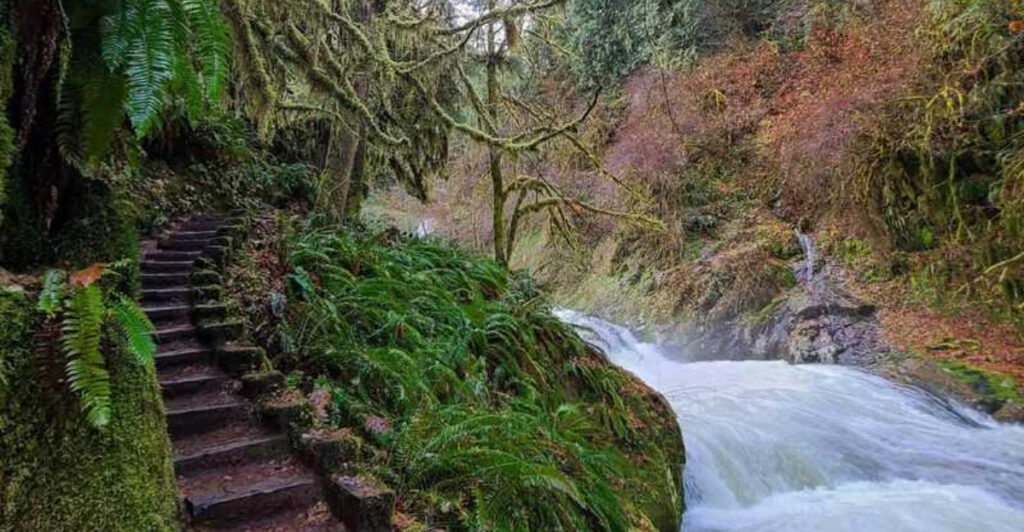
The ground is carpeted with ferns, oxalis, and deep green moss that clings to every rock and fallen log. That moss is part of what makes this place feel so alive.
It softens every surface it touches, and after a recent rain, the whole forest seems to glow with a kind of quiet intensity that is hard to describe but easy to feel.
Poison oak does grow along parts of the trail, so wearing long pants and staying on the path is a smart move. Tree roots and rocks are exposed across much of the route, which adds character but also requires you to watch your footing.
The trail rewards the attentive hiker with constant small discoveries, whether that is a cluster of mushrooms pushing through bark or a banana slug making its slow, bright yellow way across the path.
Sweet Creek Itself: The Star of the Show
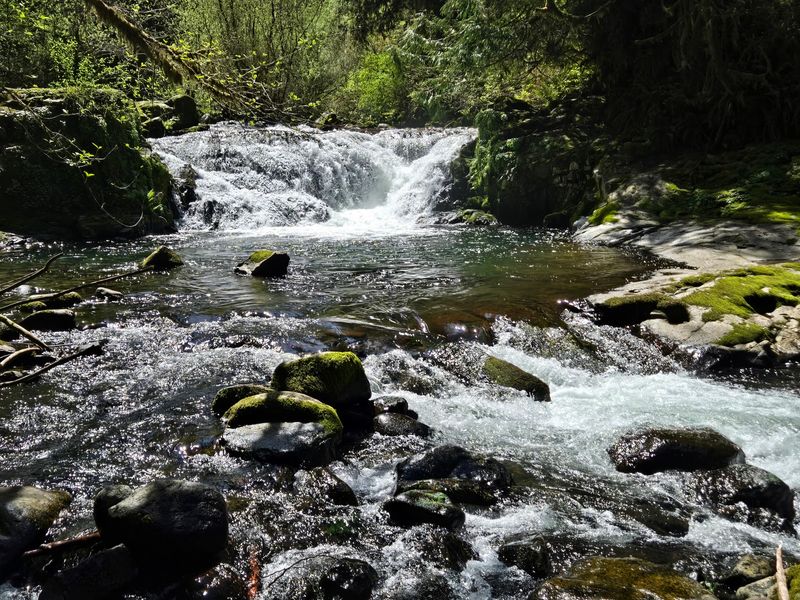
The creek is not just a backdrop on this hike. It is the main event.
Sweet Creek runs alongside the trail for nearly the entire route, and the sound of moving water never really leaves you from start to finish. Sometimes it is a low murmur over smooth stones, and other times it picks up speed and crashes through narrow channels with real force.
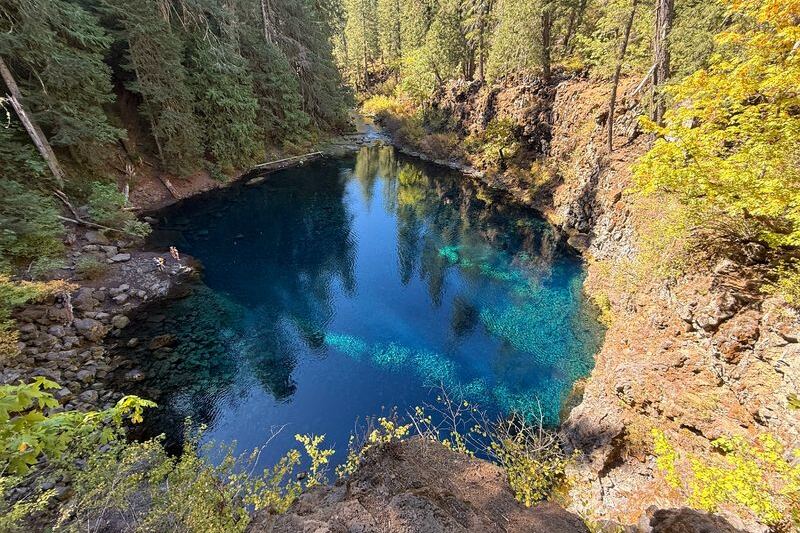
Water clarity here is remarkable. You can look down into the deeper pools and see straight to the bottom, where the rocks have been polished into smooth, rounded shapes by years of current.
The color shifts depending on depth, going from a pale green in the shallows to a deeper teal in the swimming holes.
Natural rock swimming holes appear at several points along the route, and on warm days, people wade in and cool off without hesitation. The water runs cold even in late summer, but once you are in, it is genuinely refreshing rather than punishing.
Bringing water shoes or sandals with good grip makes accessing the creek much easier and keeps the experience comfortable from start to finish.
The Waterfalls: From Trickles to the Main Drop
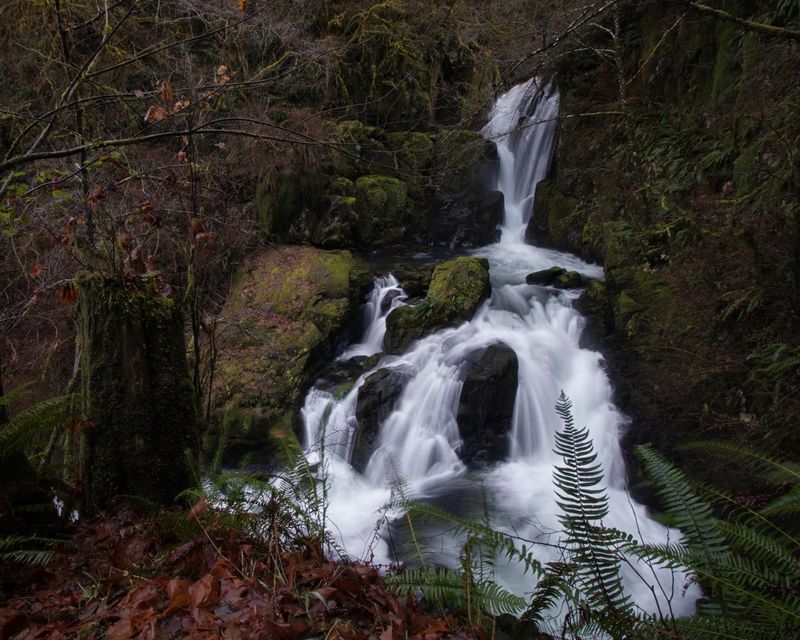
One of the most satisfying things about this trail is that the waterfall rewards come early and keep coming. Rather than hiking a long, featureless stretch to reach one big payoff at the end, Sweet Creek delivers a series of smaller cascades and drops all the way along the route, building anticipation with each one.
Water weeps from moss-covered rock faces in thin silver threads. Narrow chutes shoot water between boulders at surprising speed.
Flat-ledge drops create wide curtains of white water that catch the filtered light beautifully. Each one has its own personality, and none of them feel like a lesser version of what comes next.
The main falls at the upper end of the trail is the largest of the bunch and hits differently after seeing all the smaller ones on the way up. It is not a towering vertical drop like some of Oregon’s most famous waterfalls, but there is a quiet power to it that feels earned.
The mist it kicks up cools the air around it noticeably, and the sound bounces off the rock walls in a way that fills the whole space around you.
Trail Conditions and What to Expect Underfoot
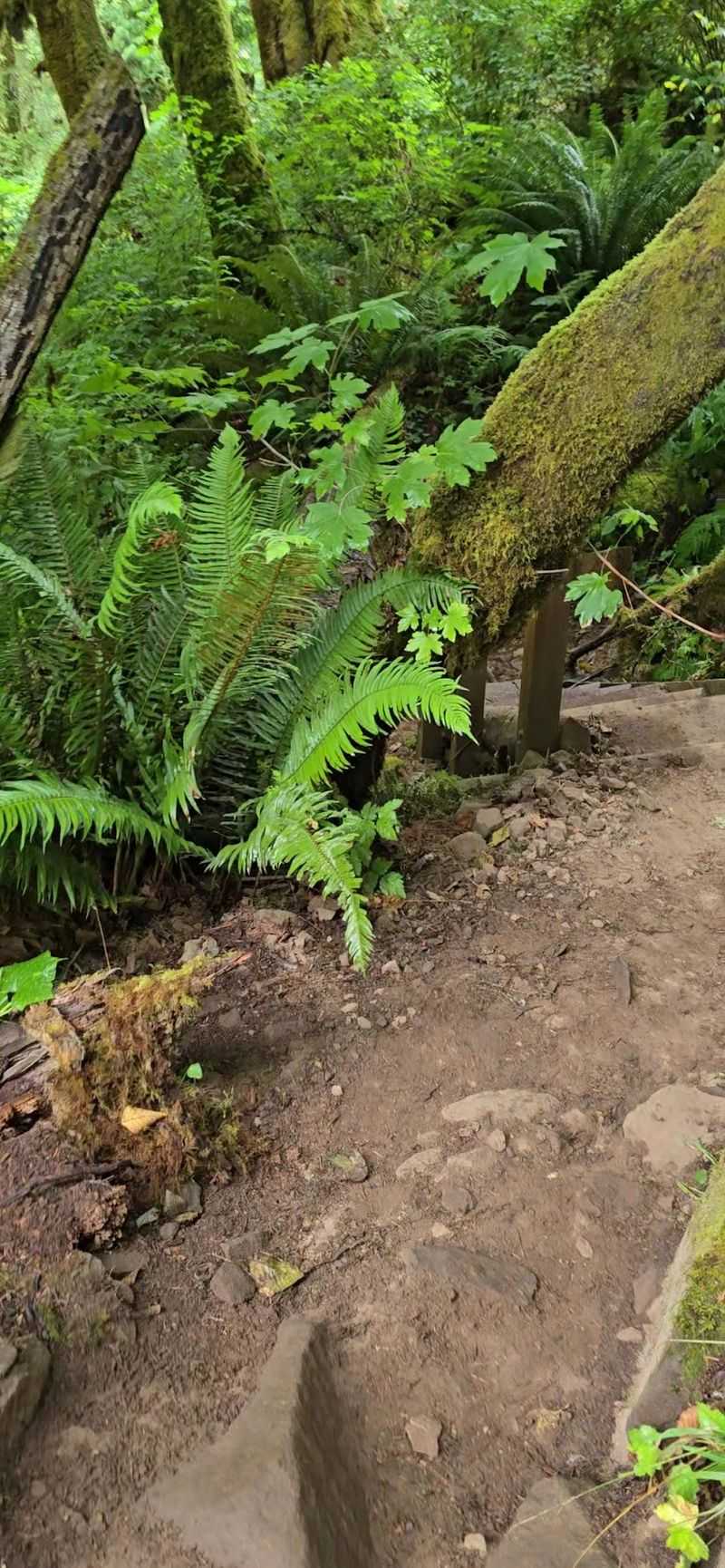
The trail is classified as easy, and for most of its length, that description holds. The elevation gain is minimal, and the overall distance is manageable for a wide range of fitness levels.
That said, easy does not mean smooth, and the path has enough exposed roots and rocks to keep you honest about where you are placing your feet.
The surface is frequently wet, particularly in the sections that run close to the creek or pass through shaded low spots that drain slowly. In winter and early spring, mud becomes a real factor, and some narrower sections can get slippery enough to warrant trekking poles or at least a solid pair of trail shoes with grip.
There are no railings along most of the route, including sections that run close to the creek bank. That is worth keeping in mind if you are hiking with younger children or anyone who needs a steadying hand in uneven terrain.
The upper viewpoint above the main falls involves a steeper and narrower path that is best skipped unless everyone in your group is comfortable with that kind of scramble. The lower and middle sections of the trail are where most of the beauty lives anyway.
Wildlife, Flora, and the Small Details Worth Slowing Down For
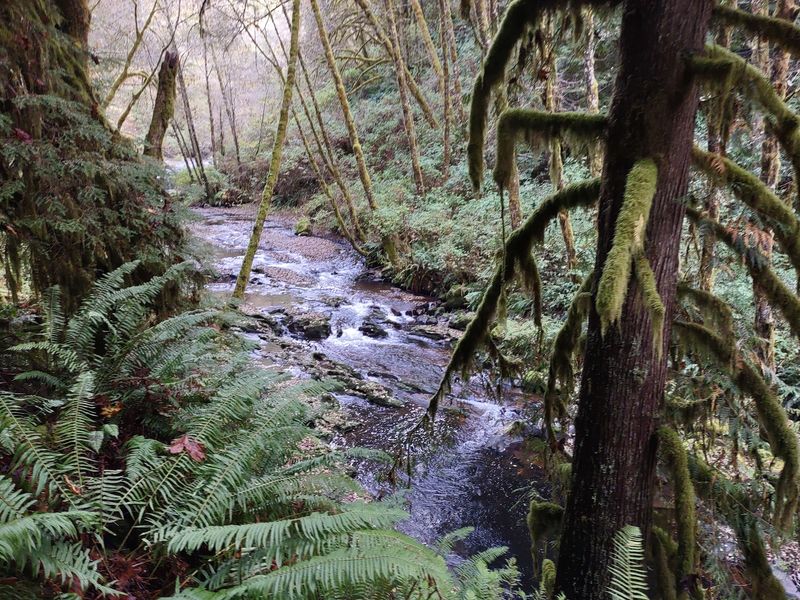
Slowing down on this trail pays off in ways that a fast pace simply cannot deliver. The forest along Sweet Creek is rich with small life that rewards a patient eye.
Banana slugs are among the most memorable encounters, and the trail produces them reliably. They are surprisingly large and a vivid yellow-green that makes them easy to spot against the dark forest floor.
Birds move through the canopy regularly, and the sound of the creek can make it tricky to pick out individual calls, but the flicker of movement in the upper branches is a constant. Beaver activity has been documented in the area, and park rangers have occasionally set up informal nature stations along the trail with prints, water quality information, and examples of local flora and fauna for visitors to examine.
The plant life alone is worth studying as you walk. Big-leaf maple leaves can grow to an impressive size, and in autumn, they drop in golden sheets that cover the trail completely.
The oxalis that carpets the forest floor has a delicate clover-like appearance, and the mosses come in dozens of shades of green depending on moisture and light. Every inch of this forest is doing something interesting.
Parking, Facilities, and a Few Things to Know Before You Go
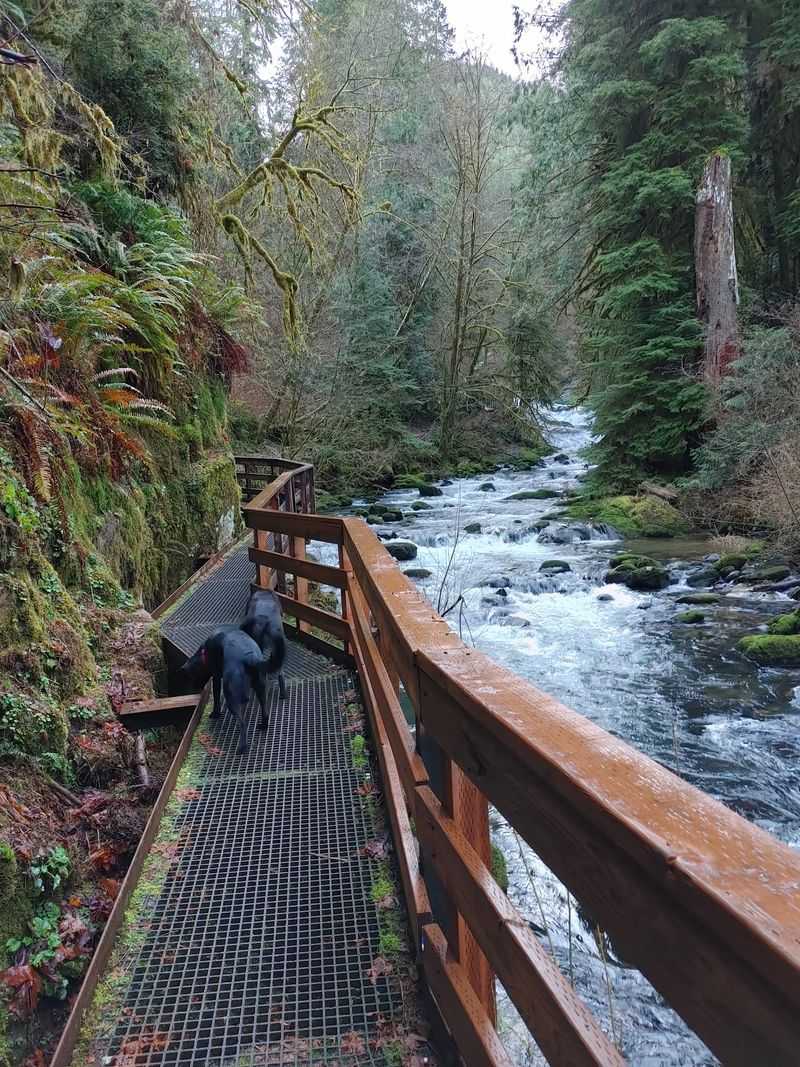
Parking at Sweet Creek Falls is free, which is a genuine bonus in a region where many trailheads now require a day-use pass. The trade-off is that the lots are small, and on weekends, they fill up fast.
Arriving before 11 a.m. gives you a strong chance of finding a spot without having to park along the narrow road.
The first trailhead parking area has a vault toilet available, which hikers will appreciate after the drive in. The second lot further up the road does not have bathroom facilities, so plan accordingly before you head up.
The restroom at the lower lot has a reputation for being less than pristine, but its existence is still a practical asset on a busy trail day.
Theft from vehicles has been reported in the area, so leaving valuables in your car is not recommended. A trail pass is not required, but checking the Siuslaw National Forest website before your visit is a good habit, since portions of the trail have been closed at various points for bridge repairs and washout damage.
Cell service along Sweet Creek Road can be unreliable, so downloading an offline map before you leave is a smart move.
Best Times to Visit and Tips for Making the Most of Your Trip
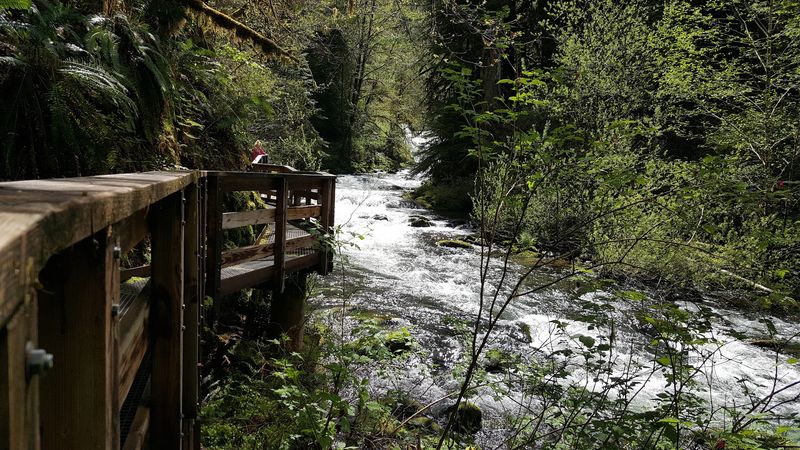
Late spring and early summer tend to bring the creek to its fullest and most photogenic state, when snowmelt and spring rain push the water volume up and every waterfall runs with real energy. Summer is the most popular season overall, and for good reason.
The shade from the forest canopy keeps temperatures comfortable even when the surrounding valleys are warm.
Autumn brings a different kind of beauty. The big-leaf maples turn gold and the light that filters through the canopy takes on a warmer tone that makes the whole trail feel like a painting.
Winter visits are possible since the trail is open year-round, but the road into the trailhead can develop ice and frost, so driving carefully and checking conditions ahead of time matters.
Bringing water shoes along with your hiking footwear opens up the creek access significantly and makes the swimming holes much more enjoyable. A small daypack with water, snacks, and a light rain layer covers most weather scenarios on this trail.
The hike takes between 45 minutes and two hours depending on pace and how many times you stop to watch the water, which, honestly, will be more than you expect.
Share this story