There is a trail in Oregon that follows a river through old-growth forest, crosses mossy creeks, and ends at a 100-foot curtain of water you can actually walk behind. The whole thing is just about 1.5 miles one way, making it one of the most rewarding short hikes in the entire Pacific Northwest.
You do not need to be a seasoned hiker to enjoy it, and you do not need a lot of gear either. What you do need is a free afternoon, a decent pair of shoes, and a willingness to get a little wet near the end.
Where the Trail Begins: Polallie Trailhead on the East Fork Hood River
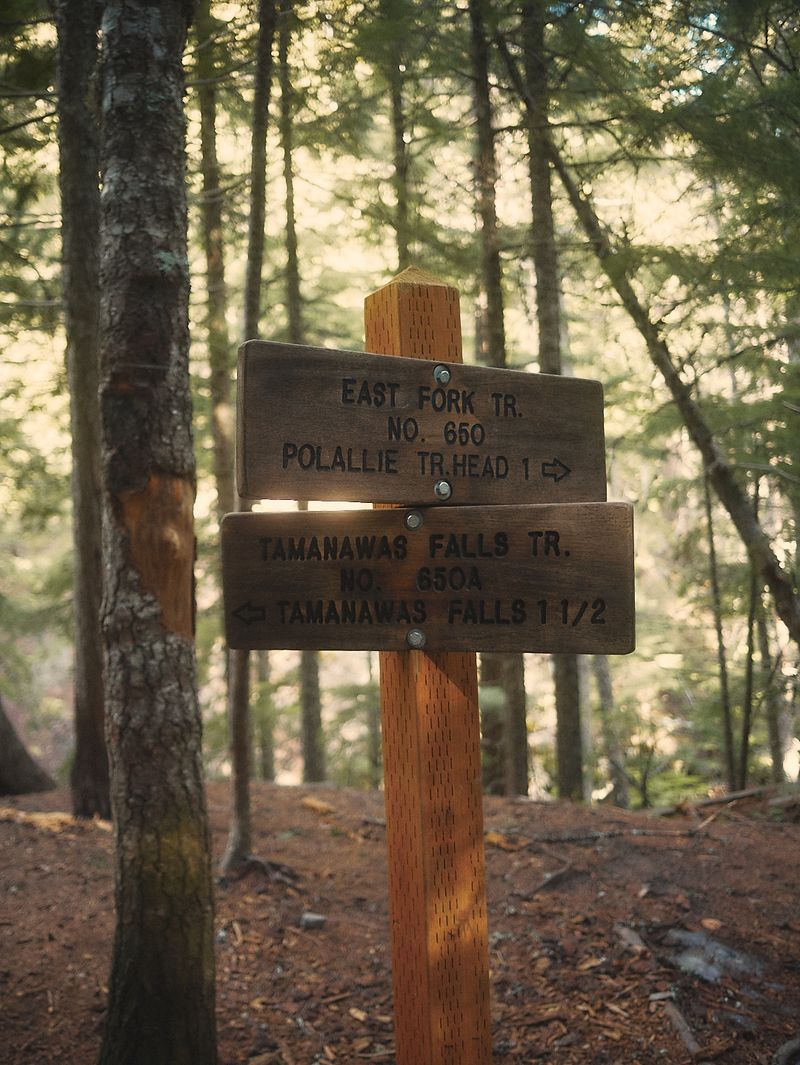
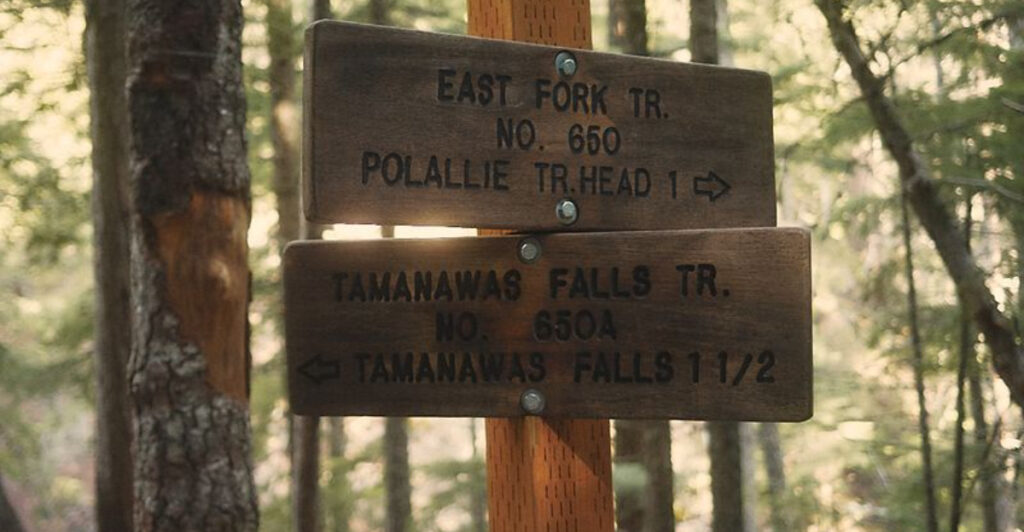
The adventure starts at the Polallie Trailhead, located along Oregon 97041 near the East Fork Hood River, on the eastern slopes of Mount Hood in Hood River County, Oregon. The coordinates place it at roughly 45.4009831 latitude, -121.5893693 longitude, and it sits within the Mount Hood National Forest.
To get there, you drive south from Hood River on Highway 35, and the trailhead appears on your right, marked with a clear wooden sign. There is a restroom at the parking area, which is a small but meaningful comfort before a hike.
One important detail: you need a Northwest Forest Pass or an equivalent recreation pass to park here legally. Day passes are available online and at some outdoor retailers nearby.
The lot fills up fast on weekends, so arriving before 9 a.m. gives you the best shot at a spot.
Weekday visits in fall are particularly peaceful, with golden larch trees lining the route and almost no crowds to share the trail with.
The River Walk: What the First Mile Actually Looks Like
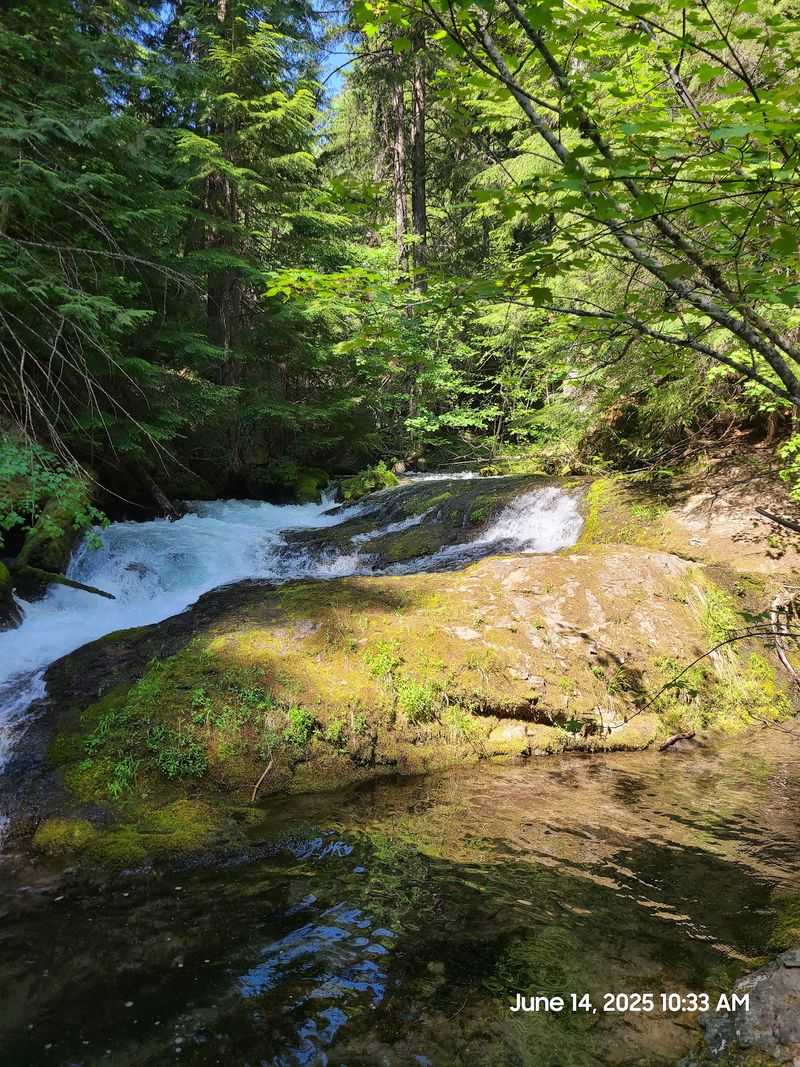
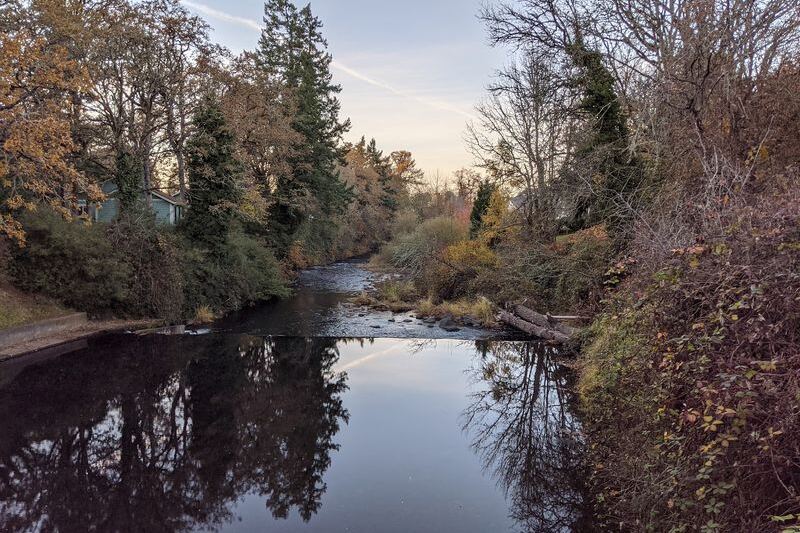
Right from the start, the trail hugs the East Fork Hood River, and the sound of rushing water never really leaves you. The path winds through a dense canopy of Douglas fir, western red cedar, and big-leaf maple trees that filter the light into soft, greenish patches on the ground.
The first mile is genuinely easy walking. The elevation gain is minimal, the trail is well-packed, and there are several natural rest spots along the river where you can sit on a boulder and watch the current move.
Kids handle this section without much trouble, and dogs on leashes seem to love every second of it.
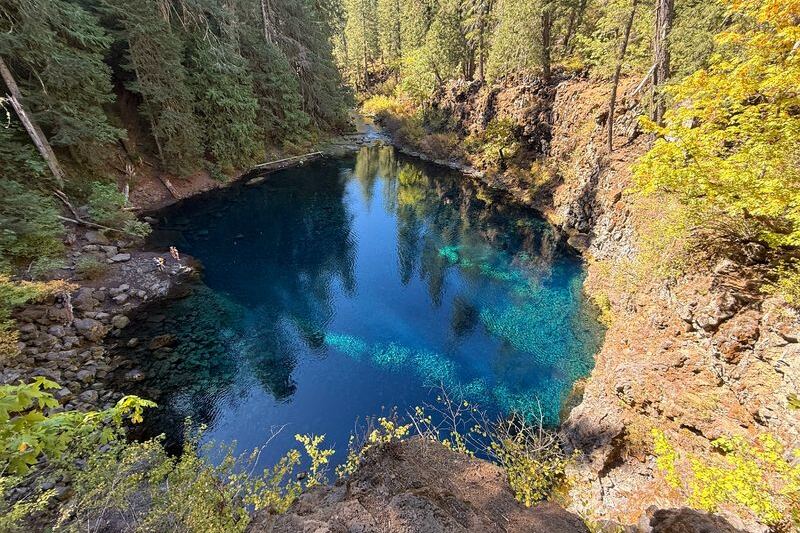
What surprises most first-time visitors is how scenic this stretch already is before the waterfall even comes into view. Small cascades tumble over mossy rocks beside the path, and the river pools in clear, cold eddies that reflect the trees above.
The whole mile feels like a nature documentary you are actually inside, and it sets the tone perfectly for what is waiting at the end.
The Boulder Field: Where the Trail Gets a Little Interesting
About a mile into the hike, the smooth forest path gives way to something a little more rugged. A boulder field stretches across the trail, the result of an old rock slide that reshaped this section of the route years ago.
Navigating through the boulders requires a bit of focus. You hop from rock to rock, using your hands in a few spots to steady yourself, and the path narrows considerably.
It is not technical climbing by any stretch, but it does demand your full attention for about ten to fifteen minutes.
This is also the section where footwear really matters. Hikers in trail runners or sturdy sneakers move through it without much issue.
Tennis shoes and sandals make the rocks feel far more treacherous than they need to be, especially if recent rain has left the surfaces slick. The good news is that once you clear the boulder field, you start to hear the waterfall.
That sound alone is enough to keep your legs moving forward, even when the path feels steep and your lungs start to notice the elevation.
The Waterfall Itself: A 100-Foot Curtain of Cold Water
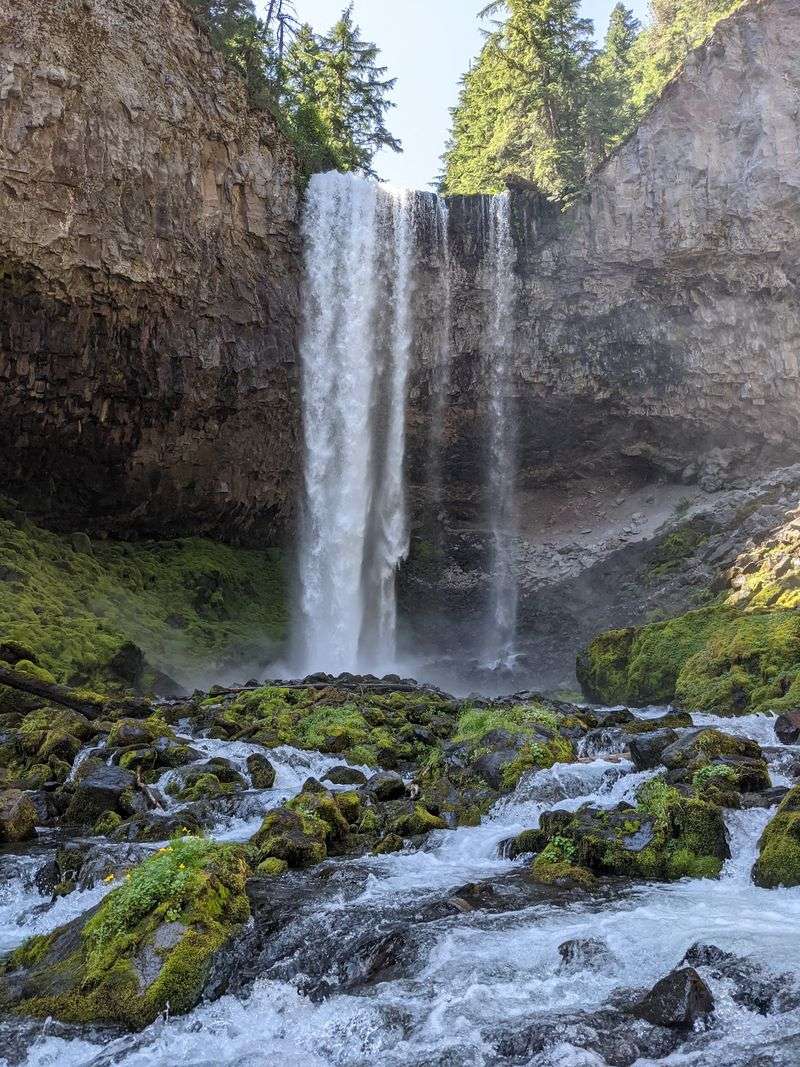
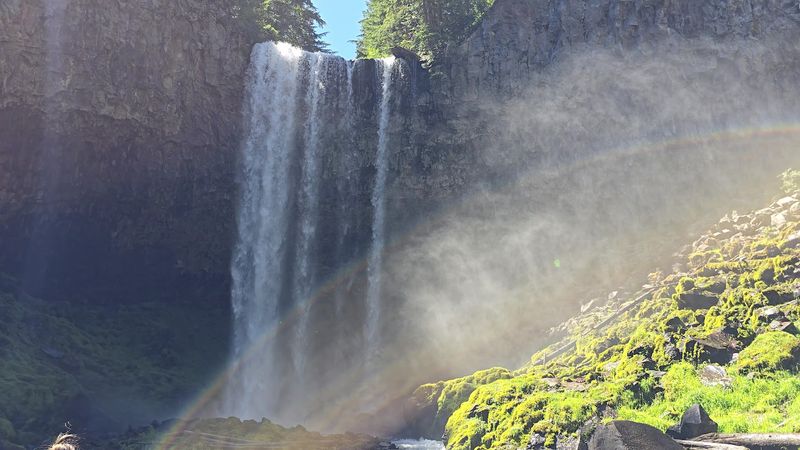
Nothing quite prepares you for the moment Tamanawas Falls comes into full view. The waterfall drops roughly 100 feet down a basalt cliff face, spreading wide as it falls and filling the entire basin with mist and sound.
The roar is constant and surprisingly deep, more like a low rumble than a high-pitched rush.
The pool at the base is ringed with large, dark rocks that hikers use as natural seating. On warm days, people spread out towels and eat snacks while the mist drifts over them.
On cooler days, the spray feels sharp and cold, and it keeps most visitors at a respectful distance.
The falls sit inside a shallow cave-like alcove carved into the cliff, which is what makes the next part possible. The water does not fall straight down; it arcs slightly outward, leaving a narrow walkable ledge behind the curtain.
Standing there with thousands of gallons of water rushing past just inches away is one of those moments that is genuinely hard to describe to someone who has not done it.
Walking Behind the Waterfall: The Highlight Everyone Talks About
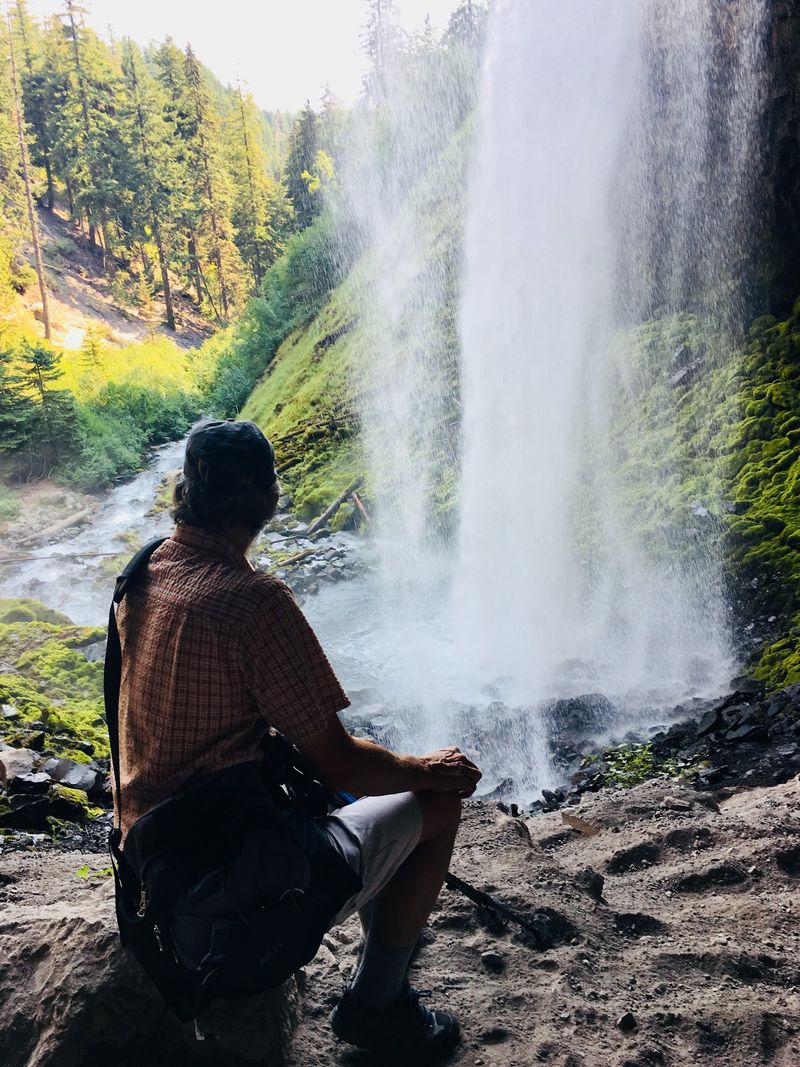
The ledge behind Tamanawas Falls is narrow but passable, and the rocks underfoot are predictably slippery. Most hikers inch their way along the wall, arms slightly out for balance, grinning the entire time.
Getting there requires crossing the wet rocks at the base of the falls and committing to the fact that your shoes are going to get soaked. Once you are behind the curtain, the view looking outward is genuinely striking.
The water hangs in front of you like a translucent wall, and through it, you can see the blurred shapes of the trees and the mountains beyond.
The noise inside the alcove is intense, loud enough that you have to shout to hold a conversation. The air is cold and wet, and the rock wall behind you is covered in dark green moss.
Most people stay for just a minute or two before retreating back to the dry rocks, but that minute tends to be the one they remember most from the entire trip.
Proper footwear with grip makes this experience much safer and far more enjoyable.
Dog and Kid Friendly: Who Can Actually Do This Hike
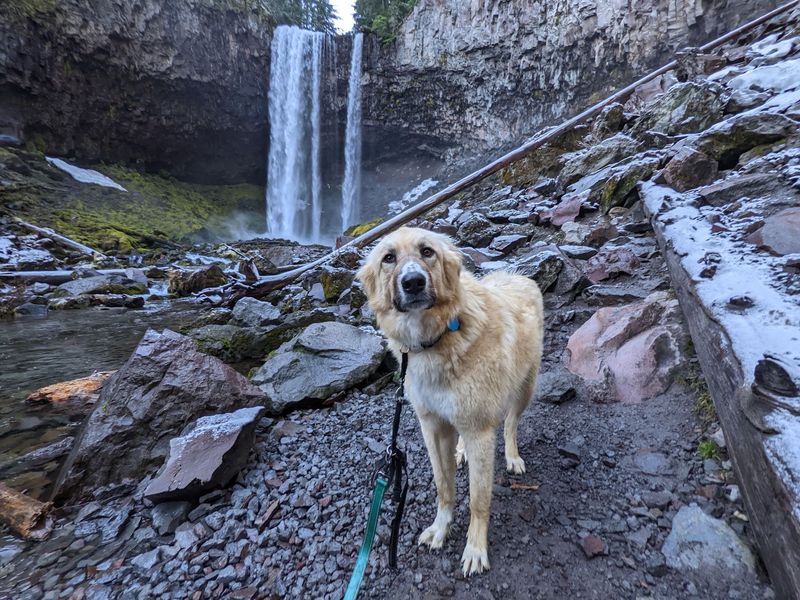
One of the best things about this trail is how inclusive it genuinely is. Dogs are welcome on leash, and the river sections give them plenty of opportunities to wade in and cool off, which they tend to take full advantage of with zero hesitation.
Children who are comfortable walking a few miles handle the first section easily. The boulder field near the end is where younger kids may need a hand, and some may need to be lifted over a few of the larger rocks.
That said, plenty of families with kids as young as five or six complete the full round trip without any real drama.
The trail is not suitable for strollers, and anyone using walking aids should know that certain sections require careful footing and may take significantly longer. The round trip is roughly 3.5 to 4 miles total, which is worth factoring into your plan if you are hiking with young children or older adults.
Pack snacks, bring more water than you think you need, and plan to spend at least two to three hours on the trail to enjoy it properly.
Best Times to Visit: Seasons, Snow, and the Golden Larch Window
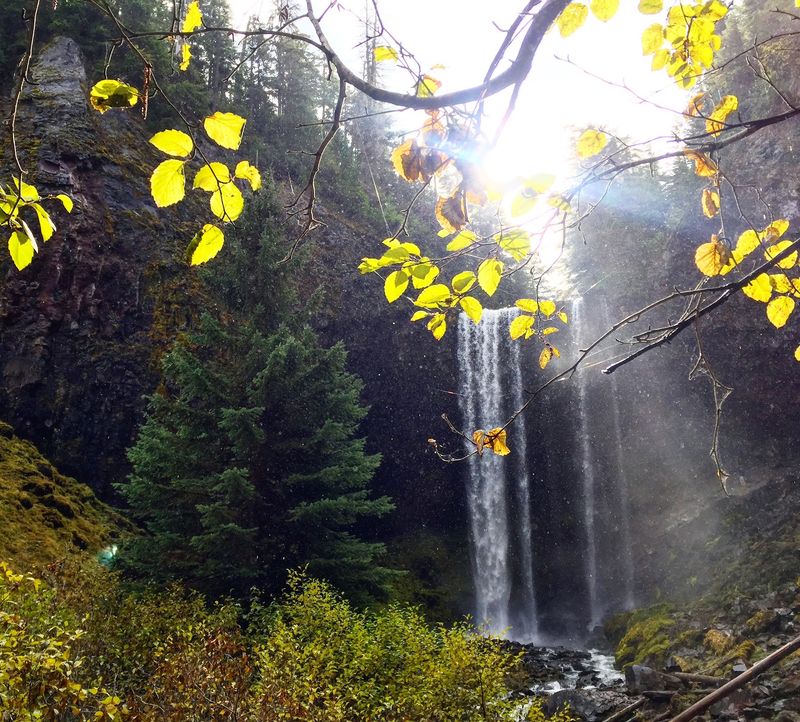
Every season brings something different to this trail, and choosing the right time to visit shapes the entire experience. Summer visits offer dry trails and warm air, making the wet rocks near the falls the most refreshing part of the day rather than a hazard.
Fall is widely considered the best window, particularly in mid-to-late October when the western larch trees along the route turn a deep, glowing gold. Larch trees are one of the few conifers that lose their needles in winter, and their color change is brief and spectacular.
Missing it by even a week can mean the difference between a golden tunnel of trees and a bare, quiet forest.
Winter visits are possible and even beautiful, but they require preparation. Snow packs the trail from roughly November onward, and ice makes the boulder field and the rocks near the falls genuinely risky without traction devices.
Microspikes or Yak Trax are the minimum recommendation, and snowshoes work well when the accumulation is deep.
Spring brings snowmelt and higher water volume, which makes the waterfall more powerful but the trail muddier and occasionally slippery in spots.
What to Wear and Bring: Practical Gear Advice for the Trail
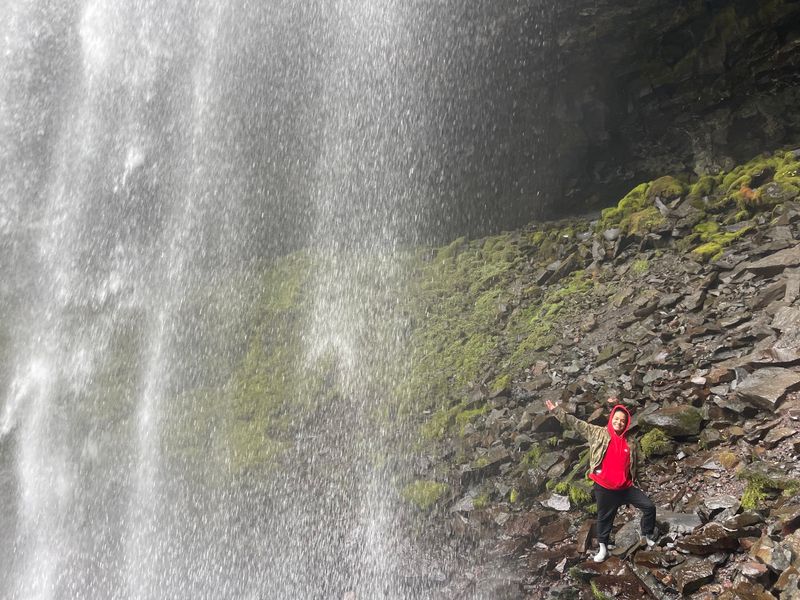
Footwear is the single most important gear decision you will make for this hike. Trail running shoes or light hiking boots with rubber grip soles handle the rocky sections and the slippery areas near the falls much better than casual sneakers or sandals.
Waterproof shoes are a bonus rather than a necessity in dry months, but in spring or after heavy rain, they are worth the upgrade. Wool or synthetic socks help keep feet comfortable even when things get damp near the waterfall.
Beyond shoes, the packing list is straightforward. Bring at least one liter of water per person, more if you are hiking in summer or with children.
A light snack or lunch is worth adding since the flat rocks near the falls make a natural picnic spot. A rain jacket takes up almost no space and earns its place on any Pacific Northwest trail, even on days that start sunny.
Trekking poles are optional but genuinely helpful in the boulder field and on the descent from the falls, especially for anyone with knee concerns or a heavier pack.
The Atmosphere on the Trail: Sounds, Smells, and Small Surprises
The sensory experience of this trail is one of its most underrated qualities. From the first few steps, the smell of damp earth, cedar bark, and river water fills the air in a way that feels immediately calming.
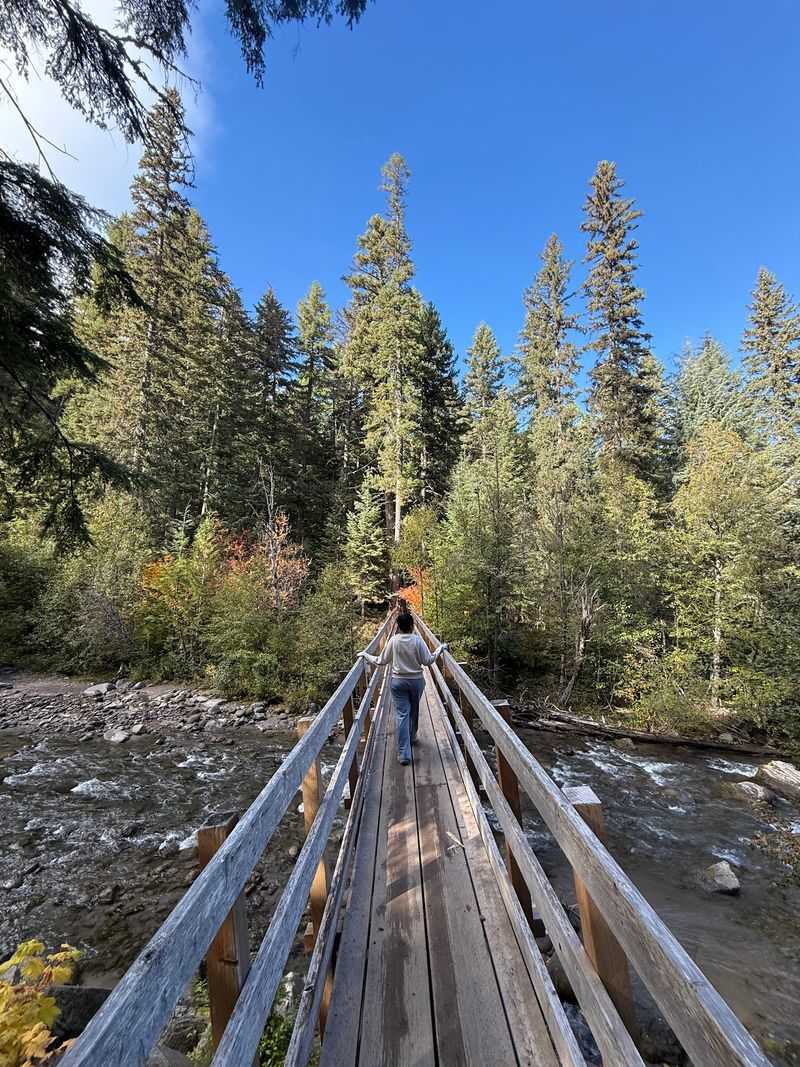
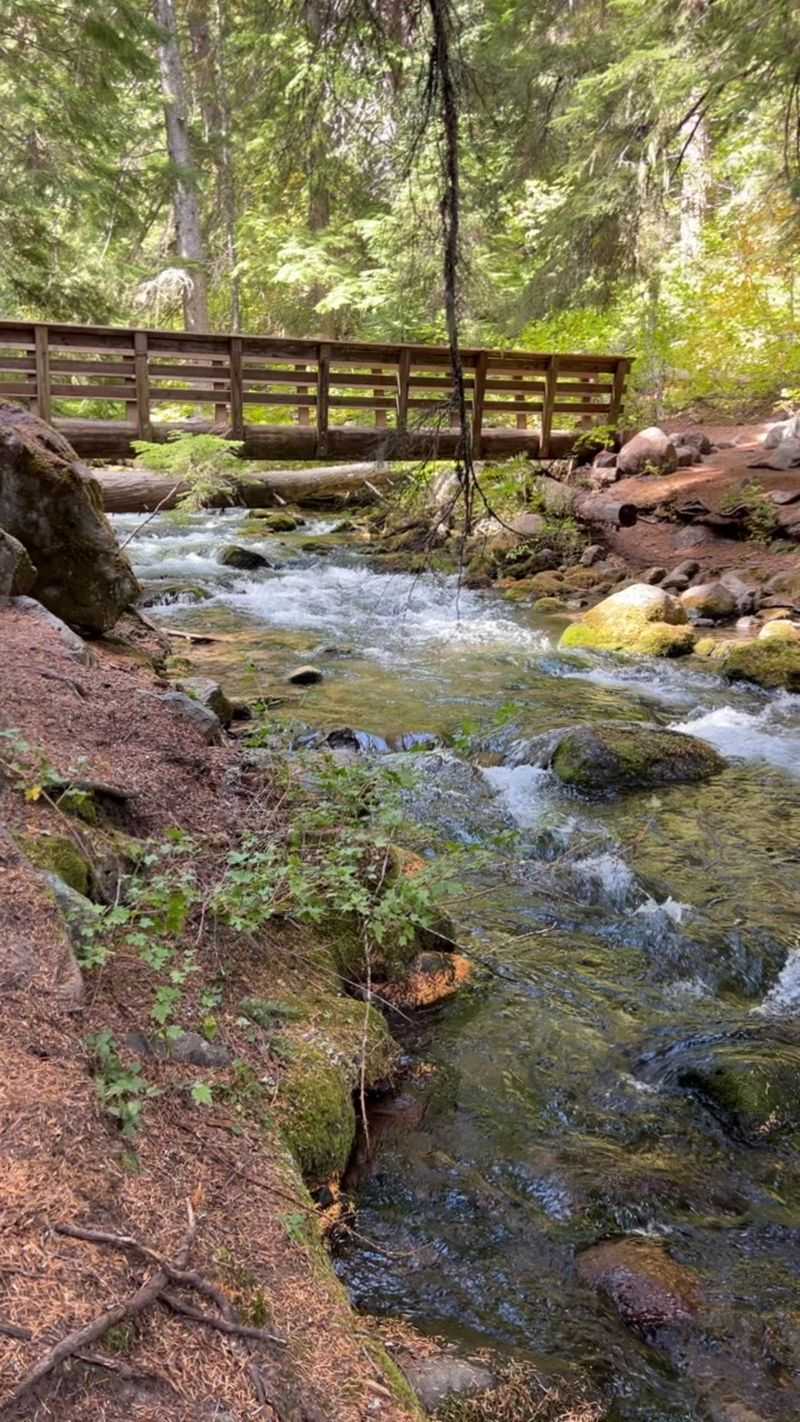
Small wooden footbridges cross side creeks at a couple of points along the route, and the sound of water is constant throughout the hike, changing pitch and volume depending on how close you are to the main river. In spring, the creek crossings run fast and cold, and the bridges feel slightly precarious in a way that is more exciting than worrying.
Wildlife sightings are not guaranteed, but they are not uncommon either. American dippers, small gray birds that bob along river rocks and actually dive underwater to feed, show up regularly along the East Fork Hood River.
Squirrels are a given. On quieter weekday mornings, deer have been spotted near the trailhead.
The trail also passes through an area of old growth that has a particular stillness to it, the kind of quiet that makes you slow down and actually look at what is around you rather than just walking through it.
Final Thoughts: Why This Trail Earns Its Near-Perfect Rating
With a 4.9-star rating across dozens of reviews, Tamanawas Falls is not a trail that needs much selling. The numbers speak clearly enough, but what the ratings do not fully capture is how the trail manages to feel rewarding at every stage rather than just at the finish.
The river walk is beautiful on its own. The boulder field adds a fun element of physical problem-solving.
The waterfall is genuinely impressive, and walking behind it is the kind of experience that earns a permanent spot in your memory without any exaggeration.
The trail also has a natural way of filtering out crowds. Because it requires a bit of effort and the right footwear, the people who make it to the falls tend to be the ones who came prepared and are genuinely there to enjoy it.
That creates a trail atmosphere that feels respectful and unhurried.
Whether you are looking for a solid beginner hike, a family outing, a winter snowshoe adventure, or just a couple of hours in one of Oregon’s most beautiful river corridors, this trail delivers every single time.
Share this story