New Hampshire has plenty of surprises hiding beyond its famous mountains and lakes. Scattered across the state are enormous glacial boulders, unusual museums, woodland art trails, historic mansions, and other overlooked attractions that even longtime residents may have missed.
These 14 hidden spots reveal a different side of the Granite State, with fascinating discoveries stretching from the Seacoast to the mountains. Each offers a memorable reason to leave the familiar tourist routes behind.
1. Madison Boulder Natural Area, Madison, New Hampshire
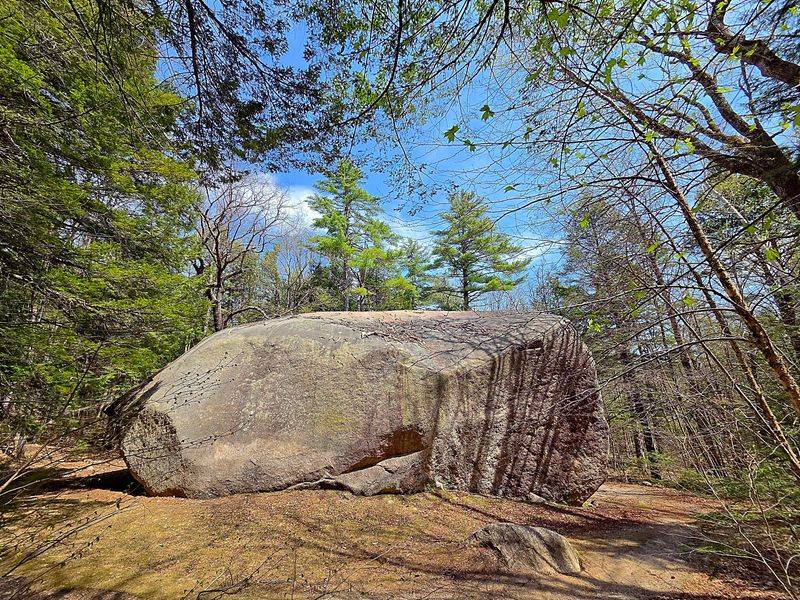
One of the largest glacial erratics in the entire world is sitting quietly off a back road in Madison, and most people drive right past the sign without a second thought.
The Madison Boulder stretches roughly 83 to 87 feet long, stands 23 feet above the ground, and tips the scales somewhere between 5,000 and 6,000 tons. A glacier carried it here from miles away during the last ice age, depositing it on completely different bedrock like a forgotten piece of luggage.
The New Hampshire Division of Parks acquired the 17-acre site in 1946, and the U.S. Department of the Interior designated it a National Natural Landmark in 1970. A short, easy quarter-mile walk leads from the parking area to a loop trail circling the boulder. Admission is free, and the park is open year-round.
2. Sculptured Rocks Natural Area, Groton, New Hampshire
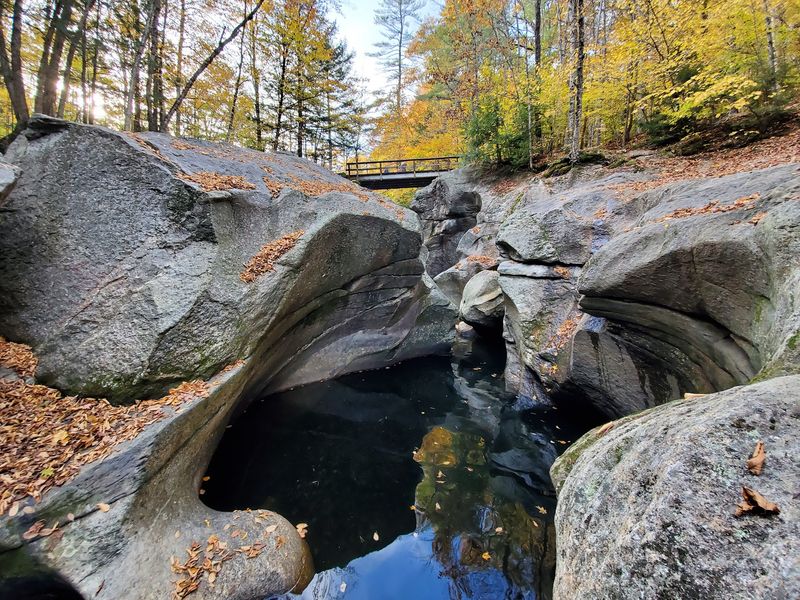
Some call it the Little Grand Canyon of New Hampshire, which sounds like an overstatement until you actually peer into the canyon the Cockermouth River has been carving for thousands of years.
Sand and particles carried by the river have slowly eroded the bedrock into narrow channels, deep potholes, and smooth curved shapes that genuinely look like someone planned them. A wooden footbridge crosses the gorge and gives visitors one of the better views of the rock formations below.
The 272-acre natural area is open daily, year-round, with no entry fee. A short trail from the parking area leads to the main features, and the path continues further as a snowmobile trail in winter. The deeper pools attract swimmers in warmer months, though the water stays cool and the rocks can be slippery.
3. America’s Stonehenge, Salem, New Hampshire
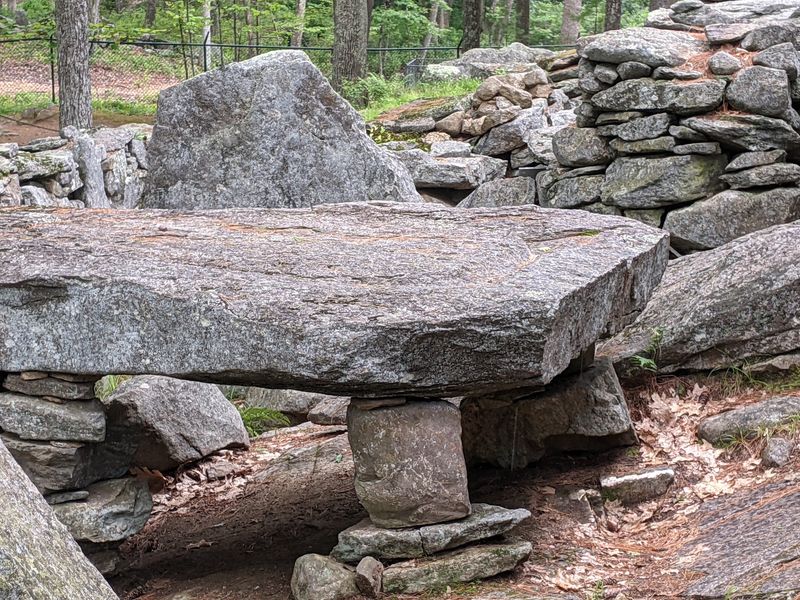
Before it got its current name in 1982, this 100-acre property in Salem was simply called Mystery Hill, which honestly tells you everything you need to know about the place.
The site features over a dozen stone chambers built into the hillside using dry-stone masonry, standing stones that align with solstices and equinoxes, and a 4.5-ton granite slab known as the Sacrificial Table. Charcoal samples from the site have been dated between 2,000 and 7,000 years ago, with Native American artifacts pointing to a significant Pawtucket presence over thousands of years.
Visitors explore the structures via a 0.9-mile loop trail, with a mobile app and audio tour available. The visitor center at the base of the hill includes a museum, restrooms, and a gift shop. The site is open daily year-round, except Thanksgiving and Christmas Day.
4. Saint-Gaudens National Historical Park, Cornish, New Hampshire
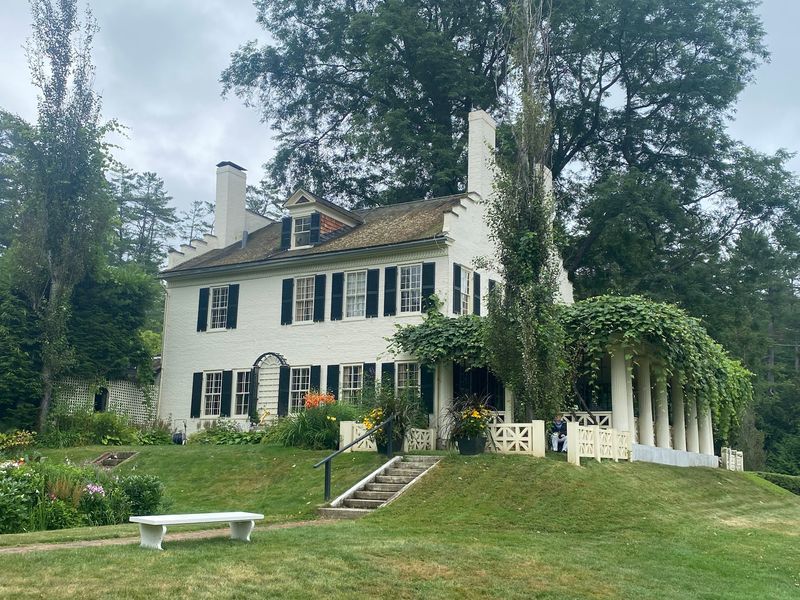
Most national parks center on wilderness, but this one preserves the former home and studio of Gilded Age sculptor Augustus Saint-Gaudens.
Saint-Gaudens began using the Cornish estate, which he called Aspet, as a summer home in 1885 and lived there permanently from 1900 until his death in 1907. The grounds include terraced gardens, a Pan grove with a green marble pool, and bronze sculptures throughout the landscape. His best-known works include Chicago’s Standing Lincoln and Boston’s Robert Gould Shaw Memorial.
Visitors can tour the mansion’s first floor, explore the gardens, hike three trails, and join guided basement tours. The park also hosts a summer concert series.
5. Andres Institute of Art, Brookline, New Hampshire
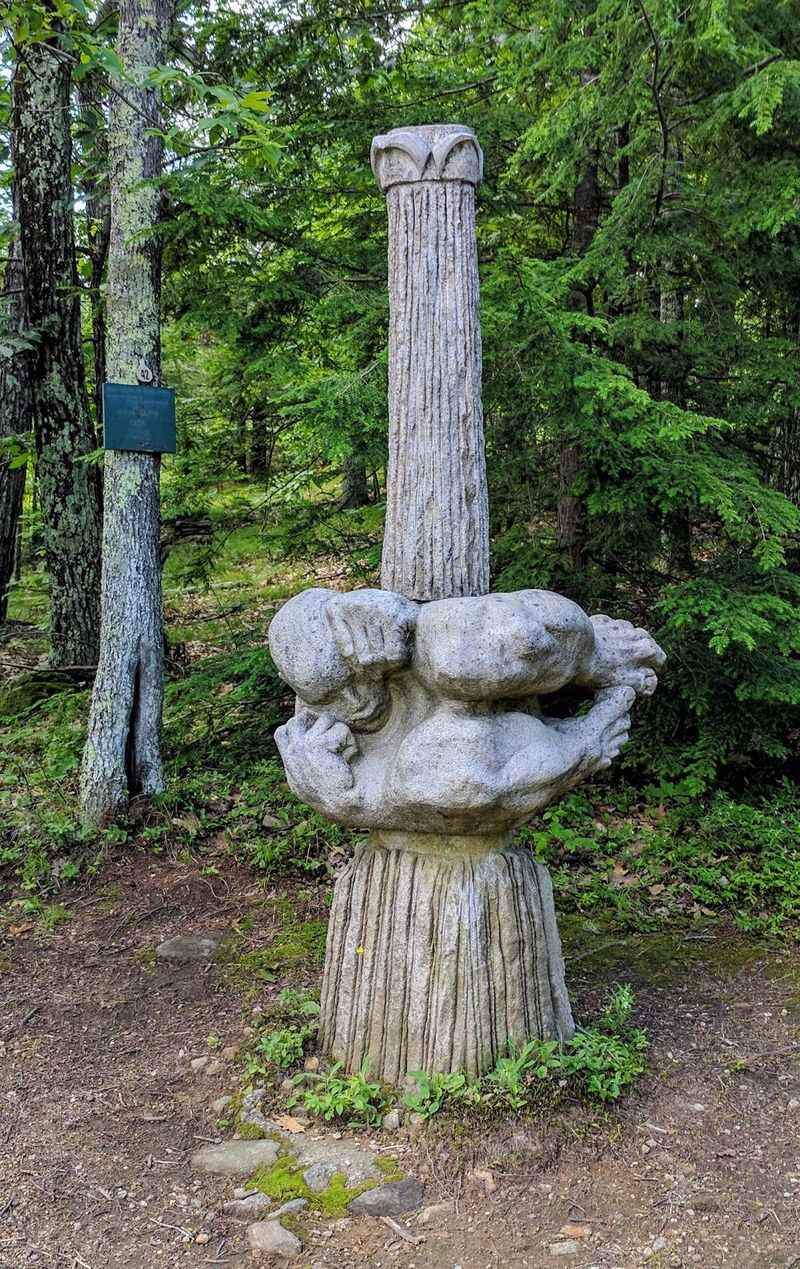
Most hikes end with a view or a waterfall, but a hike through the Andres Institute of Art ends with over 100 large sculptures distributed across 140 acres of forested hillside and open meadow.
Founded in 1996 on the site of a former ski area called Big Bear Mountain, the park was established by local benefactor Paul Andres and sculptor John Weidman. New sculptures are added every year through an annual international symposium where artists create works on-site for permanent display, meaning the collection keeps growing with each passing season.
More than 10 miles of trails range from easy paved paths to steeper dirt and gravel routes, making the park accessible to a range of fitness levels. Admission is free, and the park is open daily from dawn to dusk year-round. Dogs are welcome on leash, which makes this one of the better trail options in southern New Hampshire.
6. Cathedral of the Pines, Rindge, New Hampshire
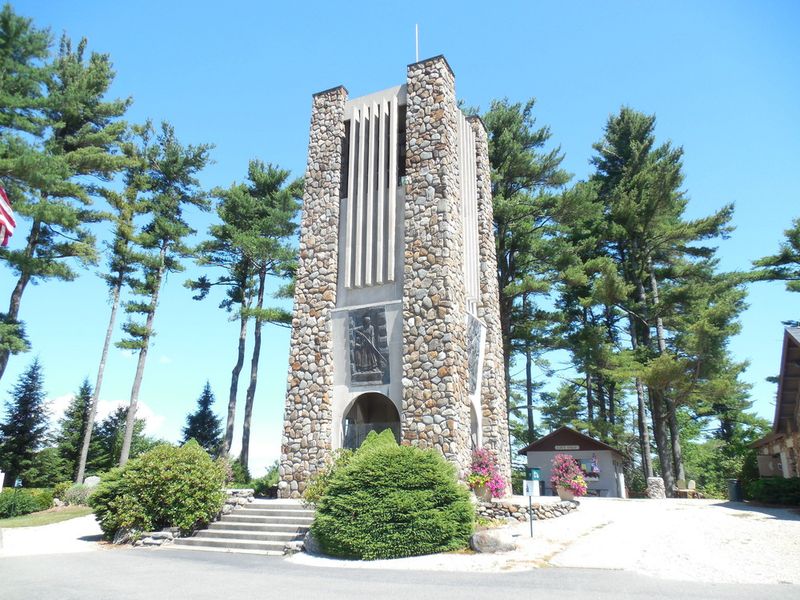
Grand Monadnock fills the horizon from this hilltop in Rindge, and the view alone would be worth the visit even without the remarkable history behind the place.
Cathedral of the Pines was founded in 1945 by Douglas and Sibyl Sloane as a memorial to their son, Lt. Sanderson Sloane, who was lost when his B-17 bomber was shot down over Germany in 1944. The U.S. Congress recognized the Altar of the Nations here as a national memorial to all American war dead in 1957, incorporating stones from all 50 states and every U.S.
President since Harry Truman.
A 55-foot stone Women’s Memorial Bell Tower features bas-relief bronze plaques by Norman Rockwell, and the grounds include several gardens, outdoor chapels, and 4.70 miles of trails. There is no entry fee. The main facilities are open May through October, while the grounds are accessible year-round from dawn to dusk.
7. Wright Museum of World War II, Wolfeboro, New Hampshire
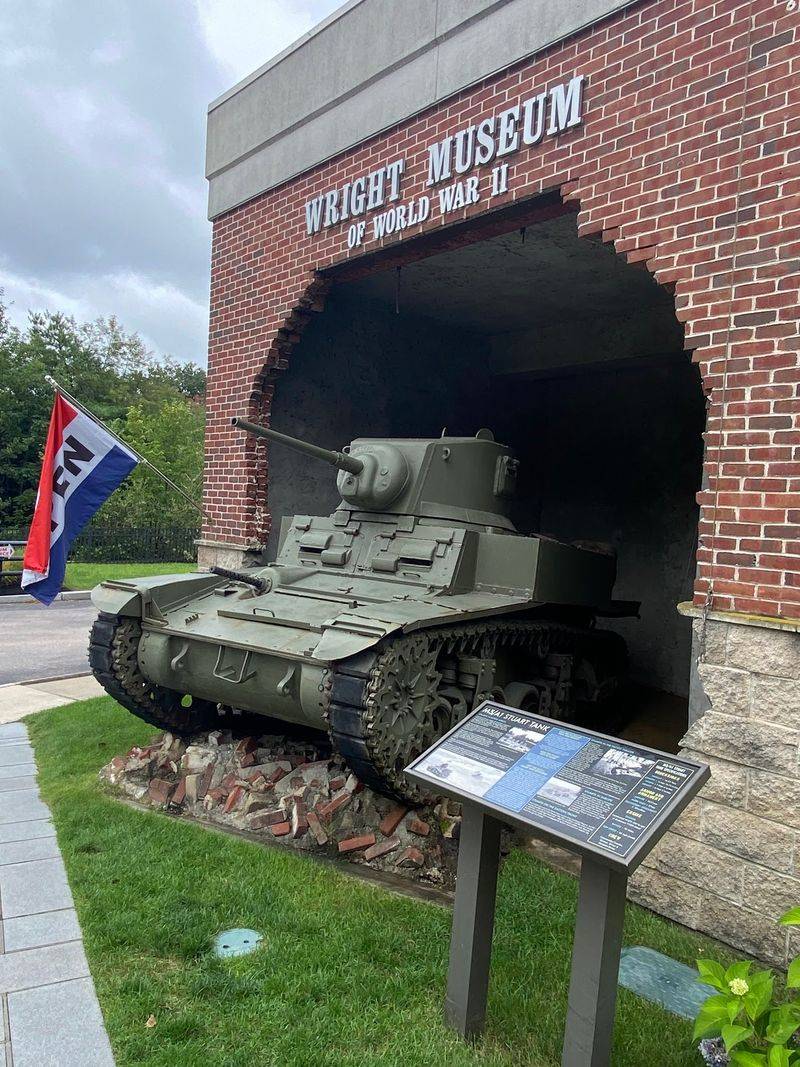
The first clue that this museum takes its subject seriously is the genuine M3A1 Stuart tank that appears to be bursting straight through the building’s front wall.
Founded in 1994, the Wright Museum houses more than 20,000 items covering American life from 1939 through 1945, with over 20 fully operational military vehicles among the collection. A Time Tunnel guides visitors through each year of the war, blending popular culture with battlefield events, while the Home Front Gallery features a replica 1940s kitchen and a full-size soda fountain.
The museum is open May 1 through October 31, Monday through Saturday from 10 a.m. to 4 p.m. and Sunday from noon to 4 p.m. Admission is $17 for adults, with discounts for military, seniors, and students. The 30,000-square-foot facility is fully wheelchair accessible, and photography without flash is permitted throughout.
8. New Hampshire Telephone Museum, Warner, New Hampshire
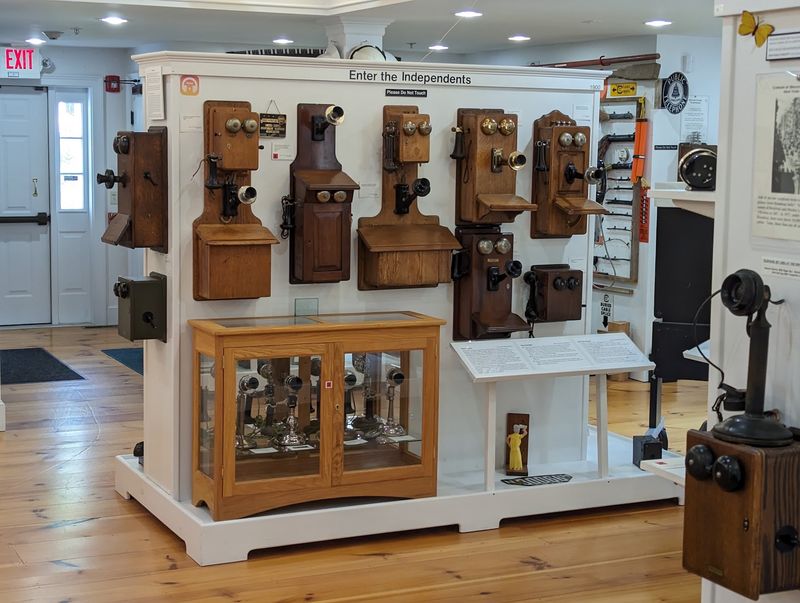
A museum dedicated entirely to telephones might sound like a niche idea, but the New Hampshire Telephone Museum in Warner makes a surprisingly strong case that the history of the phone is really the history of how people connect with each other.
Established in 2005 by Dick and Paul Violette of the Merrimack County Telephone Company, the museum holds over 1,000 artifacts, from Alexander Graham Bell-era equipment to flip phones and early smartphones. Visitors can crank a magneto telephone, dial a rotary phone to watch a nine-foot stepping switch in action, and try working a real switchboard.
The museum earned the Concord Monitor CAPPIE Award for Best Museum in 2024. Hours run Tuesday, Thursday, and Saturday from 10 a.m. to 4 p.m. between May and October, with Wednesday and Saturday hours in the off-season. Admission is $5 for adults and $3 for students.
9. Fort Stark State Historic Site, New Castle, New Hampshire
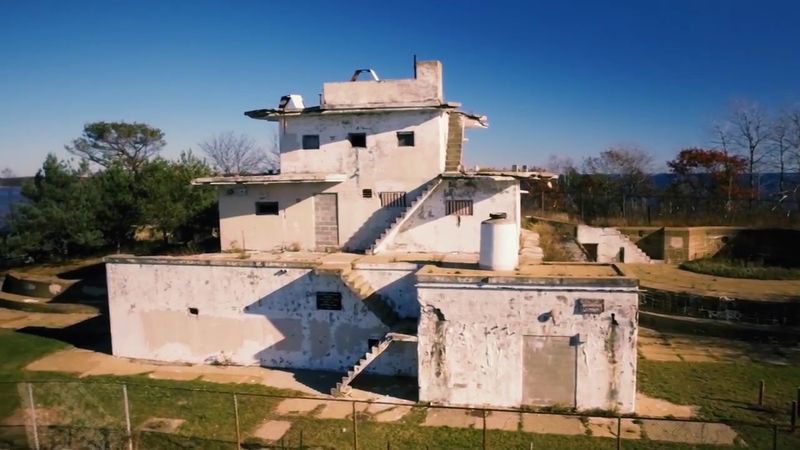
New Castle is a small island community connected to the mainland by a bridge, and tucked onto its southeastern tip is a former military installation that most visitors to the Seacoast have never set foot on.
Fort Stark was named after American Revolution officer John Stark and served as a coastal defense post through World War II, when it was headquarters for the 22nd Coast Artillery. A 1942 Harbor Entrance Control Post on the property was deliberately disguised as a seaside mansion to avoid detection, which is the kind of detail that makes history genuinely interesting.
The 10-acre site features gun emplacements, bunkers, and a walking trail about 0.3 miles long with ocean views and sightlines to Whaleback Light. The Ordnance Machine Shop museum is open Saturdays from noon to 4 p.m., Memorial Day through Labor Day. Admission to the grounds is free year-round.
10. Bedrock Gardens, Lee, New Hampshire
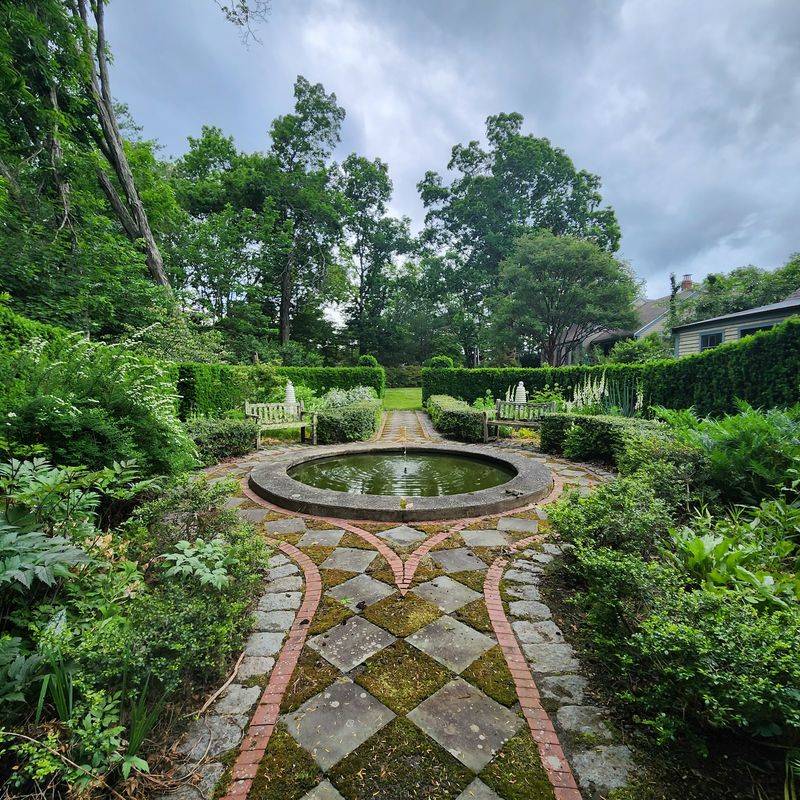
Jill Nooney and her husband Bob Munger bought an abandoned dairy farm in Lee in 1980 and spent the next four decades turning it into one of the most inventive gardens in New England.
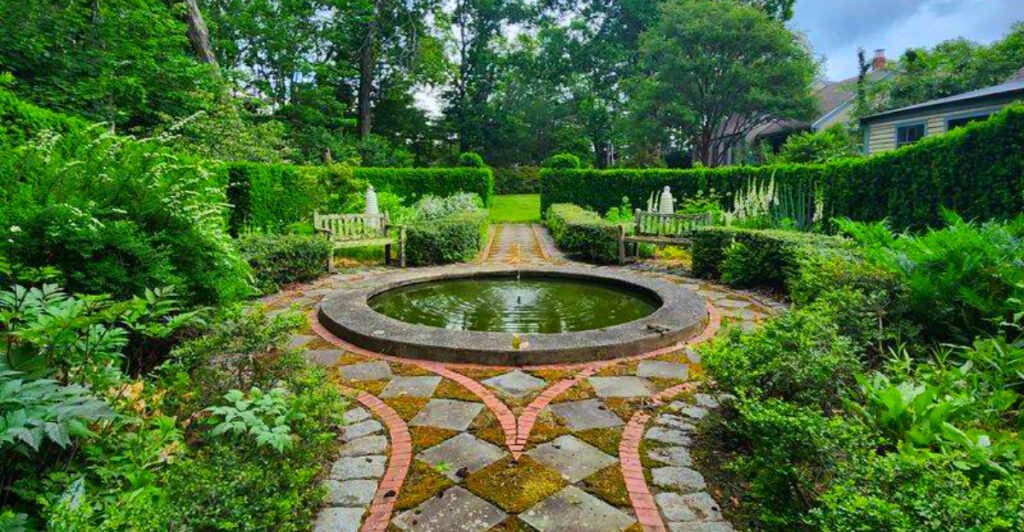
Bedrock Gardens spans 20 developed acres organized into distinct landscape rooms, each with its own character. The property includes a three-quarter-acre wildlife pond, a formal parterre garden with pools and fountains, a 400-foot allée, a spiral garden, a Japanese Tea House, and a section called GrassAcre, which is a three-quarter-acre ornamental grass composition. Nooney, a sculptor herself, creates many of the garden’s whimsical pieces from old farm equipment and repurposed metal.
For 2026, the garden is open Tuesday through Friday and on the first and third weekends of each month, from mid-May through mid-October. Hours are 10 a.m. to 4 p.m. General admission is $15, with free entry for children 12 and under.
11. Ruggles Mine, Grafton, New Hampshire
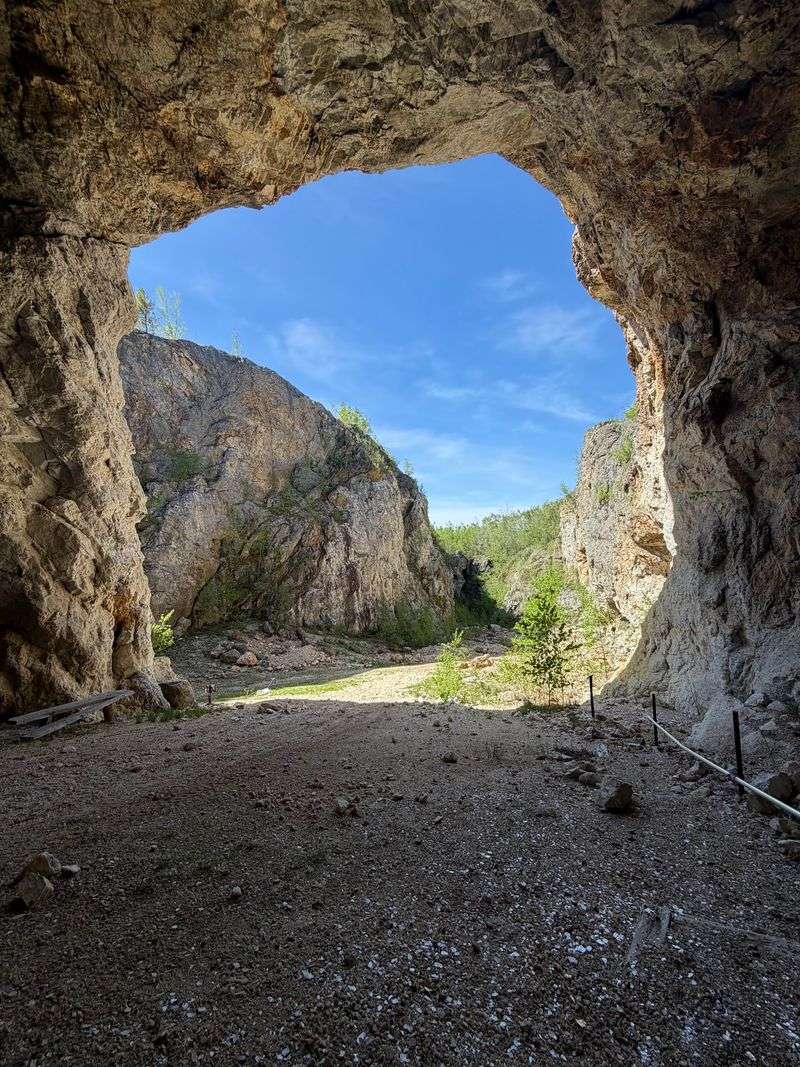
Rock collectors have been making the trip up Isinglass Mountain in Grafton since 1963, drawn by the promise of leaving with a five-gallon bucket of minerals they found themselves.
Ruggles Mine holds the distinction of being the first commercial mica mine in the United States, with operations beginning around 1803. The mineral deposits here are estimated to be 350 to 400 million years old, and over 150 different minerals have been identified at the site, including amethyst, rose quartz, garnet, beryl, feldspar, and several rare uranium-bearing minerals.
After closing in 2016, the mine was purchased by new owners in 2023 and reopened to the public in June 2024. Admission for mineral collecting is $30 per person, with children under 10 entering free. The mine is open Thursday through Saturday from 9 a.m. to 5 p.m. and Sundays from 9 a.m. to 3 p.m. Tent and RV camping is also available on-site.
12. Castle in the Clouds, Moultonborough, New Hampshire
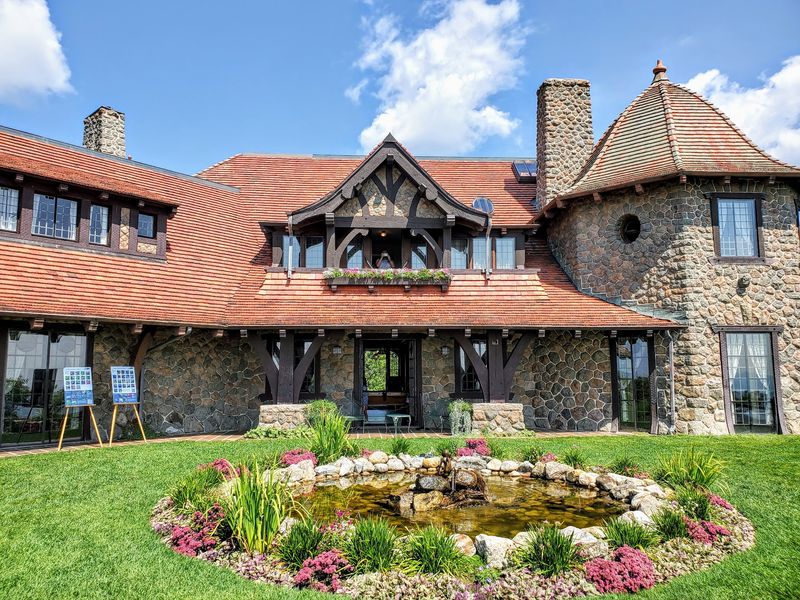
Built in 1913 and 1914 for shoe manufacturer Thomas Plant and his wife Olive, this mountaintop mansion came equipped with features that most houses would not see for another 50 years.
Lucknow, as the 16-room Arts and Crafts home was originally called, included a central vacuuming system, ammonia-brine refrigeration, a house-wide interphone system, and needle showers, all installed more than a century ago. The estate sits on the Ossipee Mountains and offers panoramic views of Lake Winnipesaukee that justify the name Castle in the Clouds without any exaggeration.
Today the property is owned and operated by the Castle Preservation Society and was designated a National Historic Landmark in 2024. Visitors can take self-guided mansion tours, explore 28 miles of hiking trails, and grab lunch at the Carriage House Restaurant. The great house is open seasonally from late May through early October, with over 200 programs and events hosted annually.
13. John Hay Estate at The Fells, Newbury, New Hampshire
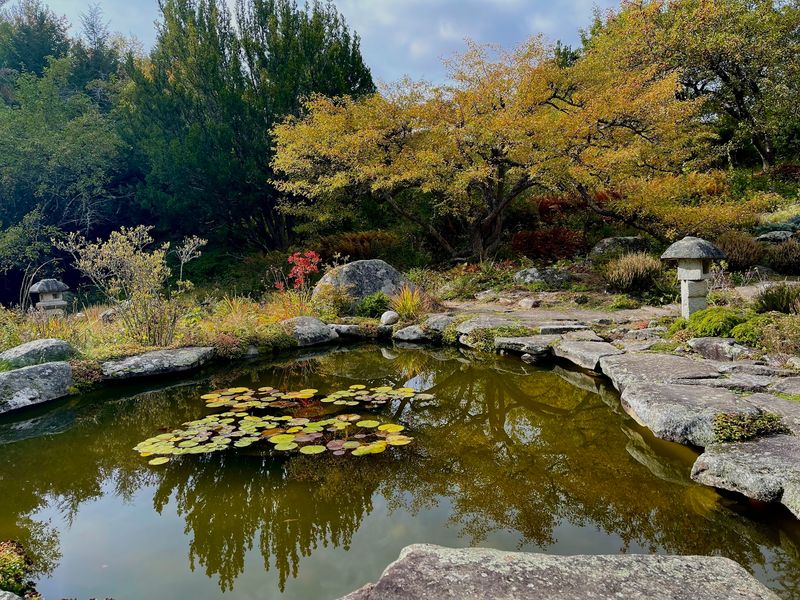
Before John Milton Hay became Abraham Lincoln’s private secretary and later U.S. Secretary of State under Presidents McKinley and Roosevelt, he was simply looking for a quiet place to spend his summers on Lake Sunapee.
Hay began acquiring abandoned farms in Newbury in 1888, eventually assembling nearly 1,000 acres and naming the property The Fells after the rocky upland meadows of his Scottish heritage. His 22-room Colonial Revival main house was completed in 1891 and 1892, and later generations of the Hay family transformed surrounding sheep pastures and boulder-strewn fields into the exceptional gardens visitors explore today.
The property now encompasses 83.5 acres with nearly half a mile of undeveloped Lake Sunapee shoreline. Gardens include a perennial border, a rose terrace, a rock garden of rare alpines, and a hidden walled woodland garden. Grounds and trails are open daily year-round from dawn to dusk, with the main house open seasonally. Adult admission is $15.
14. Lost River Gorge & Boulder Caves, North Woodstock, New Hampshire
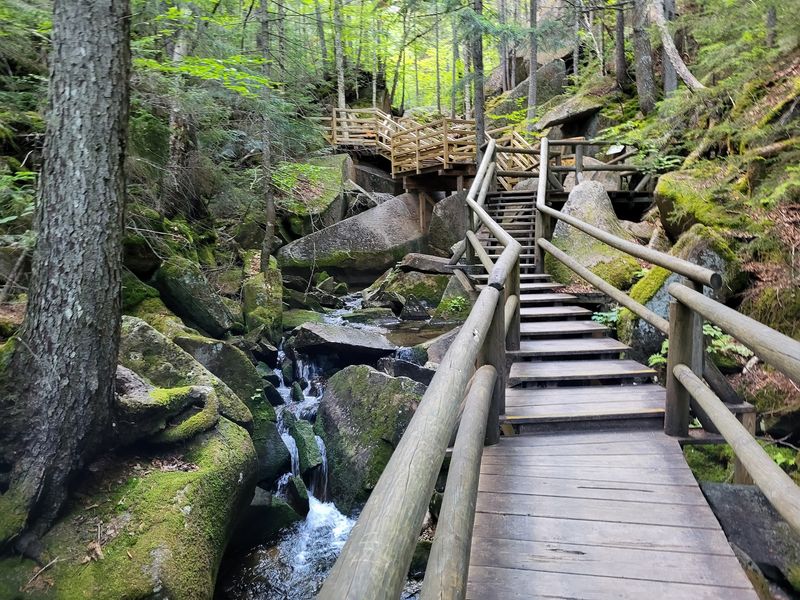
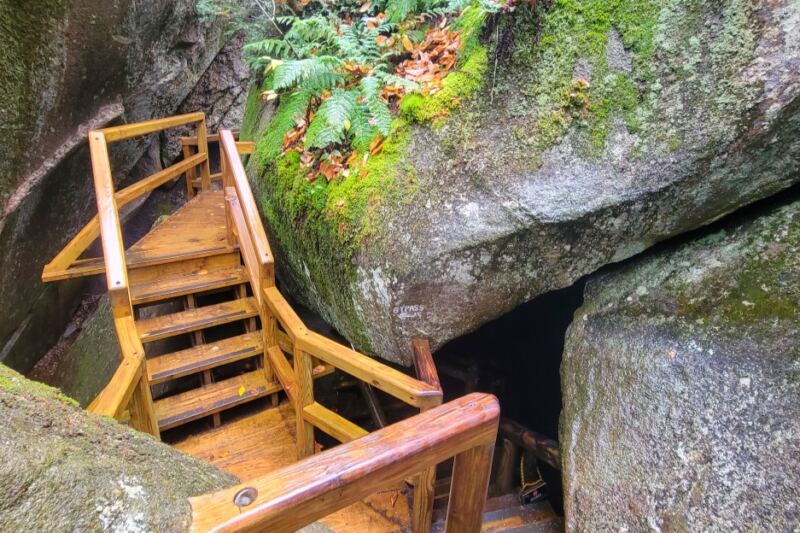
The brook running through Kinsman Notch literally disappears underground, flowing beneath an enormous pile of granite boulders before reappearing further down the slope, which is exactly the kind of geological quirk that earned this place its name.
Lost River Gorge features a one-mile boardwalk trail threading past 11 boulder caves, waterfalls including Paradise Falls, a suspension bridge, a covered bridge, and scenic overlooks above the notch. The caves have names like Devil’s Kitchen, Cave of Silence, and Fenris the Wild, and several require visitors to squeeze through tight openings to pass through.
The site was reportedly discovered in 1852 when Lyman Jackman fell into what is now called Shadow Cave, and it has been welcoming curious visitors ever since. Lost River is open mid-May through October for the 2026 season. Special events include lantern-lit night tours and gemstone panning at the mining sluice. Online ticket purchases are recommended during peak summer weeks.
Share this story