There is a stretch of rural Illinois, quiet and unhurried, where limestone walls rise from the flatlands near the Mississippi River and tell a story that most Americans have never heard. Long before the United States existed, French soldiers and settlers built a fortress here that was, at the time, the largest colonial fortification in what would become the American Midwest.
I drove out to see it on a clear weekday morning and spent a few hours completely absorbed in a chapter of history that rarely gets the spotlight it deserves. Fort de Chartres State Historic Site sits in Prairie du Rocher, Illinois, and it rewards every visitor who makes the trip with something genuinely surprising and memorable.
Where to Find It and What to Expect on Arrival
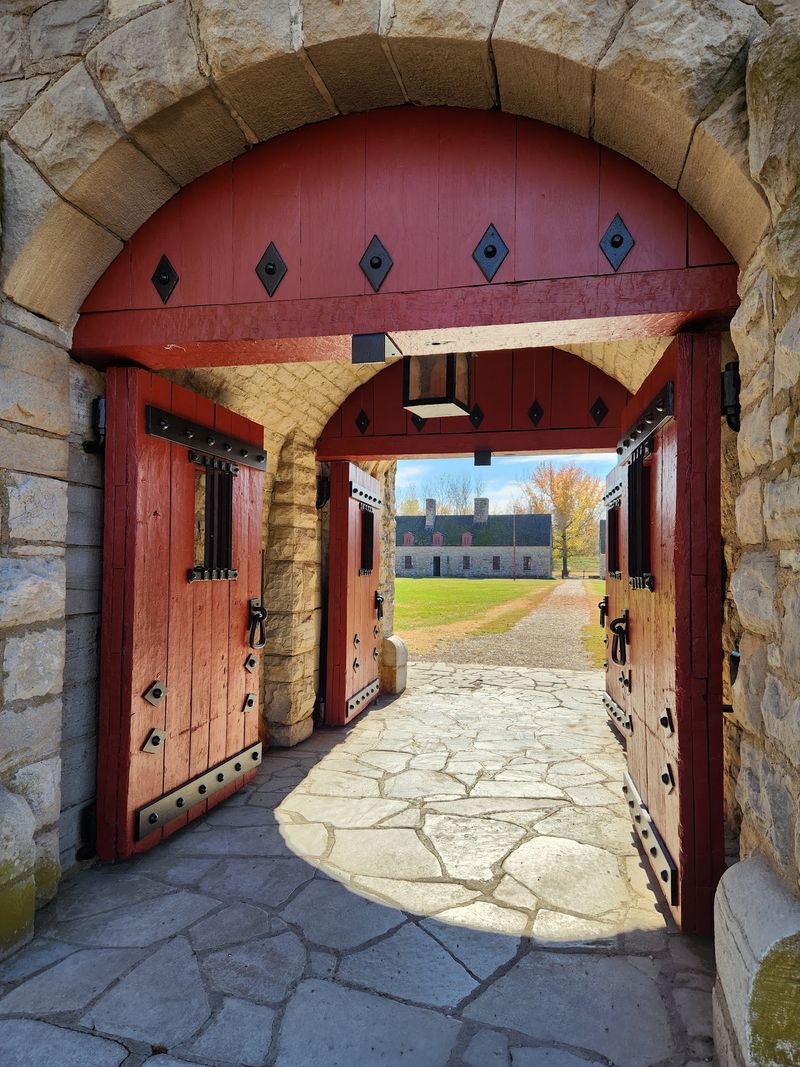
Fort de Chartres State Historic Site is at 1350 State Route 155, Prairie du Rocher, IL 62277, tucked into the southwestern corner of Illinois along the Mississippi River floodplain. The drive there already sets the mood, with flat farmland stretching in every direction and the occasional glimpse of the river through the tree line.
When I arrived on a Wednesday morning, the parking area was nearly empty, and the quiet felt immediate. There are no ticket booths, no entrance fees, and no long lines.
Admission is free, which still surprises me given how well-maintained everything is.
The site is open Wednesday through Sunday from 9 AM to 4 PM and is closed on Mondays and Tuesdays, so plan your visit accordingly. A phone number is available at +1 618-284-7230 if you need to confirm hours or ask questions before heading out.
The grounds are level and easy to walk, making the site accessible for a wide range of visitors, from young kids to older adults who prefer a relaxed pace.
The Story Behind the Stone Walls
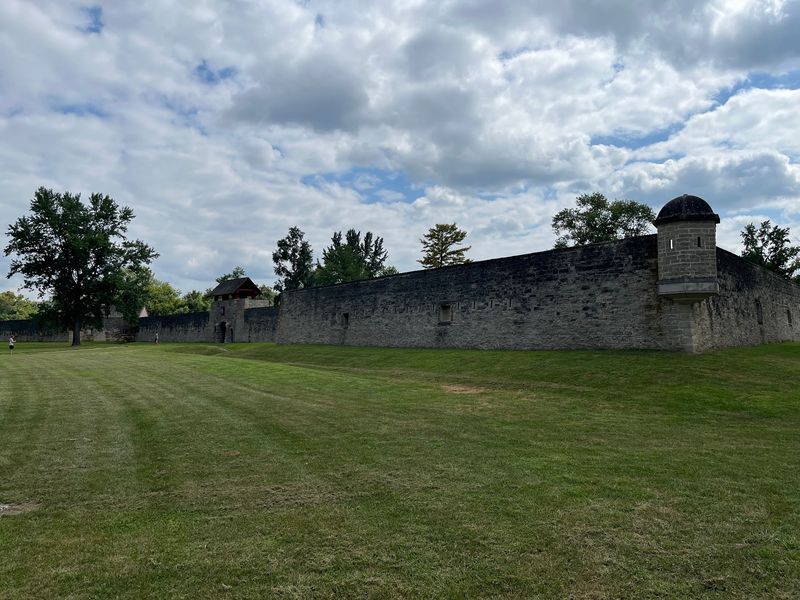
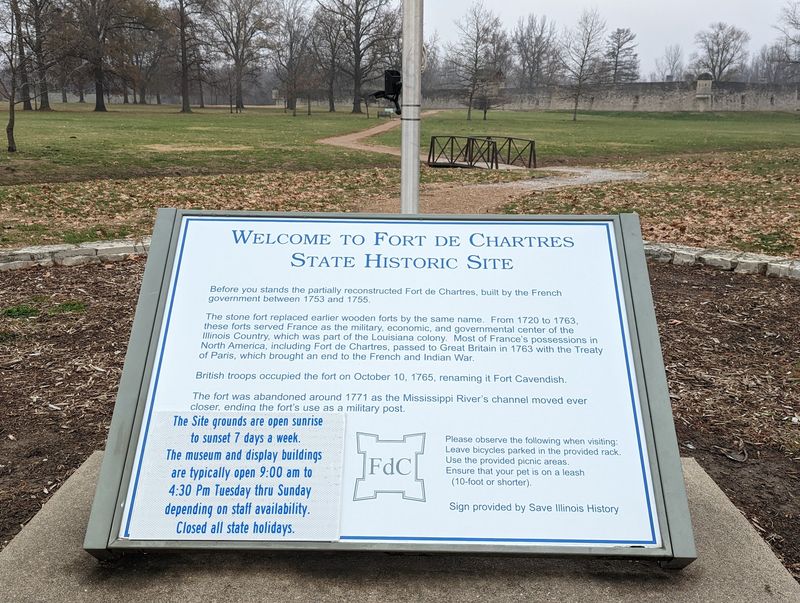
France built the original Fort de Chartres in 1720 as a military and administrative center for the Illinois Country, a vast territory that stretched from the Great Lakes down to Louisiana. The goal was to anchor French power along the Mississippi River and manage trade and relations with Indigenous nations in the region.
The fort went through several versions over the decades. The first two were built from wood and did not hold up well against the river’s floods and the relentless Midwest weather.
The third version, constructed from local limestone in the 1750s, was far more ambitious and became the most impressive colonial fortification in French Louisiana.
France ceded the territory to Britain after the Seven Years’ War, and by the 1770s the fort had been largely abandoned. The British demolished much of it, and the Mississippi River eventually eroded what remained.
What stands today is a careful, decades-long reconstruction effort by the state of Illinois, and the result is a site that genuinely conveys the scale and character of the original structure. History rarely gets a second chance this well-executed.
The Limestone Walls Up Close
The walls at Fort de Chartres are the first thing that genuinely stops you in your tracks. They are thick, solid, and surprisingly tall, built from limestone quarried locally in the 18th century.
Running your hand along the surface, you feel the weight of the construction effort behind it.
The reconstructed walls follow the original footprint of the 1750s fort, which was laid out in a traditional European bastion design. The corners feature diamond-shaped projections that allowed defenders to cover every angle of the exterior walls without blind spots.
It is a practical and elegant design that the French used across their colonial empire.
What impressed me most was the sheer scale of the perimeter. The fort enclosed a substantial area, and walking along the interior edge of the walls gives you a real sense of how much space the French committed to this outpost.
The reconstruction is not complete on all sides, but enough of the wall system is restored to let you read the full shape of the original plan. Few places in the Midwest offer this kind of architectural encounter with colonial history.
The Museum Inside the Fort
Tucked inside the fort grounds is a compact but genuinely informative museum that covers the full arc of the site’s history. The exhibits include artifacts recovered from the original fort, period maps, weapons, tools, and items that reflect both French military life and the broader colonial culture of the Illinois Country.
One of the more striking displays involves the relationship between French settlers and the Indigenous nations of the region, including the Illinois Confederacy. The museum does not shy away from the complexity of that history, which gives the exhibits more depth than you might expect from a small regional site.
The space is not large, so plan for about 30 to 45 minutes inside. But the quality of the interpretation more than makes up for the size.
Labels are clear, the layout is logical, and the artifacts are well-chosen to tell a coherent story rather than just fill display cases. I left the museum with a much better understanding of why this particular location mattered so much to the French colonial project, and that context made the rest of the site feel even more meaningful to explore.
The Powder Magazine and Other Structures
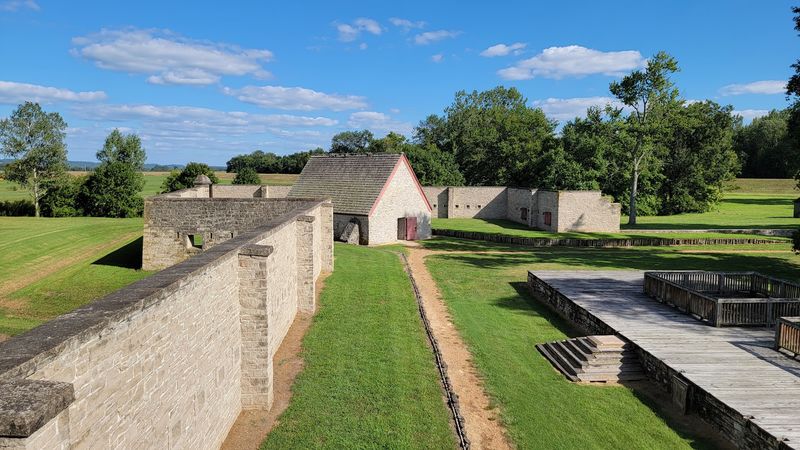
One of the most intact original structures at Fort de Chartres is the powder magazine, a low, vaulted stone building designed to store gunpowder safely away from the main living quarters. It survived the British demolition and subsequent neglect better than anything else on the site, and it is the oldest European building still standing in Illinois.
That detail alone is worth pausing over. The oldest European structure in the entire state of Illinois is a small ammunition storage building sitting quietly in a field near the Mississippi River, and most people have never heard of it.
The building’s thick walls and arched ceiling were engineered to contain any accidental explosion, and they have proven equally good at surviving centuries of weather and neglect.
Beyond the powder magazine, the site includes several reconstructed buildings with period furnishings, including officers’ quarters and a guardhouse. Each building is set up to reflect how it would have looked during active use in the mid-1700s.
The attention to detail in the furnishings and layout is careful without being overdone, and the overall effect is a site that feels lived-in rather than staged. Wandering between buildings, you piece together what daily life here might have felt like.
The Guard Towers and the View from Above
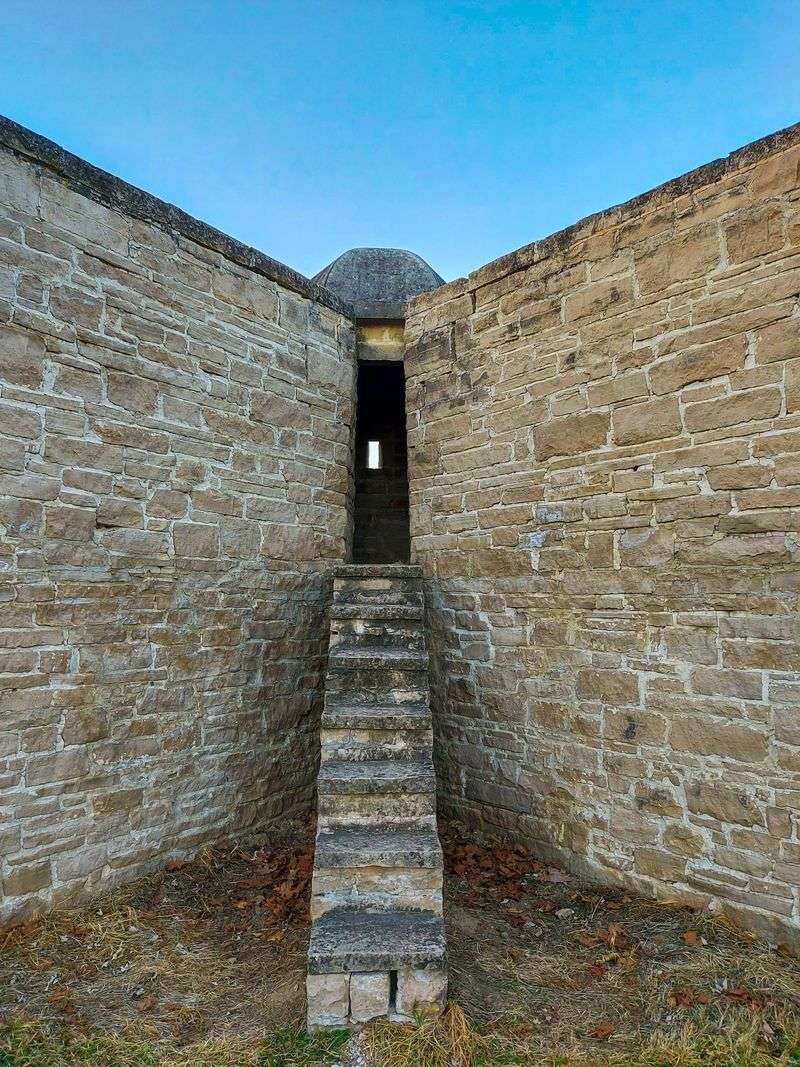
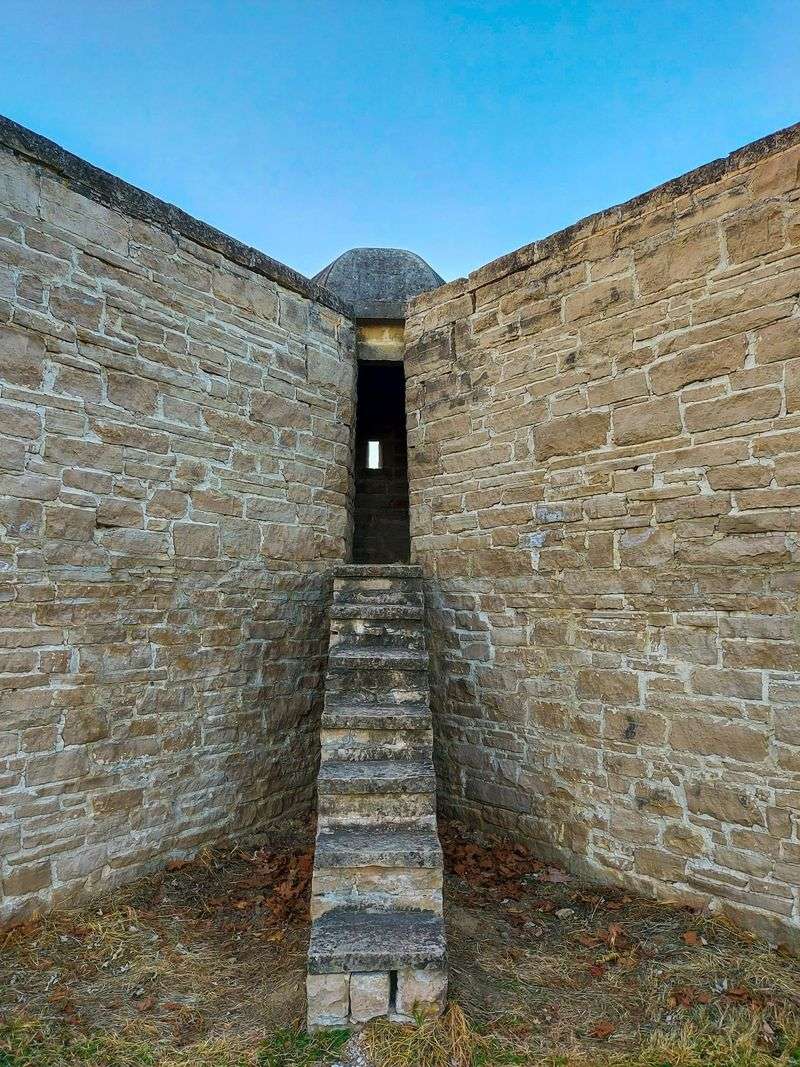
The guard towers at Fort de Chartres are one of the most popular features for visitors of all ages, and it is easy to see why. You can climb up inside them and look out over the fort grounds and the surrounding landscape, which stretches flat and green toward the Mississippi River to the west.
The towers are solid and well-maintained, and the climb is straightforward enough for kids and adults alike. From the top, the scale of the fort’s footprint becomes much clearer.
You can trace the wall lines, see where the reconstructed sections meet the original foundations, and get a sense of how the whole complex fit together as a working military installation.
On the day I visited, a group of grandchildren was scrambling up and down the tower stairs with obvious delight, which felt entirely appropriate. A place this old should be touched and explored, not just observed from a distance.
The view from the top also rewards you with a glimpse of the rural Illinois countryside that surrounds the site, a landscape that has changed enormously since the 1700s but still carries a certain quietness that feels connected to the history below your feet.
The Annual Rendezvous Event

Every year, Fort de Chartres hosts a Rendezvous event that draws living history enthusiasts, traders, and reenactors from across the region. The event re-creates the atmosphere of an 18th-century French colonial trading gathering, with participants dressed in period-accurate clothing and demonstrating crafts, skills, and activities from the era.
Gunpowder demonstrations, muzzle-loading firearms, period cooking, and traditional crafts all make an appearance. Vendors sell handmade goods that reflect the material culture of the colonial period, and the overall effect is immersive in a way that static museum displays simply cannot replicate.
The fort walls provide a perfect backdrop, and the scale of the event transforms the site from a quiet historic park into something genuinely theatrical.
The Rendezvous typically takes place in late spring, though I would recommend checking the official website at fortdechartres.us for specific dates each year. Visitors who have attended consistently describe it as far more engaging than they expected.
The combination of the historic setting and the live interpretation creates an experience that sticks with you long after the drive home. If your schedule allows, timing your visit to coincide with the Rendezvous is well worth the extra planning effort.
Getting There by Ferry from Missouri
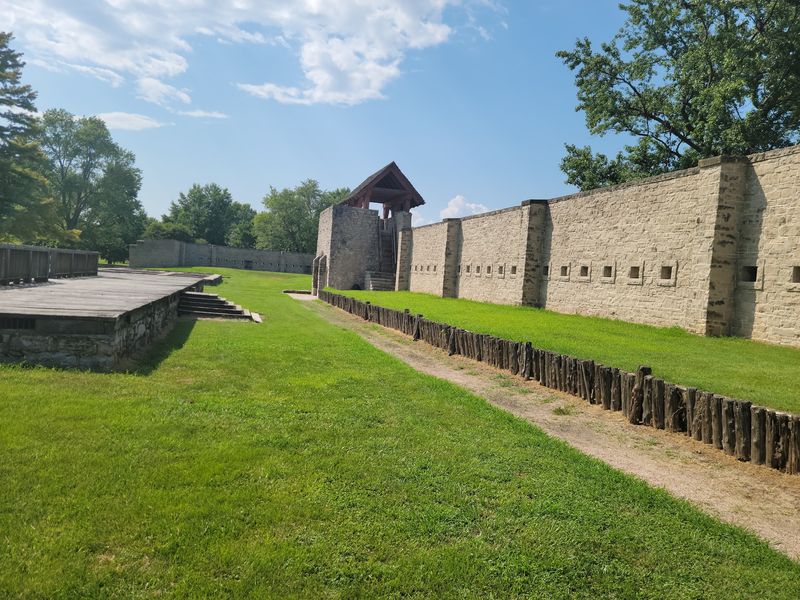
One of the most unexpected pleasures of visiting Fort de Chartres is how you can get there. The Modoc Ferry, which runs between Ste.
Genevieve, Missouri, and the Illinois side of the Mississippi River, offers a genuinely old-fashioned way to cross the river and arrive near the fort. The ferry hauls both passengers and vehicles, and the crossing takes only a few minutes.
Taking the ferry adds a layer of adventure to the trip that driving across a bridge simply does not provide. You are crossing the same river that French colonists and traders navigated for generations, and doing it by boat rather than by highway keeps that connection alive in a small but real way.
The ferry operates seasonally and on a limited schedule, so checking current hours before you plan your route is important. But if the timing works out, arriving at Fort de Chartres by way of the Modoc Ferry turns a regular day trip into something that feels like a mini-expedition.
The combination of the river crossing and the fort visit makes for a full and satisfying outing, particularly if you are coming from the St. Louis area and want a route that adds character to the journey.
Picnicking on the Grounds
Fort de Chartres is not a place surrounded by restaurants or fast food options. Prairie du Rocher is a small, quiet town, and the fort sits in a rural stretch of road with more cornfields than coffee shops nearby.
Packing a picnic is not just a nice idea here, it is genuinely the best way to make the most of the visit.
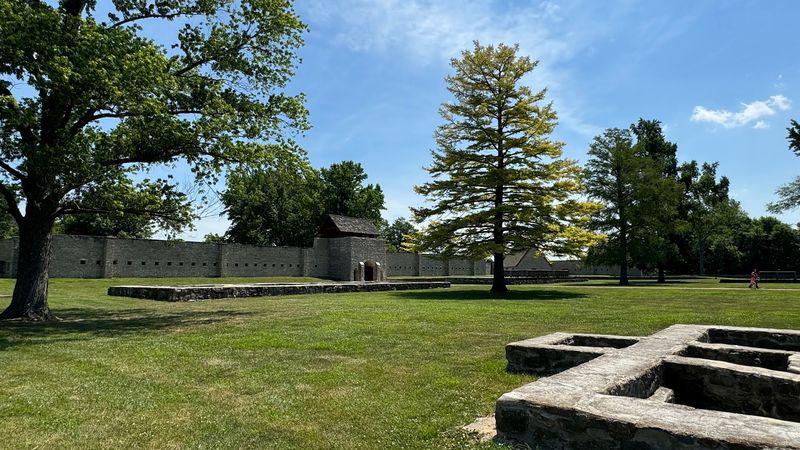
The grounds include shaded areas and picnic tables near the parking area, and the open lawn inside and around the fort is well-maintained and pleasant to sit on. On a mild day, having lunch within sight of 18th-century limestone walls is the kind of simple pleasure that feels surprisingly special when you are actually doing it.
The peacefulness of the site on a non-event day is one of its most underrated qualities. Arriving to find the grounds nearly empty, as many visitors do on weekday mornings, means you get the whole place essentially to yourself.
No crowds, no noise, just the sound of wind across open fields and the quiet presence of a very old structure doing its best to tell you something important. Bringing food and staying a while is the right move.
Why This Place Deserves More Attention
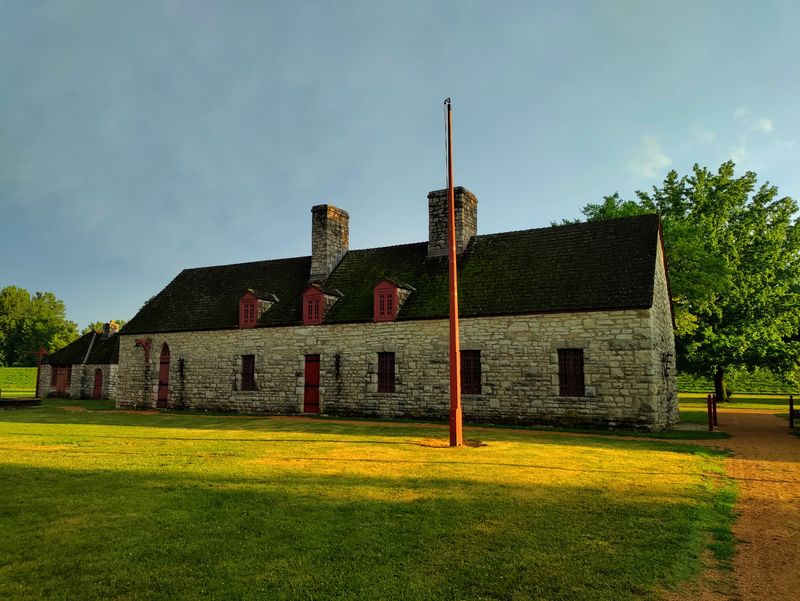
Fort de Chartres represents a chapter of American history that rarely appears in school textbooks or popular travel guides. The French colonial period in the Mississippi Valley shaped the geography, culture, and economy of a vast region, yet it gets a fraction of the attention that other colonial eras receive.
This site is one of the few places where you can stand inside that history rather than just read about it.
The fact that admission is free, the grounds are well-kept, and the museum is genuinely informative makes the lack of visitor traffic both puzzling and fortunate. Puzzling because a site this significant deserves a wider audience.
Fortunate because, on a quiet afternoon, you can have the whole place to yourself and absorb it at your own pace without distraction.
The drive out is part of the experience, winding through rural southern Illinois with the river always nearby. Fort de Chartres earns its 4.7-star rating not through spectacle but through substance.
It is the kind of place that stays with you afterward, prompting questions and making you want to learn more about the world that built those walls. That is about as good as a historic site can get.
Share this story