Most people walk past cemeteries without a second thought, but some of the most beautiful and historically rich green spaces in America happen to be burial grounds. These places are filled with incredible architecture, rare trees, fascinating stories, and connections to people who shaped this country.
Visiting a historic cemetery is one of the most affordable and genuinely interesting things you can do in a new city. Whether you are a history lover, a nature walker, or just someone who appreciates a quiet and meaningful place, this list has something worth adding to your travel plans.
From Brooklyn to Savannah to Indianapolis, these 14 American cities are home to cemeteries that go far beyond what most people expect.
Mount Auburn Cemetery, Cambridge, Massachusetts
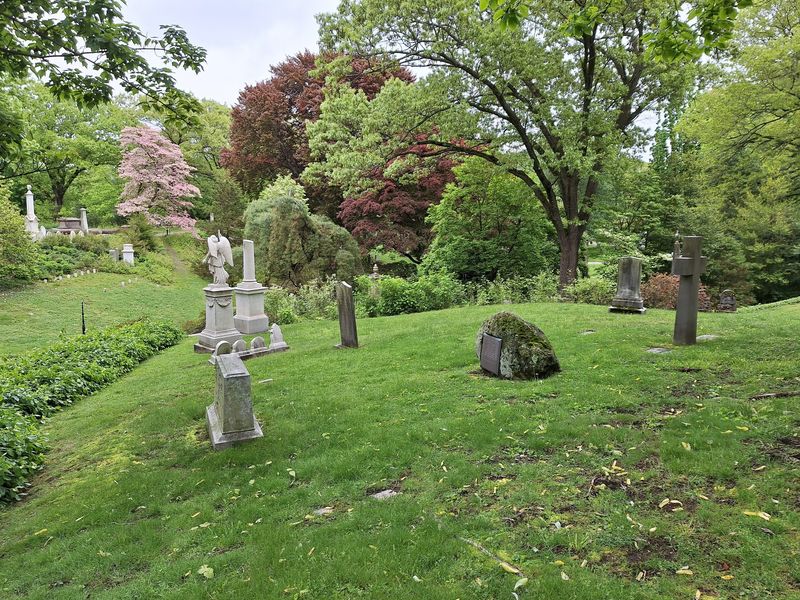
Founded in 1831, Mount Auburn Cemetery did not just change how Americans thought about burial grounds. It changed how Americans thought about public green space altogether.
As the first large-scale designed landscape for public use in the United States, it helped launch the rural cemetery movement that influenced parks across the country.
The grounds function as both a National Historic Landmark and an accredited arboretum, with hundreds of tree species, ponds, gardens, and winding paths spread across hilly terrain. Elaborate 19th-century memorials and mausoleums appear around nearly every bend.
When Washington Tower is accessible, visitors can climb it for elevated views of the surrounding area. Birdwatchers regularly visit during migration season because the grounds serve as a recognized wildlife sanctuary.
Mount Auburn is open throughout the year and welcomes visitors who come to walk, reflect, photograph, or simply spend time in one of New England’s most thoughtfully designed landscapes.
Green-Wood Cemetery, Brooklyn, New York
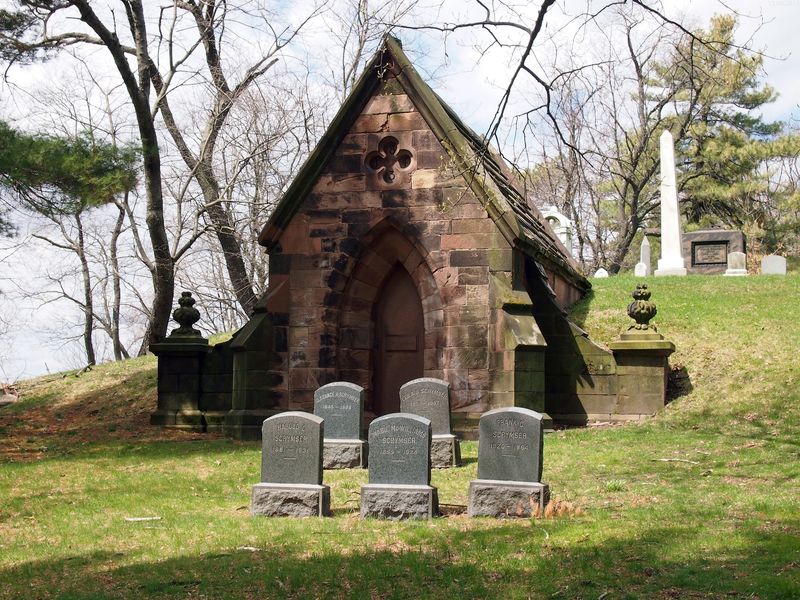
Long before Central Park opened its gates, New Yorkers were already flocking to Green-Wood to spend their leisure hours. That tells you something about how impressive this place was from the very beginning.
Opened in 1838, Green-Wood quickly earned a reputation as one of the city’s great landscaped destinations, drawing visitors with its wooded hills, scenic ponds, sweeping views, and elaborate monuments.
Today the cemetery covers roughly 478 acres and holds hundreds of thousands of burials. Its striking Gothic Revival entrance gate is among the most photographed architectural features in Brooklyn.
Inside, monuments connected to artists, politicians, soldiers, and business leaders are scattered across grounds that still feel surprisingly peaceful given the city surrounding them.
Green-Wood remains open 365 days a year and offers both self-guided exploration and organized public programs. For anyone visiting New York who wants a genuine alternative to the usual tourist stops, this is a compelling choice.
Laurel Hill Cemetery, Philadelphia, Pennsylvania
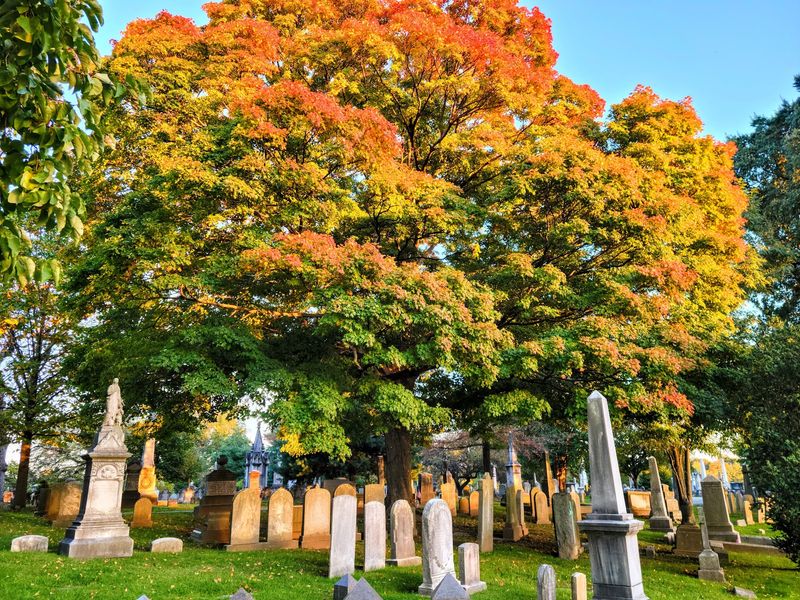
Perched above the Schuylkill River, Laurel Hill Cemetery has one of the most naturally dramatic settings of any burial ground on the East Coast. Established in 1836, it was among the earliest major rural cemeteries in the country, and its location turned it into both a burial place and a landscaped destination that Philadelphians visited for recreation.
Walking the grounds today, you encounter stone angels, obelisks, towering mausoleums, and elaborate family monuments spread across rolling terrain shaded by old trees. The mix of Victorian-era craftsmanship and natural beauty gives the place a character that is genuinely hard to replicate.
Laurel Hill is connected with numerous prominent Philadelphians and figures from broader American history. The cemetery remains an active burial site and public green space, and its gates are open every day of the year.
There is no other Philadelphia park quite like it in terms of combining history, landscape, and architecture.
Bonaventure Cemetery, Savannah, Georgia
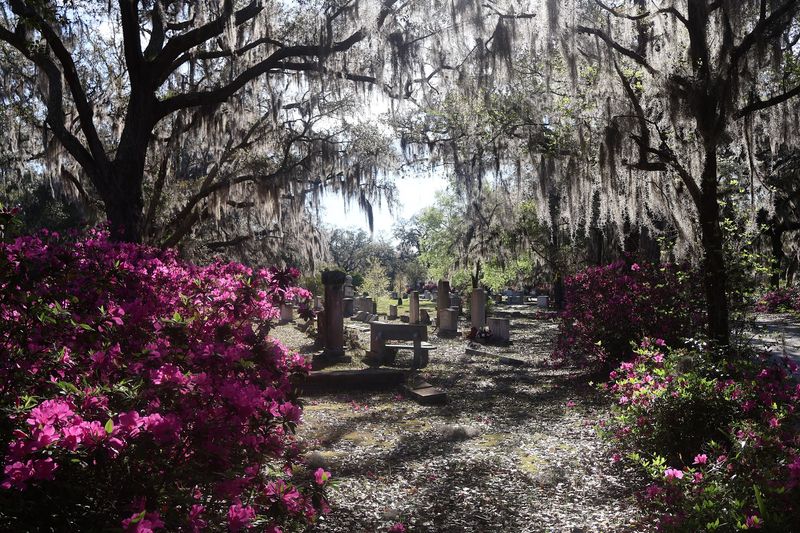
There are cemeteries with interesting history, and then there is Bonaventure. Massive live oaks draped in Spanish moss form a canopy over the lanes, while stone statues and aging monuments stand quietly amid dense, lush vegetation.
The setting alone makes it unlike almost anything else in the American South.
The property was once part of Bonaventure Plantation before being developed as a private cemetery in the 19th century and later becoming a municipal cemetery. Today it covers more than 100 acres along a bluff near the Wilmington River, giving certain sections an open, elevated quality that contrasts with the shadier interior lanes.
Bonaventure’s landscape, sculpture, notable burials, and local folklore have made it one of Savannah’s most recognizable historical attractions. The City of Savannah currently opens the cemetery to the public every day from 8 a.m. to 5 p.m.
Plan to spend at least an hour or two if you want to see it properly.
Hollywood Cemetery, Richmond, Virginia
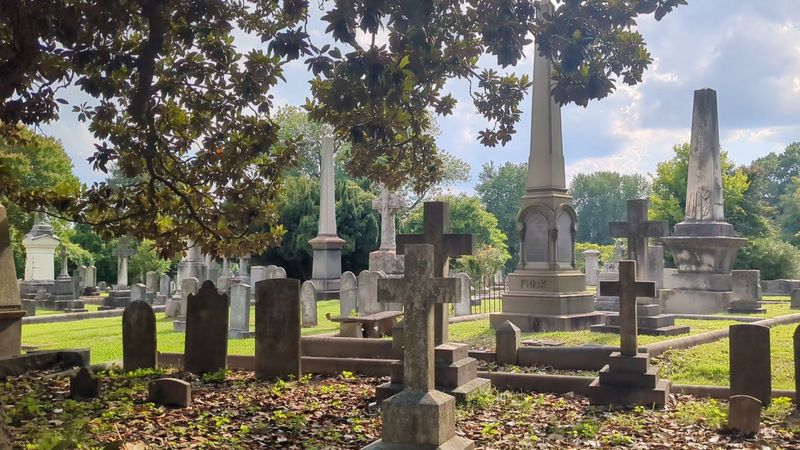
Two U.S. presidents, a Confederate president, and thousands of Civil War soldiers are all buried within a few miles of downtown Richmond. Hollywood Cemetery, established in 1847, sits on dramatic terrain above the James River and packs more American political and military history into its grounds than most museum complexes could cover in a full day.
James Monroe and John Tyler rest here alongside Confederate president Jefferson Davis and a long list of prominent Virginians. The terrain itself is part of the appeal.
Hills, valleys, winding roads, and old trees create a landscape that rewards slow exploration on foot or by car.
Self-guided tours are easy to manage, and organized historical tours are also available at certain times of year. Hollywood Cemetery remains fully operational and welcomes visitors daily.
The combination of river views, Victorian monuments, and layered American history gives it a depth that goes well beyond a typical cemetery visit.
Historic Oakland Cemetery, Atlanta, Georgia
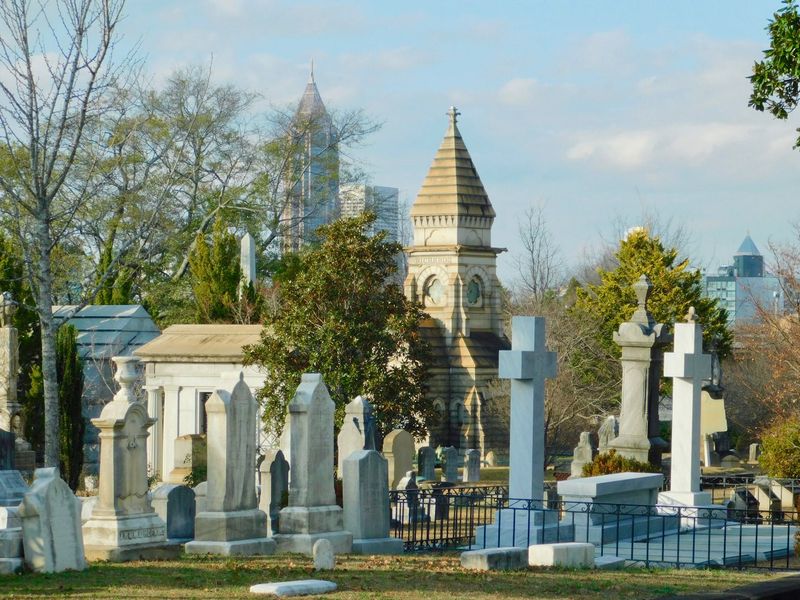
Atlanta is a city that moves fast, which makes Oakland Cemetery feel like an unexpected pocket of stillness just minutes from downtown. Opened in 1850, it is the oldest public park in Atlanta and one of the most historically layered sites in the entire state of Georgia.
The grounds combine Victorian garden design with sculptures, ornate mausoleums, mature trees, and distinct sections that reflect different communities from Atlanta’s past. More than 70,000 people are buried here, including Margaret Mitchell, the author of Gone With the Wind, and Bobby Jones, one of golf’s all-time greats.
Former Georgia governors and numerous former Atlanta mayors are also interred on the grounds, giving Oakland a civic weight that few urban green spaces can match. The Historic Oakland Foundation helps maintain the site and organizes guided tours throughout the year.
The cemetery is open to visitors and serves as both a living history resource and a genuinely pleasant place to spend an afternoon.
Cave Hill Cemetery, Louisville, Kentucky
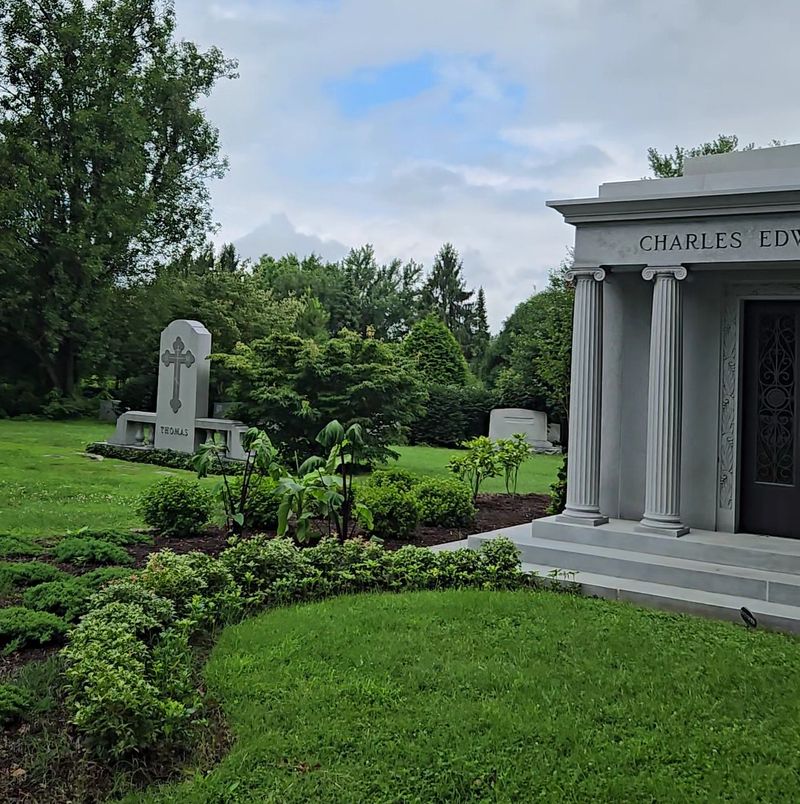
Walking through Cave Hill Cemetery in Louisville, it is easy to forget you are in a cemetery at all. Created in the 1840s, the landscape includes ponds, hills, streams, mature trees, sculptures, and winding roads that give it the feel of a large botanical garden open to the public at no charge.
Two of its most visited grave sites belong to Colonel Harland Sanders, the founder of Kentucky Fried Chicken, and Muhammad Ali, the Louisville-born boxing champion who became one of the most recognized figures in sports history. Those two names alone draw visitors from across the country.
Beyond those famous markers, Cave Hill rewards curious visitors who simply wander and pay attention to the craftsmanship of the monuments and the variety of the plantings. The cemetery remains active and is currently open seven days a week from 8 a.m. to 4:45 p.m., weather permitting.
It is a genuinely pleasant stop in Louisville.
Lake View Cemetery, Cleveland, Ohio
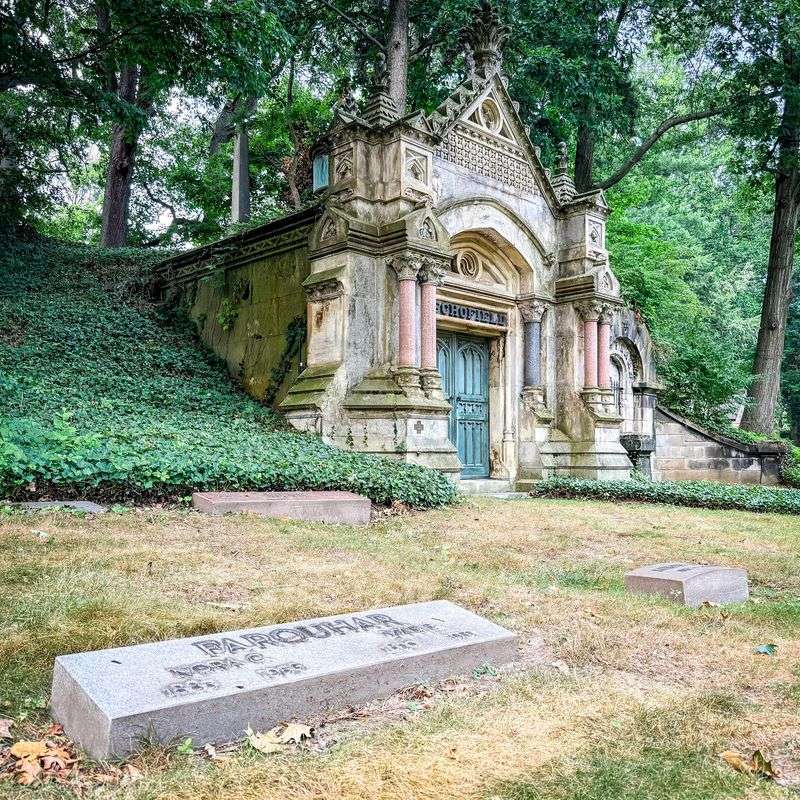
Lake View Cemetery calls itself Cleveland’s outdoor museum and arboretum, and that description holds up once you are actually inside. Founded in 1869, the cemetery covers 285 acres of landscaped grounds filled with trees, flowers, sculptures, and architectural landmarks that give it a genuine museum-like quality.
The centerpiece is the James A. Garfield Memorial, an enormous structure dedicated to the 20th president of the United States.
The building’s scale and detail make it one of the most impressive presidential memorials outside of Washington, D.C. Nearby, Wade Memorial Chapel contains interiors connected to the studio of Louis Comfort Tiffany, the famed designer known for his decorative glass work.
Lake View is open every day of the year, though gate hours vary by season and weather can occasionally affect access. For Cleveland visitors who want to see something genuinely distinctive, this cemetery offers history, art, architecture, and natural beauty in one walkable location.
Elmwood Cemetery, Memphis, Tennessee
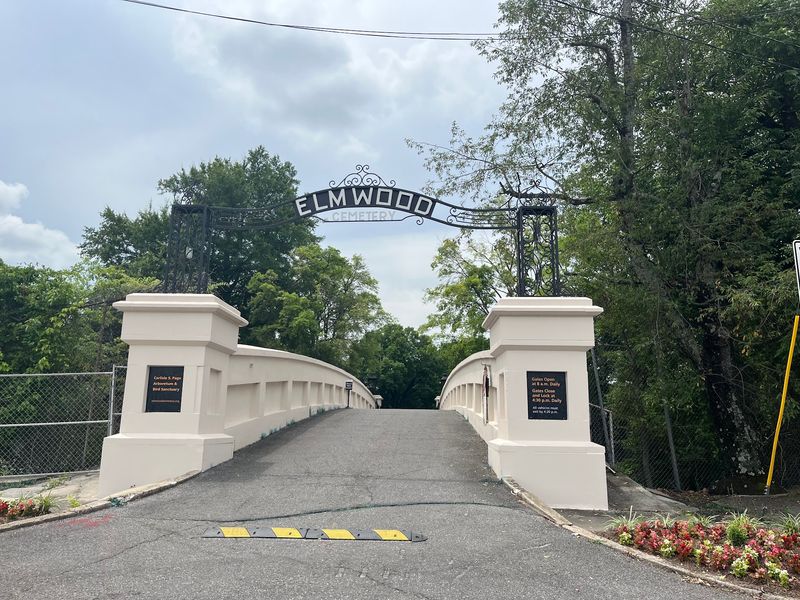
Elmwood Cemetery reads almost like a physical record of Memphis history. Established in 1852, its grounds contain Victorian monuments, towering old trees, family plots, and historic structures that span generations of the city’s story.
Few places in Memphis connect the past to the present so directly.
The cemetery’s history also reflects major events that shaped the city. Epidemics that devastated Memphis in the 19th century, the Civil War, and shifting patterns of immigration and community life are all represented across the grounds in ways that go beyond simple grave markers.
Elmwood remains an active cemetery where burial lots are still sold today. The grounds are open every day from 8 a.m. to 4:30 p.m., and there is no admission charge for visitors who come to walk and explore.
A visit here offers a quieter, more reflective way to understand Memphis than most of the city’s more well-known attractions can provide.
Congressional Cemetery, Washington, D.C.
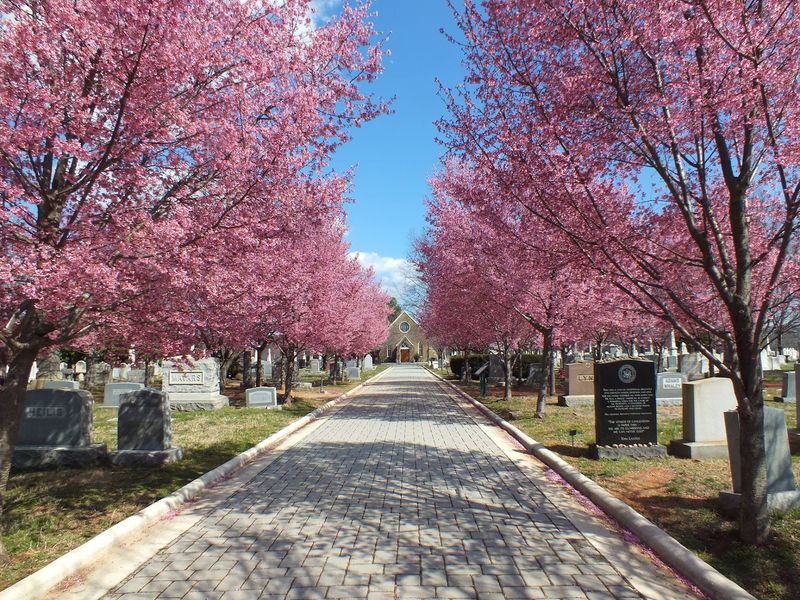
Just a short distance from some of Washington’s better-known landmarks sits one of the city’s most fascinating and underappreciated historic landscapes. Congressional Cemetery dates to 1807 and covers approximately 35 acres filled with graves connected to politicians, military figures, activists, artists, architects, and ordinary Washington residents.
One of its most distinctive features is a collection of sandstone cenotaphs traditionally associated with members of Congress. These uniform, box-like markers have a visual impact that is unlike anything else in the city.
The cemetery holds nearly 70,000 burials and was designated a National Historic Landmark in 2011.
Unlike a museum frozen in time, Congressional Cemetery remains an active burial ground where new interments still take place. The grounds are currently open daily from 7 a.m. to 7 p.m., making it accessible for early morning walks or late afternoon visits.
For history-focused travelers spending time in D.C., this one is easy to overlook and worth making the effort to find.
North Burial Ground, Providence, Rhode Island
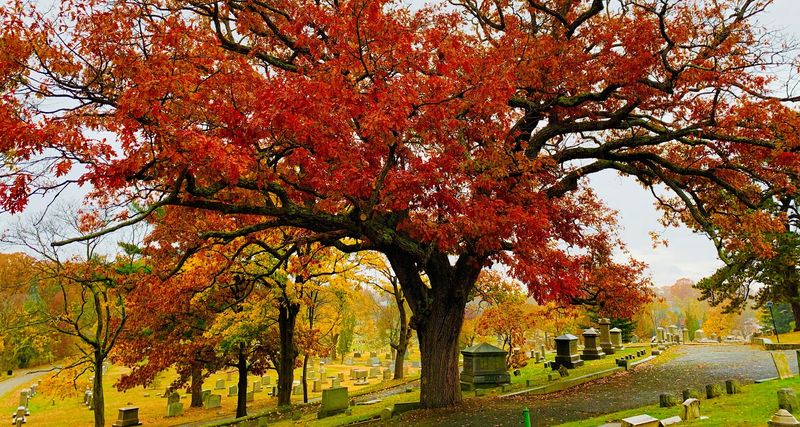
Dating back to 1700, North Burial Ground in Providence is one of the oldest municipal cemeteries anywhere in the country. More than three centuries of Rhode Island history are spread across its grounds, and the range of stories connected to the people buried here is genuinely remarkable.
More than 100,000 people have been interred here, including individuals connected with politics, business, public health, architecture, and the arts. The city offers several historical tour themes for visitors who want a structured experience, covering topics such as Black heritage, women’s history, Rhode Island politics, public health, and notable interments.
That variety of tour options is unusual for a municipal cemetery and reflects how seriously Providence treats this site.
North Burial Ground remains open throughout the year. The main gate is currently open seven days a week from 8 a.m. to 4 p.m., with extended weekend hours during parts of the warmer season.
It is a meaningful stop for anyone interested in early American history.
Old City Cemetery, Lynchburg, Virginia
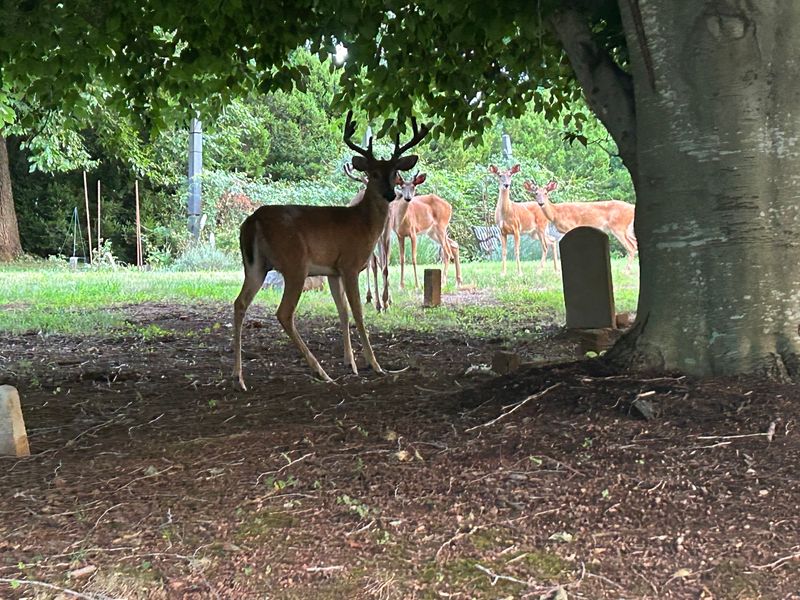
Old City Cemetery in Lynchburg is one of those places that surprises people who show up expecting only grave markers and lawn. Established in 1806, it operates more like a small outdoor museum campus than a traditional cemetery, combining historic graves with heritage rose gardens, old trees, reconstructed period buildings, and exhibits covering Victorian mourning traditions and local medical history.
The cemetery preserves stories connected with African American history, the Civil War, early Lynchburg residents, and public health challenges that shaped the region over two centuries. That breadth of subject matter makes it interesting to visitors with very different historical interests.
The grounds are currently open free of charge every day of the year from dawn to dusk, weather permitting. There is no admission fee and no requirement to join a guided tour, though tours are available for those who want more context.
Old City Cemetery offers a genuinely layered experience that rewards curious and patient visitors.
Crown Hill Cemetery, Indianapolis, Indiana
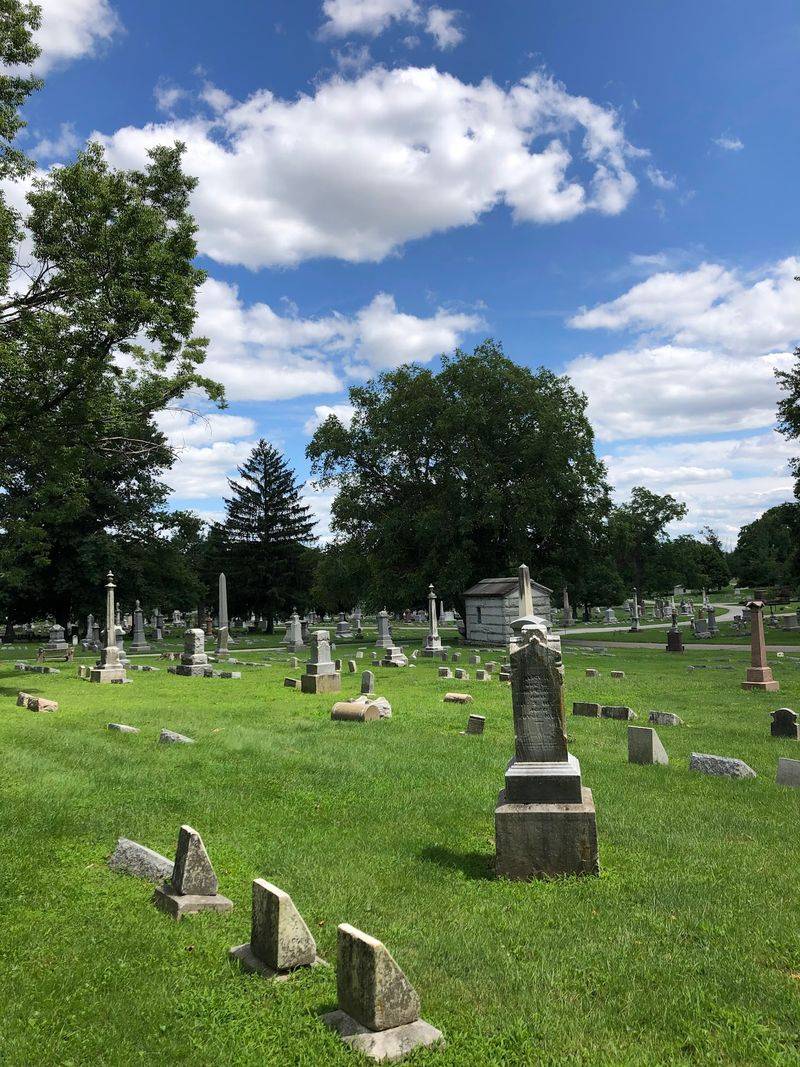
Crown Hill Cemetery in Indianapolis is enormous in the best possible way. Established in 1863, it stretches across hundreds of acres and sits at one of the highest natural points in the city, offering views of the Indianapolis skyline that most visitors do not expect to find inside a cemetery.
The grounds include winding roads, mature trees, grand monuments, and historic buildings that reflect more than 160 years of Indiana history. President Benjamin Harrison is buried here, as are poet James Whitcomb Riley, businessman Eli Lilly, and John Dillinger, the notorious bank robber whose grave remains one of the most visited spots on the property.
That mix of statesmen, artists, business leaders, and an outlaw gives Crown Hill a personality that is hard to match. The cemetery continues to function as an active burial ground and cultural landmark.
The main North Gate is currently open every day including holidays, with seasonal closing times that vary through the year.
Sleepy Hollow Cemetery, Sleepy Hollow, New York
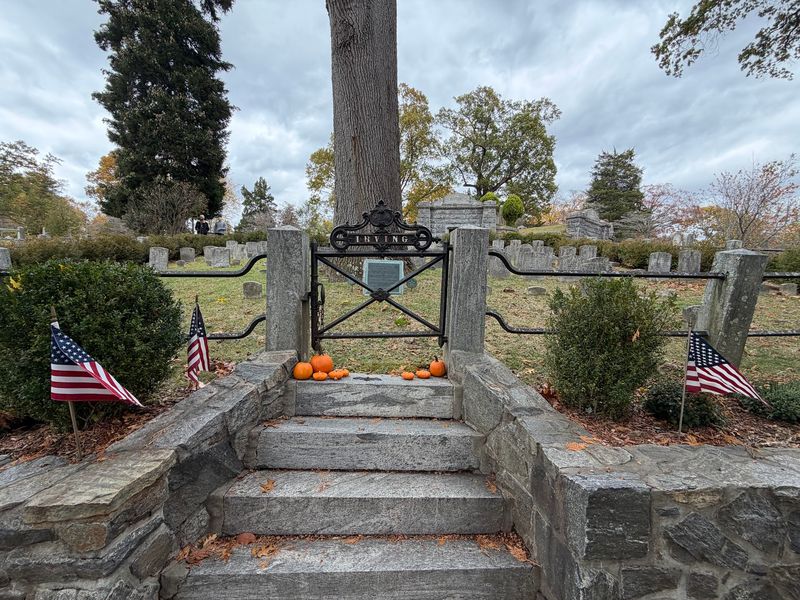
The name alone does a lot of work before you even arrive. Sleepy Hollow Cemetery sits in the Hudson Valley village of Sleepy Hollow, New York, and its connection to Washington Irving, the author of The Legend of Sleepy Hollow, gives it a literary layer that few burial grounds anywhere in the country can claim.
Established in 1849, the cemetery covers approximately 90 acres. Irving himself is among roughly 47,000 people interred on the grounds, and his grave is one of the most visited.
Beyond the literary connection, the property includes wooded scenery, mausoleums, historic monuments, and graves connected with influential American families and business leaders from the Gilded Age.
The setting in the Hudson Valley gives it a natural beauty that shifts with the seasons, and fall visits in particular attract visitors drawn to both the foliage and the cemetery’s atmospheric character. Current visiting hours are 8 a.m. to 4:30 p.m.
Monday through Friday and 8:30 a.m. to 4:30 p.m. on weekends.
Share this story