Some countries have so many cars that the numbers seem almost impossible to believe. In a handful of places, the registered passenger cars nearly outnumber the people who live there.
Whether it is rugged geography, high household incomes, suburban sprawl, or a deep-rooted car culture, the reasons vary widely from one nation to the next. Get ready to meet the 14 countries where cars per person hit levels that most of the world can only dream about.
San Marino

Perched on a rocky mountain in central Italy, San Marino holds a record that sounds almost fictional: it has more registered passenger cars than actual residents. The World Bank-based comparison clocked roughly 1,024 passenger cars for every 1,000 inhabitants, putting this tiny republic at the very top of the global ranking.
Children are included in the population count, which lowers the denominator, while businesses and multi-car households push registrations higher. With such a small population, even a modest number of company vehicles can swing the ratio dramatically.
Microstates produce quirky statistical effects, and San Marino is the ultimate example. Cross-border activity, second vehicles, and business fleets all pile onto a very small base number.
Broader road motor vehicle counts place San Marino even higher, confirming that this little republic is extraordinarily motorized. For a country smaller than many city neighborhoods, that is a genuinely jaw-dropping achievement.
Monaco

Ferraris idling at red lights, Bentleys squeezing through narrow lanes, Lamborghinis parked outside boutiques – Monaco delivers on every luxury-car cliche. Yet the principality’s extraordinary vehicle density is not purely about supercar culture.
The standardized comparison records roughly 960 passenger cars for every 1,000 residents, placing it just behind San Marino at the top of the global chart.
What makes that figure so striking is Monaco’s physical reality. It is one of the most densely populated places on Earth, with almost no spare room for roads or parking.
Still, cars keep multiplying.
Corporate registrations, a wealthy resident base, and a commuter workforce that crosses borders daily all skew the numbers upward. The international methodology specifically flags that company vehicles and commuter registration patterns can make small economies look exceptionally car-heavy.
Monaco is the textbook case. Between the Grand Prix circuit and the everyday gridlock, the principality has built a relationship with the automobile that is equal parts glamour and genuine statistical oddity.
Liechtenstein

Sandwiched between Switzerland and Austria in the Alps, Liechtenstein completes a remarkable sweep for Europe’s microstates. The principality records approximately 940 passenger cars per 1,000 inhabitants in the World Bank-based ranking, putting it right behind Monaco in the global pecking order.
High household incomes are an obvious part of the story. Liechtenstein is one of the wealthiest countries per capita on the planet, and affluent families tend to own more vehicles.
But geography adds another layer to the explanation.
Liechtenstein sits within a busy cross-border economic zone, and its communities are spread across valleys and hillsides where public transport coverage thins out quickly. Private vehicles fill that gap conveniently.
Like its fellow microstates, its tiny population base means that business registrations and multi-vehicle households have an outsized effect on the per-capita calculation. In practical terms, there are nearly enough registered passenger cars to hand one to every single resident, including toddlers.
For a country most people struggle to locate on a map, that is a remarkable automotive footprint.
Luxembourg
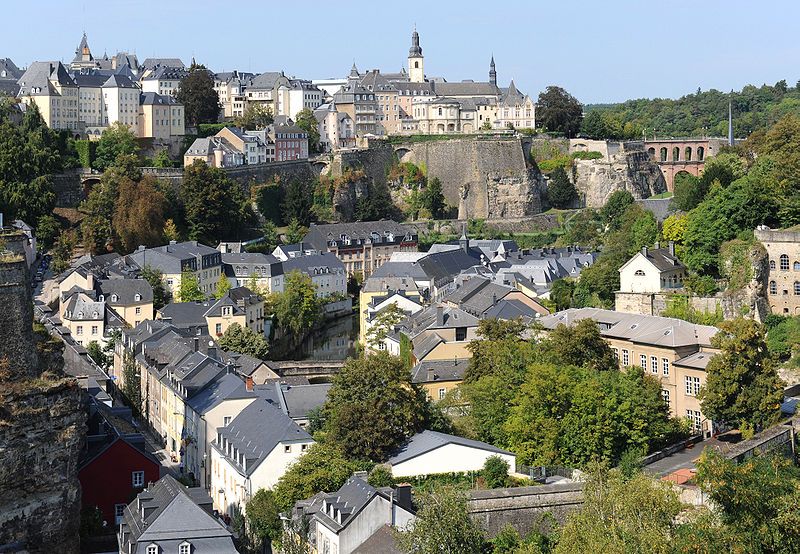
Luxembourg punches well above its weight in almost every economic category, and car ownership is no exception. The international dataset places it at roughly 820 passenger cars per 1,000 inhabitants, a figure that reflects both its prosperity and a very particular quirk of its economy.
Cross-border commuting is a massive part of Luxembourg’s daily reality. Tens of thousands of workers drive in from France, Belgium, and Germany every day, and company vehicles registered in Luxembourg inflate the per-capita count relative to the resident population.
The ranking specifically identifies those factors as key drivers of Luxembourg’s elevated position.
More recent Eurostat data put Luxembourg at 670 passenger cars per 1,000 inhabitants in 2024, second in the European Union behind Italy. The difference between the two figures illustrates how much year and methodology can shift international comparisons.
Either way, Luxembourg remains one of Europe’s most car-saturated countries. Its compact size, high wages, and cross-border economic ties create a perfect recipe for vehicle accumulation that few larger nations can match.
Iceland

Step outside Reykjavik and Iceland’s high car ownership rate starts making complete sense almost immediately. The country records approximately 790 passenger cars per 1,000 inhabitants in the international comparison, a figure shaped heavily by geography rather than luxury or habit.
Iceland has a small population scattered across a large, volcanically rugged island with no national passenger rail network. For residents outside the capital region, a private vehicle is not a lifestyle choice but a practical necessity for getting anywhere at all.
Tourism adds a fascinating extra dimension to the numbers. Rental vehicles are central to Iceland’s visitor economy, especially for travelers tackling the famous Ring Road or venturing into the volcanic highlands.
Those rental fleets contribute to the overall vehicle count on the island. Combine dispersed settlement, harsh winters, spectacular but roadless terrain, and a thriving rental market, and Iceland’s position near the top of the global chart becomes easy to understand.
The car is not just convenient here – it is the backbone of how the country functions day to day.
New Zealand

New Zealand has made road-tripping practically a national sport, so its high vehicle ownership rate should surprise nobody. The comparable passenger-car dataset places the country at approximately 770 cars per 1,000 inhabitants, and more recent official figures confirm the trend is not fading.
The Ministry of Transport counted 4.7 million motor vehicles in 2024, with an environmental-health analysis using ministry statistics finding 815 light vehicles per 1,000 people that year. Some regional areas were approaching or exceeding one light vehicle per resident.
New Zealand’s cities tend to sprawl rather than stack, intercity rail plays a minor role compared to many developed nations, and rural communities depend almost entirely on road transport. Add a tourism industry built around scenic drives and remote campsite adventures, and the vehicle count climbs even higher.
The country’s two main islands also mean that ferry crossings and road journeys are often the only realistic travel options for many trips. New Zealand has essentially organized its entire geography around the automobile, and the ownership statistics reflect that reality with striking clarity.
United States

No country its size is more thoroughly built around the automobile than the United States, and the numbers back that up completely. The standardized passenger-car comparison records around 760 passenger cars per 1,000 residents, but newer federal data tell an even bigger story.
The Federal Highway Administration reported 298 million registered motor vehicles in 2024 for a population of roughly 339 million. That works out to about 880 registered vehicles for every 1,000 residents when counting the full fleet including pickup trucks, large trucks, buses, and motorcycles.
Federal data also show that 92 percent of American households have access to at least one vehicle, while two vehicles is the most common household total nationwide. Decades of suburban development, limited public transportation in most cities, and wide open distances between communities have made car ownership feel less like a choice and more like a baseline requirement for daily life.
From drive-through coffee shops to drive-in churches, American infrastructure has been designed from the ground up with the assumption that almost everyone behind a steering wheel will be arriving by car.
Italy
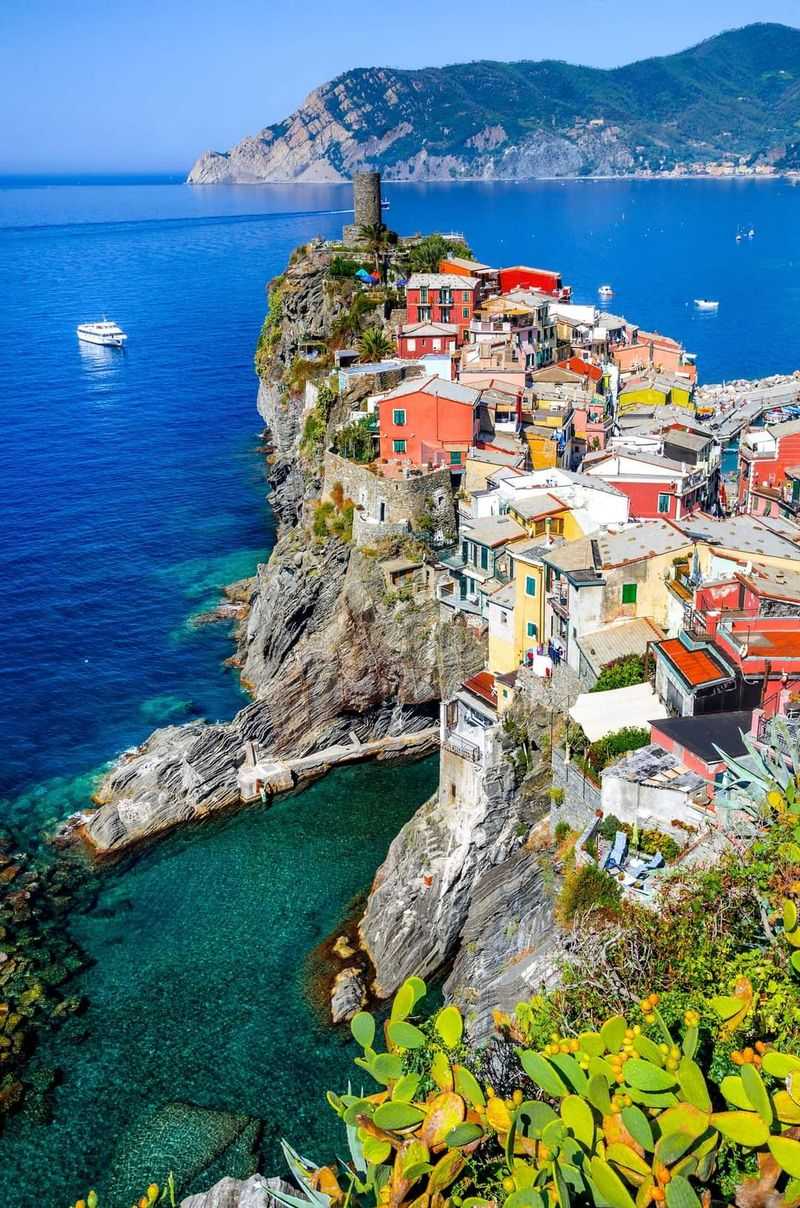
Italy seems like it should be the last country on this list. Its historic city centers are dense, winding, and barely wide enough for a Fiat 500, let alone a full-size sedan.
Yet the World Bank-based comparison places Italy at approximately 740 passenger cars per 1,000 inhabitants, and Eurostat’s 2024 data confirm it holds the highest passenger car ownership rate in the entire European Union at around 701 per 1,000 people.
Extensive rail service and iconic urban cores in Rome, Florence, Milan, and Bologna have clearly not convinced Italians to give up their cars. The reason is that most of Italy is not those famous city centers.
Suburbs, small market towns, rural agricultural areas, and sprawling industrial districts cover the majority of the country, and in those places a car is genuinely essential. Many households own more than one vehicle, treating the second or third car as a normal household appliance rather than a luxury.
Italy proves convincingly that a strong rail network and a passion for walking do not automatically translate into low car ownership at the national level.
Finland
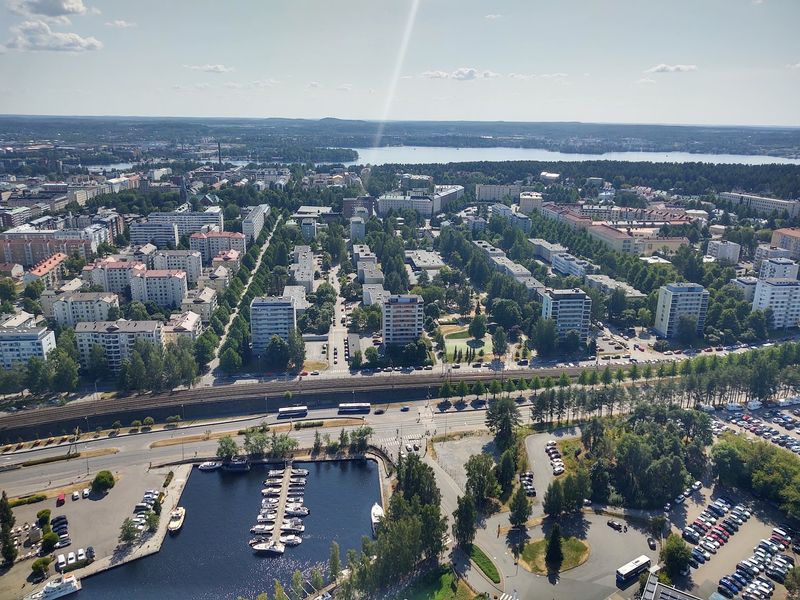
Finland’s settlement pattern makes its high car ownership rate feel almost inevitable. Roughly 730 passenger cars per 1,000 inhabitants appear in the standardized ranking, and once you look at a map of Finland, the number stops being surprising at all.
Outside Helsinki and a small number of other urban centers, population density drops sharply and distances stretch out considerably. In rural and semi-rural areas, public transport is limited, and winters are long and demanding.
A reliable private vehicle is not a luxury in those conditions – it is a survival tool.
The international ranking highlights long distances, dispersed settlement patterns, and harsh winter conditions as the main factors supporting Finland’s elevated ownership rate. Eurostat’s newer figures place Finland at around 666 passenger cars per 1,000 inhabitants in 2024, still firmly among the European Union’s highest rates.
The modest difference between datasets reflects changes in reporting methodology rather than a dramatic shift in Finnish driving habits. Whether you measure it by older or newer statistics, Finland consistently sits near the top of Europe’s car ownership table, driven by geography more than anything else.
Switzerland
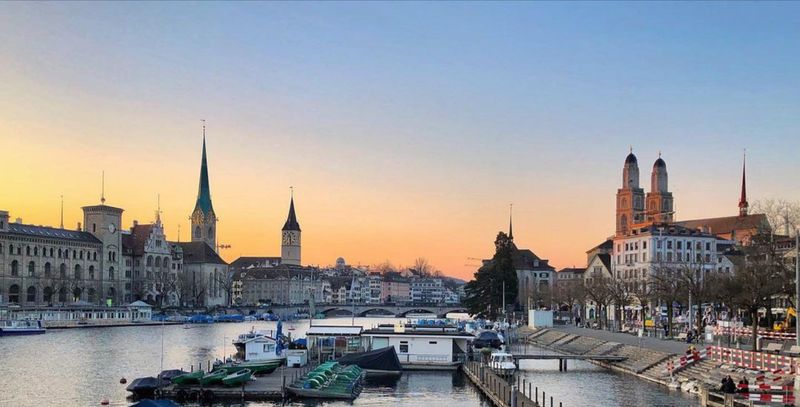
Switzerland might be the most counterintuitive country on this entire list. Its reputation for world-class public transport is completely deserved.
Trains run on time, buses connect mountain villages, and rail travel is woven into everyday Swiss life in a way that most countries can only envy.
Yet Switzerland still records approximately 720 passenger cars per 1,000 inhabitants in the comparable international dataset, placing it comfortably among Europe’s most car-rich nations. That apparent contradiction reveals something genuinely interesting about how people actually use vehicles.
Owning a car and relying on it for every single trip are two very different things. A Swiss household might commute by train during the week while keeping a vehicle for weekend mountain drives, grocery runs to out-of-town stores, or visits to relatives in smaller communities.
The ranking itself cites Switzerland as clear evidence that excellent public transportation can coexist with high private-car ownership rather than replacing it. Switzerland essentially shows that giving people great alternatives does not automatically make them sell their cars.
Sometimes people want both options available, and in a wealthy country, they can afford to have them.
Australia

Australia was practically designed with the automobile in mind. Its major cities cover enormous geographic footprints, distances between population centers can stretch for hours of driving, and most suburbs developed around the assumption that residents would own at least one vehicle.
The standardized comparison places Australia at approximately 710 passenger cars per 1,000 inhabitants.
Its position alongside the United States, Canada, and New Zealand reflects a broader pattern among wealthy, geographically large English-speaking nations that built their modern infrastructure during the age of the automobile.
Most Australians actually live in cities rather than the outback, but that does not reduce vehicle dependence as much as you might expect. Sydney, Melbourne, Brisbane, and Perth all operate public transport systems, yet those cities sprawl so extensively that reaching many destinations by transit alone is impractical or extremely time-consuming.
Car ownership fills that gap efficiently. Outside metropolitan areas, the distances involved make a private vehicle essentially non-negotiable.
Australia’s combination of high incomes, low-density urban form, vast rural distances, and a cultural affection for road travel keeps its car ownership rate firmly near the top of the global rankings.
Canada

Canada’s sheer geographic scale makes its high car ownership rate easy to understand, but the real story is more nuanced than just empty space. The international comparison places Canada at approximately 700 passenger cars for every 1,000 residents, just behind Australia in the global ranking.
Most Canadians live in metropolitan areas, not remote wilderness. The challenge is that those metropolitan areas frequently extend across vast suburban zones where daily errands, school runs, and commutes are difficult or slow without a personal vehicle.
Long winters in most of the country add another strong incentive to keep a car in the driveway. Transit options that work well in mild weather become far less appealing when temperatures drop to minus 30 and snowdrifts block bus shelters.
The result is that even cities like Toronto, Montreal, and Vancouver, which have genuine rapid transit networks, record high car ownership nationally. Canada demonstrates that building good transit in city cores does not necessarily reduce vehicle ownership in the surrounding suburban and exurban areas where the majority of a country’s population may actually live and work every day.
Austria
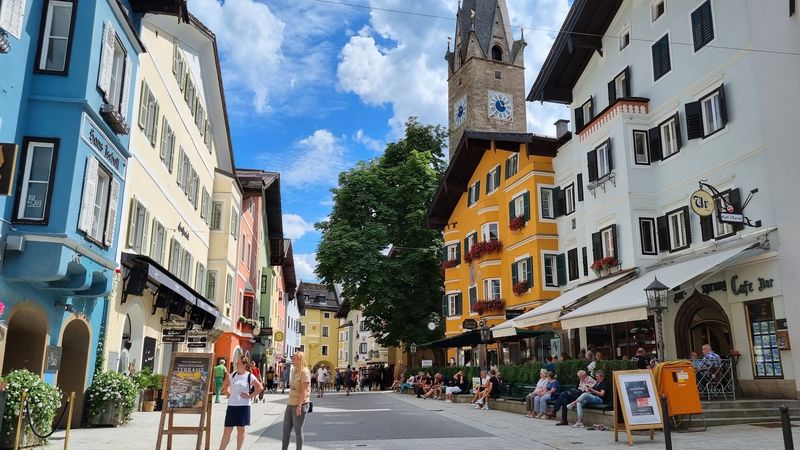
Austria has a reputation for elegant public transport, and that reputation is well-earned in Vienna. The capital’s tram network, U-Bahn subway, and regional rail connections make it entirely possible to live car-free in the city.
The national picture, however, tells a different story entirely.
The international comparison puts Austria at roughly 690 passenger cars per 1,000 residents, a figure that reflects life well beyond the Ringstrasse. Alpine valleys, ski resort towns, rural farming communities, and suburban areas surrounding smaller cities all rely heavily on private vehicles for everyday transport.
Cross-border transportation adds further complexity. Austria shares borders with eight countries, and many residents regularly drive across those borders for work, shopping, or leisure.
That cross-border traffic contributes to a vehicle culture that extends far beyond what any map of Vienna’s transit network would suggest. Austria is a useful reminder that a country’s most famous city can create a misleading impression of how the rest of the nation actually moves around.
Strip away the Viennese coffee-house lifestyle and you find a country where the car remains the dominant mode of transport for a substantial portion of daily life.
Germany
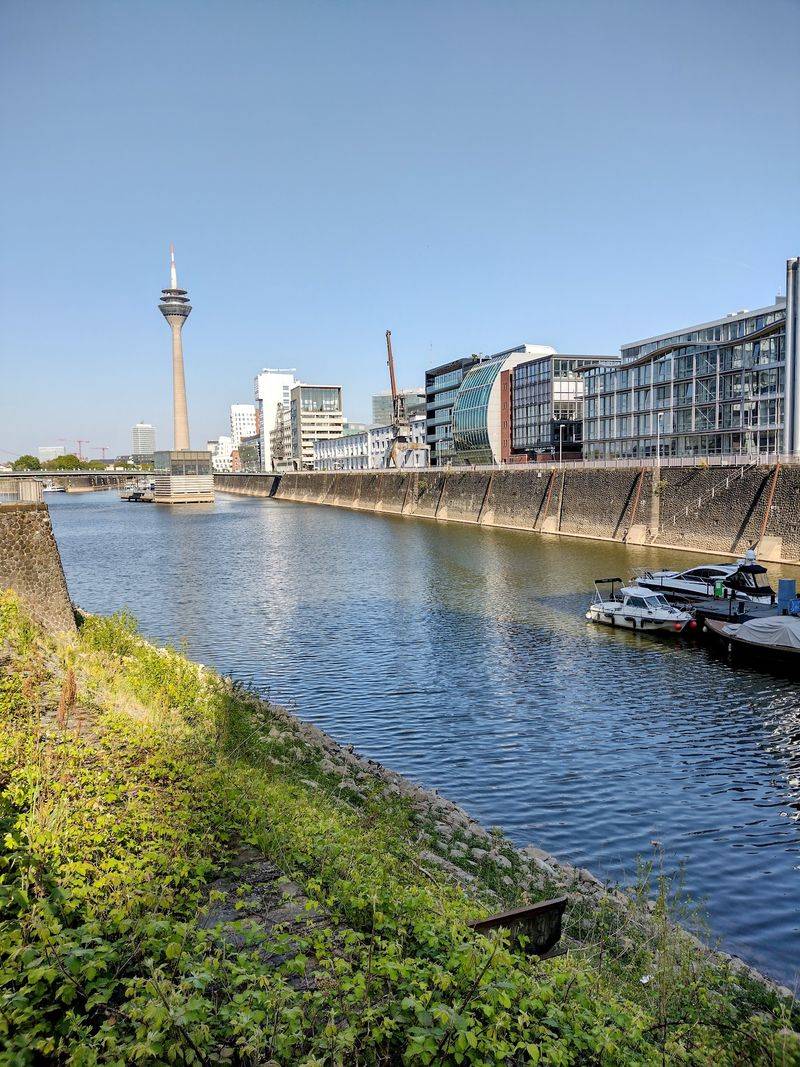
Germany rounding out this list feels almost poetic. The country that gave the world the Autobahn, Volkswagen, BMW, Mercedes-Benz, Porsche, and Audi records approximately 680 passenger cars for every 1,000 inhabitants in the standardized comparison.
Cars are not just transportation in Germany – they are a cultural institution with deep industrial roots.
The Autobahn network has become globally synonymous with driving freedom, and the automobile industry remains one of the most important pillars of the German economy. That cultural and economic weight keeps private vehicle ownership high even as alternatives improve.
Germany has extensive intercity rail, strong urban transit in major cities, and growing cycling infrastructure in places like Berlin, Hamburg, and Munich. Those alternatives have expanded considerably in recent years, yet they have not significantly dented the national passenger-car fleet relative to population.
Germany demonstrates that building better alternatives runs alongside, rather than replacing, private car ownership in a country where the automobile is genuinely part of the national identity. With one of the world’s largest passenger-car fleets relative to population, Germany closes this list in exactly the style you would expect from the birthplace of the modern automobile.
Share this story