There is a trail in Illinois where crumbling brick walls rise out of the trees, old iron structures stand half-buried in the earth, and the forest has quietly swallowed what was once one of the busiest industrial sites in the Midwest. The whole place feels like a secret that history forgot to erase.
A short walk from a regular parking lot leads you into what feels like an open-air museum frozen in time. The Joliet Iron Works Historic Site in Joliet, Illinois, sits right along the I&M Canal Trail and packs more fascinating history, atmosphere, and free outdoor adventure into a single visit than most places three times its size.
Whether you are a history fan, a casual hiker, or someone who just loves a good story written in stone and rust, this one is worth every step.
Where the Ruins Begin: Location and First Impressions
The address is 31 Columbia St, Joliet, IL 60432, and once you pull into the free parking lot, the first thing you notice is how ordinary it looks from the outside. A gravel lot, a picnic pavilion, some trees.
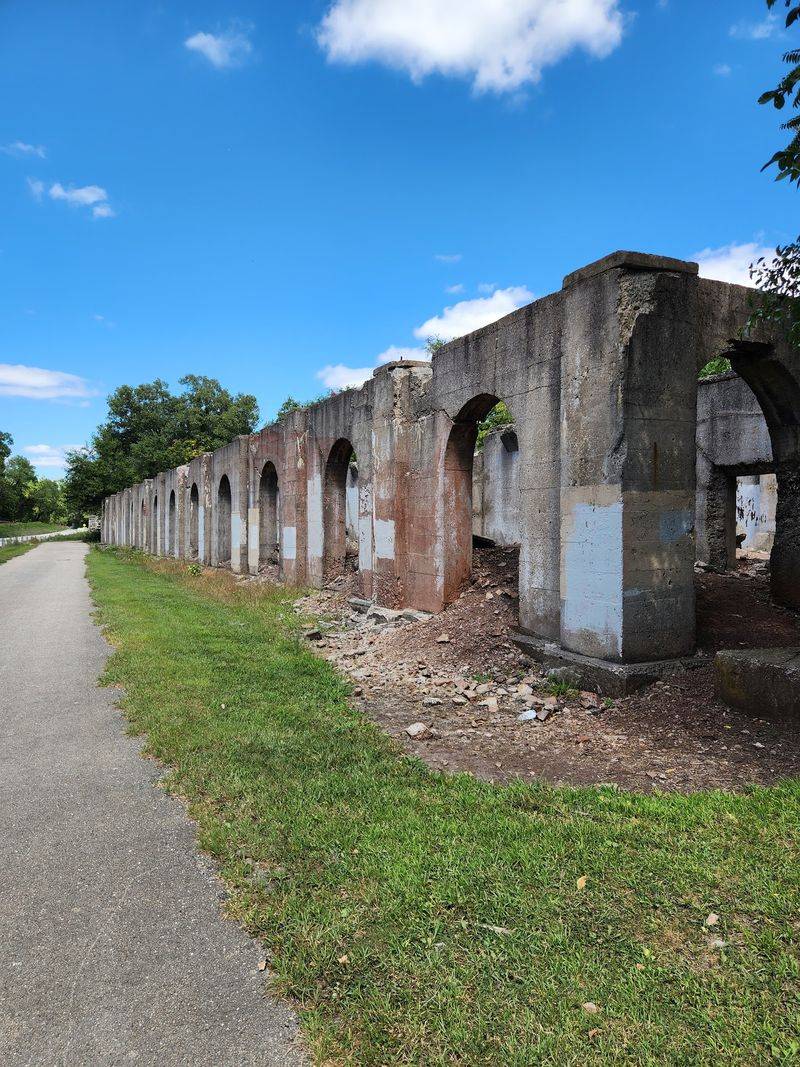
Then you take about twenty steps down the trail and the ruins appear.
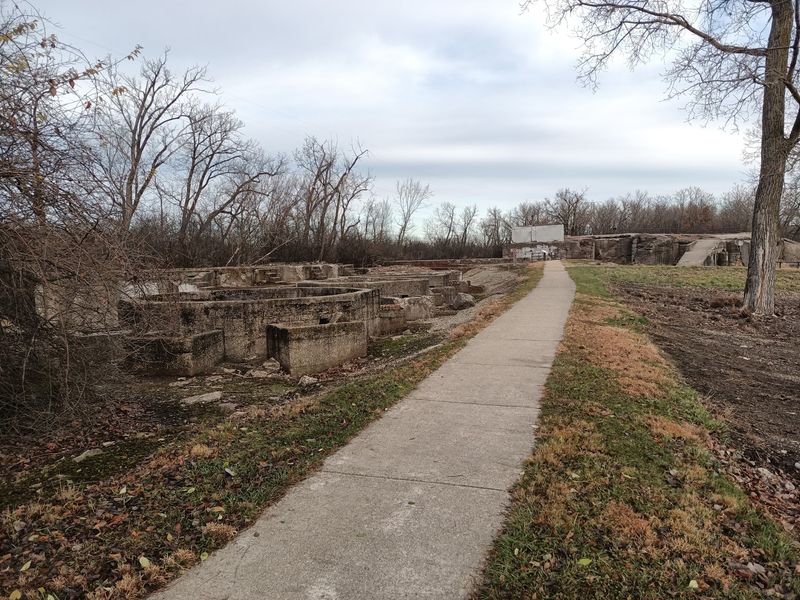
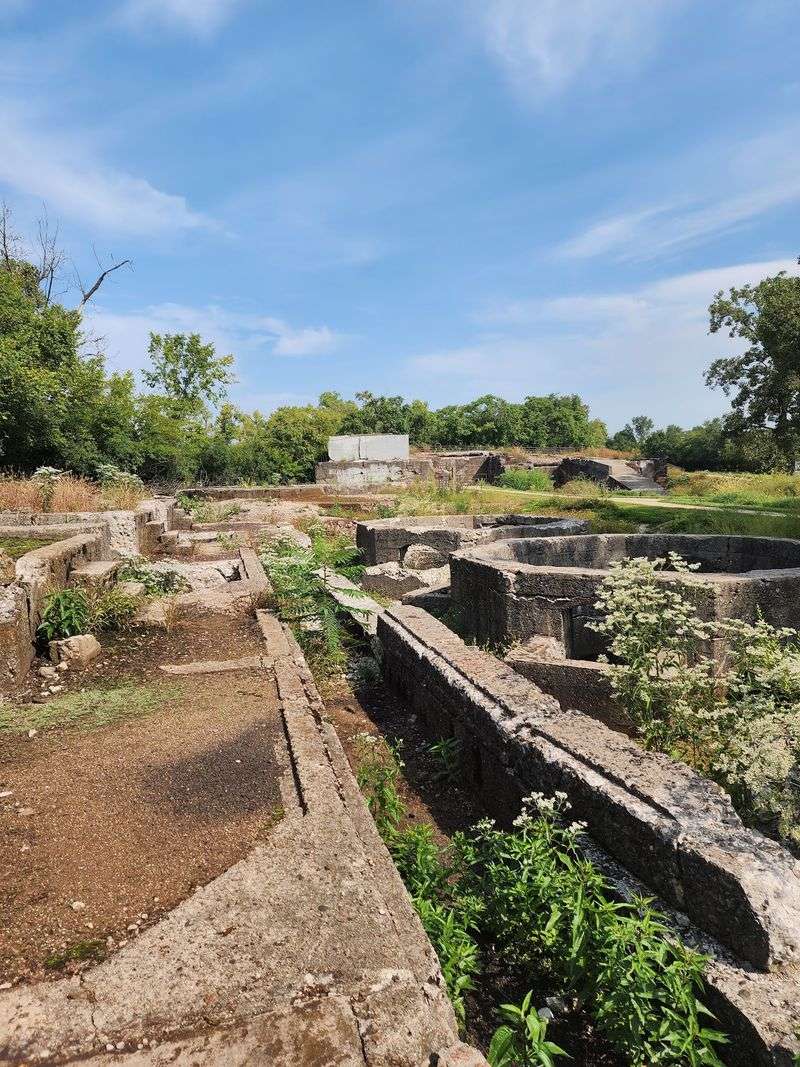
Massive brick walls jut out of the ground at odd angles. Iron beams lean against crumbling archways.
Moss creeps along surfaces that once glowed red-hot with molten metal. The transformation from ordinary park entrance to industrial ghost town happens fast, and it catches most first-time visitors completely off guard.
The site sits along the Illinois and Michigan Canal Trail in Joliet, which means it connects to a much longer trail system if you want to keep walking after exploring the ruins. The area is managed by the Forest Preserve District of Will County, and admission is always free.
Parking is free too, which makes it one of the best no-cost outdoor experiences in the entire state of Illinois.
The Story Behind the Steel: A Brief History of the Iron Works
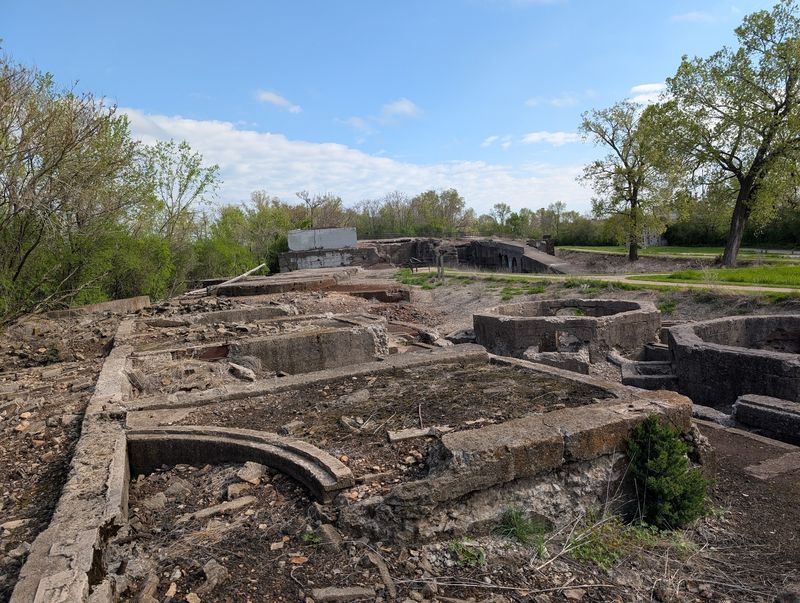
Long before the trees grew back and the vines took over, this site was a roaring industrial giant. The Joliet Iron and Steel Company opened in 1869 and quickly became one of the largest steel producers in the United States during the Gilded Age.
At its peak, the plant employed thousands of workers who labored in brutal heat, producing steel rails that helped build the railroads expanding across the country. The work was physically demanding, the hours were long, and the conditions were dangerous by modern standards.
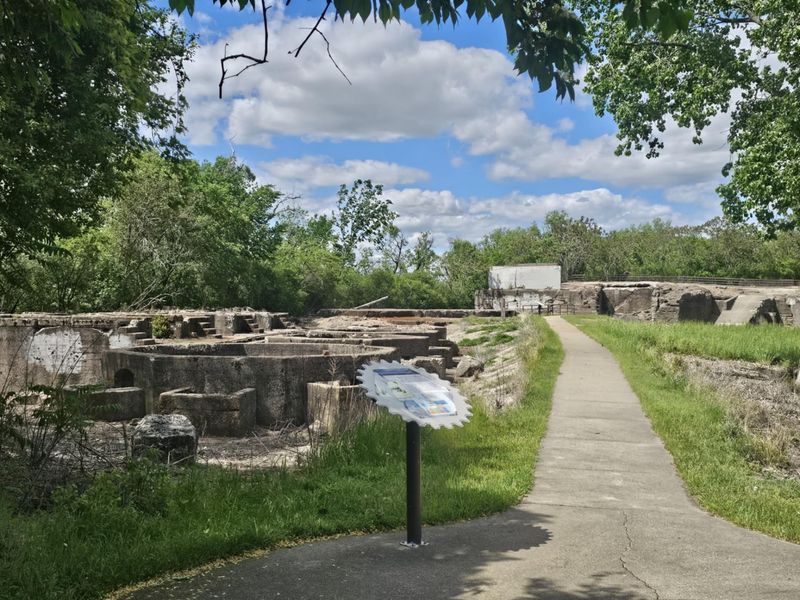
Some of the informational placards along the trail address this directly, giving visitors an honest look at what daily life was like for workers of that era.
The plant eventually closed in 1936 after years of decline, and the structures were left largely in place. Decades of weather, plant growth, and time did the rest.
What remains today is a remarkable collection of foundry ruins, brick furnaces, and iron remnants that tell the story of an industry that helped shape American infrastructure. Few places make that history feel this tangible.
Reading the Ruins: What the Placards Actually Tell You
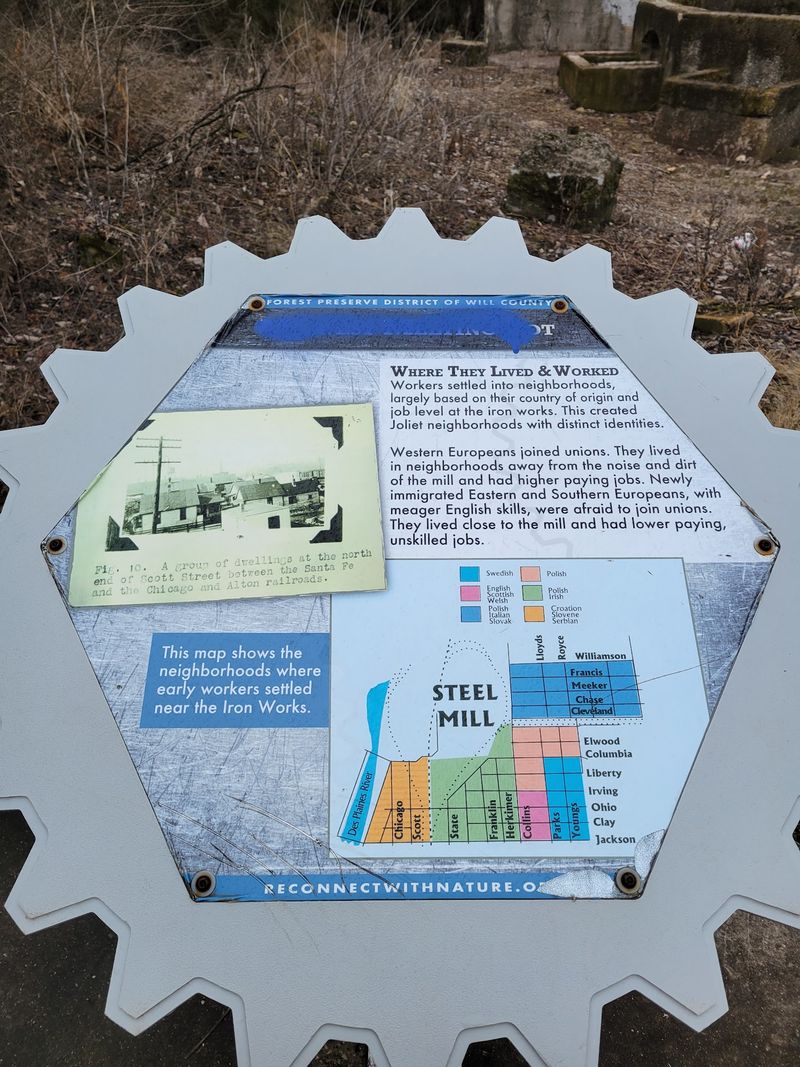
One of the smartest decisions the Forest Preserve District made was installing detailed informational signs throughout the site. These are not generic park signs.
They are specific, well-researched placards that explain what each structure was used for, who worked there, and what the production process actually looked like.
There is a timeline brick walkway near the start of the trail that lays out the history of the iron works in a visual and easy-to-follow format. Kids tend to respond well to it, and adults often stop longer than they expect to.
Some placards focus on the labor history, including the role of unions in the steel industry, which adds a layer of social history that goes beyond just describing old buildings.
A few of the signs have unfortunately been vandalized over the years, which is a genuine shame because the ones that remain intact are genuinely informative. The overall educational value of the trail is high, and most visitors leave knowing something real about American industrial history that they did not know before they arrived.
That is a rare thing for a free outdoor site to pull off so well.
The Atmosphere: Why This Place Feels Genuinely Eerie
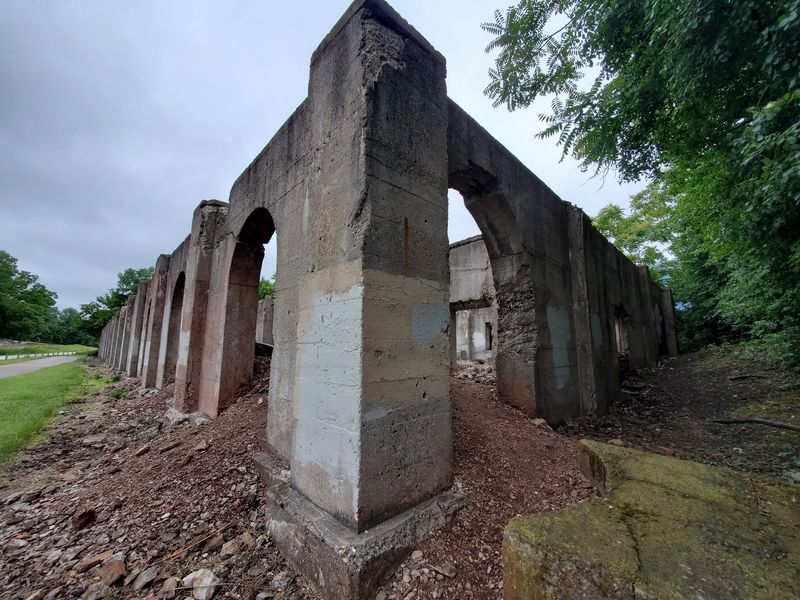
There is something about the combination of crumbling industrial structures and dense woodland that creates a mood unlike anything else in the Chicago metro area. The ruins at this site are not behind glass or roped off at a comfortable distance.
They are right there, close enough to touch, and the scale of them is striking.
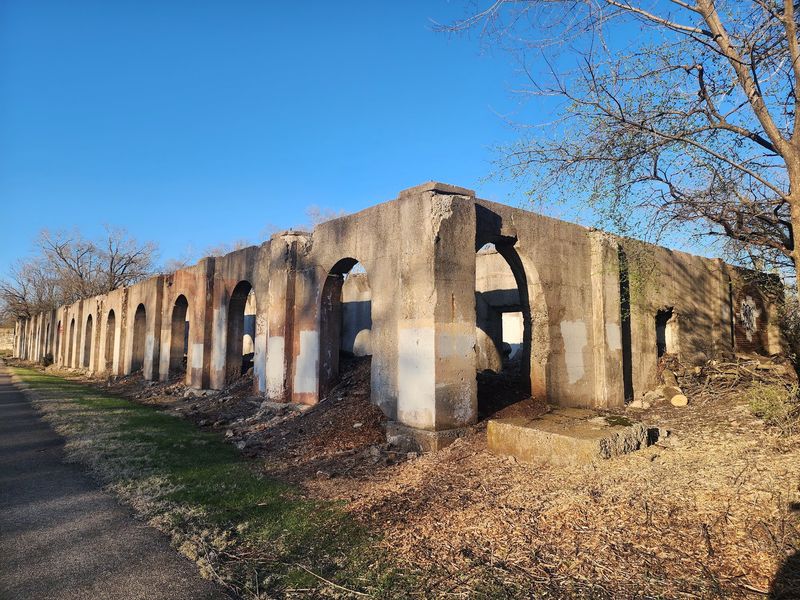
Brick archways frame views of the tree canopy above. Rusted iron structures cast long shadows across the gravel path.
In the fall, the native prairie grasses and wildflowers that grow around the ruins add a layer of color that makes the whole scene feel almost painterly. In winter, the bare trees reveal the full skeletal structure of the remaining buildings in a way that summer growth hides.
Several visitors have described the atmosphere as creepy in the best possible way. The old Joliet Prison is visible in the background from certain points along the trail, which adds to the feeling that you have wandered into a corner of Illinois that time treated differently than the rest.
That backdrop makes for genuinely striking photographs and a memorable visual experience.
The Trail Itself: What to Expect on Your Walk
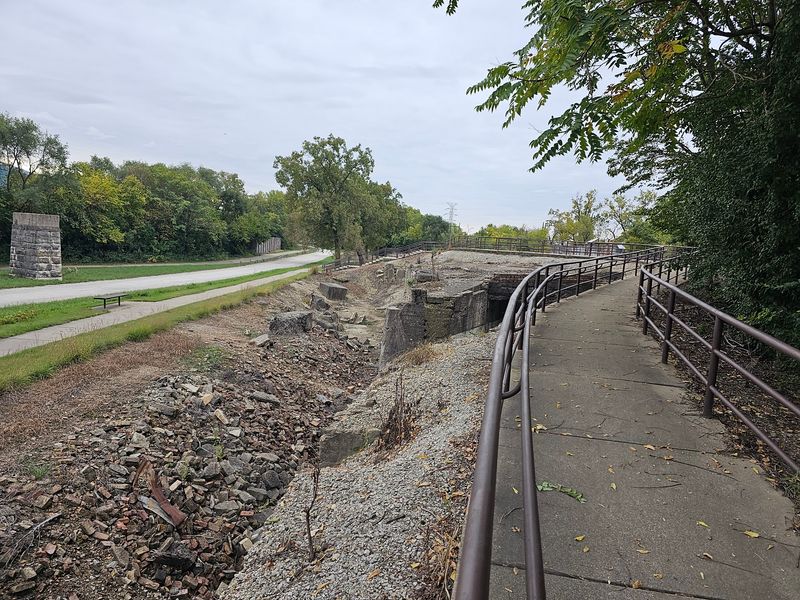
The main trail at the Joliet Iron Works Historic Site is paved and relatively flat, which makes it accessible for a wide range of visitors. Strollers can handle it, and so can anyone who prefers a casual walk over a strenuous hike.
The round trip through the ruins and back is roughly two miles, which takes most people between forty-five minutes and an hour and a half depending on how long they stop to read the signs.
Beyond the main ruins area, the trail connects to the I&M Canal Trail, which opens up longer walking and biking options for those who want more distance. The canal trail is well-maintained and runs through a genuinely pleasant stretch of Illinois landscape with small ponds and natural woodland on either side.
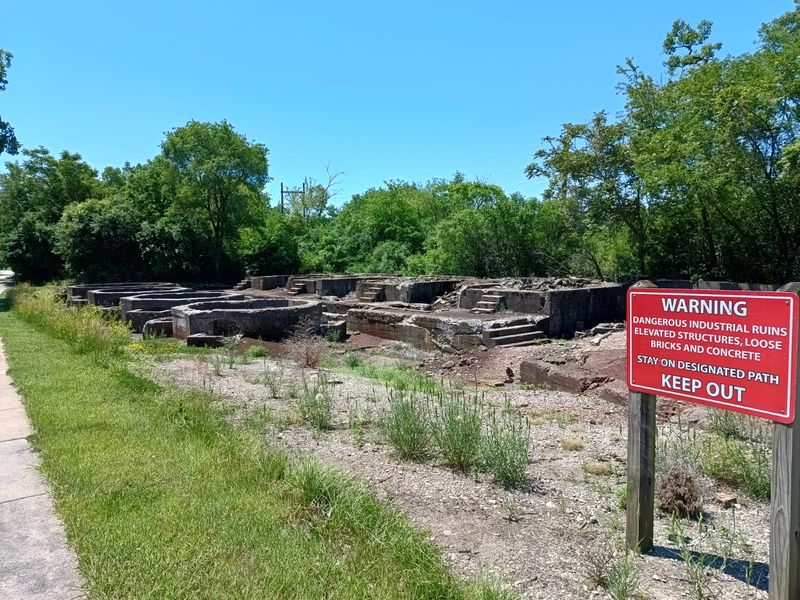
One practical note worth mentioning: watch your footing near the ruins themselves. The paved path is smooth, but if you step off it to get a closer look at a particular structure, the ground can be uneven and there are occasionally nails or debris from decades of decay.
Staying on the marked path keeps things safe and still gives you excellent views of everything worth seeing.
Biking the Canal Trail: A Two-Wheeled Extension of the Visit
The bike trail connection at this site is one of its most underrated features. The I&M Canal Trail runs directly past the Joliet Iron Works, and cyclists can park at the same free lot, explore the ruins on foot, and then hop on their bikes to continue along the canal for as long as they like.
The trail surface is well-maintained and appropriate for road bikes, hybrid bikes, and mountain bikes alike. The scenery along the canal section is quiet and green, with the water visible through the trees and the sounds of the city fading quickly once you get moving.
Trains pass by occasionally, which adds a surprisingly enjoyable industrial soundtrack to the ride.
For families with older kids who can handle a longer outing, combining the ruins walk with a bike ride along the canal makes for a genuinely full day of outdoor activity without spending a single dollar on admission. The site closes at sundown, so planning an early arrival gives you the most flexibility to do both the walking and cycling portions comfortably before the light fades.
Bring water and a snack, and you are set.
Family-Friendly Features: Bringing Kids Along
Families show up here regularly, and for good reason. The free admission removes one of the biggest barriers to a spontaneous weekend outing, and the combination of outdoor exploration and hands-on history keeps kids engaged in a way that a traditional museum often struggles to do.
The picnic pavilion near the parking lot is a practical bonus. Families can pack a lunch, spend a couple of hours exploring the trail and ruins, and then settle in at the pavilion for a meal before heading home.
Benches and tables are available throughout the site as well, so there are plenty of spots to rest if younger children need a break mid-walk.
The trail is stroller-friendly on the paved sections, though parents should keep small children close near the ruins. The structures are fenced in the most hazardous areas, but curious kids can still find ways to get into tricky spots if left unsupervised.
The educational placards are written clearly enough that older children can read them independently, which turns the walk into a low-pressure history lesson that actually sticks. It is the kind of outing that families tend to remember and return to.
The Old Joliet Prison in the Background: A Bonus Landmark
From certain points along the trail, you can see the old Joliet Correctional Center looming in the distance behind the ruins. The prison closed in 2002 and has taken on a second life as a cultural landmark, partly famous for its appearance in the Blues Brothers film and later in the television series Prison Break.
You cannot access the prison grounds from the Iron Works trail, and the area beyond the fence is clearly marked as off-limits. But the visual of those old stone walls rising above the tree line while you stand among iron furnace ruins creates a layered sense of history that is hard to find anywhere else in the region.
Both sites are within walking distance of each other in Joliet, and some visitors make a day of exploring both. The old prison offers separate tours through a different organization, so checking their schedule before your visit is worth the effort if the history of the correctional facility interests you.
Together, the two sites paint a vivid picture of Joliet’s industrial and civic past that goes well beyond what any single attraction could deliver on its own.
Photography at the Site: Getting the Best Shots
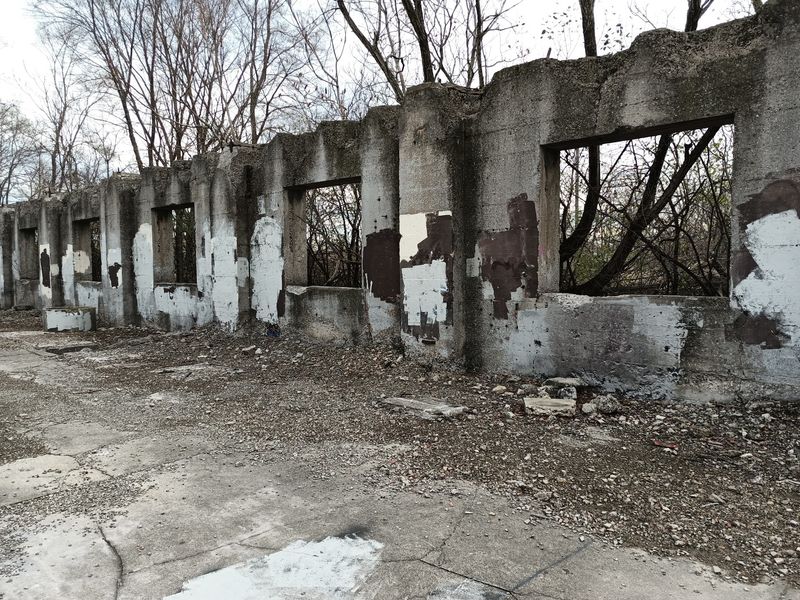
Few places in the Chicago area give photographers this much to work with at no cost. The ruins offer a variety of compositions: close-up textures of weathered brick, wide shots of iron structures against the sky, and mid-range frames that capture the contrast between industrial decay and natural regrowth.
The lighting changes dramatically depending on the season and time of day. Early morning visits in the fall produce some of the most striking conditions, when low-angle light hits the rusted iron and the prairie grasses glow gold around the brick walls.
Overcast days also work well for ruin photography because the soft, even light brings out surface detail without harsh shadows.
The fenced-off sections of the site limit how close you can get to some of the most visually interesting structures, but the views from the trail are still excellent and require no trespassing to capture. Bringing a wide-angle lens helps with the larger structures, while a standard lens handles the placard details and texture shots beautifully.
The rusted metal surfaces, the mossy brick, and the encroaching forest provide a natural color palette that almost every camera handles well without much editing afterward.
Safety and Practical Tips for Your Visit
The site has a reputation for being safe and well-managed, and the Forest Preserve District maintains a police presence in the parking lot and along the trail. That said, a few practical details are worth knowing before you go.
The trail closes at sundown, so arriving at least two hours before dark gives you enough time to complete the full walk without feeling rushed. Restrooms are available on-site during the warmer months, and portable facilities are near the trailhead as well.
The parking lot is free and spacious enough to handle weekend crowds without much trouble.
Wearing closed-toe shoes is a smart call here. The paved trail is smooth, but stepping off it near the ruins means encountering uneven ground, loose debris, and occasionally broken glass left by people who visit after hours.
Staying on the marked path eliminates most of those concerns. Dogs are welcome on leash, which makes the site a popular choice for pet owners who want a walk with more visual interest than a standard neighborhood park.
The phone number for the site is +1 815-727-8700 if you need to confirm hours or ask specific questions before visiting.
Labor History and Union Culture: A Deeper Layer
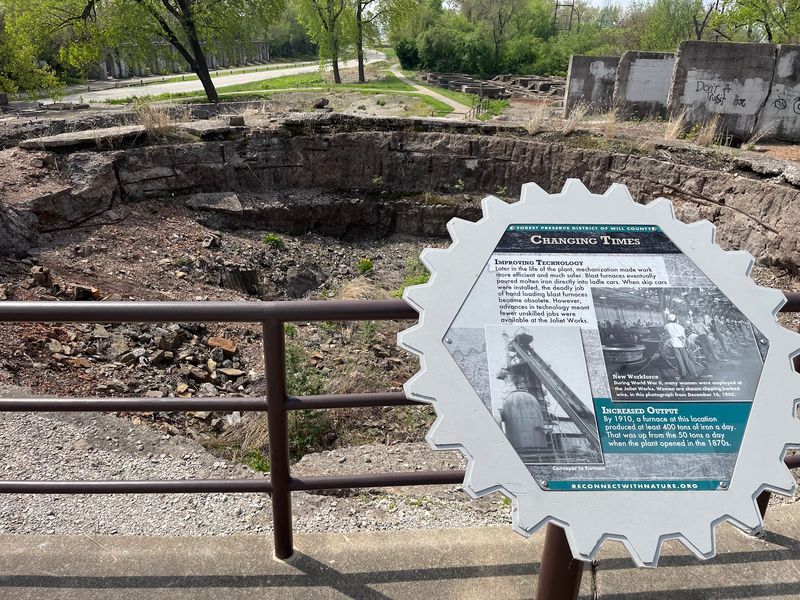
Steel production in the 19th and early 20th centuries was not just an industrial story. It was a human one, shaped by the men who worked the furnaces and the labor movements that fought to improve their conditions.
The Joliet Iron Works Historic Site takes this seriously, and several of the trail placards address the labor history of the plant in direct and honest terms.
Workers at the original Joliet Iron and Steel Company faced long shifts, high temperatures, and significant physical risk. The rise of labor unions in the steel industry was directly tied to conditions like those that existed at this plant.
For anyone with a personal or professional connection to union labor, the site carries an extra layer of meaning that goes beyond the visual spectacle of the ruins.
One visitor noted that the site is especially meaningful for people who work in labor unions today, and that perspective adds a dimension to the visit that purely architectural or industrial history sites rarely offer. The placards do not shy away from the harder parts of the story, which makes the educational experience feel complete rather than sanitized.
History told honestly tends to stick, and this site understands that well.
Best Times to Visit and Final Thoughts on the Experience
Fall is the season most visitors point to as the best time for this trail. The native prairie grasses turn golden, the deciduous trees add color to the canopy above the ruins, and the cooler temperatures make walking comfortable for longer stretches.
Spring is a close second, when the wildflowers around the foundry remains bloom and the whole site feels refreshed after winter.
Summer visits are perfectly enjoyable but the heat and full tree cover can make the ruins feel a bit more enclosed. Winter strips the trees bare and reveals structural details that leafy growth hides the rest of the year, which appeals to photographers and architecture enthusiasts willing to bundle up for the walk.
The Joliet Iron Works Historic Site is one of those places that rewards repeat visits because each season genuinely changes how it looks and feels. A first visit gives you the history and the layout; return trips let you slow down, notice smaller details, and appreciate how the natural world has reclaimed this industrial space over nearly a century.
For a free afternoon in Illinois, few trails offer this much to think about long after you have driven home.
Share this story