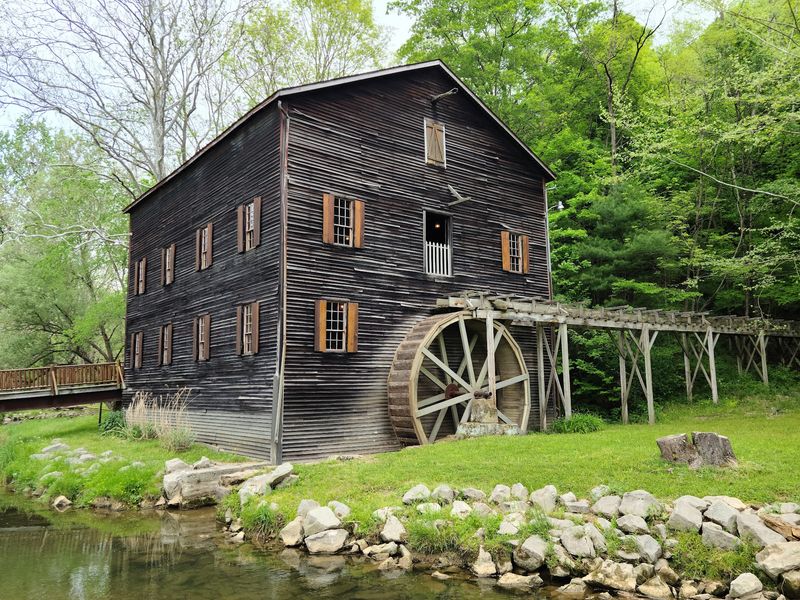
Tucked along a quiet stretch of Ohio Route 3 near Loudonville, Wolf Creek Grist Mill has been turning grain into flour the same way it did more than a century ago. Most people drive past without a second glance, which is exactly what makes discovering it feel like stumbling onto a well-kept secret.
The mill sits beside a small, clear creek, surrounded by log cabins and antique farm buildings that transport you straight back to the 1800s. For Ohioans who love finding surprising pieces of history hiding in plain sight, this place is the real deal.
Wolf Creek Grist Mill and Its Place on the Ohio Map
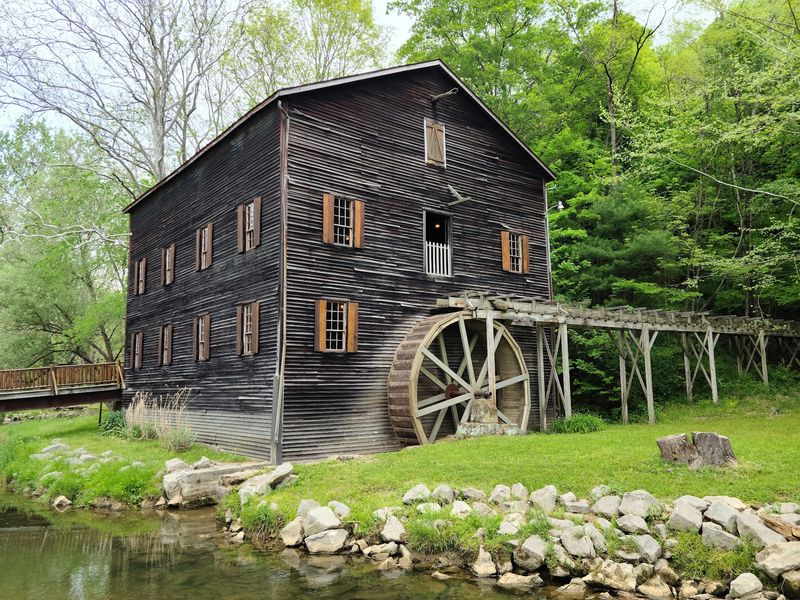
Perched at 3175 OH-3 in Loudonville, Ohio 44842, Wolf Creek Grist Mill is one of those rare places that earns its reputation simply by existing. Loudonville sits in Ashland County in north-central Ohio, right on the edge of Mohican Country, a region already beloved by Ohioans for its natural beauty and outdoor recreation.
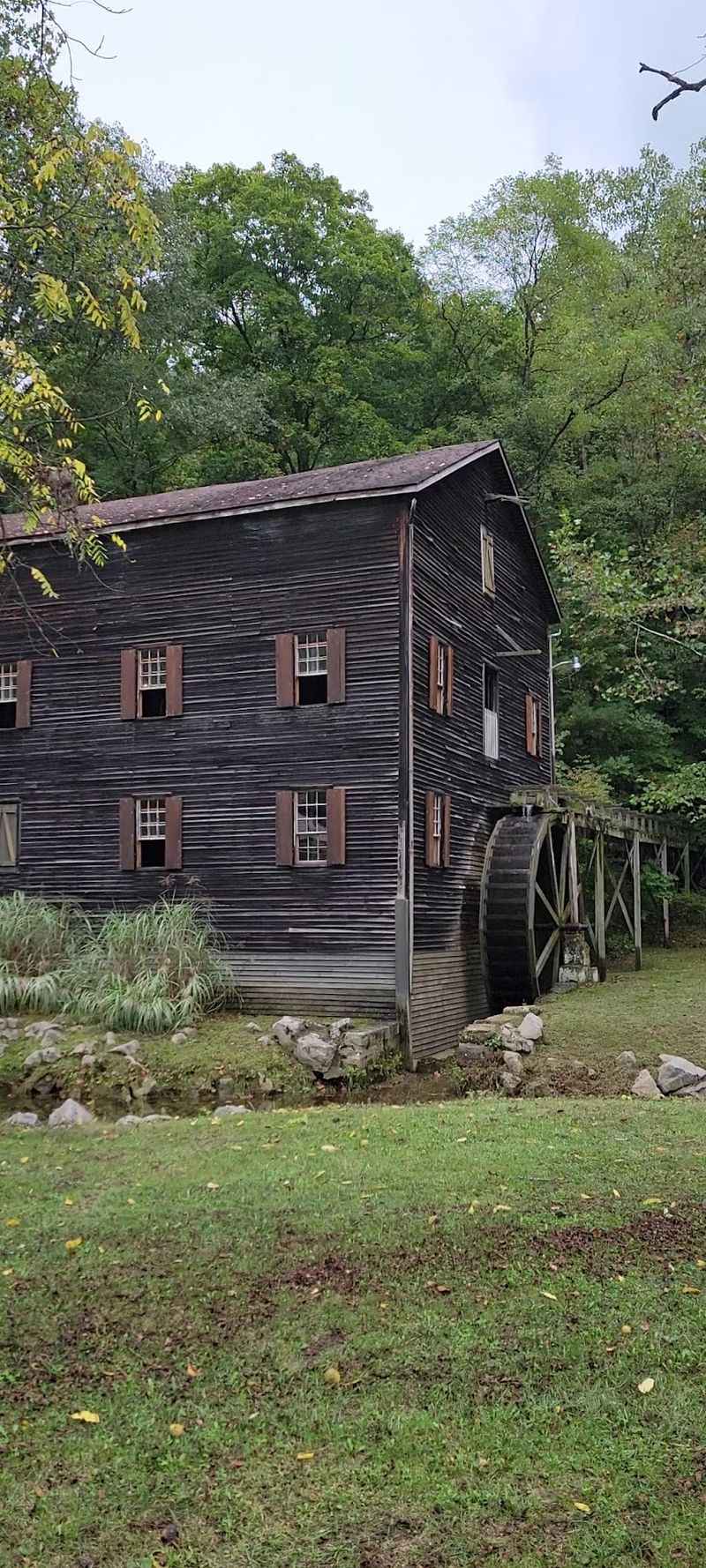
The mill is categorized as a museum, but calling it just a museum undersells the experience by a wide margin. What greets you is a full pioneer-era complex: a working grist mill beside a small stream, historic log cabins, and a collection of outbuildings that together paint a vivid picture of rural Ohio life generations ago.
Getting here is straightforward. From Loudonville’s town center, the site is a short drive south on OH-3, easy to spot from the road.
Parking is free, and the grounds are open to explore even when the buildings are closed, which makes it a flexible stop no matter when you pass through Mohican Country.
The History Behind the Millstone
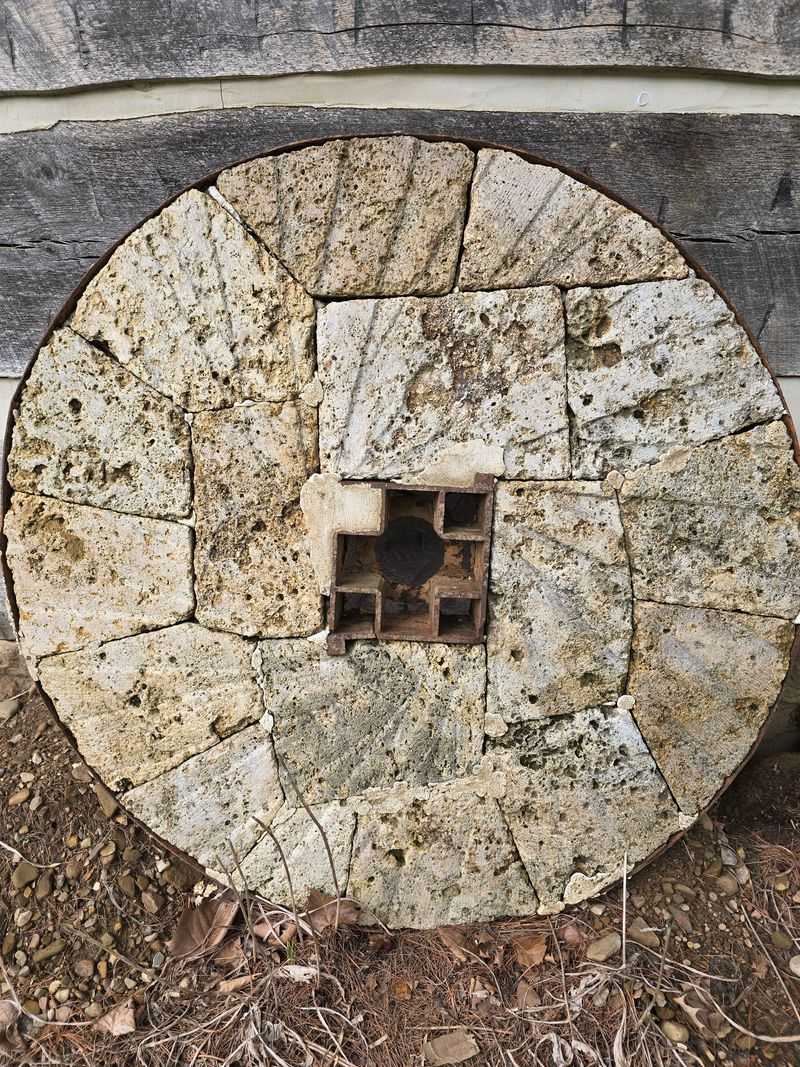
Grist mills were the backbone of early American rural life. Before grocery stores and commercial flour suppliers, every farming community depended on a local mill to grind corn and grain into the staples that fed families through long Ohio winters.
Wolf Creek Grist Mill represents that essential chapter of Ohio’s agricultural past. The mill was moved to this location and carefully preserved, meaning the structure itself carries the weight of real history rather than a modern reconstruction.
The machinery inside dates to the era it represents, giving the whole place an authenticity that is increasingly hard to find.
Interpretive signs throughout the property explain how the mill worked, breaking down the mechanics of water-powered grinding in language that makes sense even if you have never thought much about how flour gets made. The educational layer here is genuine, not just decorative.
Families with curious kids will find plenty to spark a real conversation about where food comes from and how hard people worked to produce it.
Water, Wheel, and the Creek That Powers It All
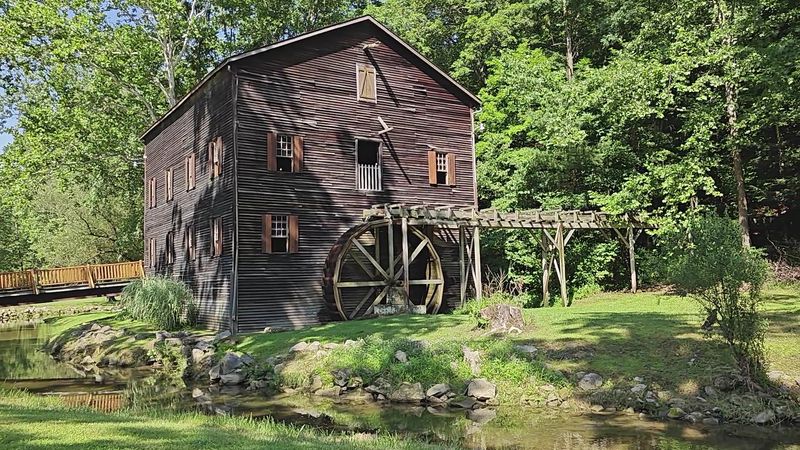
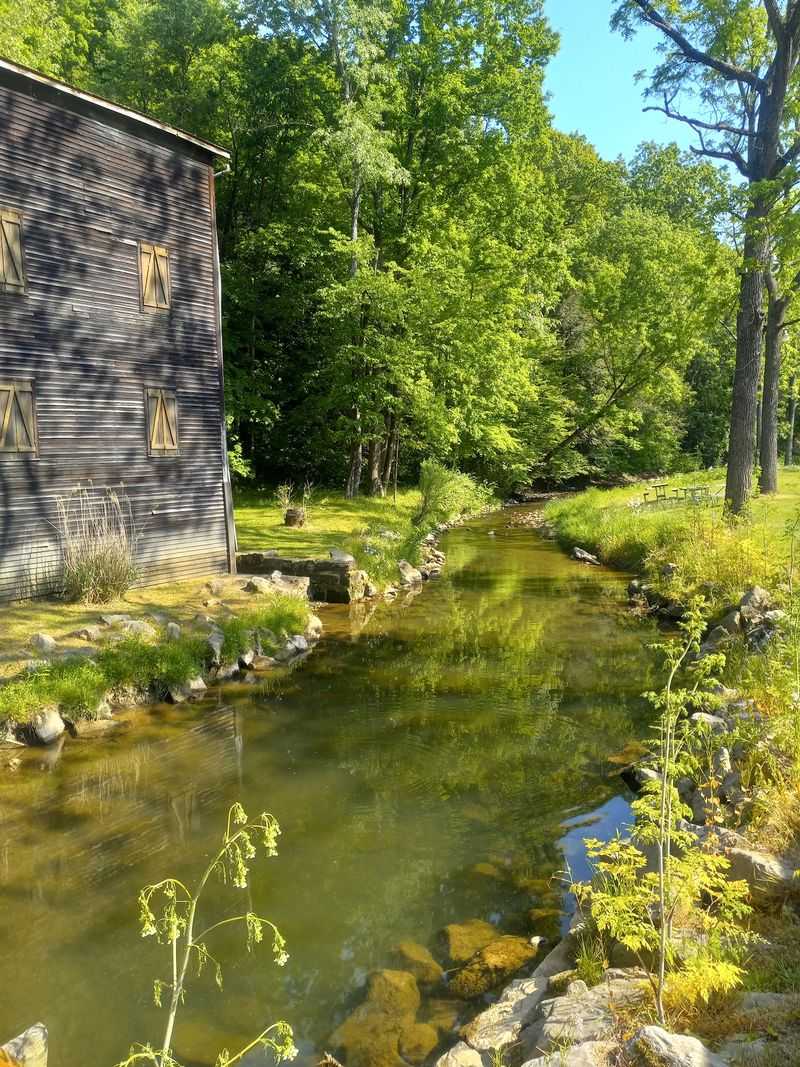
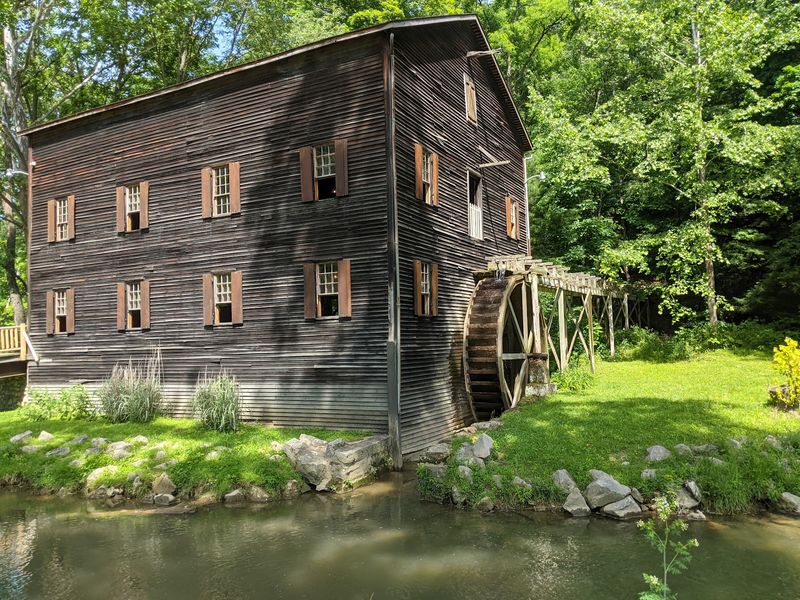
A small stream runs right in front of the mill, and it is not just scenic backdrop. The water wheel that harnesses the creek’s flow is the beating heart of the entire operation, converting moving water into the rotational force needed to spin the millstone above.
Watching the wheel turn is quietly hypnotic. There is something grounding about seeing a machine that requires no electricity, no fuel, and no complicated electronics to do its job.
The creek keeps moving, the wheel keeps turning, and the stone keeps grinding, exactly as it has for generations.
The setting around the creek is genuinely beautiful. The combination of the old wooden mill, the sound of running water, and the surrounding Ohio landscape creates a scene that feels lifted from a painting.
Many visitors mention that the exterior alone is worth the stop, and on a clear afternoon, it is hard to argue otherwise. Picnic tables near the stream offer a peaceful spot to sit and take it all in.
A Pioneer Village Hidden Along the Road
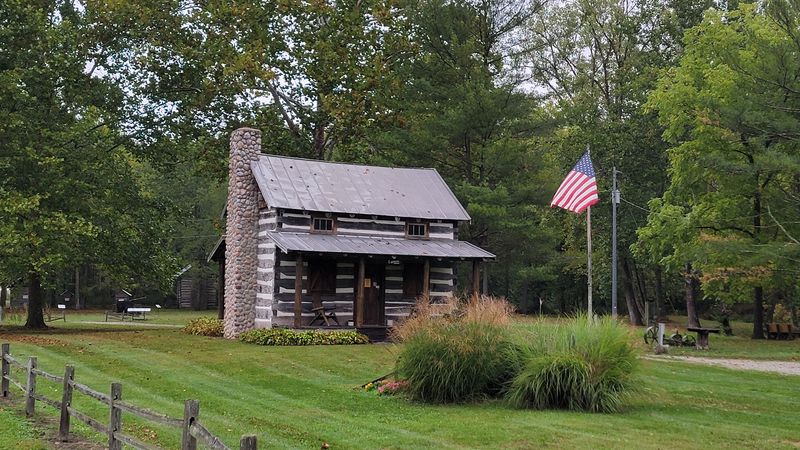
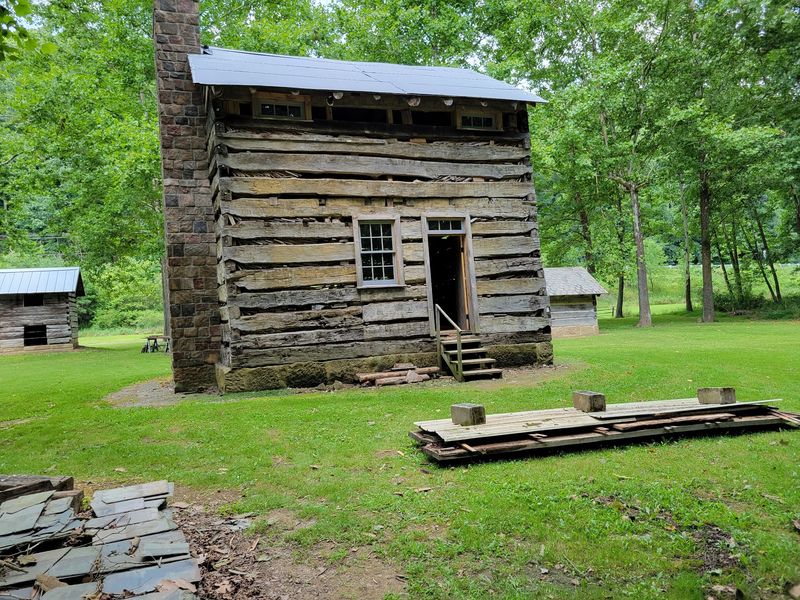
The grist mill is the headline act, but the supporting cast of historic structures surrounding it is just as compelling. Log cabins built in the colonial era stand in close proximity to the mill, along with a corn crib, a barn, a main house, and even an outhouse that completes the picture of 19th-century rural life.
Each building has its own story, and the on-site signage does a solid job of connecting the dots between structures. The corn crib in particular is a detail that often surprises visitors who did not expect to find such a complete agricultural collection in one compact space.
One reviewer described the property as a pioneer village, which is an accurate way to frame it. Rather than a single landmark, Wolf Creek presents a cluster of preserved history that collectively tells the story of how Ohio settlers lived, worked, and survived.
The number of buildings on the property, frequently noted in visitor feedback, tends to catch first-timers off guard in the best possible way. More than a dozen structures create a sense of stepping into a fully realized historical world.
Old Machines and the Stories They Tell
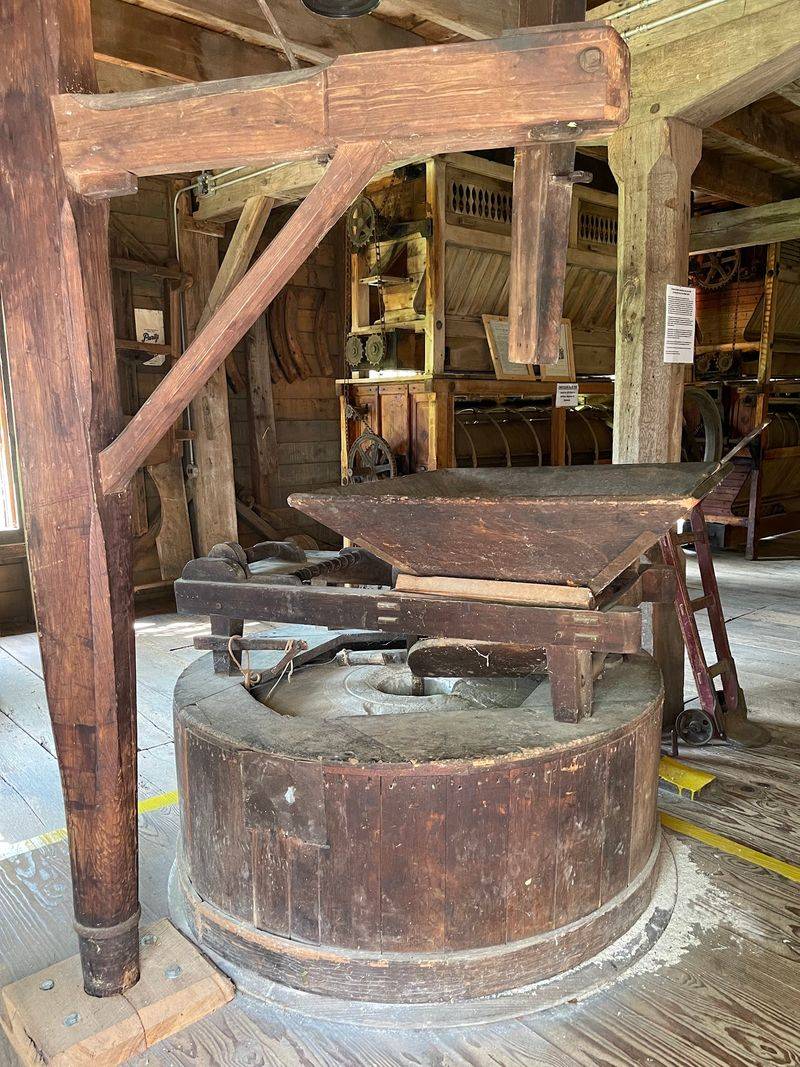
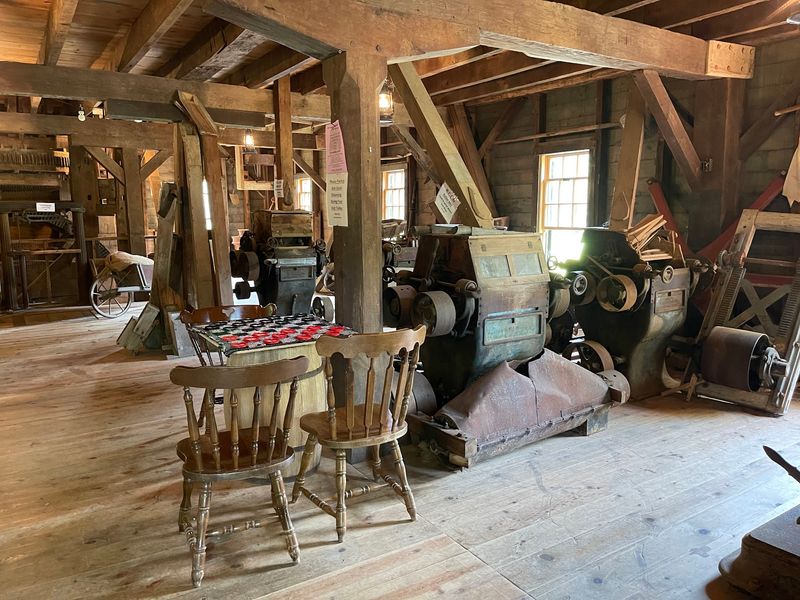
Few things communicate the ingenuity of earlier generations as clearly as their machines. Inside the mill building, a collection of old equipment tells the story of grain processing in a way that no textbook could replicate.
The machinery is dense, purposeful, and genuinely fascinating to examine up close. Gears, belts, chutes, and grinding mechanisms that once operated as a coordinated system fill the interior, and the volunteer guides who lead tours bring each piece to life with context and explanation.
What stands out is how well everything has been maintained. Nothing looks neglected or dusty in the way that some historical collections can feel.
The care taken to preserve the machinery reflects the dedication of the people behind the mill, who treat the equipment not as a relic but as a working part of an ongoing story. For anyone who appreciates mechanical craftsmanship, the interior of the mill is a genuine highlight, and the guided explanation of how it all connects is worth every minute.
Volunteer-Run and Proud of It
There is a particular kind of warmth that comes from a place run entirely by people who genuinely care about what they are preserving. Wolf Creek Grist Mill is staffed by volunteers, and that fact shapes the entire visitor experience in the best way possible.
The guides here are not reading from a script or checking a clock. They are enthusiasts, historians at heart, and storytellers who know the property’s background in real depth.
One volunteer known as the MillKeep has earned particular praise for his willingness to share the stories behind the cottage and other structures, turning a quick stop into a genuinely memorable visit.
Volunteers also staff the log cabin across from the mill, offering educational context about daily life during the colonial period. The conversations that happen in these buildings tend to linger with visitors long after they leave.
A place run on donated time and genuine passion has a character that no paid attraction can easily replicate, and Wolf Creek has that quality in abundance.
Hiking Trails and the Grounds Beyond the Mill
Beyond the mill and cabins, the property opens up into something more active. A short, well-marked hiking trail runs behind the mill, offering a chance to stretch your legs and absorb a bit of the surrounding Ohio countryside.
The trail is described as manageable and clearly signed, making it accessible for most visitors without requiring any special preparation. It adds a natural dimension to what might otherwise be a purely historical stop, blending a light outdoor experience with the cultural visit.
The grounds as a whole are open to explore at any time, even on weekdays when the buildings are closed. That means the property functions as a quiet green space as much as a museum, which expands its appeal considerably.
Families can let kids run across the grass, history buffs can photograph the buildings, and anyone who just wants a peaceful few minutes beside a creek can find that here too. Free parking makes the whole thing even easier to justify as a spontaneous detour on any drive through the Mohican area.
Oktoberfest and Colonial Days at the Mill
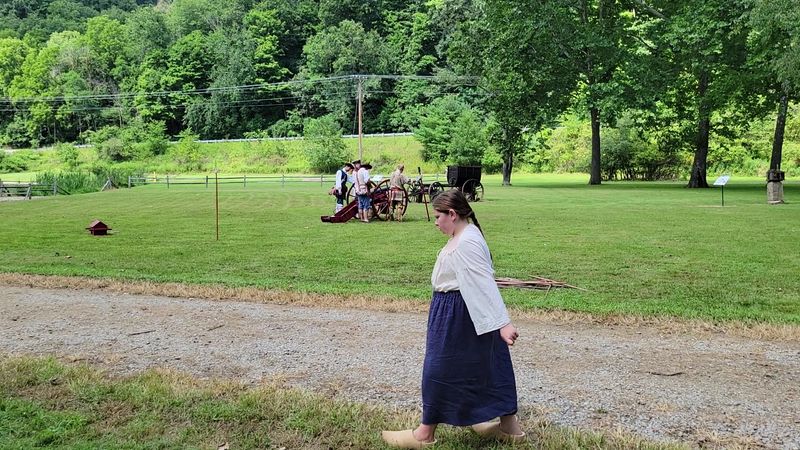
Some of the most memorable visits to Wolf Creek happen during its special events, and two in particular draw notable crowds each season. Colonial Days brings the pioneer village to life with demonstrations, period activities, and an atmosphere that goes well beyond what a standard weekend tour offers.
Oktoberfest, held at the end of September, closes out the public season in style. The event has generated consistent buzz among visitors who mention it as a highlight of the fall calendar in the Loudonville area.
The combination of the historic setting and a festive seasonal gathering creates something genuinely different from the typical Ohio autumn event.
Both events represent the mill at its most vibrant, with more buildings open, more demonstrations running, and more of the volunteer community present and engaged. If your schedule allows you to plan a visit around one of these occasions, the experience is considerably richer than a standard weekend drop-in.
The mill’s public tour season runs from Memorial Day weekend through the last weekend in September, with Oktoberfest marking the grand finale each year.
What a Donation-Based Visit Actually Means
One of the more refreshing aspects of visiting Wolf Creek Grist Mill is the admission structure, or more accurately, the lack of a fixed one. Tours are offered by donation, meaning you pay what you feel the experience is worth rather than a set ticket price.
That model works particularly well here because the experience genuinely earns generosity. Visitors who come with cash to contribute are supporting a volunteer-run preservation effort that receives no guarantee of steady funding.
The people keeping this mill alive are doing it out of dedication, and a few dollars in the donation box goes directly toward maintaining the buildings, the machinery, and the grounds.
Bringing cash is worth planning ahead for, since there is no card reader waiting at the entrance. The grounds are free to walk at any time, and even a visit on a closed weekday offers real value for photographers, history enthusiasts, or anyone who simply wants a quiet moment beside an old creek.
The donation model makes Wolf Creek one of the most accessible historical sites in north-central Ohio, lowering the barrier for families and spontaneous visitors alike.
The Atmosphere That Sets Wolf Creek Apart
A 4.7-star rating across 184 reviews is not something a place earns by accident. Wolf Creek Grist Mill has built that reputation on something harder to manufacture than a fancy renovation: genuine atmosphere.
The combination of the small stream, the weathered log structures, the sound of the water wheel, and the absence of commercial noise creates a setting that feels removed from ordinary Ohio in the best possible sense. Visitors consistently describe the property as peaceful, beautiful, and calming, words that come up again and again without prompting.
Part of what makes the atmosphere work is what is not here. There are no loud attractions, no gift shop demanding your attention, no artificial activities competing for your focus.
The mill and its surroundings are simply allowed to be what they are, and that restraint is surprisingly powerful. Whether you arrive during a busy weekend event or on a quiet afternoon when you have the grounds almost entirely to yourself, the mood of the place holds steady.
That consistency is a mark of something well cared for and honestly presented.
Who Will Love This Place Most
Wolf Creek Grist Mill is the kind of place that works for a surprisingly wide range of people, which is part of why it has sustained such strong visitor satisfaction over the years.
History enthusiasts will find plenty to engage with, from the machinery inside the mill to the colonial-era log cabins and the interpretive signage that ties it all together. Families with school-age children get a hands-on history lesson that holds attention far better than a textbook ever could.
The volunteer guides bring a human element that makes learning feel like a conversation rather than a lecture.
Photographers will appreciate the visual richness of the property, where the interplay of old wood, flowing water, and Ohio greenery creates compositions that are hard to replicate elsewhere. Campers and outdoor enthusiasts already in the Mohican area will find it a natural addition to any itinerary.
Even travelers who are not particularly interested in history often find themselves lingering longer than expected, drawn in by the setting and the quiet authenticity of the experience. The mill is genuinely good for kids of all ages, as one longtime visitor put it.
Hours, Season, and Planning Your Visit
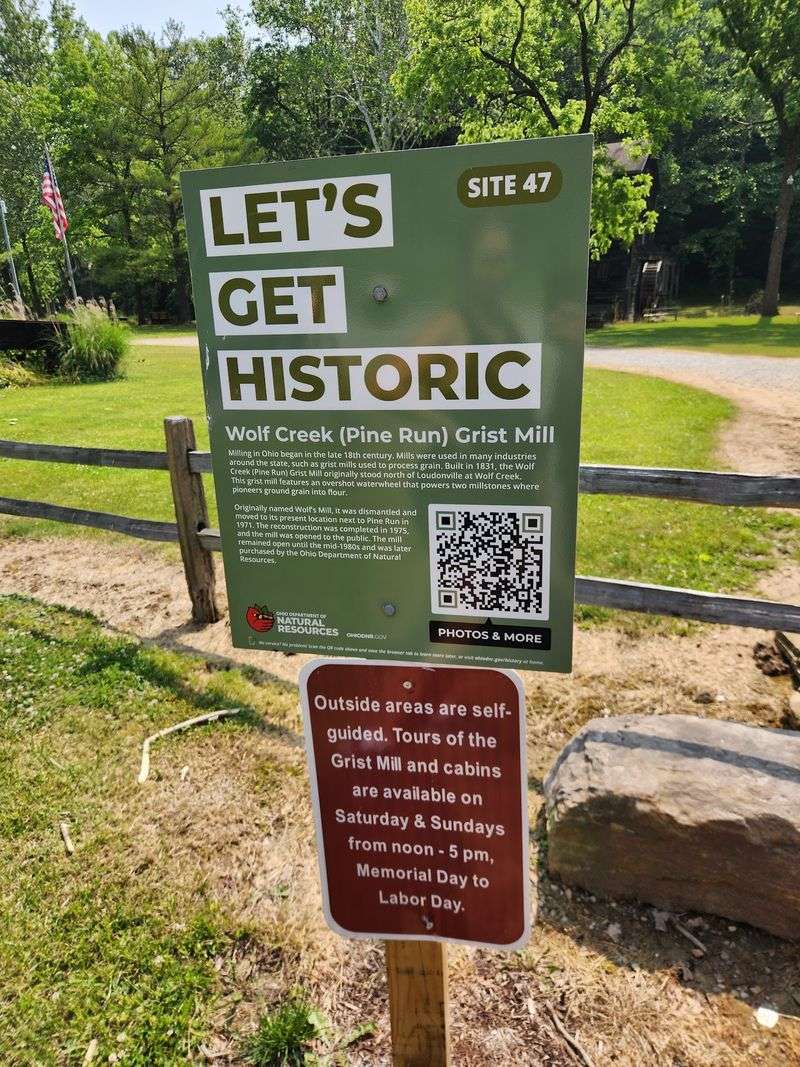
Planning a trip to Wolf Creek Grist Mill requires a bit of attention to timing, because the schedule is more limited than a typical attraction. Public tours run on Saturdays and Sundays from 12 PM to 5 PM, with the season stretching from Memorial Day weekend through the last weekend in September.
Weekdays are not tour days, and the buildings remain closed outside the season. That said, the grounds are accessible at any time, and the exterior of the mill and surrounding structures can be explored and photographed freely.
Several visitors have noted that a weekday stop still delivers a rewarding experience, particularly for those who appreciate having a historic site entirely to themselves.
The website at wolfcreekmill.org is worth checking before you go, especially if you are hoping to catch a specific event like Colonial Days or Oktoberfest. New restroom facilities have been added to the property, improving the practical side of the visit considerably.
The small parking area is free and has generally been easy to access, with visitors rarely reporting crowding issues. Arriving on a weekend afternoon within the operating window gives you the full experience, including the guided tour and access to all open buildings.
A Short Drive That Delivers Something Lasting
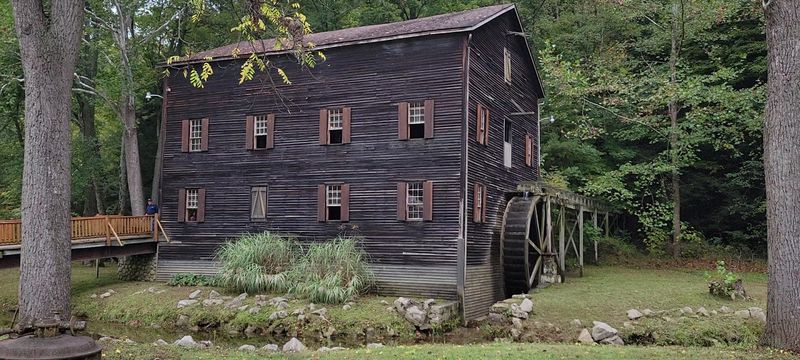
Some destinations justify a long drive and careful planning. Wolf Creek Grist Mill is the other kind: a place that rewards the spontaneous detour, the curious glance from the car window, and the decision to pull over and see what that old building by the creek actually is.
For Ohioans already exploring Mohican Country, whether camping, canoeing, or simply driving through, the mill is a natural and easy addition to any itinerary. For those making a dedicated trip from central or northeast Ohio, the surrounding area offers enough to fill a full weekend, with the mill serving as one of the more distinctive stops along the way.
What stays with you after leaving is not any single feature but the overall impression: a place that has been genuinely preserved rather than polished for tourism, staffed by people who care about what they are sharing, and set in a landscape that Ohio does particularly well. The mill grinds its grain the same way it always has, and that continuity, quiet, unhurried, and real, is exactly what makes it worth finding.
Share this story