Mark Twain did not invent Tom Sawyer and Huckleberry Finn from scratch. He borrowed heavily from the streets, caves, neighbors, and Mississippi River life he knew growing up in Missouri.
Much of that world still survives in Hannibal, where visitors can see his boyhood home, the real houses connected to Becky Thatcher and Huck Finn, the cave that inspired one of Tom Sawyer’s most famous scenes, and the river that shaped his years as a steamboat pilot.
These 15 places reveal how closely Mark Twain’s fiction was tied to the Missouri places and people he actually knew.
1. Mark Twain Boyhood Home & Museum, Hannibal, Missouri
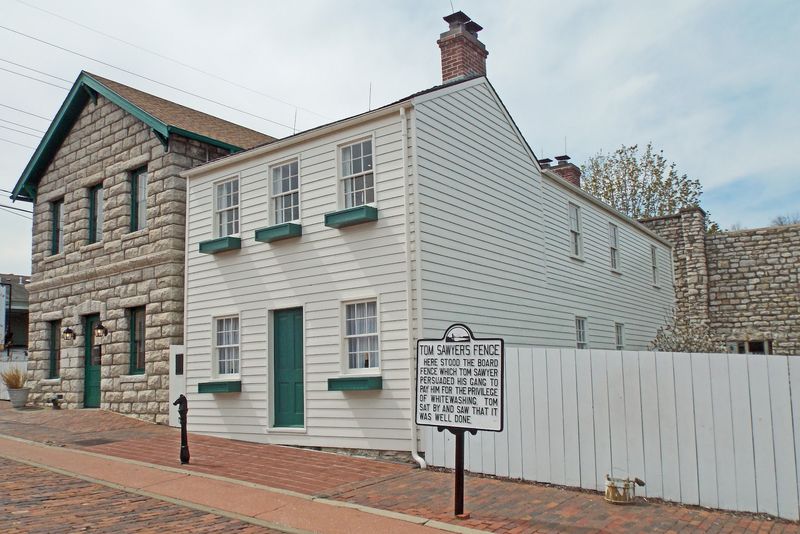
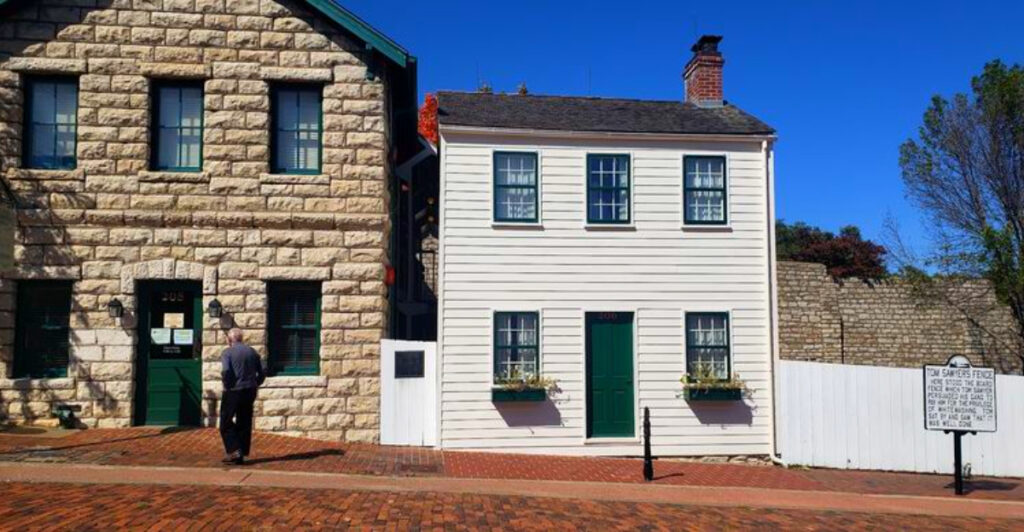
Eight buildings, one ticket, and a childhood that became American literature: that is the basic deal at the Mark Twain Boyhood Home and Museum in Hannibal. The Boyhood Home itself is a National Historic Landmark, and Samuel Clemens lived here from 1844 to 1853, the exact years that filled his imagination with neighbors, river rats, and cave adventures.
The campus includes interactive exhibits where visitors can try whitewashing a fence or navigating a raft, which turns reading about Tom Sawyer into something you can actually attempt. Personal belongings of the Clemens family, first editions, and two of Twain’s own inventions round out the collection.
The Museum Gallery also displays 15 original Norman Rockwell paintings commissioned in 1935 to illustrate special editions of the novels. A two-day ticket covers every property on campus.
2. Becky Thatcher House, Hannibal, Missouri
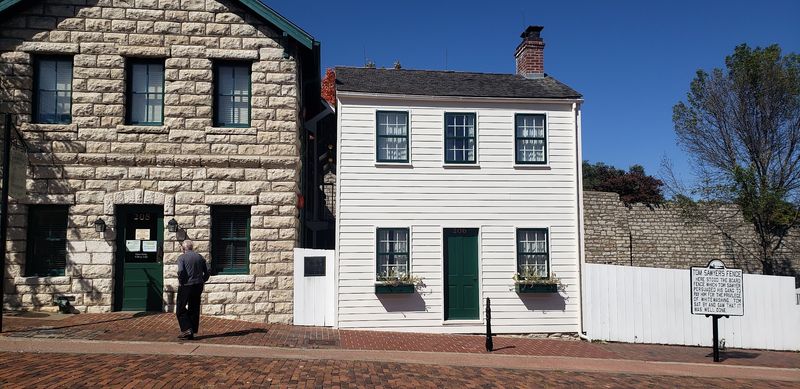
Laura Hawkins lived directly across the street from Samuel Clemens, and that proximity made her famous in a way she probably never expected. Twain used her as the model for Becky Thatcher in The Adventures of Tom Sawyer, and the two remained friends long into adulthood.
Laura later recalled that young Sam would regularly show off for her, a detail that makes Tom Sawyer’s theatrical behavior feel less like fiction and more like a factual report. The house reopened in 2016 after restoration work and now contains exhibits exploring childhood life and social class in 19th-century Hannibal.
Its position directly facing the Boyhood Home turns an ordinary street crossing into a surprisingly vivid connection between the real neighborhood and the fictional one Twain built from it. The property is part of the museum campus ticket.
3. Huckleberry Finn House, Hannibal, Missouri
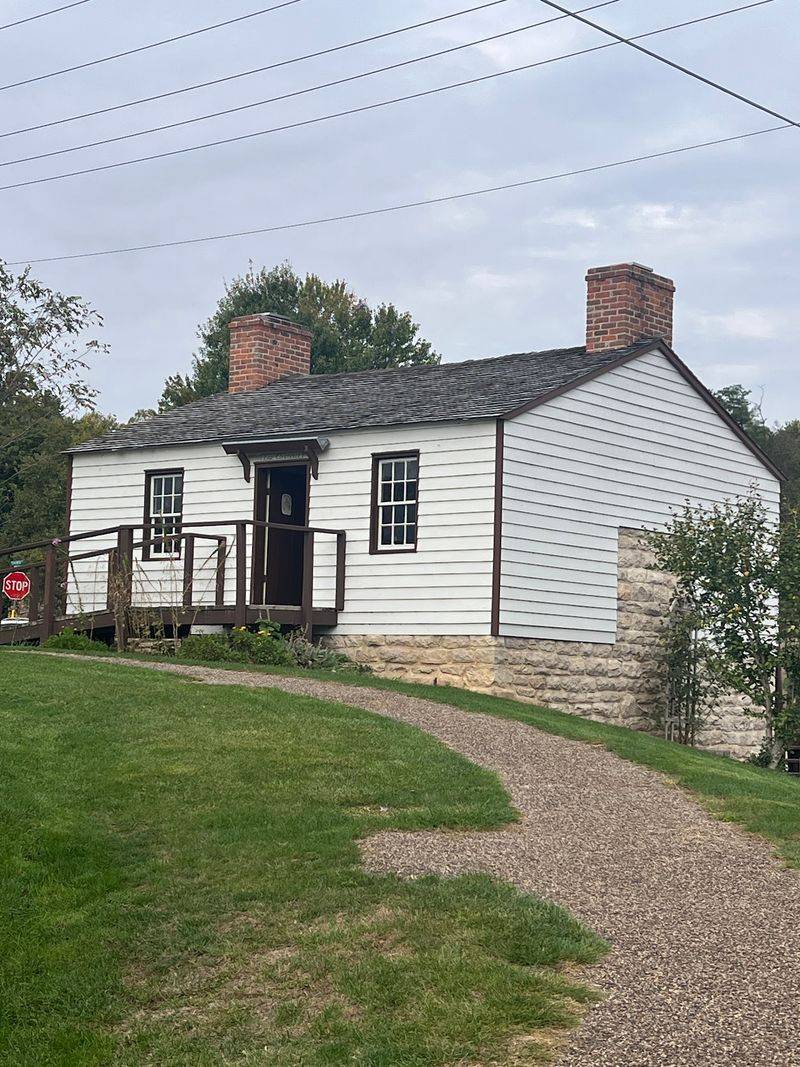
Tom Blankenship was the kind of kid parents warned their children about, which is probably exactly why Samuel Clemens found him so interesting. Blankenship became the primary inspiration for Huckleberry Finn, and his family’s home once stood on this Hannibal lot before it was demolished in 1911.
The current structure is a reconstruction completed in 2006, built on the original site using period-appropriate materials salvaged from another historic building. Rather than undermining the experience, that honesty actually enriches it.
Exhibits inside examine the Blankenship family’s documented circumstances, including 1850 census records that confirmed their modest living conditions.
The museum also addresses the history of slavery in Hannibal, providing important context for the character of Jim in Adventures of Huckleberry Finn. The property is included in the Mark Twain Boyhood Home and Museum campus ticket.
4. Mark Twain Cave, Hannibal, Missouri
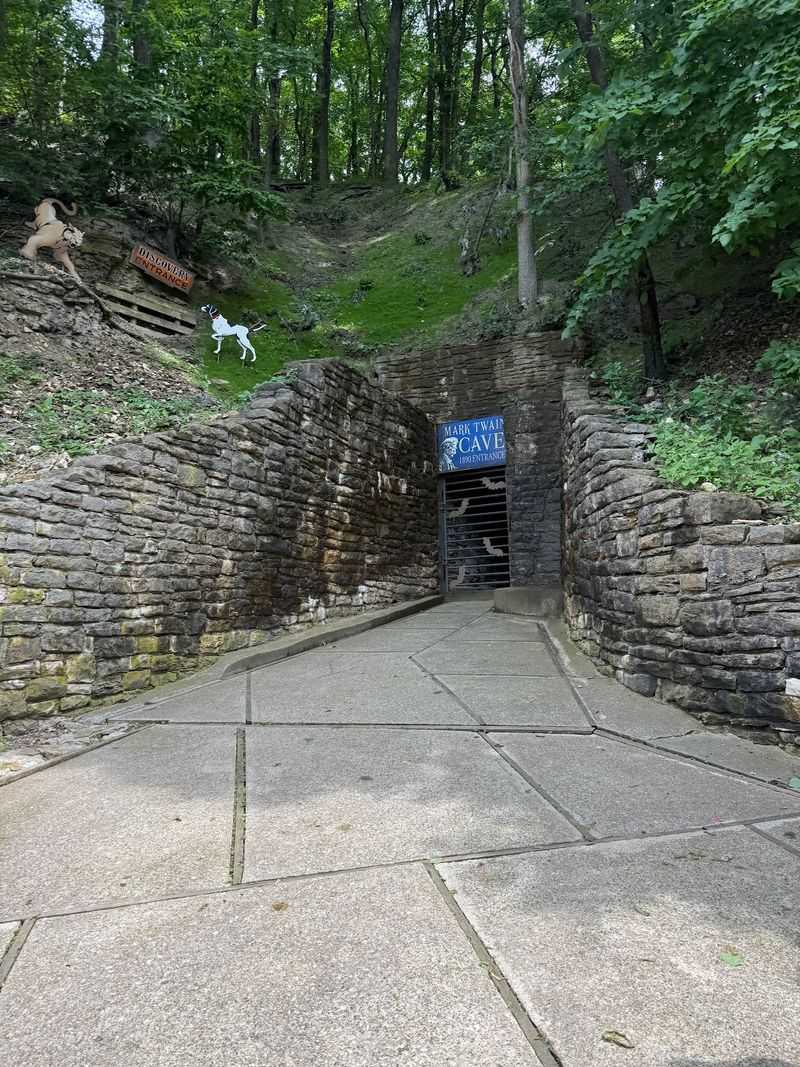
Missouri’s oldest continuously operating show cave has been welcoming visitors since 1886, which means guided tours were already a tradition here before Twain published most of his major works. Originally called McDowell’s Cave, this labyrinth outside Hannibal directly inspired the cave sequence in The Adventures of Tom Sawyer, where Tom and Becky Thatcher become lost underground.
Guided tours cover 3/8 of a mile of electrically lit passages and last approximately one hour. Along the way, guides cover the cave’s history as a saltpeter source, its brief association with outlaw Jesse James in 1879, and the discovery in 2019 of Samuel Clemens’ own signature carved into the rock.
The cave maintains a constant 52 degrees Fahrenheit year-round, so a light jacket is a practical idea. In 1972, it was designated a National Natural Landmark for its exceptional maze-type cavern development.
5. Mark Twain Riverboat, Hannibal, Missouri
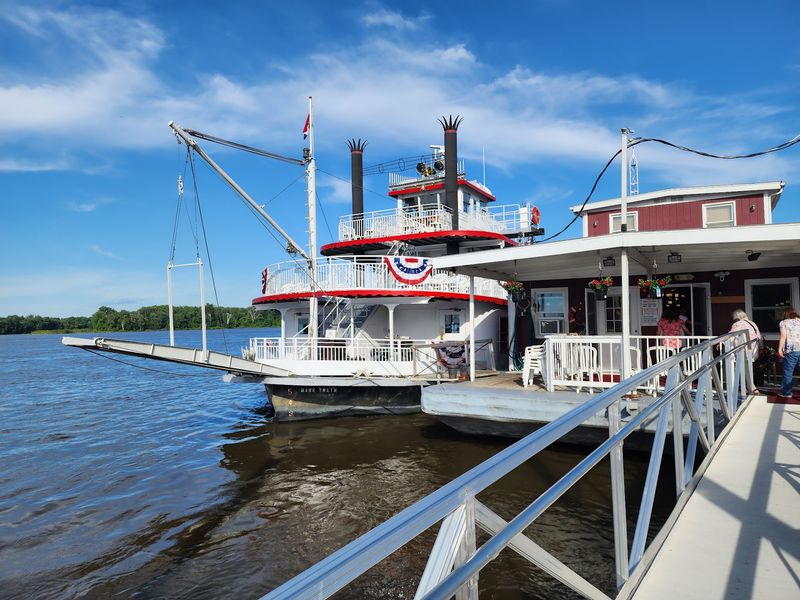
Before Samuel Clemens ever picked up a pen professionally, he spent years learning the Mississippi River from the pilot house of a steamboat, and that experience eventually gave the world both a pen name and a book. The Mark Twain Riverboat has operated from the Hannibal riverfront for over 30 years, and it connects that chapter of his life directly to the landscape that shaped it.
The vessel is 120 feet long, built in 1964, and offers one-hour narrated sightseeing cruises as well as two-hour dinner cruises with a buffet and live entertainment. Sightseeing commentary covers river history, local legends, and landmarks visible from the water.
Clemens worked as a licensed steamboat pilot from 1857 to 1861, and his pen name came from a riverman’s call meaning a safe depth of two fathoms. Departures run seasonally from early April through early November at Center Street Landing.
6. Mark Twain Memorial Lighthouse, Hannibal, Missouri
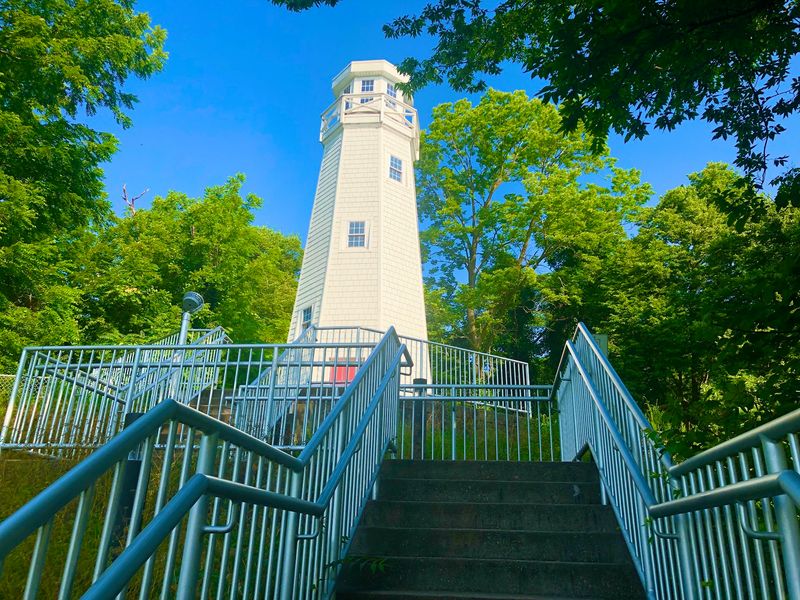
President Franklin D. Roosevelt dedicated this lighthouse in 1935 without leaving the White House, remotely lighting its beacon from Washington as part of the ceremony marking the 100th anniversary of Twain’s birth.
That is the kind of detail that makes a simple hilltop monument considerably more interesting.
The white octagonal wooden tower sits atop Cardiff Hill, the same hill that Twain used as a setting in his fiction, and it overlooks both downtown Hannibal and a wide stretch of the Mississippi. Visitors can climb 244 steps from the intersection of North and Main Street, or drive up via Cardiff Hill Drive and park near the top.
The lighthouse was rebuilt in 1963 after a windstorm leveled the original in 1960, then reconstructed again during Hannibal’s 2019 bicentennial. The public cannot enter the tower itself, but the surrounding area offers some of the best river views in the city.
7. Tom & Huck Statue, Hannibal, Missouri
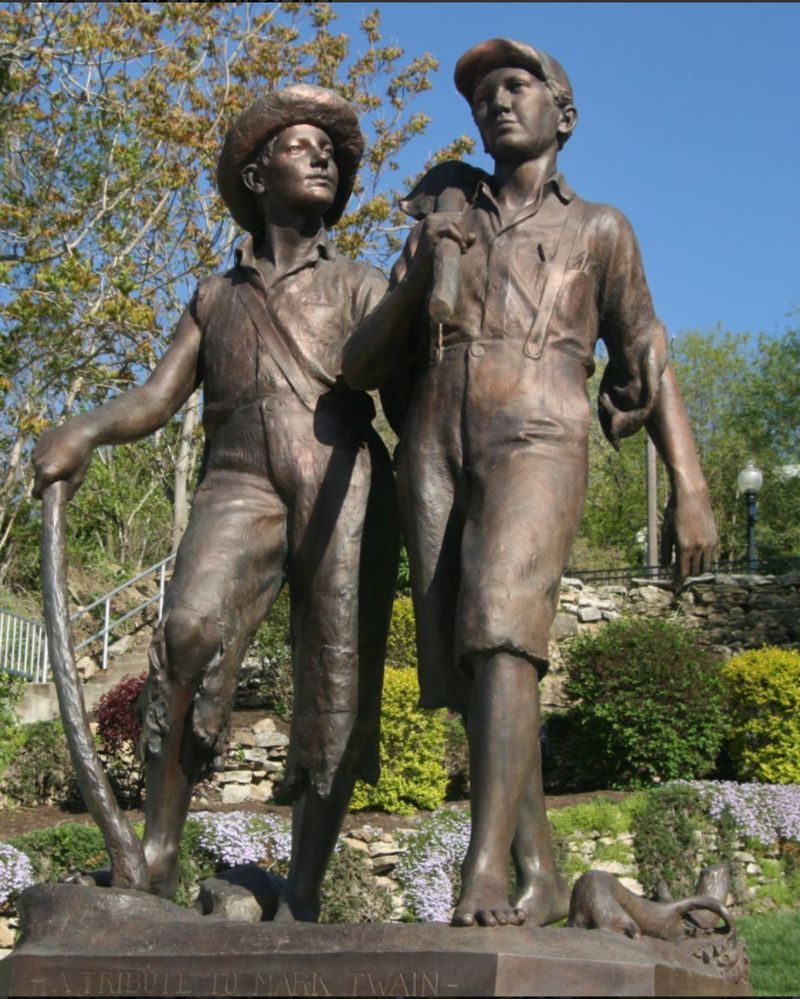
Dedicated on May 27, 1926, this bronze sculpture at the base of Cardiff Hill holds a quietly remarkable distinction: it is one of the earliest known statues anywhere in the world erected to honor purely fictional characters. Sculptor Frederick Hibbard created the piece, and local businessman George Mahan commissioned it specifically to represent Tom’s desire for adventure alongside Huck’s preference for staying put.
The statue stands at the intersection of North and Main Street, within easy walking distance of the Boyhood Home museum campus and directly at the start of the climb toward the Memorial Lighthouse. Visitors routinely stop here for photographs before heading uphill or down toward the riverfront.
The masonry background was restored in 2009 with a new rock structure. Tom and Huck may be fictional, but in Hannibal they carry the weight of permanent residents who simply never got around to leaving.
8. J.M. Clemens Justice of the Peace Office, Hannibal, Missouri
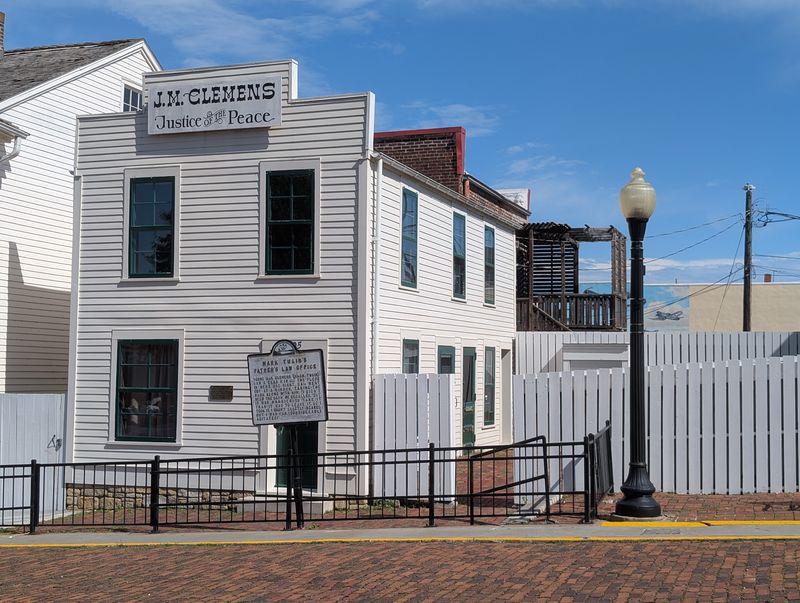
John Marshall Clemens, Mark Twain’s father, carried enough authority in Hannibal that young Samuel believed he held the power of life and death over other men. Twain wrote that himself in his autobiography, and this small historic building is where that authority was exercised on a daily basis.
The office originally sat on Bird Street before Warner Brothers Studios acquired it in 1943 as a thank-you gift to the city after filming a Twain biography here. The studio donated it to Hannibal, and in 1955 the building was relocated to its current Hill Street position within the museum campus.
A restoration was completed in 2016.
Exhibits interpret John Marshall Clemens’ legal work and provide a window into the social institutions of 19th-century Hannibal. Understanding the father adds useful context to the son, and this stop rewards visitors who want more than just the childhood-adventure side of the Twain story.
9. Grant’s Drug Store, Hannibal, Missouri
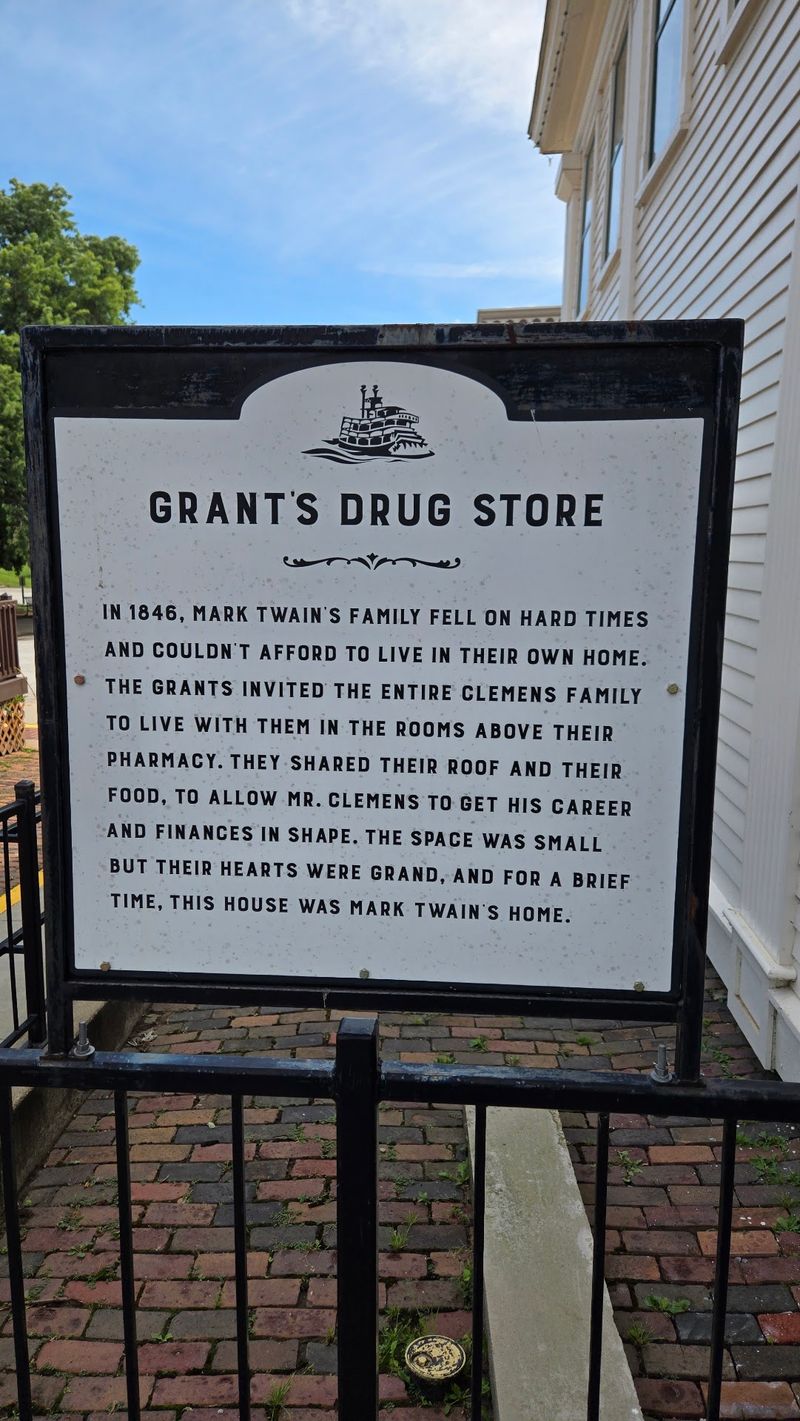
Also called the Pilaster House for its distinctive flat exterior columns, this is one of Hannibal’s oldest surviving structures. Its interior timbers were prefabricated in Cincinnati and shipped downriver by steamboat in 1836, which already makes it an interesting piece of local construction history before Twain enters the picture.
The Clemens family moved into the upstairs rooms here in 1846 during a period of severe financial hardship, sharing the building with Dr. Orville Grant and his family. It was in one of those rooms that John Marshall Clemens died in March 1847, an event that pushed 11-year-old Sam out of school and into work as a printer’s apprentice.
The building was gifted to the city in 1955 and underwent a major renovation in 2019. Visitors can view an old-time drug store display through the windows as part of the museum campus experience.
10. Mark Twain Birthplace State Historic Site, Florida, Missouri
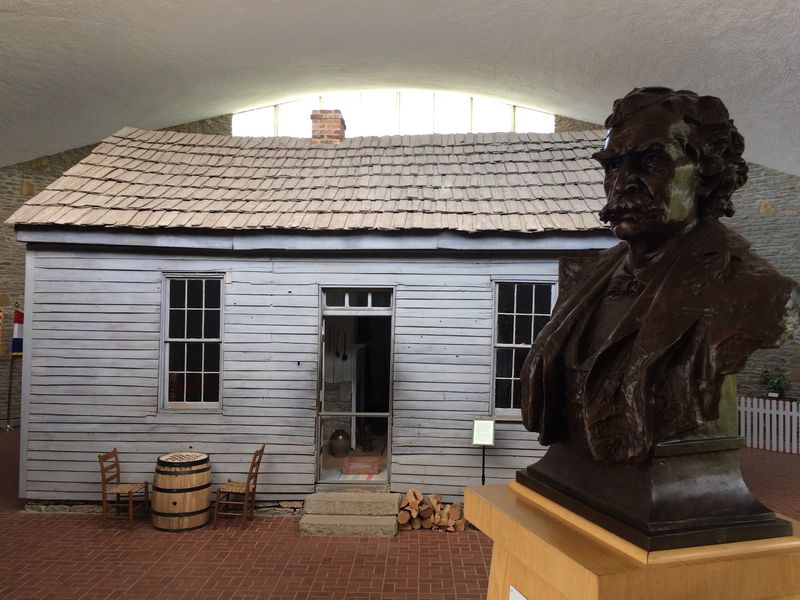
Samuel Langhorne Clemens arrived in the world on November 30, 1835, in a two-room cabin in Florida, Missouri, a community so small that Twain himself later joked he had increased its population by one percent simply by being born there. That cabin, which once housed eight people including an enslaved teenager, is now protected inside a modern museum building.
The site is maintained by the Missouri Department of Natural Resources and sits adjacent to Mark Twain State Park, overlooking Mark Twain Lake. Exhibits include a handwritten manuscript of The Adventures of Tom Sawyer, first editions of many of his works, and furnishings from his later home in Hartford, Connecticut.
A public reading room is available for personal study and research. The cabin was listed on the National Register of Historic Places in 1969, and the roughly 30-mile drive from Hannibal makes it a logical addition to any full Twain itinerary.
11. Mark Twain State Park, Florida, Missouri
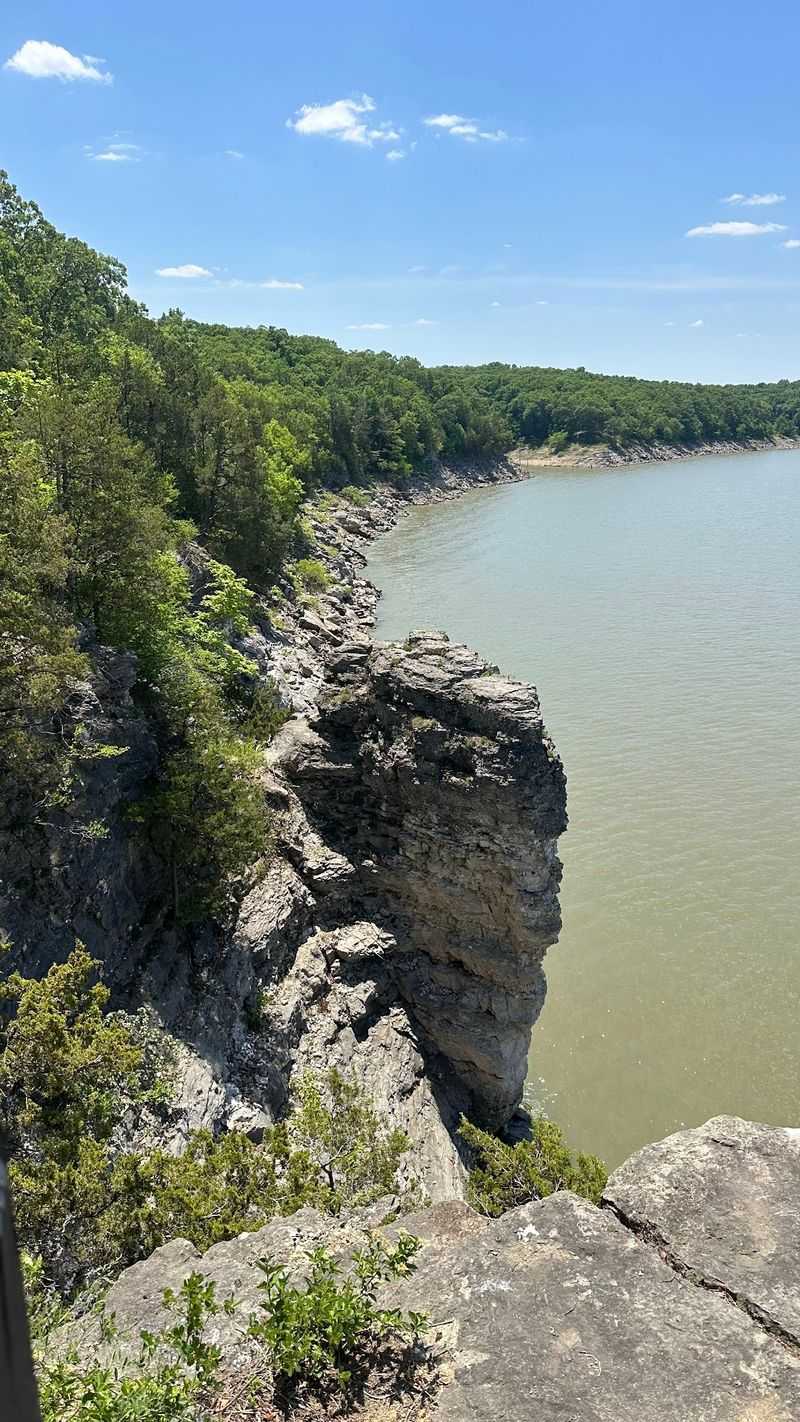
Established in 1924 through the efforts of the Mark Twain Memorial Park Association, this 2,775-acre park in the Salt River Hills of Monroe County is the outdoor companion to the birthplace site immediately next door. The terrain covers limestone bluffs, woodlands of oak, hickory, and maple, and open prairie-like clearings that give the park a varied character.
Mark Twain Lake, created by the Clarence Cannon Dam across the Salt River, anchors the recreation side of the park. Fishing opportunities include crappie, catfish, bass, and walleye, and a swimming beach on the lake provides a straightforward summer option for families.
More than six miles of hiking trails cross the park, some with overlooks above the water. Camping facilities range from basic sites to electric hookups and camper cabins.
Bald eagles are frequently spotted here in winter, which gives the park year-round appeal beyond the summer peak season.
12. Jim’s Journey: The Huck Finn Freedom Center, Hannibal, Missouri
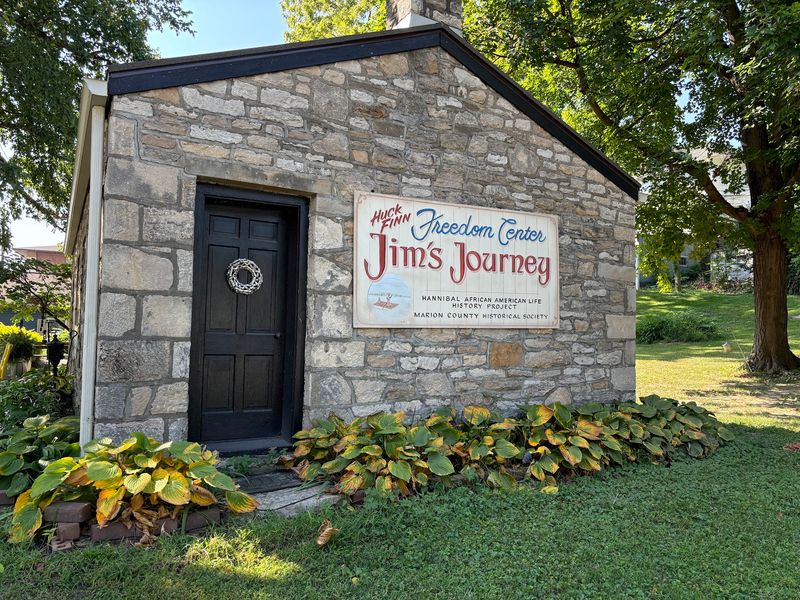
Opened in September 2013, this is the country’s first memorial dedicated to Jim, the central character in Adventures of Huckleberry Finn, and the only African American history museum in northeast Missouri. That combination of firsts signals how much ground the center covers that other Hannibal sites do not.
The museum centers on Daniel Quarles, an enslaved man from Twain’s uncle’s farm in Florida, Missouri, whom Clemens identified in his autobiography as a key inspiration for both Jim and a character in The Gilded Age. Exhibits trace the lives of Quarles and other African Americans in Hannibal, covering achievements, the realities of slavery and segregation, and community contributions stretching back to the town’s founding in 1819.
The center frames Jim as the first African American character in American literature portrayed as a fully human individual with a family. That argument changes how many visitors read the novel afterward.
13. Mark Twain Steamboat Pilot Statue, Hannibal, Missouri
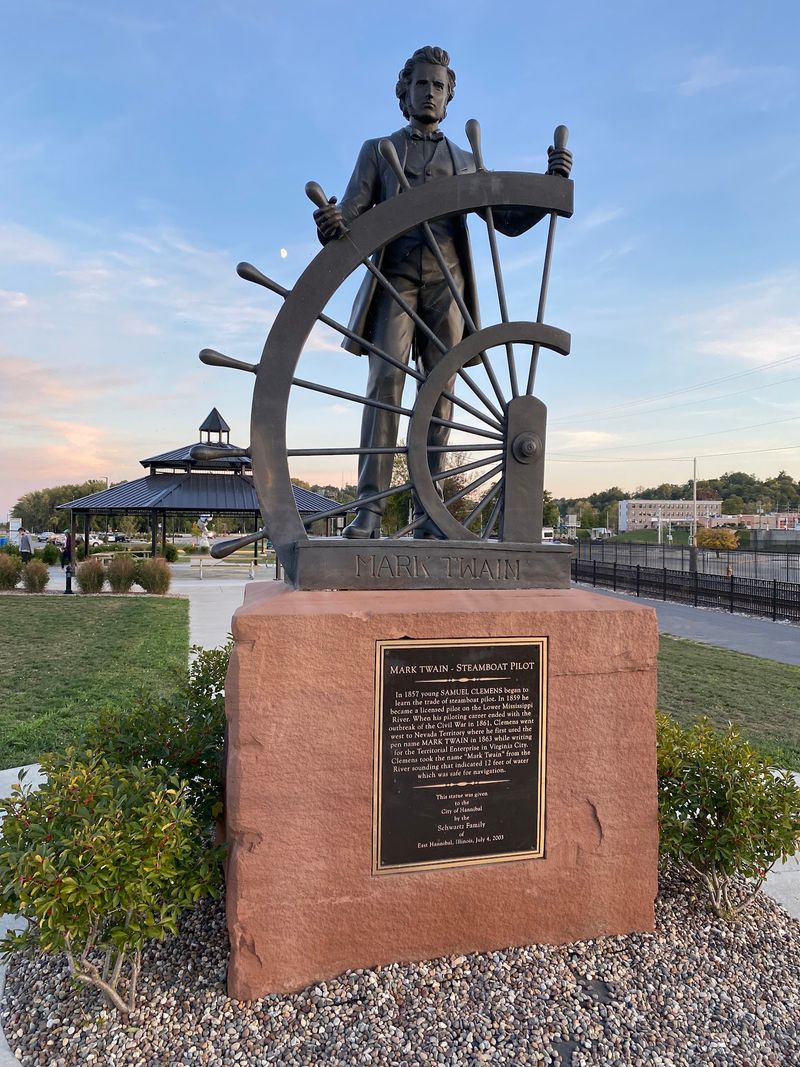
Dedicated on July 4, 2003, this 6.5-foot bronze sculpture at Glasscock’s Landing depicts Samuel Clemens not as the white-haired literary celebrity most people picture, but as the young man who spent four years learning one of the most demanding jobs on the Mississippi River. Clemens trained and worked as a licensed steamboat pilot from 1857 to 1861.
That career gave him an unusually detailed knowledge of the river’s currents, sandbars, and seasonal changes, all of which fed directly into Life on the Mississippi. It also produced his pen name: “mark twain” was a riverman’s call announcing a safe water depth of two fathoms, or 12 feet.
The statue’s riverfront location is well chosen. With the Mississippi immediately in front and active river traffic still passing Hannibal, the setting reinforces the connection between the young pilot Clemens and the celebrated writer who later made that experience central to his identity.
14. Rockcliffe Mansion, Hannibal, Missouri
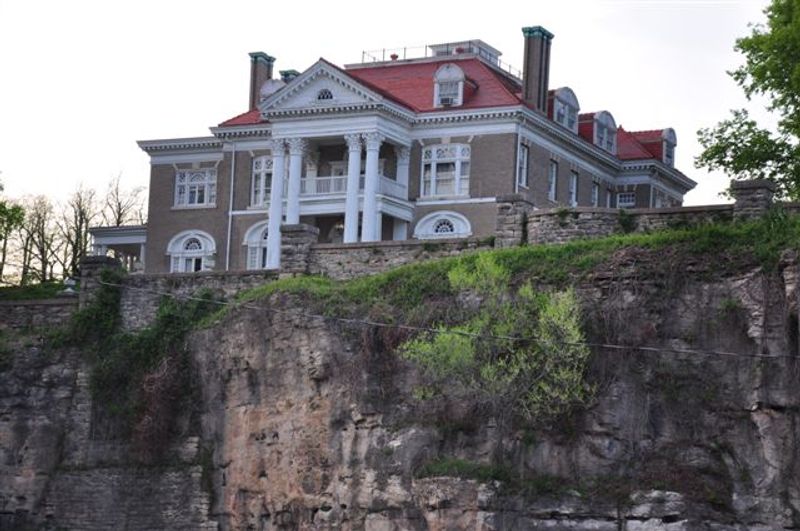
Built between 1898 and 1900 by lumber baron John J. Cruikshank Jr., Rockcliffe Mansion covers 13,500 square feet across more than 30 rooms, with 10 ornate fireplaces and 125 windows.
The materials inside include rich mahogany, quarter-sawn oak, South African pink marble, and L.C. Tiffany stained-glass fixtures, which makes it a considerably different environment than the modest Clemens family buildings a few blocks away.
Mark Twain visited in 1902 during his last trip to Hannibal, delivering a speech from the grand staircase to approximately 300 guests. After Cruikshank’s death in 1924, the mansion sat largely vacant for 43 years before local families rescued it from potential demolition in 1967 and began a meticulous restoration.
Today it operates as a house museum with docent-led tours from April 15 through November 15 and functions as a boutique bed and breakfast. Rockcliffe is listed on the National Register of Historic Places.
Share this story