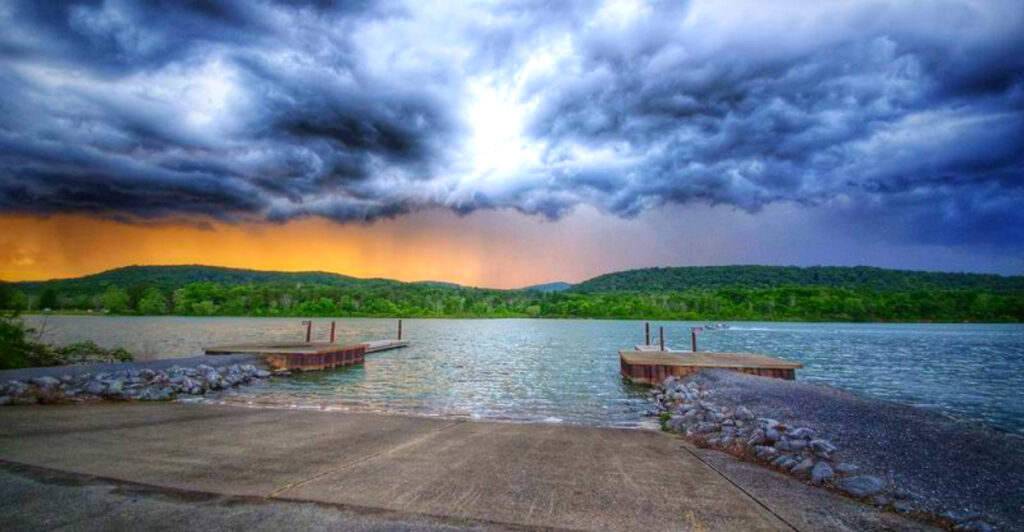
A 1,730-acre lake stretches for eight miles through a forested valley at this northcentral Pennsylvania state park, with Bald Eagle Mountain rising beyond the shoreline.
Bald Eagle State Park surrounds the water with a 1,200-foot swimming beach, hiking trails, boating, fishing, campgrounds, and an eco-lodge overlooking the reservoir.
Come back in winter and the landscape reveals an even stranger feature: as the reservoir drops, portions of an old highway that normally sit underwater can reappear along the exposed lake bed.
Where Exactly This Park Sits and Why the Setting Is So Striking
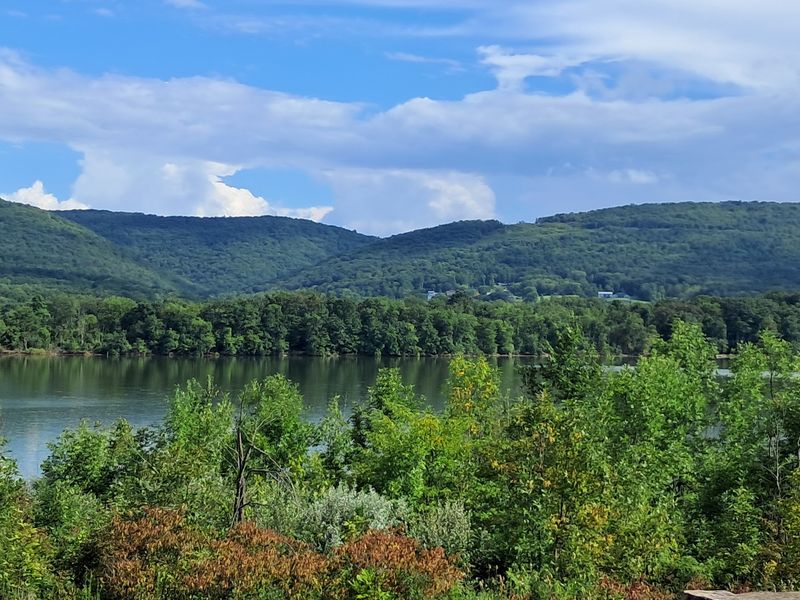
Bald Eagle State Park sits at 149 Main Park Road, Howard, PA 16841, tucked into the broad Bald Eagle Valley of northcentral Pennsylvania. The park covers 5,900 acres in total, but what makes the setting immediately arresting is the geography underneath it all.
The park straddles two distinct geological regions: the Allegheny Plateau to the north and the Ridge and Valley area to the south. That collision of landforms gives the landscape a layered quality that most parks simply cannot match.
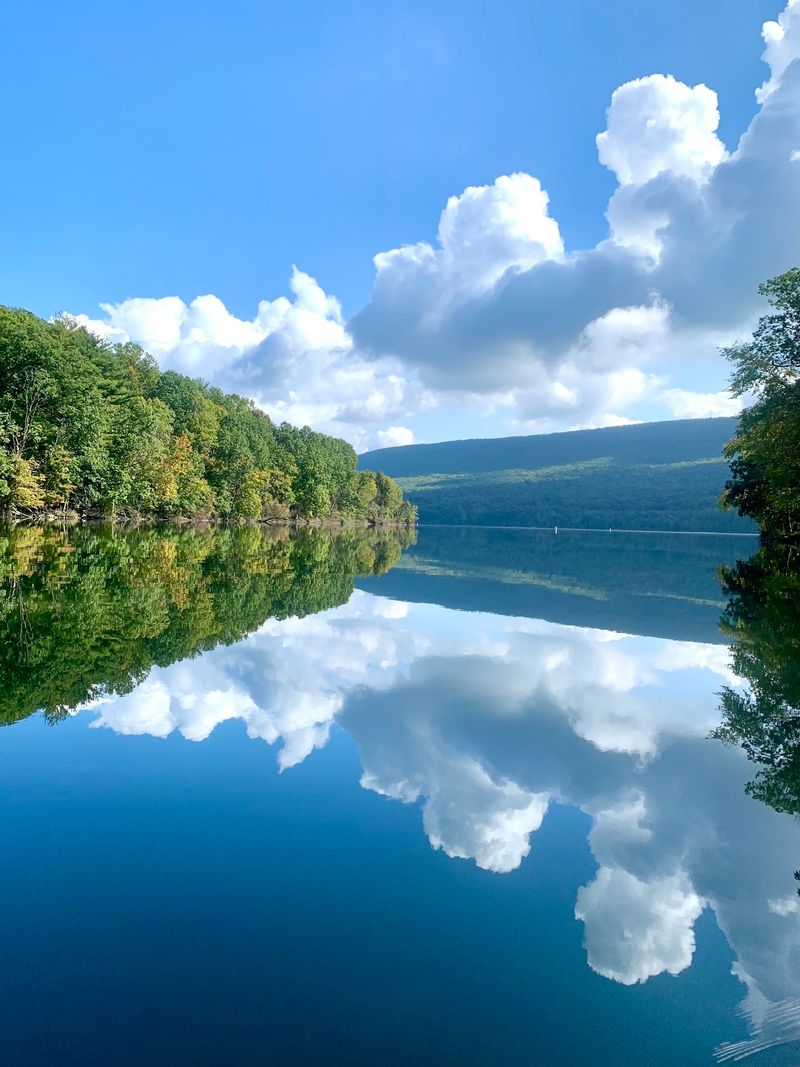
The 1,730-acre Foster Joseph Sayers Reservoir fills the valley floor, while Bald Eagle Mountain rises along the southern edge, its forested slopes reflected in the water below. Wetlands and open fields round out the habitat mix, creating a patchwork that supports a remarkable range of wildlife.
The park is open every day of the year from sunrise to sunset, making it accessible across all four seasons. That kind of year-round access is rarer than you might think for a Pennsylvania state park of this scale.
The Story Behind the Lake and the Name on the Dam
The lake at the center of the park did not always exist. The Foster Joseph Sayers Reservoir was created in 1969 when the U.S.
Army Corps of Engineers dammed Bald Eagle Creek as part of a flood control project for the Susquehanna River basin.
The dam itself is a substantial structure: 100 feet high and 1.3 miles long. The reservoir filled the valley and the park officially opened to the public on July 4, 1971, a fitting birthday for a place built around freedom and open space.
The dam and reservoir carry the name of Private First Class Foster Joseph Sayers, a local World War II hero from Howard, Pennsylvania, who received the Medal of Honor and gave his life in combat in 1944. A statue and war memorial stand near the dam in his honor.
As for the park, valley, mountain, and creek sharing the name Bald Eagle, that traces back to Chief Woapalanne, a Munsee Lenni Lenape leader whose name translates to bald eagle. The history here runs deeper than most visitors realize.
A 1,200-Foot Sandy Beach That Actually Delivers
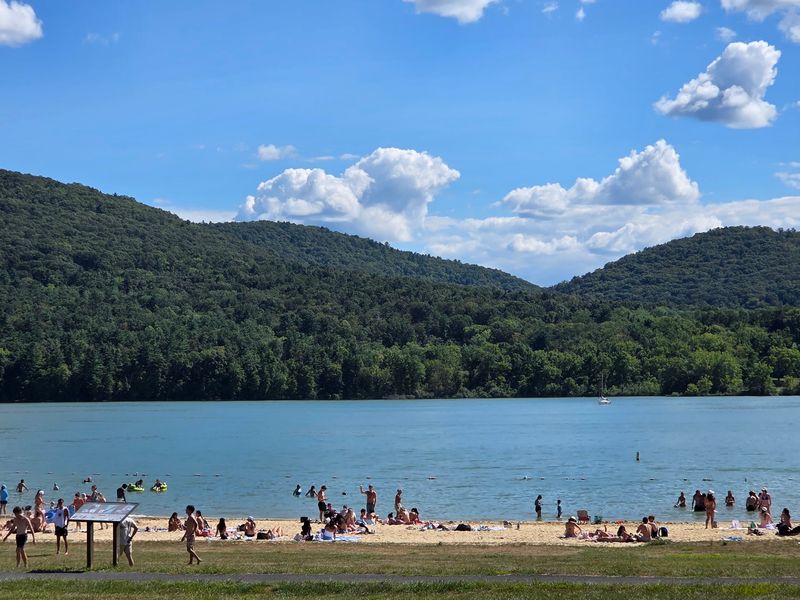
Not every state park beach lives up to its reputation, but the 1,200-foot sand and turf beach here is the real thing. The water is clear and clean, the sand is well-maintained, and the lake behind it stretches far enough that you genuinely feel like you are somewhere expansive.
The beach area comes with a children’s playground, changing rooms, public restrooms, and plenty of parking, so showing up with a carload of kids does not require military-level planning. Swimming is open from Memorial Day through Labor Day, generally from 8:00 AM until sunset.
One detail worth knowing: there are no lifeguards on duty, so the beach operates on a swim-at-your-own-risk basis. Keep that in mind if you are bringing younger children.
There is also a designated pet-friendly section of the beach, which is a genuinely thoughtful touch. Watching a happy dog sprint into a mountain lake while everyone else enjoys the sun is honestly one of the better free shows available at this park.
Trails That Range from a Butterfly Loop to a Rocky Lakeside Path
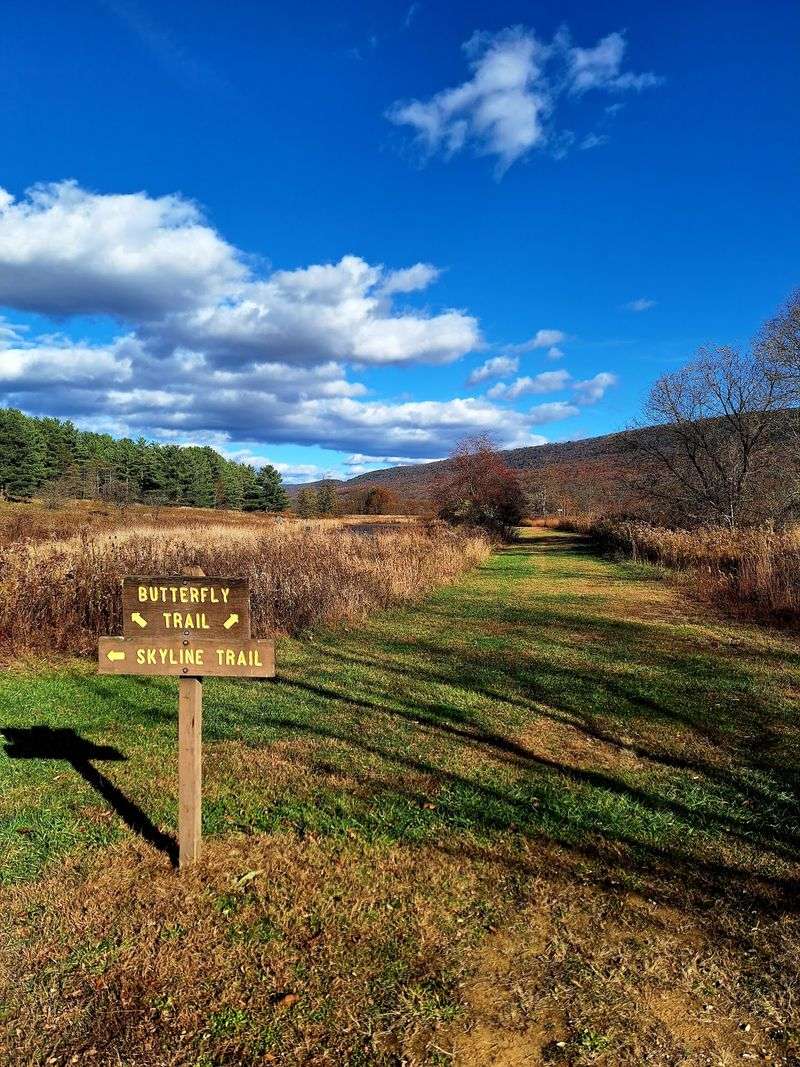
The trail network at Bald Eagle State Park covers between 11 and 14.5 miles depending on which connector paths you count, and the variety on offer is better than the mileage suggests. Each trail has a distinct personality.
The Butterfly Trail is an easy 1.5-mile mowed grass loop designed specifically for butterfly conservation, starting and ending near the beach. It is the kind of trail that rewards slow walkers and curious observers more than speed hikers.
The Skyline Drive Trail runs for two miles through a small forested ridge of mixed hardwoods, offering a quieter woodland experience away from the water. The Lakeside Trail, by contrast, runs along the base of Bald Eagle Mountain between the lake and a railroad line, giving it a rugged, hemmed-in feel that some hikers find more satisfying than open meadow paths.
The Swamp Oak Trail leads to the largest tree in the park, a record-breaking Swamp White Oak that has been growing long enough to put most of our life plans into perspective.
Boating, Fishing, and the Water Sports Scene on the Reservoir
The reservoir allows unlimited horsepower boating, which puts it in a different category from many Pennsylvania lakes where restrictions keep things slow and quiet. Water-skiing is permitted, and on a summer weekend the lake sees a healthy mix of motorboats, pontoon rentals, kayaks, and paddleboards.
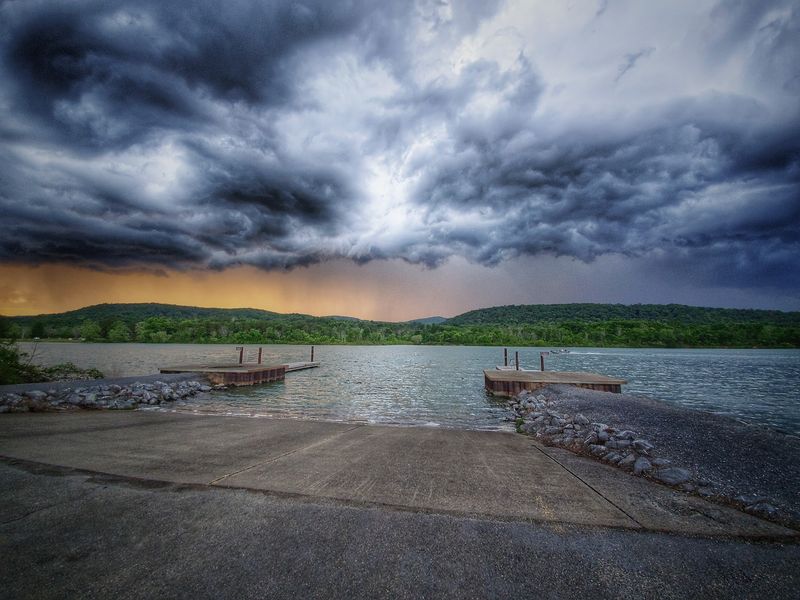
Five boat launches are spread around the park, which reduces bottlenecks considerably. The ramps are wide and well-maintained, and the marina rents pontoon boats at reasonable rates for anyone who wants time on the water without trailering their own vessel.
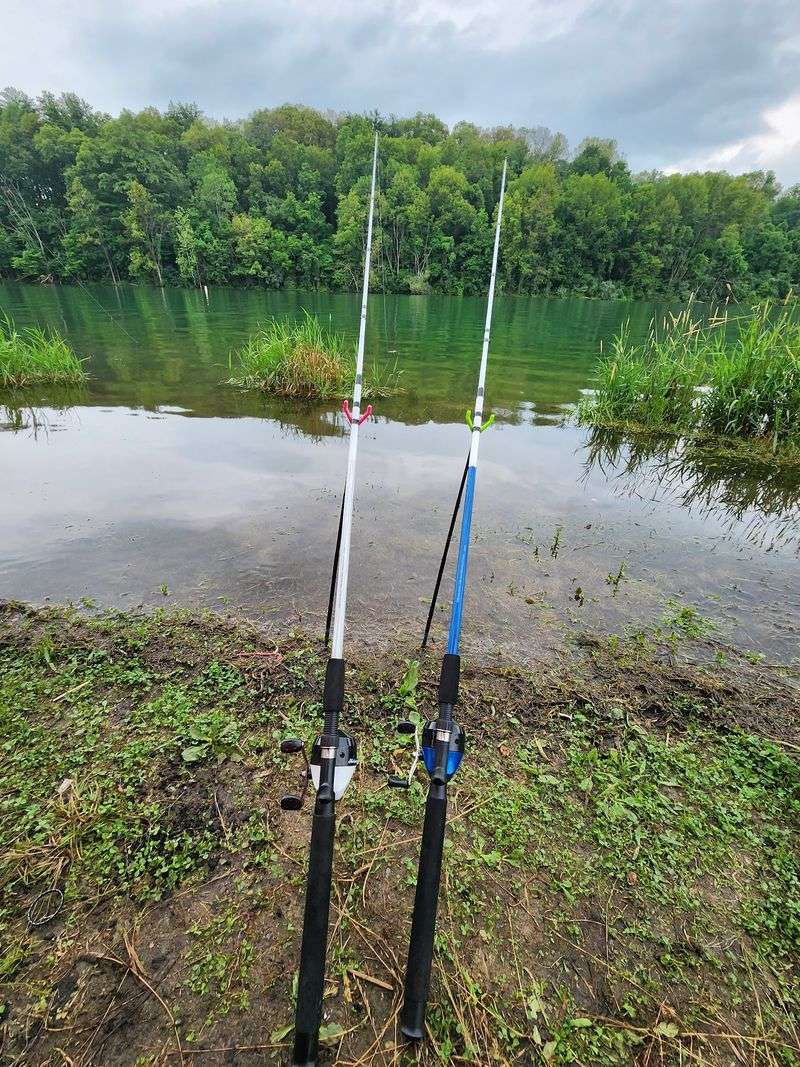
Fishing on the reservoir is consistently productive. The water stays alkaline due to limestone in the watershed, which creates ideal conditions for a warm-water fishery.
Largemouth and smallmouth bass, yellow perch, crappie, catfish, sunfish, and tiger muskellunge all inhabit the lake.
The 23 miles of shoreline give anglers plenty of access points beyond the boat launches. Early morning from a shoreline spot near the primitive campground is a particularly productive setup, especially for bass moving into shallower water as the sun climbs.
The Submerged Highway You Can Actually Walk On in Winter
Here is a detail that surprises nearly every first-time visitor: before the dam was built, Route 220 ran directly through the valley that is now underwater. Parts of the old highway were submerged when the reservoir filled in 1969, while other sections were repurposed into park roads, fishing jetties, and trail segments.
Every mid-November, the lake’s water level is drawn down for flood control purposes and does not return to its full summer level until around mid-May. During that winter drawdown, sections of the old submerged roadway become exposed and visitors can actually walk on them.
It is a genuinely eerie and fascinating experience, standing on a stretch of old asphalt that normally sits under several feet of water, surrounded by the quiet of a winter valley. The exposed lake bed also reveals old foundations and landscape features that give a clear picture of what the valley looked like before the dam changed everything.
Plan a visit specifically for this if you enjoy the kind of outdoor discovery that feels more like exploration than recreation.
Camping Options That Cover Everything from Full Hookups to Rustic Tent Sites
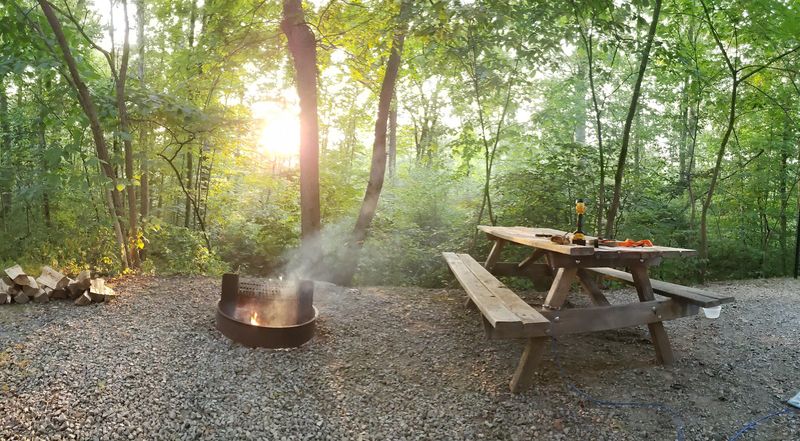
The campground situation at Bald Eagle State Park is more varied than the average Pennsylvania park, which makes it genuinely useful for a wider range of travelers. Two main campgrounds serve different needs, and the gap between them is significant.
The modern Letterman campground offers RV sites with electricity, paved pads, flush toilets, and warm showers. The Sycamore loop is pet-friendly with 50-amp electric service, and the White Pine loop provides full hookups for those who need them.
Recycling stations and dump facilities are on-site and well-organized.
The rustic campground offers walk-in tent sites with much more privacy and seclusion. Sites vary considerably in size and tree cover, so checking site photos before booking is genuinely worth the extra five minutes of research.
Beyond traditional camping, the park also offers yurts and cabins for those who want a roof overhead without checking into a hotel. Each option sits within walking distance of trails, so the morning routine of coffee and a lake view is available regardless of which accommodation type you choose.
The Nature Inn: An Eco-Lodge Perched Above the Reservoir
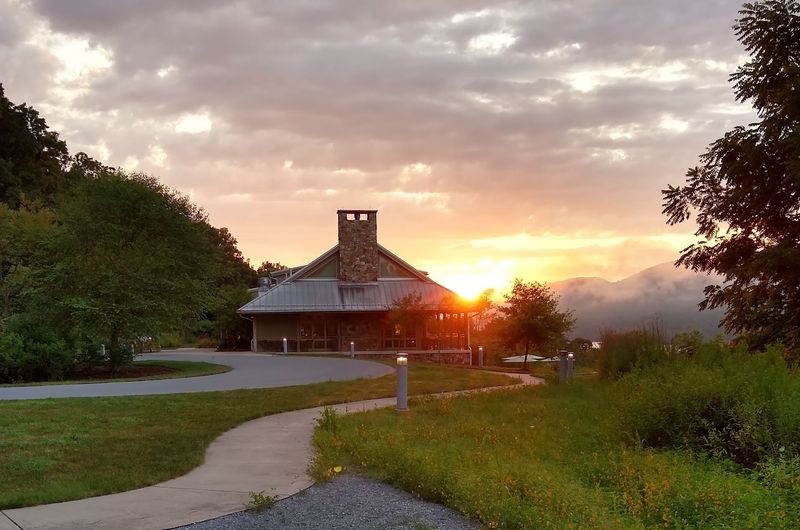
Not many state parks can claim a LEED Gold certified eco-lodge on their property, but Bald Eagle State Park has one. The Nature Inn sits on a hilltop overlooking the reservoir and Bald Eagle Ridge, and the views from its windows are the kind that make you forget what you were doing before you looked up.
The lodge has 16 guestrooms and suites, an outdoor fireplace for cooler evenings, and a dedicated eagle-viewing station that puts the park’s birdwatching reputation into sharp focus. The building has earned awards for both sustainability and hospitality, which is a combination that tends to require genuine effort to achieve.
Guests staying at the Nature Inn also get complimentary snowshoe rentals in winter, which is a thoughtful perk that encourages people to actually get outside rather than watching the snow from a warm room.
The inn is the most comfortable base for exploring the park across multiple days, and the hilltop position means you get mountain and lake views without needing to hike anywhere first. That kind of effortless scenery has real value after a long day on the trails.
Wildlife Watching
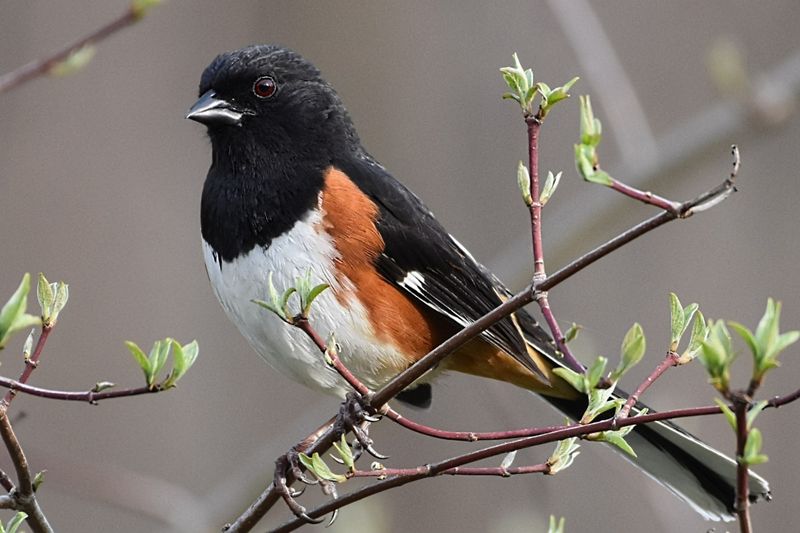
The park’s name is not just a historical reference. Bald eagles are a genuine and regular presence here, and spotting one perched in a lakeside tree or circling low over the water is a realistic expectation rather than a lucky bonus.
Osprey, great blue herons, and a wide variety of warblers and flycatchers also use the park’s diverse habitats throughout the year.
Spring mornings at the campground bring a wall of birdsong that hits you before you are fully awake. The mix of honeysuckle and dogwood blooms adds a sensory layer that makes the early alarm worth setting.
Migrating species funnel through the valley in both spring and fall, turning the park into a reliable stop on the regional birding circuit. White-tailed deer are common throughout the day, and turtles are frequently spotted along the lakeside trail and near the wetland edges.
Early morning and the hour before sunset are the most productive windows for wildlife observation. Arriving at the lake before 7:00 AM on a calm day in May or October is about as rewarding as outdoor experiences get in central Pennsylvania.
Winter at the Park: Ice, Snow, and a Quieter Kind of Beauty
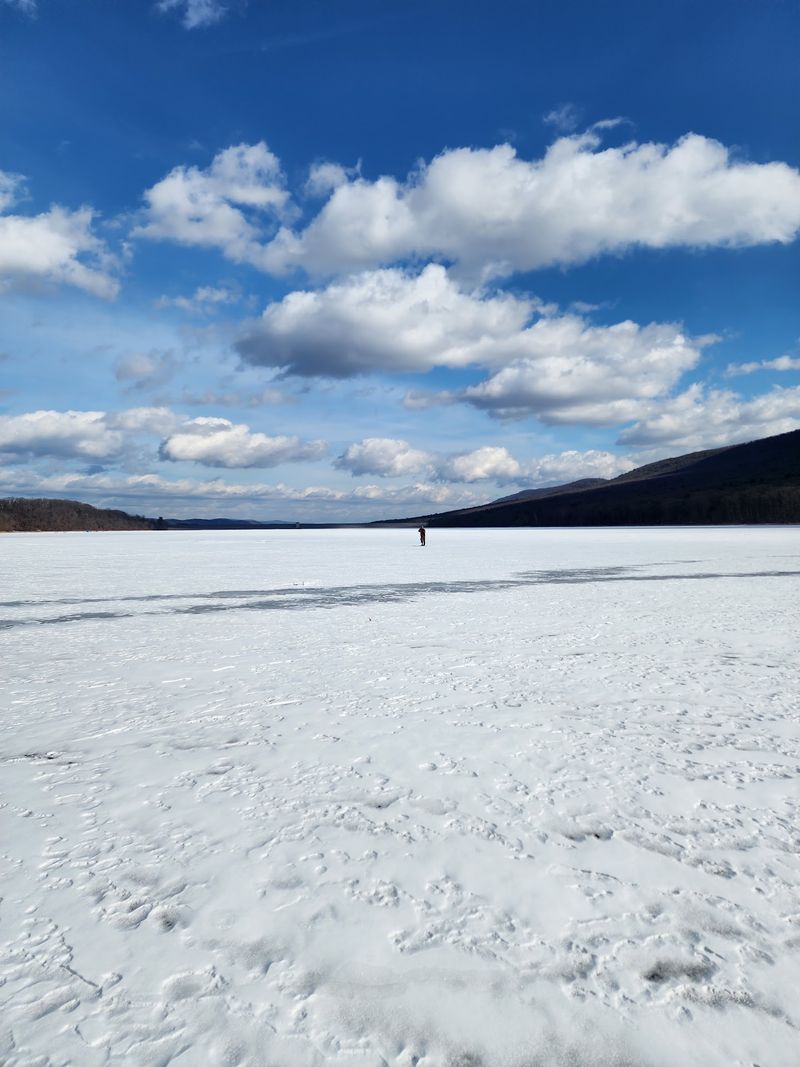
Most visitors think of Bald Eagle State Park as a summer destination, but the winter version of this place has a completely different appeal that deserves more attention. When the crowds thin out and the lake level drops, the park takes on a hushed, almost meditative quality.
When conditions cooperate, the park offers cross-country skiing, snowshoeing, ice skating, sledding, and tobogganing on the intermediate hill near the Nature Inn. Ice fishing opens up on approximately 630 acres of the reservoir, and the combination of productive water and minimal competition makes it a worthwhile cold-weather pursuit.
Year-round resident bird species are easier to spot in winter when the leaves are down and the understory opens up. The eagle-viewing station at the Nature Inn becomes particularly useful during this season, with clear sightlines across the bare ridgeline and open water near the dam.
The complimentary snowshoe rentals available to Nature Inn guests make a spontaneous morning snowshoe almost frictionless to arrange. Arriving at a park in January and having a trail to yourself in fresh snow is a specific kind of pleasure that summer visitors never get to experience.
Practical Tips for Getting the Most Out of Your Visit
A few practical details make the difference between a good visit and a great one at Bald Eagle State Park. The park’s main office phone number is 814-625-2775 if you need current conditions or have questions before arriving.
The website through Pennsylvania’s DCNR page covers trail maps, campsite booking, and seasonal updates.
Bring your own garbage bags if you are camping at a rustic site, as bag dispensers are not always available near individual campsites. The nearest stores are about 15 minutes away, which is close enough for forgotten supplies but far enough that a proper packing list saves a trip.
The beach concession stand is convenient but slow during peak summer weekends. Packing your own lunch is a consistently better use of time and money, especially if you plan to spend a full day at the water.
Pick up a Bald Eagle Recreational Guide at the park office when you arrive. It includes the park’s full history and a checklist of 50 living things to identify during your visit, which turns an ordinary afternoon into something that keeps kids and curious adults genuinely engaged throughout the day.
Share this story