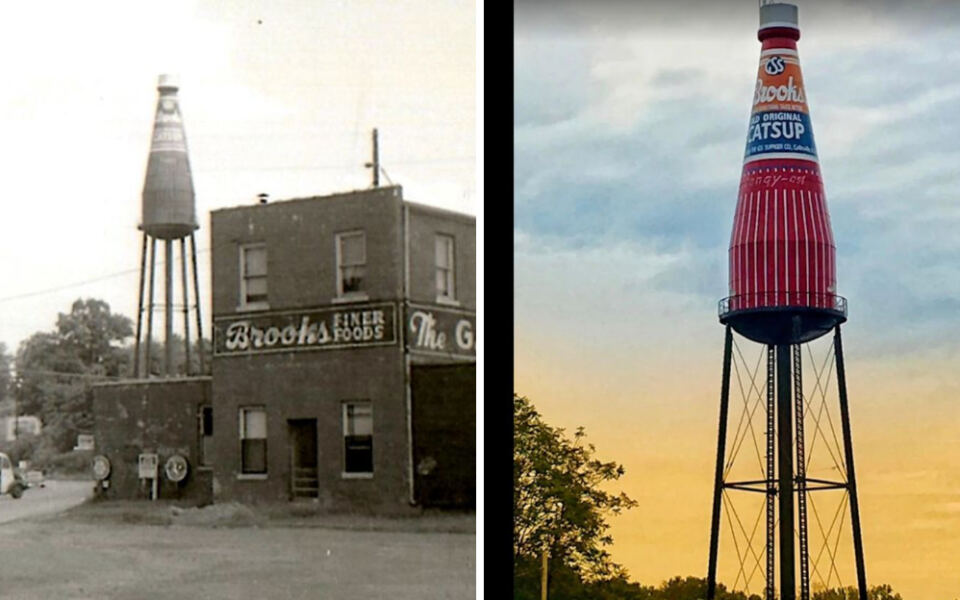
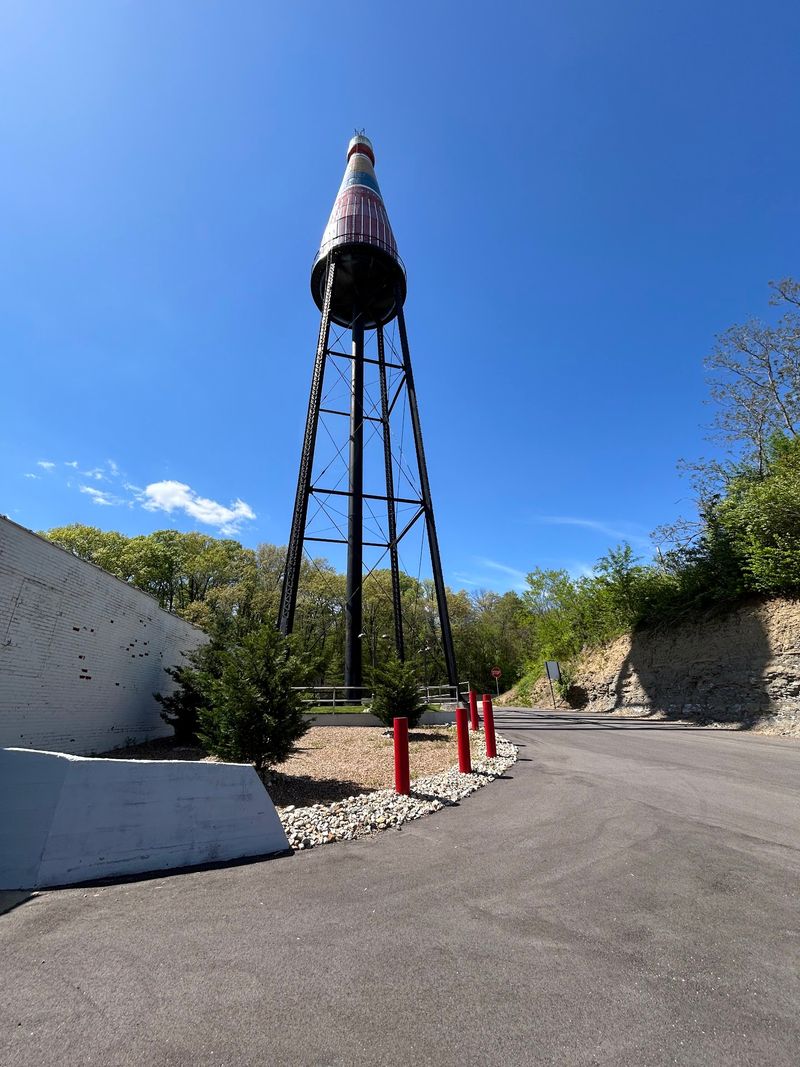
Standing proud along Route 159 in Collinsville, Illinois, the World’s Largest Catsup Bottle is one of America’s most beloved roadside attractions. This 170-foot tall water tower, built in 1949 for the G.S.
Suppiger Company, was designed to look like a giant Brooks Catsup bottle and has become an iconic symbol of quirky Americana. Whether you’re a Route 66 enthusiast, a lover of unusual landmarks, or simply passing through the St. Louis area, this towering tribute to America’s favorite condiment offers a fun and memorable photo opportunity that captures the spirit of classic road trip culture.
A Towering Tribute to Brooks Catsup
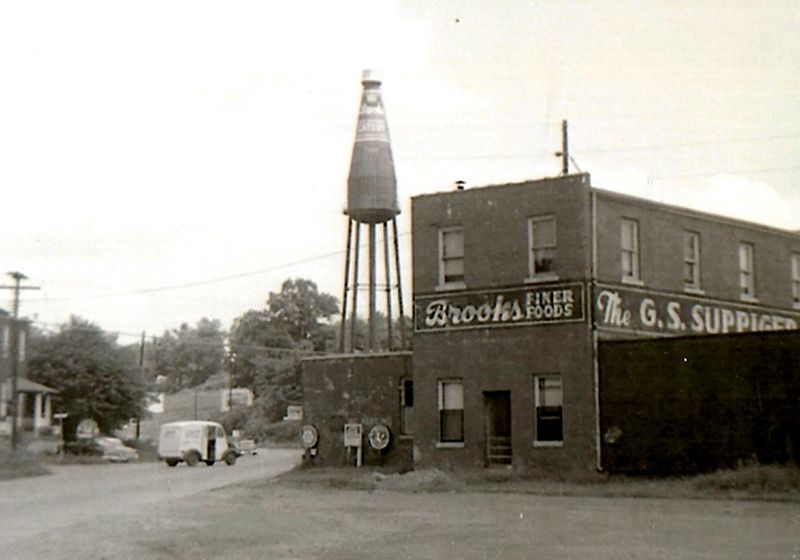
Built in 1949, this massive water tower wasn’t just a piece of industrial infrastructure. It was a bold advertising statement for the G.S.
Suppiger Company, which produced Brooks Catsup at the adjacent factory. The bottle held 100,000 gallons of water to support the processing plant’s operations.
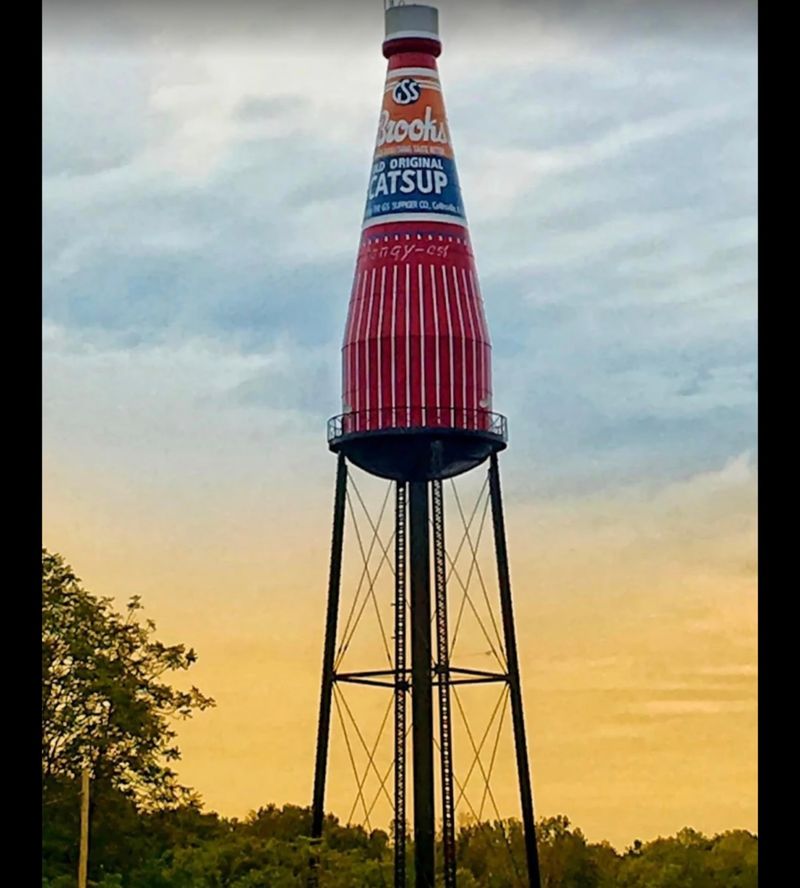
What makes this landmark truly special is its detailed design. Every element, from the cap to the label, was carefully crafted to replicate an actual Brooks Catsup bottle.
The bright red color and distinctive shape made it visible for miles around, serving as both a functional water tower and a giant billboard.
When the factory closed decades later, the bottle faced an uncertain future. Many feared demolition would erase this piece of local history.
Fortunately, dedicated volunteers stepped in to save it, recognizing its cultural significance beyond its original commercial purpose.
Today, the bottle stands as a testament to mid-century American ingenuity and marketing creativity. It represents an era when companies weren’t afraid to think big and make bold architectural statements that would capture public imagination for generations to come.
Rescued from Demolition by Dedicated Volunteers
The Catsup Bottle Preservation Group emerged as unlikely heroes when this beloved landmark faced potential destruction. After the Brooks plant closed, the tower’s future hung in the balance.
These passionate volunteers refused to let a piece of American roadside history disappear without a fight.
Through tireless fundraising efforts and community organizing, the group raised money to restore the aging structure. They worked with local officials, historical societies, and preservation experts to ensure the bottle would receive proper care.
Their dedication paid off in ways that exceeded their wildest expectations.
In 2002, their efforts culminated in the bottle being added to the National Register of Historic Places. This prestigious designation ensured permanent protection and recognition of the tower’s cultural importance.
The listing acknowledged the bottle as more than just a quirky attraction but as a significant example of novelty architecture.
The preservation group continues monitoring the bottle’s condition and organizing maintenance efforts. Their ongoing commitment ensures future generations can enjoy this slice of Americana, proving that community action can save even the most unusual landmarks from vanishing into history.
Perfect Photo Opportunity for Road Trippers
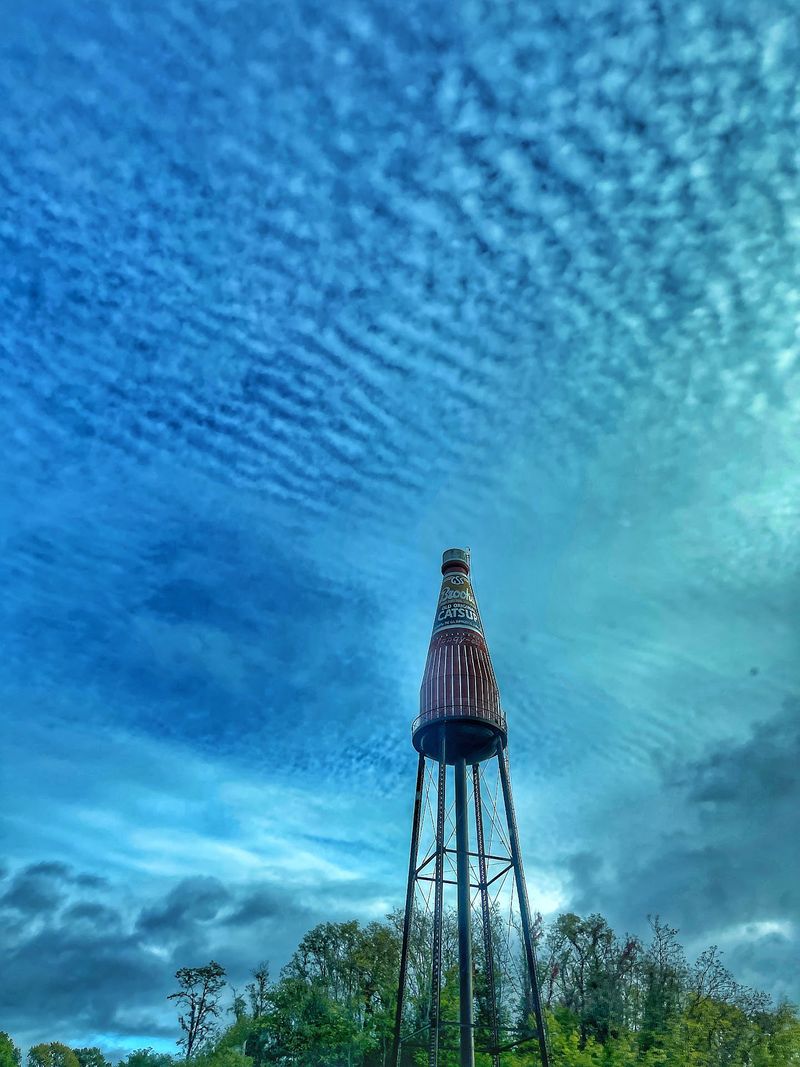
Visitors consistently mention the bottle as an irresistible photo subject. Its sheer size and whimsical design create Instagram-worthy shots that capture the essence of American road trip culture.
The contrast between the mundane industrial setting and the playful giant bottle makes for compelling images.
Most people spend 5-10 minutes at the site, which is perfect for a quick stop. You can snap photos from multiple angles, read the informational placard, and appreciate the bottle’s impressive scale.
The visit doesn’t require much time, but it delivers maximum impact.
Parking can be slightly tricky since the bottle sits next to an operating business. Many visitors pull into the nearby lot for convenience, though some reviewers mention parking across the street in residential areas.
The location isn’t set up as a formal tourist attraction with dedicated parking facilities.
Despite these minor inconveniences, the bottle remains wildly popular with travelers. Whether you’re documenting your Route 66 journey or simply collecting memories of quirky American landmarks, this oversized condiment container delivers exactly what road trip enthusiasts crave: unexpected charm and pure, unapologetic fun.
Located Just Minutes from Downtown St. Louis
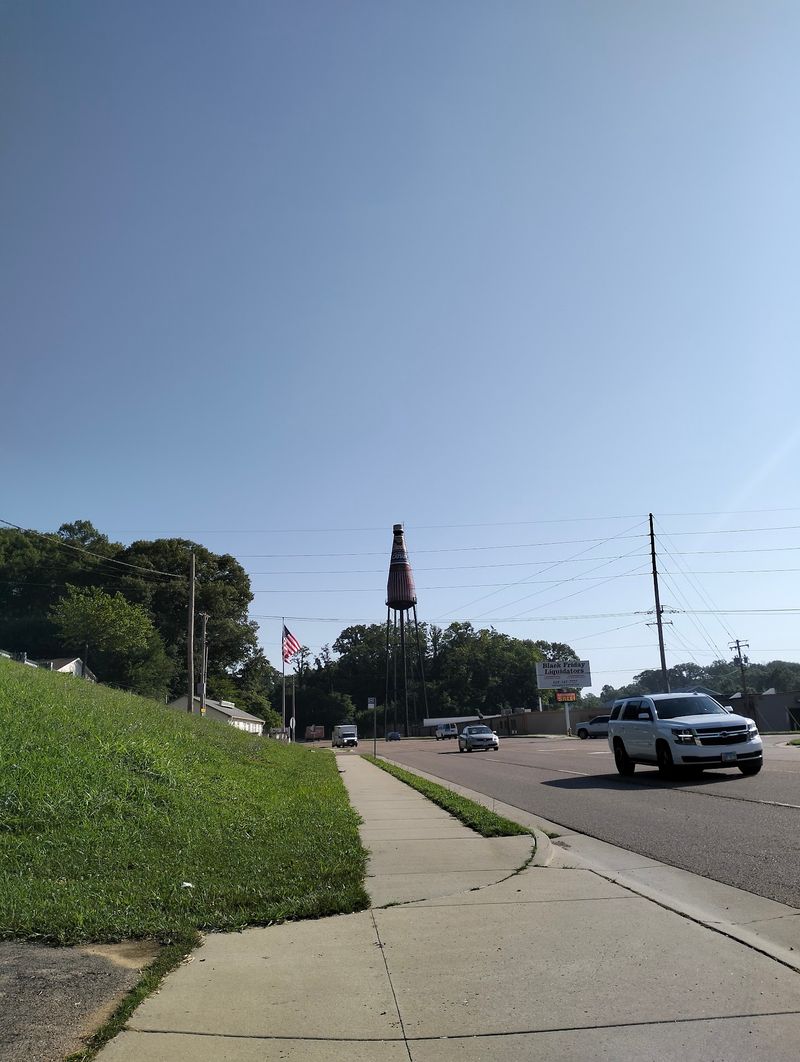
Geography works in the bottle’s favor. Positioned at 800 South Morrison Avenue in Collinsville, it sits conveniently close to metropolitan St. Louis, making it accessible for both local residents and out-of-town visitors.
The short drive from downtown opens this attraction to a wide audience.
Route 159 runs right past the landmark, ensuring excellent visibility for passing motorists. Many people discover the bottle accidentally while driving through the area, then immediately pull over for an impromptu visit.
Its location along a main thoroughfare means you don’t need to venture down obscure back roads.
For Route 66 enthusiasts, the bottle represents an essential stop on their historic highway pilgrimage. Though not directly on the original Route 66 alignment, it’s close enough to warrant inclusion on most travelers’ itineraries.
The proximity to other St. Louis-area attractions makes trip planning easier.
The bottle’s suburban setting provides easy access without the crowds and congestion of major tourist destinations. You can visit any time of day or night since it’s visible 24/7.
This flexibility makes it perfect for spontaneous detours or planned stops during cross-country adventures.
Open 24 Hours for Maximum Convenience
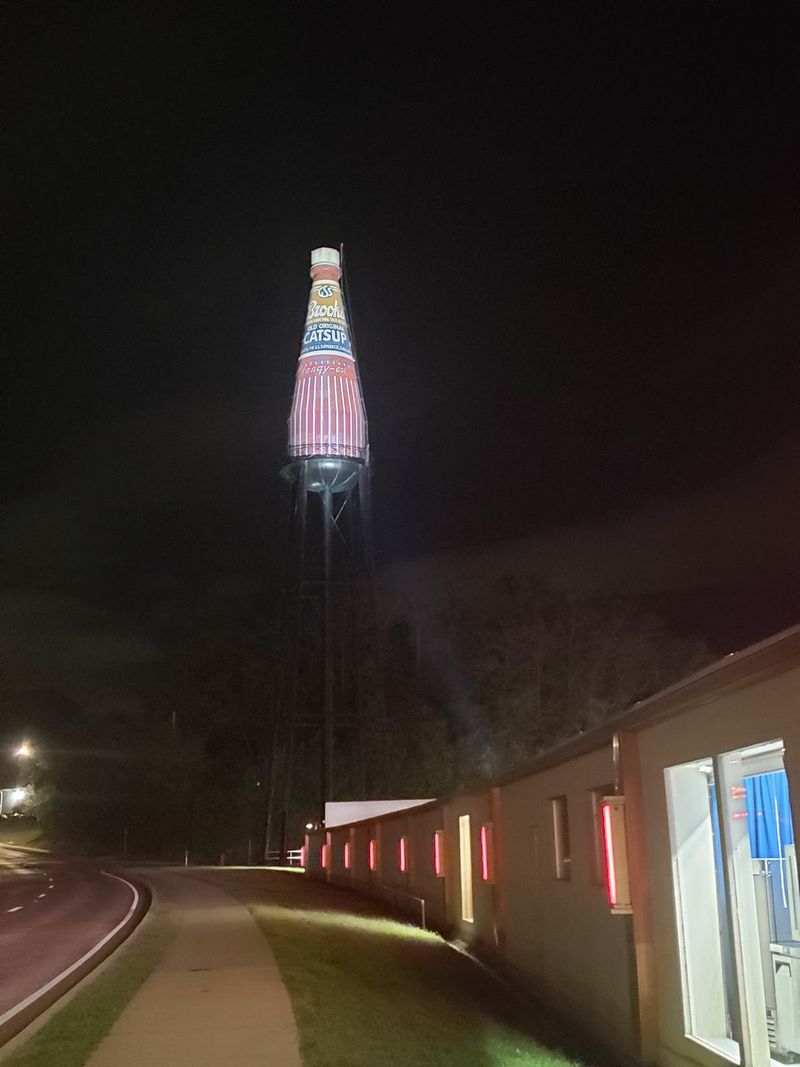
Unlike museums with restricted hours, the bottle welcomes visitors around the clock. This unrestricted access makes it incredibly convenient for travelers keeping irregular schedules or passing through at odd hours.
Night owls and early birds enjoy equal opportunity to experience this landmark.
Several reviewers mention seeing the bottle lit up after dark, adding extra visual appeal. The nighttime illumination transforms the already eye-catching structure into a glowing beacon that’s even more dramatic against the dark sky.
Evening visits offer a completely different aesthetic experience.
The 24-hour accessibility also means you can plan your visit around other activities without stress. Running behind schedule?
No problem. Want to avoid midday heat or crowds?
Visit early morning or late evening instead.
This open-access approach reflects the bottle’s nature as a public landmark rather than a commercial attraction. There are no admission fees, no tickets to purchase, and no gates to worry about.
The simplicity and accessibility embody the democratic spirit of American roadside culture, where everyone can enjoy these quirky monuments to our collective imagination and humor.
Free Admission Makes It Budget-Friendly
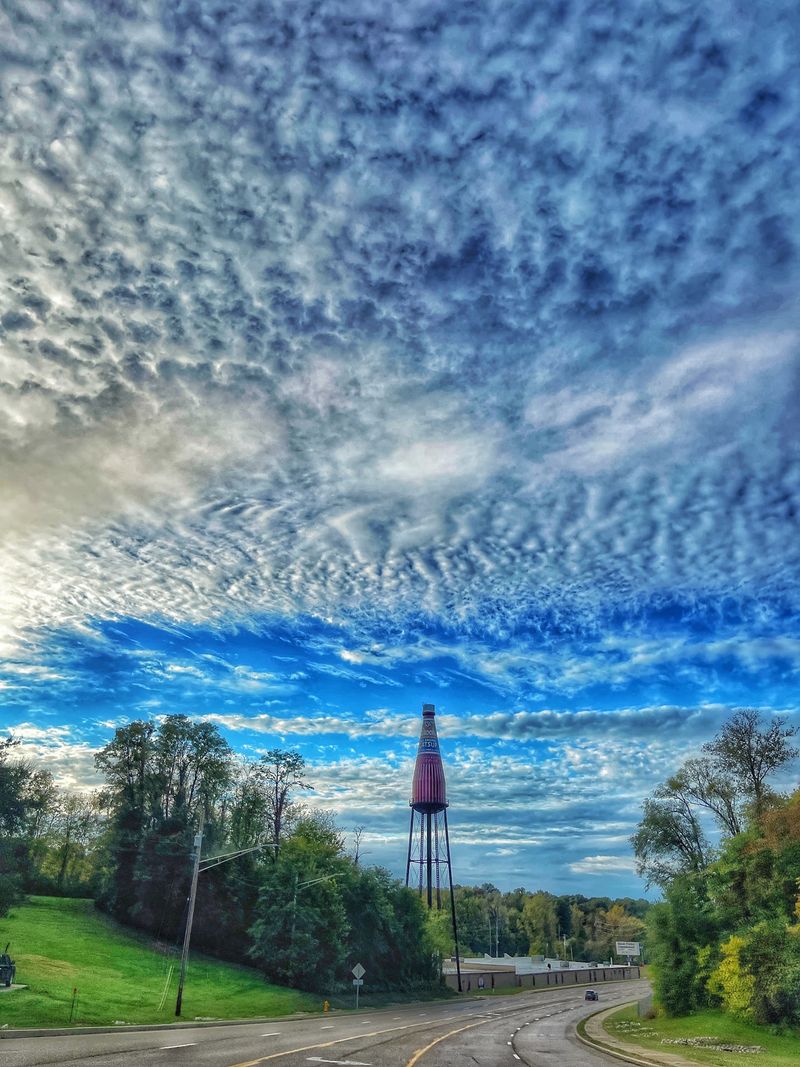
Your wallet can stay in your pocket for this attraction. The bottle charges absolutely nothing for visits, making it perfect for budget-conscious travelers or families looking for free entertainment.
In an era of expensive tourist attractions, this refreshing approach feels genuinely welcoming.
The lack of commercialization actually enhances the experience for many visitors. You won’t encounter gift shops, entrance gates, or pressure to purchase souvenirs.
The bottle simply exists as a public landmark for everyone to enjoy equally, regardless of economic circumstances.
This accessibility aligns with the democratic tradition of American roadside attractions. These landmarks were built to delight ordinary people during everyday travels, not to extract money from tourists.
The bottle maintains that egalitarian spirit beautifully.
While there’s no formal gift shop at the bottle itself, some reviewers mention finding catsup bottle-themed merchandise at a nearby distillery or brewery in town. Local businesses have embraced the landmark as a community symbol, creating opportunities for those who want to take home a memento without any obligation or pressure.
Quirky Americana at Its Finest
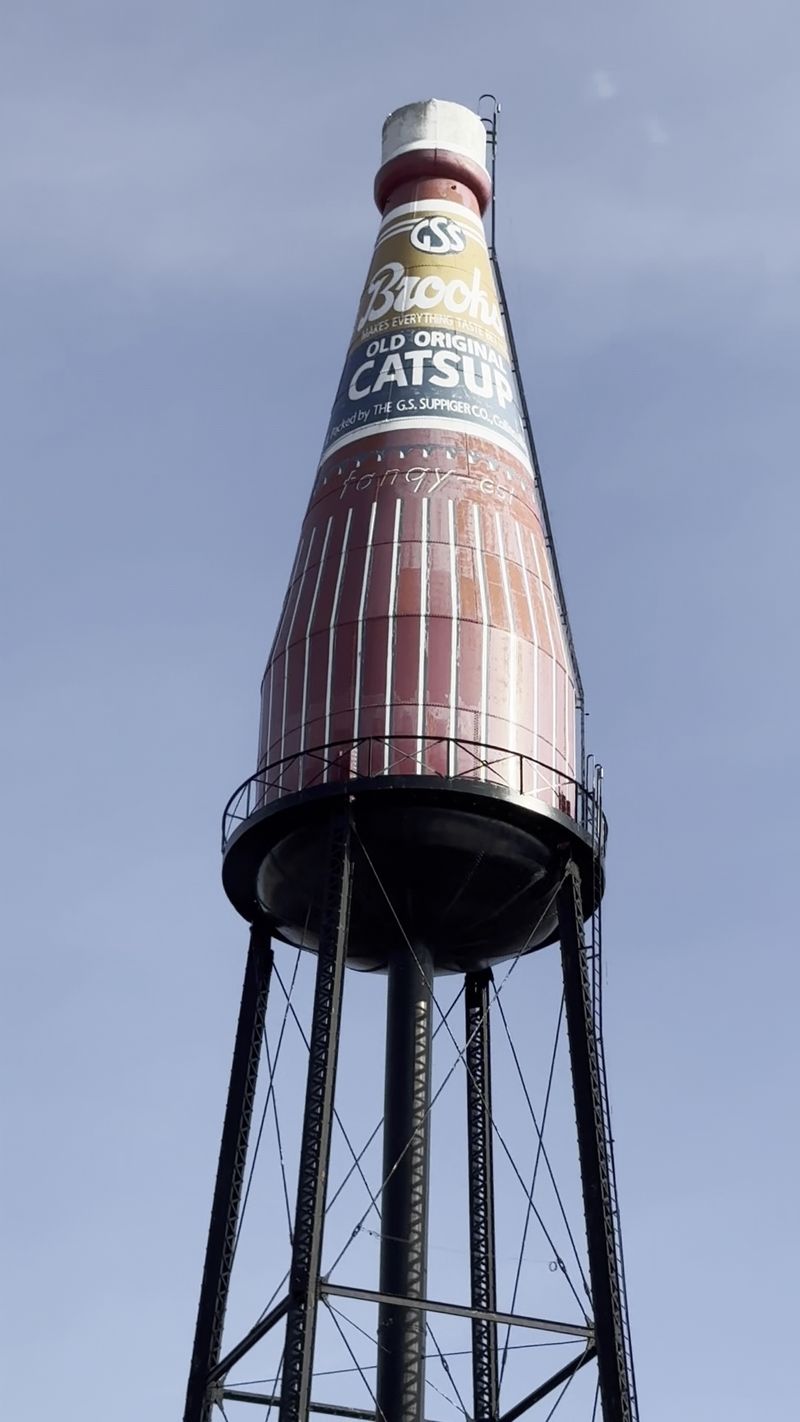
Kitsch has never looked so good. The bottle represents peak mid-century American roadside culture, when businesses competed for motorists’ attention with increasingly outrageous architecture.
Giant donuts, oversized cowboys, and enormous animals dotted the landscape, but few examples survive as beautifully as this one.
What defines great kitsch is sincerity mixed with playfulness. The bottle wasn’t built ironically or as a joke.
It served real purposes while simultaneously delighting passersby with its whimsical design. That genuine quality separates authentic roadside treasures from modern imitations.
The bottle’s survival through changing decades proves its enduring appeal. While tastes evolved and minimalism replaced exuberance in commercial architecture, people continued cherishing these quirky landmarks.
They remind us that life doesn’t always need to be serious or sophisticated.
Visiting the bottle connects you to a broader tradition of American road culture. These attractions transformed mundane car trips into adventures filled with unexpected discoveries.
They encouraged families to slow down, pull over, and create memories together, values that remain important despite our increasingly fast-paced digital world.
Still Functions as an Active Water Tower
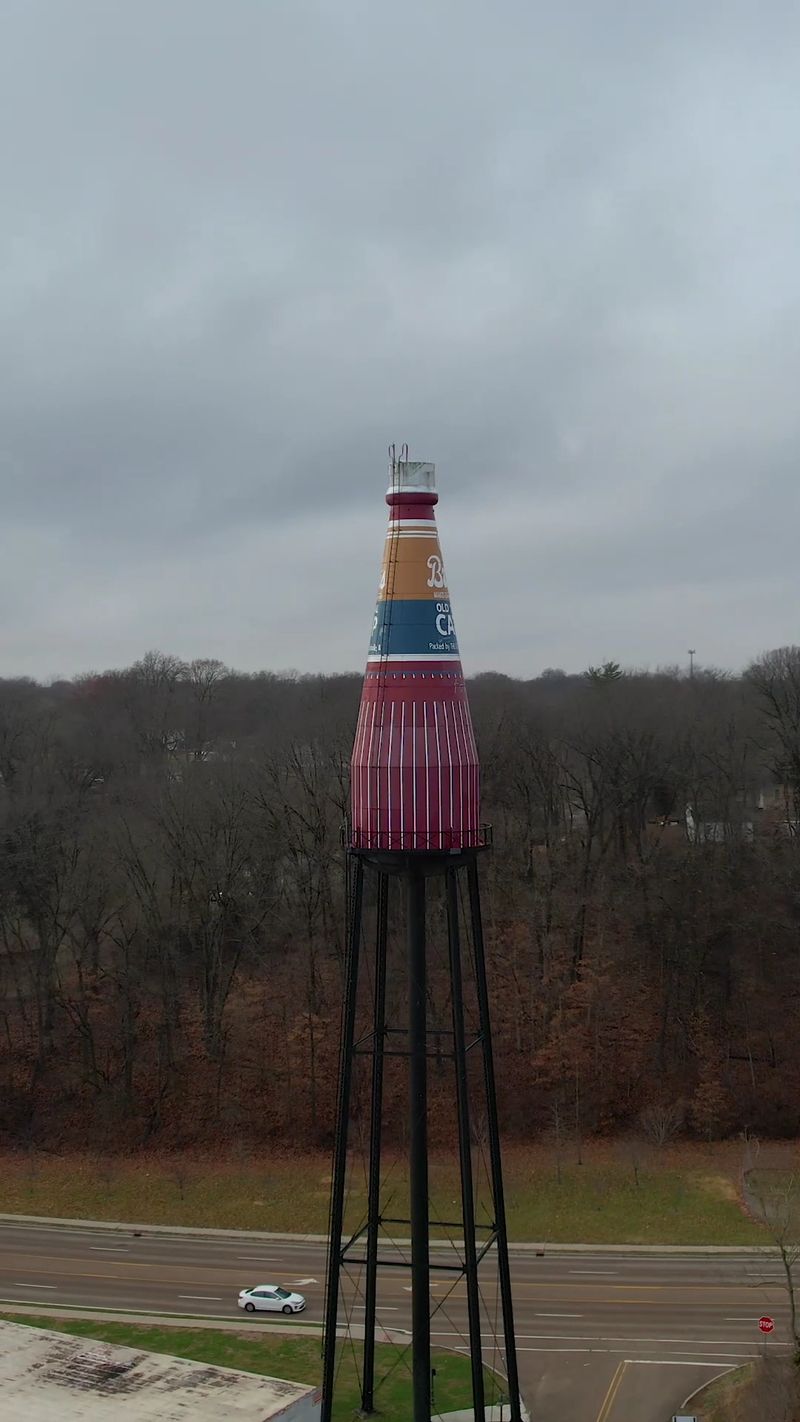
Beauty meets function in spectacular fashion here. Many people assume the bottle is purely decorative, but it continues serving its original purpose as a working water tower.
This dual nature makes it even more impressive than a simple statue or monument would be.
The engineering required to create a functional water tower shaped like a catsup bottle demonstrates remarkable technical skill. Designers had to balance aesthetic accuracy with structural integrity and practical water storage requirements.
They succeeded brilliantly on all fronts.
This ongoing functionality helps justify the preservation efforts and maintenance costs. The bottle isn’t just a museum piece but active infrastructure serving the community.
That practical value strengthens arguments for its continued care and protection.
Knowing water still flows through this giant bottle adds an extra layer of appreciation. It’s not a relic of the past but a living piece of history that continues fulfilling its intended purpose decades after construction.
Few roadside attractions can claim such practical longevity alongside their cultural significance, making the bottle a rare example of form and function achieving perfect harmony.
Informational Placard Shares Historical Details
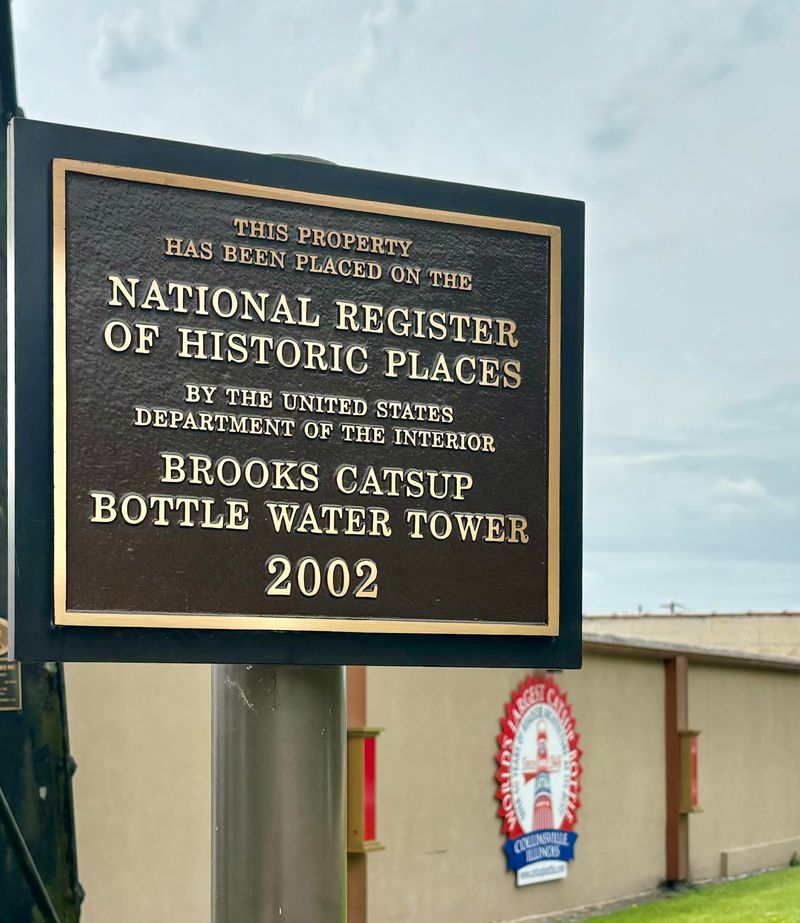
Knowledge enhances appreciation. At the bottle’s base, an informational placard provides historical context and interesting facts about the structure’s construction, purpose, and preservation.
Reading these details transforms a quick photo stop into an educational experience.
The placard explains the bottle’s connection to Brooks Catsup and the G.S. Suppiger Company.
It outlines the preservation efforts and the bottle’s addition to the National Register of Historic Places. These details help visitors understand why this seemingly silly structure matters culturally and historically.
Some reviewers mention additional information available inside the adjacent business that now occupies the site. The current occupants, who sell commercial kitchen equipment, have embraced the bottle’s legacy and welcome curious visitors seeking more details.
Their hospitality adds warmth to the experience.
Taking time to read the historical information deepens your connection to the landmark. You’ll understand the dedication required to save it and the broader context of American roadside architecture.
This knowledge makes the visit more meaningful than simply snapping a quick selfie and rushing away without understanding the bottle’s fascinating story.
Essential Stop for Route 66 Enthusiasts
Route 66 travelers consider the bottle a must-see destination. While not technically on the original Mother Road alignment, its proximity and period-appropriate character make it an honorary member of the Route 66 family.
The bottle embodies everything road warriors love about historic highway culture.
Many Route 66 guidebooks and websites include the bottle in their recommended stops. Its location near St. Louis positions it perfectly for travelers following the historic route through Illinois and Missouri.
The short detour rewards visitors with authentic roadside Americana.
The bottle represents the same era when Route 66 achieved peak popularity. Both the highway and the bottle symbolize post-war American optimism, automobile culture, and the freedom of the open road.
They share DNA as products of that transformative period.
For serious Route 66 enthusiasts checking off landmarks, the bottle offers satisfying completion of their quest. It appears on countless bucket lists alongside Cadillac Ranch, the Blue Whale, and other iconic stops.
Visiting connects you to a community of travelers who appreciate these quirky monuments to America’s unique roadside heritage and culture.
Share this story