World War II shaped America in ways that go far beyond battlefields and military strategy. From Hawaiian harbors to desert laboratories, from California shipyards to Alabama airfields, the evidence of that era is spread across the country in ways that might surprise you.
Some of these places mark headline moments that every history textbook covers. Others preserve quieter, more complicated stories about who built the weapons, who was kept out of the fight, and who was locked away despite doing nothing wrong.
The range is genuinely remarkable. You can stand on the deck of a ship that crossed the Atlantic for D-Day, walk through a submarine that hunted enemy vessels across the Pacific, or visit the exact spot where Japan formally surrendered.
Each of these 12 stops offers something different, and together they cover the full sweep of what America actually experienced during the war years.
1. Pearl Harbor National Memorial, Honolulu, Hawaii
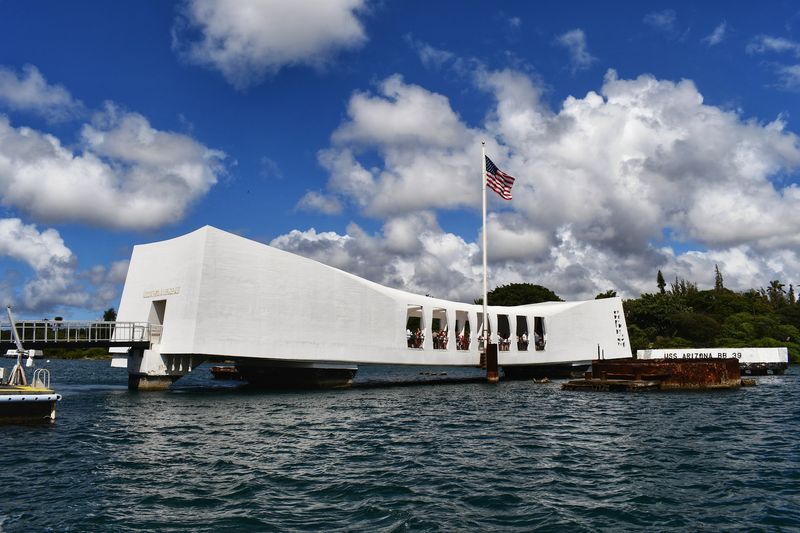
On the morning of December 7, 1941, a Sunday, the harbor below looked nothing like the calm blue stretch visitors see today. The Pearl Harbor National Memorial preserves and interprets the sites connected to Japan’s surprise attack that pulled the United States directly into World War II.
The USS Arizona Memorial sits above the sunken battleship, accessible by a short boat ride across the harbor. More than 1,100 crew members remain aboard the vessel, making the site one of the most significant in American history.
The visitor center covers the events leading up to the attack with artifacts, photographs, and recorded accounts from survivors. Military installations remain active around the harbor, giving the site an unusual quality where living history and current operations exist side by side.
Few experiences put the weight of a single date into such concrete, physical terms. The harbor itself does much of the storytelling that no exhibit panel ever fully could.
2. Battleship Missouri Memorial, Honolulu, Hawaii
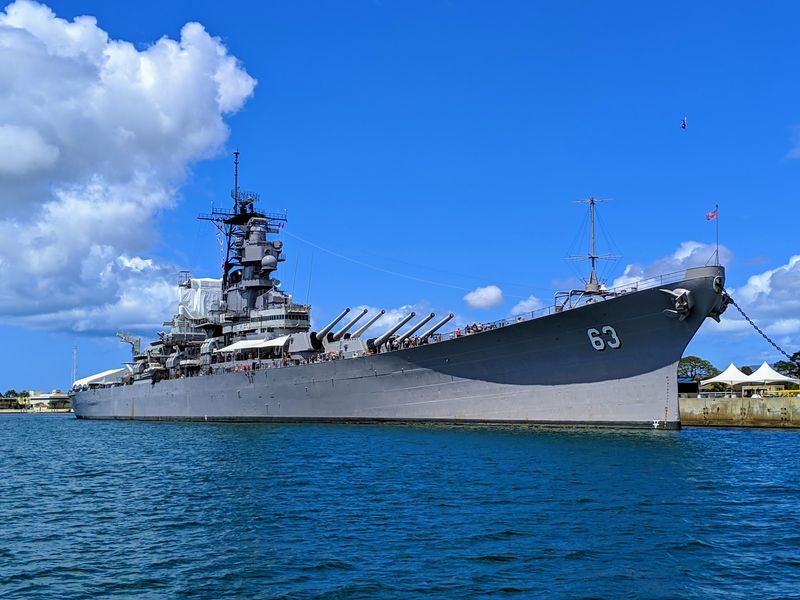
History has a sense of irony, and nowhere is that clearer than at Pearl Harbor, where the ship that marks the end of the war sits just across the water from the site that marks its beginning for America. USS Missouri, nicknamed Mighty Mo, is where Japan formally surrendered on September 2, 1945, ending World War II.
The surrender ceremony took place on the ship’s deck in Tokyo Bay, and visitors can find the exact spot commemorated aboard the vessel today. The battleship measures 887 feet long and carried nine 16-inch guns capable of firing shells weighing as much as a small car.
Exploring the ship’s multiple levels reveals gun turrets, officer quarters, crew spaces, and the bridge where commanding decisions were made during wartime operations. The placement of Missouri at Pearl Harbor was an intentional choice, creating a geographic connection between the war’s opening and closing chapters.
That pairing makes the harbor one of the most layered historical sites in the entire country.
3. The National WWII Museum, New Orleans, Louisiana
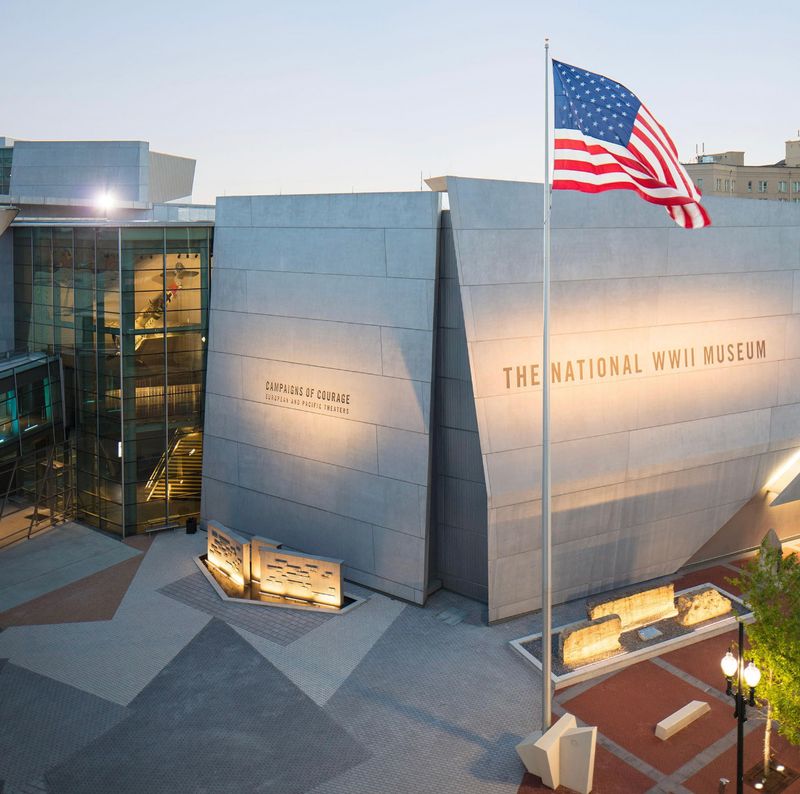
A museum that requires multiple days to fully explore is either doing something very right or has genuinely run out of wall space. The National WWII Museum in New Orleans manages to cover an entire global conflict while still making room for individual human stories at every turn.
Aircraft, tanks, landing craft, personal letters, oral histories, and interactive exhibits fill multiple pavilions dedicated to different theaters of the war. The collection is one of the largest of its kind in the world, and the museum consistently ranks among the top-rated in the United States.
New Orleans connects directly to the subject matter because Higgins Industries built thousands of flat-bottomed landing craft in the region. Those boats made amphibious invasions possible, including the Normandy landings, and military historian Dwight Eisenhower credited their designer, Andrew Higgins, as one of the people who won the war.
The museum honors that connection while expanding outward to cover every major aspect of the conflict, from the home front to the Pacific islands.
4. National D-Day Memorial, Bedford, Virginia
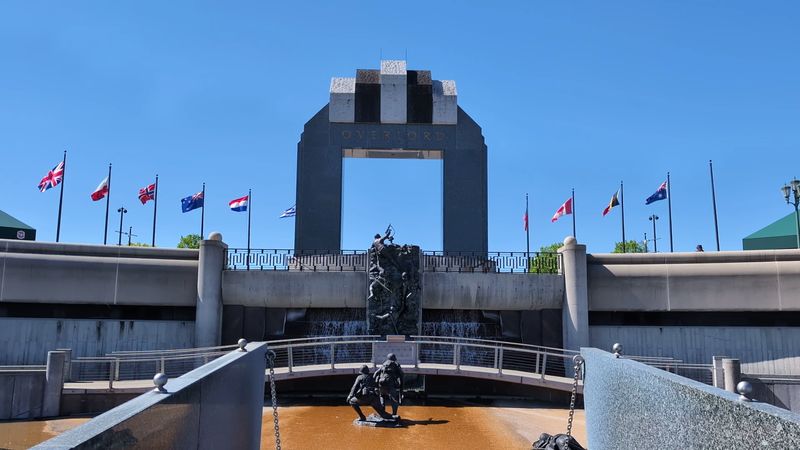
Bedford, Virginia, is a small town, and that is exactly what makes its connection to D-Day so striking. On June 6, 1944, the community lost 19 young men from Company A of the 116th Infantry Regiment during the assault on Omaha Beach, giving Bedford one of the highest per-capita loss rates of any American community that day.
The National D-Day Memorial honors those losses and the broader Allied operation through sculptures, inscriptions, plazas, and architectural features spread across more than 50 acres at the base of the Blue Ridge Mountains. The central Overlord Arch stands 44 feet tall and frames the memorial’s commemorative pool.
Bronze figures of soldiers crossing water recreate the chaos and courage of the beach landings with considerable visual impact. The design moves visitors through different phases of the operation, from the planning stages to the assault itself.
Choosing Bedford as the memorial’s home was a decision rooted in real grief, and that personal history gives the site a weight that purely symbolic memorials rarely achieve.
5. National Museum of the Pacific War, Fredericksburg, Texas
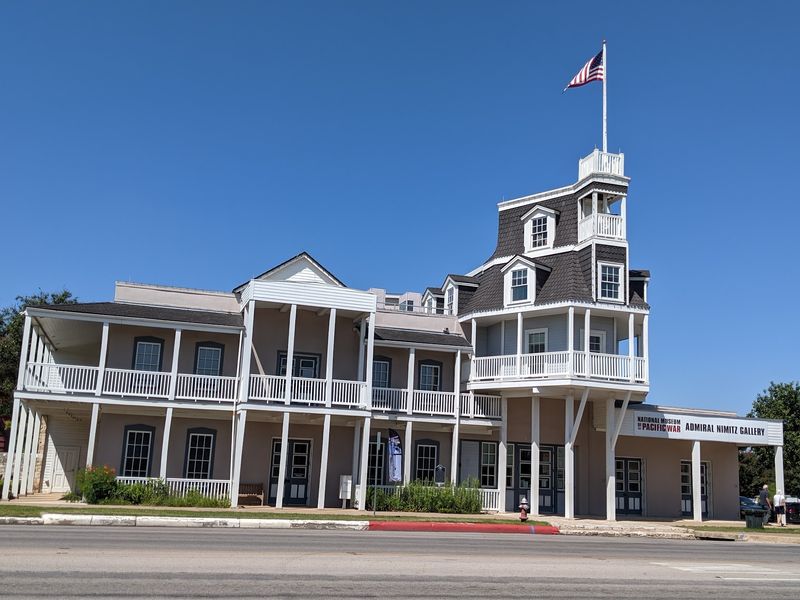
Fredericksburg, Texas, sits in the Hill Country and is better known for peaches and German heritage than for naval history, yet it became the birthplace of Fleet Admiral Chester W. Nimitz, the commander of Allied naval forces across the Pacific Theater.
That local connection anchored the creation of one of America’s most comprehensive museums dedicated to the Pacific War.
The museum grew from the historic Nimitz Hotel, which Nimitz’s grandfather built in the 1850s, into a sprawling complex of multiple buildings and outdoor exhibit areas. Aircraft, midget submarines, weapons, personal items, and large-format displays cover the campaign from its earliest engagements to Japan’s surrender.
A recreated Pacific combat zone allows visitors to walk through a simulated battle environment with full-scale equipment and detailed terrain features. The George H.W.
Bush Gallery houses a significant collection of Pacific War artifacts.
Connecting the admiral’s childhood home to the theater he commanded gives the museum a biographical thread that most military institutions simply cannot replicate.
6. Manhattan Project National Historical Park, Los Alamos, New Mexico
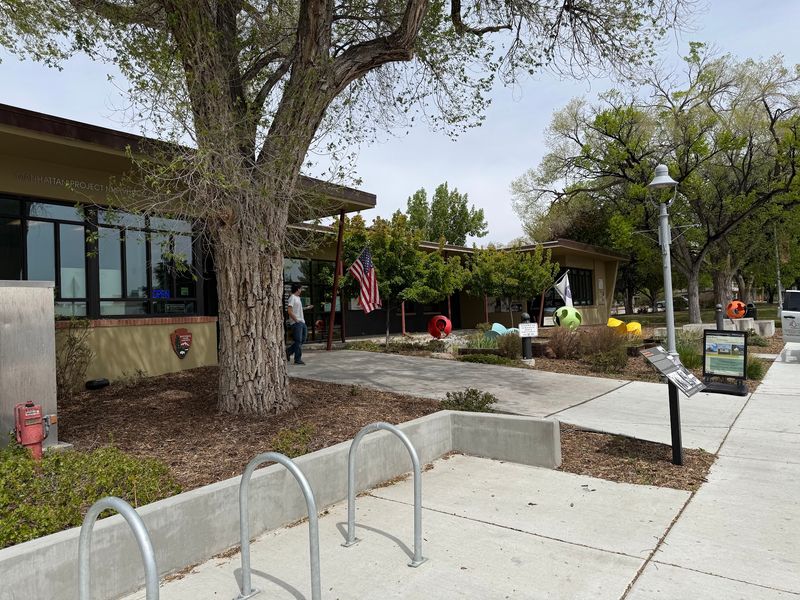
During World War II, Los Alamos did not officially exist on most maps. The community was built in secret on a remote mesa in northern New Mexico, and the people who lived and worked there were not permitted to tell family members where they were or what they were doing.
The Manhattan Project brought together physicists, chemists, engineers, and military personnel to develop the world’s first atomic weapons. J.
Robert Oppenheimer directed the scientific effort, working alongside researchers from universities and laboratories across the United States and Europe.
The Los Alamos unit of Manhattan Project National Historical Park now interprets this history through preserved buildings, exhibits, and guided tours that cover both the science and the human stories behind the project. The site addresses the ethical debates that surrounded the program alongside its technical achievements.
Visitors can see original structures from the wartime period while learning about a project that reshaped international relations, military strategy, and scientific research for decades after the war ended.
7. Manhattan Project National Historical Park, Hanford, Washington
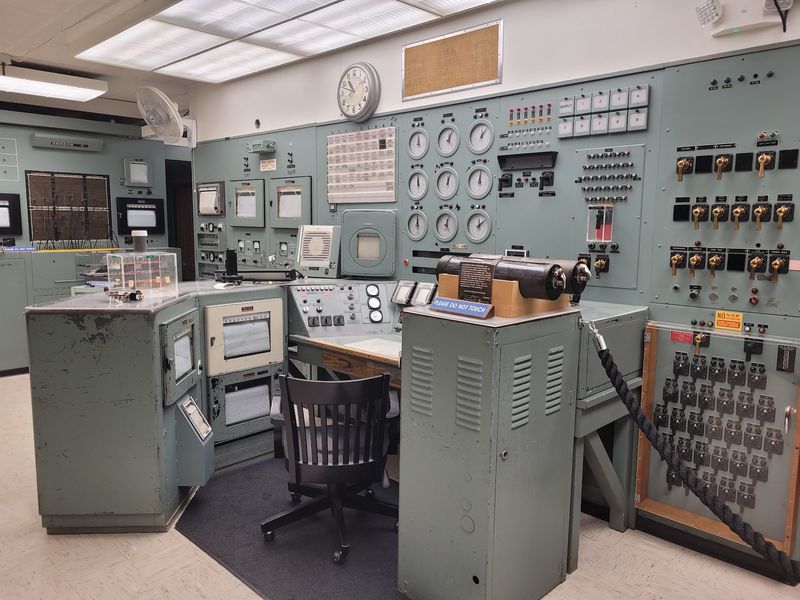
B Reactor at Hanford, Washington, holds a distinction that very few structures anywhere in the world can claim: it was the first full-scale nuclear reactor ever built and operated. Constructed in 1944 as part of the Manhattan Project, it produced the plutonium used in the bomb detonated over Nagasaki, Japan.
The Hanford site covered 586 square miles along the Columbia River, and building it required relocating the towns of White Bluffs and Hanford and removing access rights from Native American nations who had long used the land. At peak operation, more than 51,000 workers were employed across the complex.
Tours of B Reactor allow visitors to stand inside the massive graphite structure and examine the original control panels, instrumentation, and reactor face. The surrounding landscape of flat scrubland and river bluffs reinforces just how deliberately isolated the facility was designed to be.
Hanford shifts the Manhattan Project story away from laboratory chalkboards and toward the industrial workforce that translated scientific theory into wartime production at an enormous scale.
8. SS Jeremiah O’Brien, San Francisco, California
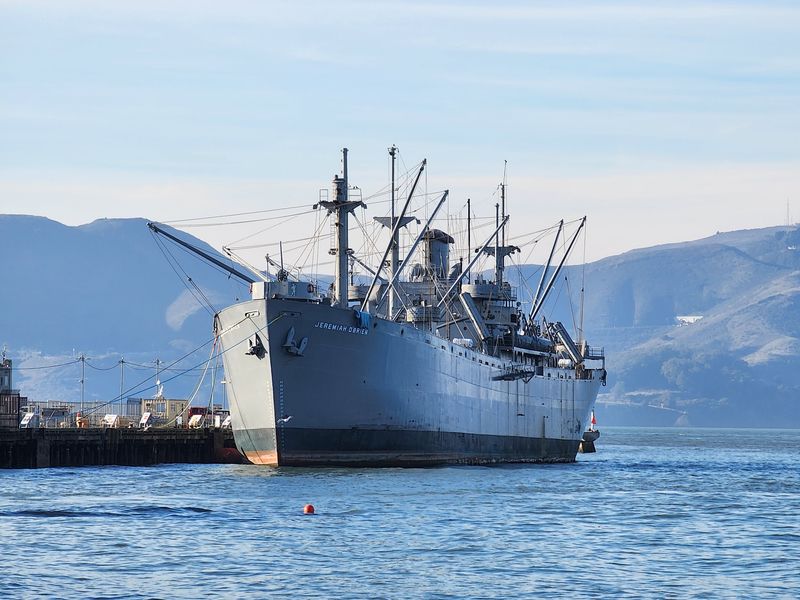
Of the more than 2,700 Liberty ships built during World War II, only two survive in operational condition, and the SS Jeremiah O’Brien is the only one that retains its complete original wartime configuration. Launched in 1943 in Maine, the ship made 11 crossings to the Normandy beachhead following D-Day, delivering supplies and personnel during the critical weeks after the invasion.
In 1994, the O’Brien made an extraordinary return voyage through the Panama Canal and across the Atlantic to participate in the 50th anniversary commemorations at Normandy, the only ship from the original invasion fleet to complete that journey.
Moored at Pier 45 in San Francisco, the ship is open for self-guided tours that take visitors through cargo holds, engine rooms, crew quarters, and the wide main deck. The machinery remains operational and the ship periodically gets underway for bay cruises.
Liberty ships were the cargo backbone of Allied operations, and the O’Brien makes that logistical story tangible in a way that no photograph or exhibit panel quite manages.
9. USS Pampanito Museum and Memorial, San Francisco, California
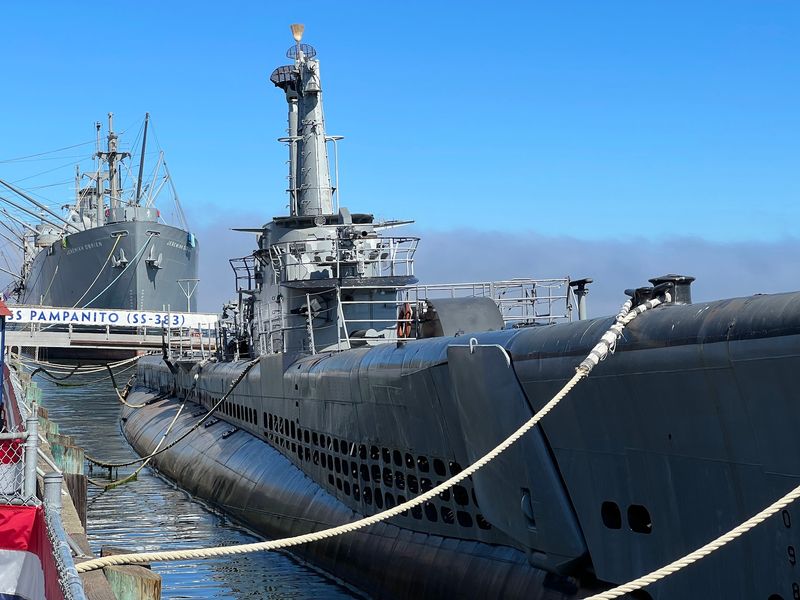
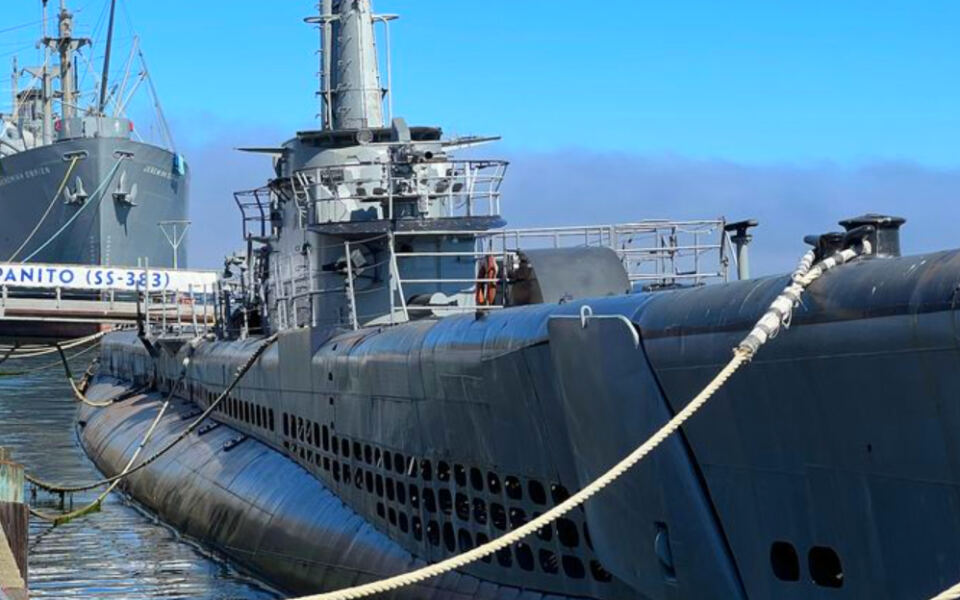
Climbing down the hatch of USS Pampanito makes one thing immediately clear: submarine crews during World War II operated in some of the most confined working conditions imaginable. The Balao-class submarine, commissioned in 1943, completed six war patrols in the Pacific and earned six battle stars for its service record.
The Pampanito sank six Japanese ships and damaged four others during those patrols. On one mission, the submarine and a fellow American sub rescued 73 Australian and British prisoners of war who had been adrift after a Japanese transport ship was sunk, an event that dramatically overcrowded the vessel for a five-day run to a friendly port.
Visitors to Fisherman’s Wharf can tour the entire submarine, moving through torpedo rooms, the control room, crew berthing areas, and the narrow passageways connecting every compartment. Informational panels throughout explain each space’s function and the routines of the crew.
The interior makes the submarine’s cramped reality completely concrete, which is something that even the most detailed written account cannot fully convey.
10. Rosie the Riveter WWII Home Front National Historical Park, Richmond, California
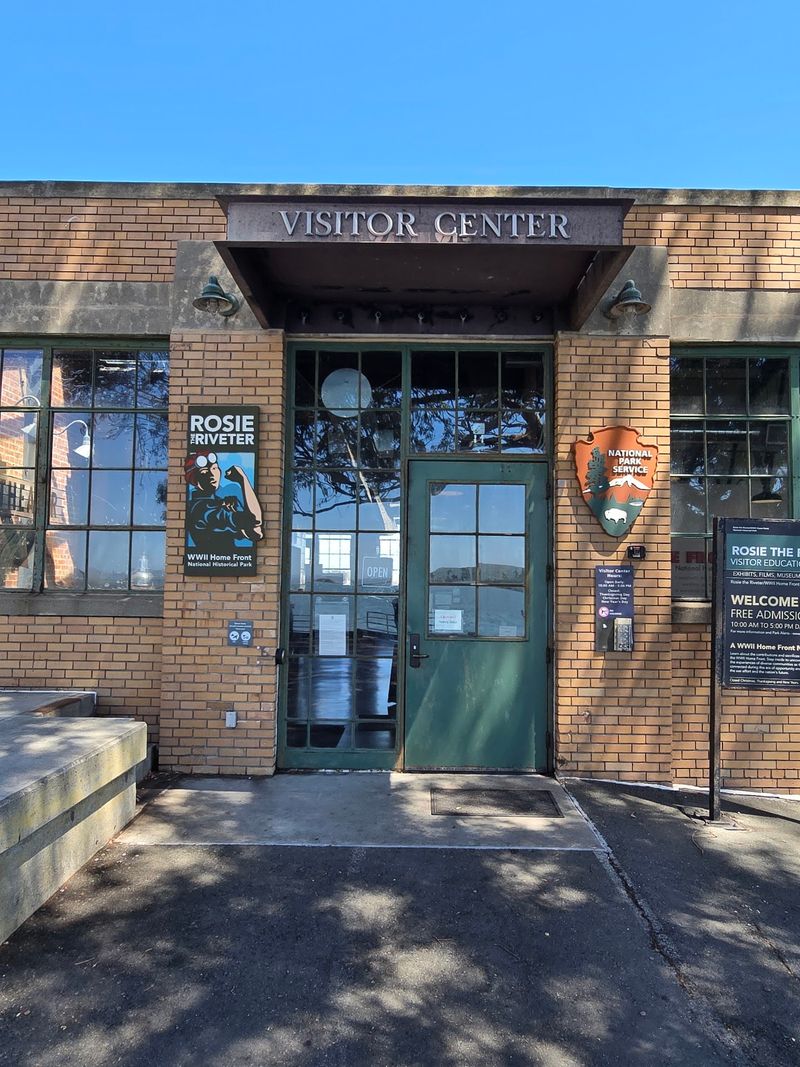
Between 1942 and 1945, Richmond, California, built more ships faster than any other city in America. The Kaiser Shipyards employed tens of thousands of workers, many of them women and African Americans who had never worked in heavy industry before the war created the demand for their labor.
Rosie the Riveter WWII Home Front National Historical Park preserves that production story and the social changes it triggered. The park’s main visitor center occupies the historic Ford Assembly Building on the waterfront, directly adjacent to where the shipyards once operated.
Exhibits address the lives of workers in concrete detail, covering housing shortages, childcare programs the Kaiser company created, labor union activity, and the experiences of workers who faced discrimination even within the wartime workforce. Oral histories from former workers appear throughout the exhibits.
The park makes a strong case that the home front was not a backdrop to the war but an active part of it, shaped by the decisions and sacrifices of ordinary working people rather than military commanders.
11. Manzanar National Historic Site, Independence, California
More than 11,000 people were incarcerated at Manzanar between 1942 and 1945, and approximately two-thirds of them were American citizens by birth. Their removal from West Coast communities followed President Franklin D.
Roosevelt’s Executive Order 9066, issued in February 1942 in response to public pressure and military recommendations after the attack on Pearl Harbor.
No evidence of espionage or sabotage was ever produced against those incarcerated. The policy has since been formally acknowledged as a grave injustice, and the United States government issued a national apology and reparations to survivors in 1988.
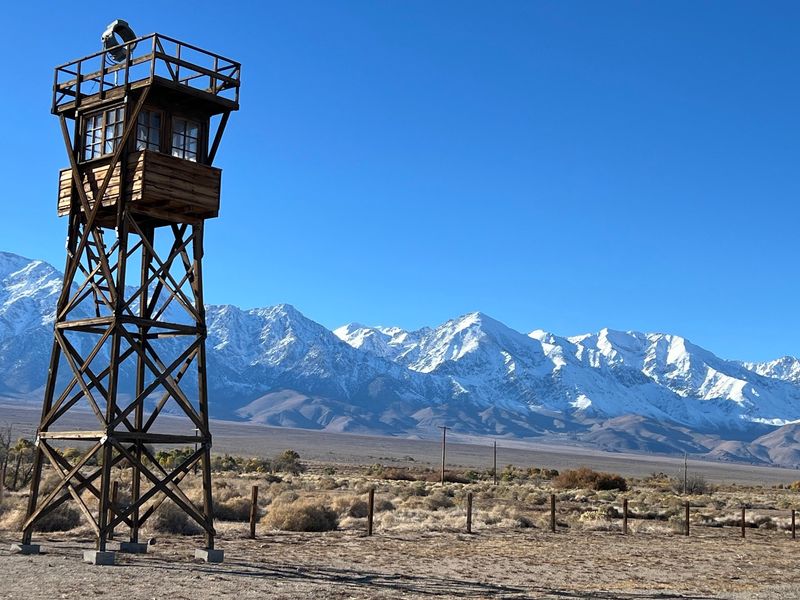
Manzanar National Historic Site preserves the camp’s footprint with reconstructed barracks, a restored guard tower, the original auditorium building, and a cemetery where some who died during incarceration are buried. The visitor center inside the auditorium provides detailed exhibits on daily life, community organization, and resistance within the camp.
The eastern Sierra Nevada rises sharply just beyond the barracks, and that dramatic setting makes the contrast between the landscape’s freedom and the camp’s confinement particularly hard to ignore.
12. Tuskegee Airmen National Historic Site, Tuskegee, Alabama
When the U.S. Army Air Corps launched what it called an experimental program to train African American pilots in 1941, many officials expected it to fail.
Instead, the men who trained at Moton Field in Tuskegee, Alabama, went on to fly more than 15,000 missions in Europe and North Africa, earning hundreds of decorations and a reputation that made the experiment’s skeptics look foolish.
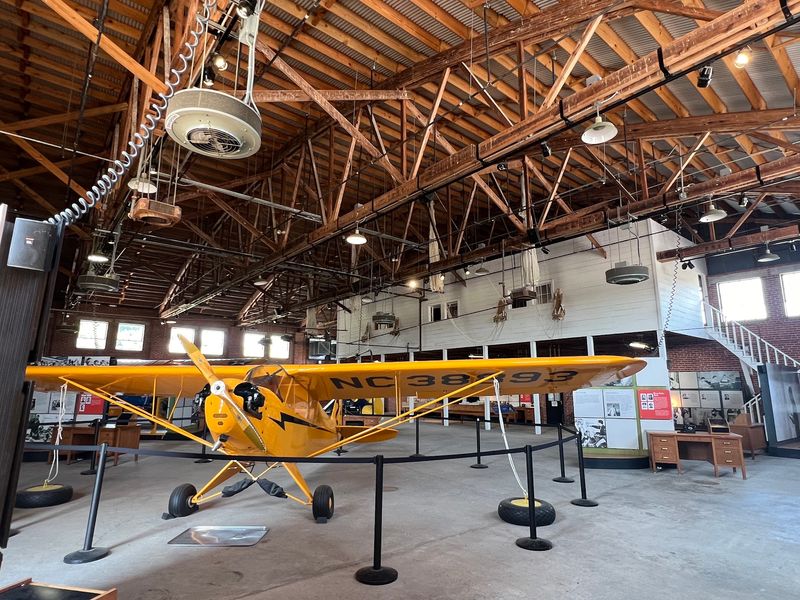
The Tuskegee Airmen National Historic Site preserves Moton Field and its original hangars, which now house exhibits on the pilots, navigators, mechanics, nurses, and support personnel who made the program function. The site covers not just combat records but the political battles required to get Black Americans into the cockpit at all.
Training aircraft used during the program are on display, and the field itself remains an active general aviation airport, a detail that gives the historic site an unusual energy compared to purely static museums.
The program’s success contributed directly to President Truman’s 1948 executive order integrating the U.S. military, making Moton Field a site where aviation history and civil rights history are genuinely inseparable.
Share this story