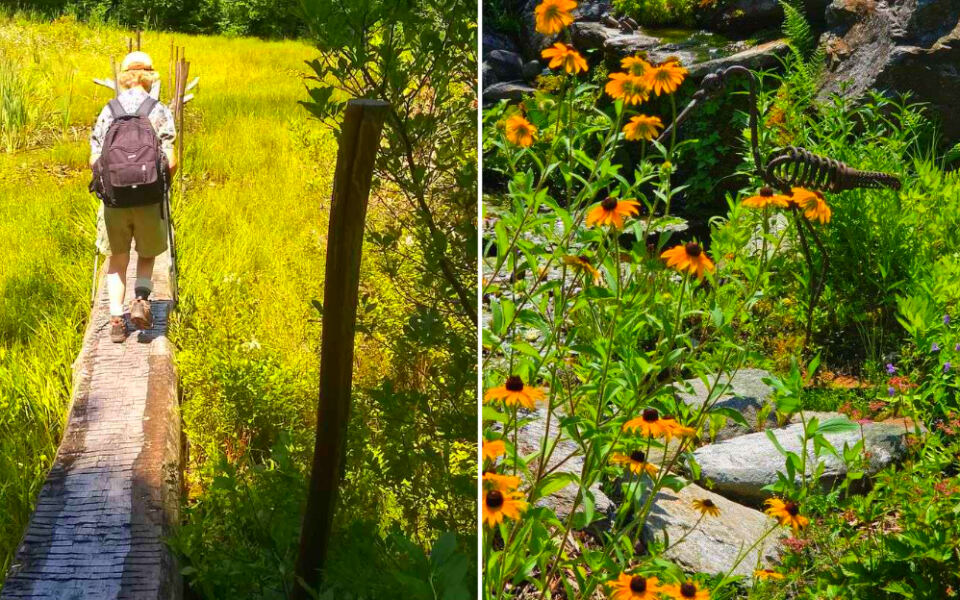
There is a place tucked into the hills of southwestern New Hampshire that most people drive right past without ever knowing it exists. A winding road leads to 155 acres of forests, wetlands, sculpted gardens, and a thirty-foot stone circle aligned to the winter solstice sunset.
The gardens open their gates only on select weekends each year, which makes every visit feel less like a casual outing and more like being let in on something rare. I got the chance to spend time at Distant Hill Gardens and Nature Trail in Walpole, New Hampshire, and what I found there went far beyond pretty flowers and peaceful paths.
There are whimsical metal sculptures built from century-old horseshoes, a boardwalk over a quaking cranberry bog, a free electric vehicle for visitors with mobility challenges, and a community tradition where people gather around a bonfire at the stone circle to mark the shortest day of the year. Keep reading, because this place has a lot more layers than you might expect.
An Unexpected Sanctuary Hiding in Plain Sight
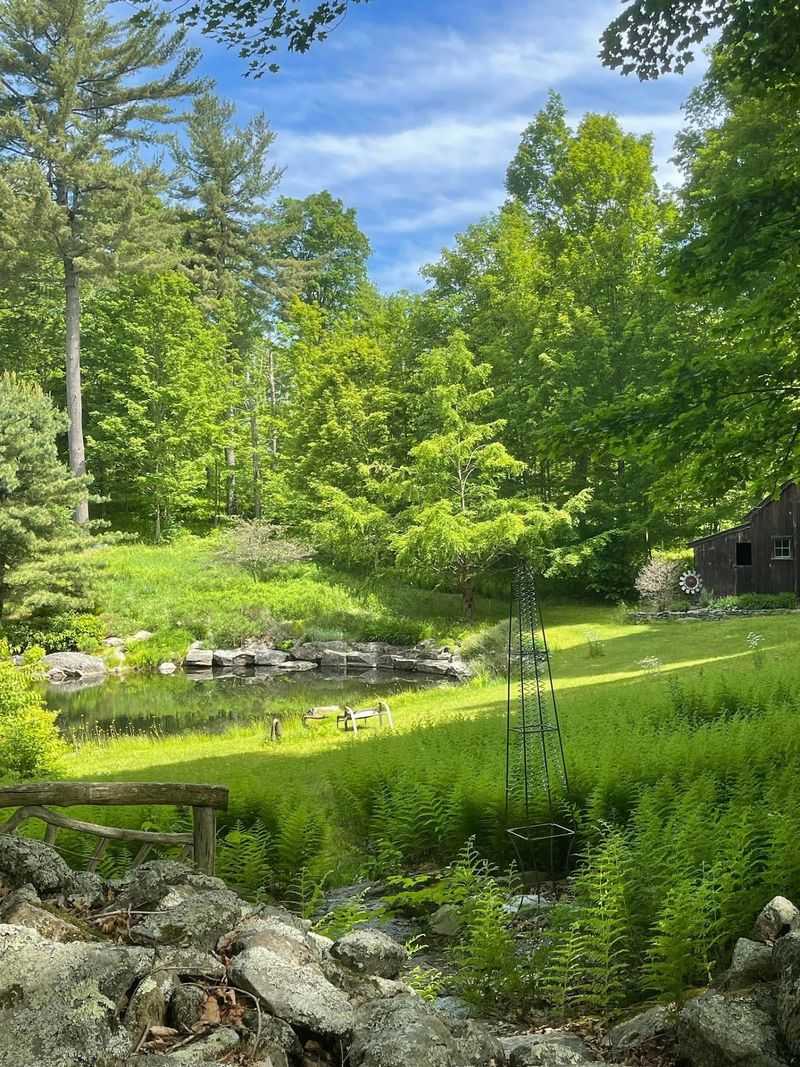
Most people associate New Hampshire with leaf-peeping and ski slopes, so discovering a 155-acre environmental and horticultural learning center tucked along a quiet rural road feels genuinely surprising. Distant Hill Gardens and Nature Trail is found at 507 March Hill Road in Walpole, New Hampshire 03608, sitting about five miles east of downtown Walpole in the southwestern corner of the state.
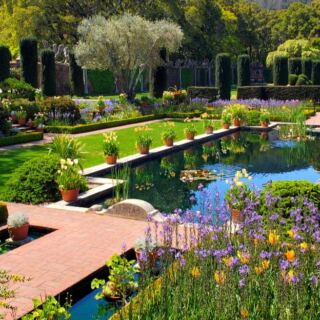
The property spans forests, fields, and wetlands, creating a landscape that blurs the boundary between cultivated design and untamed wilderness. Two distinct experiences await visitors here: a meticulously tended two-acre shrub garden surrounding the owners’ passive solar home, and an expansive network of over five miles of trails weaving through diverse natural habitats.
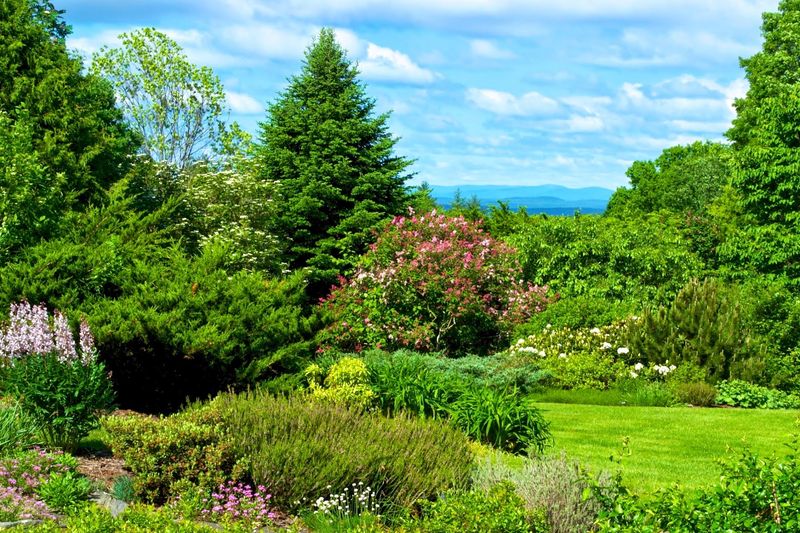
My first impression was one of quiet harmony, where human intention and natural energy seem to have reached a genuine agreement. The property holds over 450 labeled plants, ten vernal pools, a cranberry bog, and a pollinator meadow that buzzes with life from spring through fall.
It rewards slow, curious exploration at every turn.
How a Rock-Strewn Hayfield Became Something Remarkable
Back in 1979, Michael and Kathy Nerrie purchased a 21-acre parcel of land on a knoll already known as Distant Hill. The land was not a garden at the time; it was a rocky hayfield, largely cleared and waiting for someone with enough vision and stamina to do something meaningful with it.
Self-described “1960s back-to-the-land” enthusiasts, the Nerries spent the next decade building their energy-efficient passive solar home and several outbuildings entirely by hand. They also revived an abandoned eight-acre sugarbush, returning it to maple syrup production, and began thinning trees to improve forest health throughout the property.
The first ornamental gardens were planted in 1990 in what had once been an old hay field, marking the quiet beginning of what would eventually grow into a beloved public destination. Moving tons of rocks to create hundreds of feet of stonewalls, the Nerries transformed raw New Hampshire land into something layered, intentional, and deeply personal.
Their story is proof that patience and dedication can reshape a landscape entirely.
Sculptures Built from a Two-Hundred-Year-Old Scrapheap
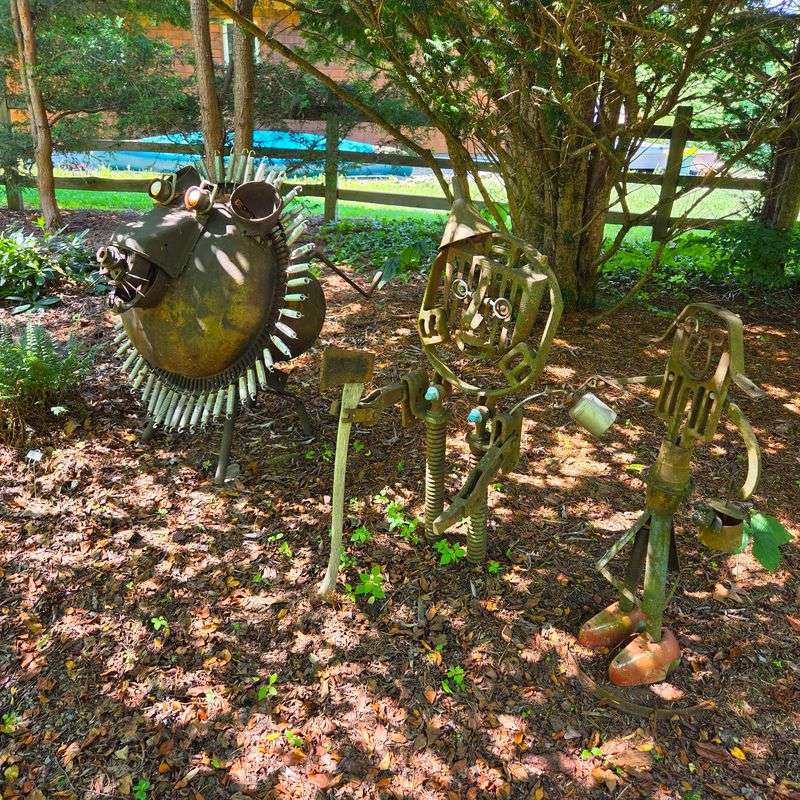
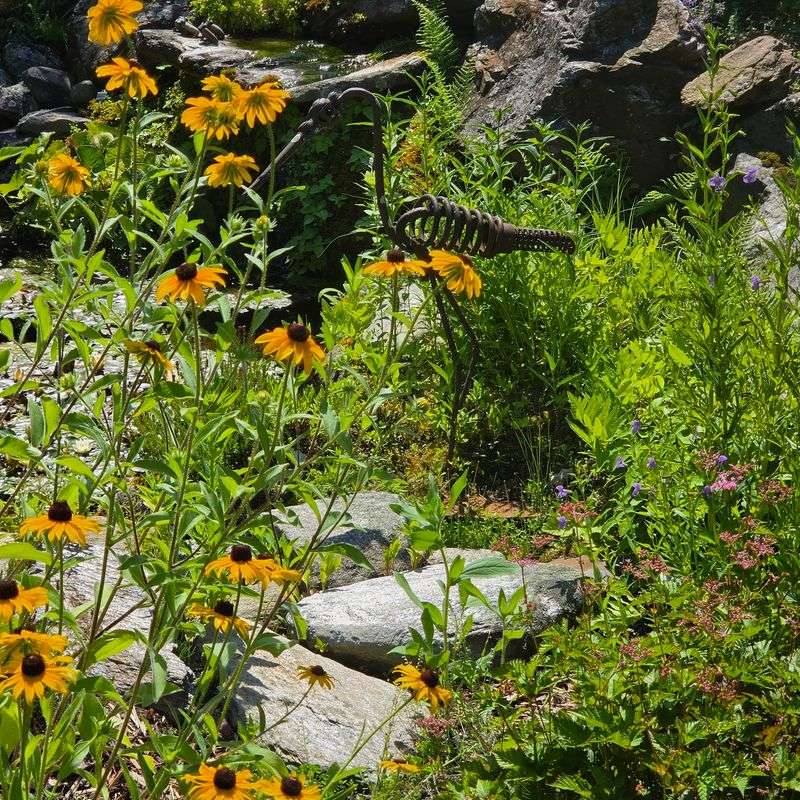
Scattered throughout the gardens, a collection of playful metal sculptures catches the eye at unexpected moments. Michael Nerrie built many of these pieces from found objects, and the source of his raw materials is one of the more charming stories on the property.
An old dump site on the farm, roughly two hundred years old, turned out to be filled with discarded horseshoes and other metal scraps left behind by a previous farmer who relied on work horses. That forgotten pile of iron became the foundation for a series of imaginative creations that now bring personality and humor to the natural surroundings.
A red-headed woodpecker perches near the sugarhouse, and a hummingbird hovers mid-flight beside vibrant red metal flowers, some of which were contributed by local artisans. These sculptures are woven into the landscape rather than placed on pedestals, making them feel like natural inhabitants rather than decorations.
The effect is a garden that rewards close attention, because the next surprising detail is always just around the bend.
A Stone Circle Rooted in Ancient Wonder
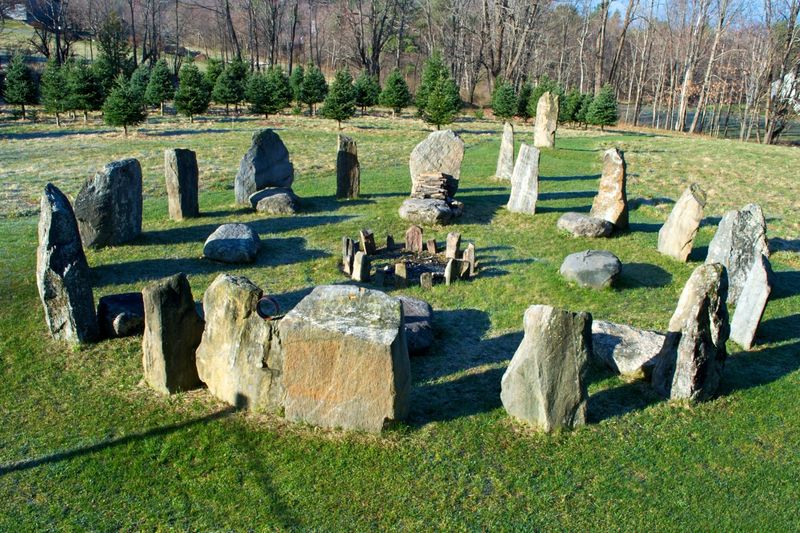
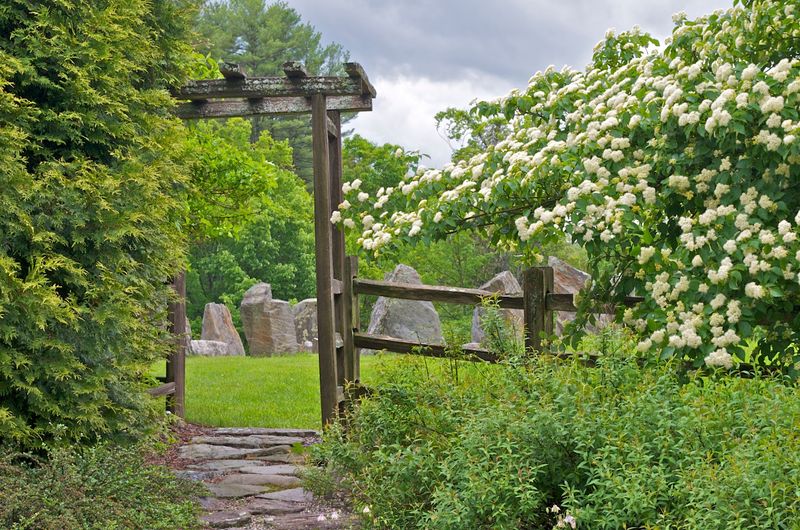
Some garden features stop you mid-step, and the stone circle at Distant Hill does exactly that. Inspired by ancient ceremonial sites found across the British Isles, this carefully arranged ring of upright stones feels both timeless and unexpected in a New Hampshire meadow.
It is the kind of place where you find yourself slowing down without meaning to.
Each stone was placed with intention, creating a space that invites quiet reflection. Visitors often pause here longer than anywhere else on the property.
Whether or not you believe in the mystical history behind stone circles, standing inside one feels genuinely different from anything else on the trail.
Five Miles of Trails Designed for Everyone
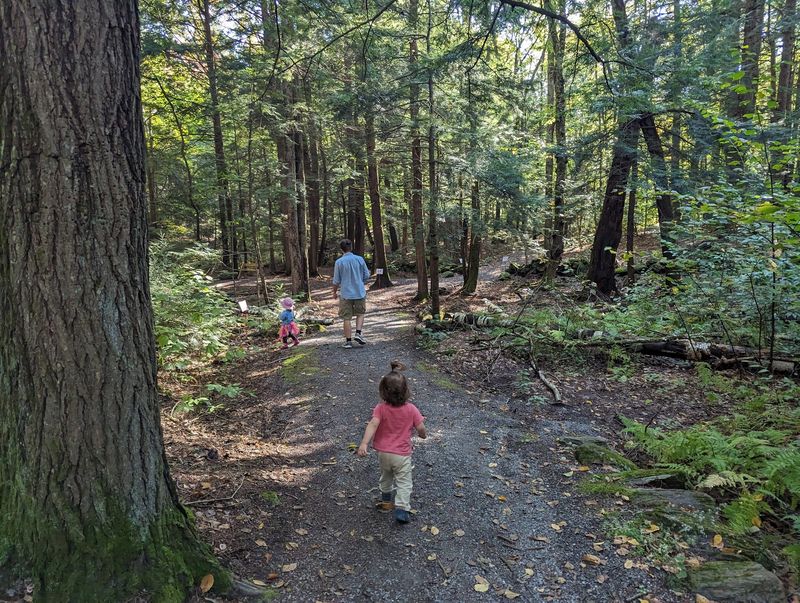
Accessibility is not an afterthought at Distant Hill; it is woven into the design of the entire trail network. The property offers more than five miles of paths, including a two-mile network of wide, hard-packed gravel trails specifically built to accommodate wheelchairs and strollers without difficulty.
Two wheelchair-accessible portable restrooms are available on-site, one near the main parking area and another positioned along the trail system itself. Beyond the accessible gravel paths, three additional miles of more rugged hiking trails wind through mixed hemlock and hardwood forests rich with native wildflowers and wildlife.
Perhaps the most remarkable feature is the “Live Free and Ride” program, which provides a free all-terrain electric vehicle called a TerrainHopper for visitors who face mobility challenges. Trained volunteers offer orientation, transfer assistance, and companionship for riders, ensuring that even the more challenging terrain becomes reachable.
The commitment to making nature genuinely accessible here is the kind of detail that sticks with you long after you have left the property.
A Children’s Book You Walk Through in the Woods
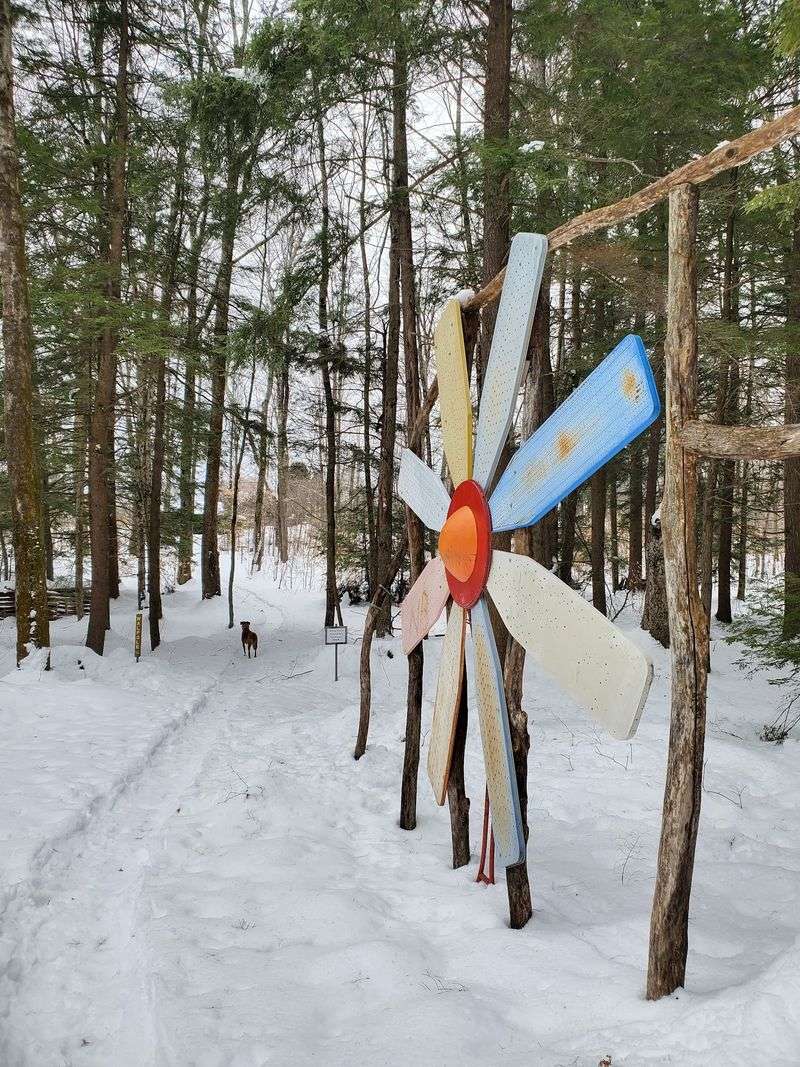
Children visiting Distant Hill get to experience something genuinely different from a typical garden walk. The Distant Hill Story Walk trail is a collaboration with the Walpole Town Library, and it works exactly the way it sounds: laminated pages from a nature-based children’s book are mounted on metal holders spaced roughly fifty feet apart along a trail.
A new book is installed each month, keeping the experience fresh for families who return regularly. Each page comes with a fun activity, turning a simple stroll into an interactive literary adventure that holds kids’ attention without screens or structured programming.
For those whose curiosity runs toward what lies beneath their feet, the Geology Trail offers a parallel kind of wonder. This half-mile path features ten distinct rock outcrops, each with interpretive signs explaining the geological forces that shaped the landscape over millions of years.
The first half-mile of this trail is also wheelchair accessible, so the educational experience extends to all visitors. Both trails demonstrate how learning can feel effortless when it is built into the walk itself.
Wetlands, Bogs, and the Quiet Pulse of a Living Ecosystem
Wandering beyond the cultivated gardens, the landscape opens into a series of natural habitats that reveal just how much ecological thought has gone into managing this property. Ten vernal pools and four forest seeps dot the land, each serving as a seasonal breeding ground for amphibians and other creatures that depend on these temporary water sources.
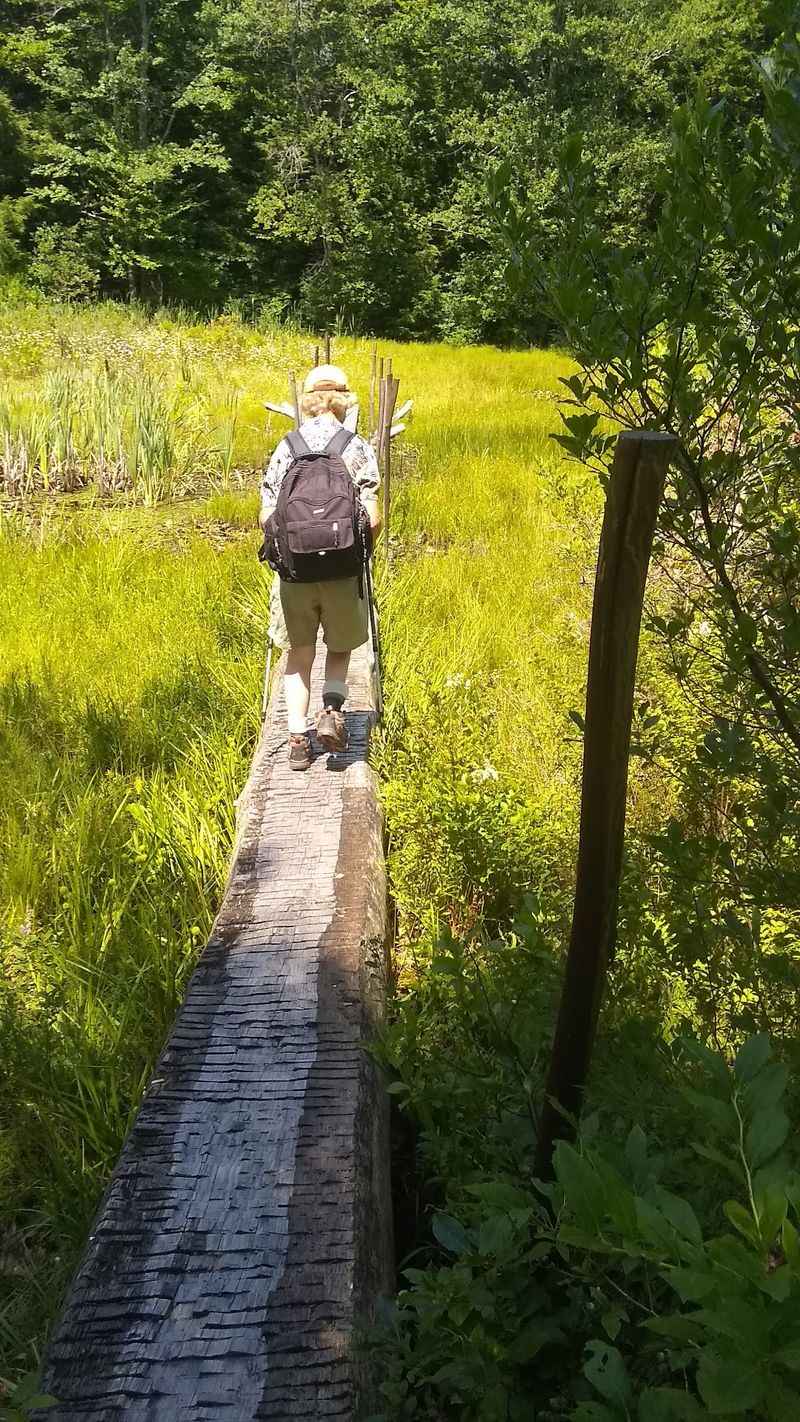
A boardwalk and log bridge cross a quaking cranberry bog, and the sensation underfoot is genuinely unusual. The ground has a soft, springy give to it, as if the bog itself is breathing, and the surrounding vegetation shifts noticeably from the forest plants just a few steps away.
The Nerries have also cultivated a dedicated milkweed meadow to support monarch butterflies, alongside a broader pollinator meadow that blooms from spring through late fall. These areas attract bees, butterflies, and other essential insects in impressive numbers, creating a visual and ecological richness that feels alive in every sense.
Rare bog copper butterflies have even been spotted here, making this wetland section one of the most rewarding parts of the entire property to explore slowly.
Workshops That Turn Curiosity into Real Knowledge
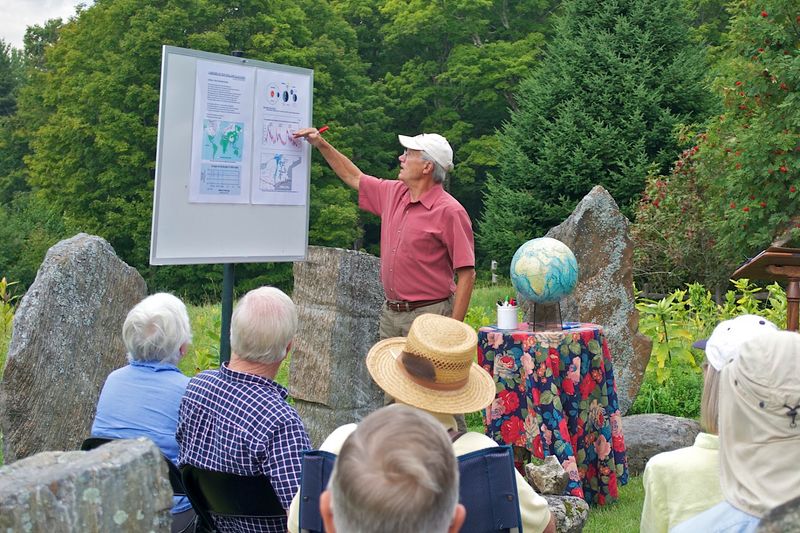
Distant Hill is not just a place to observe; it is a place to learn something you can actually use. The property runs a year-round calendar of workshops and educational events covering topics that range from edible mushroom identification and fern recognition to native plant landscaping and shrub pruning techniques.
Programs like “Autumn Forest Bathing” encourage mindful immersion in the surrounding woods, treating time in nature as a form of active well-being rather than passive scenery. Other past workshops have included “Herbal First Aid for Outside Fun,” “Managing Old Fields for Wildlife and Pollinators,” and evening events like “Mothing Night,” which explores the surprising diversity of moth species active after dark.
Local homeschooling groups, public schools, and nearby colleges have all partnered with Distant Hill, making it a genuine educational resource for the wider region. The workshops are typically led by subject-matter experts, and the hands-on format means participants leave with practical skills rather than just general impressions.
This consistent investment in education is one of the clearest expressions of what the Nerries set out to build here.
Conservation Written into the Land Itself
The long-term protection of Distant Hill is not left to chance or goodwill alone. The entire 155-acre property is secured by a conservation easement, a legal agreement that permanently restricts development and ensures the land’s natural and educational values are preserved regardless of who eventually stewards it.
This decision reflects a clear-eyed understanding of what can happen to beloved natural spaces when they lack formal protection. Michael Nerrie has spoken about witnessing the transformation of landscapes he loved as a child, and the easement is a direct response to that experience.
The property’s managed forests contain over thirty species of native trees, while the meadows, wetlands, and bog habitats collectively support an impressive range of plant and animal life. Invasive species removal is an ongoing priority, carried out largely by the dedicated volunteers who form the backbone of the operation.
The “Friends of Distant Hill” nonprofit provides additional support, allowing donations to fund trail maintenance and educational programming. Together, these layers of protection ensure that the land will continue doing its work long into the future.
Planning Your Visit Without the Guesswork
Getting the timing right for a visit to Distant Hill requires a bit of planning, and it is worth the effort. The cultivated Distant Hill Gardens are open to the public on “Open Garden Weekends,” specifically the third weekend of May and the first and third weekends of June through October, generally from 10:00 AM to 4:00 PM.
A $10 fee per adult is requested for garden tours, with proceeds going directly toward the accessible trail fund and ongoing property maintenance. Private guided or self-guided visits can be arranged by appointment for those whose schedules do not align with public weekends, offering a more flexible option without sacrificing the experience.
The Distant Hill Nature Trail, which includes the Geology Trail, Story Walk, hiking paths, and nature play area, is open daily from dawn to dusk and is free of charge year-round. Cell reception can be unreliable on the hill, so saving directions to your phone or printing them beforehand is a smart move.
Leashed pets are welcome throughout both the gardens and trails, and dog waste stations are available on-site.
A Legacy Built to Outlast Its Founders
Nearly half a century of work has gone into Distant Hill, and the Nerries show no sign of treating it as a finished project. New plantings, sculptures, and trail improvements continue to be added, ensuring that regular visitors always encounter something they have not seen before.
The long-term vision includes expanding Distant Hill into an even more comprehensive destination for environmental, horticultural, health, wellness, and nature-based programming, with a wider reach into local schools and research institutions. As the scale of the property grows, there is recognition that the operation may eventually need paid staff to maintain the quality that volunteers have built and sustained so far.
Family friends Hannah Silverblank and Rowan Norlander-McCarty have already been identified as future caretakers, ensuring that the stewardship of this remarkable place will continue beyond the Nerries themselves. That kind of foresight, planning for the land’s future rather than just its present, is the clearest signal of what Distant Hill really is: not a personal project, but a living gift to anyone who takes the time to find it.
Share this story