There is a hillside park in Pittsburgh where the city reveals itself in a way that most residents have never seen, and most visitors never find. Spread across 257 acres of restored woodland above the Monongahela River, this elevated greenspace sits where coal mines once carved the slopes bare, and where a community later decided to bring the forest back.
The views from its overlooks are the kind that make you stop mid-step, pull out your phone, and quietly wonder why nobody told you about this place sooner. From trails threading through second-growth forest to sudden clearings that frame the Golden Triangle in perfect, unobstructed glory, Emerald View Park rewards every curious hiker who makes the climb.
Read on to discover the history, the hidden corners, the best seasons to visit, and the practical tips that will make your trip to this remarkable hilltop park truly memorable.
A Verdant Crown Above the Steel City
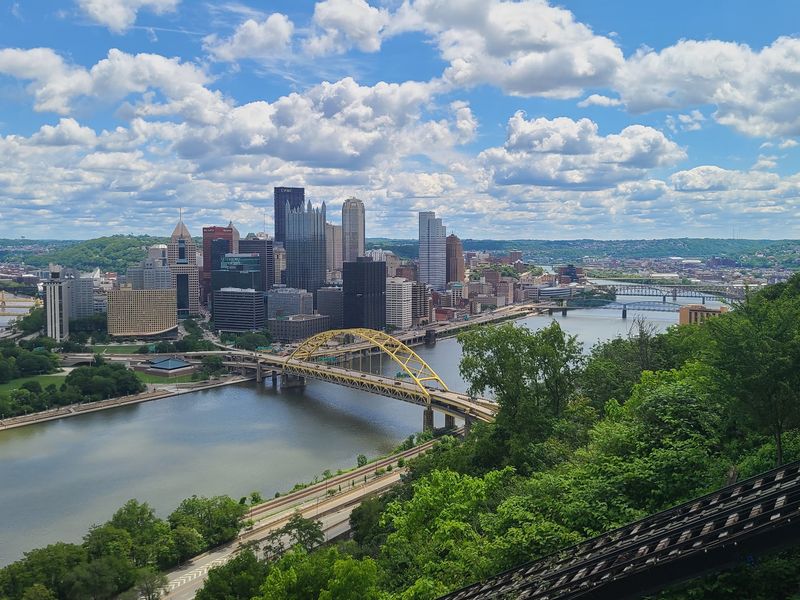
Few parks in any American city announce themselves quite the way this one does. Emerald View Park sits along Bailey Avenue, Pittsburgh, PA 15211, wrapping gracefully around the hilltop neighborhoods of Mount Washington, Duquesne Heights, and Allentown in southwestern Pennsylvania.
The park covers a remarkable 257 acres, making it one of the largest contiguous urban green spaces in the city. Its elevated position above the Monongahela River gives it a natural grandeur that few parks in the region can match.
From almost any trail entrance, the city begins to reveal itself in fragments through the tree canopy, teasing you with glimpses before delivering a full panoramic reward at the overlooks.
The park is open daily from 6 AM to 11 PM, and the phone number for information is +1 412-682-7275. Whether you arrive by car, bus, or the historic inclines, the park greets every visitor with the same quiet, forested energy that makes it feel like a world apart from the bustling streets below.
From Coal Hill to Green Sanctuary: The Park’s Remarkable Origin Story
The ground beneath your boots here carries centuries of industrial memory. Long before the first trail marker was planted, this entire hillside was known as Coal Hill, a name earned through relentless bituminous coal extraction that stripped the slopes bare and left them scarred and vulnerable.
For decades after the mines closed, the hillsides became an informal dumping ground, plagued by illegally discarded tires, vehicles, and construction debris. Then, in 1998, a rare tornado swept through the neighborhood and caused significant damage, which unexpectedly sparked a grassroots movement among local residents who feared unchecked development would follow.
That community push led to the park’s official creation in 2005, with the name Emerald View Park formally adopted in 2007. The Pittsburgh Parks Conservancy and the Mount Washington Community Development Corporation drove the restoration, overseeing the removal of hundreds of tons of waste and the planting of hundreds of native trees.
The Allegheny Land Trust holds a protective easement on the land, ensuring this transformation is permanent.
The Views That Stop You Mid-Trail
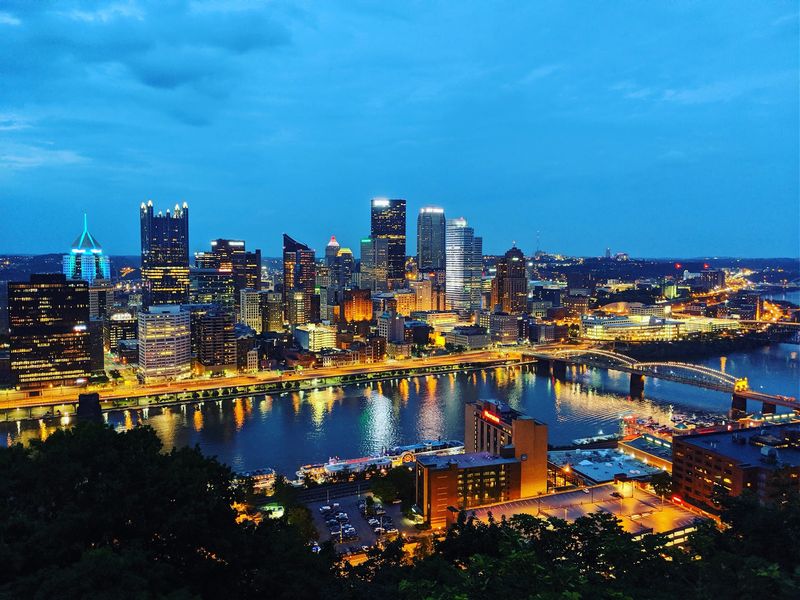
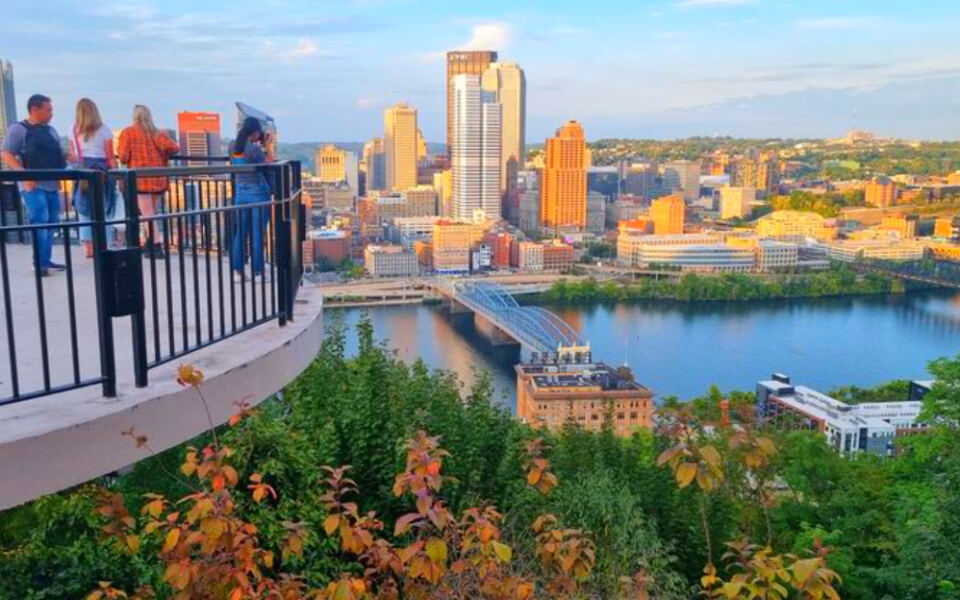
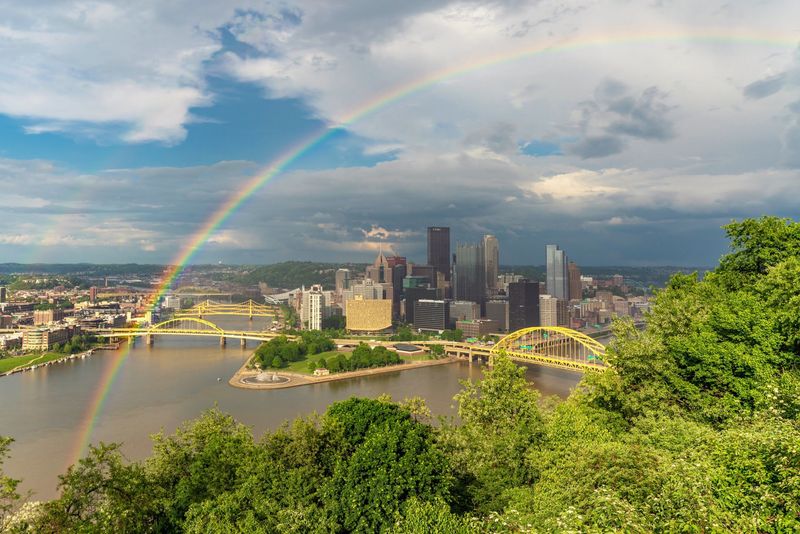
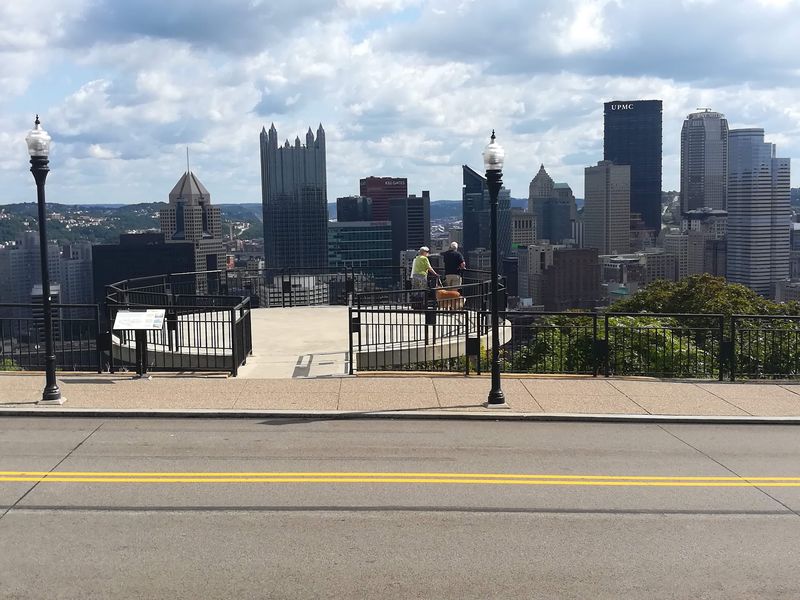
Rounding a bend on one of the park’s quieter paths and suddenly finding the entire Pittsburgh skyline framed between two oak trees is the kind of moment that travel writers struggle to describe without sounding dramatic. The Golden Triangle, where the Allegheny and Monongahela Rivers meet to form the Ohio, spreads out below in a panorama that feels almost too cinematic to be real.
The Grand View Scenic Byway, which traces the park’s edge along Grandview Avenue, draws roughly 1.5 million visitors annually, yet the trails themselves remain far less crowded. Heading deeper into the woodland reveals what regulars call “surprise vistas,” clearings where the canopy breaks and the PPG Place glass towers or the bridges suddenly appear without warning.
One of the most celebrated vantage points is the overlook near the far end of Grandview Avenue, which provides a clear sightline to Acrisure Stadium and PNC Park that the more popular incline observation decks simply cannot match. Sunset here, with the river catching the last of the light, is genuinely difficult to forget.
More Than 10 Miles of Trail Waiting to Be Explored
The trail network here is more extensive than most first-time visitors expect. With over 10 miles of existing pathways and a long-term vision to expand the system beyond 20 miles, the park offers everything from short, accessible strolls to longer routes that demand real effort and reward it generously.
The 3-mile Emerald View Trail blends shaded woodland sections with brief on-road stretches through the surrounding neighborhoods, giving hikers both natural immersion and a taste of local community life. The Saddle Trail stretches 2.4 miles and is known for feeling genuinely exploratory, with trail markings that keep you alert and engaged rather than comfortably passive.
Shorter options include the 0.8-mile George and Guy Trail, which features steep ledges that add a satisfying physical challenge, and the 0.4-mile Turkey Run Trail, which hides a seasonal waterfall that catches many visitors completely off guard. The Dilworth Trail’s switchbacks serve as a quiet nod to the park’s former life as an illegal dumping ground, now fully reclaimed by forest and footsteps.
History Hidden in the Hillside: Civil War Earthworks and Depression-Era Steps
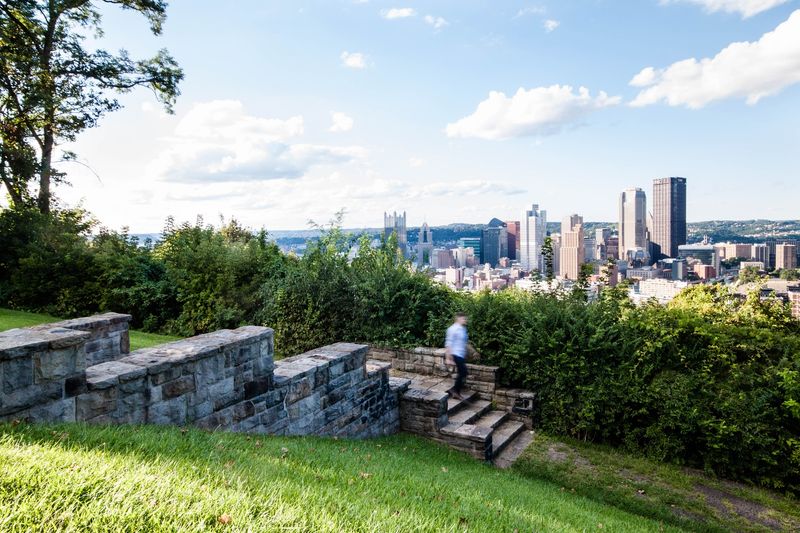
History at Emerald View Park does not announce itself with interpretive signs at every turn. Some of it requires patience, a willingness to slow down, and an eye for subtle details that the casual visitor might walk right past without noticing.
Scattered throughout the park are Depression-era sandstone steps and retaining walls, built as part of earlier park spaces that were eventually absorbed into the broader Emerald View footprint. These weathered stone structures carry a quiet dignity, a physical reminder of the labor-intensive public works projects that shaped Pittsburgh’s green spaces during the 1930s.
For history enthusiasts willing to search, one of the most compelling discoveries is the remnant of one of the last Civil War redoubts remaining in Pittsburgh, a barely visible earthen fortification erected in the summer of 1863 when a Confederate advance on the city seemed like a genuine possibility. Finding it feels less like visiting a landmark and more like uncovering a secret the hillside has been keeping for over 150 years, which is exactly the kind of reward that makes a second visit feel necessary.
The Inclines: Pittsburgh’s Most Charming Way to Reach the Trails
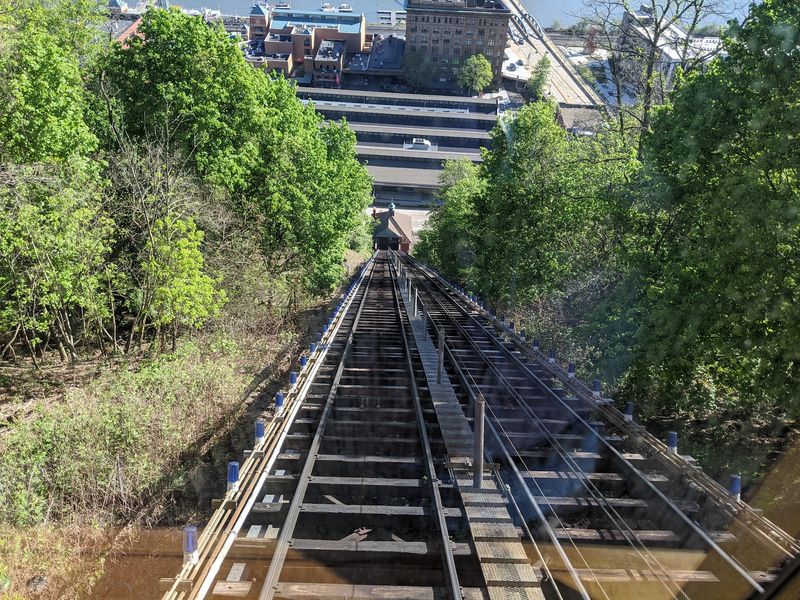
There is no more Pittsburgh way to begin a hike than by boarding one of the city’s historic funicular railways and riding it up the face of Mount Washington. Both the Duquesne Incline, which opened in 1877, and the Monongahela Incline, the older of the two at 1870, connect the South Side riverfront directly to the hilltop neighborhoods that border Emerald View Park.
The ride itself is a compact adventure, with the city dropping away beneath the cable car’s windows as you climb at an angle that makes the whole experience feel slightly theatrical. At the top, the inclines deposit you within easy walking distance of multiple trail entrances, making the transition from historic transit to woodland hiking seamless and satisfying.
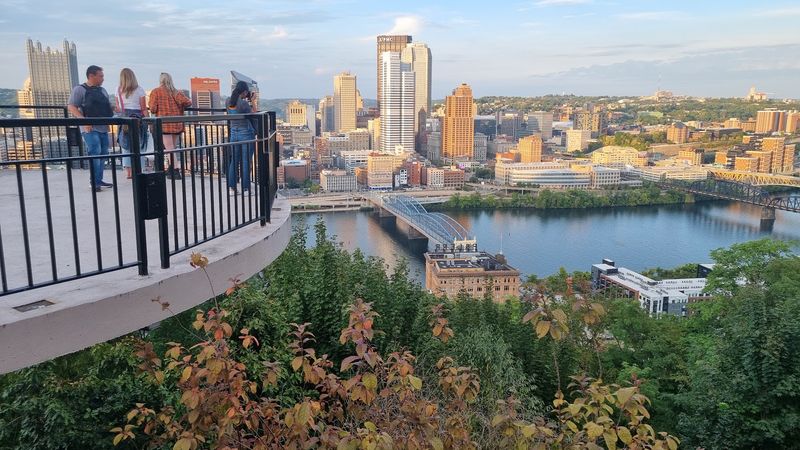
The Duquesne Incline includes a well-maintained observation deck at the summit station, offering a brief but compelling preview of the views that await deeper in the park. Choosing the incline over driving is not just a practical decision; it is a deliberate choice to experience Pittsburgh the way the city was designed to be experienced, one steep, creaking, magnificent ascent at a time.
Community Roots: The People Who Built This Park Back From Nothing
Emerald View Park did not emerge from a city planning document. It came from neighbors who looked at a degraded, garbage-strewn hillside and decided it deserved better.
That origin story is not just inspiring; it is woven into the physical fabric of every restored trail and replanted woodland section you walk through today.
The Mount Washington Community Development Corporation and the Pittsburgh Parks Conservancy have been the primary organizational forces behind the park’s transformation, coordinating funding, advocacy, and the practical work of turning vision into reality. Volunteers have contributed thousands of hours to clearing illegal dumpsites, battling invasive plant species, and constructing the trail infrastructure that now spans the hillside.
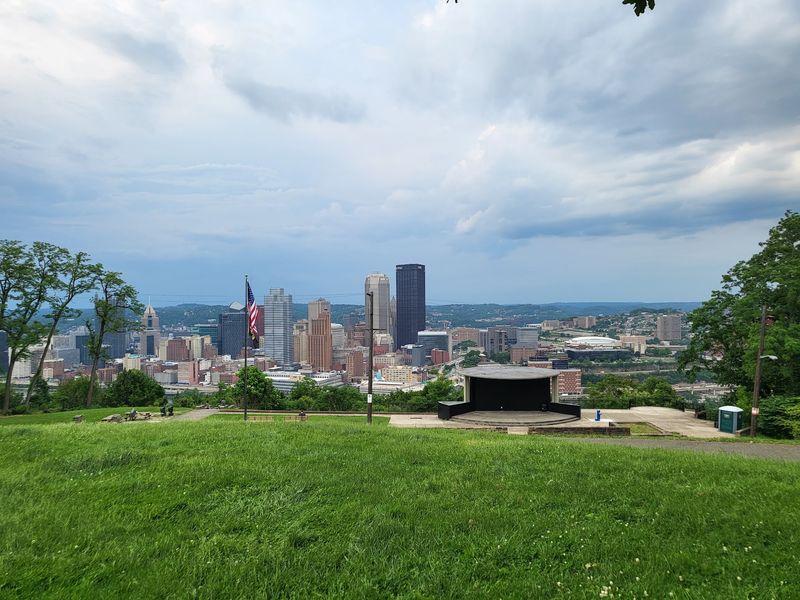
Community programming extends the park’s reach beyond simple recreation. Guided hikes, educational workshops, and open-air summer movie screenings held on the park’s small stage help foster a sense of shared ownership that keeps the restoration momentum alive year after year.
The Anchor Green Garden, a native plant garden at the intersection of Grandview Avenue and McArdle Roadway, stands as one of the most visible and beautiful expressions of that ongoing community investment in the landscape.
Point of View: Public Art That Adds Depth to the Landscape
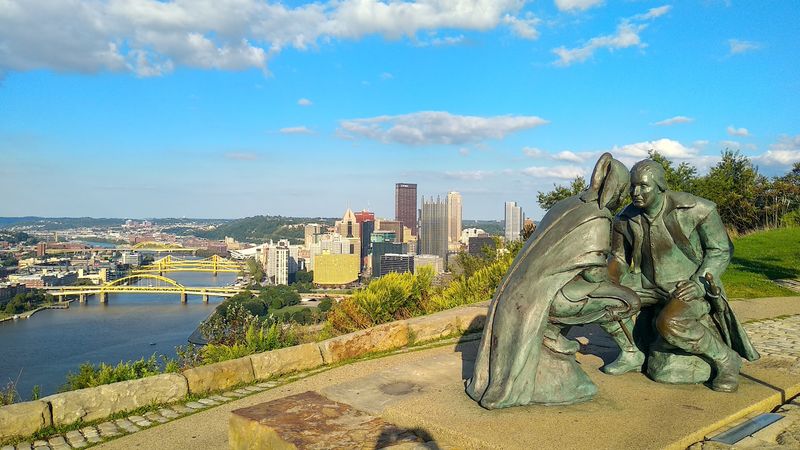
Public art and sweeping natural scenery do not always coexist gracefully, but at Emerald View Park, the combination works remarkably well. The most prominent example is the “Point of View” sculpture by artist James A.
West, positioned at the intersection of Grandview Avenue and Sweetbriar Street where the views of the city are at their most dramatic.
The sculpture depicts a historically significant encounter between George Washington and Guyasuta, the Seneca leader who played a pivotal role in the region’s colonial-era conflicts. Having this piece positioned at a hilltop overlook above the rivers that shaped that same history gives the artwork a contextual resonance that is hard to replicate in a gallery or museum setting.
Beyond the main sculpture, the park incorporates informal garden beds at several trail entrances, including spots near Bigbee Field and Sycamore Street, as well as a rain garden at the Republic Street Trail entrance planted with native species that support local pollinators. These smaller, quieter touches of intentional design reward the observant visitor who takes the time to look beyond the headline views and notice what the park has tucked into its edges.
Planning Your Visit: Timing, Parking, and Trail Preparation
A little preparation goes a long way at Emerald View Park, and the logistics are genuinely straightforward once you know what to expect. The park is open daily from 6 AM to 11 PM, and most of the trail system is accessible year-round, though some sections become muddy and slippery after heavy rain, so sturdy footwear with grip is always the right call.
Parking is available at Olympia Park and Mount Washington Park at no charge, and additional public lots can be found off State Route 51 and Carson Street. Street parking exists in the surrounding residential neighborhoods as well, though weekend afternoons tend to fill available spots quickly.
For those using public transportation, Port Authority bus routes 40 and 43 serve the area conveniently.
There are no water sources on the trails themselves, so carrying enough water for your planned route is essential rather than optional. Dogs are welcome throughout the park as long as they remain leashed and owners clean up after them.
One recent visitor flagged the presence of broken glass on some trail sections, so keeping pets close to the main paths adds an extra layer of caution worth taking seriously.
Autumn Gold and Winter Silence: The Park Across the Seasons
The park shifts its personality with each season in ways that justify returning multiple times throughout the year. Autumn is widely considered the prime window for a visit, with peak foliage typically arriving during the first two weeks of October and painting the hillside in deep reds, burnt oranges, and brilliant golds that frame the river views in a way that feels almost staged.
Beyond the color, autumn brings thinner foliage and cooler temperatures that make longer hikes genuinely comfortable, while also improving sightlines from the overlooks that summer’s full canopy partially obscures. Wildlife activity increases noticeably in fall as well, with deer more visible along the trail edges and migratory bird species passing through on their southward routes.
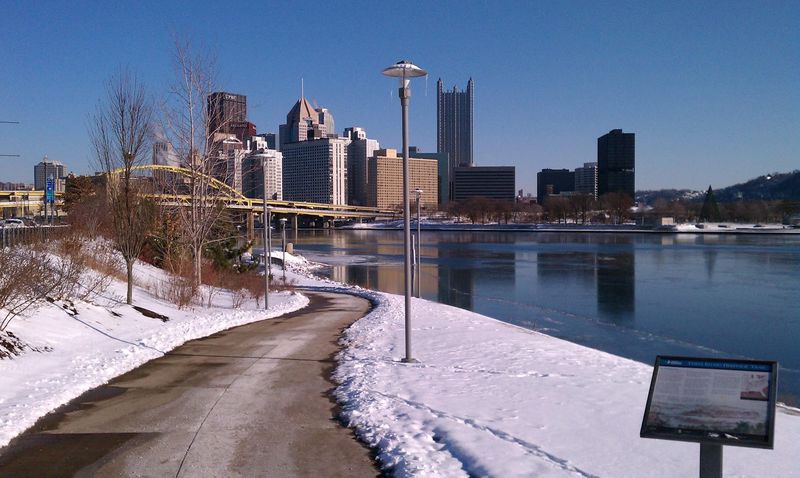
Winter strips the trees bare and delivers something unexpectedly beautiful: the most unobstructed city views the park offers all year. Snow-dusted trails carry a hushed quality that makes the whole hillside feel private and contemplative.
Olympia Park, located within the broader Emerald View footprint, becomes a local sledding spot when conditions allow, and spring’s return brings budding canopy growth and returning songbirds that signal another full cycle of the park’s quiet, steady life.
Where the Park Meets the Neighborhood: A Living, Breathing Community Space
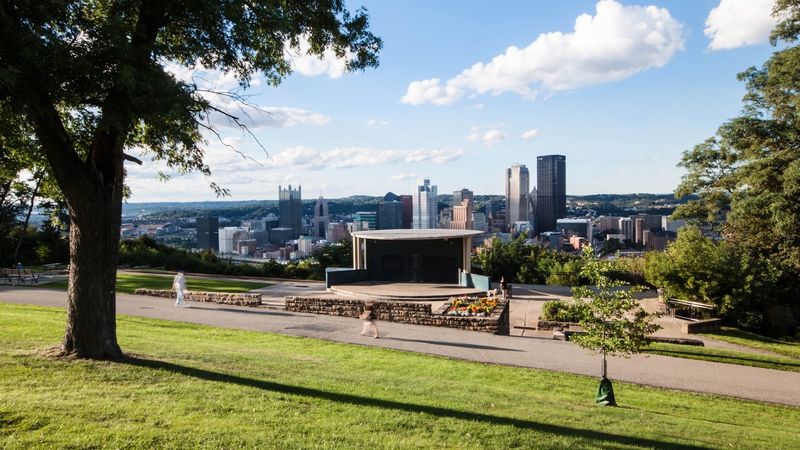
What distinguishes Emerald View Park from a conventional nature preserve is the way it refuses to stay neatly separated from the communities surrounding it. Certain trail sections, particularly along the Emerald View Trail, move fluidly between shaded woodland and the sidewalks of Mount Washington and Duquesne Heights, creating an experience that is part hike and part neighborhood walk.
This blending of natural and urban environments means a morning on the trails can transition effortlessly into exploring the local character of Mount Washington, a neighborhood with a well-earned reputation for dining spots that also happen to overlook the same skyline you just spent an hour hiking toward.
Emerald View Park functions less like a destination and more like a living extension of the neighborhoods it serves, which is precisely what makes it feel so genuinely rooted in Pittsburgh’s character.
Share this story