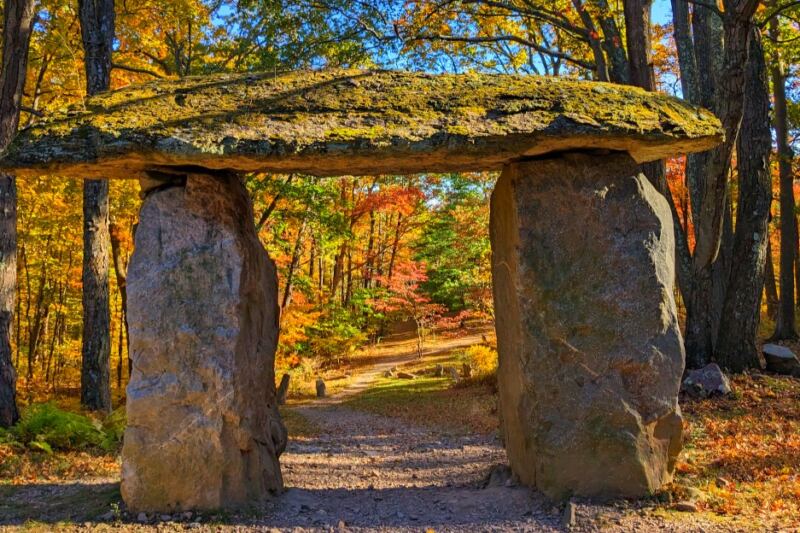
Somewhere in the rolling hills of central Pennsylvania, a secret has been hiding in plain sight for over 300 million years. Ancient sandstone walls rise up to 50 feet high, narrow corridors twist into near-total darkness, and a natural cave holds ice well into June, even on the warmest summer days.
Most people drive right past on Interstate 80 without ever knowing this geological wonderland exists just minutes away. I stumbled onto it almost by accident, and what I found genuinely stopped me in my tracks.
A sprawling rock city, free to explore, packed with hidden rooms, dramatic crevices, and passageways so tight you have to turn sideways just to get through. Keep reading, because every section of this article reveals something new and surprising about one of Pennsylvania’s most jaw-dropping natural destinations.
Where the Rock City Begins: Location and First Impressions
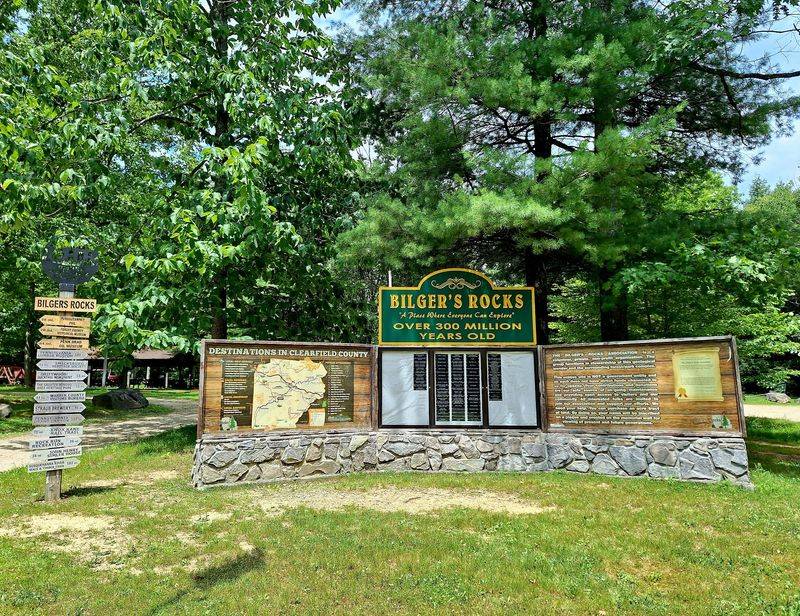
The address is easy enough to punch into your GPS: 1921 Bilgers Rocks Rd, Grampian, Pennsylvania 16838, tucked inside Bloom Township in central Clearfield County. From the parking area, the rocks are only a short walk down the road, but nothing about the approach quite prepares you for what waits on the other side of the tree line.
The park spans 170 acres of community-managed land, with the main boulder field covering an impressive 20 acres on its own. Managed by the Bilger’s Rocks Association, a private non-profit, the site has recently come under the additional protection of Moshannon State Forest.
Best of all, admission is completely free, though donation boxes are placed thoughtfully around the grounds for visitors who want to give back. The park is open daily from 6 AM to 10 PM, year-round, making spontaneous visits entirely possible.
That first glimpse of stone rising above the forest floor hits differently than any sign or photo could ever suggest.
300 Million Years in the Making: The Geological Story
These rocks are not just old. They are ancient in a way that makes the word feel almost inadequate.
The sandstone formations at Bilger’s Rocks date back to the Carboniferous Period, roughly 300 million years ago, placing their origins in a time when much of North America was covered by tropical seas and vast river systems.
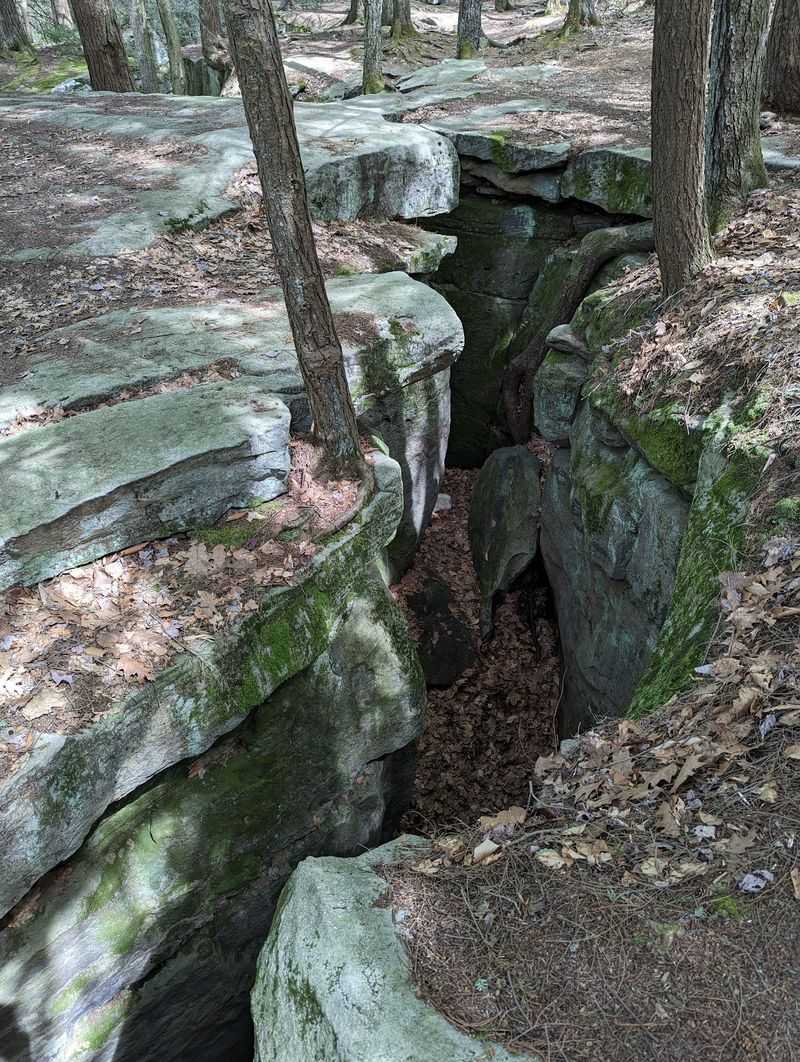
The material itself comes from the Homewood Formation of the Pottsville Group, a thick sandstone bed that can exceed 50 feet in depth. Long ago, softer rocks like limestone and shale covered these formations completely, but millions of years of erosion stripped those layers away, exposing the harder sandstone beneath.
Tectonic pressure then created vertical fractures called joints within the exposed rock. Water seeped into those cracks, froze, expanded, and thawed repeatedly across countless seasons, a process called frost wedging that slowly pried the boulders apart.
The result is the dramatic, fractured rock city you can walk through today, still actively changing with every freeze and thaw.
Towering Stone Walls That Redefine Your Sense of Scale
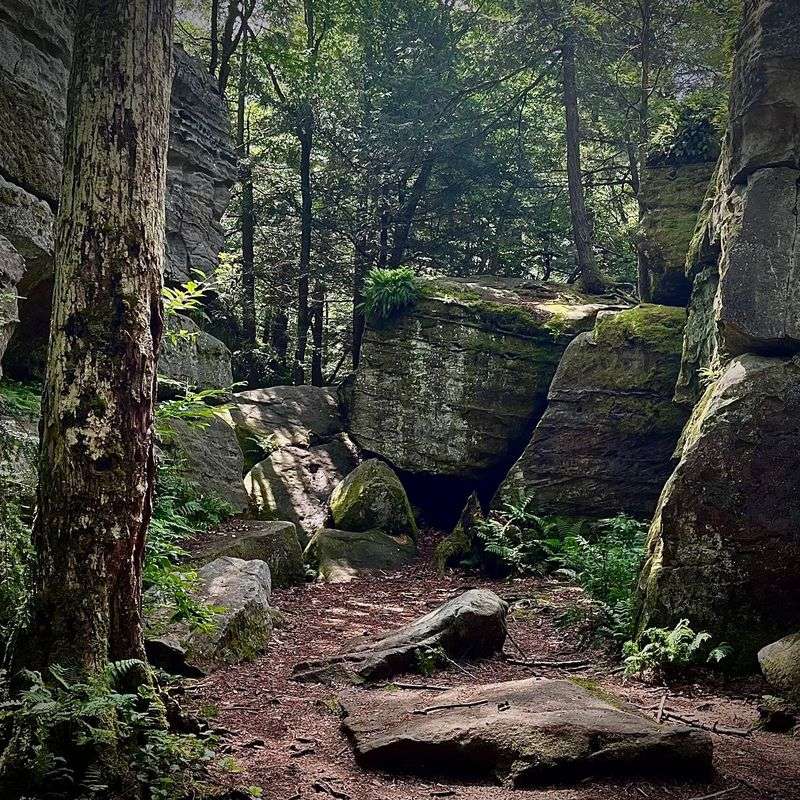
Standing at the base of these formations for the first time, I felt genuinely small in a way that most outdoor destinations simply do not produce. The boulders at Bilger’s Rocks rise up to 50 feet above the ground, and when you are wedged between two of them with stone walls stretching skyward on either side, the experience borders on surreal.
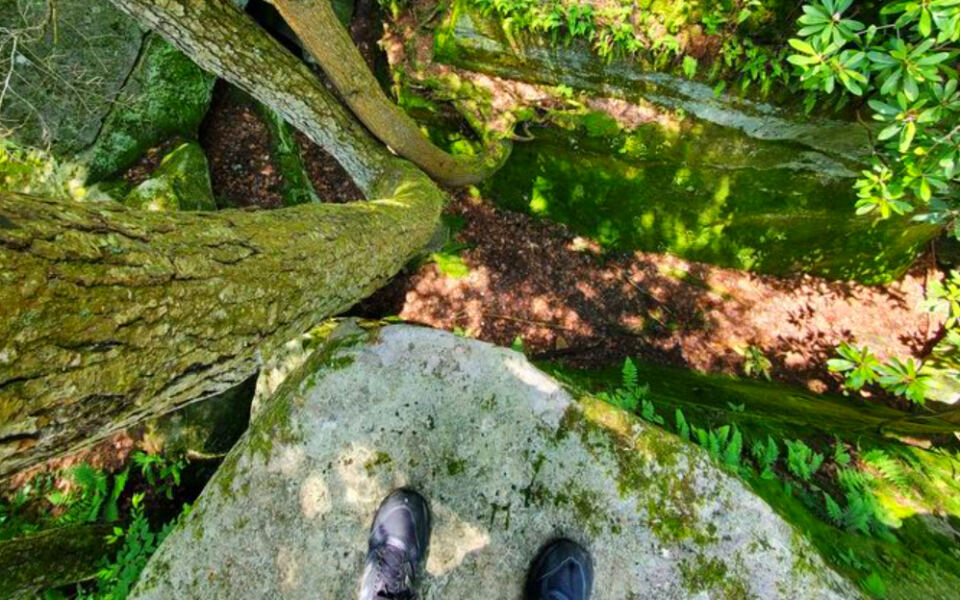
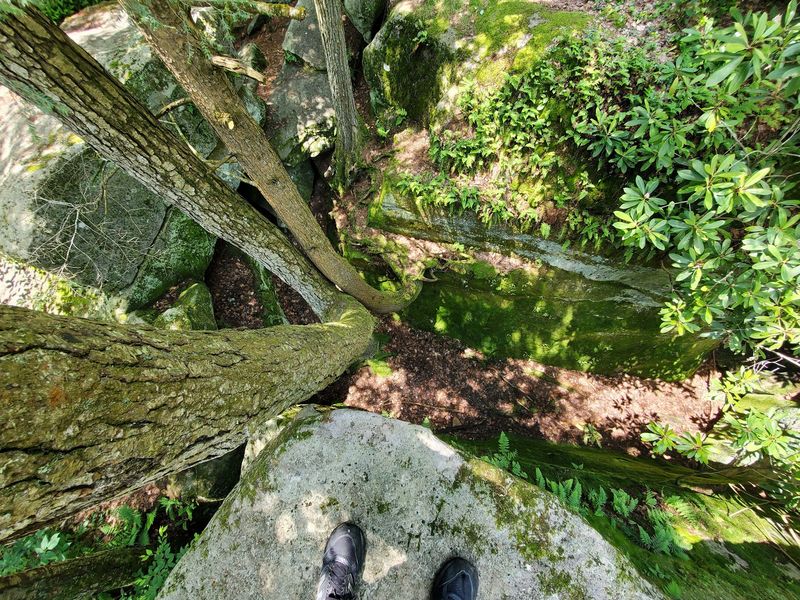
From the top of the boulder field, the view is equally disorienting in the best possible way. What looks from above like a forest floor with deep seams in the ground is actually a network of rooms and corridors dropping into near-total darkness below your feet.
The contrast between the open sky above and the shadowy labyrinth below is something photographs genuinely struggle to capture.
Visitors consistently note that pictures fail to convey the true size of these formations, and after seeing them in person, that observation makes complete sense. The sheer vertical presence of the stone walls creates an atmosphere that is both humbling and electric, the kind of scale that stays with you long after you have driven home.
The Natural Stone Maze: A Labyrinth You Have to Feel to Believe
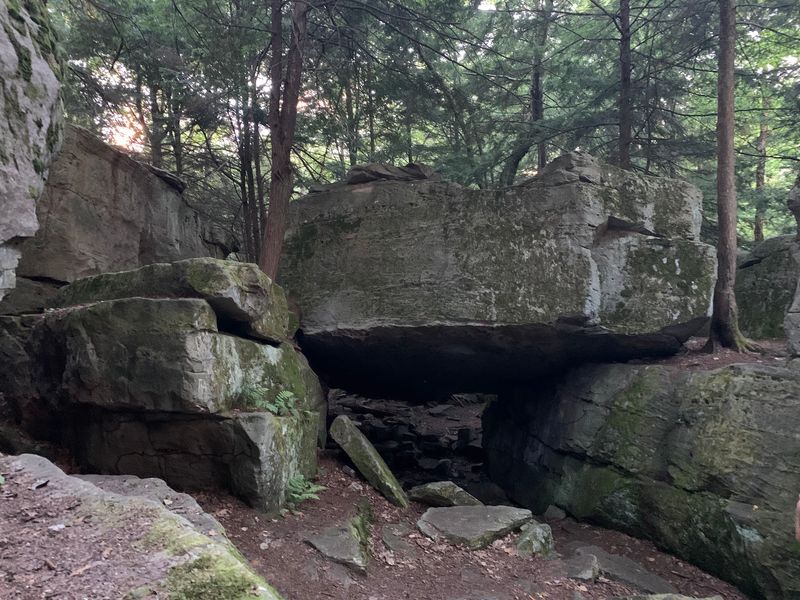
Some passageways at Bilger’s Rocks are wide enough for a relaxed stroll, but others narrow down to gaps as tight as 15 inches across, stretching for up to 50 feet in length. Turning sideways, sucking in a breath, and inching through a slot of ancient stone is one of those experiences that feels equal parts thrilling and absurd.
The maze quality of the place is genuine. Named chambers like the “Devil’s Dining Room” and the “Devil’s Kitchen” add a theatrical flair to the exploration, conjuring images of underground feasts in stone-walled halls.
Choosing between paths feels less like hiking and more like solving a puzzle that nature spent millions of years designing.
Even after multiple visits, longtime locals report finding new crevices and hidden corners they had never noticed before. The layout is complex enough that the sense of discovery never fully fades.
Each winding corridor opens into something unexpected, whether a mossy alcove, a dramatic overhang, or a sudden shaft of light cutting through a crack in the stone above.
The Ice Cave: Where Summer Meets a Frozen Underground
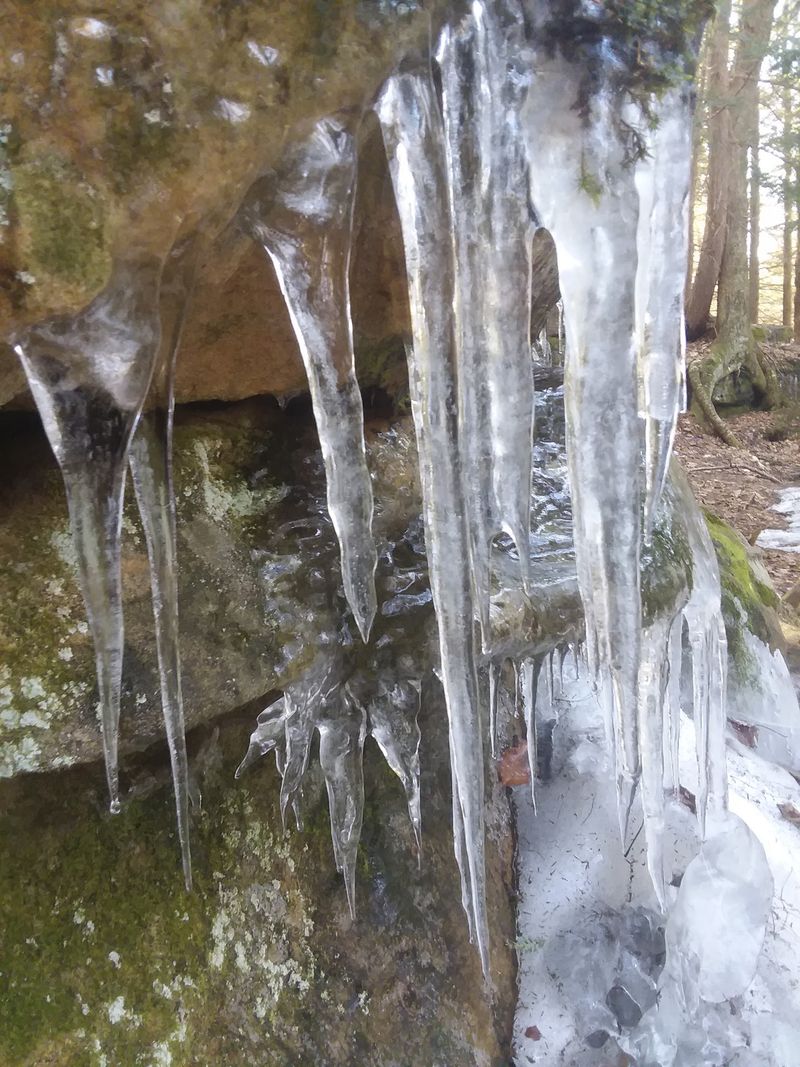
Of all the features tucked inside this rock city, the Ice Cave stands out as the one that surprises visitors most. This underground passageway stretches roughly 25 feet below the surface, and its interior stays cold enough to hold ice well into June, sometimes even longer, long after the surrounding landscape has fully warmed up.
A flashlight is non-negotiable here. The darkness inside the cave is genuine and complete in certain sections, making the experience feel more like caving than hiking.
The sudden drop in temperature as you descend into the passage is immediate and dramatic, easily 10 to 15 degrees cooler than the air just a few feet above.
The cave owes its icy persistence to the microclimate created by the dense stone walls and limited airflow, which trap cold air from winter deep into the warmer months. Emerging on the other side, blinking back into the light and warmth, feels like crossing a threshold between two completely different seasons.
It is easily one of the most memorable moments the park has to offer.
Century-Old Carvings and 10,000 Years of Human History
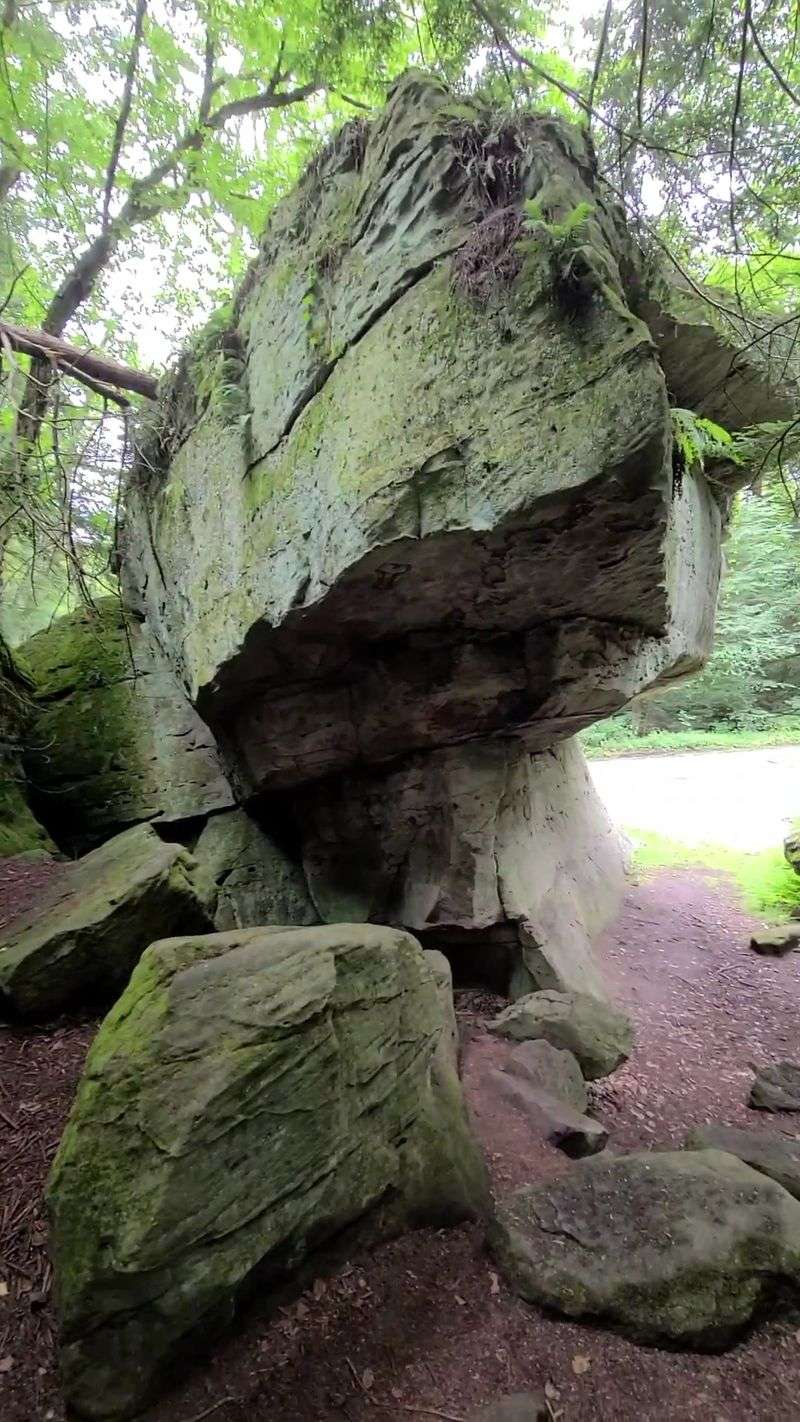
Long before any trail map existed, people were drawn to these rocks. Archaeological evidence suggests that Paleo-Indians sheltered within these formations more than 10,000 years ago, drawn by the natural protection the boulders provided.
The West Branch Susquehanna River, known to Native Americans as Otsinachsin, meaning “The Place By The Rocks,” flows nearby, reinforcing the site’s deep human history.
More recent visitors left their own marks etched directly into the sandstone. Numerous carvings from the early twentieth century are still visible across the rock faces, offering a tactile connection to the people who explored these same corridors generations ago.
The most striking of these is the 1921 carving attributed to John W. Larson of Grampian, which depicts a globe of the Western Hemisphere alongside the inscription “The World is Looking to Us.” Believed to reflect American sentiment following World War I, the carving transforms a stretch of sandstone into a quiet historical document.
Standing beside it, you get the distinct feeling that these rocks have always inspired people to leave something of themselves behind.
A Microclimate Unlike Anything You Expected
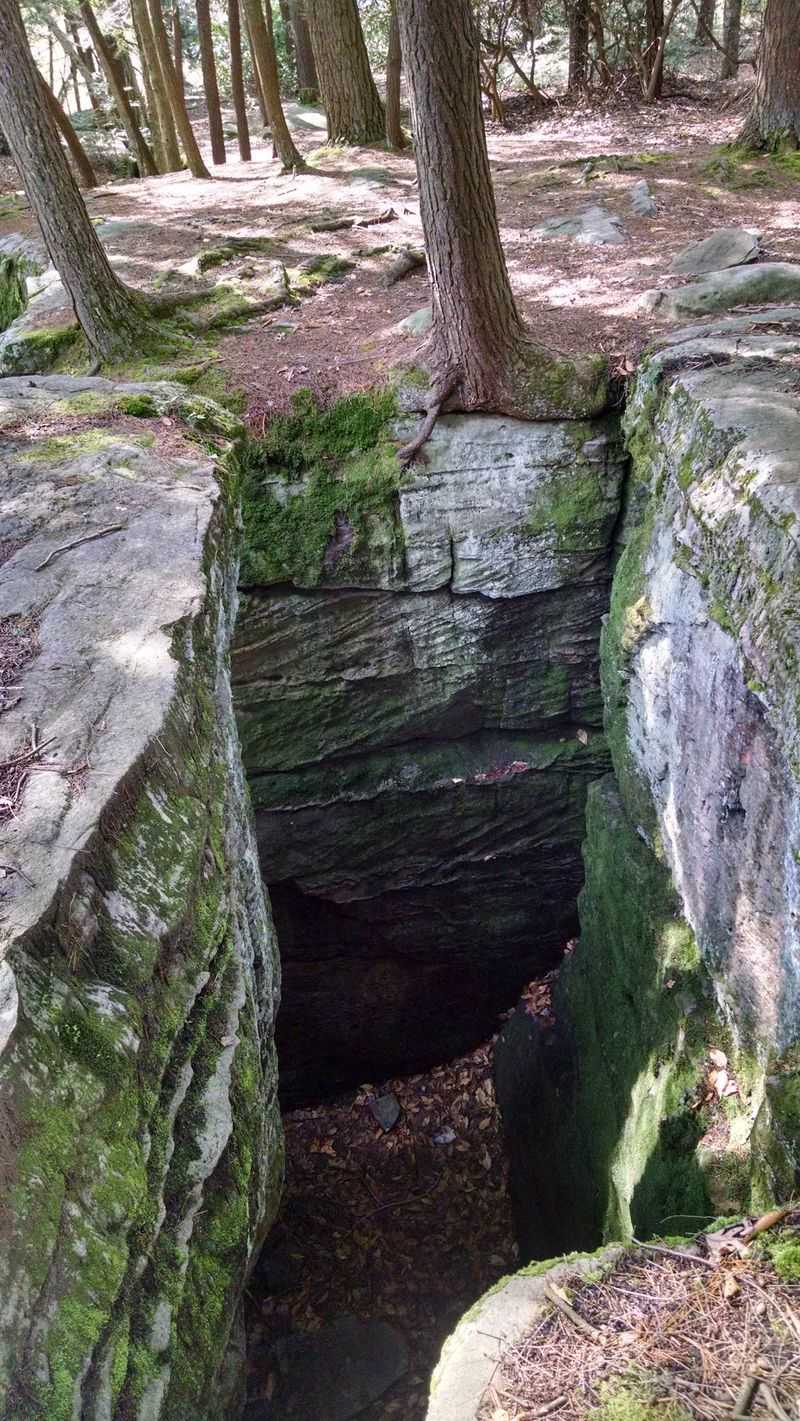
One of the quieter surprises at Bilger’s Rocks is how dramatically the temperature changes the moment you move between the boulders. On a warm summer afternoon, the shaded passageways run a consistent 10 to 15 degrees cooler than the exposed areas nearby, creating a natural refuge that feels almost engineered for comfort.
That persistent chill does more than just cool you down. It creates a microclimate that supports an entirely different community of plants than you would find in the surrounding forest.
Mosses drape themselves over nearly every surface, ferns push up through the thinnest cracks in the stone, and hardy trees send their roots weaving across the rock faces in patterns that look almost deliberate.
This ecological richness earned Bilger’s Rocks its designation as a Wild Plant Sanctuary by the Pennsylvania Department of Conservation and Natural Resources. The combination of cool air, filtered light, and moisture-retaining stone creates conditions that shelter rare and protected plant species.
In winter, the same microclimate produces spectacular ice formations across the overhangs and crevices, turning the already dramatic landscape into something that looks like it belongs in a nature documentary.
Trails Beyond the Boulders: Hiking the Full 170 Acres
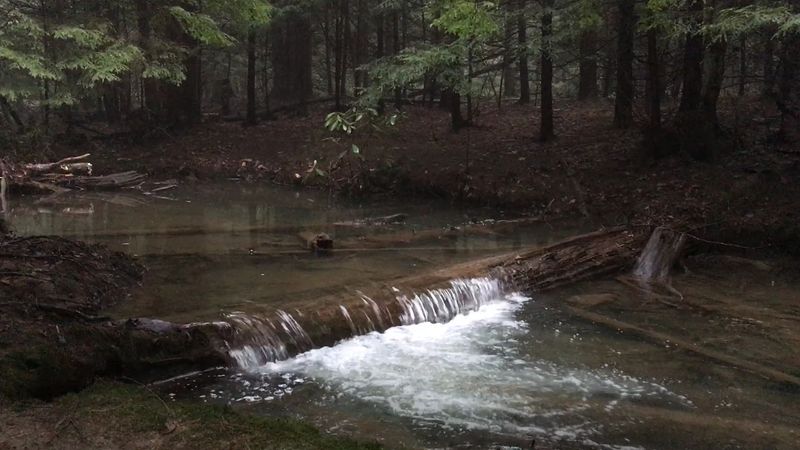
Most visitors focus their energy on the main boulder field, and honestly, that alone justifies the trip. But the surrounding 170 acres hold about 10 miles of hiking trails that wind through hemlock groves, follow Bilger’s Run, and pass through smaller satellite boulder fields that feel like quieter, more personal versions of the main attraction.
Trail markers point out ten named locations throughout the park, though finding them all requires some patience and a willingness to wander. The Roland Welker Trail is a particular highlight, a one-mile loop that begins and ends at a commemorative Rock House built to honor Mr. Welker’s survival challenge in Alaska, adding an unexpected biographical element to a walk through the woods.
For those who prefer a guide, the Bilger’s Rocks Association offers volunteer-led tours that cover the geology, Native American history, and plant life of the area in engaging detail. Mountain biking is also permitted on certain trails, and the peaceful forest environment makes the whole property a reliable spot for bird-watching at almost any time of year.
Family Fun, Facilities, and the Surprisingly Full Amenity List
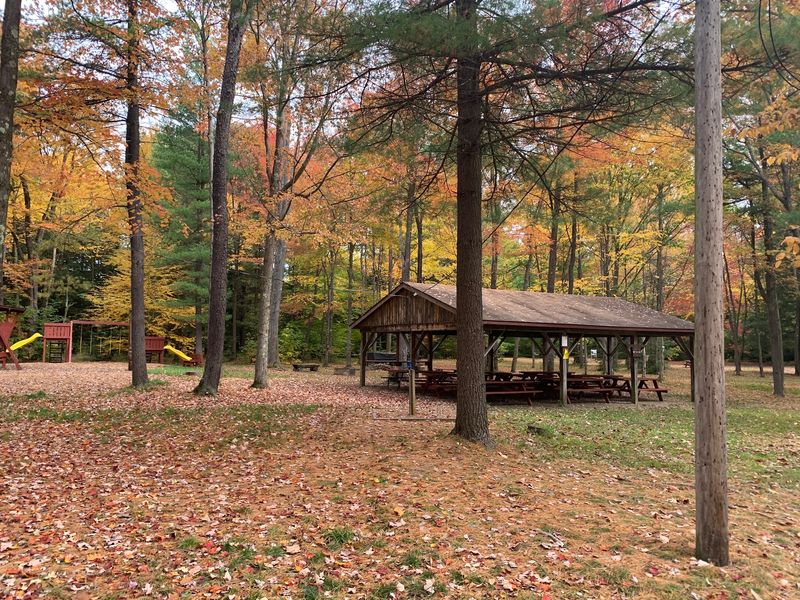
Bilger’s Rocks is not the kind of natural area where you show up and find a trail sign and a gravel lot. The park is genuinely well-equipped in ways that make a full day visit comfortable for families, groups, and solo explorers alike.
A large parking area handles the volume without feeling cramped, and rustic pit latrines are scattered throughout the grounds.
A covered pavilion with picnic tables and charcoal grills makes it easy to extend the visit into a full outdoor meal, and a playground gives younger children a place to channel energy between rock-climbing sessions. On most weekends, a concession stand opens up with snacks and drinks, a detail that feels unexpectedly thoughtful for a free park.
The park also features an open-air amphitheater stage that hosts a surprisingly robust calendar of community events, including music festivals, craft shows, nature walks, geology tours, mushroom walks, and seasonal celebrations. An Education Center on the property offers environmental programming, typically by appointment or during special events.
Essential Tips for Getting the Most Out of Your Visit
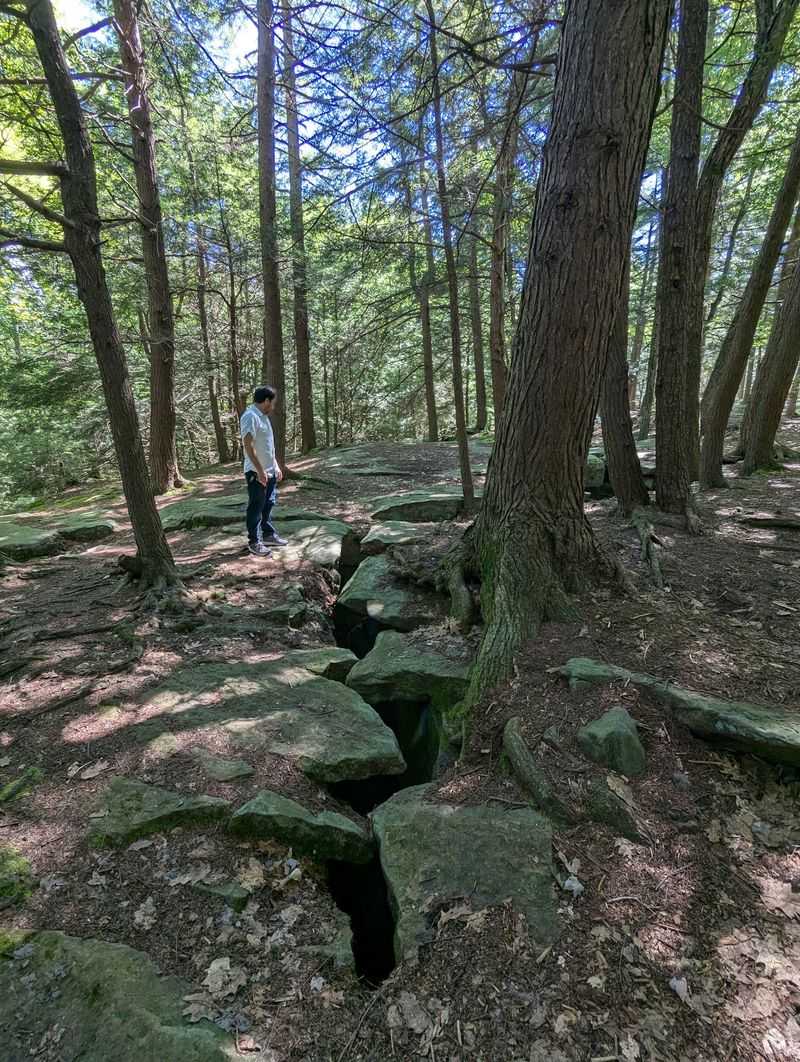
A few practical details can make the difference between a frustrating outing and a genuinely great one. Footwear is the single most important consideration: sturdy hiking boots or shoes with serious traction are essential.
The terrain inside the boulder field is consistently uneven, often root-covered, and prone to slippery moss, especially after rain or early in the morning when dew sits on the stone.
Bring a flashlight for the Ice Cave, and consider downloading any maps or information before you arrive, as cell service can be unreliable in certain sections of the park. Water and sunscreen are worth packing even for shorter visits, and a light jacket is a smart addition on warmer days given how dramatically the temperature drops inside the rock corridors.
Parents visiting with young children should stay close and attentive throughout. Some crevices drop more than 50 feet, and the maze-like layout means it is easy for small explorers to wander out of sight quickly.
The park recommends a minimum of two hours to do the site justice, though five hours is entirely reasonable for those who want to cover the full trail network and soak in every corner of this ancient landscape.
Why This Hidden Corner of Pennsylvania Deserves a Spot on Your List
Places like Bilger’s Rocks are rare not because of what they offer on paper, but because of how they feel in person. The combination of geological drama, human history, ecological richness, and completely free access creates an experience that outperforms its modest reputation by a wide margin.
It earns its 4.8-star rating across nearly a thousand reviews honestly, through sheer quality of experience rather than marketing.
The park sits just eight miles southwest of Interstate 80, making it a realistic stop on a longer road trip or a destination in its own right for anyone within a few hours of central Pennsylvania. Nearby Curwensville and the borough of Grampian provide basic services, while the broader Clearfield County area offers additional natural and historical attractions for those building a longer itinerary.
What stays with you after visiting is not any single feature, but the cumulative effect of 300 million years of geological patience made suddenly, vividly accessible. The rocks were here long before us and will remain long after, quietly waiting for the next curious person to squeeze through a 15-inch gap and discover what is on the other side.
Share this story