Pennsylvania keeps some of its best stories underground. Across the state, historic cemeteries hold the graves of Founding Fathers, Civil War soldiers, industrial giants, and everyday people who lived through moments that shaped the country.
Some of these burial grounds were designed as garden retreats long before public parks existed, while others ended up on the front lines of battle by accident. A few have been rescued from decades of neglect by determined volunteers who refused to let the past disappear beneath weeds and broken stone.
Whether you enjoy history, architecture, or simply a good story with unexpected twists, these 13 cemeteries offer something genuinely surprising at every turn. Get ready to meet a pregnant caretaker who buried soldiers alone, a lawyer who donated his fortune to create a park for the departed, and a penny tradition that nearly wore away one of America’s most famous grave markers.
1. Laurel Hill East, Philadelphia, Pennsylvania
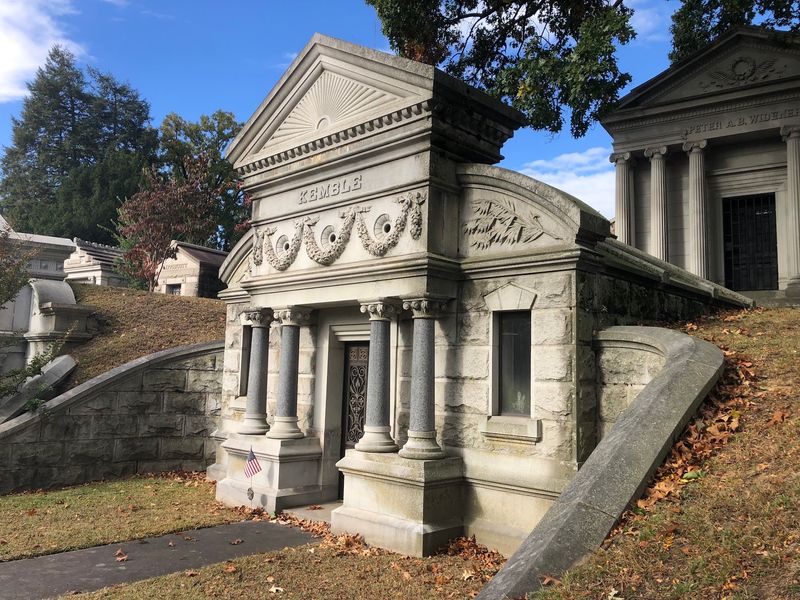
Before public parks became standard in American cities, Laurel Hill was already offering something rare: a beautifully designed landscape where people could take a quiet stroll among history. Opened in 1836, it was one of America’s first rural cemeteries, modeled after Mount Auburn Cemetery in Boston.
The grounds follow winding paths across rolling hills, with scenic Schuylkill River views and an extraordinary collection of Victorian funerary art. Elaborate mausoleums and sculptures fill the landscape alongside over 6,500 trees representing 950 unique species, earning the cemetery a certified Level II Arboretum designation.
Among those buried here are Civil War General George Gordon Meade, Sarah Josepha Hale who helped establish Thanksgiving as a national holiday, and Declaration signer Thomas McKean. The cemetery also hosts guided tours, yoga classes, and an annual 5K race, making it one of Philadelphia’s most active historic sites.
2. The Woodlands, Philadelphia, Pennsylvania
Most cemeteries were built on empty land. The Woodlands was built around an already-impressive 18th-century country estate, which makes it one of the more architecturally unusual burial grounds in the entire country.
The original property belonged to William Hamilton, a gifted botanist who once cultivated up to 10,000 different plant species on the grounds.
Investors transformed Hamilton’s landscaped estate into a rural cemetery beginning in 1840, carefully preserving the mansion, rolling terrain, and mature trees. Today, the 54-acre National Historic Landmark District contains an arboretum with over 1,000 trees, fifteen of which are recognized as State Champion trees.
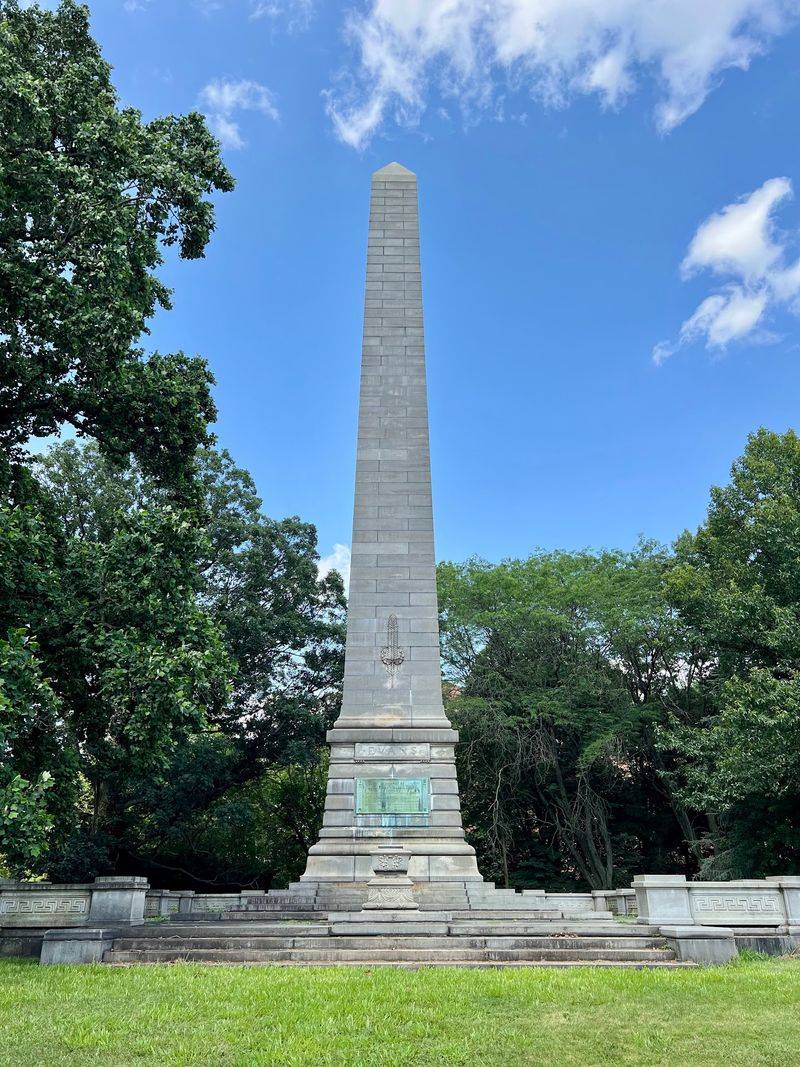
One standout monument belongs to Dr. Thomas W. Evans, whose 150-foot obelisk is considered both the tallest gravestone in the United States and the tallest obelisk gravestone in the world.
More than 150,000 visitors explore the grounds each year, many tending the cemetery’s volunteer-maintained cradle grave gardens.
3. Mount Moriah Cemetery, Philadelphia, Pennsylvania
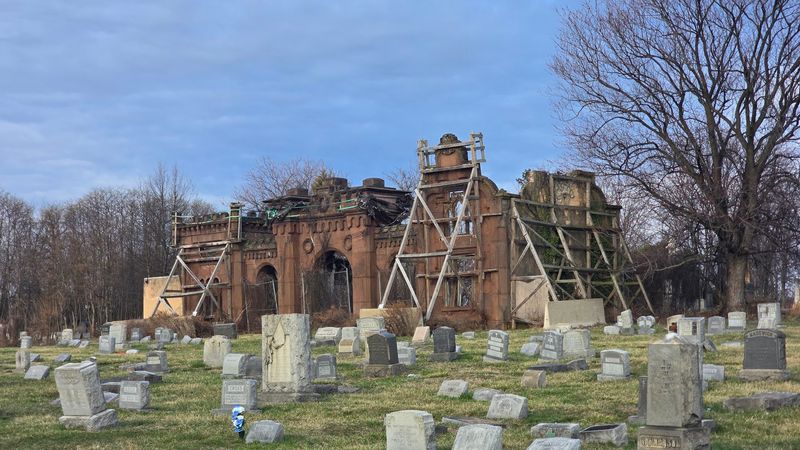
At roughly 200 acres and approximately 150,000 burials, Mount Moriah holds the distinction of being the largest cemetery in Pennsylvania, and for years, almost nobody was taking care of it. The last known board member passed away in 2004, the cemetery closed in 2011, and the grounds slowly disappeared under heavy vegetation.
Founded in 1855, Mount Moriah was notable from the start for accepting burials for African Americans, Jews, and Muslims at a time when many other cemeteries refused. Its ornate Romanesque brownstone gatehouse, designed by architect Stephen Decatur Button, once marked an impressive entrance to grounds served by streetcar.
Two separate military plots maintained by the Department of Veterans Affairs sit within the cemetery, covering over 2,800 Union Army soldiers and U.S. Navy personnel.
Volunteers from the Friends of Mount Moriah Cemetery began reclaiming the landscape in 2011 and had cleared roughly 60 to 70 percent of the grounds by 2022.
4. Eden Cemetery, Collingdale, Pennsylvania
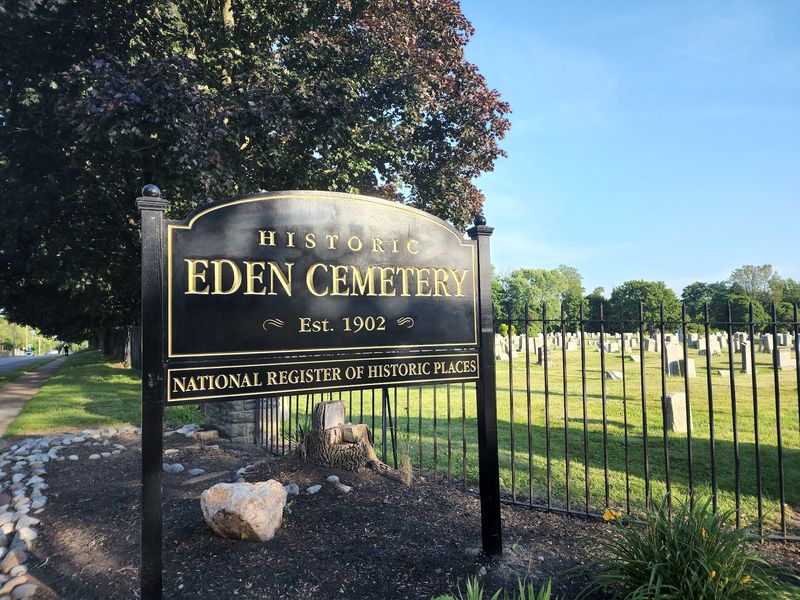
Eden Cemetery holds a record that most people do not know about: it is the oldest existing Black-owned cemetery in the United States. Created in 1902, its founding came directly out of necessity, after segregation, urban expansion, and the closure of earlier Black burial grounds left Philadelphia’s African American community with almost nowhere to bury their own.
Local white residents tried to block its very first funeral in August 1902, gathering at the entrance to prevent the procession from entering. Eden persevered, and over the following decades it became a place of genuine community pride, spanning 53 acres with approximately 93,000 burials.
Sections of the cemetery honor heritage figures like Frederick Douglass, Harriet Tubman, Richard Allen, and Octavius Catto. Many 18th and 19th-century Black burial grounds were relocated and reinterred here, with the oldest reburial dating back to 1721, giving the cemetery layers of history that stretch across three centuries.
5. Christ Church Burial Ground, Philadelphia, Pennsylvania
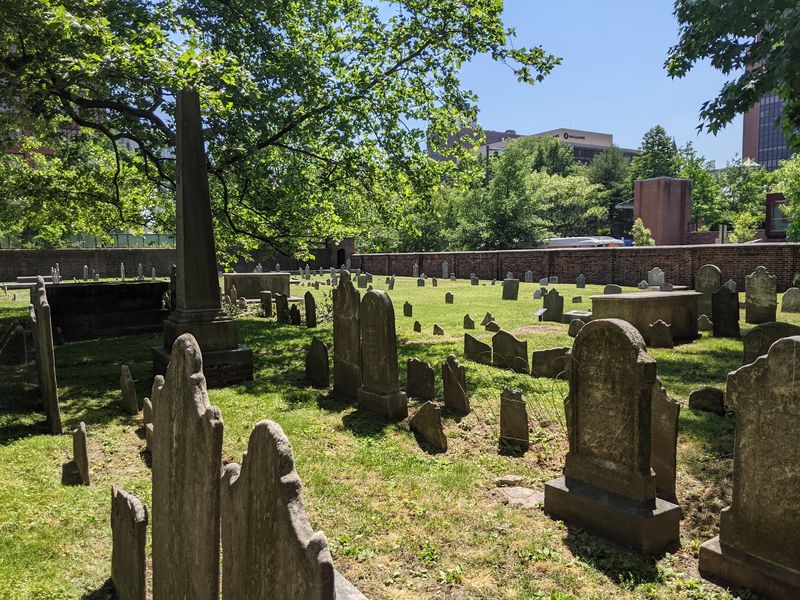
Pennies have been landing on one particular grave here since the tradition became popular enough to actually damage the stone beneath them. The grave belongs to Benjamin Franklin, and visitors still toss coins toward his flat marble marker, a habit tied to his famous saying about saving pennies.
Opened in 1719, this compact burial ground holds over 4,000 burials, including five signers of the Declaration of Independence. Franklin is joined here by Francis Hopkinson, George Ross, Joseph Hewes, and Dr. Benjamin Rush.
An iron railing section added to the brick wall in 1858 lets passersby view Franklin’s grave directly from the sidewalk without entering. Conservation work between 1977 and 2003 repaired markers, rebuilt walls, and addressed the wear caused by decades of coin-tossing.
Today, collected coins fund ongoing maintenance and restoration efforts.
6. Gettysburg National Cemetery, Gettysburg, Pennsylvania
On November 19, 1863, Abraham Lincoln stood here and delivered a speech that most people know by heart but few have heard in its original setting. The Gettysburg Address was delivered during this cemetery’s dedication ceremony, and those words have been connected to this ground ever since.
Created for Union soldiers who fell at Gettysburg in July 1863, the cemetery now holds more than 6,000 U.S. soldiers and veterans overall, spanning conflicts from the Civil War through the Vietnam War. Among the Civil War burials, 979 soldiers remain unidentified.
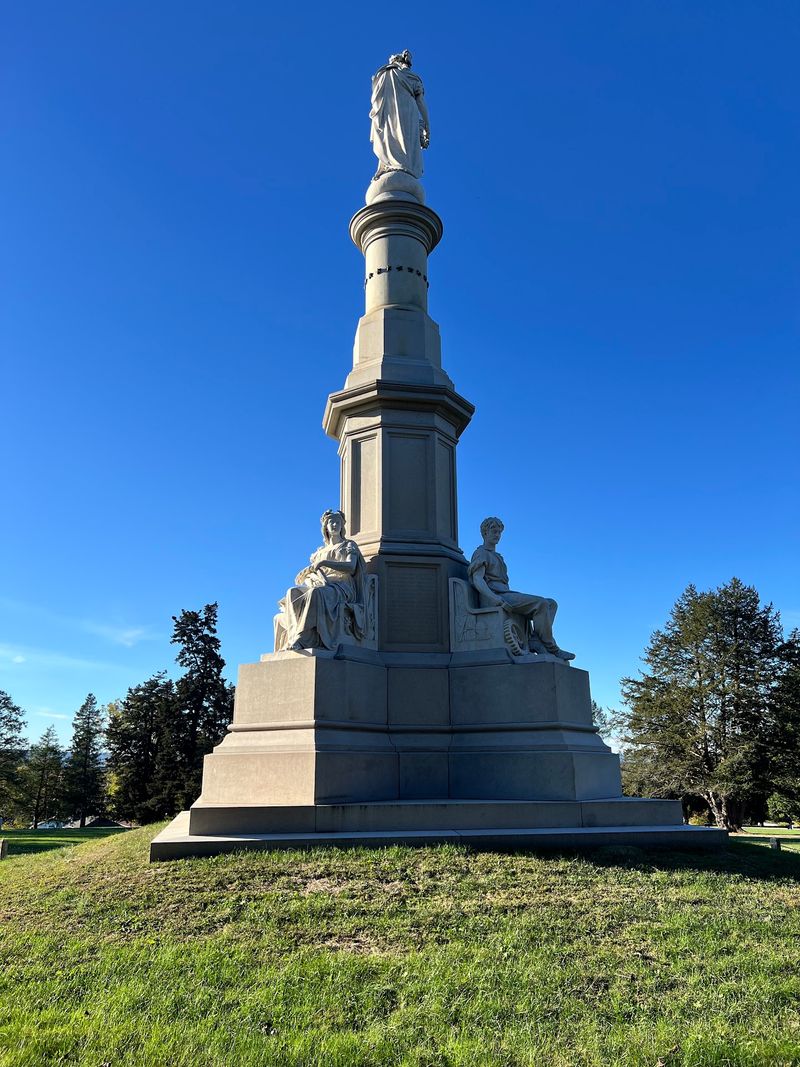
Landscape architect William Saunders designed the radial plan, arranging gravestones in semicircles grouped by state around the central Soldiers’ National Monument. That 60-foot monument, completed in 1869, features a figure of Liberty surrounded by allegorical figures representing War, History, Plenty, and Peace.
An annual Remembrance Day ceremony brings Civil War reenactors and heritage organizations back to the grounds each November.
7. Evergreen Cemetery, Gettysburg, Pennsylvania
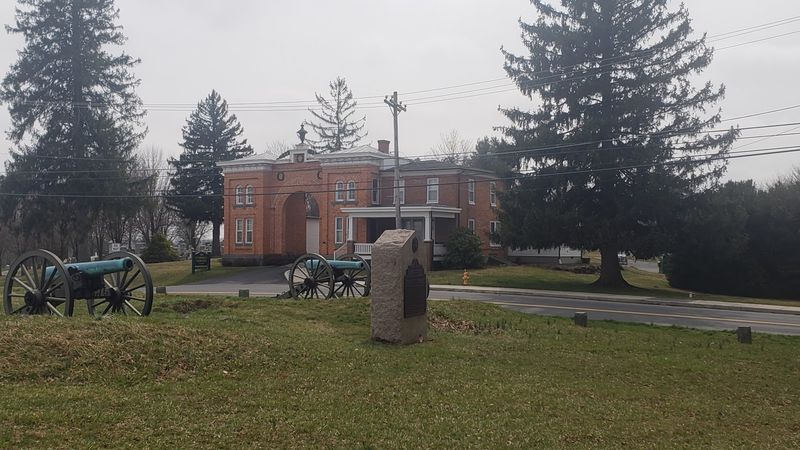
Evergreen Cemetery did not ask to become part of one of the most important battles in American history. Established in 1854, it was already a functioning community burial ground when the Battle of Gettysburg erupted around Cemetery Hill in July 1863.
The cemetery’s 1855 Italianate gatehouse, designed by Philadelphia architect Stephen Decatur Button, became the headquarters for the Union Army’s XI Corps during the fighting. Cemetery Hill itself served as a strategic artillery platform for Union forces throughout the three-day battle.
The most human story here belongs to Elizabeth Thorn, the cemetery’s caretaker, who buried approximately one hundred fallen Union soldiers after the battle while six months pregnant and with her husband away serving in the army. A memorial fashioned in her likeness now stands near the cemetery entrance.
President Lincoln also delivered his Gettysburg Address from a platform located within Evergreen Cemetery’s boundaries during the adjacent national cemetery’s dedication.
8. Easton Cemetery, Easton, Pennsylvania
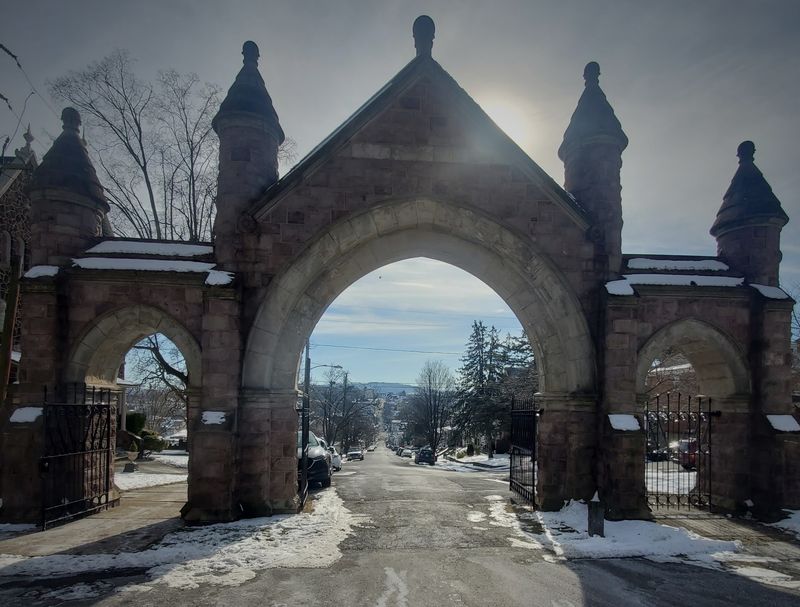
Dr. Traill Green and a group of prominent Easton citizens visited other cemeteries before designing their own, determined to create something both beautiful and practical. The result, established in 1849, is a park-like landscape now listed on the National Register of Historic Places for its significance in landscape architecture and funerary art.
Landscape architect James Charles Sidney, who also worked on Laurel Hill Cemetery, helped select the site and shape the design. The grounds feature winding routes, a Gothic Revival gatehouse and chapel built with stone from the site itself, and thousands of examples of funerary artwork spanning Greco-Roman Revival, Gothic Victorian, and Art Deco styles.
George Taylor, a signer of the Declaration of Independence, is buried within the cemetery. Some graves arrived here after older burial grounds elsewhere in Easton were absorbed by later development, giving the cemetery a role as a kind of historical rescue operation for the region’s past.
9. Prospect Hill Cemetery, York, Pennsylvania
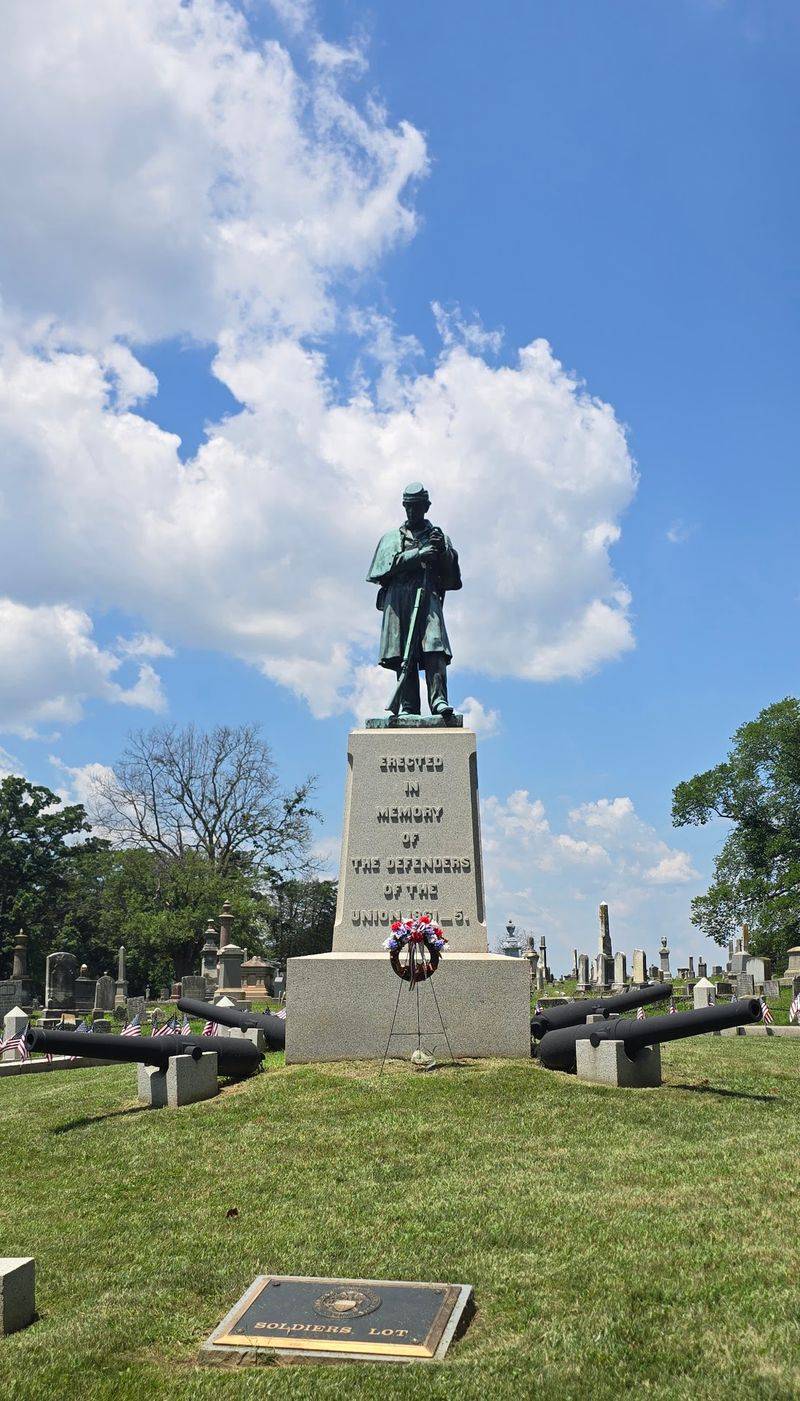
York’s Prospect Hill Cemetery contains a soldiers’ monument that took eleven years after the Civil War to build, and when it finally arrived in 1874, it came with four cannons positioned around its base for good measure. The 15-foot bronze soldier figure was commissioned by York citizens to honor the men who passed through or were treated at the U.S.
Army General Hospital in York.
Chartered in 1849 as part of the Victorian rural cemetery movement, Prospect Hill spans over 100 acres with more than 90,000 interments, preserving a wide range of York’s social and political history. A marker on the grounds also honors five unknown Confederate soldiers, a quiet acknowledgment that the war touched both sides.
The remains of Philip Livingston, a signer of the Declaration of Independence, were reinterred here in 1856 after originally being buried in a churchyard. His presence gives Prospect Hill a direct connection to the founding of the nation, layered beneath more than a century of community history.
10. Charles Evans Cemetery, Reading, Pennsylvania
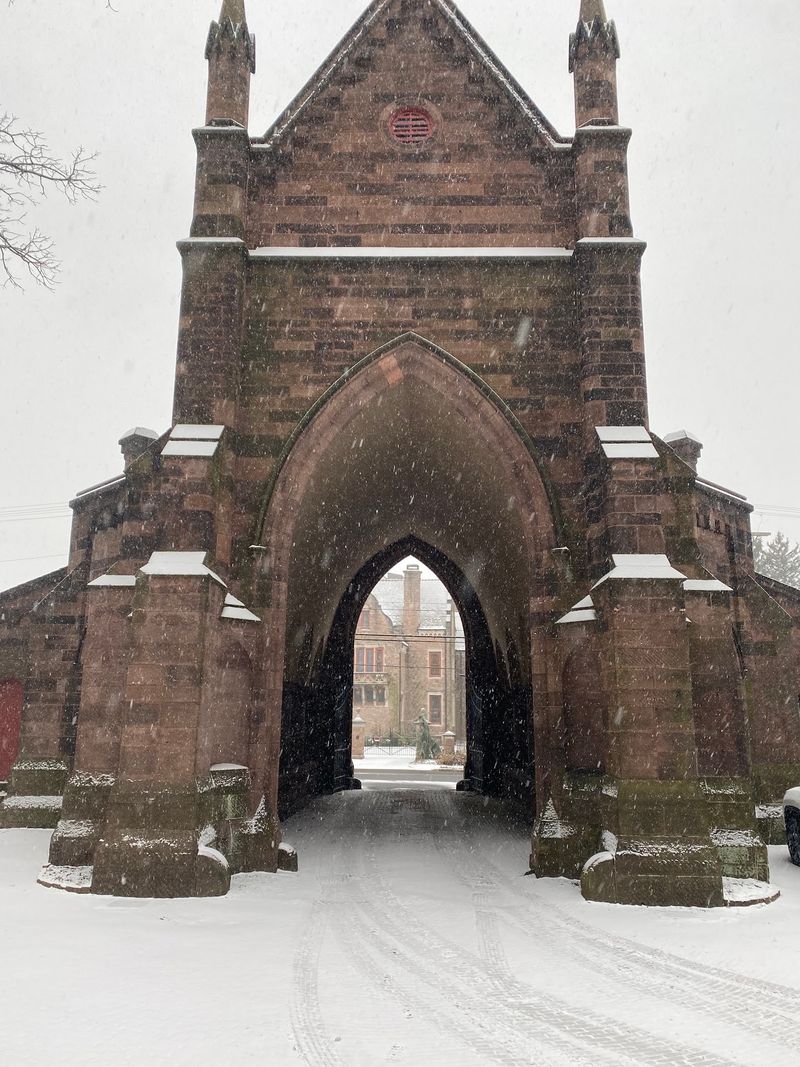
Charles Evans was a Reading lawyer who decided the best thing he could do with his fortune was give his city a peaceful place to rest, literally. In 1846, he donated 25 acres of land and $2,000 to establish a nonsectarian, garden-style public cemetery removed from the noise and congestion of the city.
He passed away in 1847, just a year after the cemetery opened, but not before arranging for a significant portion of his estate to fund its perpetual care. The result is one of the first rural cemeteries in Pennsylvania, now grown to 127 acres with over 65,000 burials.
A large sandstone Gothic Revival arch erected in 1852 marks the main gate, setting the tone for the winding roads and landscaped setting within. The remains of Joseph Hiester, Pennsylvania’s fifth governor, were reinterred here, and Civil War soldiers previously buried in paupers’ fields were moved here in 1885 for a more fitting resting place.
11. Allegheny Cemetery, Pittsburgh, Pennsylvania
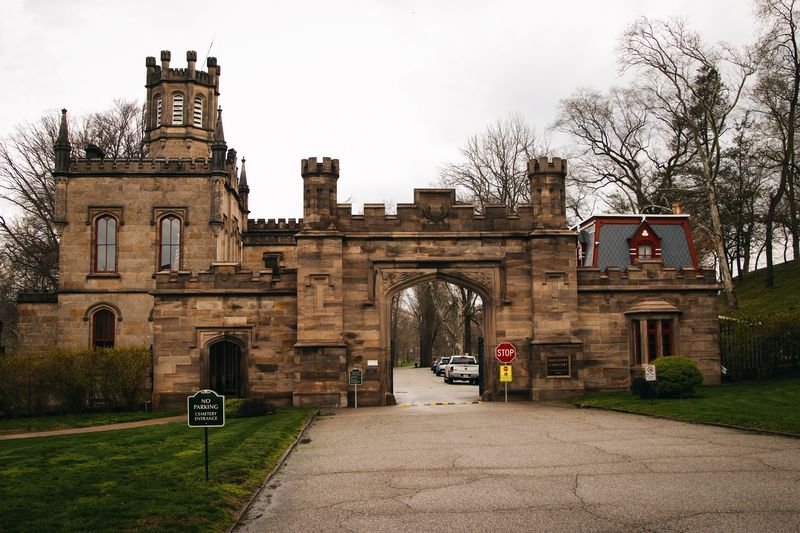
Ranked as the sixth oldest rural cemetery in the United States, Allegheny Cemetery was already setting a high architectural standard when it incorporated in 1844. John Chislett, Pittsburgh’s first professional architect and the cemetery’s first superintendent, modeled the grounds after Mount Auburn Cemetery in Boston.
The Butler Street Entrance Complex, begun in 1849, features an English Gothic Gateway and Lodge that signals right away this is not a typical burial ground. More than 300 acres of gently curving roads, diverse tree plantings, and Gothic architecture spread across the grounds, creating a landscape that feels more like a historic park than a conventional cemetery.
A dedicated Soldiers’ Lot contains more than 7,000 military veterans, including Civil War generals and Medal of Honor recipients. Remains of soldiers from the French and Indian War were also reinterred here from Trinity Cathedral, adding yet another layer to a site that has been collecting Pittsburgh’s history for nearly two centuries.
12. The Homewood Cemetery, Pittsburgh, Pennsylvania
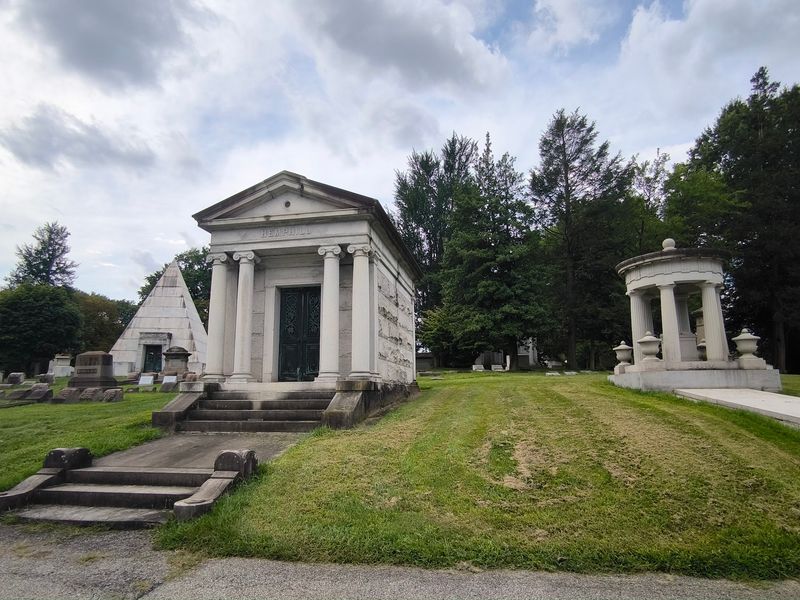
Judge William Wilkins once called this land his estate, and he named it Homewood. That name eventually passed to the cemetery established here in 1878, and then to the entire surrounding neighborhood, which is a rare case of a burial ground quietly naming a piece of a city.
Homewood Cemetery was built on the lawn-park model, which favored more uniform, natural settings over the elaborate eclectic designs of earlier rural cemeteries. The 200-acre grounds contain nearly 80,000 graves and were founded with a nondenominational and nondiscriminatory mission that was genuinely progressive for its era.
The list of notable residents covers a remarkable range of Pittsburgh history: industrialist Henry Clay Frick, ketchup magnate Henry J. Heinz, jazz pianist Erroll Garner, photographer Charles Teenie Harris, and Pittsburgh Pirates legend Harold Pie Traynor.
The cemetery is also an accredited arboretum featuring over 40 tree species, and app-guided walking tours explore themes from Black history to baseball.
13. Union Dale Cemetery, Pittsburgh, Pennsylvania
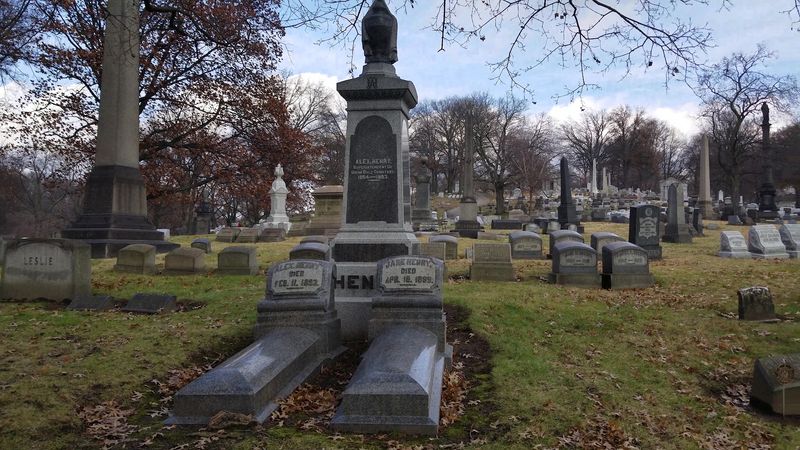
Few cemeteries can say that part of their land was turned into a military fortification while the Civil War was still being fought, but Union Dale can. During June 1863, as Confederate forces advanced northward ahead of the Battle of Gettysburg, Pittsburgh residents and military officials commandeered this elevated hilltop ground to build defensive works protecting the city.
Union Dale traces its origins to two separate cemeteries: Mount Union Cemetery, founded in April 1846 by members of the First Associated Reformed Presbyterian Church of Allegheny, and Hilldale Cemetery, which opened across the street in 1857. The two were consolidated in 1869 to form what is now Union Dale Cemetery, covering 96 acres on Pittsburgh’s North Side.
Before the war tensions arrived, the cemetery had already become a community gathering spot, with visitors enjoying strolls, fountains, and seasonal plantings. That combination of peaceful community space and wartime history gives Union Dale a quietly dramatic backstory that most visitors never expect to find.
Share this story