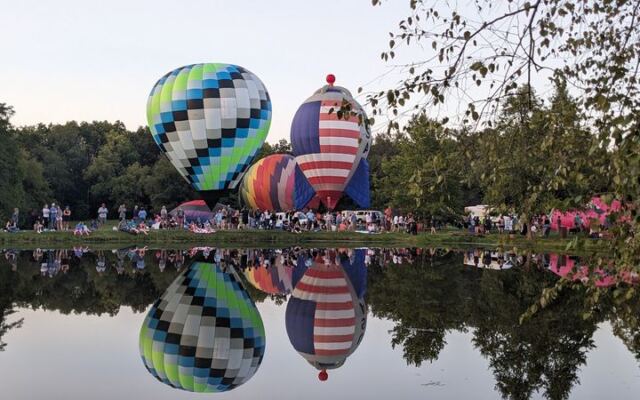
Something happens over a festival field in Illinois on a summer evening that is genuinely hard to describe until you see it yourself. Hot-air balloons, fully inflated and anchored to the ground, begin to pulse with warm light as their pilots fire the burners inside, and the whole scene glows against the darkening sky.
That experience is at the heart of Centralia Balloon Fest, a Southern Illinois tradition that has drawn families and curious travelers for decades. If you have never watched a balloon envelope light up from within while standing on the grass a short distance away, this is the weekend trip worth planning.
A Southern Illinois evening begins to glow
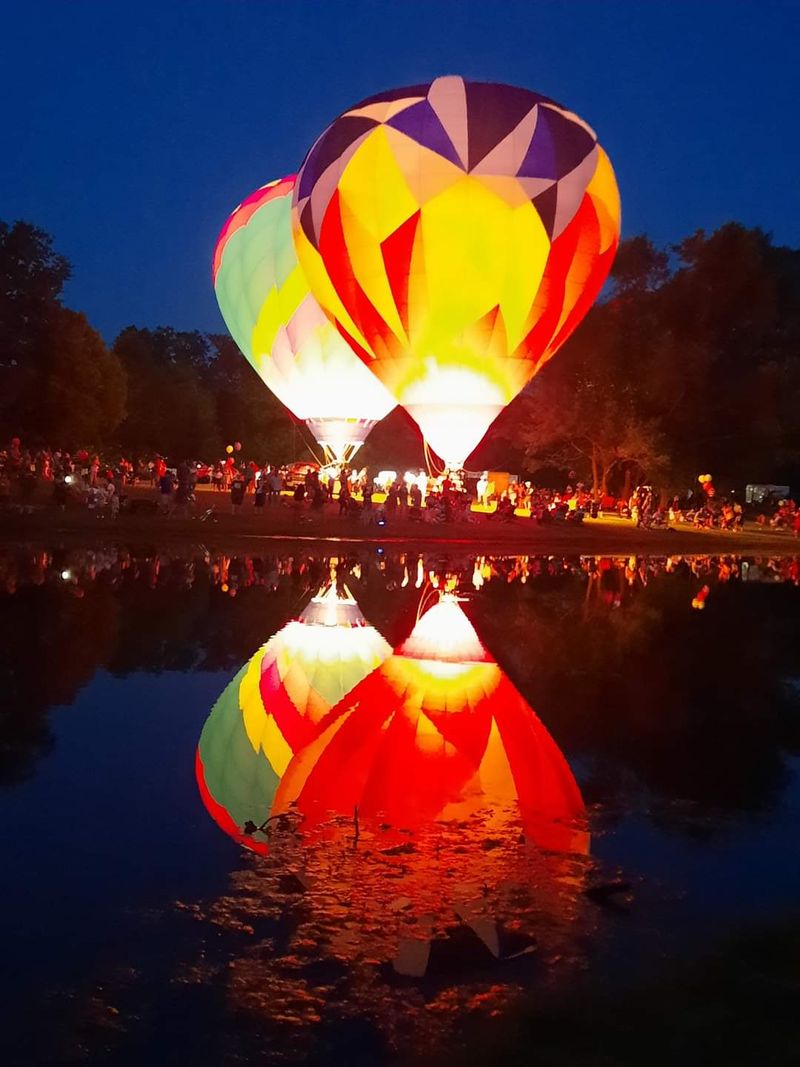
Picture a wide open field as the sun drops low and the air cools just enough to feel like summer exhaling. Across the grass, enormous balloon envelopes stand fully inflated, their vivid colors catching the last of the daylight before something more dramatic takes over.
That is the opening act of the Balloon Glow at Centralia Balloon Fest, an annual Southern Illinois event held in Centralia, Illinois, where the festival field itself seems to brighten as evening settles in.
Centralia Balloon Fest is not a pop-up event or a newly introduced attraction. The festival began in 1990 and has grown into a full weekend tradition that the community has celebrated for more than three decades.
Centralia’s tourism community identifies it as one of the area’s signature warm-weather events, and the crowds who return year after year treat it as something worth protecting.
The 2026 edition was scheduled for August 21 through 23 at Fairview Park in Centralia. That venue detail applies specifically to 2026, so anyone planning a future visit should confirm the location, schedule, and all related logistics directly with the organizers before making the drive.
How the Balloon Glow creates its light
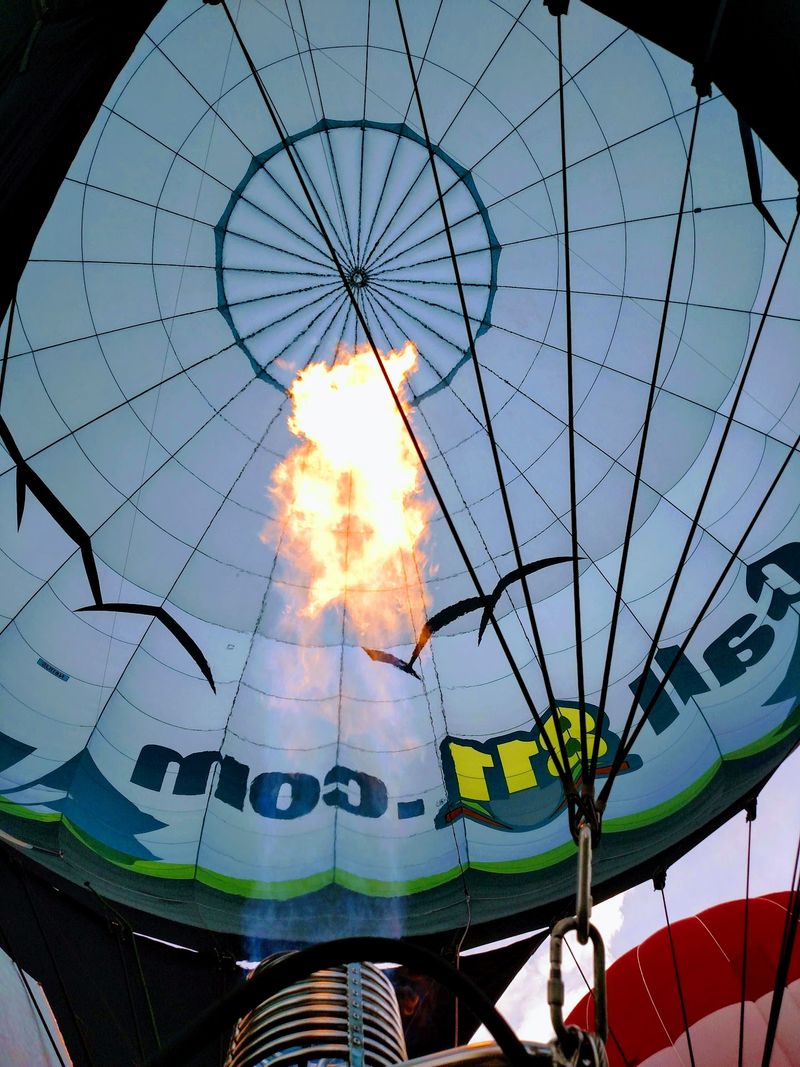
The glow does not come from floodlights or stage lighting. Each balloon is inflated until the envelope stands fully upright, and then the pilot ignites the propane burner positioned at the base of the balloon’s opening.
The heat and flame push upward into the envelope, and the fabric, stretched tight and translucent, catches that light and radiates it outward in pulses of amber, gold, and color.
As Albuquerque International Balloon Fiesta’s glow FAQ explains, the balloon glows while the pilot’s burner is lit, making each burst of flame visible through the envelope as a wave of illumination. The effect is rhythmic and alive, different from anything a static display can produce.
Meanwhile, the FAA classifies piloted balloons as aircraft, and the burner system is a regulated part of that aircraft, not a prop or decoration.
During the glow, the burner’s job is illumination, not lift. The balloons are secured to the ground throughout the presentation, so the fire you see is creating light, not flight.
That distinction matters for understanding what you are actually watching.
The spectacle stays tethered to the ground
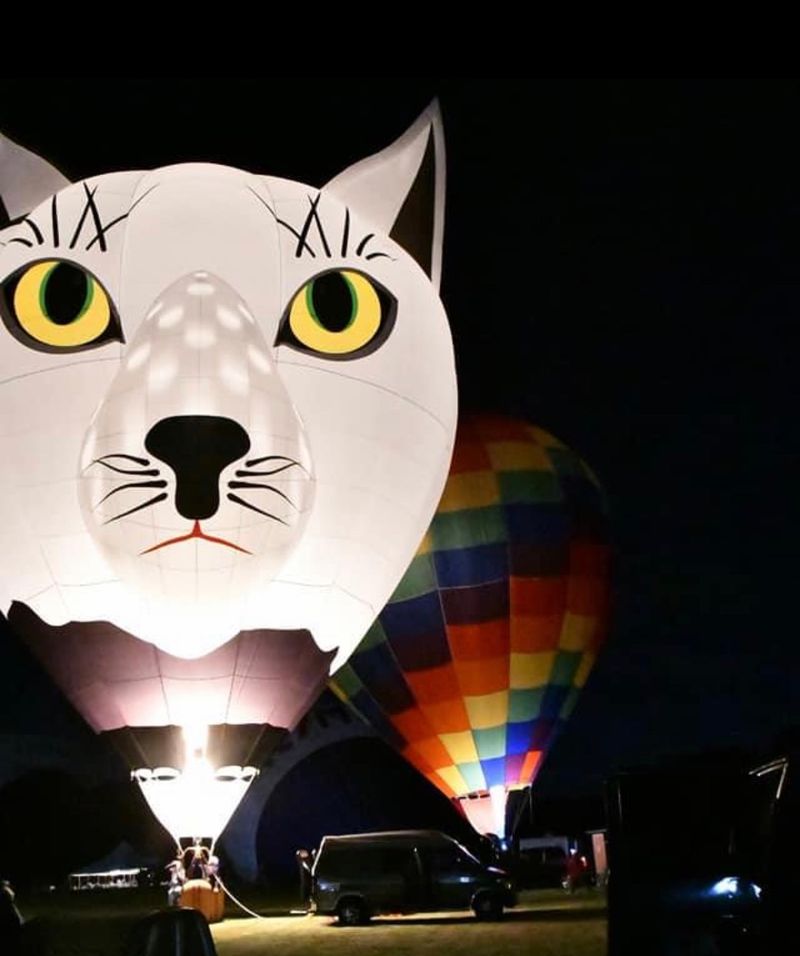
A Balloon Glow and a mass ascension are two entirely different experiences, and mixing them up leads to real disappointment. During a mass ascension, balloons launch and travel with the wind across open sky.
During a glow, the balloons stay put. They are inflated, anchored with tether lines, and fired up in place while spectators watch from the festival grounds.
That tethered format is exactly what makes the glow accessible. Families do not need to scramble for a viewing angle or track a moving object across the horizon.
The balloons stand on the field, and their envelopes shift from fabric to lantern as the burners fire. The distinction between a glow and a free flight is well established in balloon-festival operations: one involves a stationary ground display, and the other involves actual launch and travel.
Watching an enormous, glowing shape pulse with light from just a short distance away, against a sky that has shifted from blue to deep violet, carries its own kind of quiet drama. The balloons do not need to leave the ground to make the moment feel remarkable.
The festival offers more than the evening glow
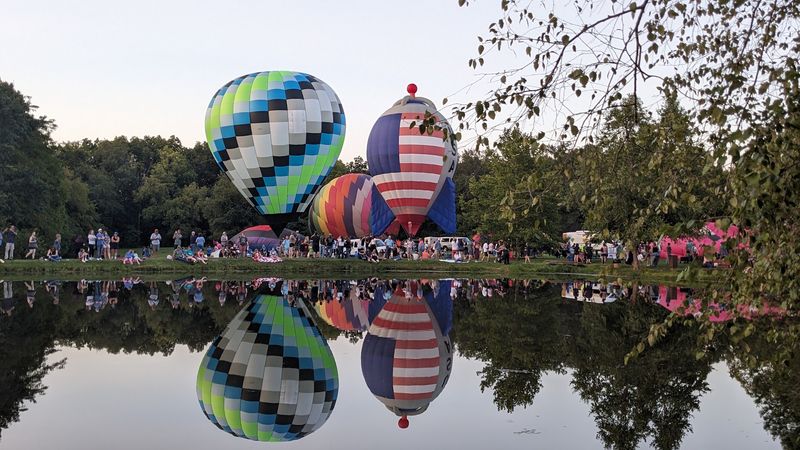
Arriving only for the glow means missing most of what Centralia Balloon Fest actually offers across the weekend. The days leading up to the evening presentation fill with balloon inflation, scheduled flights, food and craft vendors, live entertainment, and children’s activities, all layered into a program that gives families plenty of reasons to stay longer than an hour.
Morning flights are a separate part of the schedule, listed for approximately 6 a.m. on flight days, with launch locations determined on the morning of each flight and shared through the festival’s social media. Tethered rides are listed as their own activity, distinct from the glow, giving visitors a chance to climb into a basket and feel the lift without actually departing the ground.
Weather and safety conditions affect whether rides operate on any given day, so they should be treated as a possibility rather than a guarantee.
According to the Centralia Balloon Fest official page, the weekend combines all of these elements into a program built for families and casual visitors alike. A tethered ride, a morning flight, and the evening glow are three genuinely different balloon experiences, and the festival offers a path to all three.
Plan around the published schedule
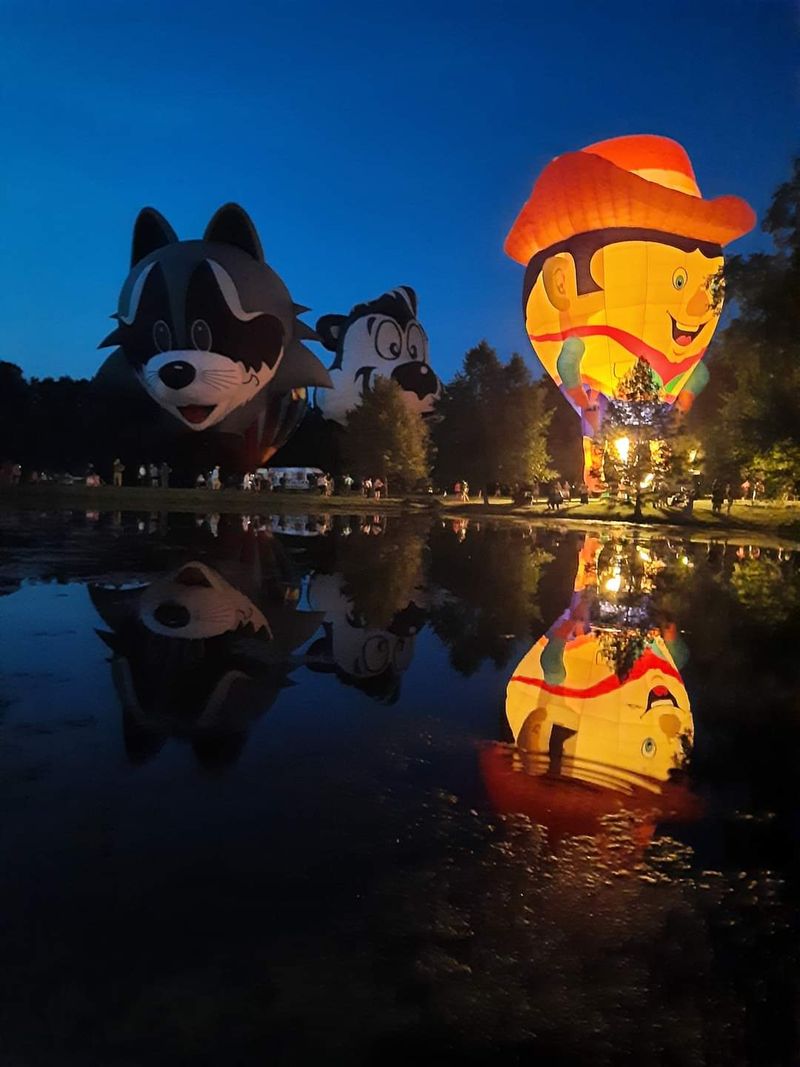
Getting the most out of the Balloon Glow starts with arriving before it begins. Watching the balloons inflate from flat fabric to full standing envelopes is its own reward, and settling into a good viewing spot on the grass before the field gets crowded makes the evening noticeably better.
Organizers and comparable festivals consistently recommend early arrival for exactly that reason.
For the 2026 edition, the official Centralia Balloon Fest schedule listed Balloon Glows at approximately 7:30 p.m. on both Friday, August 21, and Saturday, August 22. Parking for that year was referenced at Fairview Park Plaza at 1010 West Broadway.
Both the glow time and the parking location are 2026-specific details. Start times, parking arrangements, and venue information can change between years, and the organizers are the only reliable source for confirmed logistics.
Admission for the 2026 event was listed as free, but that policy applies to that specific edition only. Before planning a future visit, check the official organizer’s website for updated admission details, hours, and any changes to the venue.
Making one quick confirmation call or website visit before the drive is far easier than arriving to find a different setup than expected.
Weather determines what can take flight
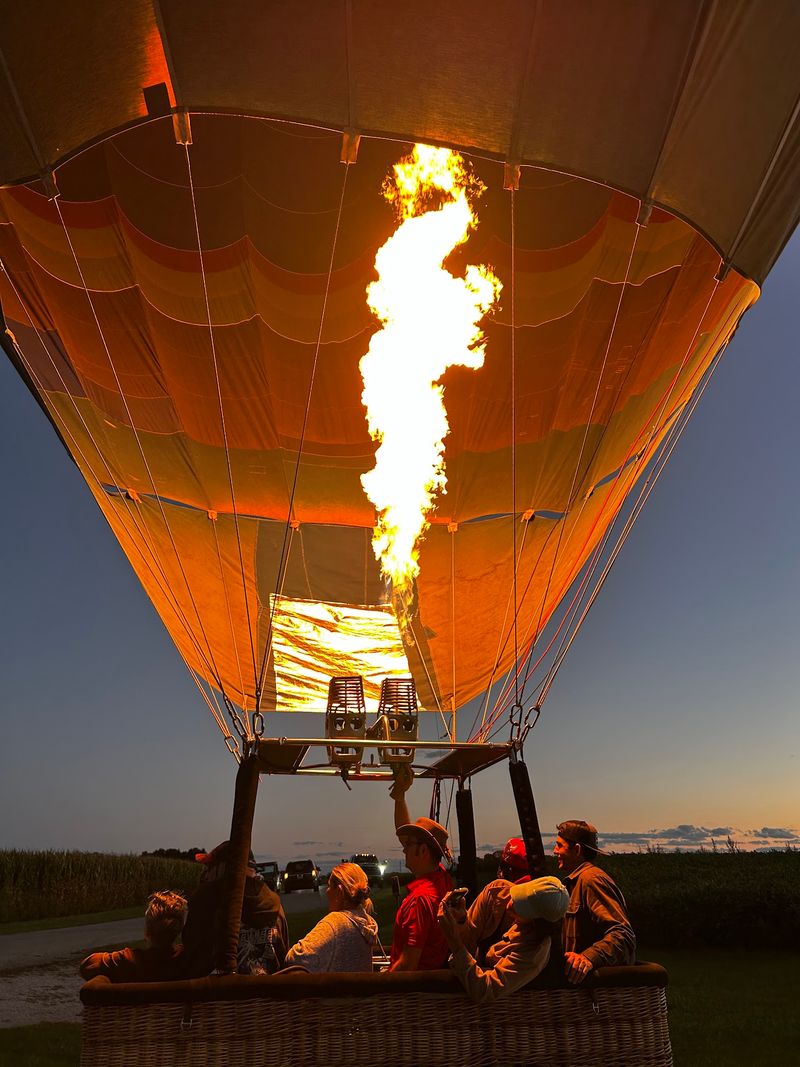
Every balloon activity at Centralia Balloon Fest, from the morning flights to the tethered rides, carries a weather caveat. The organizers state plainly that all balloon activities depend on weather and safety conditions, and that flight paths and landing areas shift with wind direction.
A schedule is a plan, not a promise, and experienced balloon-festival visitors learn to treat it that way.
The reason weather matters so much comes down to how balloons actually move. The FAA Balloon Flying Handbook dedicates significant attention to preflight planning and weather assessment, noting that wind is the primary means of steerage for a hot-air balloon.
Pilots cannot steer the way a car or airplane does; they ascend or descend to find favorable wind layers, which makes pre-launch weather evaluation critical for every flight.
Local reporting from the 2025 festival documented that weather conditions affected how many balloons were able to fly during one of the evening sessions, a reminder that even well-established events can see reduced activity on a given night. Following the festival’s official social media channels in the days before and morning of your visit is the most practical way to stay current on what is actually happening on the field.
Watch respectfully and prepare for the field
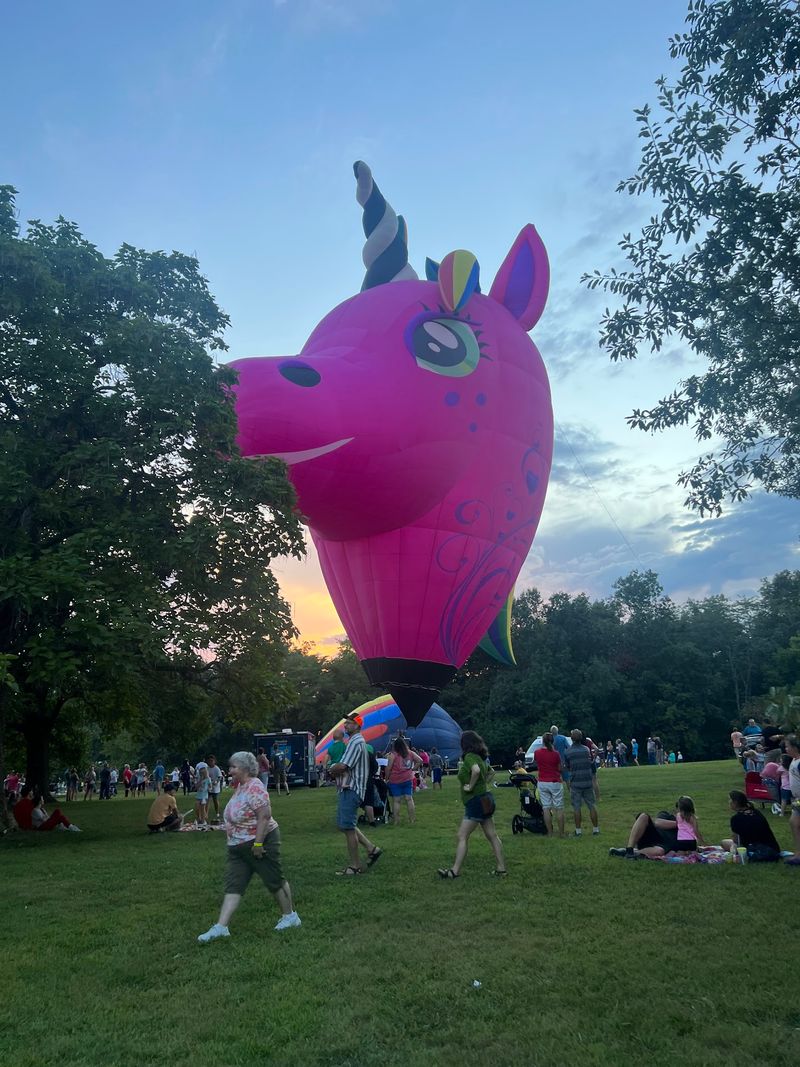
Packing for Centralia Balloon Fest is straightforward once you picture where you will actually be standing. The festival takes place on open ground, so a lawn chair or a blanket makes a significant difference in comfort, especially during the evening glow when most visitors settle in to watch.
Sunscreen matters earlier in the day, and comfortable shoes handle the grass and uneven ground better than anything with a heel.
Balloon crews work around heavy equipment, hot burners, and pressurized fuel systems. The festival asks attendees to respect the balloons and follow crew instructions, and that request deserves to be taken seriously.
Staying back from launch areas, tether lines, and burner equipment unless a crew member specifically invites you closer is the right call. On the drone question, the FAA has flagged unmanned aircraft as a safety concern near balloon operations, and balloon festivals may impose their own event-specific restrictions on drone use.
Before making the trip, check the official Centralia Balloon Fest page to confirm dates, venue, and any updated policies for the upcoming year. The glow is a ground-level experience, close and vivid, and a little preparation makes the whole evening feel effortless rather than rushed.
Share this story